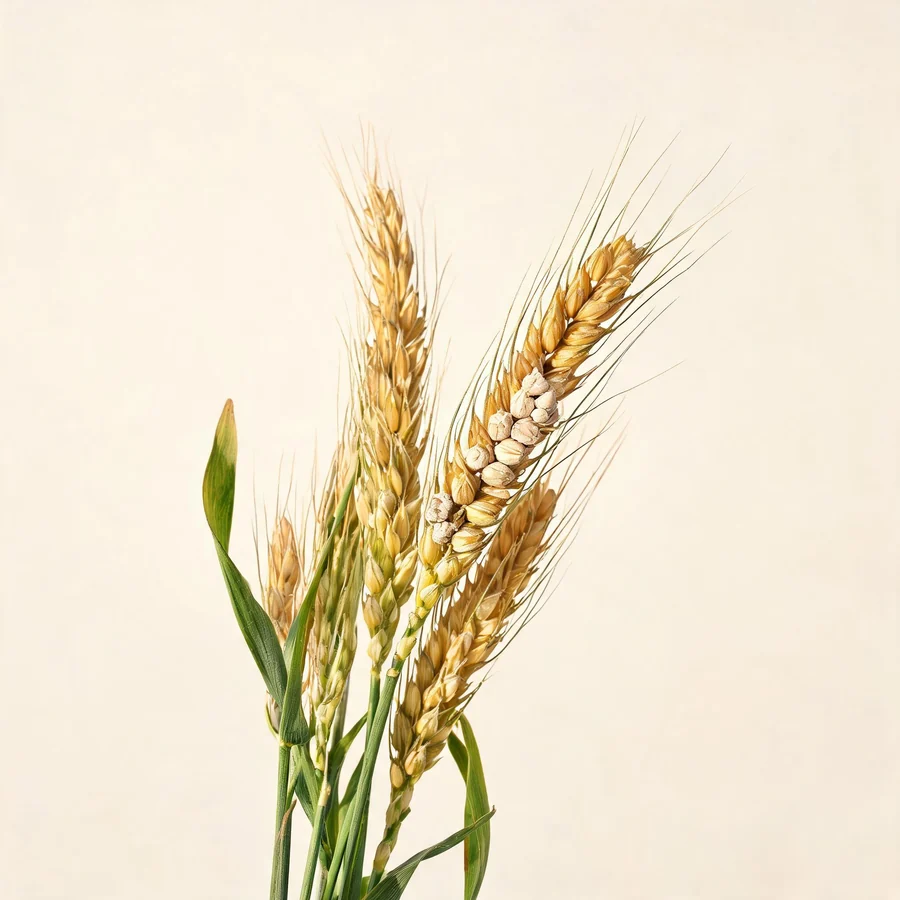
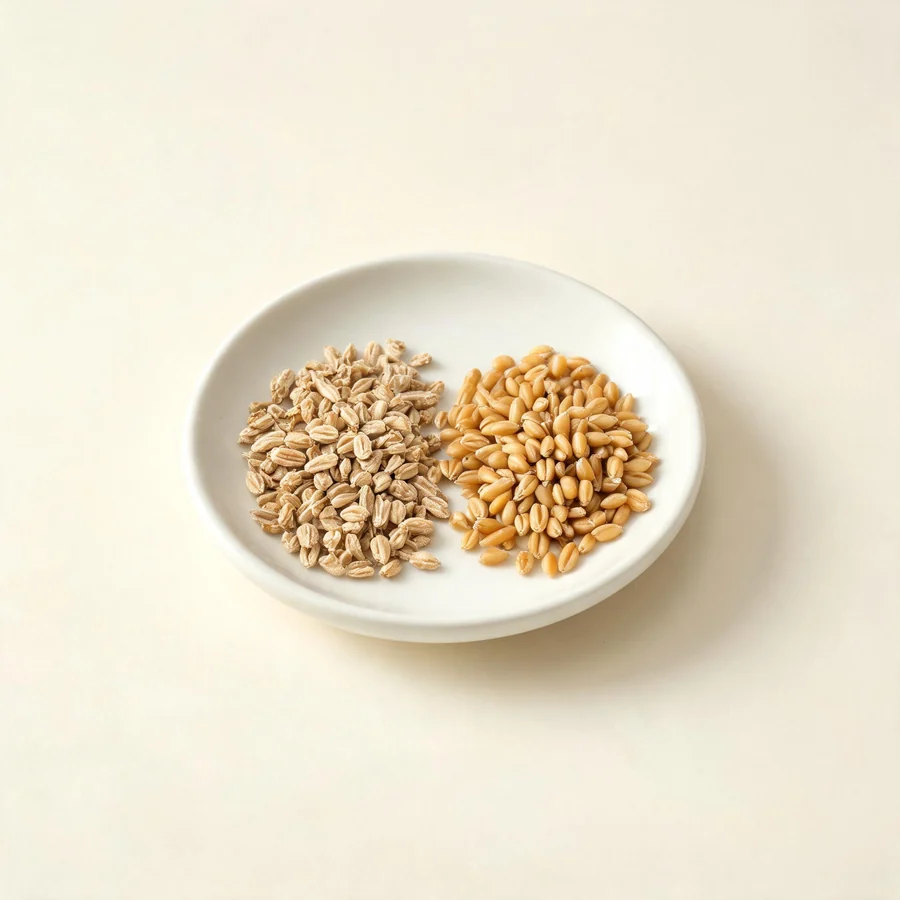
Skin profile
Where this herb sits in skin practice: the pattern it corrects, the skin signs it suits, and what it should not be used for.
Fu Xiao Mai is a sweat-stopper before it is anything else, and the skin value follows from that: a surface that is no longer perpetually wet, and a low heat that no longer makes it warm and itchy at night. It is mild, food-grade and well tolerated, which makes it easy to overstate. The one thing it must not do is suppress sweating that has not been explained, and the one group that must avoid it is anyone with coeliac disease or wheat allergy.
Skin signs that suggest it
- Night sweats that leave the skin damp and cool by morning, with a low afternoon warmth
- Sweating on the least exertion, with a tired voice and a pale complexion
- Skin that feels warm to the hand without fever, worse in the afternoon and evening
- Itch and restlessness at night, when the body is warm and slightly damp
- A red tongue with little coating, or a pale one, with a fine rapid pulse
When it is not the right herb
Not while an exterior pattern is active. Sweating that comes with chills, an aching body and a recent onset is the body trying to expel a pathogen, and closing the pores drives it inward and prolongs the illness. Not for a cold drenching sweat with a fading pulse, icy limbs and confusion, which is collapse and needs emergency care. Coeliac disease and wheat allergy rule it out completely, because the thin grain holds the same protein as the plump one, and a diabetic counting carbohydrate should count this too rather than treat it as water.
What it does for skin
Skin-relevant actions only. Each one describes a mechanism in TCM terms and what it looks like on the skin.
Closes a surface that leaks
Sweat is the Heart's fluid in this framework, and wheat is the grain assigned to the Heart, which is why a wheat preparation is used for a sweating surface. The light grains are read as rising to the surface, and their astringency shuts the pores. The practical result is drier, less clammy skin and a person less depleted by the loss, which matters in chronic skin disease where constant dampness macerates the folds.
Cools empty heat without chilling
The warmth of depletion is low and persistent rather than the heat of infection: it arrives in the afternoon, disturbs sleep, and comes with warmth in the palms and soles. A bitter cold medicine would clear it at the cost of the digestion, so a sweet, cool grain is used instead, cooling gently while it nourishes. That is the quality that makes it suitable for dry, warm, itchy skin in a thin and tired person.
Settles the Spirit that sweating disturbs
Night sweats wake people, and broken sleep makes itch worse, which makes the sweating worse again. The grain enters the Heart channel, and its traditional pairing with oyster shell and schisandra is aimed at both the sweat and the restlessness. On the skin the benefit is indirect but real: a person who sleeps is less likely to scratch.
Adds a food-grade base to a formula
Fifteen to thirty grams of grain is bulky but bland, and the bulk is useful: it carries stronger herbs without adding heat, and it can be taken for weeks without upsetting the digestion. In skin formulas for a depleted person that reliability is worth more than a stronger herb which has to be stopped after a week because it dries the mouth or loosens the stool.
Skin conditions it is used for
Mapped to the condition pages on this site. The pattern column shows what the skin is doing when this herb is the right choice.
| Condition | Pattern | Why it suits | Typical setting |
|---|---|---|---|
| Moist skin sensation | Empty-Heat caused by Yin Deficiency with night sweating | Skin that is damp and warm, particularly at night, with a dry mouth and a fine rapid pulse, is read as Yin failing to hold the fluid while a low heat drives it out. The grain closes the surface and cools that heat at the same time, which is why it suits this picture rather than a bitter drying herb. It is a supporting ingredient, and sweating with fever, weight loss or enlarged glands needs investigation before treatment. | Mu Li San, with Wu Wei Zi added for the Yin aspect |
| Cool or clammy skin | Ying-Wei Disharmony with sweating | A surface that alternates between feeling cool and breaking into sweat, with a weak pulse and a tendency to catch cold, is read as the nutritive and defensive layers failing to keep step. The grain acts at the surface and is paired with astragalus to support the defensive Qi. Sudden cold clamminess with chest pain or breathlessness is a cardiac emergency and comes before any pattern. | Gui Zhi Tang with Huang Qi and Fu Xiao Mai |
| Warm skin | Empty-Heat caused by Yin Deficiency | Skin that is warm to touch without fever, worst in the late afternoon and evening, in a thin person with night sweats and a dry mouth, is empty heat. The grain is one of the mildest ways to cool it, and its astringency stops the heat from being accompanied by a constant loss of fluid. It is used within a Yin-nourishing formula, and persistent unexplained warmth or fever must be investigated first. | Modified Zhi Bai Di Huang Wan with Fu Xiao Mai |
| Dry and hot skin | Empty-Heat with fluid loss | Skin that is dry and warm at once is read as fluid low and heat present, and the two feed each other. The grain addresses the heat and the leakage while a Yin tonic addresses the missing fluid, so it is a partner rather than the principal herb. It should not be used where the heat is excess, with a red face, a full pulse and a bitter taste, since a mild astringent grain will do nothing for that. | Modified Dang Gui Liu Huang Tang with Fu Xiao Mai |
Combinations for skin
Herbs it is paired with when the skin, not an internal organ, is the target.
| Partner | Ratio | Why the pair is used |
|---|---|---|
| Huang Qi | 15 to 30 g Huang Qi with 15 to 30 g Fu Xiao Mai | Astragalus lifts Qi and closes the surface, and the grain stops the sweat while cooling the heat that goes with it. The pair is the backbone of the treatment of spontaneous sweating in a tired person, and both are mild enough to continue for weeks. On the skin the visible result is a surface that stays dry and warm rather than damp and cool. |
| Mu Li Ke | 15 to 30 g Mu Li Ke with 15 to 30 g Fu Xiao Mai | Oyster shell is heavy and sinking, anchoring Yang that has floated up and holding fluid in the lower body, while the light grain rises to the surface and shuts the pores. The two work top and bottom at once: one steadies the root, the other seals the branch, and both quieten the Spirit. It is chosen for sweating with palpitations and anxiety, where surface and mind are unsettled together. |
| Wu Wei Zi | 6 to 10 g Wu Wei Zi with 15 to 30 g Fu Xiao Mai | Schisandra is sour and astringent and works on the Lung and Kidney as well as the surface, holding fluid at every level, while the wheat acts on the Heart and on the skin itself. The combination suits a Yin-deficient picture with night sweats, a dry mouth and warmth in the palms and soles, and it recurs in formulas for the sweating of the menopause. |
| Ma Huang Gen | 10 to 15 g Ma Huang Gen with 15 to 30 g Fu Xiao Mai | Ephedra root is an astringent and nothing more: it shuts the pores and does no other work. The wheat brings a mild tonification of Qi and clears the heat that so often accompanies the loss. The pair is for sweating that has not yielded to either herb alone, whether it starts on climbing a stair or only in sleep, and above all where the skin lies cool and damp between bouts. |
Formulas where it leads
- Mu Li San (牡蛎散) - From the Song imperial prescription collection, the standard answer to sweating that comes from deficiency, day or night, in which the wheat assists oyster shell, astragalus and ephedra root. Its skin relevance is the damp, cool surface of someone who sweats continuously, and it is used only once the reason for the sweating has been established.
Safety for skin use
What to check before recommending or using it, including the cautions that matter most for skin patients.
Do not use, or use with caution
- Sweating as part of a fresh exterior invasion: recent onset, chills, aching limbs and a pulse that floats. Shutting the pores at that stage turns the pathogen inward and drags the illness out.
- Cold sweat in quantity, limbs like ice, a pulse almost gone and confusion. This is collapse, not the sweating of deficiency, and it needs emergency care.
- Coeliac disease, wheat allergy and wheat-dependent exercise-induced anaphylaxis. The shrivelled grain still contains wheat protein, and no amount of drying removes it.
- Diabetes with carbohydrate counting. A thirty gram decoction carries a meaningful starch load, so it should be counted rather than treated as a free food.
Pregnancy and breastfeeding
The grain is a food and is generally regarded as safe at ordinary amounts. There is no classical prohibition and no known harm, and it is used in antenatal and postpartum recipes for sweating. The pattern matters: a pregnant woman who is sweating because she has caught cold should not be given a herb that stops sweat, and sweating with a high fever, faintness or breast pain needs medical advice before anything else. A weak infusion for night sweats in the last months is a reasonable traditional option at food-level strength.
Interactions
- Glucose-lowering medicine. There is no established effect on blood glucose, but a starchy decoction taken regularly should be covered by the usual monitoring rather than assumed inert, particularly in someone using insulin.
- Statins. Animal work suggests a mild effect on blood lipids that could in theory sum with a statin; nobody has demonstrated this in patients, and it is not grounds for avoiding the grain.
- No clinically significant interaction has been recorded for the grain, and the absence is expected of a food. That does not remove the need to mention a daily decoction to a prescriber, especially where carbohydrate intake matters.
Allergy and patch testing
Wheat is one of the commoner food allergens, and the shrivelled grain is still wheat. Coeliac disease, wheat allergy and exercise-induced anaphylaxis are all reasons to avoid it entirely. A new rash with wheeze, swelling or faintness after taking it is an emergency, and anyone with a known wheat sensitivity should not use the grain on the skin either, although there is no topical tradition for it.
General safety references
General references for herbal hepatotoxicity and herb-drug interactions; they are not specific to this herb.
- Review article: Herbal hepatotoxicity - an update on traditional Chinese medicine preparations. Alimentary Pharmacology & Therapeutics, 2014. PMID: 24844799.
- Interactions between herbal medicines and prescribed drugs: an updated systematic review. Drugs, 2009. PMID: 19719333.
- Warfarin and food, herbal or dietary supplement interactions: a systematic review. British Journal of Clinical Pharmacology, 2021. PMID: 32478963.
Evidence
The classical record is quoted with its source. The modern note states the level of evidence plainly.
Classical record
咸凉。止虚汗盗汗,劳热骨蒸。汗为心液,麦为心谷,浮者无肉,故能凉心。
Salty and cool. It checks the sweat of deficiency, the sweats of sleep, the heat of exhaustion and the bone-steaming fever. Sweat is the Heart's fluid, wheat is the Heart's grain, and these grains are hollow, which is how they cool the Heart.
Ben Cao Bei Yao (Essentials of Materia Medica), Wang Ang, Qing dynasty - Wang Ang's summary is what links grain, Heart and sweat, and it is the passage usually quoted when this astringent class is being justified.
浮麦,能敛盗汗,取其散皮腠之热也。
Floating wheat binds the sweats of sleep, and it does so because it releases heat that is caught in the skin and the spaces between.
Ben Jing Feng Yuan (Original Meaning of the Classic of Materia Medica), Zhang Lu, Qing dynasty - The only classical statement that names the skin directly. It also qualifies the astringency: the grain does not simply bind, it lets out heat held at the surface.
先枯未实,敛虚汗获效如神。
Withered before it had filled, it binds up the sweat of deficiency, and its effect is spoken of as almost miraculous.
Ben Cao Meng Quan (Enlightenment on Materia Medica), Ming dynasty - A Ming line that reads the action straight off the look of the grain, an instance of the old idea that a substance's form hints at its use.
Modern evidence
Evidence status
- The modern literature on the grain is thin. Animal work reports a mild effect on blood lipids, and no controlled trial of the grain for sweating in people is cited on this page.
- No clinical study of Fu Xiao Mai in any skin condition is cited here. The skin relevance is the management of a damp, sweat-soaked surface and of empty heat, both treated in practice rather than proved in trials.
- Safety rests on food status rather than on pharmacology: the grain is eaten as food, its one real hazard is wheat protein, and the pharmacopoeial identification is a flotation test because the medicinal article and the food article come from the same crop.
PubMed records
Selected real PubMed records for this herb's species or its constituents, chosen by species name and title relevance. They are references for the non-TCM discussion above, not proof that the herb treats any skin condition.
- The Status and Research Progress of Cadmium Pollution in Rice- (Oryza sativa L.) and Wheat- (Triticum aestivum L.) Cropping Systems in China: A Critical Review.. Toxics, 2022. PMID: 36548627 (pharmacology or review record).
- Effects of the Complex of Panicum miliaceum Extract and Triticum aestivum Extract on Hair Condition.. Nutrients, 2023. PMID: 37892488 (pharmacology or review record).
Dose and forms
Skin-practice dosing and the preparations that suit skin complaints.
| Form | Dose and notes |
|---|---|
| Decoction | Fifteen to thirty grams daily, decocted and taken between meals in two or three doses. The grain is light and takes up a lot of room, so thirty grams fills the pot; tied into a cloth bag, it leaves the liquid clear. |
| Stir-fried | Dry-fried over gentle heat until the grains turn golden. Frying strengthens the sweat-stopping action and slightly warms the grain, which is the form to choose when the sweat comes with cold limbs and tiredness. |
| Powder | Three to five grams of roasted grain, ground and stirred into rice water, which is how the old handbooks gave it as a single herb. |
| Children | Between a third and a half of the adult amount. A child sweating with a fever, a rash or unusual sleepiness needs a doctor rather than home treatment. |
Thirty grams is the usual working weight, and up to sixty grams is recorded for stubborn sweating under supervision. Raw grain is preferred when empty heat dominates, because frying lessens the cooling; choose the fried form when cold limbs and fatigue come with the sweat. Because it is a food, the limits are practical: bulk in the pot, starch in the diet, and the wheat protein that rules it out entirely for anyone with coeliac disease.
Citations and further reading
Only real sources are listed: the classical materia medica passages quoted above, and the source works behind the botanical and safety statements.
- Ben Cao Bei Yao (Essentials of Materia Medica), Wang Ang, Qing dynasty - classical entry quoted above.
- Ben Jing Feng Yuan (Original Meaning of the Classic of Materia Medica), Zhang Lu, Qing dynasty - classical entry quoted above.
- Ben Cao Meng Quan (Enlightenment on Materia Medica), Ming dynasty - classical entry quoted above.
- Fructus Tritici Levis monograph: Pharmacopoeia of the People's Republic of China - article definition, which distinguishes the light grain from the food grain.
- Wheat allergen literature - the basis for excluding the grain entirely in coeliac disease and wheat allergy.
- Botanical description and identification: botanical literature on Triticum aestivum, Poaceae.
Educational reference for qualified practitioners. This page is not medical advice, and skin conditions should be diagnosed by a clinician before treatment.