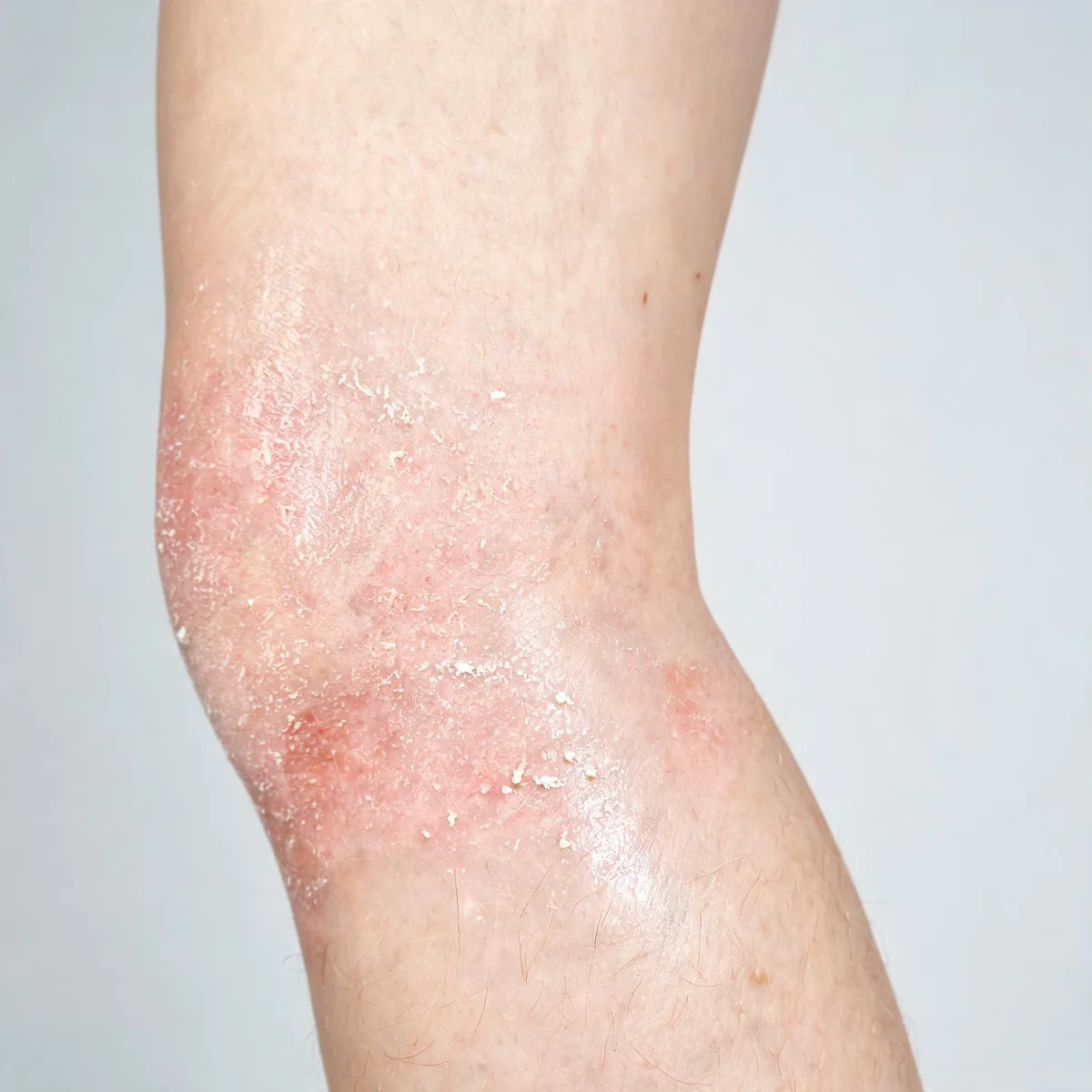
Understanding Dry and hot skin
The classical literature ties the skin to the Lungs, which distribute defensive Qi and body fluids across the surface. When Lung function is compromised, or Yin and Blood run low, the skin becomes dry and hot at once.
Empty-Heat from Yin deficiency gives skin that is dry and hot worse at night, with five-palm heat, night sweats, dry mouth and a desire to sip water. That is the commonest pattern, and the treatment is nourishing rather than cooling.
Heat in the Blood gives bright red eruptions or rashes with intense burning heat, worse at night, thirst for cold drinks and restlessness. Blood deficiency with external wind gives dry flaky skin that may feel hot, with itch that shifts and worsens at night, a pale complexion and an aversion to drafts.
Wind-Heat gives sudden onset with mild fever, slight chills, sore red throat, thirst for cold fluids and yellow nasal congestion. That is the surface heat pattern, and it resolves faster.
Dryness and heat can arise in opposite ways. In one, the body's cooling fluids are simply too few, so the surface is parched and a thin, restless warmth rises in the evening. In the other, heat arrives from outside or from food and burns through the fluids, so the dryness is a consequence rather than the cause. The first calls for replenishment and the second for clearing, and applying one approach to the other is why a single cream or antihistamine often disappoints.
The Lung connection explains why dryness so often starts at the surface, since the Lung spreads defensive Qi and fluid to the skin; when its function is strained, or the deeper stores of Yin and Blood are low, the first sign is tightness rather than a rash. Blood adds a second layer, because it moistens as well as nourishes, and when it is thin the skin turns flaky and reacts to any draught. Whether the heat is empty or full, and which of these stores is short, decides the whole plan.
Conventional view
Conventional medicine treats dry hot skin as a symptom rather than a diagnosis. Dehydration, sunburn, eczema, psoriasis, hormonal change around the menopause and a damaged skin barrier can all produce it, and the heat may come from inflammation, nerve sensitivity or increased blood flow. Examination, allergy testing or blood tests look for the underlying condition.
Standard care is topical and symptomatic: emollients to repair the barrier, topical corticosteroids or calcineurin inhibitors for inflammation, antihistamines for itch, and practical measures such as cooler shorter showers and a humidifier. A diagnosed condition such as eczema or psoriasis brings its own targeted treatment.
These measures soothe the surface but do not touch the systemic imbalance that keeps the skin reactive, and symptoms often return when the cream stops, while long-term topical steroids thin the skin. Conventional care also rarely separates heat that worsens at night from depletion from heat that flares after spicy food, which is exactly the distinction that changes the TCM formula.
Selected PubMed records
Real PubMed records for the conventional discussion above, selected by condition name and title relevance. They are references, not a claim that any treatment is proven for this condition.
- The terminology of skin disorders. Primary Care, 2000. PMID: 10815043.
How it is assessed
The practitioner assesses whether the heat precedes the dryness or results from it.
What a practitioner looks for
- Timing: worse at night with sweats suggests Empty-Heat from Yin deficiency.
- Rash: bright red eruptions suggest Heat in the Blood.
- Pallor: dry flaky skin with a pale complexion suggests Blood deficiency.
- Onset: sudden with sore throat and fever suggests Wind-Heat.
The practitioner begins with timing and temperature. Warmth that builds in the evening, with a dry mouth, hot palms and soles, night sweats and a red tongue with little coat, indicates Empty-Heat caused by Yin Deficiency, and the pulse is thin and rapid. A bright red rash that burns and itches fiercely, with thirst for cold drinks, irritability and a red tongue with a yellow coat, indicates Heat in the Blood, and the pulse there is rapid.
Chronic dryness with scaling, a shifting itch and a pale complexion, together with a thin weak pulse and a pale tongue with a thin dry coat, indicates Blood Deficiency with External Wind. A sudden episode with mild fever, a sore throat and sneezing, a red tongue tip and a floating rapid pulse, indicates Wind-Heat and is expected to settle quickly. Mixed pictures are checked for as well, because Yin deficiency readily flares into Blood Heat after a hot meal.
TCM patterns in Dry and hot skin
Four patterns produce skin that is dry and hot at once, and timing does much of the sorting. Warmth that builds in the evening with a dry mouth, hot palms and soles and night sweats suggests Empty-Heat caused by Yin Deficiency, a depletion pattern where the skin is parched for lack of fluid. Bright red burning patches with fierce itch, thirst for cold drinks and irritability suggest Heat in the Blood, where full heat has dried the fluids. Dry flaky skin with a shifting itch, a pale complexion and brittle nails suggests Blood Deficiency with External Wind, where thin Blood cannot hold the surface. A sudden episode with mild fever, a sore throat and sneezing suggests Wind-Heat from outside, usually short lived. Tongue and pulse confirm it: a red thin dry tongue with a fine rapid pulse points to Yin deficiency, and a pale thin tongue with a fine weak pulse to Blood deficiency.
| Pattern | Key signs | The itch | Tongue | Main formula |
|---|---|---|---|---|
| Empty-Heat caused by Yin Deficiency | Skin dry and hot, worse at night; Dry mouth with desire to sip water | Not specified | Body: Red, thin and dry, often crackedCoat: Little or none; the tongue may look peeled | Not specified |
| Heat in the Blood | Bright red skin eruptions or rashes; Intense burning heat sensation | Not specified | Body: Deep red, often with red points or pricklesCoat: Thin, yellow and dry | Not specified |
| Blood Deficiency with External Wind | Dry flaky skin that may feel hot to touch | Itching that comes and goes or shifts | Body: Pale and thin, sometimes slightly dryCoat: Thin, white and a little dry | Not specified |
| Wind-Heat | Sore and red throat | Not specified | Body: Red at the tip and edgesCoat: Thin yellow or white turning yellow | Not specified |
Empty-Heat caused by Yin Deficiency
Dry hot skin at night with sweats and five-palm heat.
Yin is the body's cooling and moistening side, and when it is spent the skin loses the fluid that keeps it supple. At the same time the warmth that Yin normally holds in check begins to rise, and because it comes from lack rather than from an invader it feels like heat radiating from within rather than from the surface. Night exposes it, since the evening belongs to Yin and the shortage shows most when the body should be at its coolest.
The tongue is red, thin and dry with cracks and little or no coat, and the pulse is fine and rapid and gives way under deep pressure. Heat-generating food, alcohol, stress, hot dry rooms and late nights consume Yin further, while a cool humid room, an early night, moistening food such as pear and tofu, and exercise that does not break a sweat let it recover. Shu Di Huang and Zhi Mu are the herbs named for this pattern, and the points are Taixi (KI-3), Zhaohai (KI-6), Sanyinjiao (SP-6) and Shenshu (BL-23).
Signs
- Skin dry and hot, worse at night
- Five-palm heat
- Night sweats
- Dry mouth with desire to sip water
Diet and lifestyle for this pattern: Prioritise moistening, cooling food such as pear, cucumber, tofu and spinach, and avoid spicy, fried and very dry food that consumes Yin. Sip warm water or chrysanthemum tea through the day, be in bed before eleven to protect Yin, keep the bedroom cool and humid, and choose gentle exercise such as tai chi or yoga over sweating.
Heat in the Blood
Bright red rashes with intense burning heat.
Here the heat is full and it has moved past the surface into the Blood level, where it dries the fluids and stirs the blood itself. The skin becomes bright red, burning and intensely itchy, and the heat often peaks at night. Because the blood is agitated rather than merely warm, small bleeds may appear, and there is thirst for cold drinks with restlessness and irritability.
The tongue is red to deep red with red spots or prickles and a thin yellow dry coat, and the pulse is rapid, often wiry or slippery, and forceful. Spicy, fried or greasy food, alcohol, coffee, anger, hot showers, sun and overexertion all sharpen it, and a cool compress, cooling drinks, rest, loose clothing and cool weather ease it. Qing Ying Tang is the formula named, with Shui Niu Jiao, Mu Dan Pi and Zi Cao among its herbs, and the points are Xuehai (SP-10), Quchi (LI-11), Taichong (LR-3) and Dazhui (DU-14).
Signs
- Bright red skin eruptions or rashes
- Intense burning heat sensation
- Worse at night
- Thirst for cold drinks
- Restlessness and irritability
Diet and lifestyle for this pattern: Avoid spicy, greasy and fried food, alcohol and coffee, which add Heat. Eat cooling, moistening food such as cucumber, watermelon, pear, mung beans and chrysanthemum tea, keep the skin cool and well moisturised, stay out of hot showers and strong sun, and move gently without overheating.
Blood Deficiency with External Wind
Dry flaky hot-feeling skin with a shifting itch.
Blood moistens the skin as well as nourishing it, so when Blood is thin the surface turns dry, flaky and rough, and the defensive Qi that depends on it weakens. That weakness lets Wind in, and Wind is a moving pathogen, which is why the itch wanders and why the skin can feel hot to the touch even where there is no rash. The dryness and the Wind feed each other, which is why simple moisturising brings only short relief.
The tongue is pale and thin with a thin white, slightly dry coat, and the pulse is fine overall, wiry at the left guan position and floating at the right cun. Stress, overwork, spicy or drying food, wind and dry air, and heavy sweating all make it worse, while rest, warm humid air, nourishing soups, gentle movement and a natural oil help. Dang Gui Yin Zi is the formula named, with Dang Gui, Shu Di Huang, Ji Li and Huang Qin among its herbs, and the points are Zusanli (ST-36), Sanyinjiao (SP-6), Xuehai (SP-10) and Hegu (LI-4).
Signs
- Dry flaky skin that may feel hot to touch
- Itching that comes and goes or shifts
- Pale or sallow complexion
- Aversion to wind and drafts
Diet and lifestyle for this pattern: Eat blood-nourishing food such as dark leafy greens, beetroot, black sesame, eggs and moderate amounts of red meat or bone broth. Avoid spicy, fried and very roasted food that dries the body, protect the skin from wind and dry air with gentle natural moisturisers, keep exercise gentle, and protect sleep to replenish Blood.
Wind-Heat
Sudden dry hot skin with fever and sore throat.
Wind-Heat is an acute invasion from outside, much like the start of a cold. The defensive Qi rushes to the surface to meet it, and that rush generates heat of its own. The heat dries the skin and makes it feel hot, while the pores stay tight, so the sweat that would normally cool the body does not come and the surface feels tight and uncomfortable.
The tongue has a red tip and edges with a thin yellow coat, or a white to yellow coat in the earliest stage, and the pulse is floating and rapid. Spicy and greasy food, draughts, overexertion and hot dry weather aggravate it, while rest, peppermint tea, a calm cool room and taking Yin Qiao San early help. Yin Qiao San is the formula named, with Bo He and Jin Yin Hua as key herbs, and the points are Hegu (LI-4), Quchi (LI-11) and Dazhui (DU-14).
Signs
- Sudden onset with mild fever and slight chills
- Sore and red throat
- Thirst for cold fluids
- Nasal congestion with yellow discharge
Diet and lifestyle for this pattern: Drink plenty of water and cooling herbal teas such as peppermint or chrysanthemum, and avoid spicy, greasy and fried food that generates internal Heat. Rest and stay out of draughts until the fever and sore throat settle.
Treatment approach
How the tradition treats dry and hot skin, with the herbs, formulas and points used for it.
Principles
- Nourish Yin and fluids where the pattern is Empty-Heat from deficiency.
- Cool the Blood where rashes are bright red and burning.
- Moisten and nourish Blood where the skin is dry and flaky with pallor.
- Dispel Wind-Heat where the onset is sudden with sore throat.
- Every strategy protects fluid while it works. Empty-Heat is cooled gently while Yin is rebuilt, with Shu Di Huang and Zhi Mu and points such as Taixi (KI-3); full Heat is cleared and the Blood cooled with Shui Niu Jiao and Mu Dan Pi and points such as Xuehai (SP-10); Blood deficiency is nourished with Dang Gui and Shu Di Huang while Wind is dispersed with Ji Li; and Wind-Heat is released quickly and lightly with Bo He and Jin Yin Hua. Mixed pictures are common, so the layers are adjusted as the tongue and pulse change.
Herbs used
Formulas
Acupoints
- KI-3 (Taixi)
- KI-6 (Zhaohai)
- SP-6 (Sanyinjiao)
- BL-23 (Shenshu)
- SP-10 (Xuehai)
- LI-11 (Quchi)
- LR-3 (Taichong)
- DU-14 (Dazhui)
- ST-36 (Zusanli)
- LI-4 (Hegu)
What to expect
- Wind-Heat settles within days to two weeks.
- Deficiency patterns improve over weeks to months as fluids are restored.
- Cracked or infected skin needs medical review.
- Change usually appears within two to four weeks of herbs and weekly acupuncture, with tightness and itch easing before redness and scaling fade. Acute Wind-Heat clears in days, while Blood and Yin are rebuilt over three to six months, and progress often fluctuates with sleep, diet and dry weather rather than rising in a straight line.
Safety and when to get help
Seek medical help urgently for
- Cracked or oozing skin with yellow crusting, pus or spreading redness.
- Skin changes with fever and systemic illness.
- Rapidly worsening dryness with severe pain.
For anything severe, sudden or spreading quickly, read when a skin problem needs urgent care.
Cautions
- Use tepid water and gentle emollients; hot water worsens dryness.
- Persistent generalised skin changes need medical review.
- Do not apply strong topical agents to broken skin.
Using this alongside conventional care
- TCM is described as complementary to conventional care: emollients and prescribed treatment continue alongside herbs.
- Herbs can be taken alongside topical treatment and most oral medicines. Some Blood-nourishing herbs such as Dang Gui have a mild anticoagulant effect, so anyone on warfarin or a similar drug should tell both practitioners, and cooling herbs can lower blood sugar or blood pressure, which matters if those are already treated. A complete medication and supplement list belongs in the first consultation, and prescribed treatment should not be stopped without medical advice.
Diet and lifestyle
- Favour moistening foods and adequate fluids, and avoid spicy, drying and fried food.
- Cooling and moistening food is the base: pear, apple, cucumber, celery, tofu, mung beans and millet, with water taken at room temperature or warm. Spicy, greasy and deep-fried food, alcohol, coffee and heavy red meat generate heat and dry the fluids, and smaller more frequent meals prevent the sluggish digestion that produces damp-heat. For Empty-Heat add pear, cucumber, tofu and spinach and avoid very dry food; for Heat in the Blood, cucumber, watermelon, pear and mung beans with chrysanthemum tea; for Blood deficiency, dark leafy greens, beetroot, black sesame, eggs and a little red meat or bone broth; for Wind-Heat, peppermint or chrysanthemum tea and plenty of water.
If you're pregnant
In pregnancy Blood and Yin are directed towards the fetus, so deficiency patterns dominate and Empty-Heat and Blood Deficiency with External Wind are the commonest. Herbs that strongly move Blood or are very cold are avoided; Dang Gui in Dang Gui Yin Zi is used only cautiously because large doses can stimulate the uterus, and Huang Bai with Zhi Mu in Zhi Bai Di Huang Wan is monitored in small amounts. Points traditionally avoided in pregnancy, such as Sanyinjiao (SP-6) and Hegu (LI-4), are omitted and the formula is modified to protect mother and pregnancy together.
If you're breastfeeding
Bitter-cold herbs such as Huang Bai can pass into milk and loosen the infant's stools, so milder coolers such as Jin Yin Hua or Bo He are used instead. Acupuncture is safe during lactation, and the formula is adjusted once breastfeeding is known, since a nursing mother's fluids are already in demand.
If treating a child
Children more often develop dry hot skin from Wind-Heat or from food accumulation that generates heat, though Heat in the Blood also appears, especially with atopic dermatitis. Because a child cannot describe the sensation, redness, scratching and irritability are the signs to watch. Doses are a quarter to a half of the adult dose, needles are usually replaced by acupressure or tui na, Yin Qiao San suits acute Wind-Heat, and strong heat-clearing formulas are used sparingly so the developing Spleen is not damaged.
If treating an elderly patient
Yin and Blood decline with age, so Empty-Heat and Blood Deficiency with External Wind dominate, and thin fragile skin makes strong heat-clearing herbs risky because they can dry it further. Progress is slower, formulas such as Zhi Bai Di Huang Wan or Dang Gui Yin Zi are given at lower doses, and blood thinners and diabetes medication are checked because many herbs affect clotting and blood sugar. Gentle acupuncture is usually well tolerated.
Urgent-sign guidance is based on standard sources: NHS anaphylaxis, NHS cellulitis, NHS Stevens-Johnson syndrome, NHS melanoma.
Evidence
Evidence status
Compiled for this page from the classical and modern literature; not a systematic review, so treat it as a pointer to sources rather than clinical guidance.
Evidence specific to this symptom is limited and drawn from conditions where dryness and heat feature, such as atopic dermatitis and psoriasis. A study in the Journal of Beijing University of Chinese Medicine reported that a blood-cooling, dampness-eliminating formula improved lesions and itch in the blood-heat dampness pattern of atopic dermatitis, and Chinese trials of Dang Gui Yin Zi for chronic urticaria and Zhi Bai Di Huang Wan for menopausal hot flushes provide related support.
Studies often cited
Reported significant improvement in skin lesions and itching. Journal of Beijing University of Chinese Medicine (as recorded in the source)
Chinese trials in chronic urticaria and menopausal hot flushes provide indirect support for the pattern approach. Chinese clinical trials (as recorded in the source)
Classical record
Wind is the chief cause of the hundred diseases. When it transforms, it gives rise to other diseases, without a fixed pattern, yet it always originates from wind qi.
- Huang Di Nei Jing (Su Wen), chapter 42, Discussion on Wind. The Chinese original is not reproduced here: it could not be recovered reliably from the source record, and is not guessed.
肺主皮毛,其華在毛。
The Lung governs the skin and body hair, and its brightness shows in the hair.
The Lung governs the skin - Classical citation: Huang Di Nei Jing (Su Wen), chapter 10, Zang Qi Fa Shi Lun.
Common questions
Why is my skin dry and hot at the same time?
The classical literature reads it as heat with low fluids: Empty-Heat from Yin deficiency is the commonest pattern, and nourishing is the treatment rather than cooling alone.
Can herbs help?
The tradition describes nourishing Yin and Blood, with improvement over weeks to months.
Should I use hot water?
No. Hot water strips the skin and worsens dryness.
When should I see a doctor?
Cracked or infected skin, or skin change with fever and systemic illness.