Chinese herbs used for the skin
Nature, taste, channels, actions, dosage and safety for the herbs that appear in skin formulas - with the formulas each one belongs to and the conditions it is used for.
Browse by category
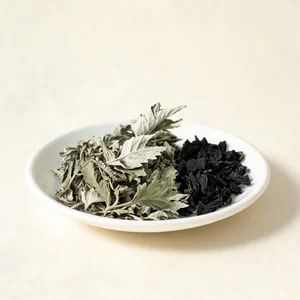
Ai Ye艾叶
Ai Ye is the leaf of mugwort, the aromatic plant most people outside China know as the material of moxibustion. In skin practice the leaf is used far more often as a wash than as…
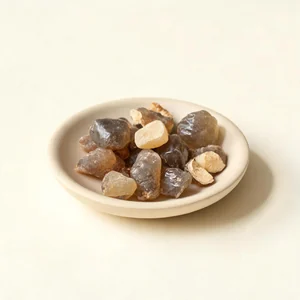
An Xi Xiang安息香
An Xi Xiang is benzoin, the balsam of Southeast Asian Styrax trees, and on a skin page it is a surface medicine rather than an internal one. Its traditional character is aromatic,…
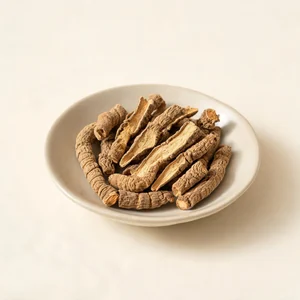
Ba Ji Tian巴戟天
Ba Ji Tian is the root of a climbing shrub of the madder family, acrid and sweet and only slightly warm, and it is counted among the gentlest of the herbs that warm the Kidney.…
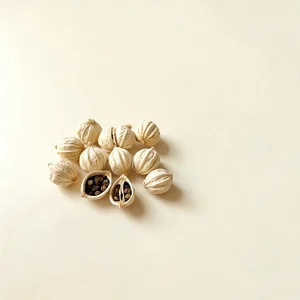
Bai Dou Kou白豆蔻
Bai Dou Kou is the round white cardamom, warm, acrid and strongly aromatic, entering the Lung, Spleen and Stomach. It is a digestive herb before it is a skin herb, and its skin…
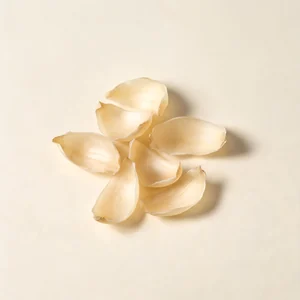
Bai He百合
Bai He is the fleshy scale of the lily bulb, slightly cool, sweet with a faint bitterness, and it enters the Lung and the Heart. In Chinese medicine the Lung governs the skin and…
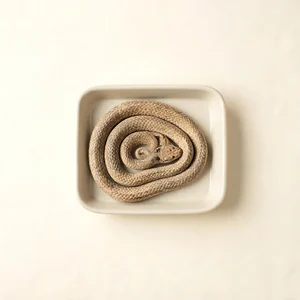
Bai Hua She白花蛇
The dried body of the sharp-nosed pit viper, Bai Hua She is the strongest Wind-dispelling substance in the materia medica. Warm, sweet and salty, it enters the Liver channel and…
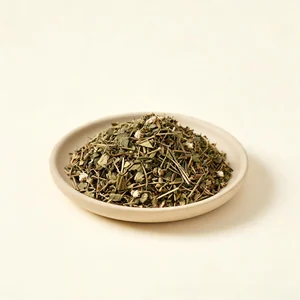
Bai Hua She She Cao白花蛇舌草
A mild herb of very cold nature, Bai Hua She She Cao rests its whole reputation on clearing heat toxin. On the skin that means the angry end of the inflammatory spectrum: boils…
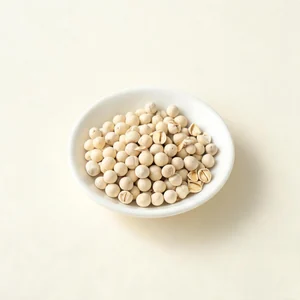
Bai Jie Zi白芥子
The white mustard seed is warm and sharply acrid, and its territory is phlegm that has settled in places ordinary phlegm herbs cannot reach. The old texts call that layer between…
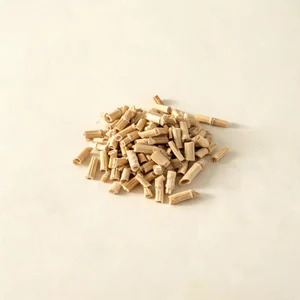
Bai Mao Gen白茅根
Bai Mao Gen is the lalang grass rhizome, a sweet, cold, juicy root that cools the Blood and arrests bleeding without drying the skin. In skin practice it is chosen for the…
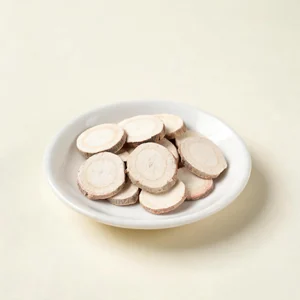
Bai Shao白芍
Bai Shao is the peeled and boiled root of the cultivated peony, cool, sour and slightly bitter. In skin practice it is a builder rather than a clearer. It is chosen when the skin…
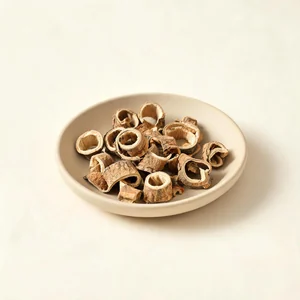
Bai Xian Pi白鲜皮
Bai Xian Pi is a pale root bark from a citrus relative, bitter and cold, with a strong smell that classical writers noticed before anything else about it. Its work in skin…
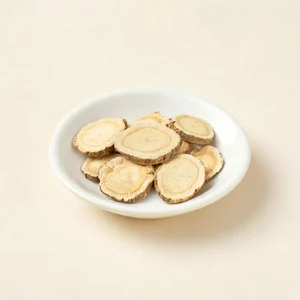
Bai Zhi白芷
The tradition sends this aromatic root to the face. Bai Zhi is warm, pungent and drying, and what it does on the skin is move what has stalled: it disperses the Wind behind a…
Bai Zhu白术
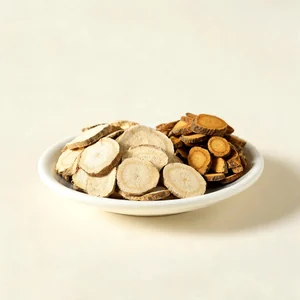
Bai Zhu is the herb this tradition treats as foremost for strengthening the Spleen, and in skin practice it acts on where Dampness is made rather than on the lesion itself. The…
Bai Zi Ren柏子仁
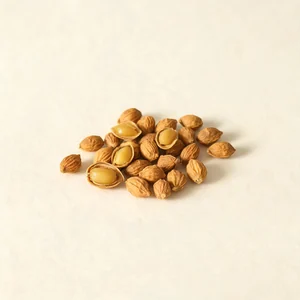
The arborvitae seed is sweet and neutral, it builds Heart Blood and Yin, and it is the mildest of the seeds used to calm the spirit. In skin practice it is chosen for skin that is…
Ban Lan Gen板蓝根
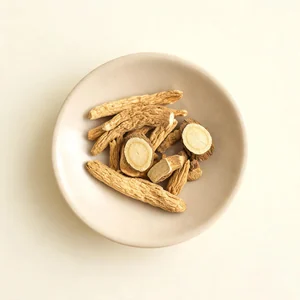
Ban Lan Gen comes from woad, the plant whose leaves yield indigo, and for centuries the root was a by-product of the dye trade. In skin practice its place is narrow and specific:…
Ban Xia半夏
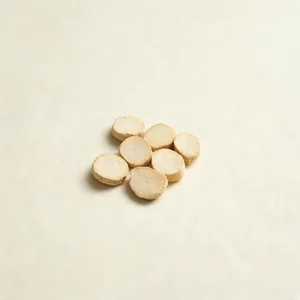
Ban Xia is the herb the phlegm tradition is built around: warm and acrid, entering the Spleen, Stomach and Lungs, drying Dampness and transforming Phlegm. The skin it suits is the…
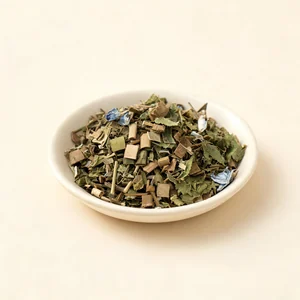
Ban Zhi Lian半枝莲
Ban Zhi Lian is the whole-plant skullcap, cold and bitter with an acrid edge, and it is the member of the genus that skin practice reaches for when heat has thickened into a hard,…
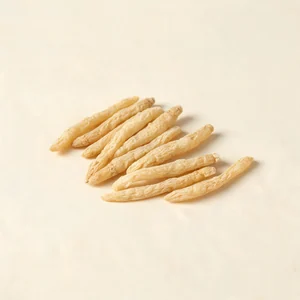
Bei Sha Shen北沙参
The pale root of a coastal umbellifer, sweet, slightly bitter and only a little cool, Bei Sha Shen is a Yin tonic that works within the Lung and the Stomach. Its task is to…
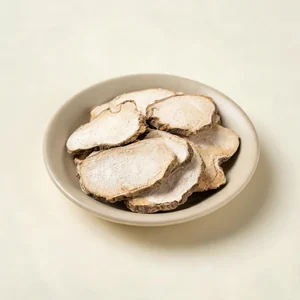
Bi Xie萆薢
Bi Xie is the herb for turbidity, and its skin use follows from that same action. The rhizome drains Dampness downward and restores the separation of clear fluid from waste, so…
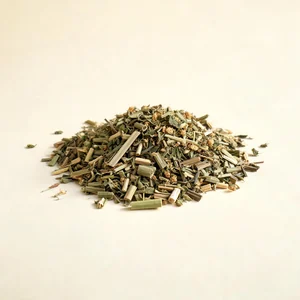
Bian Xu萹蓄
Bian Xu is knotgrass, the low creeping weed with swollen joints that grows on paths, yards and waste ground. In skin practice it is a wash herb before it is anything else, chosen…
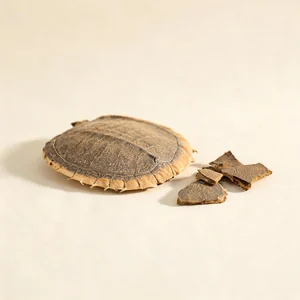
Bie Jia鳖甲
The dorsal shell of the Chinese soft-shelled turtle is a dense, mineral-like material rather than a leaf or root: salty, cool and heavy, and directed to the Liver and Kidney. Its…
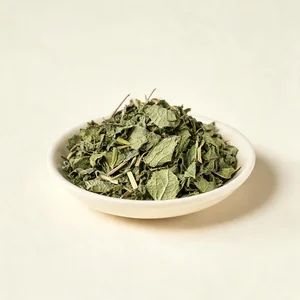
Bo He薄荷
Field mint is the coolest and lightest of the herbs that act at the body's surface. It opens the pores, drives out Wind-Heat and coaxes a rash that has been held down into the…
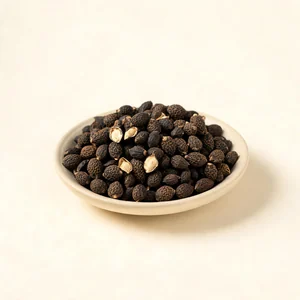
Bu Gu Zhi补骨脂
This small dark legume fruit, warm, acrid and bitter, is used in the tradition to warm the Kidney Yang and secure what is leaking. Its skin work is narrower than its internal…
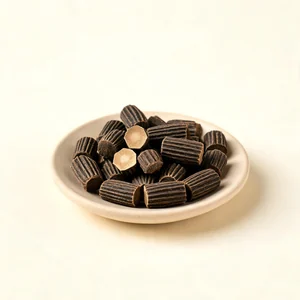
Can Sha蚕沙
The silkworm's dried droppings are the material, and the tradition treats them as a medicine rather than a waste product. Its work is on Wind-Dampness: the itchy, swollen, heavy…
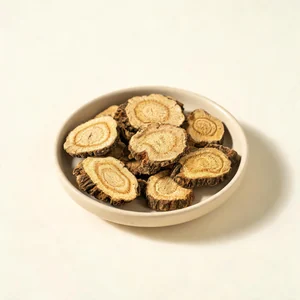
Cang Zhu苍术
Cang Zhu is a strongly aromatic rhizome whose whole character is dryness. It is warm, acrid and bitter, and the tradition uses it to draw moisture out of tissue that has become…
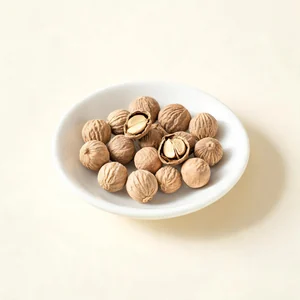
Cao Dou Kou草豆蔻
Cao Dou Kou is the seed of a wild cardamom relative, warm, acrid and strongly aromatic, and it enters the Spleen and Stomach. Its skin relevance is indirect and specific. Where…
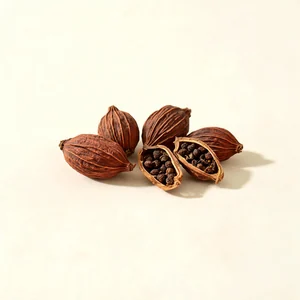
Cao Guo草果
Cao Guo is a kitchen spice in south-western China and one of the most strongly drying of the warm aromatics. Its skin role is narrow but real: when Cold and Dampness have settled…
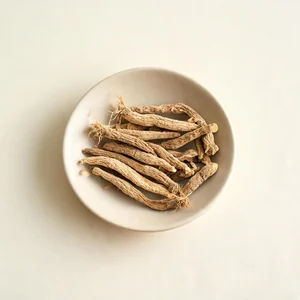
Chai Hu柴胡
Chai Hu is the root that courses the Liver, and its value in skin practice is almost entirely about constraint. It is chosen where the skin reacts to pressure: hives that appear…
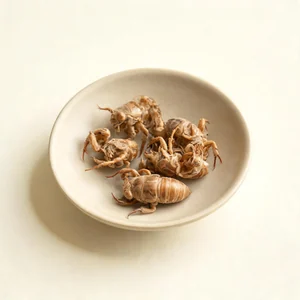
Chan Tui蝉蜕
Chan Tui is the shed shell of a cicada, and the tradition reads its lightness literally: a hollow, airy material that works at the surface, lifting what is stuck there and letting…
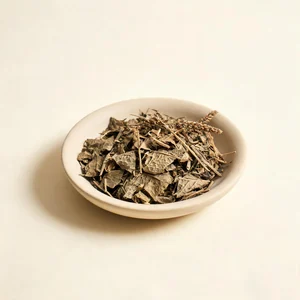
Che Qian Cao车前草
Che Qian Cao is plantain, the broad-leaved weed that grows along paths and in lawns, and the medicine is the whole plant, not its seed. It is cold and sweet rather than bitter. On…
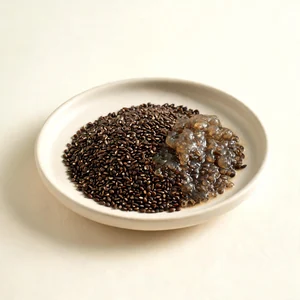
Che Qian Zi车前子
The plantain that thrives in cart ruts and at the roadside gives this small seed, whose work is to open a drainage route. Sweet and cold rather than bitter, it swells into a…
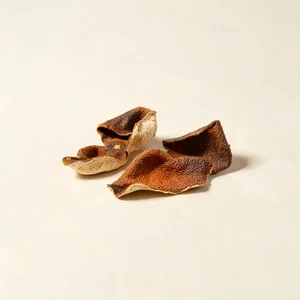
Chen Pi陈皮
Chen Pi is the dried, aged peel of the tangerine, warm, acrid and bitter, entering the Spleen and the Lungs. It is a Qi-regulating herb rather than a skin herb in its own right,…
Chi Shao赤芍
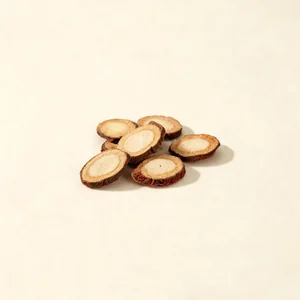
Chi Shao is the red peony root, the cooling and moving half of a pair that is often taught together: Bai Shao nourishes and holds, Chi Shao clears and disperses. In skin practice…
Chong Lou重楼
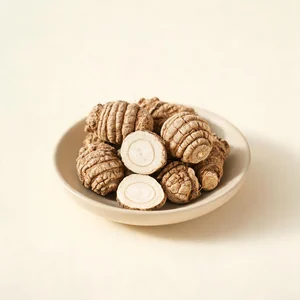
The medicine called Chong Lou is a knobbly rhizome, dug from a slow-growing woodland herb whose single whorl of leaves sits beneath one greenish flower. Few cooling,…
Chuan Bei Mu川贝母
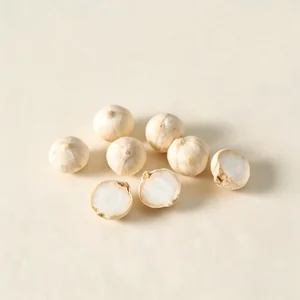
Chuan Bei Mu is the sweet, slightly cool fritillary bulb, the mildest and most moistening of all the Bei Mu bulbs, and its reputation belongs to the dry cough rather than to the…
Chuan Niu Xi川牛膝
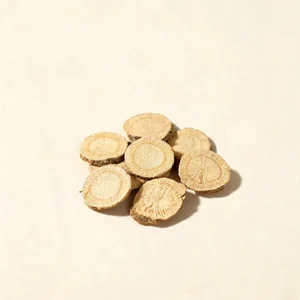
Chuan Niu Xi is the Sichuan root, neutral in temperature and sweet with a bitter edge, entering the Liver and Kidney channels with a pronounced downward direction. Its work is on…
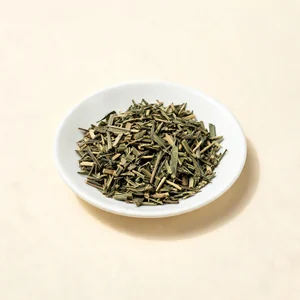
Chuan Xin Lian穿心莲
Chuan Xin Lian is andrographis, one of the bitterest herbs in the materia medica, and its skin work follows from that bitterness: it clears heat, resolves toxin, dries dampness…
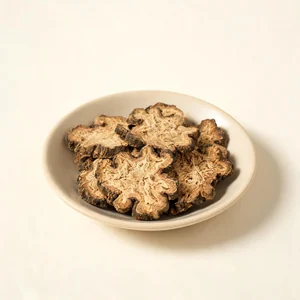
Chuan Xiong川芎
Chuan Xiong is the warm, aromatic rhizome that the tradition uses whenever Blood has ceased to circulate. It moves Qi at the same time as Blood, a double action that earned it the…
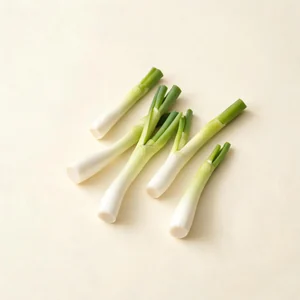
Cong Bai葱白
Cong Bai is the white bulb and stalk of the scallion, warm and pungent, and it is a kitchen food before it is a herb. Its skin use is almost entirely external: the bulb is…
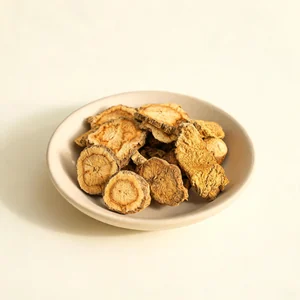
Da Huang大黄
Da Huang is rhubarb root, the most forceful laxative in the Chinese materia medica, and skin practice uses it for heat that has gone deep. The typical setting is a boil, an…
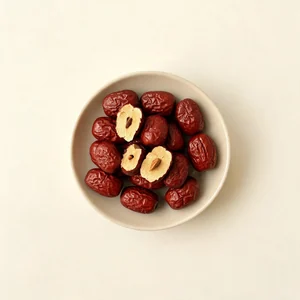
Da Zao大枣
Da Zao is the dried ripe fruit of the jujube tree, a food that also serves as a medicine. Sweet and warm, it acts on the middle burner: strengthening the Spleen and Stomach, which…
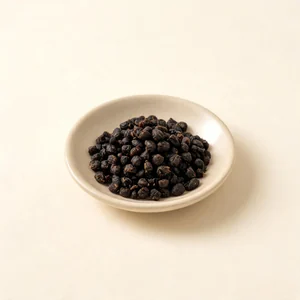
Dan Dou Chi淡豆豉
Dan Dou Chi is black soybean that has been fermented with two herbs, mulberry leaf and sweet wormwood; the processing, not the bean, is what makes it a medicine. It is the mildest…
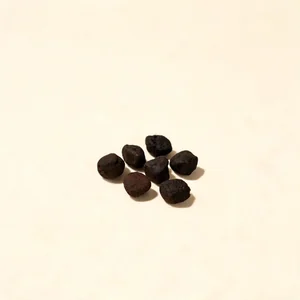
Dan Nan Xing胆南星
Dan Nan Xing is the bile-processed form of Tian Nan Xing, and the processing is the whole point. The raw arisaema tuber is an irritant poison, full of needle-shaped calcium…
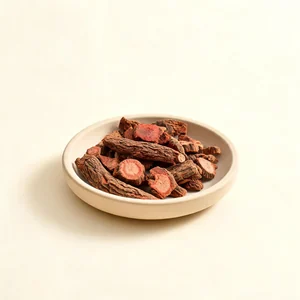
Dan Shen丹参
Dan Shen is the root of a red-rooted sage, and this tradition takes the colour as an emblem of its work on Blood. It cools the Blood and moves it at the same time, which makes it…
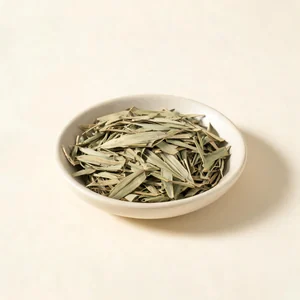
Dan Zhu Ye淡竹叶
Dan Zhu Ye is the leaf of a woodland grass that resembles a young bamboo, and it is the gentlest of the cooling herbs used on skin. Its picture is a hot, restless, thirsty person…
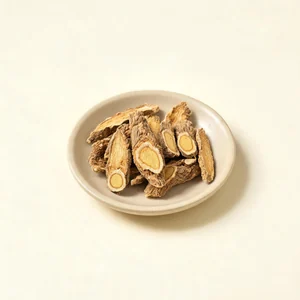
Dang Gui当归
Dang Gui stands at the centre of Blood tonification in this tradition, and it is the herb most often reached for when the skin itself looks underfed. It nourishes the Blood, warms…
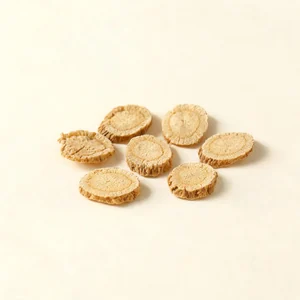
Dang Shen党参
Dang Shen is the root of a twining bellflower, sweet and neutral, and the tradition uses it as a milder, cheaper stand-in for ginseng. Its work is in the middle of the body: it…
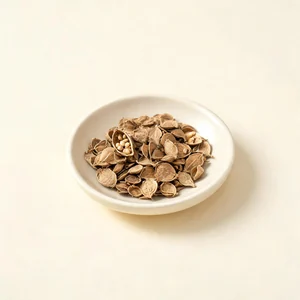
Di Fu Zi地肤子
Di Fu Zi is the small dried fruit of a wayside plant, cold, bitter and slightly acrid, and it is one of the gentler itch herbs in the materia medica. It clears Heat, drains…
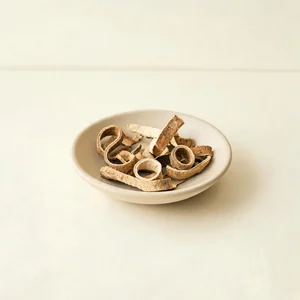
Di Gu Pi地骨皮
The wolfberry shrub gives both the goji fruit and this root bark, and the two have opposite temperaments. The bark is cold and clearing where the fruit is sweet and building, and…
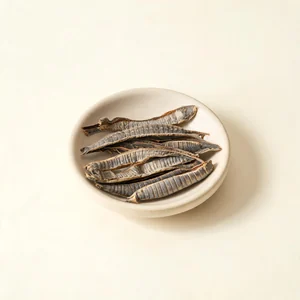
Di Long地龙
Di Long is the dried earthworm of the Chinese materia medica, and its reputation rests on an image: an animal that tunnels through soil is reasoned to tunnel through the channels…
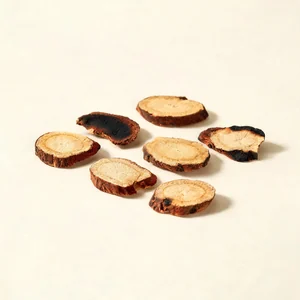
Di Yu地榆
Di Yu is the burn remedy of the Chinese materia medica, and the same properties that earned it that place are what it brings to skin care: a cool, bitter, sour root with a heavy…
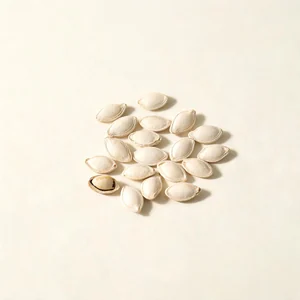
Dong Gua Zi冬瓜子
Winter melon seed is a kitchen herb with one of the oldest cosmetic records in the materia medica: the earliest entry praises it for making the face lustrous, and a later text…
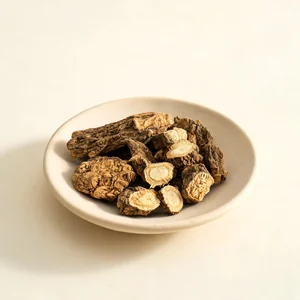
Du Huo独活
Du Huo is a thick, aromatic Angelica root whose place is defined by depth and location: it works on Wind-Cold-Damp that has lodged in the channels of the lower half and in the…
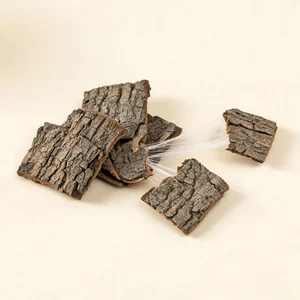
Du Zhong杜仲
Du Zhong is the bark of Eucommia ulmoides, sweet and warm, entering the Liver and Kidney, and its classical work is on the lower back, the sinews and the bones. It is a tonic…
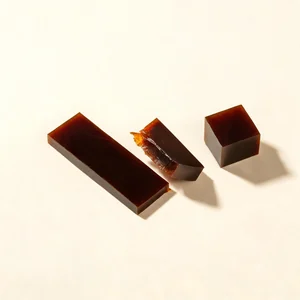
E Jiao阿胶
E Jiao is a gelatin made by boiling and concentrating donkey hide, and it is one of the few animal substances used as a tonic in this tradition. Sweet and neither hot nor cold, it…
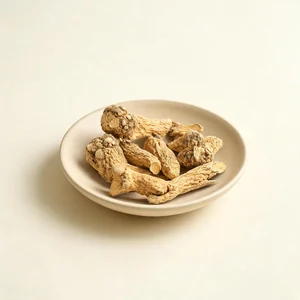
Fang Feng防风
Fang Feng is what the tradition reaches for whenever skin itches and the itch moves. Its name means to stand against Wind, and Wind in the old physiology is whatever shifts, rises…
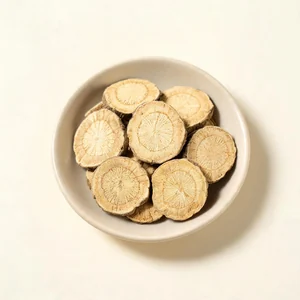
Fang Ji防己
Fang Ji is a climbing vine's root, and what it brings to the skin is a downward draining action. In skin practice it is chosen for damp-heat that sits low: weeping, puffy, itchy…
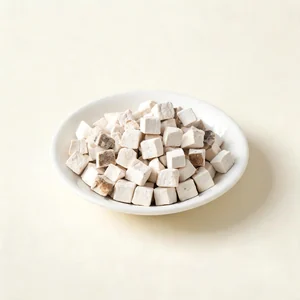
Fu Ling茯苓
Fu Ling is a fungus, the hardened underground mass that grows on pine roots, and it is sweet, bland and neutral, with an affinity for the Heart, Lungs, Spleen and Kidneys. What it…
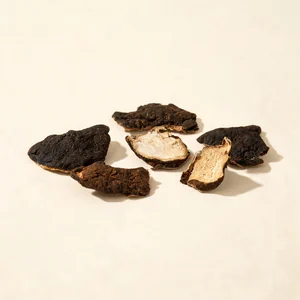
Fu Ling Pi茯苓皮
Fu Ling Pi is the dark outer skin of the Poria fungus, separated from the white interior that most formulas use. The tradition gives the peel one special territory: water that has…
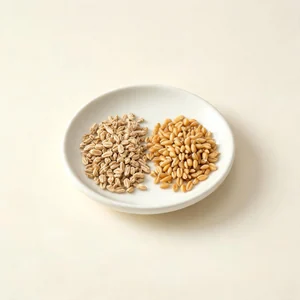
Fu Xiao Mai浮小麦
Fu Xiao Mai is the light, shrivelled wheat grain that floats when the harvested crop is winnowed, and its whole medicinal identity is the contrast with the plump grain beside it.…
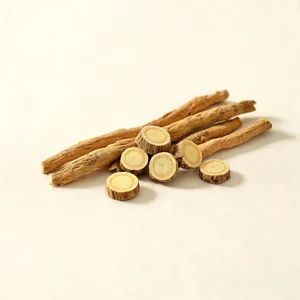
Gan Cao甘草
Gan Cao is the great reconciler of this materia medica, and in skin practice part of what it offers is indirect. The raw root clears heat and resolves toxin, which makes it useful…
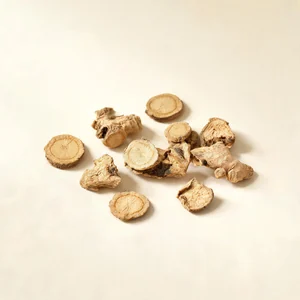
Gan Jiang干姜
Gan Jiang is dried ginger, hotter and drier than the fresh root and aimed at the interior rather than the surface. In skin practice its job is to bring warmth back to tissue that…
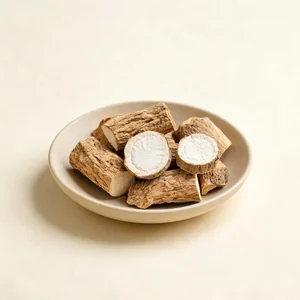
Ge Gen葛根
Ge Gen is the root of the kudzu vine and one of the few herbs in the materia medica that is also a food. Its skin work follows from a single idea: it moves things outward and…
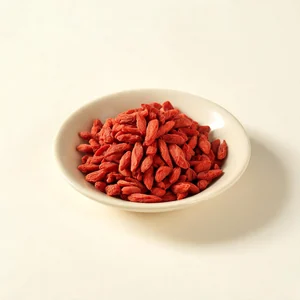
Gou Qi Zi枸杞子
The goji berry carries a plainer role in skin practice than its reputation in the eye and fertility formulas suggests. Its work on the skin is to rebuild the Yin and Blood that…
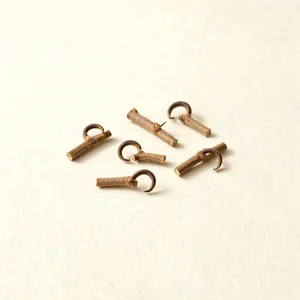
Gou Teng钩藤
Gou Teng is the hook-bearing stem of the gambir vine, a sweet and cooling herb where most of the Wind-settling group are bitter and cold, and the tradition uses it to calm…
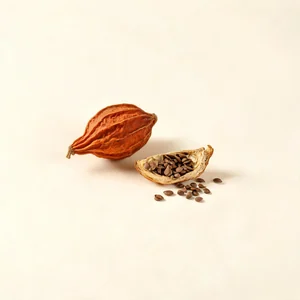
Gua Lou瓜蒌
Gua Lou is the ripe fruit of the trichosanthes vine: cold, sweet and faintly bitter, and far narrower in skin practice than its fame in the chest. What it offers the surface is…
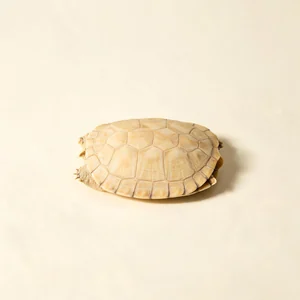
Gui Ban龟板
Gui Ban is the flat lower shell of the Chinese pond turtle, a dense animal material that is cold, salty and sweet and that enters the Liver, Heart and Kidney. Its work is on the…
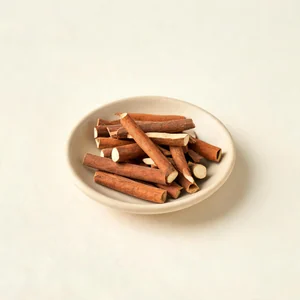
Gui Zhi桂枝
Gui Zhi is the slender young shoot of the cinnamon tree, warm and sweet-acrid, and it enters the Heart, Lung and Bladder. Its skin work follows from warmth and movement: it…
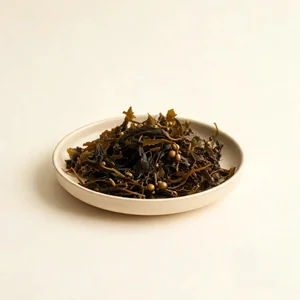
Hai Zao海藻
Hai Zao is a brown seaweed, salty and cold, and saltiness is the whole basis of its skin reputation: salt, in this framework, loosens whatever has set hard, so the herb is applied…
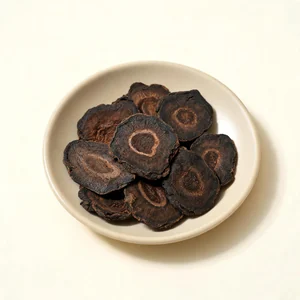
He Shou Wu何首乌
He Shou Wu is a root whose two preparations are two different medicines. The prepared tuber, steamed repeatedly with black bean juice, is a Blood and Essence tonic, and its skin…
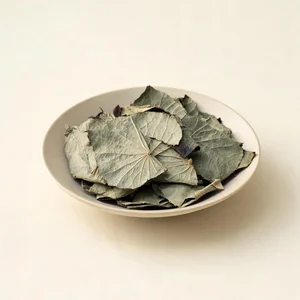
He Ye荷叶
He Ye is the dried leaf of the sacred lotus, a bitter, neutral, food-grade herb that the tradition gives two jobs on the skin. The first is to clear Summer-Heat and the Dampness…
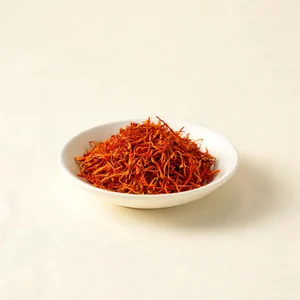
Hong Hua红花
Hong Hua is the dried flower of a thistle-like plant, and it is the warm, moving counterpart to the peach kernel. Acrid and warm, it enters the Heart and Liver, where the…
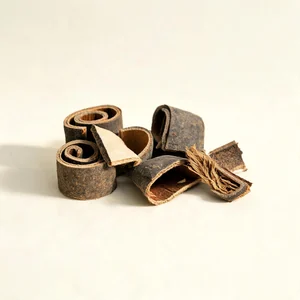
Hou Po厚朴
Hou Po is the bark of Magnolia officinalis, bitter and acrid, warm, and one of the strongest drying and descending herbs in the materia medica. Classically it works on dampness…
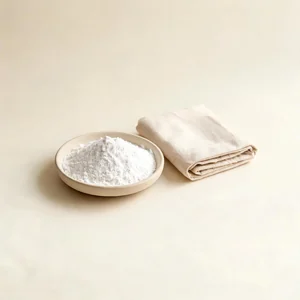
Hua Shi滑石
Hua Shi is talc, a soft pale mineral that is ground and levigated into an impalpable powder. In skin practice it is a dusting powder before it is anything else: it takes up…
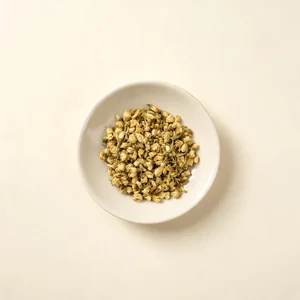
Huai Hua槐花
Huai Hua is the flower and bud of the Chinese scholar tree, bitter and slightly cool, and its first work is on blood that heat has made reckless. On the skin that means the small…
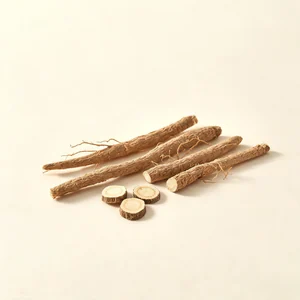
Huai Niu Xi怀牛膝
Huai Niu Xi is a neutral root that moves Blood and carries it downward, and in skin practice that downward direction is the whole point. It is chosen when the problem sits below…
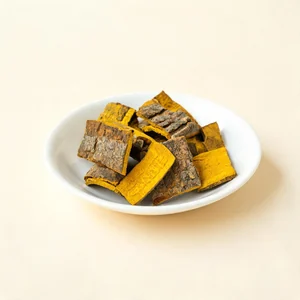
Huang Bo黄柏
The medicine is the yellow bark of Phellodendron chinense, and in skin practice its work is concentrated on the lower half of the body. It drains damp-heat that has settled into…
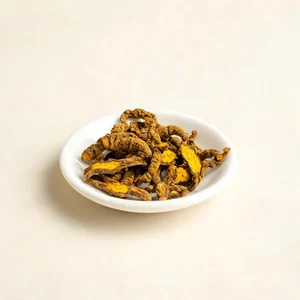
Huang Lian黄连
Huang Lian is the most intensely bitter and cold rhizome in the Chinese materia medica, and on the skin it is used where fire and dampness have produced a lesion that is red, hot,…
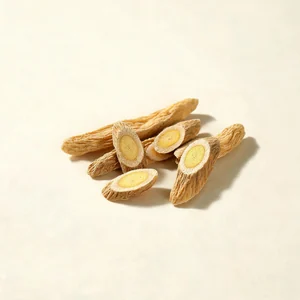
Huang Qi黄芪
Huang Qi is the great Qi tonic, and in skin practice it is the herb for tissue that will not repair. It strengthens the Spleen and Lung, firms the defensive layer that keeps the…
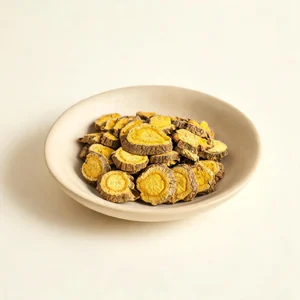
Huang Qin黄芩
Huang Qin is one of the three great bitter-cold herbs of Chinese medicine and the one most weighted toward the upper body and the skin. Its job is to drain Heat that has combined…
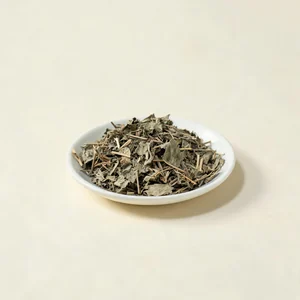
Huo Xiang藿香
Huo Xiang is the patchouli leaf, and its whole character is aromatic warmth. The tradition uses it to lift and dry turbid Dampness, the heavy, cloudy, stale quality that settles…
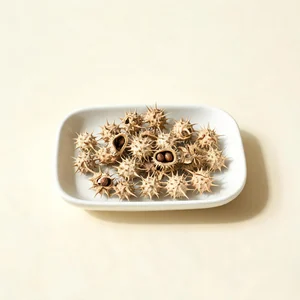
Ji Li蒺藜
Ji Li is the fruit of puncture vine, a low spiny plant of roadsides and poor ground, and in skin practice it is a Wind herb. Its territory is itch that moves: weals that rise…
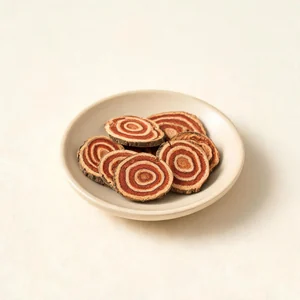
Ji Xue Teng鸡血藤
Ji Xue Teng is the woody stem of a climbing legume from southern China, and it is unusual in doing two opposite things: it frees Blood that has stalled and it builds Blood that is…
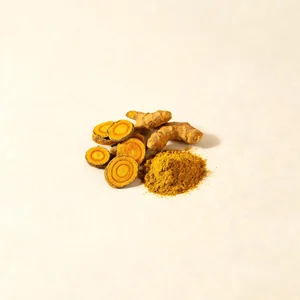
Jiang Huang姜黄
Jiang Huang is the yellow rhizome of turmeric, warm, acrid and bitter, classed with the medicines that break Blood stasis, not merely those that move it. On the skin that means…
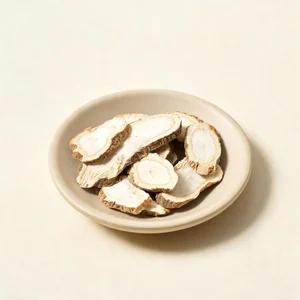
Jie Geng桔梗
Jie Geng is a Lung herb whose tendency is to open and lift, not to settle. It is neutral, so it can be added to a hot formula or a cold one without tipping the balance, and its…
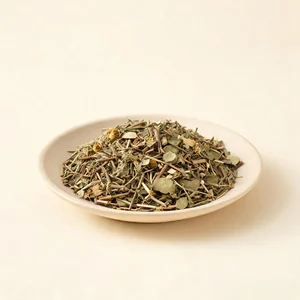
Jin Qian Cao金钱草
Jin Qian Cao is a creeping whole plant, cool and sweet with a salty and bland edge, and its modern reputation rests on stones. The older record is different and matters on this…
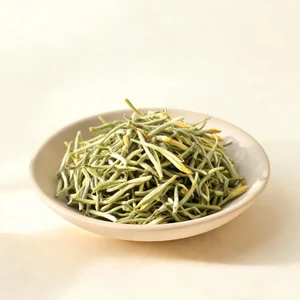
Jin Yin Hua金银花
The medicine is the honeysuckle bud, gathered while still closed. It is unusual in being both a skin remedy and an ordinary food, and it clears heat toxin while dispersing…
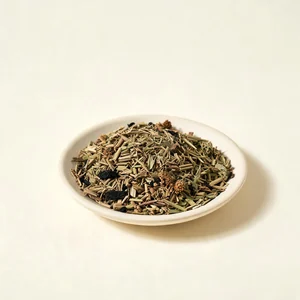
Jing Jie荆芥
Jing Jie belongs to the mild end of the warming surface herbs, and nearly everything it offers the skin follows from a single premise: a rash that has not finished coming out is…
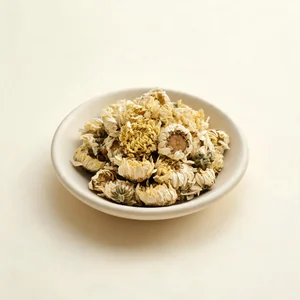
Ju Hua菊花
Ju Hua is the garden chrysanthemum, the flower most people meet first as a tea. It is light, sweet-bitter and only slightly cool, and in skin practice its role is modest but…
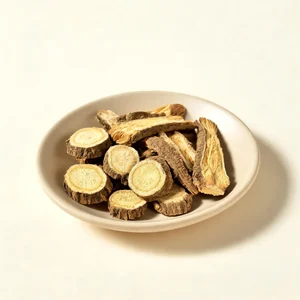
Ku Shen苦参
Ku Shen is the most intensely bitter and drying root in the bitter-cold group, and the one skin practice reaches for when an eruption is wet, red and maddening to scratch. Its…
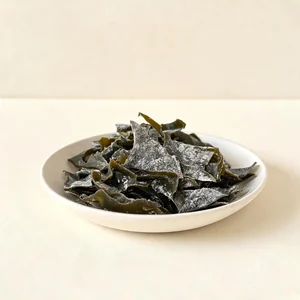
Kun Bu昆布
Kun Bu is kelp, a cold, salty seaweed that the tradition describes as softening hardness and dissipating nodules. Its skin application follows directly from that phrase: it is…
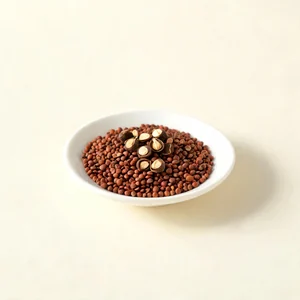
Lai Fu Zi莱菔子
The seed of the common radish has one defining direction: downward. In the digestive tradition it clears food left sitting in the stomach, releases distension and moves gas and…
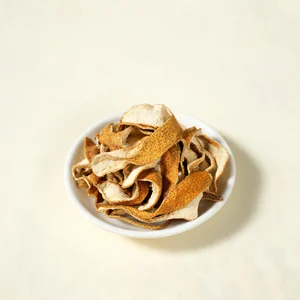
Li Pi梨皮
Li Pi is the peel of the Asian pear, cool in temperature and sweet with a mild astringency, and it is a food before it is a medicine. Its skin record is small and mostly external:…
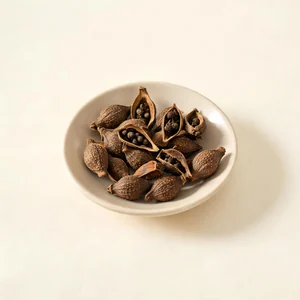
Lian Qiao连翘
Lian Qiao is the dried capsule of the weeping forsythia, a light, bitter and slightly cool fruit that clears heat toxin and breaks up the swollen, hard lumps that heat leaves…
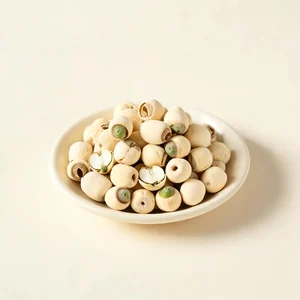
Lian Zi莲子
Lian Zi is the dried seed of the sacred lotus, neutral in temperature, sweet and slightly astringent, and it enters the Spleen, Kidney and Heart. It is a food as much as a…
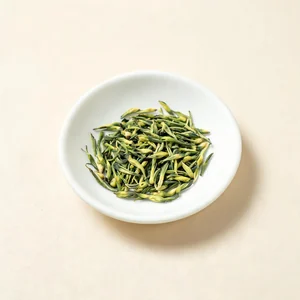
Lian Zi Xin莲子心
Lian Zi Xin is the small green embryo inside the lotus seed, and it is the bitterest part of a plant that is otherwise sweet and food-like. In the tradition it clears Fire from…
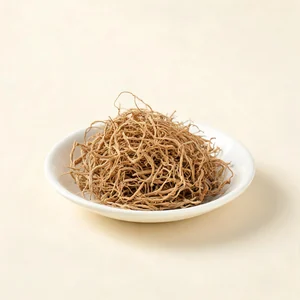
Long Dan Cao龙胆草
Long Dan Cao is the bitterest and coldest root in ordinary use, and its skin territory is the lower body and the channel it enters. It drains Liver and Gallbladder fire and dries…
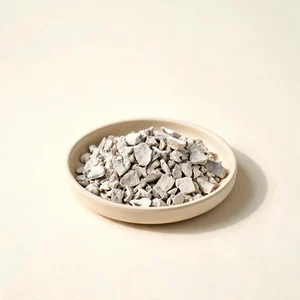
Long Gu龙骨
Long Gu is fossilised mammalian bone, and on the skin it acts as a drying, settling material rather than as a systemic tonic. Ground to a fine powder and dusted on, it takes up…
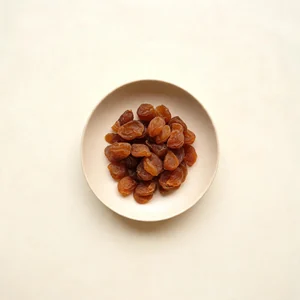
Long Yan Rou龙眼肉
Long Yan Rou is a sweet, warm fruit that builds Blood from the Spleen side, and in skin practice it is used where the surface looks underfed rather than inflamed. The picture is a…
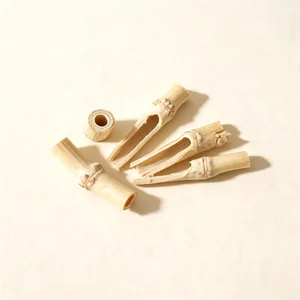
Lu Gen芦根
Lu Gen is the pale, hollow rhizome of the common reed, sweet and cold, and its skin role comes from two directions. The first is the face: heat in the Stomach and Lung rises to…
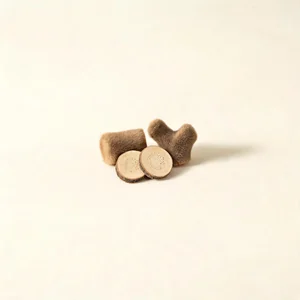
Lu Rong鹿茸
Lu Rong is the velvet-covered antler of a male deer, taken while it is young and soft, before it hardens into bone. It is warm, with a sweet and salty taste, and its work goes…
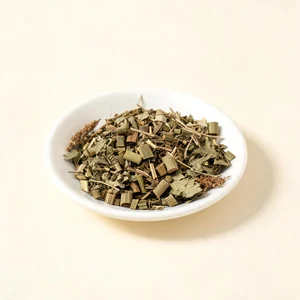
Ma Bian Cao马鞭草
The verbena herb, Ma Bian Cao in Chinese, is a slender wayside plant whose long flower spike bends like a whip. Chinese practice turns to it where heat and stagnation sit together…
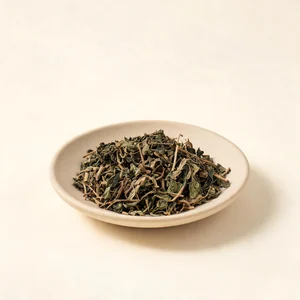
Ma Chi Xian马齿苋
Ma Chi Xian is the purslane weed, a fleshy edible plant that doubles as a cooling medicine; on the skin the kitchen and the clinic overlap. It is cold and sour, clears heat toxin,…
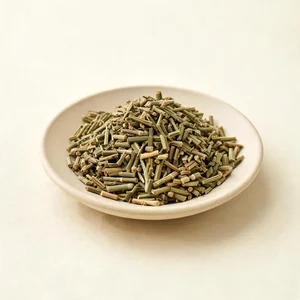
Ma Huang麻黄
Ma Huang is the ephedra stem, the strongest of the herbs that release the exterior. Its skin territory is narrow and specific: pale or light-red wheals that rise when the skin is…
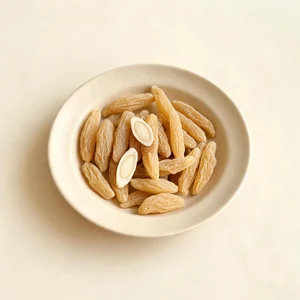
Mai Dong麦冬
Mai Dong is the mildest of the moistening herbs, and its skin work is exactly that: it supplies the fluids that keep skin supple. When Yin and the body fluids run low, from fever,…
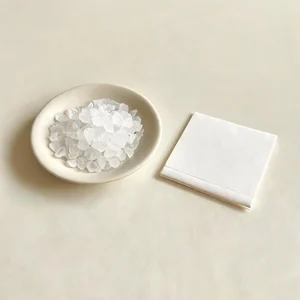
Mang Xiao芒硝
Mang Xiao is Glauber's salt, refined hydrated sodium sulphate, and it behaves like a salt rather than like a plant. On the skin it is used externally, as a cooled solution or a…
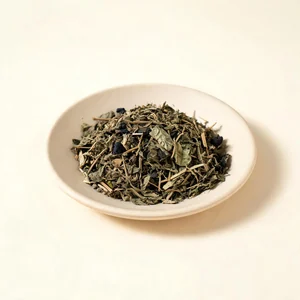
Mo Han Lian墨旱莲
Mo Han Lian is a cold, sweet and sour aerial herb, and its reputation in skin practice rests on two quite different jobs. The first is corrective: when Heat has entered the Blood…
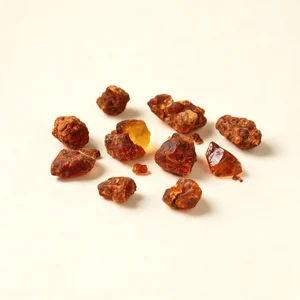
Mo Yao没药
Mo Yao is myrrh, the gum a wounded tree exudes to close itself, and the tradition reasons from the material: it is used where tissue has set, clotted or refused to mend. On the…
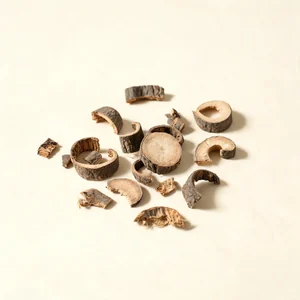
Mu Dan Pi牡丹皮
Mu Dan Pi is the bark of the tree peony root, and it is the herb the tradition reaches for when heat has gone down into the Blood and the skin makes that visible. It cools that…
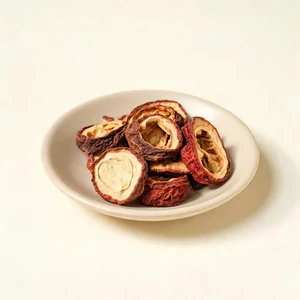
Mu Gua木瓜
Mu Gua is the hard, intensely sour fruit of a thorny Chinese quince, and in skin practice it works on the lower half of the body. Its picture is a leg that is heavy, puffy and…
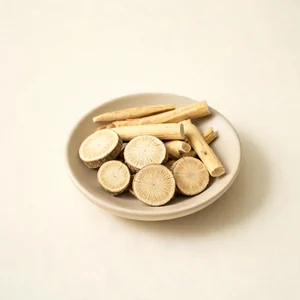
Mu Tong木通
Mu Tong is the woody stem of a vine, and its work is downward and outward by way of the urine. In skin practice it is never the leading herb. It is added when a moist, eroded,…
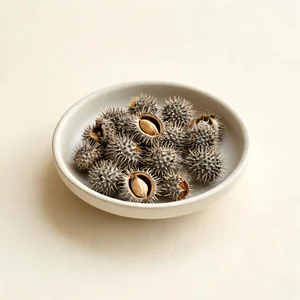
Niu Bang Zi牛蒡子
Niu Bang Zi is the seed of burdock, the plant whose long root is also a table vegetable. In skin work it belongs to eruptions that have not completed: a rash that showed in…
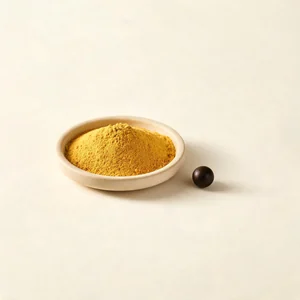
Niu Huang牛黄
Niu Huang is a cattle gallstone, and the tradition's most valued material for heat that has closed the orifices of the Heart. Its skin role is narrower than its fame: it is used…
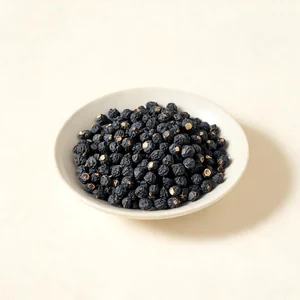
Nu Zhen Zi女贞子
Nu Zhen Zi is the small black fruit of the glossy privet, a cool, sweet and bitter Yin tonic that enters the Liver and Kidney. It is the mildest of the Yin tonics in common use:…
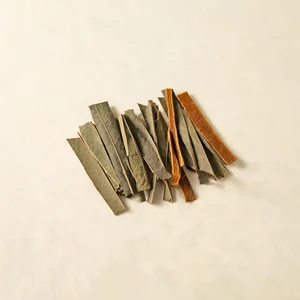
Pi Pa Ye枇杷叶
Pi Pa Ye comes from the loquat tree, a bitter leaf that is slightly cool, and it has one clear skin application: the face and the scalp where heat from the Lung and Stomach rises.…
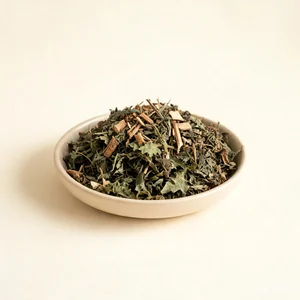
Pu Gong Ying蒲公英
Pu Gong Ying is dandelion, a spring vegetable and a cold, bitter, faintly sweet medicine. Skin practice brings it out when heat has gathered into a lump or an infection: a boil,…
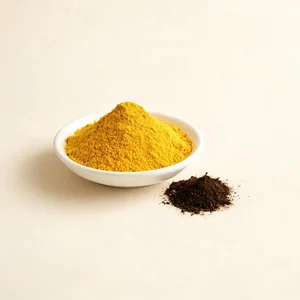
Pu Huang蒲黄
Cattail pollen, Pu Huang, is a fine yellow dust with an unusual double action: it holds blood inside the vessels and it disperses blood that has already leaked and clotted. On the…
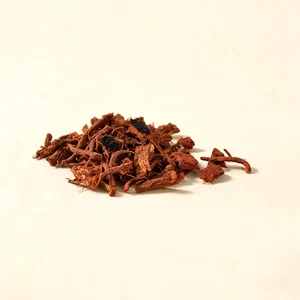
Qian Cao茜草
Qian Cao is the root of madder, a plant that dyed wool and cloth red long before it was a medicine, and that colour was read as a signature of a Blood herb. Its character is…
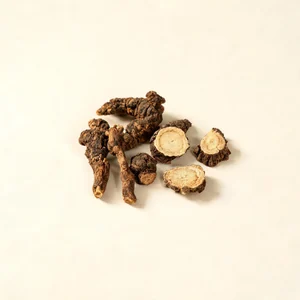
Qiang Huo羌活
Qiang Huo is the root and rhizome of a high-altitude umbellifer, warm and acrid with a bitter edge, and it enters the Bladder channel that runs up the back and over the head.…
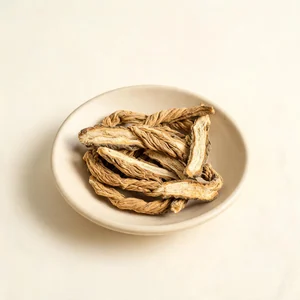
Qin Jiao秦艽
Qin Jiao is the gentle member of the Wind-Dampness group, and that is exactly why it turns up in skin practice. Most herbs that move painful obstruction are warm and drying, which…
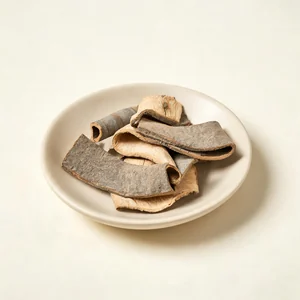
Qin Pi秦皮
Qin Pi is ash bark, and its character comes from a combination few herbs carry: bitter and cold enough to clear Heat and Dampness, astringent enough to tighten tissue that has…
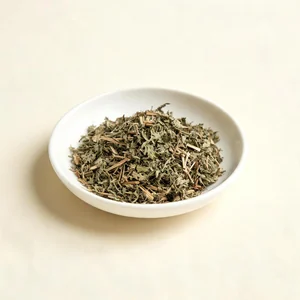
Qing Hao青蒿
Qing Hao is the herb of heat that has gone in deep. Its work is not at the surface of the skin but underneath it, in the Yin layer and the Blood, where heat smoulders and produces…
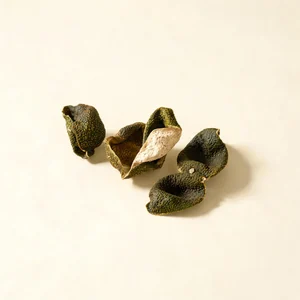
Qing Pi青皮
Qing Pi comes from tangerines picked green and unripe; it is warm, bitter and acrid, and it enters the Liver, Gallbladder and Stomach. Its skin role is indirect but well defined.…
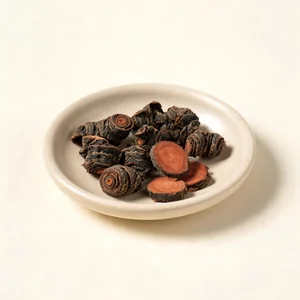
Quan Shen拳参
Quan Shen is the twisted bistort rhizome, cool, bitter and astringent. It does two things at once that most herbs do separately: it clears heat toxin and it binds and tightens…
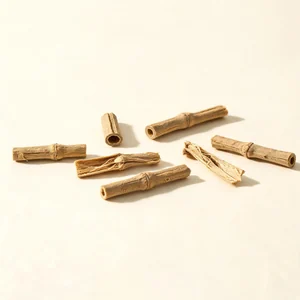
Ren Dong Teng忍冬藤
Ren Dong Teng is honeysuckle stem, from the same plant that yields Jin Yin Hua, and it is used where heat toxin has settled into the skin or a limb. It clears the heat, resolves…
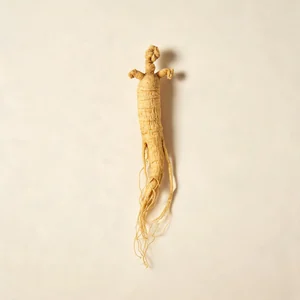
Ren Shen人参
Ren Shen is the great Qi tonic of the tradition, and on a skin page it is a supporting herb with a narrow brief. Its work is to restore Qi where Qi has run out: after a long…
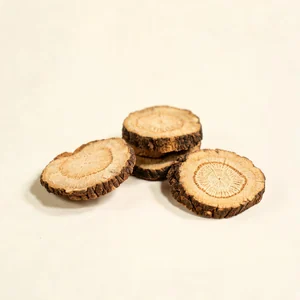
Rou Cong Rong肉苁蓉
A thick, fleshy stem from a desert plant that parasitises shrub roots, Rou Cong Rong is unusual among warming tonics in that it moistens instead of drying. It acts on the Kidney,…
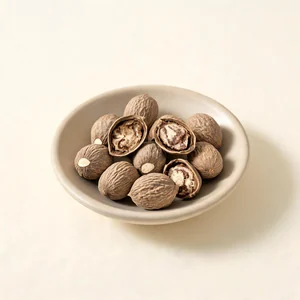
Rou Dou Kou肉豆蔻
Rou Dou Kou is nutmeg, a warm, acrid, astringent seed that is a kitchen spice as much as a medicine. Its skin role is narrow and it is easily misused. It is chosen when the skin…
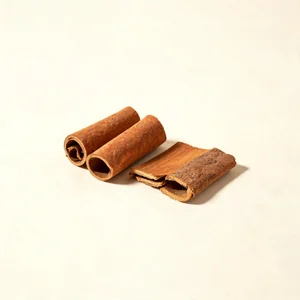
Rou Gui肉桂
The same tree yields Gui Zhi from its young twigs and Rou Gui from its bark, and the two work at different depths: the twig releases the surface, the bark warms the interior. On…
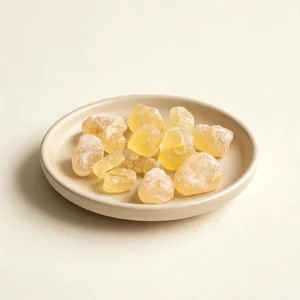
Ru Xiang乳香
Ru Xiang is the resin of a desert tree of the frankincense family, and on the skin it is a mover and a repairer rather than a drier. It is chosen where tissue is hard, dusky and…
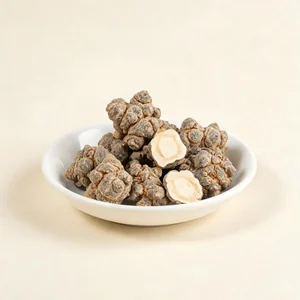
San Qi三七
Notoginseng is the trauma root. It stops bleeding and moves the blood at the same time, which is why a bruise that stays hard and dark, a swelling after a blow, and a wound that…
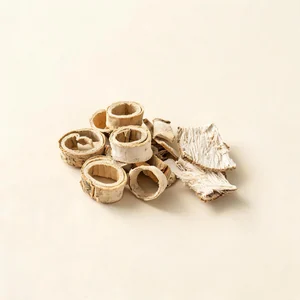
Sang Bai Pi桑白皮
Mulberry root bark is cold and sweet rather than bitter, which makes it the mildest of the herbs that act on the Lung by draining it. Two jobs follow from that. Heat trapped in…
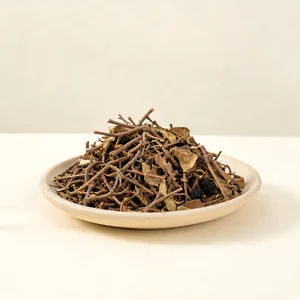
Sang Ji Sheng桑寄生
Sang Ji Sheng is a mistletoe of the mulberry, a hemi-parasitic shrub whose nature is neutral and whose bittersweet taste leads it into the Liver and Kidney. Its work is twofold:…
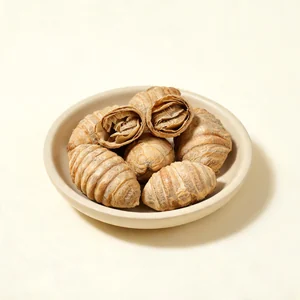
Sang Piao Xiao桑螵蛸
The dried egg-case of a praying mantis is one of the few animal articles the Chinese materia medica classes as neutral and non-toxic, sweet and salty in taste and entering the…
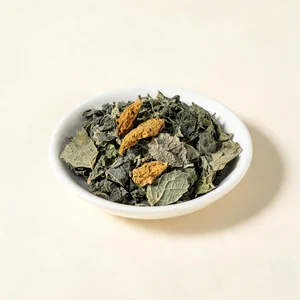
Sang Ye桑叶
Sang Ye is the frost-touched leaf of the white mulberry, cold, sweet and slightly bitter, and it is one of the gentlest herbs in the cooling group. Its work on the skin is the…
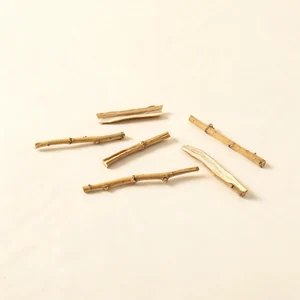
Sang Zhi桑枝
Sang Zhi is the young twig of the white mulberry, neither warm nor cool, with a bitter taste, and it enters the Liver channel. Its work is on the limbs and the channels rather…
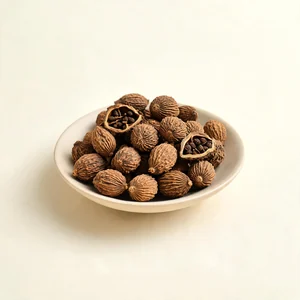
Sha Ren砂仁
Sha Ren is the aromatic fruit of a ginger-family plant, a spice in southern Chinese cooking and one of the gentlest herbs that transform Dampness. On a skin page it is an…
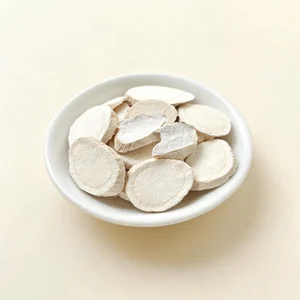
Shan Yao山药
Chinese yam is the gentlest herb on a skin page: a food that builds Qi and nourishes the fluids that keep the skin supple. Its classical warrant is a single line, that it moistens…
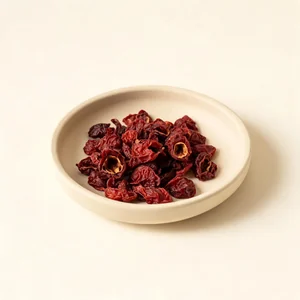
Shan Zhu Yu山茱萸
Shan Zhu Yu is the pitted flesh of a small dark red fruit, sour and slightly astringent with a gentle warmth, and it belongs to the dry and depleted end of skin practice. It…
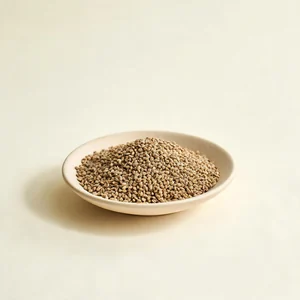
She Chuang Zi蛇床子
She Chuang Zi is a small aromatic fruit of the carrot family, warm, acrid and bitter, and its main work is on the skin and the genital area rather than on the interior. It dries…
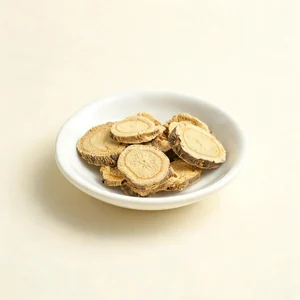
She Gan射干
She Gan is a cold, bitter rhizome of an iris relative, and it is a throat herb before it is anything else: a swollen, red, painful throat with thick phlegm, hoarseness and a voice…
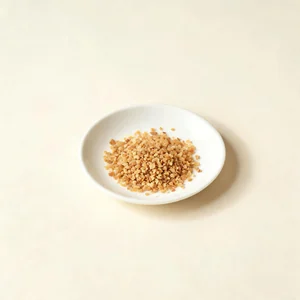
She Xiang麝香
She Xiang is the secretion of the male musk deer and the most penetrating aromatic in the materia medica. Skin practice borrows two of its actions rather than its emergency use.…
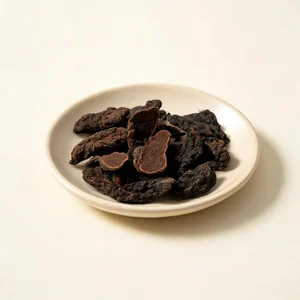
Sheng Di Huang生地黄
Sheng Di Huang is the raw, cold root of rehmannia, and in skin practice it is used for heat that has gone deep enough to change the Blood rather than the surface. The picture is a…
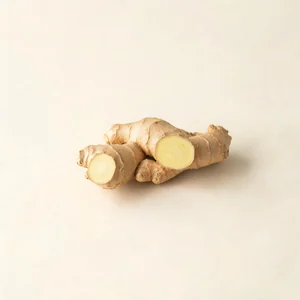
Sheng Jiang生姜
Sheng Jiang is the fresh rhizome of the ginger plant, and in the Chinese materia medica it is as much food as medicine. Its skin use is the logical extension of its warming,…
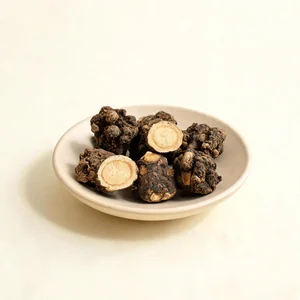
Sheng Ma升麻
Sheng Ma is a light, slightly cool rhizome from a buttercup-family plant, and in skin practice it does two jobs. The first is to finish an eruption: when a rash has come out in a…
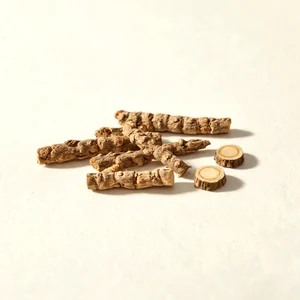
Shi Chang Pu石菖蒲
Shi Chang Pu is the slender aromatic rhizome of a rush that grows on stones in running water, and its nature is written into that setting: warm, pungent, bitter, intensely…
Shi Gao石膏
Shi Gao is gypsum, the soft fibrous mineral that the tradition rates as its strongest cooling material. Its place is heat that has settled deep and filled the body: a fever that…
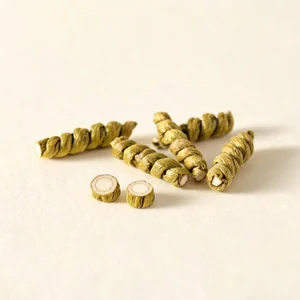
Shi Hu石斛
Shi Hu is the dried stem of an epiphytic orchid, sweet, slightly cool and unusually rich in mucilage. Its work is to replenish the fluids and the Yin, and on the skin that…
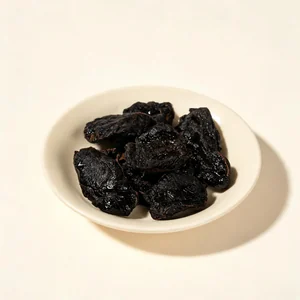
Shu Di Huang熟地黄
Shu Di Huang is rehmannia root taken through repeated steaming with rice wine until it is black, soft and sticky, and in that state it becomes the great builder of Blood and…
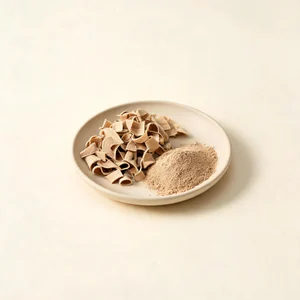
Shui Niu Jiao水牛角
Water buffalo horn, known in Chinese as Shui Niu Jiao, is a dense animal material reserved for heat that has passed beyond the surface and entered the Blood. On the skin that…
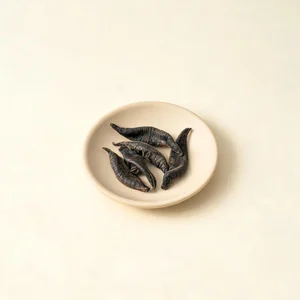
Shui Zhi水蛭
Shui Zhi is the dried medicinal leech, and it is the strongest stasis-breaking material in the materia medica. Where the plant movers of Blood are used for sluggish circulation,…
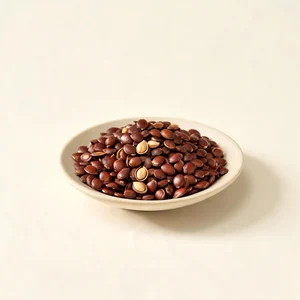
Suan Zao Ren酸枣仁
Suan Zao Ren is the seed a practitioner reaches for when the skin is worse for lack of sleep. Its work is to nourish Heart and Liver Blood and to settle a spirit that will not…
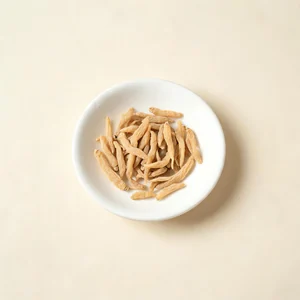
Tai Zi Shen太子参
Tai Zi Shen is the small tuber of Pseudostellaria heterophylla, sweet and slightly bitter, neutral, and one of the mildest tonics in the materia medica. It supplements Qi,…
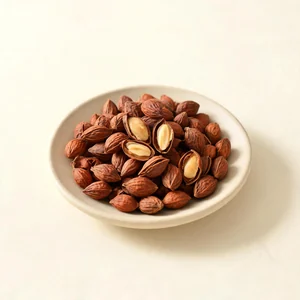
Tao Ren桃仁
Peach kernel is the seed within the stone of the peach, and it is the gentlest of the strong Blood movers. Bitter, slightly sweet and neutral in temperature, it enters the Heart…
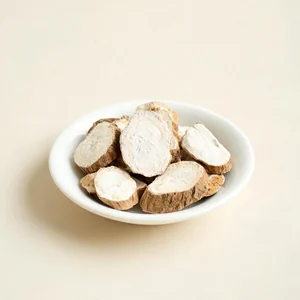
Tian Hua Fen天花粉
The starchy white root of the vine that also yields the Gua Lou fruit, Tian Hua Fen has a narrow but definite place on the skin. It clears heat, reduces swelling and moves pus,…
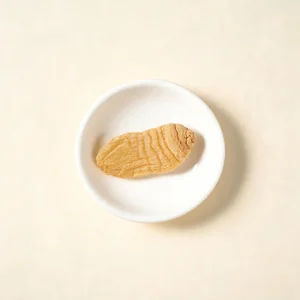
Tian Ma天麻
The tuber comes from a leafless orchid, and its work is with movement that has gone wrong: tremor, twitching, cramp, the crawling itch that shifts from place to place, and the…
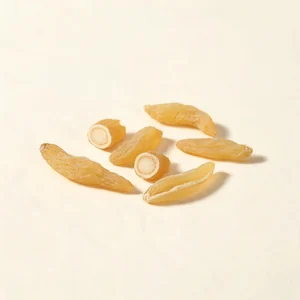
Tian Men Dong天门冬
Tian Men Dong is the fleshy tuber of a climbing asparagus, cold in nature and sweet with a bitter edge, entering the Lung and Kidney. Its work is to restore the moistening reserve…
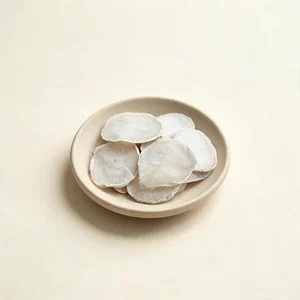
Tian Nan Xing天南星
Tian Nan Xing is the arum tuber that the phlegm tradition keeps for the stubborn end of its range. Warm, bitter and acrid, it dries Dampness hard rather than gently, so what it…
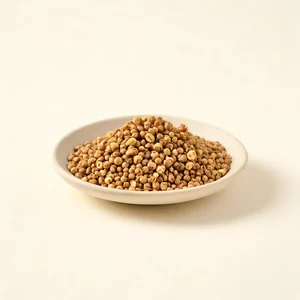
Ting Li Zi葶苈子
Small, flat and brown, this seed comes from weeds of the mustard family and is cold, pungent and bitter. Of all the herbs that drain the Lung it acts most forcefully, and what it…
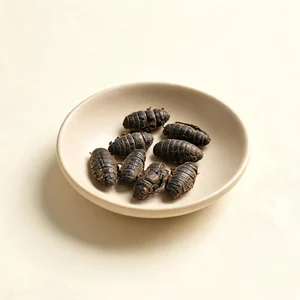
Tu Bie Chong土鳖虫
The drug is the dried body of the female ground beetle: salty, cold, and directed at the Liver and at the Blood level. It breaks blood that has stopped and hardened and it mends…
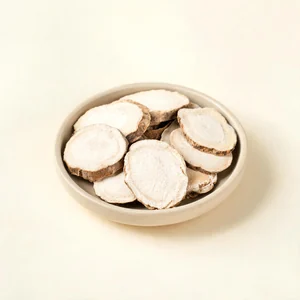
Tu Fu Ling土茯苓
Tu Fu Ling is the starchy rhizome of a climbing smilax, neutral in temperature and sweet and bland in taste. Its work is to resolve damp-heat toxin that has become chronic and…
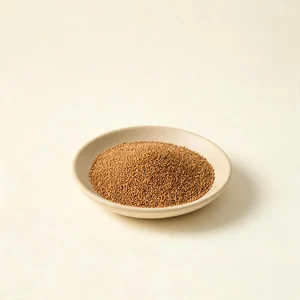
Tu Si Zi菟丝子
Tu Si Zi is the seed of dodder, a leafless parasitic vine, and the tradition classifies it as a mild tonic of the Kidney and Liver. It is sweet and faintly acrid, neither hot nor…
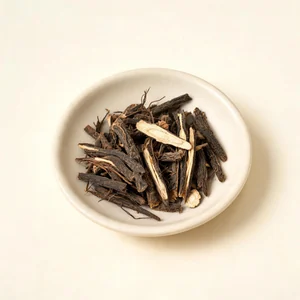
Wei Ling Xian威灵仙
Wei Ling Xian is the most forceful of the Wind-Dampness roots, warm and acrid, and its contribution to skin practice is about movement rather than inflammation. It is chosen where…
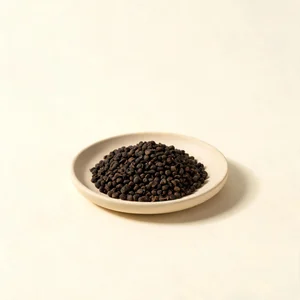
Wu Ling Zhi五灵脂
Wu Ling Zhi is the dried faeces of a cliff-dwelling flying squirrel, and the tradition treats it as a Blood medicine rather than as an excreta. Its work is to set stuck Blood…
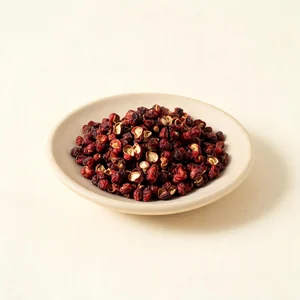
Wu Wei Zi五味子
Wu Wei Zi is the sour, warm berry that holds things in, and its skin use follows from that single quality. The tradition gives it the job of stopping what leaks: sweat that runs…
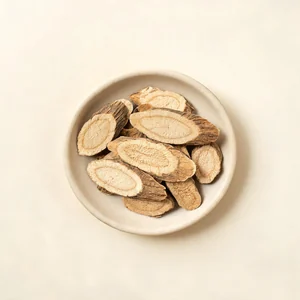
Wu Yao乌药
The dried tuberous root of a laurel-family shrub, Lindera is warm, strongly aromatic and acrid to the taste, and it works both upward on the Lung and downward through the Spleen,…
Xi Xin细辛
Xi Xin is a thin, dark, fiercely aromatic root, and the tradition gives it one quality above all others: penetration. Where cold has sunk deep enough to leave the skin numb,…
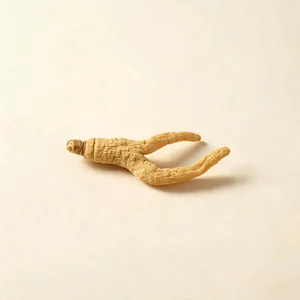
Xi Yang Shen西洋参
Xi Yang Shen is the cool ginseng. It tonifies Qi and nourishes Yin at the same time, which is why it suits a person who is tired and dry and running a little warm, rather than the…
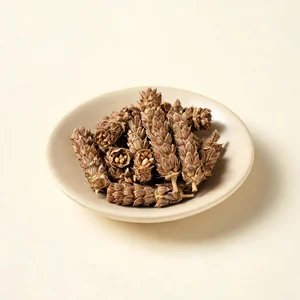
Xia Ku Cao夏枯草
Xia Ku Cao is the brown flower head of a mint-family weed, cut as the plant withers at midsummer, and the tradition reads that timing as the herb's own signature: it suits heat…
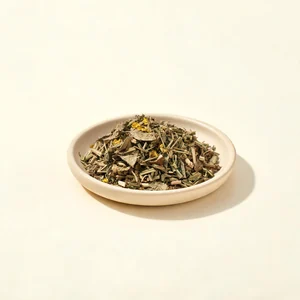
Xian He Cao仙鹤草
Xian He Cao is agrimony, a rough-leaved wayside plant of the rose family with a binding, astringent taste and a neutral temperature. Skin practice uses it for skin that leaks:…
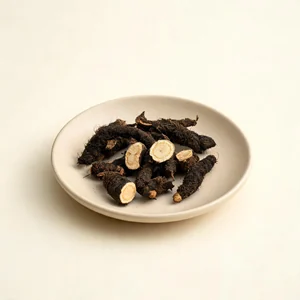
Xian Mao仙茅
Xian Mao is a small, hot and acrid rhizome that warms the Kidney Yang and drives cold and dampness out of the limbs. Its skin use is narrow and always warming. It is chosen when…
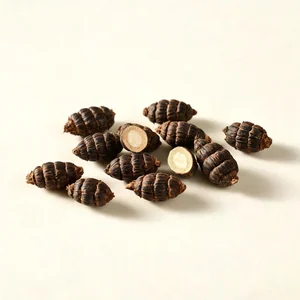
Xiang Fu香附
Xiang Fu is the Qi-moving rhizome of the materia medica, and its skin value lies in the relationship between constraint and the surface. When the Liver fails to keep Qi flowing,…
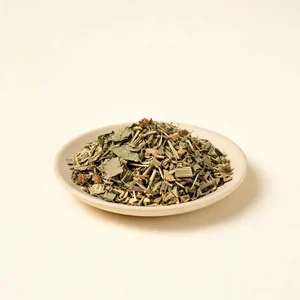
Xiang Ru香薷
Xiang Ru is a small, sharply aromatic member of the mint family, slightly warm, and it enters the Lung and Stomach. Its traditional place is the hot damp season, when the surface…
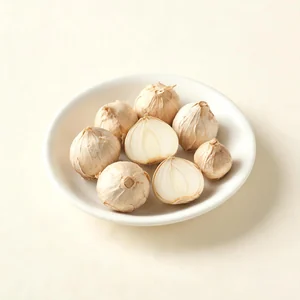
Xie Bai薤白
Xie Bai is the bulb of a wild onion, acrid and bitter, warm, and it enters the Heart, Lung, Stomach and Large Intestine. Its fame in Chinese medicine rests on the chest rather…
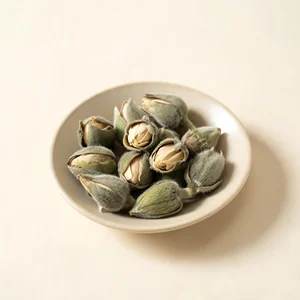
Xin Yi Hua辛夷花
Xin Yi Hua is the closed, silky bud of a magnolia, warm and strongly aromatic, and its whole action is to open what is blocked in the upper body. The nose is its home ground, but…
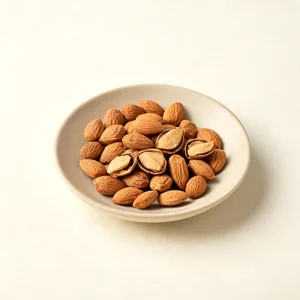
Xing Ren杏仁
Xing Ren is the bitter kernel inside the apricot stone, slightly warm and bitter, and its skin use follows the old principle that the Lung governs the skin and hair. When Lung Qi…
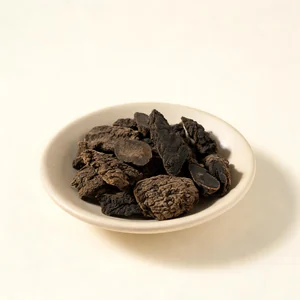
Xuan Shen玄参
Xuan Shen does two jobs at once, and the second is what makes it useful on skin that has been inflamed for a while. It clears Heat from the Blood and resolves the toxin that keeps…
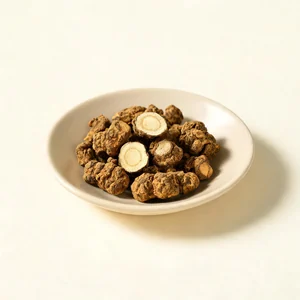
Yan Hu Suo延胡索
Yan Hu Suo is the tuber of a small poppy-family plant, warm, acrid and faintly bitter, and it moves both Qi and Blood. That double action is why it is the analgesic the tradition…
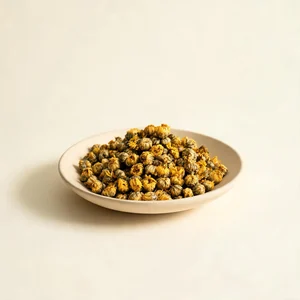
Ye Ju Hua野菊花
Ye Ju Hua is the wild cousin of the chrysanthemum people drink as tea, and the contrast is the whole point: it is smaller, much more bitter and considerably more powerful against…
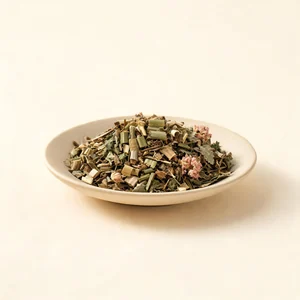
Yi Mu Cao益母草
Yi Mu Cao is the dried aerial part of a mint-family weed, slightly cool and acrid with a bitter edge, entering the Heart, Liver and Bladder. Its fame is gynaecological, but the…
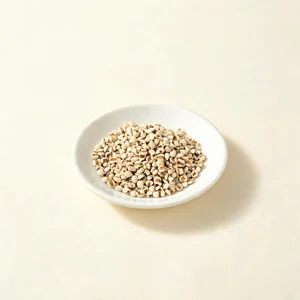
Yi Yi Ren薏苡仁
Yi Yi Ren, the grain known in English as job's tears, is both a staple food and a medicine in East Asia. In skin practice it works on dampness: it seeps moisture out through the…
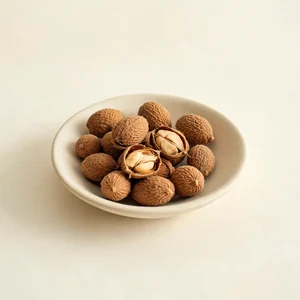
Yi Zhi Ren益智仁
Yi Zhi Ren is the dried fruit of a southern ginger, warm and pungent, and it reaches a skin page by the back door: it warms the Spleen and Kidney while it holds fluid in. Where…
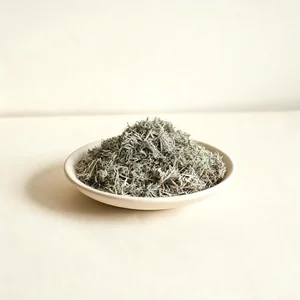
Yin Chen茵陈
Yin Chen is the feathery spring shoot of a wormwood, slightly cool and bitter with a pungent edge, and its skin work comes out of the same action that made it famous: it separates…
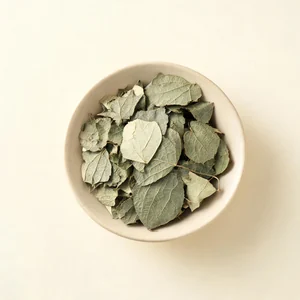
Yin Yang Huo淫羊藿
The epimedium leaf is one of the main warming tonics for the Kidney. The tradition gives the Kidney charge of the body's fire, and when that fire runs low the surface is the first…
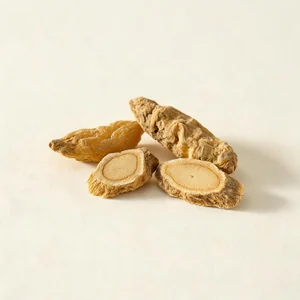
Yu Jin郁金
Yu Jin is the tuber of a Curcuma species, cold in nature with an acrid and bitter taste, and it belongs among the herbs that move blood, with one difference: it is cooling rather…
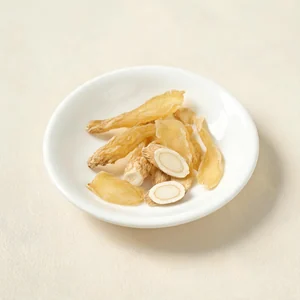
Yu Zhu玉竹
A pale, translucent rhizome from a woodland Polygonatum, sweet and only slightly cool, Yu Zhu is the gentlest of the Yin-nourishing herbs. Its concern is fluid. Moisture is…
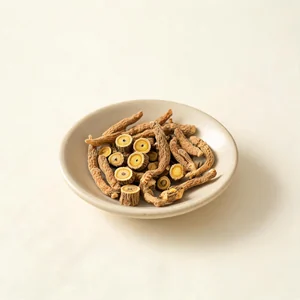
Yuan Zhi远志
Yuan Zhi is known mainly as a spirit-calming root, but its oldest surface use is the one that belongs on this page: it disperses swelling and draws out pus. A boil, a carbuncle or…
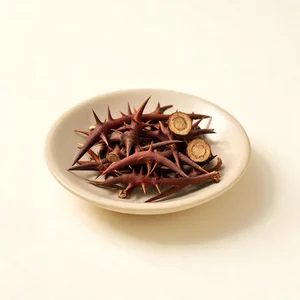
Zao Jiao Ci皂角刺
Chinese honey locust gives this medicine its one unusual feature: what is used is a hardened spine rather than a root, leaf or fruit. The thorn's reputation rests on direction. It…
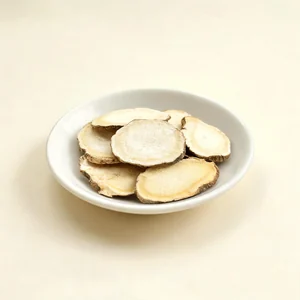
Ze Xie泽泻
Ze Xie is one of the plainest herbs in the materia medica: cold, bland and directed at water. In skin practice that makes it a drainer, used where Dampness is visible on the…
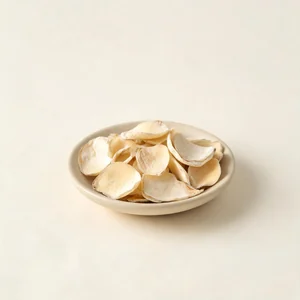
Zhe Bei Mu浙贝母
Zhe Bei Mu is a bitter, cold fritillary bulb, and for the skin its work is narrower than its reputation for coughs suggests: it breaks up nodules, clears heat toxin and draws the…
Zhi Chuan Wu制川乌
Zhi Chuan Wu is the processed mother root of Sichuan aconite, the strongest warming herb for cold that has settled deep in the channels, and the most dangerous herb on this site.…
Zhi Fu Zi制附子
Zhi Fu Zi is prepared aconite, the hottest and most dangerous root in the materia medica, and its place on a skin page is narrow and specific: skin that is cold. Not dry, not red,…
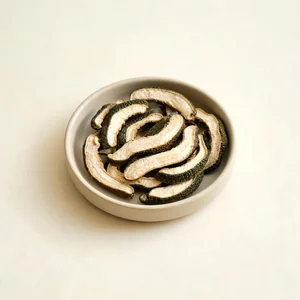
Zhi Ke枳壳
Zhi Ke is the dried fruit of the bitter orange, picked just before it ripens, bitter, acrid and sour, slightly cool, and entering the Spleen, Stomach, Large Intestine and Lung.…
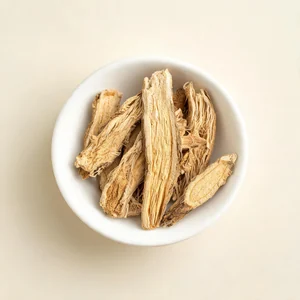
Zhi Mu知母
The pale, fibrous rhizome of a grass-like plant of the dry northern hills is one of the coldest medicines in the materia medica: bitter and sweet, entering the Lung, Stomach and…
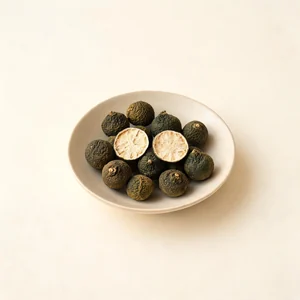
Zhi Shi枳实
Zhi Shi is the green, hard, unripe fruit of the bitter orange, and its nature is to break Qi downward, clear focal distension and scatter phlegm nodules. In skin practice it is a…
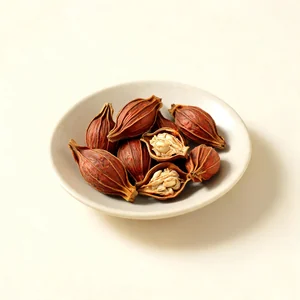
Zhi Zi栀子
Zhi Zi is the dried fruit of the gardenia, a bitter, cold and unmistakably yellow medicine that clears heat from the Heart and from all three burners, cools the blood and resolves…
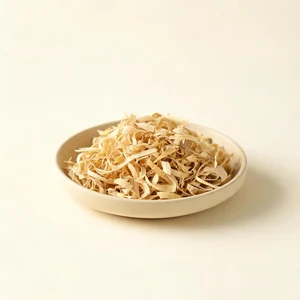
Zhu Ru竹茹
Zhu Ru is the middle layer of the bamboo stem, scraped into thin shavings, slightly cool and sweet. It is not a herb with a skin reputation of its own; it enters skin practice…
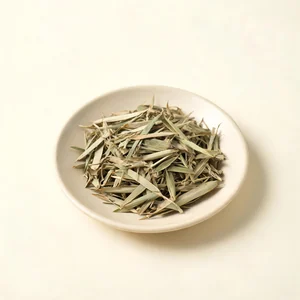
Zhu Ye竹叶
Zhu Ye is the leaf of a tall bamboo, thin, light and cold, and its skin work follows from where it goes rather than from any strong action on the surface. It clears heat from the…
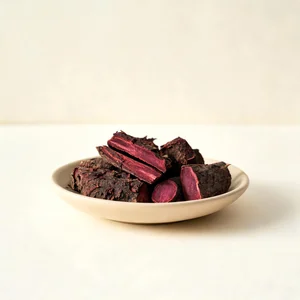
Zi Cao紫草
Zi Cao is the arnebia root, a cold, sweet and salty herb whose deep purple-red dye is a clue to its work: it reaches the Blood, cools it, and clears the toxin that turns a rash…
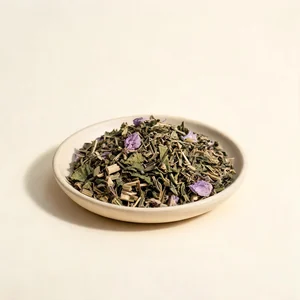
Zi Hua Di Ding紫花地丁
A small spring violet supplies this medicine, and its skin brief is narrow and pointed. It is called on where Heat has become destructive: a boil with a hard deep root, a…
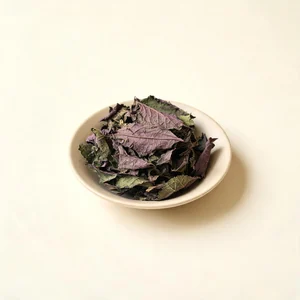
Zi Su Ye紫苏叶
Zi Su Ye is perilla leaf, the warm, aromatic leaf sold in bunches as a culinary herb and used in medicine for the same qualities. On the skin its role is narrow but clear. It…
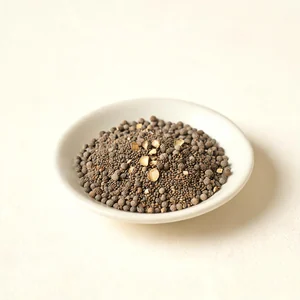
Zi Su Zi紫苏子
Zi Su Zi is the seed of perilla, a warm, aromatic, oily kernel that is eaten as food and used in medicine to bring Lung Qi downward. Its skin role is narrow and it is easily…
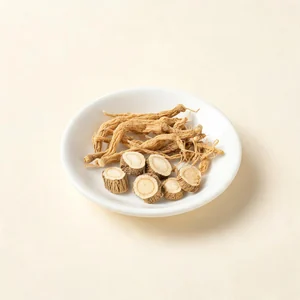
Zi Wan紫菀
Zi Wan, the dried root and rhizome of the Tatarian aster, is a Lung herb used for cough, and it appears on a skin page only because the tradition treats the Lung as the organ that…
Nothing matches those filters. Try clearing one, or use the full search.