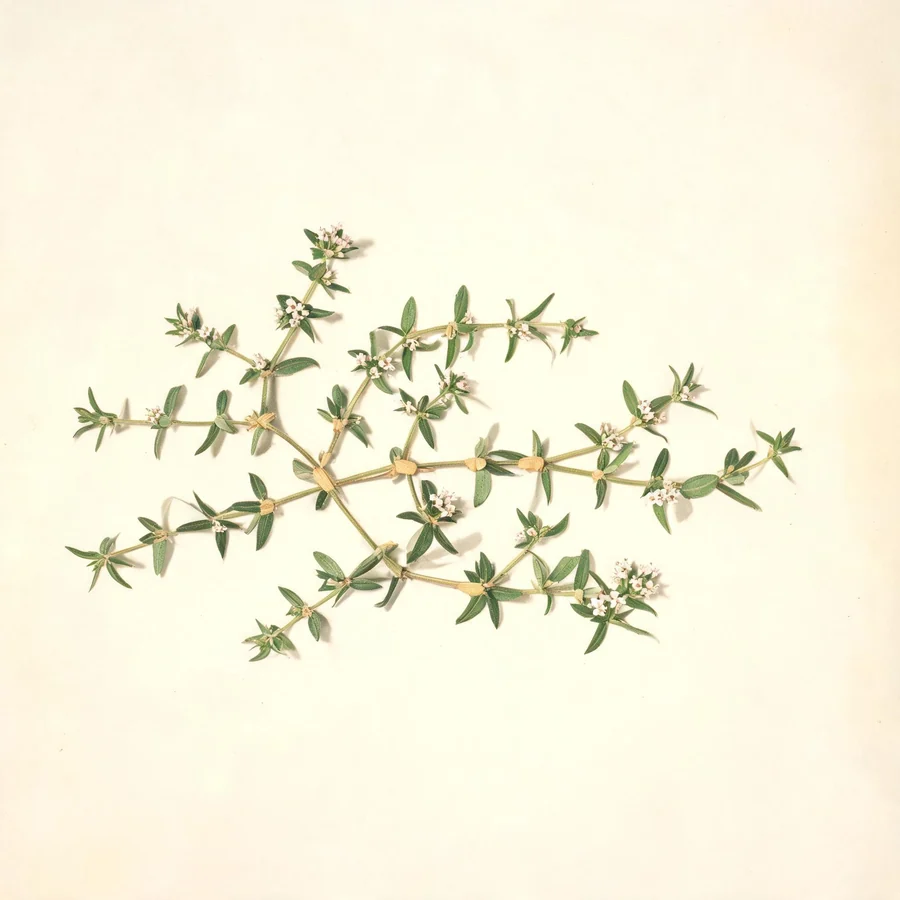
Skin profile
Where this herb sits in skin practice: the pattern it corrects, the skin signs it suits, and what it should not be used for.
Bian Xu is the wash for a damp itch: folds, groin, perianal skin and the lower body, used for days and judged by whether the surface dries and the itch quietens.
Skin signs that suggest it
- Red, oozing patches in the groin, between the buttocks or under the breasts, with a sour smell and softened edges
- Itch around the anus or the genitals that is worse at night and after scratching (damp-heat in the lower body)
- Small vesicles or crusted spots sitting in damp skin folds, spreading in humid weather
- Itch that eases in dry cold weather and flares in heat, damp or tight clothing
- A yellow greasy tongue coating, dark scanty urine and a slippery pulse
When it is not the right herb
Not for dry, pale or thin skin with no moisture and no redness, and not for the lichenified, cold eczema of a depleted person, where a drying wash makes the surface tighter and the itch worse. Not for cold, weak digestion: the bitter cool herb loosens the stool and dulls the appetite, so internal courses are short and are stopped once the damp-heat has gone. Not while pregnant, and not for a person short of fluids, with night sweats, a dry mouth and a pulse that is thin and rapid. A wash belongs on intact or lightly eroded skin, not on deep ulcers or a spreading infection.
What it does for skin
Skin-relevant actions only. Each one describes a mechanism in TCM terms and what it looks like on the skin.
Dries damp-heat in the skin folds
The main reason the herb is reached for. Where skin is both inflamed and wet, the fold under a breast, the groin, the perianal skin, the herb's bitter drying quality reduces the moisture that keeps the surface softened and macerated. The drying is not the whole effect: the coolness takes down the redness at the same time, so a wash can settle an area that a plain drying powder would only stiffen.
Stops itch at the anus and the genitals
The itch that follows threadworm, a damp perianal fold or a persistent genital irritation is treated in the tradition with a wash rather than a pill, and this is the herb's most specific external use. Its parasite action is read on the skin as an action against the small creatures that keep an itch going, and the cool bitter liquid is applied straight to the irritated surface. It is a comfort measure, not a cure for an infestation, which needs its own treatment.
Reduces ooze and crusting on weeping lesions
A weeping eczema or a damp, crusted patch in a fold loses its stickiness once the surface is cooled and dried. Bian Xu is used as a cooled decoction in compresses, often with other drying herbs, and the aim is to change the surface the lesion is sitting in rather than to suppress inflammation from within. Compresses are kept short and the area is patted dry afterwards, because leaving skin damp under a dressing defeats the purpose.
Drains the same damp-heat through the bladder
Internally the herb works on the lower burner, and skin practice uses it where the skin sign and a urinary sign belong to one pattern: an itchy groin with burning urine, a rash that flares along with a urinary infection. The route explains the choice, because the herb is not anti-inflammatory in the modern sense; it moves damp-heat out by the path the tradition considers nearest to it.
Skin conditions it is used for
Mapped to the condition pages on this site. The pattern column shows what the skin is doing when this herb is the right choice.
| Condition | Pattern | Why it suits | Typical setting |
|---|---|---|---|
| Eczema | Damp-heat with ooze, in the folds or on the lower body | Weeping eczema in a fold, with redness, stickiness and itch, is the clearest skin expression of the damp-heat this herb drains. It is used as a cooled wash on the affected area, and internally only when the whole picture is damp-heat and the digestion can take a bitter cool herb. It is a supporting herb rather than a leading one, and it is dropped once the surface dries, because a drying herb has nothing left to do at that point. | Bian Xu with Huang Bo and Ku Shen as a cooled wash, or inside a damp-heat formula |
| Itchy skin with redness | Damp-heat provoking itch on the lower body | Itch that comes with warmth, redness and a slightly moist surface is read as damp-heat rather than dryness, and a drying wash addresses the cause rather than the sensation. The herb suits itch on the lower body and in the folds better than itch on the face or the hands. Dry, scaling, winter itch is the opposite picture and is made worse by it. | Bian Xu with Ku Shen and Bai Xian Pi as a wash |
| Anal irritation and itch | Damp-heat in the perianal skin, or threadworm itch | The perianal skin is where damp-heat and the tradition's parasite action meet, and a cooled wash is the form the herb has always taken here. It reduces the moisture and the itch that keep the area raw, and it is used for a few days at a time alongside the treatment of the underlying cause. Persistent anal itch needs a diagnosis first, because haemorrhoids, fissures and infestation each need their own management. | Bian Xu with Huang Bo as a shallow sitz bath |
| Itchy genitalia | Damp-heat pouring downward into the genital skin | Genital itch with redness, a thin discharge and heaviness low in the pelvis is the picture of damp-heat that has settled in the lower burner, and the herb was recorded for it long before it was recorded for the bladder. It is used as a wash, tepid and brief, and internally only in a full damp-heat picture. A discharge or an itch that persists needs swabs and a diagnosis, since infection and irritation look alike at the surface. | Bian Xu with Huang Bo and Ku Shen as a cooled wash |
| Jock itch | Damp-heat in the groin folds, worse in heat and tight clothing | The red, itchy, sharply bordered patch of jock itch sits exactly where the herb works best, and a cooling drying wash eases the surface discomfort that goes with it. Honesty matters here: the herb reduces the damp environment a fungus favours but it does not kill the fungus, so an antifungal is still needed. The wash is an addition to that treatment, not a replacement for it. | Bian Xu with Huang Bo as a cooled wash, alongside antifungal treatment |
Combinations for skin
Herbs it is paired with when the skin, not an internal organ, is the target.
| Partner | Ratio | Why the pair is used |
|---|---|---|
| Huang Bo | 10 to 15 g each in a wash | Huang Bo dries the lower burner more forcefully than any other herb of its kind, and it reaches the pelvis and the legs. Bian Xu brings the itch and the urinary passage into the same formula, so the pair works on the surface and on the source together. They are used in a cooled wash for an itchy, oozing groin, and internally when the damp-heat is pronounced in both places. |
| Ku Shen | 10 to 15 g each in a wash | Ku Shen is the stronger antipruritic of the two and is used for stubborn, intense itch, while Bian Xu brings the drying of a weeping surface. Together they make the standard wash for a damp, itchy fold or a perianal itch that will not settle. Both are bitter and cold, so the wash is used for days rather than weeks, and the skin is dried afterwards. |
| Bai Xian Pi | 10 to 15 g each in a wash | Bai Xian Pi is a skin-specific herb with its own antipruritic and antifungal tradition, and it is the natural partner when the itch has a fungal quality. Bian Xu supplies the drying, Bai Xian Pi the itch-quieting, and the pair is used where a groin patch has been treated with an antifungal but the itch remains. Neither is taken internally for long. |
| Qu Mai | 9 g each in decoction | The classical strangury pair of the internal tradition, and the reason it belongs on a skin page is the route. When an itchy lower-body rash comes with burning, frequent urine, the pair drains the damp-heat the way the tradition knows best. Qu Mai carries more draining power; Bian Xu contributes the itch action that Qu Mai lacks. |
Topical use
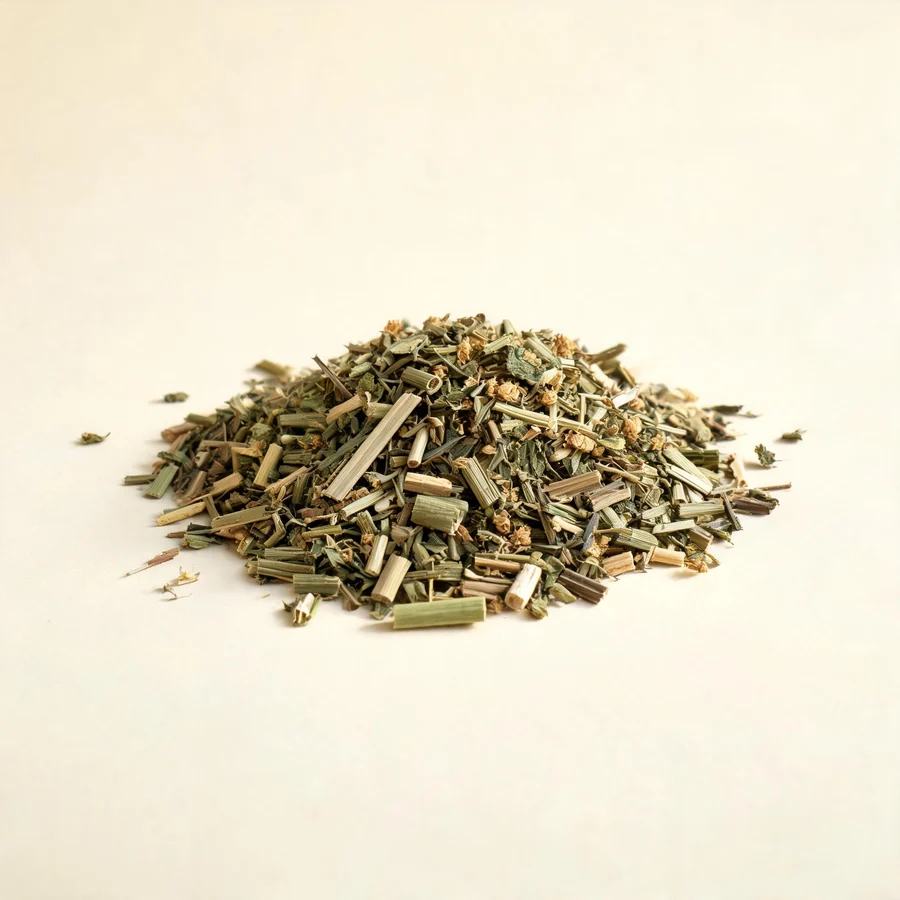
Almost all of Bian Xu's skin use is external. The dried aerial parts are simmered, strained and cooled, and the liquid is used as a compress, a rinse or a shallow bath for the groin, the perianal area or another damp, itchy site. The wash is made fresh, used tepid rather than hot, and the skin is patted dry afterwards. It is a surface treatment for a surface problem, used for days rather than weeks.
| Preparation | How and when it is used |
|---|---|
| Cooled decoction compress | 15 to 30 g of dried herb simmered in 500 ml of water for 15 minutes, strained and left to cool to skin temperature. Soak clean gauze and hold it against the area for 10 to 15 minutes once or twice daily, then pat the skin dry. |
| Shallow sitz bath | A larger volume, 30 to 60 g in a litre of water, poured into a shallow basin for the perianal or genital area. Ten minutes is enough, the liquid is discarded afterwards and the basin is cleaned before the next use. |
| Combined wash | Equal parts Bian Xu, Huang Bo and Ku Shen, about 10 g each, decocted together and cooled. The combination is used for an itchy, oozing area where one drying herb has not been enough on its own. |
Patch test and cautions
Patch test on a small area of normal skin for 24 hours first. Do not use on broken, ulcerated or deeply infected skin, or on the face and near the eyes. Keep the water tepid rather than hot, dry the area afterwards, and stop if the skin stings, burns or becomes redder. A wash is not a treatment for a spreading infection, and persistent anal or genital itch needs a diagnosis rather than a repeat prescription.
Safety for skin use
What to check before recommending or using it, including the cautions that matter most for skin patients.
Do not use, or use with caution
- Cold and weak digestion: loose stools, a cold abdomen, a poor appetite, and a history of reacting badly to cold food and drink. A bitter draining herb added to that picture produces more looseness and a heavier feeling instead of relief.
- Pregnancy: the herb is avoided internally, and external use is limited to small areas and discussed with a practitioner first.
- Fluid depletion: a dry mouth, night sweats, a thin rapid pulse and scanty dark urine. A draining herb pulls fluid from a body already short of it.
- Dry, cold or lichenified skin with no moisture: the wash tightens the surface and increases the itch rather than settling it.
Pregnancy and breastfeeding
Avoid internally. Laboratory work has found that both water and alcohol extracts increase uterine tone and contractions, so the concern about stimulating the uterus rests on more than tradition. A draining herb also takes fluid from a body that is busy building a pregnancy. External use over a small area is the lower-risk route, but it should still be agreed with a practitioner. The same caution applies while breastfeeding, where a bitter diuretic may reduce milk and where nothing is known about transfer into it.
Interactions
- Diuretics such as furosemide or a thiazide: the herb increases the output of water, sodium and especially potassium, so two diuretics together can dehydrate and lower potassium. Cramps, weakness and dizziness on standing are the signs to watch, and this matters only when the herb is taken internally.
- Anticoagulants: extracts have been reported to speed clotting, which is not what most people would predict of a cooling herb; anyone taking warfarin or heparin should mention it to their prescriber before using it by mouth.
- Blood pressure medicines: a fall in blood pressure has been recorded after intravenous extract in animals, so an additive effect is worth knowing about, though at the standard oral range readings are unlikely to shift much.
Allergy and patch testing
Herb washes are a recognised cause of contact dermatitis, and the risk rises with a strong decoction and a long soak. Patch test first, keep the wash to the area that needs it, and stop at once if the skin becomes more irritated rather than calmer. People who have reacted to other plants of the knotweed family, including dock and sorrel, should be cautious.
General safety references
General references for herbal hepatotoxicity and herb-drug interactions; they are not specific to this herb.
- Review article: Herbal hepatotoxicity - an update on traditional Chinese medicine preparations. Alimentary Pharmacology & Therapeutics, 2014. PMID: 24844799.
- Interactions between herbal medicines and prescribed drugs: an updated systematic review. Drugs, 2009. PMID: 19719333.
- Warfarin and food, herbal or dietary supplement interactions: a systematic review. British Journal of Clinical Pharmacology, 2021. PMID: 32478963.
Evidence
The classical record is quoted with its source. The modern note states the level of evidence plainly.
Classical record
主浸淫,疥瘙疽痔,杀三虫。
It chiefly treats spreading oozing lesions, scabies and itch, abscess and haemorrhoids, and it destroys the three worms.
Shen Nong Ben Cao Jing (Divine Husbandman's Classic of Materia Medica) - The oldest entry leads with the skin and the parasites and says nothing about the bladder, which is where later practice put the herb.
治霍乱,黄疸,利小便。
It is given for cholera-like disorder and for jaundice, and it promotes the passing of urine.
Ben Cao Gang Mu (Compendium of Materia Medica), Li Shizhen - Li Shizhen records the urinary action that became the herb's main work; the skin use rests on the older entry above, not on this one.
萹蓄,《本经》《别录》皆以却除湿热为治……然亦惟湿阻热结为宜,而气虚之病,皆非其治。
Zhang Shouyi reads both old texts as treating by driving damp-heat out, then draws the line: suitability depends on dampness blocking and heat binding, and a disease of qi deficiency is not its business at all.
Zhang Shouyi, Qing dynasty commentary - The classical basis for the rule that a draining wash and a draining decoction both belong to damp-heat and to nothing else.
Modern evidence
Evidence status
- Laboratory work on the aerial parts reports diuretic, anti-inflammatory and antipruritic activity, along with effects on smooth muscle, mostly in animal preparations. None of it was designed as a skin study in people.
- No controlled clinical trial of Bian Xu in eczema, anal itch or any other skin condition was identified for this page. Chinese-language reports place it inside multi-herb washes, where its own contribution cannot be separated from the other herbs.
- Regulatory status: the dried aerial parts are an accepted herbal substance in the Chinese Pharmacopoeia. Veterinary reports of poisoning in grazing animals concern the fresh plant eaten in quantity, not the dried herb at decoction doses.
PubMed records
Selected real PubMed records for this herb's species or its constituents, chosen by species name and title relevance. They are references for the non-TCM discussion above, not proof that the herb treats any skin condition.
- Polygonum aviculare L. extract reduces fatigue by inhibiting neuroinflammation in restraint-stressed mice.. Phytomedicine : international journal of phytotherapy and phytopharmacology, 2018. PMID: 29655685 (skin-related record).
- Polygonum aviculare L. and its active compounds, quercitrin hydrate, caffeic acid, and rutin, activate the Wnt/β-catenin pathway and induce cutaneous wound healing.. Phytotherapy research : PTR, 2016. PMID: 26929003 (skin-related record).
Dose and forms
Skin-practice dosing and the preparations that suit skin complaints.
| Form | Dose and notes |
|---|---|
| External wash | 15 to 30 g of dried herb simmered in 500 ml of water for a compress or rinse, or 30 to 60 g in a litre for a shallow bath. Make it fresh for each use and use it tepid. |
| Decoction (internal) | 9 to 15 g daily in a formula, for short courses. The lower end suits a supporting role; above about 15 g a person with delicate digestion may get loose stools. |
| Course length | Days to about two weeks for a skin flare, stopped when the ooze and the itch settle. A wash can be repeated for longer than an internal course, but the skin should be improving within a week. |
The gap between the urinary dose and the old worming dose is a gap of purpose rather than of tolerance, and neither figure belongs to the skin. Skin practice uses the wash at the top of the ordinary range and the decoction at the bottom, and it treats them as two separate treatments with separate limits. The dried aerial parts are what a wash is made from; fresh juice belongs to the parasite use and is not a skin preparation.
Citations and further reading
Only real sources are listed: the classical materia medica passages quoted above, and the source works behind the botanical and safety statements.
- Shen Nong Ben Cao Jing (Divine Husbandman's Classic of Materia Medica), attributed compilation of the Han period - classical entry quoted above.
- Ben Cao Gang Mu (Compendium of Materia Medica), Li Shizhen, 1578 - classical entry quoted above.
- Zhang Shouyi, Qing dynasty commentator on the materia medica - classical entry quoted above.
- Pharmacopoeia of the People's Republic of China, Polygoni Avicularis Herba monograph - source for the accepted botanical source, part used and quality requirements.
- Botanical identification: taxonomic literature on Polygonum aviculare, Polygonaceae, including the regional Kummerowia material sold under the same name.
- Modern evidence statement: summarised from laboratory and veterinary literature on the aerial parts, presented as a comment on the level of evidence rather than as a cited finding.
Educational reference for qualified practitioners. This page is not medical advice, and skin conditions should be diagnosed by a clinician before treatment.