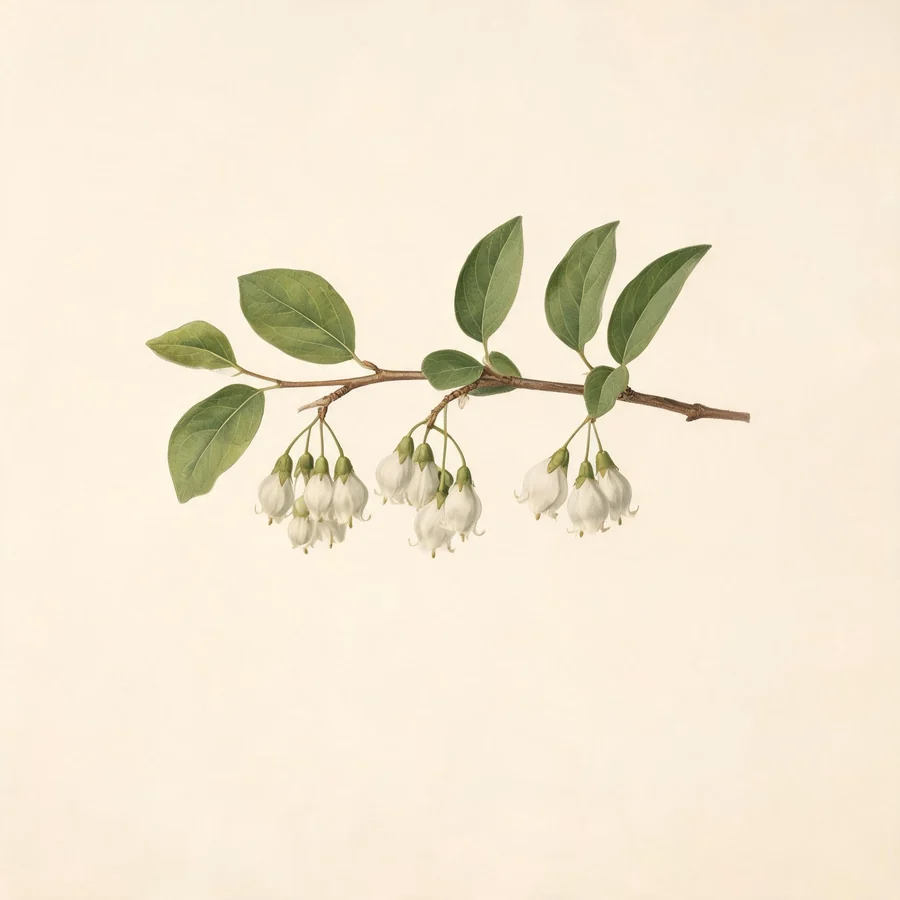
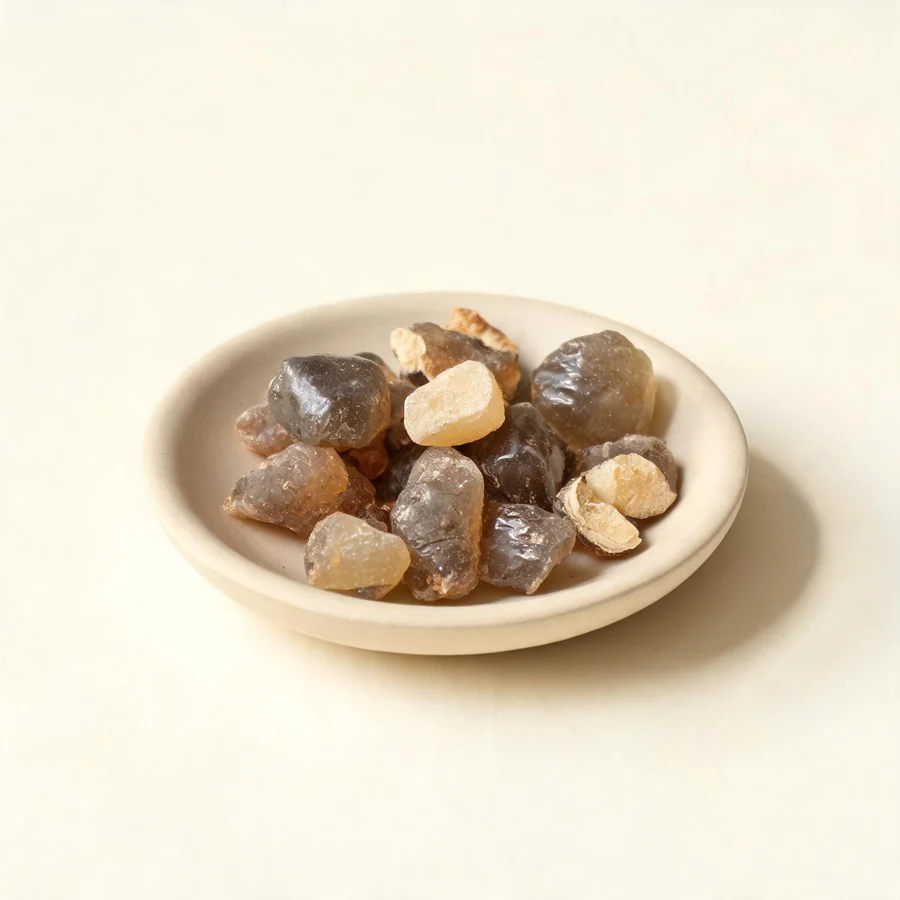
Skin profile
Where this herb sits in skin practice: the pattern it corrects, the skin signs it suits, and what it should not be used for.
An Xi Xiang is a sealer rather than a healer: it covers a clean break in the skin, warms a cold and sluggish patch, and buys the surface time. Its dangers are the ones that come with any seal, namely heat and moisture trapped over an infection, plus a real capacity to sensitise skin.
Skin signs that suggest it
- A clean crack at a fingertip, heel, lip or nipple that reopens whenever it starts to close
- A graze, shave cut or superficial scrape with intact skin around it and no spreading redness
- A small, superficial burn that has cooled and stopped weeping, with the surface still raw
- Dry, chapped, cold skin with fine fissures and no heat, ooze or smell
- Skin that stings with water or soap because the outer layer has been lost
When it is not the right herb
Not for skin that is red, hot, swollen, weeping or spreading: a sealing resin holds heat and moisture against the surface, and on an infection that is the wrong direction. Not for a wound with pus, an unpleasant smell, fever or red streaks, and not for a deep burn, an intact blister or a bite. Not on infants and children under two, not over a large area, and not under an airtight dressing on a first trial. It is not a treatment for chest pain or collapse, whatever the old aromatic pills were used for.
What it does for skin
Skin-relevant actions only. Each one describes a mechanism in TCM terms and what it looks like on the skin.
Seals a broken surface with a protective film
Benzoin dissolves in alcohol and dries into a thin, slightly tacky varnish, and that physical behaviour is most of what it does for the skin. The film slows water loss from a raw surface, reduces the friction that reopens a crack, and keeps dirt and clothing off the area while the epidermis repairs itself. Compound benzoin tincture is the pharmacy form of this idea, and it has been painted on minor cuts and grazes for far longer than any theory of why it works. Expect a sharp sting when it meets raw skin, and do not mistake the protective film for a treatment of infection.
Warms and moves a cold, stagnant patch
The resin is aromatic and warming, and the tradition credits it with moving Qi and Blood where both have slowed. On the skin that shows as a patch which is dusky, cool and slow: a graze that will not close, a fissure with pale edges, a small burn that has gone quiet without healing. The warmth is mild and local, and it is the reason the resin appears in warming plasters and liniments rather than in cooling ones. It will not rescue tissue that is dead, infected or poorly supplied with blood, and those need assessment.
Settles a musty, foul surface with its aroma
Aromatic resins are described as dispelling turbid and foul Qi, and the old use of benzoin as a fumigant and a perfume belongs to the same quality. On the body that becomes the moist, warm skin fold or the healing wound that smells musty, where the aromatic material is used to freshen and dry the surface. This is a deodorising action, not an antimicrobial one: a smell that is new, strong or accompanied by pain and spreading redness is a reason to seek care, not to mask it.
Holds a dressing in place over a difficult surface
Because the dried film is slightly tacky, benzoin tincture has long been used to improve the adhesion of tapes and dressings on skin that is moist, mobile or fragile, and to protect the surrounding skin from repeated stripping. That practical use explains why it survives in hospitals even where the therapeutic claims have faded. Use it sparingly, let it dry fully, and do not use it to anchor a dressing over an infected or weeping wound, where occlusion does harm.
Skin conditions it is used for
Mapped to the condition pages on this site. The pattern column shows what the skin is doing when this herb is the right choice.
| Condition | Pattern | Why it suits | Typical setting |
|---|---|---|---|
| Cracked skin | A clean, dry fissure with no heat and no discharge | A crack that reopens at the same point is a barrier problem: the surface cannot stay closed while it is being stretched and dried. Benzoin tincture is painted into the base of the fissure and allowed to dry, which holds the edges together and keeps water and friction out long enough for them to knit. It is not for a crack that is inflamed, weeping or surrounded by spreading redness, and a fissure that keeps returning needs the cause found, whether that is tinea, eczema, diabetes or a habit of licking the lip. | Compound benzoin tincture applied sparingly to the cleaned fissure, with a plain ointment over it at night |
| Skin erosion | A superficial graze or scrape on intact surrounding skin | Where the top layer has been lost but the skin around it is healthy, the resin's film protects the raw surface from friction, water and contamination while it re-epithelialises. The sting is immediate and is the main reason people stop using it. It is not for an erosion that is oozing heavily, has pus or a smell, or sits on a leg with poor circulation, and a large area or an airtight dressing is not appropriate for it. | Compound benzoin tincture painted on the cleaned area once daily, left uncovered |
| Skin burns | A minor superficial burn after the heat has gone out of it | Benzoin was the wound varnish of earlier practice, and a small superficial burn is the kind of surface it was used on: raw, painful and clean, after cooling and cleaning. The film protects the tender area and reduces friction from clothing. It is wrong for a deep burn, a burn larger than a few centimetres, a burn on the face, hands, feet or genitals, and any burn with blistering or infection, all of which need medical care rather than a resin. | Cool running water first, then a thin film of compound benzoin tincture on a small superficial burn |
| Skin infection | Toxic-Heat at the surface, as a historical antiseptic cover | Before antibiotics, benzoin tincture was used as an antiseptic dressing on cuts and abrasions, and it is still sometimes painted around a lesion to protect the surrounding skin. Modern practice cannot rely on it: the resin does not clear a bacterial infection, it seals the surface, and sealing an infected wound can trap pus and spread redness. It may be used only after assessment, alongside proper treatment, never instead of it, and not at all on a spreading, hot or foul-smelling lesion. | Not a stand-alone treatment; compound benzoin tincture only as a protective cover around a lesion already under medical care |
Combinations for skin
Herbs it is paired with when the skin, not an internal organ, is the target.
| Partner | Ratio | Why the pair is used |
|---|---|---|
| Ru Xiang | Equal parts in a tincture, or 3 g benzoin to 6 g frankincense in an ointment | Both are balsamic resins that move Qi and Blood, but they are used for different halves of a slow lesion. Frankincense is the stronger mover, reached for when tissue is hard, dusky and painful; benzoin is the sealer, chosen when the surface will not close. Together they cover a cold, indolent graze or fissure that is both stagnant and open. Both are concentrated and both can sensitise skin, so the mixture is kept to a small area and a short trial. |
| Bing Pian | 0.5 g borneol to 10 g benzoin in a tincture | Borneol is the cooling aromatic, and a small amount of it takes the hot, stinging edge off a benzoin tincture while adding its own penetration. The pair is used on grazed, itchy or sun-tight skin where cooling and sealing are both wanted. Borneol is not a soothing oil, though: it is an irritant in quantity, and the proportion stays low. Neither material belongs on broken, infected or large areas of skin. |
| Huang Qi | 15 g Huang Qi with 0.5 g benzoin powder in a formula | Astragalus lifts and generates flesh, and benzoin moves the Qi and Blood that have stalled at the surface, so a shallow erosion that will not fill is approached from both directions. The pairing suits a pale, tired person with a chronic graze or ulcer and no heat in it. The internal resin is a practitioner's decision, not a domestic one, and the wound should be reviewed as the formula is adjusted. |
Topical use
External use is the whole point of this page. The resin barely dissolves in water, so it is prepared as a tincture in alcohol or worked into an ointment, and both forms leave a film rather than being absorbed. The traditional description of benzoin as an aromatic that seals and warms matches the modern pharmacy tincture, and the practical rules are the same for both: clean skin, a small area, a thin layer, and no airtight cover.
| Preparation | How and when it is used |
|---|---|
| Tincture on a fissure | Paint compound benzoin tincture into the base of a clean, dry crack with a cotton bud, using the smallest amount that covers it, and let it dry for a minute. Once daily is enough for most cracks. It stings sharply; if the crack is inflamed, weeping or spreading, do not use it. |
| Protective film over a graze | After washing and drying a superficial graze, apply a thin film and leave it uncovered. Do not apply it to a wound that is dirty, oozing or infected, and do not seal it with an airtight dressing. |
| Ointment for cold, chapped skin | A few drops of the tincture or a small amount of a benzoin ointment can be rubbed into dry, chapped hands, heels or lips at night, with a plain moisturiser on top. Keep it away from the eyes and from any area of broken, hot or itchy skin. |
Patch test and cautions
Patch test on the inner forearm for 24 hours before the first use. Keep the area small and the layer thin, never use it on infants or children under two, and stop at once if the skin becomes red, itchy or more painful rather than calmer. The tincture contains alcohol, so it stings on raw skin and is flammable until dry. Do not apply it near the eyes or on the face, and do not cover a treated area with an occlusive dressing.
Safety for skin use
What to check before recommending or using it, including the cautions that matter most for skin patients.
Do not use, or use with caution
- Hot, red, spreading or weeping skin, and any wound with pus, swelling, fever or a red streak. A sealing resin holds heat and moisture against the surface, and on an infection that can make matters worse.
- Infants and children under two, and anyone with a known allergy to benzoin, peru balsam or a related resin. The skin of a young child is thin and absorbs more, and the tincture contains alcohol.
- Deep burns, intact blisters, bites, and large areas of broken skin. These need wound care rather than a varnish, and the alcohol in the tincture is painful on a raw surface.
- Chest pain, known heart disease or a history of collapse. The old aromatic pills are not a treatment for a cardiac event, and chest pain needs emergency assessment rather than a resin.
Pregnancy and breastfeeding
Avoid the internal resin. It is warming, aromatic and moving, and the classical sources treat it as a caution in pregnancy rather than a routine medicine; there is no safety data, and the concentrated dose is unnecessary. Used on the skin, keep it to a small area of intact or lightly cracked skin and raise it with a practitioner first, because alcohol-based tinctures are absorbed more than water-based preparations. Do not apply it to the breasts during pregnancy or breastfeeding, where the infant could take it in.
Interactions
- Anticoagulants and antiplatelet medicines. The resin is classed as blood-moving, and benzoic acid and its esters are handled by the same liver and kidney routes as many drugs; no bleeding case is documented, but anyone on warfarin, a direct oral anticoagulant or clopidogrel should ask before using it regularly, internally or on a large area.
- Heart medicines and chest pain. Benzoin appears in old aromatic pills used for collapse and chest pain, and that history is not evidence of benefit; anyone with angina, an arrhythmia or heart failure should not self-treat with the resin, and new chest pain needs emergency assessment.
- Other topical products and dressings. The tincture is alcoholic and astringent, and layering it with a steroid cream, a retinoid or an occlusive dressing increases stinging and absorption; apply at different times of day and keep the area small.
Allergy and patch testing
Benzoin is a recognised contact sensitiser, and compound benzoin tincture has produced allergic contact dermatitis, sometimes spreading beyond the painted area. Patch test before first use, stop at once if itching, redness or swelling develops, and note that cross-reactions with peru balsam, colophony and other balsams are reported. Anyone with a plaster or fragrance allergy should be cautious with any resin preparation.
General safety references
General references for herbal hepatotoxicity and herb-drug interactions; they are not specific to this herb.
- Review article: Herbal hepatotoxicity - an update on traditional Chinese medicine preparations. Alimentary Pharmacology & Therapeutics, 2014. PMID: 24844799.
- Interactions between herbal medicines and prescribed drugs: an updated systematic review. Drugs, 2009. PMID: 19719333.
- Warfarin and food, herbal or dietary supplement interactions: a systematic review. British Journal of Clinical Pharmacology, 2021. PMID: 32478963.
Evidence
The classical record is quoted with its source. The modern note states the level of evidence plainly.
Classical record
此香辟恶,安息诸邪,故得名。
This aromatic drives off evil and lays to rest all malign influences, and from that its name comes. Some say An Xi was the name of a country, and the Buddhist texts call it Zhuo Bei Luo Xiang.
Ben Cao Gang Mu (Compendium of Materia Medica), Li Shizhen - Li Shizhen, 1578. The passage explains the name and the reputation rather than a skin action, which is a useful reminder of how little the classical texts say about the resin's external use.
凡气虚少食,阴虚多火者禁用。
It is forbidden in all those with Qi deficiency and little appetite, and in those with Yin deficiency and much Fire.
Ben Jing Feng Yuan (Thoroughly Revised Materia Medica), Zhang Lu - Zhang Lu, 1695. The source of the two exclusions that later texts repeat, and the reason a dry, hot, thin-skinned person is the wrong candidate for a warming resin.
平,无毒。
Neutral in nature and free of toxicity.
Xin Xiu Ben Cao (Newly Revised Materia Medica) - The Tang pharmacopoeia of 659. It fixes the temperature and the safety grading, and the modern pharmacopoeia keeps both.
Modern evidence
Evidence status
- Compound benzoin tincture is a pharmacopoeial preparation used as a skin protectant: it is painted on minor cuts, grazes and cracked skin and used to improve the adhesion of dressings. That is a long pharmacy tradition rather than a trial result, and it supports the protective use rather than any claim to heal.
- No controlled trial of benzoin in a dermatological condition was identified. Reports in the literature are dominated by contact allergy, and the resin is a well-recognised sensitiser in patch-test series.
- Benzoic acid and its esters are the main constituents, and the acid is widely used to preserve food, which indicates how small the exposure is at the quantities applied to skin. The topical risk is irritation and sensitisation rather than poisoning.
PubMed records
Selected real PubMed records for this herb's species or its constituents, chosen by species name and title relevance. They are references for the non-TCM discussion above, not proof that the herb treats any skin condition.
- Three unusual norlignans with anti-inflammatory from the resin of Styrax tonkinensis (Pierre) Craib ex Hart.. Natural product research, 2025. PMID: 41434718 (skin-related record).
Dose and forms
Skin-practice dosing and the preparations that suit skin complaints.
| Form | Dose and notes |
|---|---|
| Tincture, topical | Compound benzoin tincture, the smallest amount that covers the crack or graze, painted on once or twice daily and allowed to dry. A cotton bud gives more control than a brush. |
| Ointment or balm | A thin film of a benzoin ointment on chapped skin at night, with a plain moisturiser over it if the skin is very dry. |
| Internal resin | 0.3 to 1 g of the powdered resin in a compound pill, under practitioner direction only. It is not a dose for self-treatment and it has no place in the skin routine described here. |
| Course length | Days, not months. The film is a temporary cover while the surface closes; a fissure or graze that has not settled in a week or two needs the cause looked at. |
The quantity is small because the resin is concentrated and because the tincture is mostly alcohol. A topical dose is set by area, not by weight: enough to coat the base of a crack or a graze and no more. The sting is proportional to how much raw surface is exposed, so a large area is unpleasant as well as unnecessary. The internal figure belongs to the old aromatic pills and is a practitioner's decision, not a domestic measure.
Citations and further reading
Only real sources are listed: the classical materia medica passages quoted above, and the source works behind the botanical and safety statements.
- Ben Cao Gang Mu (Compendium of Materia Medica), Li Shizhen, 1578 - passage quoted above.
- Ben Jing Feng Yuan (Thoroughly Revised Materia Medica), Zhang Lu, 1695 - passage quoted above.
- Xin Xiu Ben Cao (Newly Revised Materia Medica), Su Jing and others, 659 - passage quoted above.
- Compound Benzoin Tincture monograph, British Pharmacopoeia - the pharmacy preparation and its skin-protectant use.
- Contact sensitisation statement: based on published patch-test reports of allergic contact dermatitis to benzoin and its tincture, given as a safety finding rather than as a claim of benefit.
- Botany and trade: literature on Styrax tonkinensis and the balsamic resins of the Styracaceae.
Educational reference for qualified practitioners. This page is not medical advice, and skin conditions should be diagnosed by a clinician before treatment.