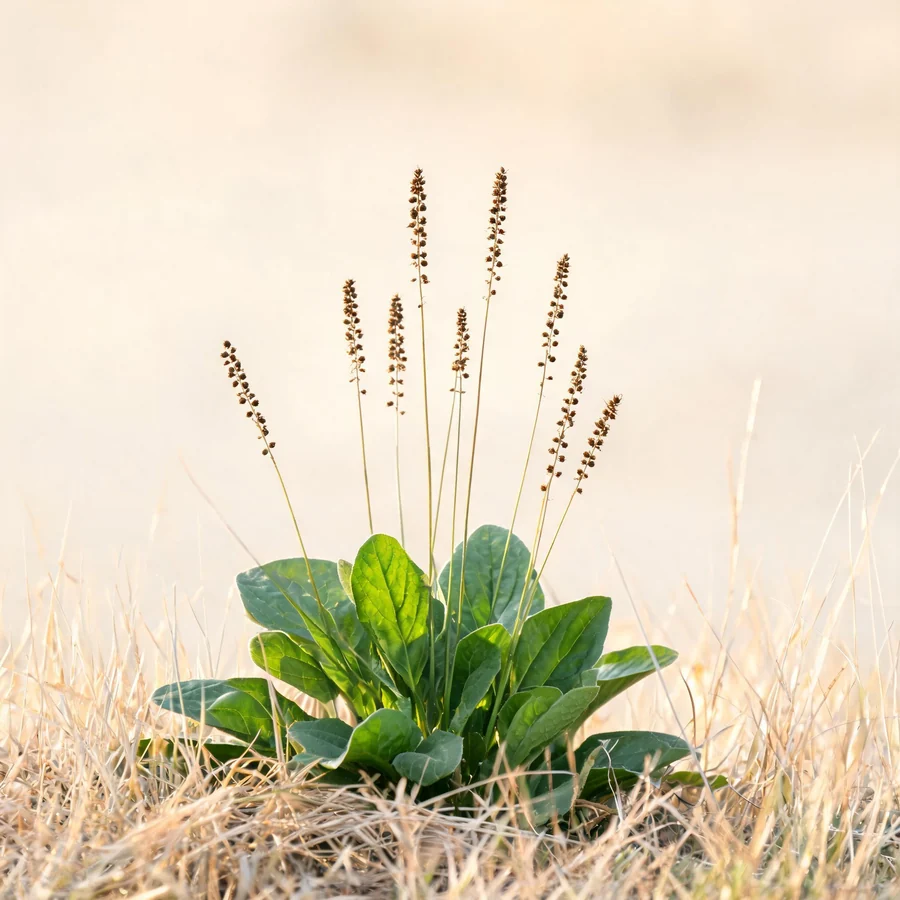
Skin profile
Where this herb sits in skin practice: the pattern it corrects, the skin signs it suits, and what it should not be used for.
Che Qian Zi is a draining herb borrowed for the skin: it does not dry a lesion itself, it gives damp-heat a route out through the urine. It suits wet, low-set eruptions with scanty dark urine, it is gentle enough for a person who cannot take the strong bitters, and it is wrong for cold or depleted skin.
Skin signs that suggest it
- A weeping or oozing rash on the lower body with scanty, dark urine
- Itch and redness in the groin, the genitals or between the toes, worse in heat
- Puffiness or a heavy feeling in the legs, with skin that stays damp
- A greasy yellow coating on the tongue, with thirst and little desire to drink
- Loose, watery stools in hot weather, with little urine passed
When it is not the right herb
Not for cold, depleted kidneys: a person who feels the cold, passes a lot of pale urine, runs a deep and weak pulse and has had cold hands and feet for years should leave it out, because a cold draining seed adds to the cold. Not for dry, thin skin with scanty concentrated urine from fluid loss, where it drains what little fluid remains. Not for skin without damp-heat at all, and not for urinary retention or visible blood in the urine, which need urgent assessment rather than a diuretic herb.
What it does for skin
Skin-relevant actions only. Each one describes a mechanism in TCM terms and what it looks like on the skin.
Drains damp-heat downward through the urine
The seed is sweet and cold, and its action is described as percolating dampness rather than scouring it: it cools the heat and gives the fluid a route out. On the skin that is useful when a damp-heat eruption sits low on the body, in the groin, the genitals or the feet, and when the person is passing little dark urine. Clearing the route below reduces what is pooling at the surface, which is why it is added to formulas rather than used alone.
Dries an oozing surface by redirecting fluid
The old principle behind the seed is that water routed to the bladder is water that does not reach the bowel or the skin surface. In skin practice the same reasoning is applied to a weeping lesion: the ooze is read as dampness with no proper exit, and restoring the urinary route is part of drying it. It is a supporting action, and the main drying work is done by the bitter herbs in the same formula.
Cools the Liver channel that runs through the groin
The seed enters the Liver channel and is cold by nature, and that channel passes through the groin and the genital skin. That is the anatomical reason for its place in formulas for itchy, damp genital skin and for the itchy red patches of the inner thigh. It cools and drains rather than drying hard, so it suits a person whose damp-heat is real but whose digestion will not tolerate the strongest bitters.
Keeps a drying formula from binding the stool
A damp-heat skin formula is full of bitter, drying herbs, and a long course can bind the stool and concentrate the heat it is trying to clear. The seed's mucilage and its downward moisture keep the bowel moving, which is why it appears in formulas where the drying is heavy. The point is practical: a constipated person with a hot, oozing rash tends to flare, and a formula that closes the lower exit works against itself.
Skin conditions it is used for
Mapped to the condition pages on this site. The pattern column shows what the skin is doing when this herb is the right choice.
| Condition | Pattern | Why it suits | Typical setting |
|---|---|---|---|
| Eczema | Damp-heat in the skin with ooze and scanty urine | A wet, red, itchy flare in a person who is passing little dark urine is the picture in which the seed earns its place. It does not dry the lesion itself; it gives the damp-heat a route out below, so that the cooling and drying herbs in the formula are not working against a blocked exit. It is used for the wet rather than the dry form of eczema, and it is combined with the bitter damp-heat herbs rather than given alone. | A modified Long Dan Xie Gan Tang, with Ku Shen and Bai Xian Pi |
| Itchy genitalia | Damp-heat in the Liver channel | Itch, redness and a discharge in the genital skin are read as damp-heat in the channel that runs through the groin, and the seed both cools that channel and drains the dampness downward. It is a supporting herb in the formulas for this area, paired with the bitter drying herbs that do the main work. A persistent discharge, a visible skin change or bleeding needs assessment before herbs are relied on. | Long Dan Xie Gan Tang, with Ku Shen and Huang Bai |
| Jock itch | Damp-heat in the Lower Burner | Dampness pools in the groin because the skin stays warm and occluded there, and the seed's downward drainage is a natural fit: it cools the heat and moves the fluid out rather than leaving it to collect. It is used inside a formula with drying and itch-settling herbs, and the environment matters as much as the medicine, because the same occlusion will bring the rash back. | With Ku Shen, Bai Xian Pi and Huang Bai in a damp-heat formula |
| Athlete's foot | Damp-heat in the Lower Burner, sinking to the feet | The feet are the lowest point of the body, which is where dampness collects, and a vesicular, itchy, macerated eruption between the toes is read as damp-heat that has sunk. The seed drains that dampness downward and out, and it is combined with drying and antifungal herbs. It does not replace a topical antifungal where the infection is active, and the feet need to be dried properly whatever else is done. | With Ku Shen, Cang Zhu and Yi Yi Ren in a damp-draining formula |
| Heat rash | Damp-heat in the Stomach and Spleen, with sweat unable to vent | Prickly heat in hot humid weather is read as damp-heat that the skin cannot vent, and the seed's cooling, draining action addresses the internal part of it. It is used in children and in adults who are also passing little urine and feel heavy and hot. Cooling, loose clothing and a cooler room do more of the work than any herb, and a rash with fever or a widespread pustular eruption needs assessment. | With Hua Shi and Yi Yi Ren in a summer damp-heat formula |
Combinations for skin
Herbs it is paired with when the skin, not an internal organ, is the target.
| Partner | Ratio | Why the pair is used |
|---|---|---|
| Ze Xie | 9 to 15 g Che Qian Zi with 9 to 12 g Ze Xie | Two draining herbs that meet in the formulas for damp-heat with difficult urination. Ze Xie acts via Spleen and Kidney and pulls harder, whereas the seed reaches Liver and Lung and is kinder to body fluids, so between them the middle burner's dampness and the lower burner's heat are both addressed. On the skin that translates into a weeping lesion with little urine passed. |
| Long Dan Cao | 6 to 10 g Long Dan Cao with 9 to 15 g Che Qian Zi | Long Dan Cao is the bitter, cold herb for damp-heat in the Liver channel, and the seed is the gentle drainer that gives that heat a way out. The combination is the core of the formulas for genital itch and weepy eczema in the groin, and it is a strong pairing used for a defined course rather than as a long tonic. |
| Mu Tong | 6 to 9 g each | A pairing for hot, scanty, stinging urine with damp-heat skin below: Mu Tong clears the water passages, while the seed cools and drains what has gathered. Both are used in the classic formulas for painful urination, and both are given inside a formula rather than alone. Mu Tong has its own safety questions over long use, which is another reason the course is short. |
| Bai Zhu | 10 to 15 g Bai Zhu with 9 to 15 g Che Qian Zi | Bai Zhu builds the Spleen so that fresh dampness is not manufactured, while the seed carries off the dampness already present. The pair suits a person whose wet skin problem comes with loose stools and a poor appetite, which is the case where draining alone would leave the Spleen weaker. It is the combination to choose for a recurring ooze rather than for an acute flare. |
Formulas where it leads
- Long Dan Xie Gan Tang (龙胆泻肝汤) - The great formula for damp-heat in the Liver and Gallbladder channels, in which the seed appears with Long Dan Cao, Zhi Zi, Ze Xie and Mu Tong. In skin practice it covers weepy eczema in the groin, genital itch and the red, inflamed skin that comes with a bitter taste and dark urine.
- Ba Zheng San (八正散) - The formula for damp-heat strangury, built on the draining herbs with the seed among them. Its skin relevance is the drainage principle rather than a direct indication: where heat and dampness are pouring downward, opening the route below is part of clearing the surface.
Safety for skin use
What to check before recommending or using it, including the cautions that matter most for skin patients.
Do not use, or use with caution
- Cold and depleted kidneys: a person who feels the cold, passes plentiful pale urine, has a deep weak pulse and cold limbs. A cold draining seed adds to the cold and can worsen the urinary picture it is meant to help.
- Fluid depletion with dry skin and scanty concentrated urine. There is nothing to drain, and the seed takes what little fluid remains.
- Urinary retention, visible blood in the urine, or reduced urine output of unknown cause. These need urgent assessment, and no draining herb belongs in the first hours of that picture.
- Long courses in an older person already taking a diuretic, because the combined fluid loss can cause dizziness, thirst and a rising creatinine.
Pregnancy and breastfeeding
Used only with supervision, and never as an everyday urinary tonic in pregnancy. Classical writers treated pregnancy as a reason for care rather than an outright ban, and the herb has been given for difficulty passing urine in pregnancy, yet a cold medicine that descends and drains is not what an uncomplicated pregnancy wants. A brief supervised course for unmistakable damp-heat differs from months of routine use, and any urinary symptom in pregnancy should be assessed, because infection carries its own risk.
Interactions
- Prescription diuretics, furosemide and the thiazides among them. The issue is arithmetic rather than chemistry: further water and potassium lost can leave someone dizzy on standing, thirsty or prone to cramps, with kidney function and blood pressure both drifting down.
- Antihypertensives and glucose-lowering medicines. Animal and laboratory work hints that the seed may reduce blood pressure and alter glucose handling, so readings at home are worth keeping while it is taken.
- Lithium. Renal clearance of lithium falls when sodium is lost, and draining herbs are treated warily in anyone taking it, with levels measured rather than assumed stable.
Allergy and patch testing
The seed is mucilaginous and is not a common sensitiser, and reactions are rare. Anyone with a known sensitivity to plantain or to psyllium-like mucilages should avoid it, and a first dose should be watched, because the swelling mucilage can cause abdominal discomfort. A rash or wheeze after taking it needs medical attention.
General safety references
General references for herbal hepatotoxicity and herb-drug interactions; they are not specific to this herb.
- Review article: Herbal hepatotoxicity - an update on traditional Chinese medicine preparations. Alimentary Pharmacology & Therapeutics, 2014. PMID: 24844799.
- Interactions between herbal medicines and prescribed drugs: an updated systematic review. Drugs, 2009. PMID: 19719333.
- Warfarin and food, herbal or dietary supplement interactions: a systematic review. British Journal of Clinical Pharmacology, 2021. PMID: 32478963.
Evidence
The classical record is quoted with its source. The modern note states the level of evidence plainly.
Classical record
The entry describes the seed as leading heat out of the small intestine and as stopping the diarrhoea and dysentery that belong to summer dampness. The comment places the bowel use firmly within the same downward, out-through-the-urine logic as the urinary use.
Ben Cao Gang Mu (Compendium of Materia Medica), Li Shizhen - The downward route is the whole basis of the skin use: where damp-heat has no exit, the seed restores one. The skin indication itself is a later extension and is not stated here.
Said to remove wind toxin, and to treat wind-heat in the liver when toxic wind rushes to the eyes, producing redness, pain, a veil over vision, headache and streaming tears; it is also said to clear restless heat from the chest.
Yao Xing Lun (Discussion of the Properties of Medicines) - The entry is about the eyes, not the skin, and wind toxin there means an acute toxic process. The term is the one later skin writers use for itchy, erupting lesions, which is how the seed came to be borrowed for them.
Modern evidence
Evidence status
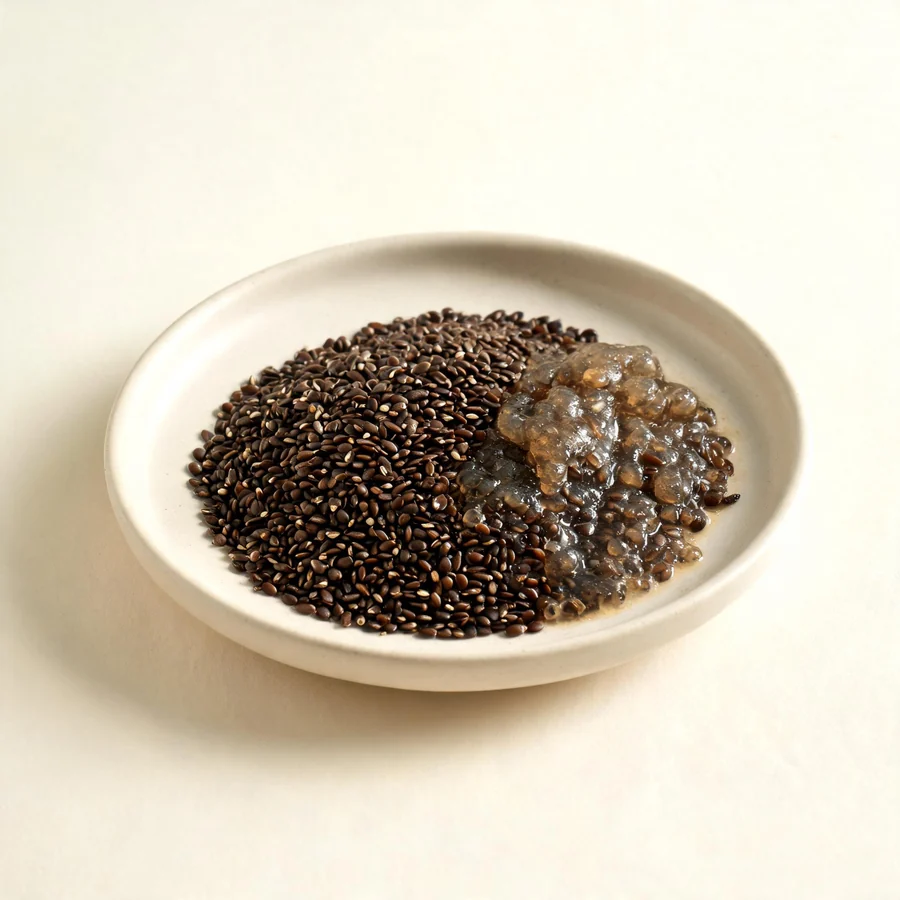
- The seed's mucilage is the best-characterised part: it swells in water and behaves as a bulk-forming demulcent, which is why the seed is wrapped in cloth for decoction and why it is taken with plenty of water. That property explains the traditional preparation more convincingly than it explains any effect on the skin.
- Laboratory work on Plantago species reports anti-inflammatory and antimicrobial activity in extracts, and there is animal work on blood pressure and glucose handling. None of it is a trial of the seed in eczema, itch or any other skin disease.
- Clinical trial evidence for the seed in dermatology is essentially absent, and the herb appears in skin formulas as one draining ingredient among several, so its own contribution has not been measured. It is an accepted substance in the Chinese Pharmacopoeia, and the page describes traditional practice rather than established benefit.
PubMed records
Selected real PubMed records for this herb's species or its constituents, chosen by species name and title relevance. They are references for the non-TCM discussion above, not proof that the herb treats any skin condition.
- Plantago asiatica L. extract alleviates hyperuricemia-associated renal injury by modulating gut microbiota to inhibit NLRP3 inflammasome activation.. Phytomedicine : international journal of phytotherapy and phytopharmacology, 2026. PMID: 41539089 (pharmacology or review record).
- Plantago asiatica L. polysaccharides: Physiochemical properties, structural characteristics, biological activity and application prospects: A review.. International journal of biological macromolecules, 2024. PMID: 38158057 (pharmacology or review record).
Dose and forms
Skin-practice dosing and the preparations that suit skin complaints.
| Form | Dose and notes |
|---|---|
| Decoction | 9 to 15 g of dried seed daily, decocted inside a cloth bag so that the mucilage does not thicken the whole pot. Some practitioners crush the seed lightly first so that the inner constituents are released. |
| Prepared forms | Stir-frying the seed makes it easier on the Stomach and is preferred wherever the Spleen is weak; processing with salt points it at the Kidney; untreated seed is reserved for the strongest clearing of heat. |
| Higher doses | Up to 30 g is used by some practitioners for acute water retention, briefly and with the patient watched. That is a practitioner decision and not a dose to take from a page. |
Wrapping the seed matters more than it sounds. Left loose, the seeds turn into a gluey lump that lines the pot and traps the other ingredients at straining time, so a cloth bag keeps both the decoction clean and the quantity predictable. Squeeze the bag gently afterwards rather than throwing the mucilage away. As a skin herb the dose is modest and the course is short, because the seed is a draining agent and a person with damp-heat skin usually needs the draining to stop once the ooze has settled.
Citations and further reading
Only real sources are listed: the classical materia medica passages quoted above, and the source works behind the botanical and safety statements.
- Ben Cao Gang Mu (Compendium of Materia Medica), Li Shizhen, 1578 - classical passage translated above.
- Yao Xing Lun (Discussion of the Properties of Medicines), Zhen Quan, Tang dynasty - classical passage translated above.
- Che Qian Zi monograph: Pharmacopoeia of the People's Republic of China - source for the accepted botanical source, part used and preparation.
- Modern evidence statement: based on literature on Plantago mucilage and on laboratory work in Plantago species, summarised as a statement about the level of evidence rather than as a cited finding.
- Botanical description and identification: botanical literature on Plantago asiatica, Plantaginaceae.
Educational reference for qualified practitioners. This page is not medical advice, and skin conditions should be diagnosed by a clinician before treatment.