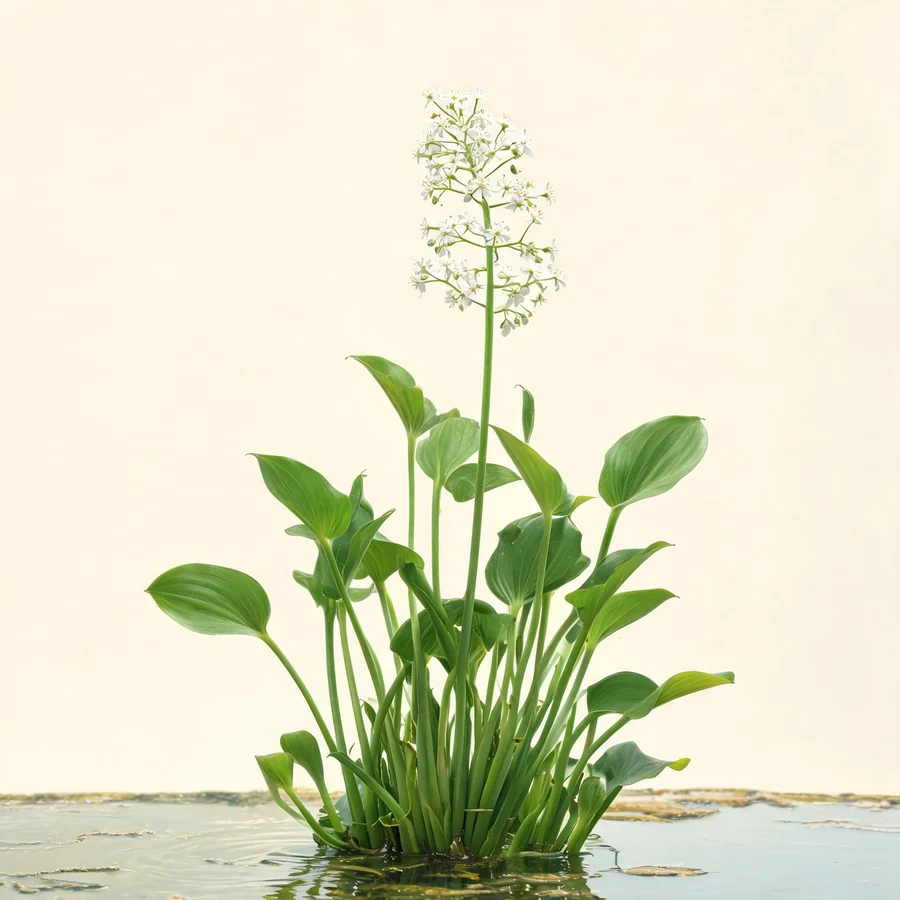
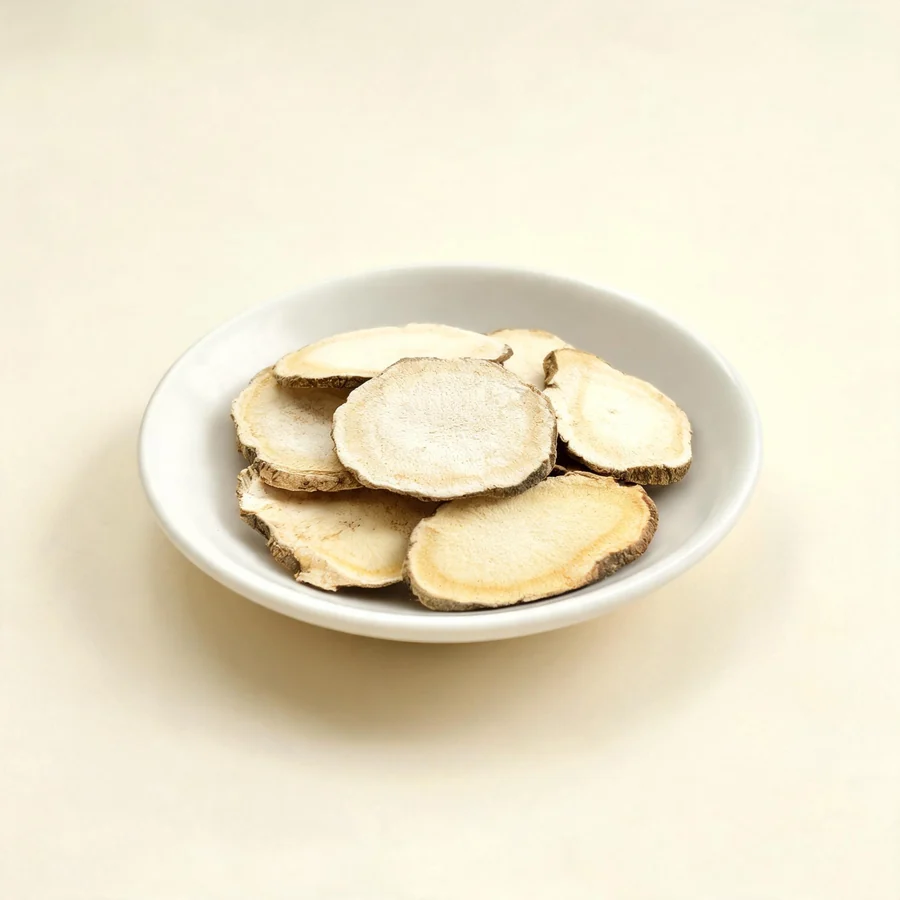
Skin profile
Where this herb sits in skin practice: the pattern it corrects, the skin signs it suits, and what it should not be used for.
Ze Xie is chosen for skin that is wet, greasy and puffy rather than red and dry, and it is used for as long as there is something to drain. In a skin formula it is rarely the leading herb and almost never the only one; its job is to remove the fluid that keeps a lesion moist, and to stop once that job is done.
Skin signs that suggest it
- Weeping lesions with a sticky yellow discharge and a greasy surface
- A scalp and face that are oily and scaly at once, with redness in the folds beside the nose
- Itch, redness and moisture in the groin, genitals or perianal skin
- Puffiness around the eyes on waking, or ankles that swell by evening, with scanty urine
- A yellow greasy tongue coat, a slippery pulse, and a heavy feeling in the limbs or head
When it is not the right herb
Not for dry, thin, scaling skin, and not where there is no Dampness to remove: draining a body already short of fluid makes the dryness worse and undoes what a Yin tonic is doing. Not for cold, deficient digestion with loose stools and a pale tongue, because the cold descending action loosens the stool further. Not for prolonged use at high dose, and not alongside a prescribed diuretic without review. If the skin is hot, red and dry rather than moist, this is the wrong herb.
What it does for skin
Skin-relevant actions only. Each one describes a mechanism in TCM terms and what it looks like on the skin.
Drains Dampness and reduces ooze
A sweet, bland taste is read as leaching fluid away, and the route out is the urine. On the skin that shows as less weeping, less stickiness, and a lesion that dries from the base rather than crusting over a pool of fluid. It is combined with Fu Ling and Yi Yi Ren so the drainage is steady rather than abrupt, and it is used while the lesion is wet.
Clears Heat from the lower body where damp-heat has settled
Damp-heat that pours downward produces the itchy, red, moist skin of the groin and genital area, and this rhizome is in the classical formula for that picture. Its cold nature clears the Heat while its blandness carries the Dampness away, which is why the two are treated together rather than one after the other. The formula is the usual context, since the herb is rarely used alone.
Reduces puffy, boggy swelling of the skin
Soft swelling that gathers under the eyes or at the ankles, in a person who feels heavy and passes little urine, is fluid the body has not moved. Ze Xie opens the water pathway so the swelling settles, and it is used with Bai Zhu, which strengthens the transformation that failed. Swelling of one leg, breathlessness or sudden weight gain needs medical assessment rather than a herb.
Keeps a cooling formula from becoming cloying
Damp-heat formulas are full of cold, sweet and moistening herbs, and in a damp person those can add to the problem they are meant to treat. Ze Xie drains the excess fluid so the richer herbs can do their work. This is the reason it appears among the draining components of the Yin tonics given for dry skin with a greasy sheen and low-grade Heat.
Resolves turbidity so a lesion loses its greasy quality
Turbidity is the tradition's word for Dampness that has thickened: greasy scale, a sticky discharge, an oily sheen over an inflamed base. Ze Xie is described as separating the clear from the turbid, and the visible result on the skin is that the greasiness recedes. It is used with aromatic herbs that move turbidity outward, and with Huang Qin where Heat is also present.
Skin conditions it is used for
Mapped to the condition pages on this site. The pattern column shows what the skin is doing when this herb is the right choice.
| Condition | Pattern | Why it suits | Typical setting |
|---|---|---|---|
| Eczema | Damp-heat with a wet, weeping flare | A flare that weeps, smells, crusts yellow and itches worse in heat is the damp-heat picture, and Ze Xie is the draining herb inside the formula that clears it. It is used with Huang Qin and Ku Shen while the lesion is wet, and it is stopped once the skin is dry, since drying an already dry phase is the wrong direction of travel. | Long Dan Xie Gan Tang with Ku Shen and Bai Xian Pi |
| Seborrhoeic dermatitis | Damp-heat rising to the face and scalp | Greasy yellow scale on a red base, worst in the nasolabial folds and along the hairline, is read as Dampness that has combined with Heat. Ze Xie drains the Dampness that the greasiness represents, and it is used with Huang Qin and Zhi Zi in a formula directed at the upper body. It is a supporting herb, and medicated shampoo or cream remains the first measure. | Long Dan Xie Gan Tang with Huang Qin and Zhi Zi |
| Jock itch | Dampness pooling in the groin with Heat | Moist, itchy, reddened skin in the groin folds, returning in warm weather or tight clothing, fits the damp-heat pattern, and the herb is in the standard formula for it because it drains downward. Keeping the area dry and treating the fungus directly are the measures that end the episode, and the formula supports them. | Long Dan Xie Gan Tang with Huang Bo and Ku Shen |
| Itchy genitalia | Damp-heat in the Liver channel | Genital itch with moisture and redness is read through the Liver channel, which runs through the groin, and damp-heat is the usual pattern. The rhizome drains the Dampness that keeps the skin wet and the itch alive, always within a formula. Persistent or one-sided itch, bleeding or a visible change in the skin needs examination. | Long Dan Xie Gan Tang with Che Qian Zi and Zhi Zi |
| Skin swelling | Fluid collecting because the water pathway is blocked | Puffiness that pits, gathers under the eyes and settles at the ankles with scanty urine is fluid that has not been moved. Ze Xie opens the pathway, and it is used with Bai Zhu and Fu Ling so that drainage is supported by better transformation. Swelling with breathlessness, chest pain or a single hot swollen leg is a medical matter. | Wu Ling San with Bai Zhu and Fu Ling |
Combinations for skin
Herbs it is paired with when the skin, not an internal organ, is the target.
| Partner | Ratio | Why the pair is used |
|---|---|---|
| Fu Ling | 6 to 10 g each | Fu Ling seeps Dampness gently and supports the Spleen at the same time, whereas Ze Xie drains harder and clears Heat. The pair is the core of the water-regulating formulas, and in skin practice it is the base for a wet, greasy, puffy picture. Fu Ling can be continued for months, which is the practical difference between the two. |
| Bai Zhu | 10 g Bai Zhu with 6 to 10 g Ze Xie | Bai Zhu rebuilds the Spleen's transforming work and Ze Xie removes what has already gathered, so one treats the source and the other the accumulation. The classical proportion favours the draining herb where fluid is the immediate problem. In skin practice the pair is used for pale, puffy, clammy skin in someone whose digestion is weak. |
| Huang Qin | 6 to 10 g each | Huang Qin clears Heat and dries Dampness in the upper body while Ze Xie drains it from below, so the pair covers a damp-heat picture that shows on the face and in the limbs at once. Both are cold and both are drying, which is why the pair belongs to short courses rather than to maintenance. |
| Mu Dan Pi | 6 to 10 g each | Mu Dan Pi cools Blood and clears Liver Heat, and Ze Xie draws deficiency fire down and out with the urine. The two are the draining herbs of the Yin-tonifying formulas, set against the tonics so that richness does not become Dampness. In skin practice that balance is used for dry skin with a greasy sheen and a low-grade feeling of heat. |
Formulas where it leads
- Long Dan Xie Gan Tang (龙胆泻肝汤) - The formula for damp-heat in the Liver and Gallbladder channels, and the setting in which Ze Xie most often reaches the skin: weeping eczema, genital and groin itch, and greasy seborrhoeic scale. The bitter cold herbs clear the Heat and the draining herbs, this one among them, carry the Dampness out.
- Wu Ling San (五苓散) - The classical formula for water that has collected because the transformation of fluids has stalled. Ze Xie is one of its three draining herbs, and in skin practice the formula is the context for puffy, clammy, heavy skin with scanty urine rather than for a red lesion.
Safety for skin use
What to check before recommending or using it, including the cautions that matter most for skin patients.
Do not use, or use with caution
- Dry skin, or a Yin-deficient picture with no Dampness: a herb that drains takes fluid the body is already short of, and the old principle that draining water does not enrich Yin applies directly to skin work.
- Cold-deficient Spleen and Stomach with loose stools, a pale tongue and a cold abdomen. The cold, descending action loosens the stool further and can leave the digestion worse than it was.
- Long courses at high dose, with no clear damp pattern to justify them. Modern concern centres on electrolyte loss and kidney strain, while the classical caution is that vision dims once drainage has gone on too long.
- Anyone already taking a diuretic, or with impaired kidney function, should not add it without review.
Pregnancy and breastfeeding
Used cautiously and only under supervision. It does not appear among the herbs traditionally forbidden in pregnancy, and one classical formula uses it for generalised swelling, yet the draining, cooling character keeps it to a clear fluid-retention pattern with a practitioner watching. Excessive diuresis could in theory disturb fluid balance, so the dose stays modest and the course short. While breastfeeding, generous use could reduce supply because the herb is strongly diuretic, so it is avoided unless prescribed for a clear damp pattern.
Interactions
- Diuretics and lithium: two diuretic actions add together, so a loop, thiazide or potassium-sparing diuretic alongside the herb raises the risk of dehydration, low potassium and shifting lithium levels. Electrolyte checks are worth arranging when it is added to such treatment.
- Diabetes medicines and statins: animal work shows falls in glucose and in blood lipids, so effects may add up, and high doses of the herb and statins both ask questions of the liver. Monitoring is the answer rather than outright avoidance.
- Medicines handled by the liver: at high doses animal work shows several cytochrome pathways changing pace. No human data exist, so care is reasonable where a medicine depends heavily on one of those pathways.
Allergy and patch testing
Allergy is uncommon. Contact reactions to herb-containing washes are the practical concern, and material that has been sulphur-fumigated can irritate the skin and the airways. The fresh plant is irritant, which is one reason only the dried rhizome is used.
General safety references
General references for herbal hepatotoxicity and herb-drug interactions; they are not specific to this herb.
- Review article: Herbal hepatotoxicity - an update on traditional Chinese medicine preparations. Alimentary Pharmacology & Therapeutics, 2014. PMID: 24844799.
- Interactions between herbal medicines and prescribed drugs: an updated systematic review. Drugs, 2009. PMID: 19719333.
- Warfarin and food, herbal or dietary supplement interactions: a systematic review. British Journal of Clinical Pharmacology, 2021. PMID: 32478963.
Evidence
The classical record is quoted with its source. The modern note states the level of evidence plainly.
Classical record
Its Qi is neutral and its flavour sweet and bland. Blandness seeps and drains, and because both Qi and flavour are thin it moves water downward. Where the Spleen and Stomach hold damp-heat, the head is heavy and the eyes dim; once the dampness is seeping away the heat goes with it, Earth regains its office and clear Qi rises. Taken too long, however, the descending influence prevails, clear Qi fails to rise and true Yin is quietly consumed, so the eyes dim.
Ben Cao Gang Mu (Compendium of Materia Medica), Li Shizhen - Action and warning sit in one passage here, which is why the caution travels with the herb.
Of all herbs, Ze Xie is the most skilled at seeping and draining the water passages, and its particular strength is in freeing urination.
Ben Cao Zheng Yi (Materia Medica in the Correct Sense) - A Qing restatement that discards the old tonic claims and keeps only the draining action, which is the one skin practice draws on.
Where branching fluid lies below the Heart and the person is distressed by dizziness and a foggy head, Ze Xie Tang governs.
Jin Gui Yao Lue (Essentials of the Golden Cabinet), Zhang Zhongjing - The classical use for retained fluid; the skin equivalent, Dampness that has collected and thickened, follows the same reasoning.
Modern evidence
Evidence status
- Laboratory studies of alisols A and B, the protostane triterpenoids characteristic of the genus, report diuretic, lipid-lowering and anti-inflammatory activity. These are mainly animal experiments, and they do not show a benefit for skin disease.
- Clinical trial evidence for Ze Xie in skin conditions is absent; it appears inside classical multi-herb formulas, and the studies that exist cannot separate its contribution. The traditional pattern is the only guide to using it.
- Safety literature is the more useful modern contribution here: high-dose or prolonged use is associated with water and electrolyte disturbance, and very high animal doses show liver and kidney effects. That is why the herb is given in short courses and modest doses.
PubMed records
Selected real PubMed records for this herb's species or its constituents, chosen by species name and title relevance. They are references for the non-TCM discussion above, not proof that the herb treats any skin condition.
- Effects and potential mechanisms of Alismatis Rhizoma extracts on glucose and lipid metabolism: A systematic review and meta-analysis of rodent studies.. Journal of ethnopharmacology, 2025. PMID: 40825387 (pharmacology or review record).
Dose and forms
Skin-practice dosing and the preparations that suit skin complaints.
| Form | Dose and notes |
|---|---|
| Decoction | 6 to 10 g of dried rhizome daily for skin use, always within a formula. Salting the slices points them at the Kidney, and frying them with bran makes them easier on the Spleen. |
| Ceiling | Up to 30 g in acute fluid retention under supervision, where the bowel may also move. That figure belongs to a practitioner treating oedema, not to routine skin prescribing. |
| Course length | Short. The herb is stopped once the ooze, greasiness or puffiness has settled, because continued drainage costs fluid and electrolytes and, classically, clarity of vision. |
| Form and timing | No special handling is needed; the sliced rhizome is decocted with the rest of the formula, and the effect is judged by urine output and by the skin. |
The dose follows the pattern more than the body weight: modest inside a tonic formula where the herb is a counterweight, larger where the fluid itself is the pressing issue, as it is in the swelling formulas. Duration is the real variable, because the draining action depletes fluid over time. Anyone taking a diuretic, or with reduced kidney function, should have the herb reviewed rather than simply added.
Citations and further reading
Only real sources are listed: the classical materia medica passages quoted above, and the source works behind the botanical and safety statements.
- Ben Cao Gang Mu (Compendium of Materia Medica), Li Shizhen, 1578 - classical entry quoted above.
- Ben Cao Zheng Yi (Materia Medica in the Correct Sense), Qing period - classical entry quoted above.
- Jin Gui Yao Lue (Essentials of the Golden Cabinet), Zhang Zhongjing, Han period - classical entry quoted above.
- Ze Xie monograph: Pharmacopoeia of the People's Republic of China - source for the accepted botanical source, part used and quality requirements.
- Modern evidence statement: based on laboratory and toxicological literature on Alisma orientale and its protostane triterpenoids, summarised as a statement about the level of evidence rather than as a cited finding.
- Botanical description: botanical literature on Alisma orientale, Alismataceae.
Educational reference for qualified practitioners. This page is not medical advice, and skin conditions should be diagnosed by a clinician before treatment.