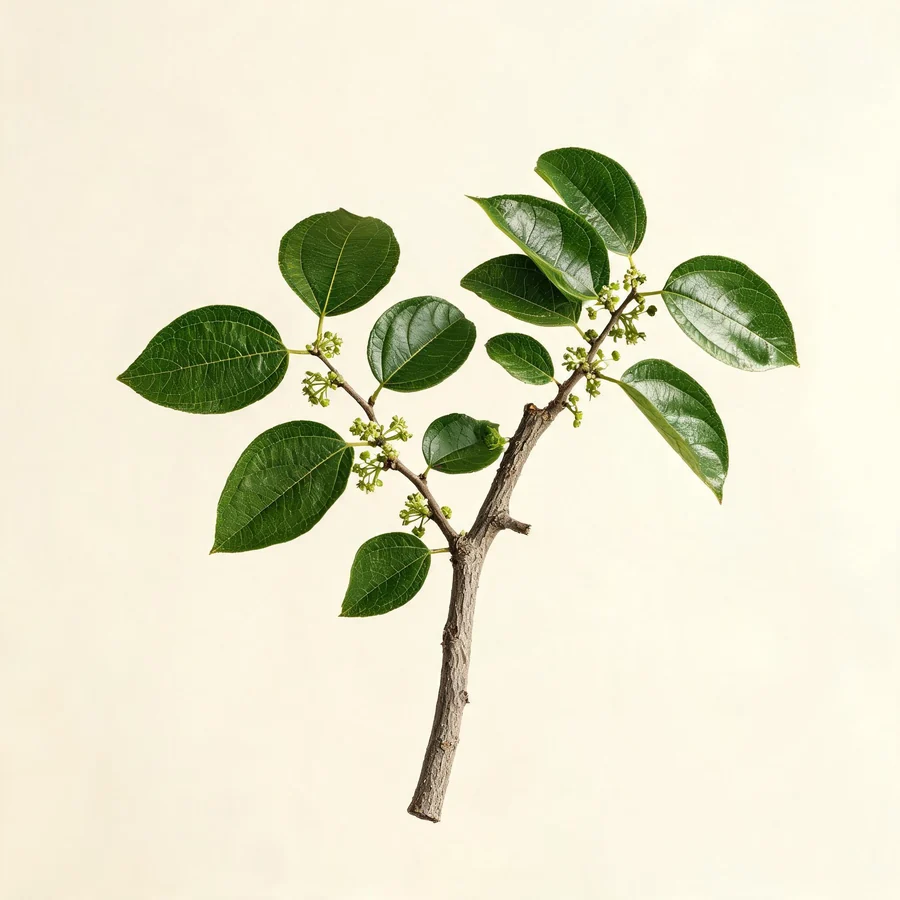
Skin profile
Where this herb sits in skin practice: the pattern it corrects, the skin signs it suits, and what it should not be used for.
Du Zhong is a warming tonic bark, and its place on a skin page is the deficiency end of the spectrum: dry, thin, itchy skin, cracked feet and numbness in a depleted person. The one classical skin line, itch and dampness of the genital region, is narrow and is not a licence for the common damp-heat genital itch. The signs that forbid it are heat, redness, discharge and burning. Judged over months and alongside ordinary skin care, it supports the supply; it does not treat the surface.
Skin signs that suggest it
- Dry, thin, itchy skin in an older person, with a weak lower back and aching knees
- Genital itch that is dry and irritating rather than weeping, in a depleted person
- Heels and soles that crack and split, with aching feet and a reluctance to walk on hard ground
- Numbness or a wooden feeling in the skin of the limbs, without weakness on one side
- A pale, moist tongue and a deep, weak pulse, weakest on the Kidney positions
When it is not the right herb
Not for red, hot, weeping or infected skin, and not for a genital itch with discharge, odour or burning, which is damp-heat and needs clearing rather than warming. Not where Yin deficiency is generating heat, with a parched throat, night sweats, flushes and a tongue that has lost its coating. Not for a threatened miscarriage from Qi sinking rather than Kidney deficiency, where the descending quality can make matters worse. Sudden numbness on one side, or a new painless ulcer, needs urgent medical assessment rather than a tonic.
What it does for skin
Skin-relevant actions only. Each one describes a mechanism in TCM terms and what it looks like on the skin.
Nourishes the Kidney and Liver so the skin is supplied
The tradition pairs the Kidney with the bones and the Liver with the sinews, and the skin is nourished by what those systems send to the surface. A depleted person shows it as thin, dry, inelastic skin that bruises and itches, and the bark is used to restore the supply rather than to treat the surface directly. It is a slow action, measured over months, and it works alongside sleep, food and the ordinary care of the skin.
Clears itch and dampness of the lower body
The classical entry names itch and dampness of the genital region, and that is the one place where the bark is described as acting on the skin itself. It is used where the itch is dry and irritating and the person is depleted, not where there is discharge, odour or burning. The last three are damp-heat, and a warm tonic bark would make them worse.
Strengthens the sinews and bones, which shows in the legs and feet
Aching feet, weak knees and heels that split are read as the same deficiency at the far end of the channels. The bark is a principal herb for that picture, and the skin signs on the feet are expected to improve as the supply reaches them. Care of the feet still matters: an emollient, sensible footwear and, in diabetes, regular inspection.
Warms without drying, so it suits cold deficiency rather than dry heat
Its warmth is gentle and its nature is not drying, which distinguishes it from the drying tonics used for dampness. That makes it usable in older skin that is both thin and cold, where a drying herb would be too much. It still adds to heat, so a person with flushes and night sweats needs a different approach.
Skin conditions it is used for
Mapped to the condition pages on this site. The pattern column shows what the skin is doing when this herb is the right choice.
| Condition | Pattern | Why it suits | Typical setting |
|---|---|---|---|
| Itchy genitalia | Kidney and Liver deficiency with dryness of the lower body | Genital itch is read through the Liver channel and the Kidney's control of the lower orifices, and the dry, irritating kind without discharge points to deficiency rather than damp-heat. The bark is the warming element in a nourishing, partly cooling formula, added for the Kidney deficiency behind the dryness, and it is the one classical herb in the group named specifically for itch and dampness in that region. Itch with discharge, odour, burning or a new ulcer needs medical assessment and screening. | Modified Zhi Bo Di Huang Wan with Du Zhong |
| Senile pruritus | Blood and Yin deficiency with dryness and wind | Itch in later life is read as dryness from declining Blood and Yin, with wind moving in the gaps. The bark strengthens the Kidney root while the nourishing herbs supply the Blood, and it is chosen where the back and knees are weak as well. Persistent itch with weight loss, jaundice, a new medicine or a rash needs investigation. | Dang Gui Yin Zi with Du Zhong and He Shou Wu |
| Cracked skin | Kidney deficiency with cold, dry feet | Heels that split and feet that ache on walking are read as the Kidney failing to supply the lower end of the channels. The bark is used with warming and nourishing herbs over weeks, and local treatment of the cracks continues alongside. A crack that becomes hot, swollen or discharges needs medical care, particularly in diabetes. | Modified Liu Wei Di Huang Wan with Du Zhong |
| Skin numbness | Liver and Kidney deficiency failing to nourish the skin | Numbness that comes on gradually, in a depleted person with a weak back and cold limbs, is read as Qi and Blood failing to reach the skin. The bark strengthens the lower body while the formula dispels wind-damp and nourishes the Blood. Sudden numbness on one side of the body, slurred speech or a facial droop is a stroke warning and needs emergency care at once. | Du Huo Ji Sheng Tang with Du Zhong |
Combinations for skin
Herbs it is paired with when the skin, not an internal organ, is the target.
| Partner | Ratio | Why the pair is used |
|---|---|---|
| Niu Xi | 10 to 15 g each in decoction | Achyranthes directs the action downward to the legs and the bark strengthens the Kidney and Liver, so the pair is used for weak knees, aching feet and the skin signs that go with them. Both appear in the classical formulas for the lower body, and the combination is judged by walking and by the state of the feet rather than by the skin alone. |
| He Shou Wu | 10 to 15 g each | Prepared fleeceflower nourishes the Blood and the Liver and the bark strengthens the Kidney, which is the pairing used for dry, itchy skin and for hair and nail changes in depletion. The two together are warmer than either alone, so the combination is avoided in a person with a red tongue and night sweats. |
| Dang Gui | 10 g Dang Gui with 10 to 15 g Du Zhong | Angelica supplies the Blood and the bark supplies the force that keeps the lower body supplied, and the pair is used for dry, thin skin with a weak back. It is a nourishing combination rather than a moving one, and it suits a slow course over weeks rather than a short intervention. |
| Huang Qi | 15 to 30 g Huang Qi with 10 to 15 g Du Zhong | Astragalus lifts Qi to the surface and the bark strengthens the root it comes from, so the pair covers the supply and the delivery together. It is used for slow-healing skin and for the numbness and dryness of depletion, and the astragalus is usually the larger part of the pair. |
Formulas where it leads
- Du Huo Ji Sheng Tang (独活寄生汤) - The formula for wind-damp with Liver and Kidney deficiency, with the bark, achyranthes, angelica, peony and the wind-damp herbs. Its skin relevance is the cold, numb, aching limb with thin skin, and it is the classical setting in which the bark is combined with nourishing herbs.
- Qing E Wan (青娥丸) - A small classical formula of the bark with psoralea and walnut for a weak lower back and aching legs. Its place on this page is the same deficient lower body, and the skin signs that accompany it are the dry feet and the thin, inelastic skin of depletion.
Safety for skin use
What to check before recommending or using it, including the cautions that matter most for skin patients.
Do not use, or use with caution
- Yin deficiency with heat: a parched throat, night sweats, hot flushes and a tongue with little coating. A warm bark feeds that picture instead of easing it.
- Red, hot, weeping or infected skin, and genital itch with discharge, odour or burning. Those are damp-heat or infection, and a warming tonic bark would make them worse.
- A threatened miscarriage that stems from Qi sinking rather than from Kidney deficiency. The classical commentary warns that a descending quality can worsen a fetus held only weakly by Qi.
- New or unexplained numbness, a painless ulcer, or a change in a long-standing skin lesion. These need assessment and are not tonic problems at all.
Pregnancy and breastfeeding
Few herbs have a longer obstetric record, and the bark is one of the principal choices for a threatened miscarriage that comes from Kidney deficiency. The caution is about differentiation rather than prohibition: where instability comes from Qi failing to hold, a descending quality may worsen matters, and any bleeding needs its cause established first. Outside practitioner guidance it is not given in pregnancy, and doses stay modest. Nothing prohibits it during breastfeeding; modest doses, briefly, are the customary practice.
Interactions
- Blood pressure medicines. The bark lowers pressure modestly on its own, so an ACE inhibitor, a diuretic, a beta-blocker or a calcium channel blocker may in theory add to that effect. Home readings over the first weeks are a reasonable check, and the herb never stands in for prescribed treatment.
- Anticoagulants, and medicines that lower glucose. Laboratory work points to mild effects on the vessels and on glucose handling rather than to any clear clinical interaction, so the sensible course is to inform the prescriber and carry on monitoring as before.
- No clinical interaction has been published for the bark at ordinary doses, which is a gap in the literature rather than a reassurance, and an older person on several medicines is best reviewed as a whole list.
Allergy and patch testing
Allergy to the bark is uncommon, but a warm tonic formula can produce a rash as a sign that the pattern is wrong rather than as an immune reaction, and such a rash usually settles when the herb is stopped. Anyone with a known plant sensitivity, or who has reacted to a herb-containing cream or wash, should be cautious, and a new rash after starting a course is reviewed rather than continued through.
General safety references
General references for herbal hepatotoxicity and herb-drug interactions; they are not specific to this herb.
- Review article: Herbal hepatotoxicity - an update on traditional Chinese medicine preparations. Alimentary Pharmacology & Therapeutics, 2014. PMID: 24844799.
- Interactions between herbal medicines and prescribed drugs: an updated systematic review. Drugs, 2009. PMID: 19719333.
- Warfarin and food, herbal or dietary supplement interactions: a systematic review. British Journal of Clinical Pharmacology, 2021. PMID: 32478963.
Evidence
The classical record is quoted with its source. The modern note states the level of evidence plainly.
Classical record
The lumbar spine and its pain come first in the entry, followed by supplementing the middle, increasing Essence and Qi, strengthening sinews and bones and firming the will. It then names itch and dampness of the genital region together with the dribbling of urine that goes with them, and promises that prolonged use lightens the body and postpones age.
Shen Nong Ben Cao Jing (Divine Husbandman's Classic of Materia Medica) - Summarised rather than quoted. The lower back is named first, which matches the bark's later reputation, and itch below the waist is the one direct skin indication in this classical record.
Sweet, warm and free of poison, says the later text, and it treats the aching feet of a person who will not willingly set them on the ground. That brief entry already carries the use down from the back to the limbs.
Ming Yi Bie Lu (Supplement to the Classic of Materia Medica) - Summarised rather than quoted. The feet matter on a skin page, because cracked heels and thin, dry skin of the feet follow the same deficiency.
Li Shizhen adopts Wang Haogu's reading and puts the bark among the Liver's Qi-level medicines, moistening dryness and filling vacuity there. Sinew is the Liver's business and bone the Kidney's, so a Kidney with substance gives strong bones and a Liver with substance gives supple sinews.
Ben Cao Gang Mu (Compendium of Materia Medica), Li Shizhen - Summarised rather than quoted. The passage that turned a remedy for the back into a Liver and Kidney tonic, and the reasoning that carries it into dry, thin and inelastic skin.
Modern evidence
Evidence status
- The bark is studied mainly for its lignans and iridoids, and laboratory work describes anti-inflammatory, antioxidant and vascular effects in cell and animal systems. Feeding studies in rats have not shown acute toxicity at high doses of a standardised extract, which is a safety observation rather than a skin finding.
- No controlled trial of Du Zhong in pruritus, dry skin, cracked heels or genital itch was identified. The skin use rests on the deficiency pattern and on the one classical line about itch and dampness below the waist.
- Regulatory status: the dried bark holds a monograph in the Chinese Pharmacopoeia, and the leaf became a separate drug in 2005, which relieved some of the pressure on bark taken from slow-growing trees. Familiarity is not evidence of effect for the skin.
PubMed records
Selected real PubMed records for this herb's species or its constituents, chosen by species name and title relevance. They are references for the non-TCM discussion above, not proof that the herb treats any skin condition.
- Anti-inflammatory effects of Eucommia ulmoides Oliv. male flower extract on lipopolysaccharide-induced inflammation.. Chinese medical journal, 2019. PMID: 30681498 (skin-related record).
Dose and forms
Skin-practice dosing and the preparations that suit skin complaints.
| Form | Dose and notes |
|---|---|
| Decoction | A daily decoction of 6 to 15 g. Six to ten grams supports a formula; ten to fifteen when the bark leads, whether for a chronic weak back or for a threatened pregnancy. |
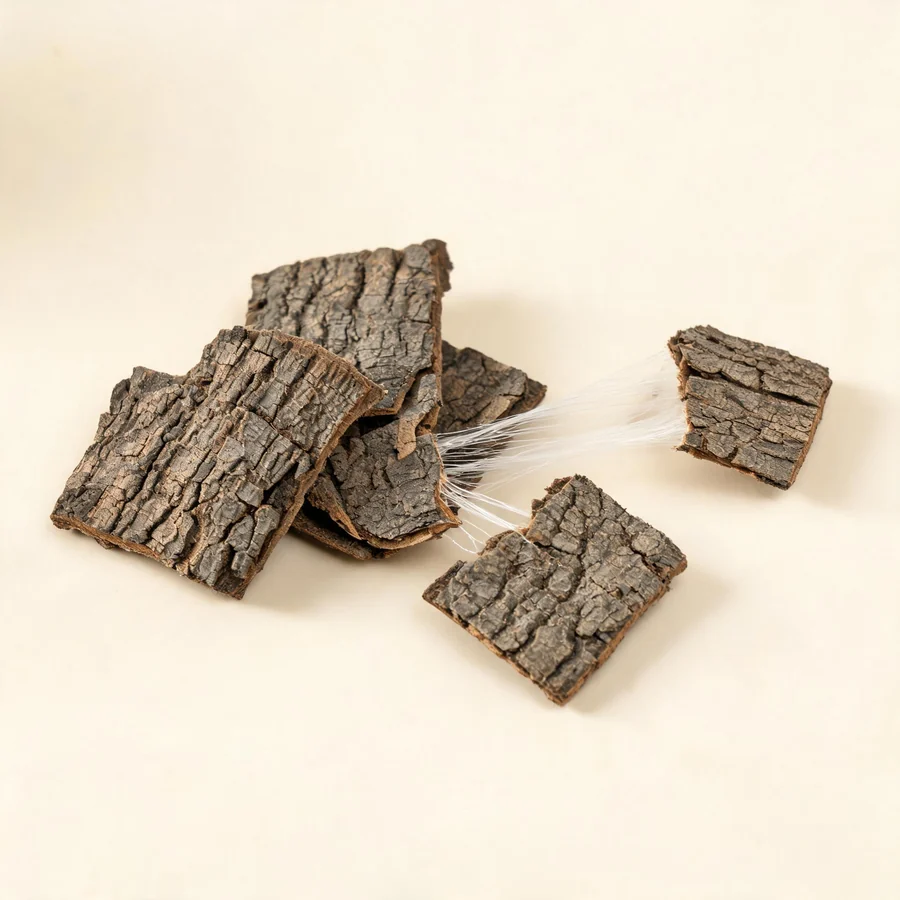
| Salt-fried bark | The preferred dispensary form: pieces stir-fried until the threads snap and the surface darkens. The processing exists for extraction rather than safety, because the rubber matrix holds the constituents back in water. |
| Course length | Weeks to months, with review. Improvement is read from the back, the knees and the skin together, and a course that brings thirst or irritability is reduced. |
The salt-fried form is not a refinement but a practical necessity: unprocessed bark holds its constituents in a rubbery matrix and gives them up poorly in water, so the pieces are fried until the threads break easily. Courses run for weeks because the action is nourishing rather than correcting, and the dose is judged by warmth as much as by effect, since the bark is warm and a person who becomes thirsty or irritable is being given too much. Raised blood pressure needs monitoring throughout, and the bark is an adjunct rather than a replacement for treatment.
Citations and further reading
Only real sources are listed: the classical materia medica passages quoted above, and the source works behind the botanical and safety statements.
- Shen Nong Ben Cao Jing (Divine Husbandman's Classic of Materia Medica), attributed compilation of the Han period - classical entry summarised above.
- Ming Yi Bie Lu (Supplement to the Classic of Materia Medica), Tao Hongjing, Southern and Northern Dynasties - classical entry summarised above.
- Ben Cao Gang Mu (Compendium of Materia Medica), Li Shizhen, 1578 - classical entry summarised above.
- Eucommiae Cortex monograph: Pharmacopoeia of the People's Republic of China - accepted botanical source, part used and quality requirements.
- Modern evidence statement: based on published laboratory and animal literature on Eucommia ulmoides lignans, summarised as a statement about the level of evidence rather than as a cited finding.
- Cultivation and conservation: botanical and forestry literature on Eucommia ulmoides.
Educational reference for qualified practitioners. This page is not medical advice, and skin conditions should be diagnosed by a clinician before treatment.