Skin profile
Where this herb sits in skin practice: the pattern it corrects, the skin signs it suits, and what it should not be used for.
Dang Gui is chosen when the skin is undernourished rather than inflamed: dry, pale, thin and slow to heal, or dusky from stasis on top of a deficiency. Its warmth and richness mean that the digestive picture and any bleeding risk are checked before a course begins.
Skin signs that suggest it
- Dry, pale, thin skin that feels cool and looks dull or lifeless (Blood deficiency)
- Fine scaling and cracking in winter, worst on the shins, hands and lips
- Dusky, bruised-looking or grey-brown patches that persist (deficiency with stasis)
- Chronic eczema that has become dry and lichenified after the oozing phase has passed
- Itch and numbness of the skin, worse at night and in cold weather
- A pale tongue with a thin white coat and a fine pulse
When it is not the right herb
Not for acute damp-heat or heat toxin: red, weeping, oozing or pustular skin with a greasy tongue. The root is warm, sweet and moistening, so it can feed the Dampness and heat that are already driving the flare. It is also the wrong choice for oily, congested skin with a heavy feeling, and for any skin that is actively bleeding.
What it does for skin
Skin-relevant actions only. Each one describes a mechanism in TCM terms and what it looks like on the skin.
Nourishes Blood and moistens the skin
Blood deficiency shows on the skin as thinness, pallor, a dull or grey cast, fine scaling and a rough, papery feel, often worst on the shins, hands and lips. Dang Gui is the principal herb for rebuilding that substance, and the tradition treats the moisture it restores as coming from within rather than from a cream. It is given over weeks with a Blood tonic partner, so that the skin has material to rebuild from instead of only a surface dressing.
Moves Blood and disperses stasis
Because the root both nourishes and moves, it suits the mixed picture where a deficiency has allowed Blood to stagnate. On the skin that looks like dusky or bruised colour that will not fade, fixed tender nodules, old injury marks and the grey-brown patches of melasma. The movement is gentle, so it is safer for a depleted person than a strong breaker of stasis would be, and it is paired with Chuan Xiong or Tao Ren when the stasis has become more fixed.
Warms the channels and drives Cold from the extremities
Cold congeals Blood, and where that happens at the surface the fingers, toes, ears and nose become cold, dusky and tender, which is the chilblain picture. Dang Gui warms the channels while moving the Blood that the cold has slowed, and its classical partner for this is cinnamon twig or Rou Gui. It is chosen when the skin is cold and pale to the touch and the problem is clearly worse in winter or in a cold room.
Settles itch that comes from dryness and deficiency
Itch without redness, in thin dry skin, worse at night, in winter or after washing, is read as Blood failing to nourish the surface. Dang Gui does not suppress the sensation; it treats the dryness that produces it, and it is combined with wind-dispelling herbs such as Fang Feng and with other Blood tonics. Where the itch comes with heat, oozing or raised wheals, a cooling herb is the better lead.
Supports the healing of slow, indolent lesions
Skin that heals badly, stays pale and does not granulate, or breaks down repeatedly at the same site, is read as a surface that lacks the Blood and Qi to rebuild. Dang Gui supplies the substance while Huang Qi supplies the force, which is the logic of the classic five-to-one pairing. Wound cleaning, offloading and treatment of infection remain the first measures; the herb is a supporting one rather than a substitute.
Skin conditions it is used for
Mapped to the condition pages on this site. The pattern column shows what the skin is doing when this herb is the right choice.
| Condition | Pattern | Why it suits | Typical setting |
|---|---|---|---|
| Eczema | Blood deficiency with wind-dryness in the chronic, lichenified stage | When the weeping stage has passed and the skin is left dry, thickened, cracked and greyish, with itch that wakes the person at night, the pattern has changed from damp-heat to deficiency with wind-dryness. Dang Gui nourishes the Blood that the skin is short of and moves it gently so the dryness does not become fixed. It is used with wind-diffusing and itch-settling herbs, and it is not given while the skin is still oozing. | Dang Gui Yin Zi, or Si Wu Tang with Fang Feng and Bai Xian Pi |
| Skin dryness | Blood deficiency failing to moisten the surface | Dry, rough, finely scaled skin in a pale, tired person, worse in winter and after washing, is the surface expression of Blood deficiency. The root is the main Blood tonic in the materia medica and is used whenever dryness is part of a broader deficiency rather than a reaction to a product. It is given over weeks inside a nourishing formula, and greasy external emollients are still needed alongside it. | Si Wu Tang with Mai Men Dong and Bai Shao |
| Melasma | Blood stasis on a background of deficiency, in the face | Symmetrical grey-brown patches on the cheeks and forehead, without scaling or redness, are read as stasis in the facial vessels, and in practice they usually sit on a depleted picture with irregular periods, fatigue and a pale tongue. Dang Gui suits this because it moves without breaking and nourishes at the same time, so the stasis is addressed without further depleting the person. Sun protection remains essential, and the patches often take months to fade. | Tao Hong Si Wu Tang, or Xiao Yao San with Dang Gui |
| Vitiligo | Blood deficiency with wind and stasis at the surface | Depigmented patches with a well-defined edge, no scaling and no heat are read in this tradition as wind and stasis sitting where Blood no longer reaches the surface. Dang Gui is a standard supporting herb in that approach because it nourishes and moves Blood, and it is given with wind-diffusing and pigment-moving herbs. The evidence is traditional, results are slow and partial, and repigmentation is not guaranteed. | Modified Tao Hong Si Wu Tang with Bai Ji Li and He Shou Wu |
| Chilblains | Cold congealing Blood in the distal skin | Dusky, cold, tender or itchy fingers, toes, ears and nose in cold weather are the classic picture of cold that has slowed the Blood. Dang Gui warms the channels and moves Blood without dispersing it, which is what a cold, depleted periphery needs, and it leads the classical formula for cold in the extremities. Warming the body, dry gloves and avoiding sudden intense heat are part of the treatment. | Dang Gui Si Ni Tang |
| Cracked skin | Blood deficiency with Cold-dryness at the surface | Deep fissures on heels, knuckles and lips that split in cold, dry weather, in skin that is otherwise pale and thin, are read as Blood and fluids failing to reach the surface. Dang Gui moistens and nourishes from within while warming the channels, so it suits the winter pattern better than a purely cooling tonic. Emollient protection and avoiding harsh soaps remain the first measures. | Dang Gui Yin Zi with Mai Men Dong, or Si Wu Tang |
Combinations for skin
Herbs it is paired with when the skin, not an internal organ, is the target.
| Partner | Ratio | Why the pair is used |
|---|---|---|
| Huang Qi | 5 parts Huang Qi to 1 part Dang Gui, for example 25 g with 5 g | The archetypal Qi and Blood pairing. Huang Qi supplies the force that moves and builds, Dang Gui supplies the substance, and together they are used for pale, dry, slow-healing skin in a tired person. The five-to-one proportion is classical, and it keeps the formula moving rather than cloying, which matters when the skin is both dry and sluggish. |
| Chuan Xiong | 10 g each | Dang Gui nourishes while Chuan Xiong moves, so the pair suits skin that is deficient and stagnant at once: dull colour, fixed tender patches, and dryness with a poor blood supply. Chuan Xiong moves more forcefully and tends upward, so the pair is used for dusky facial skin and for headache on a Blood-deficiency background. |
| Bai Shao | 10 g each | Bai Shao gathers and softens while Dang Gui makes and moves, which is the Blood pair at the centre of Si Wu Tang. On the skin the pair is used for dryness with tightness, for a pale complexion, and for the kind of itch that comes with dry, undernourished skin rather than with heat. |
| Shu Di Huang | 10 g Dang Gui with 12 g Shu Di Huang | Shu Di Huang is the heavier Blood and Yin tonic, and Dang Gui adds the movement that keeps it from stagnating. The pair is chosen for chronic dryness with a sallow complexion, dizziness and thin skin that bruises easily, where a single nourishing herb would be too rich and too static. |
| Rou Gui | 10 g Dang Gui with 3 g Rou Gui | Rou Gui warms the channels and expels Cold, while Dang Gui feeds and circulates the Blood that Cold has slowed. The pair suits skin that is cold, dusky and tender, such as chilblains and poor circulation at the fingers and toes. The cinnamon stays a small share of the formula because it is hot and drying. |
Formulas where it leads
- Si Wu Tang (四物汤) - The foundational Blood-building formula, with Dang Gui as the moving nourisher alongside Bai Shao, Shu Di Huang and Chuan Xiong. In skin practice it is the base to which wind-diffusing or itch-settling herbs are added when dryness and deficiency dominate, and it is given over weeks rather than days.
- Dang Gui Yin Zi (当归饮子) - A Blood-nourishing, wind-diffusing formula for chronic dry, itchy skin and for eczema that has lost its ooze. Dang Gui leads the nourishing half while the wind herbs address the surface itch, which is the pattern this page describes.
- Dang Gui Si Ni Tang (当归四逆汤) - The classical formula for cold that has congealed Blood in the extremities, with dusky, cold and tender fingers and toes. Dang Gui leads it, with cinnamon twig and a small amount of asarum to warm the channels, and it is the formula context for chilblains.
Safety for skin use
What to check before recommending or using it, including the cautions that matter most for skin patients.
Do not use, or use with caution
- Active bleeding, heavy periods or a bleeding disorder. The root moves Blood and can make bleeding worse, and the tradition also avoids it before surgery for the same reason.
- Damp-heat or Dampness in the middle: oily or oozing skin, a greasy coating, bloating and loose stools. The sweet, moistening root can add to the Dampness and leave the skin more congested.
- Yin deficiency with internal heat: hot flushes, night sweats, a red dry tongue and heat in the skin. The warm, rich root may increase the feeling of heat rather than settle it.
- Exterior patterns that have not cleared, such as a fresh spreading rash with fever. The classical caution is that a rich tonic given too early can hold the pathogen at the surface.
Pregnancy and breastfeeding
Use only under practitioner supervision. Modern practice avoids Dang Gui in the first trimester because it moves Blood, and later it is used at a reduced dose and only for a clear deficiency. The tail of the root carries the stronger moving action and is the part most often left out. The classical sources genuinely disagree about pregnancy, which is why the decision belongs with a practitioner. In breastfeeding, standard doses appear in postpartum formulas that rebuild after birth, with the caveat that unexpected bleeding, or a baby who feeds poorly, should prompt a review.
Interactions
- Anticoagulants and antiplatelet drugs such as warfarin, heparin, aspirin and clopidogrel: the root has antiplatelet activity of its own, so the effect adds up and bleeding risk rises. Anyone on these medicines should not start a regular course without telling the prescriber.
- Hormone-sensitive medicines, including hormone replacement, oral contraceptives and tamoxifen: some laboratory work suggests mild oestrogenic activity, so the question is worth raising even though the clinical evidence is limited.
- Blood pressure and glucose medicines: vasodilating and glucose-lowering effects have been reported in laboratory work, so readings may shift when a concentrated product is added to a stable regimen.
- Before surgery or dental work, mention the herb, because its effect on platelets outlasts the last dose and the surgeon needs the full picture.
Allergy and patch testing
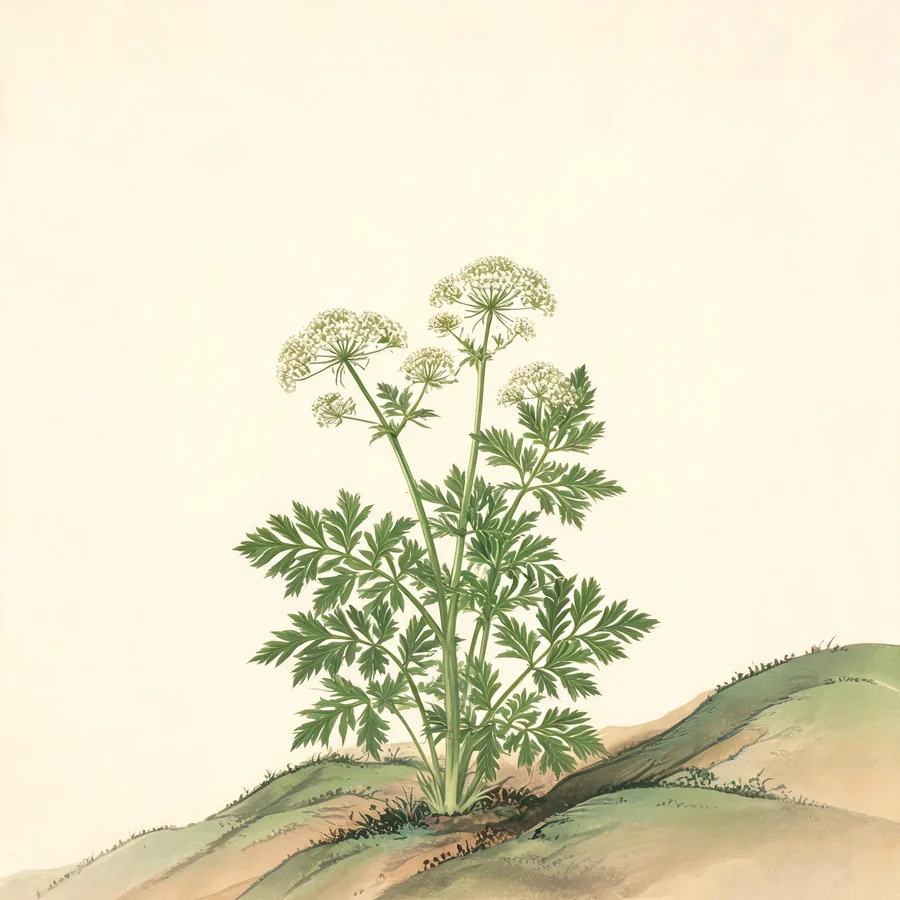
Contact dermatitis to Dang Gui in creams, oils and washes is recognised, and the root is a member of the Apiaceae family, so people who react to celery, fennel or other umbellifers should be cautious with it. Patch test any topical preparation on a small area of normal skin for 24 hours, and stop at once if the skin becomes more irritated rather than calmer.
General safety references
General references for herbal hepatotoxicity and herb-drug interactions; they are not specific to this herb.
- Review article: Herbal hepatotoxicity - an update on traditional Chinese medicine preparations. Alimentary Pharmacology & Therapeutics, 2014. PMID: 24844799.
- Interactions between herbal medicines and prescribed drugs: an updated systematic review. Drugs, 2009. PMID: 19719333.
- Warfarin and food, herbal or dietary supplement interactions: a systematic review. British Journal of Clinical Pharmacology, 2021. PMID: 32478963.
Evidence
The classical record is quoted with its source. The modern note states the level of evidence plainly.
Classical record
It governs cough and rebellious Qi, heats and colds, and the skin where it is numb or itching.
Shen Nong Ben Cao Jing (Divine Husbandman’s Classic of Materia Medica) - The earliest entry already names the skin, and the words for numb and itching are the ones later skin practice builds on.
治头痛,心腹诸痛,润肠胃、筋骨、皮肤,治痈疽,排脓止痛,和血补血。
It treats headache and the various pains of the chest and abdomen, moistens the intestines, stomach, sinews, bones and skin, treats abscesses, expels pus and stops pain, and harmonises and nourishes the Blood.
Ben Cao Gang Mu (本草纲目) - Li Shizhen - The entry that gathers the skin, the abscesses and the work on Blood in a single list, which is the warrant for using the root on dry and slow-healing skin.
当归,其味甘而重,故专能补血,其气轻而辛,故又能行血,补中有动,行中有补,诚血中之气药,亦血中之圣药也。
The flavour of Dang Gui is sweet and substantial, so it is able to nourish the Blood; its Qi is light and pungent, so it is also able to move the Blood. Within its tonifying there is movement, and within its movement there is tonification. It is truly a Qi-moving herb within the Blood, and a sage herb among Blood medicines.
Ben Cao Zheng (本草正) - Zhang Jiebin - A classical statement of the two-sided action, nourishing and moving at once, on which the skin use depends.
Modern evidence
Evidence status
- Laboratory studies of Angelica sinensis extracts and of ferulic acid report antioxidant, anti-inflammatory and circulation-related activity, and some work looks at pigmentation and wound healing. These are mainly cell and animal studies rather than trials in people with skin disease.
- Clinical trial evidence for Dang Gui as a treatment for eczema, melasma or vitiligo is limited and mostly comes from small studies of multi-herb formulas published in Chinese-language journals. No robust conclusion about benefit can be drawn from it.
- The coumarin content and the resulting antiplatelet effect are the best documented pharmacological findings, and they are the basis of the bleeding caution rather than of any claim about efficacy.
PubMed records
Selected real PubMed records for this herb's species or its constituents, chosen by species name and title relevance. They are references for the non-TCM discussion above, not proof that the herb treats any skin condition.
- Integrated in vitro - in vivo evaluation of Angelica sinensis essential oil as an anti-acne agent: Mechanistic insights into bioactive compounds and multi-target therapeutic actions.. Journal of ethnopharmacology, 2026. PMID: 41482092 (skin-related record).
- Nephroprotective effects of ferulic acid, Z-ligustilide and E-ligustilide isolated from Angelica sinensis against cisplatin toxicity in vitro.. Toxicology in vitro : an international journal published in association with BIBRA, 2015. PMID: 25561245 (safety record).
Dose and forms
Skin-practice dosing and the preparations that suit skin complaints.
| Form | Dose and notes |
|---|---|
| Decoction | 6 to 12 g of dried root daily, in a formula. Six to nine grams gives a gentle nourishing and moistening effect, and 10 to 12 g is used when pallor, dryness and stasis are pronounced. |
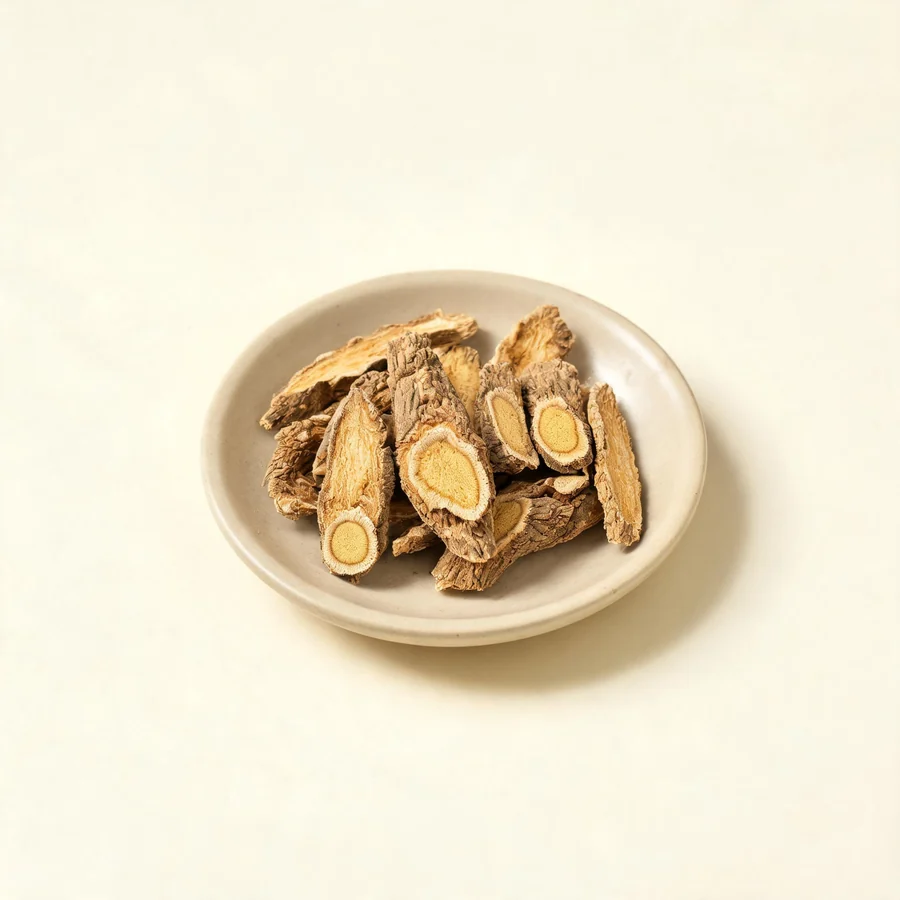
| Part of the root | Tradition gave the three sections of the root separate jobs: the head where bleeding had to be checked, the middle for nourishment and the tip for movement. Most sliced root is whole body, and the tail is left out where bleeding is a concern. |
| Processed forms | Wine-fried root is chosen when movement matters, earth-fried when the stool is loose, and charred root when bleeding is the problem. The raw slice is the usual form in skin formulas. |
| Course length | Several weeks to months, because rebuilding Blood is slow. Review every few weeks, and reduce the dose if bloating or loose stools appear. |
Skin practice uses moderate doses: the aim is to nourish without cloying. Because the root is moistening and moving, the two questions that set the dose are the state of the digestion and whether there is any bleeding. Where the stool is loose or the tongue greasy, the dose is kept low and a drying or Qi-moving herb is added. The upper figures belong to a clinical formula for marked deficiency with stasis rather than to a household measure, and the herb is not usually continued at high dose for months without review.
Citations and further reading
Only real sources are listed: the classical materia medica passages quoted above, and the source works behind the botanical and safety statements.
- Shen Nong Ben Cao Jing (Divine Husbandman's Classic of Materia Medica), attributed compilation of the Han period - classical entry quoted above.
- Ben Cao Gang Mu (Compendium of Materia Medica), Li Shizhen, 1578 - classical entry quoted above.
- Ben Cao Zheng (本草正), Zhang Jiebin, Ming dynasty - classical entry quoted above.
- Dang Gui monograph: Pharmacopoeia of the People's Republic of China - source for the accepted botanical source, part used and quality requirements.
- Modern evidence statement: based on laboratory and review literature on Angelica sinensis and ferulic acid, summarised as a statement about the level of evidence rather than as a cited finding.
- Botanical description and identification: botanical literature on Angelica sinensis, Apiaceae.
Educational reference for qualified practitioners. This page is not medical advice, and skin conditions should be diagnosed by a clinician before treatment.