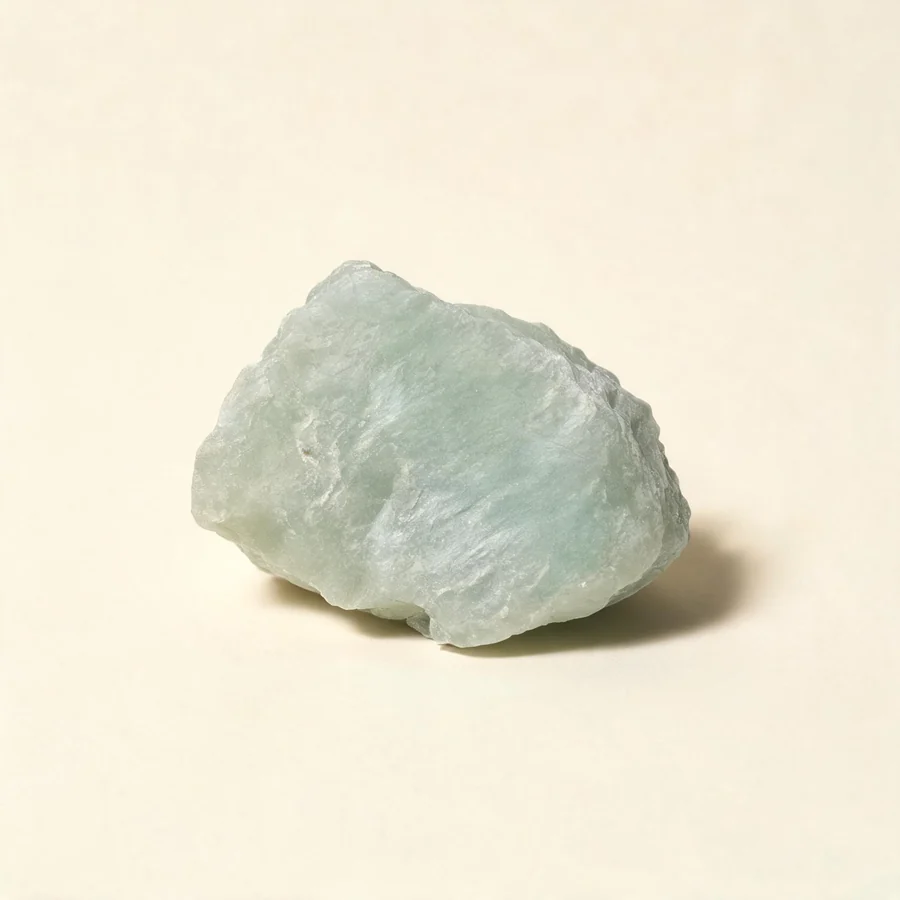
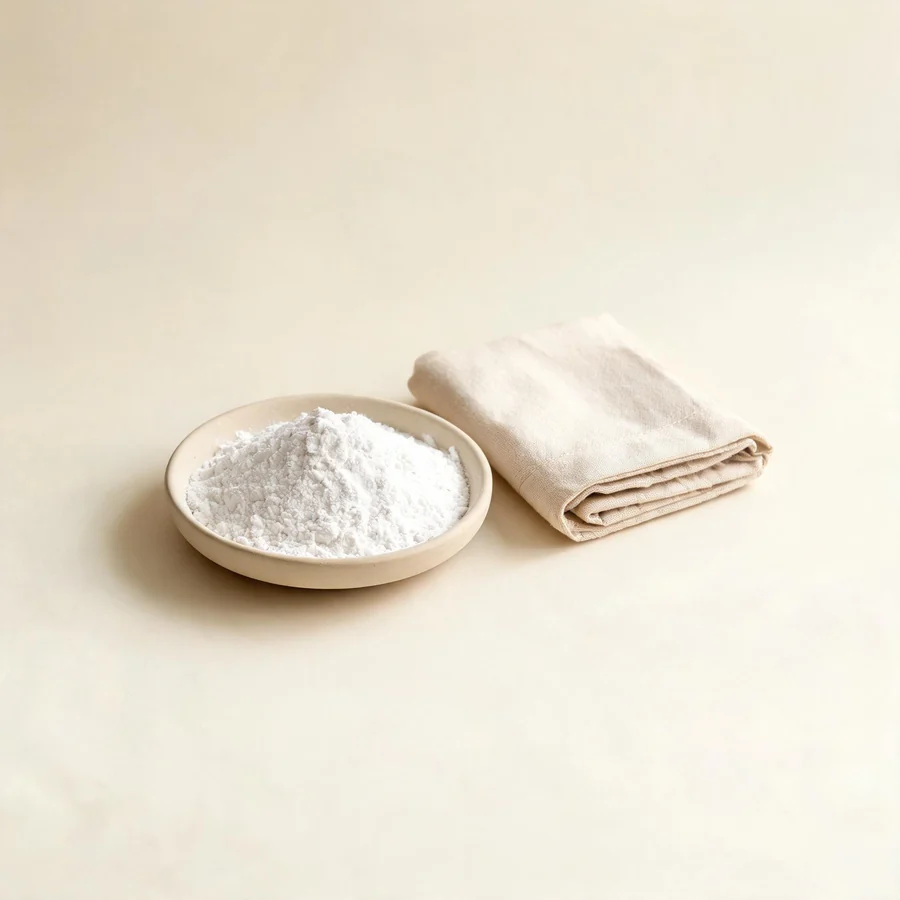
Skin profile
Where this herb sits in skin practice: the pattern it corrects, the skin signs it suits, and what it should not be used for.
Hua Shi is a surface treatment first: a dry, cooling powder for wet, hot, itchy skin and for folds that rub. The grade is the safety question, and an asbestos-free certificate matters more than any dose.
Skin signs that suggest it
- Red, itchy papules in folds, under clothing or after sweating (heat rash from damp-heat)
- Weeping, oozing or macerated patches with a sticky surface and a red base
- A nappy area that stays warm and wet, with redness in the creases and small satellite papules
- Itch with a clammy, moist surface that is worse in humid weather
- Scanty, dark, hot urine alongside a damp-heat skin flare
When it is not the right herb
Not for dry, scaly or lichenified skin: an absorbent powder takes up what little moisture there is and adds to cracking. Not for broken, ulcerated or openly infected skin, or for a rash that is spreading quickly, because powder can cake, trap moisture and hide what is happening underneath. Not internally in cold-deficient digestion with loose stools, and not where scanty dark urine comes from fluid depletion rather than damp-heat. Never use uncertified cosmetic or industrial talc on skin.
What it does for skin
Skin-relevant actions only. Each one describes a mechanism in TCM terms and what it looks like on the skin.
Absorbs moisture and dries a weeping surface
The powder works by contact. Spread thinly over a moist fold or a weeping patch, it takes up surface fluid and reduces the maceration that keeps skin raw. This is why it suits the wet phase of a rash and the creases of the groin, armpit and nappy area, and why it is the wrong choice for dry, scaly or lichenified skin. The effect lasts until the powder becomes damp, so it is reapplied after washing and drying rather than layered on top of old powder.
Cools hot, red, irritated skin
Talc is cold in the classification of the tradition, and a thin dusting gives a genuine cooling sensation on prickly heat, chafed skin and mild sunburn-like redness. The cooling is physical and temporary: it lowers the surface temperature while the cause is addressed, and it is no substitute for shade, fluids and cooling the room in heat illness. In a formula taken by mouth the cold, bland nature is what drains summer heat from the inside.
Reduces friction and protects the surface
The softness of the mineral is part of its usefulness. Dusted on skin that rubs against skin or clothing, it lowers friction and helps prevent the raw, inflamed patches that follow repeated chafing, which is the reasoning behind its long use in nappy rash and in skin folds. A barrier preparation is usually needed as well, and the area should be cleaned and thoroughly dried before anything is applied.
Drains damp-heat downward when taken internally
Hua Shi is bland and cold, and it is taken by mouth to give damp-heat a route out through the urine. In skin practice that matters when a wet, red, itchy eruption is accompanied by scanty dark urine: the surface is damp and the downward passage is dry, and the mineral addresses both ends of the same picture. It is a short-course measure, not a diuretic to take habitually, and it is avoided where the urine is scanty because the body is already dry.
Settles itch that comes from moisture and heat
Itch that is worse in humidity, with a clammy surface and small red papules, responds to drying and cooling rather than to a sedating antipruritic. The powder reduces the wet film that keeps the itch going, and taken internally the mineral clears the damp-heat behind it. Dry neuropathic itch and itch from blood deficiency are different pictures, and an absorbent powder makes them worse.
Skin conditions it is used for
Mapped to the condition pages on this site. The pattern column shows what the skin is doing when this herb is the right choice.
| Condition | Pattern | Why it suits | Typical setting |
|---|---|---|---|
| Heat Rash | Summer heat and dampness trapped at the surface | Prickly heat produces small red papules where sweat cannot escape, and a dusting of talc is the simplest traditional answer: it dries the surface, cools it and reduces the friction of clothing. The powder is applied after the skin is washed and dried, and the room, the clothing and fluid intake matter as much as the herb. A widespread rash with fever, confusion or collapse is heat illness and needs urgent medical care, not a dusting powder. | A plain talc dusting powder, or Liu Yi San taken as a cold drink where heat and thirst are marked |
| Diaper Rash | Damp-heat and friction in the nappy area | A nappy area is warm, wet and rubbed, which is damp-heat with friction added. A thin film of certified talc takes up moisture and lowers friction, and it is used with frequent nappy changes and a barrier cream rather than instead of them. Broken skin, bleeding, a rash with satellite pustules or one that is spreading needs medical review, because infection and candida need proper treatment and powder can obscure them. | A thin talc dusting with a zinc oxide barrier cream, and a damp-heat formula internally only under advice |
| Eczema | Weeping damp-heat phase on limited areas | Talc suits the short wet phase of eczema, when a patch is oozing and the surrounding skin is intact, because it takes up the exudate and cools the surface. It is not a treatment for eczema as a whole, and it is stopped as soon as the skin dries and begins to scale. On large or broken areas a clinician should guide the choice, and a prescribed topical treatment is not replaced by a powder. | A talc and calcined gypsum dusting powder on intact weeping skin, with Huang Qin and Ku Shen internally where damp-heat is clear |
| Itchy Skin | Moist itch with heat and clamminess | When itch comes with a moist, clammy surface, small red papules and a worsening in humid weather, drying and cooling are the useful moves. A thin dusting reduces the wet film, and an internal damp-heat formula addresses the cause. The herb is a poor choice for dry, thin, itchy skin, which needs moisture rather than absorbency. | Liu Yi San internally, with a talc dusting powder on the affected area |
| Jock Itch | Damp-heat in the groin folds | The groin is the classic intertriginous site: warm, moist, rubbing and often already colonised by fungus. Talc keeps the fold drier and reduces friction, which helps comfort, but it does not treat a fungal infection, so an antifungal is the definitive treatment where tinea is present. Powder is applied sparingly to dry skin only, and stopped if the area becomes more red or begins to weep. | A talc dusting powder alongside a prescribed antifungal, with damp-heat herbs internally where indicated |
Combinations for skin
Herbs it is paired with when the skin, not an internal organ, is the target.
| Partner | Ratio | Why the pair is used |
|---|---|---|
| Gan Cao | Six parts Hua Shi to one part Gan Cao | The six to one powder, Liu Yi San, is the best known preparation of the mineral. The liquorice protects the Stomach and makes the cold, bland powder easier to take, and the mixture is stirred into water as a cooling drink for summer heat with thirst and scant dark urine. In skin practice it is used when a heat rash or a clammy itch comes with the same internal picture. It is a short-term summer preparation, not a daily drink. |
| Duan Shi Gao | 10 g Hua Shi with 10 g calcined Shi Gao | Calcined gypsum is the other traditional drying powder, and the two are blended for dusting weeping, irritated skin. Gypsum adds a stronger cooling and drying quality while talc gives slip and absorbency, and the blend is used sparingly on intact skin. Both are minerals with no nutritional role, and neither should be applied to broken or infected skin without supervision. |
| Ku Shen | 15 g Hua Shi with 10 g Ku Shen in a cooled wash | Ku Shen is the skin-specific bitter for damp-heat and itch, and Hua Shi adds absorbency and cooling to a wash. The decoction is used as a rinse or compress on moist, itchy areas, and it is kept to short contact because both are drying. Ku Shen is not for large areas of broken skin, and the wash is discarded after use. |
| Che Qian Zi | 9 to 15 g Che Qian Zi with 9 to 15 g Hua Shi | Che Qian Zi is a plant diuretic that clears damp-heat through the urine, and it is gentler than the mineral. The pair is used internally when a damp-heat skin flare comes with burning, scanty urine, so that the heat has a route out. Neither is a treatment for a urinary infection with fever, which needs medical assessment, and the combination is kept to a short course. |
Formulas where it leads
- Liu Yi San (六一散) - Six parts talc to one part liquorice, stirred into water and drunk for summer heat with thirst, irritability and scanty dark urine. It is the clearest example of the cooling, bland nature of the mineral, and the same powder is used as a simple dusting on hot, moist skin. It is a preparation for a hot season and a short course, and it is not a treatment for heat stroke.
Topical use
Hua Shi is used on the skin as a dusting powder, a wash or a paste, and this is its main skin role. The powder must be fine, dry and certified asbestos-free; it is applied thinly to clean, dry skin and the old layer is washed or brushed off before a fresh application. It is not a wound dressing, and it should not be used on broken, ulcerated or infected skin.
| Preparation | How and when it is used |
|---|---|
| Dusting powder | Apply a thin film of certified pharmaceutical talc to clean, thoroughly dried skin, using a soft pad rather than a shaker near the face. Reapply after washing, and remove old powder first. Do not use it on broken skin, do not apply to the face of an infant, and keep the container closed and dry. |
| Cooling paste | Mix the powder with a little cooled boiled water to a thin paste and apply to intact, hot, itchy skin for a short period, then rinse. A paste sits on the surface longer than a dusting does, so it is used for minutes rather than left on, and it is not applied to weeping or broken areas. |
| Cooled wash | Stir 15 to 30 g of the mineral into 500 ml of water, bring it briefly to a simmer, then strain and cool. Use as a rinse or a short compress on heat rash or clammy itch, and make it fresh each day; the mineral settles, so the liquid is stirred before use. |
Patch test and cautions
Use only material with a current asbestos test report, and treat cosmetic and industrial grades as different substances. Keep powder away from a baby's face and never let it drift into the air, since breathing it in has caused grave lung damage. Patch test a small area first, stop if the skin becomes more irritated, and do not apply to broken, infected or rapidly spreading rashes.
Safety for skin use
What to check before recommending or using it, including the cautions that matter most for skin patients.
Do not use, or use with caution
- Uncertified talc. Natural deposits may carry tremolite or anthophyllite, and cosmetic or industrial material is no substitute for a pharmaceutical grade backed by an asbestos test. Water-levigation removes grit, not asbestos.
- Broken, ulcerated or infected skin, and any rash that is spreading quickly. Powder can cake, trap moisture and hide infection, and it is not a wound dressing.
- Dry, scaly or lichenified skin. An absorbent powder takes up the little moisture present and adds to cracking and tightness.
- Cold-deficient digestion with loose stools, poor appetite and a cold abdomen. Internal use is cold and slippery and can loosen the stool further.
- Fluid depletion. Thin, dry, thirsty people passing little dark urine have a deficiency picture, not damp-heat, and a draining mineral deepens the dryness.
Pregnancy and breastfeeding
Classical sources place the mineral among the cautious rather than the forbidden substances, reasoning that a slippery, descending material may unsettle the pregnancy, and later writers echoed that view. Modern practice confines it in pregnancy to a clear indication, at a minimal effective dose and under supervision. For skin use, a small dusted area is a very different exposure from a repeated internal course, but the asbestos question applies to both and the material has to be certified fibre-free before use. The mineral is hardly absorbed at all, so little reaches milk; keep powder off the nipple area so that the infant does not swallow it.
Interactions
- Oral medicines. Like kaolin and charcoal, an adsorbent powder can hold tablets in the gut and cut how much is absorbed, so doses are separated by about two hours. Narrow-window drugs matter most: thyroid hormone, digoxin, lithium and certain antibiotics.
- Prescribed topical treatment. Powder applied over a steroid cream or a calcineurin inhibitor can reduce absorption of the medicine and trap it under a drying layer; apply the prescribed cream first, let it dry, and use powder sparingly or at another time of day.
- Other laxatives and diuretics. Internal use is mild, but a cold slippery mineral taken with a laxative or a diuretic adds to fluid loss and to the risk of loose stools.
Allergy and patch testing
Contact dermatitis to talc itself is uncommon, but a reaction to another ingredient of a dusting powder, such as fragrance or boric acid, is well recognised. Patch test a small area for 24 hours, stop at once if the skin stings or reddens, and do not use a product whose full ingredient list is unknown.
General safety references
General references for herbal hepatotoxicity and herb-drug interactions; they are not specific to this herb.
- Review article: Herbal hepatotoxicity - an update on traditional Chinese medicine preparations. Alimentary Pharmacology & Therapeutics, 2014. PMID: 24844799.
- Interactions between herbal medicines and prescribed drugs: an updated systematic review. Drugs, 2009. PMID: 19719333.
- Warfarin and food, herbal or dietary supplement interactions: a systematic review. British Journal of Clinical Pharmacology, 2021. PMID: 32478963.
Evidence
The classical record is quoted with its source. The modern note states the level of evidence plainly.
Classical record
味甘,寒。主身热泄澼,女子乳难,癃闭。利小便,荡胃中积聚寒热,益精气。久服轻身,耐饥,长年。
Sweet, cold. It governs heat in the body, dysentery of blood and pus, difficult lactation in women, and blocked urine. It frees urination, scours accumulated cold and heat out of the stomach, and benefits essence and qi. Taken over a long period it makes the body light, lets hunger be borne, and lengthens the years.
Shen Nong Ben Cao Jing (Divine Husbandman's Classic of Materia Medica) - The oldest notice of the mineral is about urine, lactation and the Stomach, not the skin; the topical use rests on the physical absorbency described in later practice.
滑石利窍,不独小便也,上能利毛腠之窍,下能利精溺之窍。盖甘淡之味,先入于胃,渗走经络,游溢津气,上输于肺,下通膀胱。
Talc frees the orifices, and not the urinary one alone: above it frees the pores of the skin, below it frees the passages of semen and urine. Its sweet and bland flavour reaches the stomach first, then seeps through the channels and spreads the fluids, sending them up to the lung and down to the bladder.
Ben Cao Gang Mu (Compendium of Materia Medica), Li Shizhen - This is the passage that authorises a surface use, since it says the mineral frees the pores of the skin as well as the lower passages.
Modern evidence
Evidence status
- Talc is a chemically inert magnesium silicate. The established modern concern is contamination: natural talc can contain asbestos fibres, and pharmaceutical and cosmetic grades are tested for that reason. This is a safety finding, not a claim of benefit.
- No controlled clinical trial of talc for a skin disease was identified. The case for a dusting powder rests on its physical properties, which are well recognised in skin care: it absorbs moisture and reduces friction. Those properties explain the traditional use without proving that it treats eczema or infection.
- Inhalation of talc has caused severe respiratory injury, particularly in infants, and this is a separate hazard from asbestos. It is the reason powders are not used near a baby's face and why loose powder is handled carefully.
PubMed records
Selected real PubMed records for this herb's species or its constituents, chosen by species name and title relevance. They are references for the non-TCM discussion above, not proof that the herb treats any skin condition.
- A systematic review of the epidemiology evidence on talc and cancer.. Critical reviews in toxicology, 2024. PMID: 38868996 (pharmacology or review record).
Dose and forms
Skin-practice dosing and the preparations that suit skin complaints.
| Form | Dose and notes |
|---|---|
| Internal decoction | 9 to 24 g of the levigated mineral, put into a cloth bag before decocting so that the liquid stays clear instead of gritty. It is given for a short course when damp-heat comes with little dark urine, and the bag is the practical detail that makes the drink palatable. |
| Dusting powder | A thin film on clean, dry skin as needed, with no fixed weight. Only certified pharmaceutical grade is used, the powder is applied with a pad, and old powder is removed before a fresh application. |
| Summer powder | Six parts talc to one part liquorice, stirred into water and taken for summer heat with thirst and scant urine. It is a short-term seasonal preparation and not a treatment for heat stroke or dehydration. |
| Course length | Days to a week or two for internal use, with review. Stop if the stools loosen, the appetite falls or the skin becomes dry and tight. |
The safety variable is the grade, not the number of grams. Levigation cleans the mineral and takes out grit, yet it says nothing about asbestos, and a supplier's word is no substitute for a laboratory report. Store the powder dry and sealed, discard material spoiled by bathroom moisture, and keep it out of the reach of children.
Citations and further reading
Only real sources are listed: the classical materia medica passages quoted above, and the source works behind the botanical and safety statements.
- Shen Nong Ben Cao Jing (Divine Husbandman's Classic of Materia Medica), attributed compilation of the Han period - classical entry quoted above.
- Ben Cao Gang Mu (Compendium of Materia Medica), Li Shizhen, 1578 - classical entry quoted above.
- Hua Shi monograph: Pharmacopoeia of the People's Republic of China - source for the mineral identity, the water-levigated form and the asbestos requirement.
- Modern safety statement: based on regulatory and toxicological literature on talc and asbestos contamination, summarised as a statement about the level of evidence rather than as a cited finding.
- Mineralogy: literature on talc as hydrous magnesium silicate, its layered structure and its accessory minerals.
- Pharmacognosy and preparation: literature on water-levigation (shui fei) and on the difference between pharmaceutical, cosmetic and industrial grades.
Educational reference for qualified practitioners. This page is not medical advice, and skin conditions should be diagnosed by a clinician before treatment.