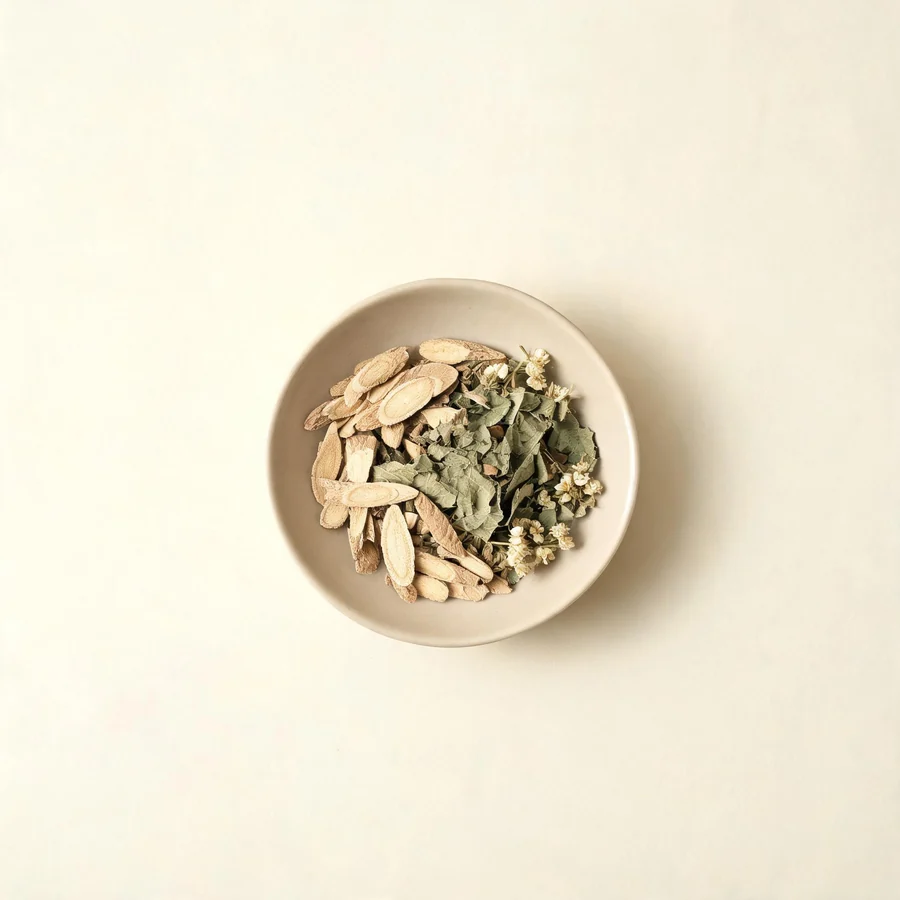
Understanding Diaper rash
The tradition describes diaper rash as a local manifestation of heat and dampness trapped in the Lower Burner, the region of lower abdomen, genitals and buttocks. The skin there is naturally vulnerable because it stays warm, wet and occluded.
Damp-Heat in the Lower Burner gives bright red moist skin that may weep, with burning or stinging, a rash concentrated in the skin folds where moisture collects, and a thick greasy coating.
Toxic-Heat gives bright red severely swollen skin with pustules or blisters, intense pain and crying when touched, and possible fever or restlessness. That is the picture that needs medical review, especially in a young baby.
Blood Stagnation with Heat gives dark purplish-red discolouration with fixed stabbing discomfort, dry rough or scaly skin and irritability. That is the pattern of long-standing, repeatedly irritated skin rather than a fresh acute rash.
The reasoning starts from anatomy. The skin under the diaper is part of the Lower Burner, the area of lower abdomen, genitals and buttocks, and it is the one part of a baby's skin kept warm, wet and covered for most of the day. Urine and stool held against the skin supply both moisture and heat, and the skin itself becomes macerated, which is why the rash looks wet and angry in the folds. A barrier that is constantly damp cannot do its job, so irritation spreads where the diaper presses and where moisture pools.
Left unresolved, the damp-heat can thicken into toxicity: the skin swells, small blisters or yellow pustules form, and the baby cries when the area is touched, sometimes with a low fever and unusual irritability. When the same patches are irritated again and again over weeks, the fine vessels are said to be damaged and blood congeals, leaving a dark purplish-red, dry, scaly area with a fixed stabbing discomfort that is worse at night. The classical literature reads that third picture as a sign of constitutional weakness behind the local problem, often a Spleen too weak to transform dampness. This is why two babies with the same diagnosis can need quite different treatment.
Conventional view
Conventional medicine classifies diaper rash as irritant contact dermatitis: moisture, urine and stool held against the skin for long periods break down the barrier, and the warm occluded space inside a diaper lets irritation build. Secondary yeast or bacterial infection can follow once the surface is damaged. It appears as patches of redness and inflammation over the buttocks, the genitals and the upper thighs, and can be as mild as a faint pink flush or as severe as raw tender skin that peels or develops small bumps, with the diagnosis usually made by looking, without any test.
Standard care is protective rather than curative. Diapers are changed frequently, the area is cleaned with plain water and a soft cloth without rubbing, and a thick barrier cream or ointment containing zinc oxide or petroleum jelly is applied to keep urine and stool off the skin, with air-drying time wherever possible. Where yeast is suspected an antifungal cream is used, and where bacteria have taken hold topical or oral antibiotics may be needed.
These measures work well for many babies, but they manage the surface rather than the tendency to inflammation, so some rashes persist or return despite diligent care and parents are left with stronger steroid creams and their own risks over prolonged use. Conventional care also does not separate the bright red weeping rash from the dark purplish dry one, treating both alike, whereas the pattern approach reads them as different imbalances that need different treatment.
Selected PubMed records
Real PubMed records for the conventional discussion above, selected by condition name and title relevance. They are references, not a claim that any treatment is proven for this condition.
- Preventive and curative approaches to diaper dermatitis in children: a systematic review.. Acta dermatovenerologica Alpina, Pannonica, et Adriatica, 2025. PMID: 41014074.
- Diaper dermatitis-a narrative review of clinical presentation, subtypes, and treatment.. Wiener medizinische Wochenschrift (1946), 2024. PMID: 37861874.
How it is assessed
The practitioner looks at the spread, the skin folds and the baby general state.
What a practitioner looks for
- Distribution: folds and moist areas suggest Damp-Heat.
- Pustules or blisters with pain suggest Toxic-Heat and need medical review.
- Colour: dark purplish discolouration suggests chronic irritation with stasis.
- Red flags: fever in a baby under three months, spreading redness or streaks.
A practitioner begins with the look and the feel of the skin. Bright red, moist, warm patches that weep, worst in the folds, are read as Damp-Heat in the Lower Burner, and the fussiness that comes with a burning sensation supports it. Deeper redness with swelling, blisters or yellow pustules, a very hot area and a baby who is hard to settle or slightly feverish move the reading toward Toxic-Heat, and a tongue that is red under a yellow coat, together with a rapid pulse, confirm that the heat is systemic rather than local.
Where the rash keeps returning the colour changes: darker red, purplish or brownish skin that feels dry rather than wet, with discomfort that stays in one place instead of spreading. The baby may be less acutely distressed, but the rash lingers, and a tongue tinged purple, or tiny dark spots on its body, are taken as signs that heat has damaged the local flow of blood.
The history fills in the rest. Bowel movements are asked about, since stools that are loose, foul-smelling and sour point to damp-heat whereas constipation, or urine that is very dark, suggests deeper heat, and feeding habits and any recent illness are reviewed. Timing is a useful clue: a rash that flares soon after a bout of diarrhoea usually reads as Damp-Heat, whereas one that develops slowly and never quite clears suggests Blood Stagnation with Heat.
TCM patterns in Diaper rash
Diaper rash is differentiated by what the skin is doing now and by how long it has been doing it. The first question is whether the surface is wet or dry. A bright red, weeping rash concentrated in the folds, with a burning sting and loose sour stools, is damp-heat sitting in the Lower Burner. If the area has become swollen and blistered, with yellow pustules, intense pain on touching and a low fever, the damp-heat has turned toxic and needs medical review as well as herbs. The second question is duration. Skin irritated repeatedly over weeks turns dark purplish-red, dry and scaly, with discomfort that is fixed and worse at night, which points to blood stasis with lingering heat rather than to a fresh acute rash. In practice these are stages of one process as often as separate types, so treatment is reassessed as a rash changes.
| Pattern | Key signs | The itch | Tongue | Main formula |
|---|---|---|---|---|
| Damp-Heat in the Lower Burner | Skin bright red, moist and may weep; Burning or stinging in the diaper area | Not specified | Body: Red, slightly swollen, with a coating thickest at the rootCoat: Yellow and greasy | Not specified |
| Toxic-Heat | Bright red severely swollen skin; Pustules or blisters | Not specified | Body: Red, often with raised red pointsCoat: Yellow, dry, sometimes thick | Not specified |
| Blood Stagnation with Heat | Dark purplish-red discolouration; Dry rough or scaly skin | Not specified | Body: Reddish-purple, with stasis spots and dark sublingual veinsCoat: Thin, dry and yellow | Not specified |
Damp-Heat in the Lower Burner
Bright red moist weeping rash in the skin folds.
The mechanism is simple and local. Urine and stool left against the skin keep the area warm and wet, and in this framework that combination is Damp-Heat. The Lower Burner is where turbid fluids are already being separated and sent downward, so the region is described as naturally prone to dampness, and a covered, unventilated diaper gives that dampness nowhere to go. The skin becomes macerated, reddens, and weeps where moisture collects, especially in the creases.
The tongue is red, its coating yellow and greasy, thickest at the root, and sometimes the body is slightly swollen; the pulse is slippery and rapid, more so at the rear position. Prolonged wet diapers, tight or non-breathable covers, hot humid weather and spicy or greasy food passed through breast milk all make it worse, while frequent changes, air-drying, breathable cloth and plain water cleansing help. Long Dan Xie Gan Tang is the formula named, with Long Dan Cao and Huang Bo as its key herbs, and SP-6 (Sanyinjiao) with SP-9 (Yinlingquan) are the points used to drain Dampness.
Signs
- Skin bright red, moist and may weep
- Burning or stinging in the diaper area
- Rash concentrated in skin folds
- Thick greasy coating
Diet and lifestyle for this pattern: Change the diaper as soon as it is wet or soiled, clean with warm water and pat dry rather than rubbing, and give the skin diaper-free time each day to breathe. If breastfeeding, the mother may want to avoid spicy, greasy and very sweet food for a while to reduce Damp-Heat passing through the milk.
Toxic-Heat
Swollen red skin with pustules or blisters and pain.
When damp-heat is left in place it can intensify rather than fade. The trapped heat is said to overwhelm the local defences, so instead of a red weepy surface the skin becomes swollen and painful, with blisters or small yellow pustules and crusting where they break. The baby's whole state reflects the change: crying when the area is touched, restlessness, and sometimes a low fever, because the heat is no longer confined to the skin.
The tongue body is red and prickly, with a dry yellow coat, and the pulse is rapid and forceful. Overheating, prolonged wet diapers and heating food passed through breast milk aggravate it, while air-drying, a cool room and gentle cleansing help. Wu Wei Xiao Du Yin is the first formula named, with Jin Yin Hua and Pu Gong Ying as its key herbs, and Huang Lian Jie Du Tang is added when the inflammation is severe; DU-14 (Dazhui) and LI-11 (Quchi) are the points used to clear heat and resolve toxicity.
Signs
- Bright red severely swollen skin
- Pustules or blisters
- Intense pain, crying when touched
- Possible fever or restlessness
Diet and lifestyle for this pattern: Keep the area clean and dry and allow as much diaper-free time as possible. For breastfeeding mothers, avoid spicy, greasy and heating food that can transfer Heat through breast milk.
Blood Stagnation with Heat
Dark purplish-red irritated skin with dry scaling.
Long-standing irritation injures more than the surface. Repeated inflammation in the same patch is said to damage the fine vessels, so blood congeals and stops moving freely, and the skin takes on a dark purplish-red colour that does not fade when the area is kept dry. Because the stagnation is fixed, the discomfort is fixed too: a stabbing quality that settles in one place and is worse at night, when circulation is described as slowing, rather than the spreading burn of a fresh rash. The skin often looks dry and scaly because the blood no longer nourishes it properly.
The tongue is reddish-purple with stasis spots and a thin dry yellow coat, and the pulse is choppy and rapid, sometimes wiry. Tight, non-breathable diapers, hot humid weather and heating food make it worse, while a cool dry environment, air-drying, gentle cleansing and cooling compresses help. Tao Hong Si Wu Tang is the formula named, with Tao Ren and Hong Hua as its key herbs and Chi Shao added to cool the blood, and SP-10 (Xuehai) with SP-6 (Sanyinjiao) are the points used to move blood and clear stasis.
Signs
- Dark purplish-red discolouration
- Fixed stabbing discomfort
- Worsens at night
- Dry rough or scaly skin
- Irritability
Diet and lifestyle for this pattern: Keep the diaper area clean and dry with gentle water rinses and patting, and allow plenty of diaper-free time so air can circulate and cool the skin. Use breathable natural-fibre diapers and avoid tight elastic bands, and if breastfeeding, the mother should avoid spicy, greasy and heating food while eating a cooling diet built around vegetables and moderate fruit.
Treatment approach
How the tradition treats diaper rash, with the herbs, formulas and points used for it.
Principles
- Keep the area clean, dry and aired, with frequent changes and a barrier cream.
- Clear heat and drain dampness where the rash is bright red and weeping.
- Clear toxicity and seek medical review where there are pustules or fever.
- Move Blood gently where the skin has become dark and thickened from chronic irritation.
- The order of work follows the skin. Local care comes first in every pattern, because the source of the dampness is a wet diaper rather than an internal imbalance, and no herb will settle a rash that is being re-irritated hourly. Once the area is kept clean, aired and protected, the herbal strategy is chosen by pattern: draining damp-heat for the weeping rash, clearing toxicity for the blistered one, and gently moving blood for the dark one. Internal herbs are kept for persistent or recurrent cases, and in a breastfed baby the mother's diet is treated as part of the plan.
- The strategy separates what is local from what is constitutional. The rash itself is the branch and is treated directly with washes, compresses or powders chosen by appearance; the tendency behind it, a Spleen too weak to transform dampness or a constitution that runs hot, is the root, and it is addressed with internal herbs only once the skin has settled or the rash keeps returning. In a breastfed baby the mother's diet belongs to that root work, since what she eats is what reaches the baby through the milk.
Herbs used
Formulas
Acupoints
What to expect
- Simple diaper rash is described as improving within a few days with barrier care.
- Fungal involvement needs specific antifungal treatment and responds more slowly.
- Persistent or recurrent rashes need review for fungal infection and other causes.
- Response is usually quick when the pattern is damp-heat, with visible settling inside a couple of days of consistent washing, drying and changing; blistering rashes take longer, and the dark stagnant picture can take a week or more. Recurrence matters more than speed, and a rash that returns whenever care slips usually means the underlying tendency has not been addressed. Any rash that spreads, blisters or comes with fever is reviewed medically rather than watched.
- The pace depends on the pattern. A damp-heat rash usually settles visibly within one to two days of consistent washing, drying and changing, a blistering toxic-heat rash takes three to five days to calm, and a dark purplish stagnant patch can take a week or more. The work is done at home, several times each day, rather than in clinic, since acupuncture is rarely used on infants, and parents can be shown gentle acupressure. If the rash has not improved after a few days of good care, or it worsens, the practitioner reassesses and may add internal herbs to support the baby's constitution.
Safety and when to get help
Seek medical help urgently for
- Fever above 38 C in a baby under three months.
- Spreading redness with red streaks or warmth beyond the diaper area.
- Pustules, blistering or broken weeping skin that looks infected.
For anything severe, sudden or spreading quickly, read when a skin problem needs urgent care.
Cautions
- Do not use strong topical steroids on a baby without medical advice.
- Avoid talc-based powders, which can be inhaled.
- Persistent rashes need review for fungal infection.
Using this alongside conventional care
- TCM is described as complementary to conventional care: barrier creams and prescribed antifungal treatment continue alongside gentle herbs.
- Herbal washes and compresses sit alongside barrier creams and antifungal treatment rather than replacing them. The practical order is wash, let the skin dry, then apply the cream, so that moisture is not sealed in; where a prescription steroid cream is in use, the paediatrician is asked before any herbal product is added, because some herbs can thin the skin. Both practitioners should know about every product being used, and no prescribed treatment is stopped without the prescriber's agreement.
Diet and lifestyle
- For breastfed babies, the mother should avoid spicy, greasy and deep-fried food that is said to generate dampness and heat.
- For a breastfed baby the diet that matters is the mother's: cut back on spicy, deep-fried and very sweet food, excess dairy and alcohol, and add cooling, easily digested foods such as mung bean, cucumber and pear, since these are said to change the quality of the milk. For an older infant on solids, keep meals bland and lightly cooked, avoid warming fruits such as mango and lychee and avoid shellfish, and offer small amounts of water or a mild chrysanthemum tea to help clear heat.
If you're breastfeeding
For a breastfed baby the mother's diet is part of the treatment. Spicy, greasy and deep-fried food is said to generate Damp-Heat that passes through the milk, so cooling and easily digested food such as cucumber, mung bean and pear is favoured, with alcohol, coffee and hot spices reduced. Where the mother takes herbs that are bitter and cold, such as Huang Lian, for her own heat, a little may reach the baby and loosen the stools, so the baby's digestion is watched.
The mother's own digestion is treated alongside the baby's bottom. A diet that is heavy, fried or very spicy is thought to load the milk with Heat and Dampness, and the rash often settles when her meals become lighter and warmer, so one suspected food is dropped at a time for a week or two and the rash noted before and after, rather than removing several foods at once and leaving her poorly nourished. What the mother takes reaches the baby in some measure, so herbs for either of them are used only with advice, and the baby's stools and feeding are watched while any new formula is started.
If treating a child
Diaper rash is mainly a paediatric problem, and treatment stays gentle and external first. Washes and compresses of Huang Bai or Jin Yin Hua are the mainstay, used several times a day, while internal formulas are given at a quarter to a half of the adult dose and slightly sweetened so a baby will take them. Because an infant cannot describe the discomfort, diagnosis rests on the tongue, how the baby cries and how it sleeps, and frequent changes together with time out of the diaper remain the most important measures.
Keep the routine simple and consistent: change the nappy as soon as it is soiled, clean with plain water and a soft cloth rather than wipes when the skin is broken, pat dry, and apply a thick barrier cream at every change. Let the baby go without a nappy for short spells on a towel and avoid tight plastic pants, and if the rash has not improved after three days of care, or shows pus, blisters or spreading redness, have it checked rather than continuing home treatment.
The wash is made fresh, cooled to lukewarm and dabbed or poured over the area at each change rather than rubbed, then the skin is patted dry and left open to the air for as long as the baby will tolerate. Compresses are kept brief so the skin does not become waterlogged, and a wash that stings, reddens the skin further or brings out new spots is stopped at once. A red, weeping rash usually looks calmer within a day or two of consistent care, while a blistering rash takes longer, and a rash that is no better after three days or comes with a fever is seen by a doctor.
If treating an elderly patient
In elderly or bedridden adults the rash usually follows incontinence and long exposure to moisture. The local picture may still be damp-heat, but the constitution behind it is often sinking Spleen Qi or deficient Kidney Yang, which is what allows the leakage in the first place. Treatment therefore pairs topical washes with internal formulas that raise Qi and astringe the leakage, doses are about two thirds of the usual adult amount, and bitter-cold herbs are used cautiously in frail patients.
Follow the same gentle routine at every change, and if the rash has not improved after a few days, or spreads beyond the nappy area with fever or pus, seek medical advice rather than continuing home treatment alone.
Skin that is already thin needs a light hand. The wash is applied with a soft cloth, the folds are dried thoroughly after every change, and a barrier cream goes on each time, because in a bedridden adult moisture sits in one place for hours and softens the skin. Repositioning and short spells without a pad help as much as any medicine, and warm, cooked, easily digested food supports the Spleen that is failing to hold fluids. Carers are shown the routine so it is repeated in the same way each time, and any break in the skin, unpleasant odour or spreading redness is reported rather than treated at home.
Urgent-sign guidance is based on standard sources: NHS anaphylaxis, NHS cellulitis, NHS Stevens-Johnson syndrome, NHS melanoma.
Evidence
Evidence status
Compiled for this page from the classical and modern literature; not a systematic review, so treat it as a pointer to sources rather than clinical guidance.
The literature is modest in volume but consistently positive. Most studies are Chinese randomised trials of topical herbal washes or creams against barrier creams or antifungals, most often testing Huang Bai, Ku Shen and Jin Yin Hua in combination. They generally report faster resolution of redness and fewer side effects, but sample sizes are small, blinding is lacking and outcome measures vary.
Research on herbal treatment for diaper rash is modest in size but consistently favourable. Most published work is Chinese-language randomised trials of topical washes or creams against barrier creams or antifungals, and the herbs most often tested are Huang Bai, Ku Shen and Jin Yin Hua, usually in combination. These trials generally report faster clearing of redness and fewer side effects than the comparators, but they are limited by small samples, absent blinding and inconsistent outcome measures, and no large multi-centre trial or English-language systematic review has been published. Paediatric practitioners in the TCM tradition treat herbal baths as a first-line option, and part of their appeal is that unwanted effects are uncommon.
Studies often cited
Chinese randomised trials report faster resolution of redness and fewer side effects than barrier cream or antifungal comparators. Chinese randomised controlled trials (as recorded in the source)
The most frequently studied combination of herbs for diaper rash. Clinical trials (as recorded in the source)
PubMed records for the TCM evidence
Real PubMed records for the TCM clinical evidence discussed above, selected by condition name and title relevance. They are references, not proof of benefit.
- Clinical effect of hydrocolloid dressings in prevention and treatment of infant diaper rash.. Experimental and therapeutic medicine, 2016. PMID: 28101161.
Classical record
When the buttocks are red like cinnabar, it is due to Damp-Heat pouring downward. Treatment should clear Heat and drain Dampness, and externally wash with medicinal solutions.
- You Ke Tie Jing (Golden Mirror of Pediatrics), section on skin conditions. The Chinese original is not reproduced here: it could not be recovered reliably from the source record, and is not guessed.
小儿臀赤者,由湿热之气,客于皮肤,与血气相搏,故令臀赤而痛。
Red buttocks in children come from Damp-Heat Qi settling in the skin and clashing with the Blood and Qi, which leaves the buttocks red and painful.
Zhu Bing Yuan Hou Lun (Treatise on the Origins and Symptoms of Diseases), Volume 45, paediatric section - Classical citation.; the translation is our own.
Common questions
Why does the rash keep coming back?
The classical literature reads recurrence as damp heat persisting in the Lower Burner; conventional medicine looks for fungal infection and irritant contact. Both need addressing.
Is it always fungal?
No. The tradition describes damp heat, toxicity and stasis patterns; conventional medicine separates irritant from fungal causes.
When should I call a doctor?
Fever in a young baby, spreading redness, or pustules and blistering.
Can I use herbs on a baby skin?
Only with practitioner and medical advice; infant skin absorbs topical agents readily.
Can TCM help without harsh creams?
Yes. The tradition describes cooling herbal washes and compresses made with gentle herbs such as Jin Yin Hua and Huang Bo, applied several times a day, as well tolerated for mild to moderate rashes and a way to avoid relying on steroid creams, under supervision.
Is a herbal wash safe on a baby's bottom?
Prepared by a qualified practitioner and used externally, the classical literature treats them as generally very safe, since absorption is minimal. A small patch is tested first, the wash is stopped at any irritation, and essential oils are never used neat on infant skin, nor unknown herbal products.
How quickly should improvement show?
Damp-heat rashes usually settle visibly within one to two days of consistent compresses and dryness, blistering rashes take three to five days, and dark purplish rashes may need a week or more. Applying the wash at every change and giving plenty of diaper-free time speeds the response.
Are there points I can press at home?
Gentle acupressure is described for parents: SP-6 (Sanyinjiao) at the inner ankle and SP-9 (Yinlingquan) below the knee to drain dampness, and LI-11 (Quchi) at the elbow crease for heat. The touch should be very light, stopped if the baby seems uncomfortable, and demonstrated first by a practitioner.