Skin profile
Where this herb sits in skin practice: the pattern it corrects, the skin signs it suits, and what it should not be used for.
This is an animal material with a single narrow skin indication, and it is worth saying plainly that most weeping skin is not it. The picture that makes it plausible is thin clear ooze from cold pale skin in a depleted person, with urinary frequency and a weak lower back alongside. The picture that forbids it is redness, heat, pus, crusting and a greasy coating. Between those two there is very little, which is why the herb appears in skin formulas as a small binding ingredient rather than as a treatment in its own right.
Skin signs that suggest it
- Chronic patches that weep a thin clear fluid, with pale cool skin around them and no redness at the edge
- A shallow erosion that stays damp and slow to close, in a person who is tired, cold and passing urine often
- Skin that feels clammy or damp without inflammation, and sweats with the least exertion
- Frequent night urination, a weak lower back and cold limbs alongside the skin problem
- A pale, wet tongue with a thin white coating and a deep, weak pulse
When it is not the right herb
Not for anything red, hot, swollen, pustular or crusted yellow, and not for a lesion that is spreading, tender or warm to touch: those are damp-heat, heat toxin or infection, and a warm binding material holds them in place. Not for night sweats with a red tongue and thirst, which is deficiency heat. Not for a child with an acute rash, not for skin that is already dry and tight, and not for anyone whose oozing has not been assessed by a clinician.
What it does for skin
Skin-relevant actions only. Each one describes a mechanism in TCM terms and what it looks like on the skin.
Binds fluid that is leaking at the surface
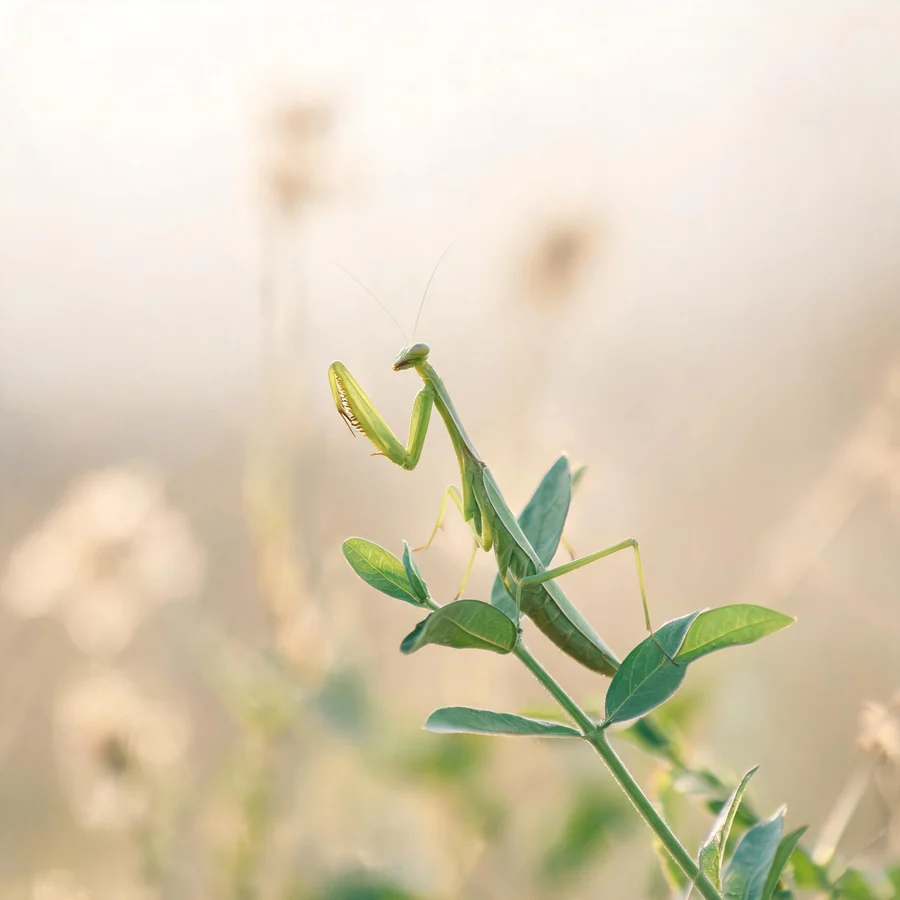
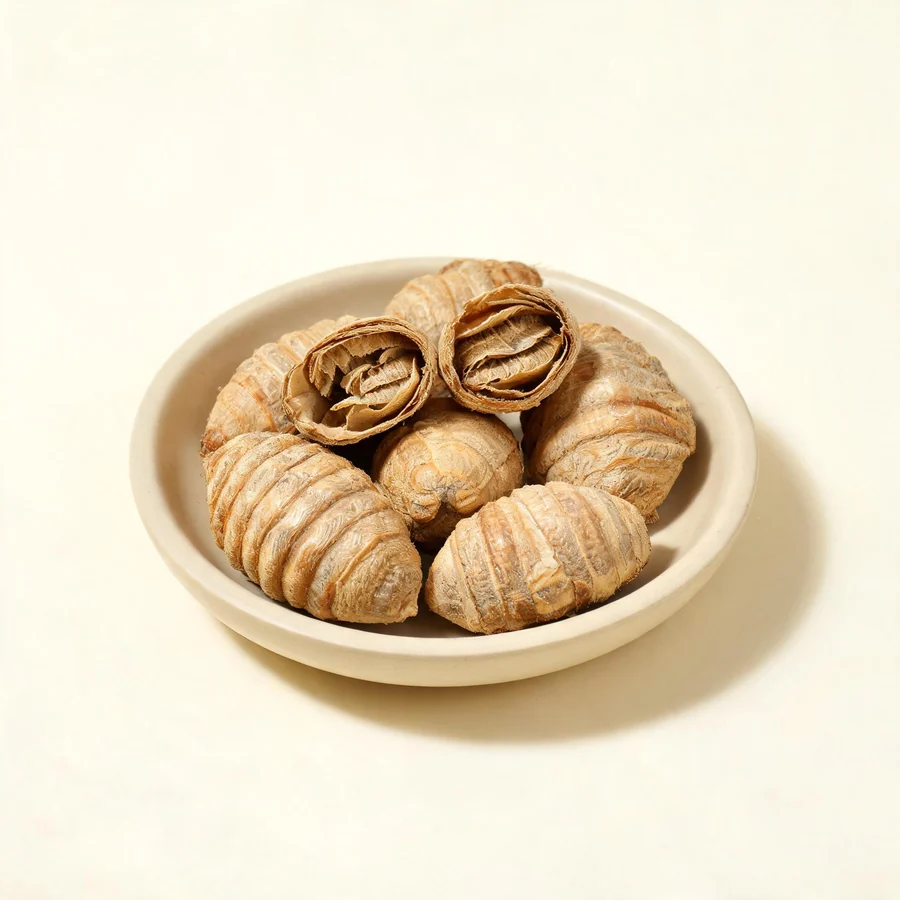
The egg-case belongs to the group of herbs that secure and astringe, and its familiar work is holding urine and semen in place. Applied to the skin, the same holding action is used where the surface itself is losing fluid: a lesion that stays wet, a patch that weeps thin clear fluid, or skin that is persistently clammy. The aim is not to dry the skin out but to restore the closing power that has failed, which is why it is given with Qi-tonifying herbs rather than on its own.
Closes a cold erosion that has stopped healing
When a shallow erosion sits in pale, cold skin, with a soft edge and no heat, the reading is that the surface lacks the Qi to close itself. The egg-case is a container in the old imagery, and the tradition uses containers to close what has opened. Its role here is supportive and slow, judged over weeks rather than days; an erosion that is painful, spreading or discharging pus is an infection and needs medical care instead.
Steadies the Kidney holding that shows on the skin
The picture this material is chosen for is rarely a skin picture alone. Frequent urination, a weak lower back, cold limbs and thin clear ooze belong together, and the tradition reads the skin sign as the visible end of that one process. Binding the Kidney is the main event and the surface is expected to follow; a person whose only complaint is a rash should not be given an animal astringent on that basis.
Binds without clearing, so it always needs a partner
This is the limit of the herb and the reason it is easy to misuse. It has no cooling, no toxin-resolving and no antipruritic action of its own, so it cannot be the treatment for an active flare. In practice it is added to a formula that is already doing the clearing, once the wet phase has been brought under control, or it is used in a depleted person whose skin never became hot in the first place.
Skin conditions it is used for
Mapped to the condition pages on this site. The pattern column shows what the skin is doing when this herb is the right choice.
| Condition | Pattern | Why it suits | Typical setting |
|---|---|---|---|
| Eczema | Cold-deficiency ooze: thin clear weeping from pale, cool skin | Eczema that weeps thin clear fluid from pale, cool skin, in someone who is tired and passing urine often, is read as Spleen and Kidney Qi failing to hold the fluids. The egg-case is a minor ingredient in that formula, added for its binding action once the dampness has been drained by the atractylodes and poria. The common hot, red, yellow-crusted flare is the opposite picture, and this is not the herb for it. | Modified Shen Ling Bai Zhu San with Sang Piao Xiao and Long Gu |
| Skin erosion | A wet erosion on cold pale skin that will not close | An erosion with a soft pale edge that stays damp for weeks is read as surface Qi too weak to close the skin. The material contributes binding, while astragalus lifts the Qi to the surface and oyster shell adds a cooling astringency without the warmth of the egg-case. Infection, pain and spreading redness take the case out of this territory entirely and belong to medical care. | Huang Qi and Mu Li with Sang Piao Xiao in a modified securing formula |
| Cool or clammy skin | Yang failing to reach and hold the surface | Clammy, cool skin with sweating on slight effort and cold limbs is read as Yang not consolidating at the surface. The classical formula for that picture already pairs warming with binding, and the egg-case is added when the leakage is longstanding and the lower-body signs are present. Sudden cold clamminess with chest pain or breathlessness is a medical emergency and must never be treated as a pattern. | Gui Zhi Jia Long Gu Mu Li Tang with Sang Piao Xiao |
| Moist skin sensation | Dampness leaking through a surface that has lost its grip | Skin that feels permanently damp, without a rash and without heat, is read as a surface that no longer holds its fluid. The material is a supporting astringent rather than a drying herb, so it is given with oyster shell and wheat, the classical astringents for a leaking surface. Persistent night sweating with weight loss, fever or a cough needs investigation and not a binding formula. | Mu Li San with Sang Piao Xiao added |
Combinations for skin
Herbs it is paired with when the skin, not an internal organ, is the target.
| Partner | Ratio | Why the pair is used |
|---|---|---|
| Long Gu | 6 to 10 g each in decoction | Fossil bone settles the spirit and holds, while the egg-case warms and secures the lower half of the body. The two sit at opposite ends of one Kidney axis, which is why the old prescription for a leaking lower body with broken sleep and poor memory rests on exactly this pair. Read on the skin, the logic holds: one ingredient steadies, the other contains, and both are heavy and slow, so the pair belongs to a chronic picture rather than an acute one. |
| Huang Qi | 10 to 15 g Huang Qi with 5 to 10 g Sang Piao Xiao | Astragalus lifts Qi to the surface and closes the pores, and the egg-case holds what has already leaked. Together they are used for clammy sweating and for a cold erosion that will not close, with the astragalus doing the work of supply and the egg-case the work of containment. The balance usually favours astragalus, because the problem is a failure of supply as much as of holding. |
| Mu Li | 10 to 15 g Mu Li with 5 to 10 g Sang Piao Xiao | Oyster shell is salty, cool and strongly astringent, and it tempers the warmth of the egg-case while adding its own binding force. The pair is chosen when a surface is both leaking and slightly hot, a situation in which the egg-case alone would be too warming. Neither herb clears heat, so a genuine damp-heat flare still needs the cooling herbs that do that work. |
| Shan Yao | 10 to 15 g Shan Yao with 5 to 10 g Sang Piao Xiao | Chinese yam tonifies the Spleen and Kidney and has a mild astringency of its own, so it supports the same holding action from the nourishing side. The combination is used in depleted people with thin clear ooze and poor digestion, where a purely binding approach would have nothing to work with. It is food-like and gentle, which makes it suitable for a longer course in an older person. |
Formulas where it leads
- Sang Piao Xiao San (桑螵蛸散) - The formula named after the material, built for urinary frequency, emission and poor memory, with tortoise plastron, dragon bone, ginseng and angelica. Its relevance to skin is structural: it shows how the material is used as the binding centre of a formula that also nourishes and settles, which is exactly the supporting role it takes on a skin page.
- Gui Zhi Jia Long Gu Mu Li Tang (桂枝加龙骨牡蛎汤) - A warming formula for a surface that will not hold, with sweating, cold limbs and a restless spirit. The egg-case is not part of the original, and it is added in practice when the leakage has a lower-body component, following the same binding logic.
Safety for skin use
What to check before recommending or using it, including the cautions that matter most for skin patients.
Do not use, or use with caution
- Red, hot, weeping or pustular skin with yellow crusting, or a greasy yellow tongue coating. This is damp-heat or heat toxin, and a warm binding material would trap it; clearing herbs are needed instead.
- Yin deficiency with heat: night sweats, a red tongue with little coating, thirst and restless sleep. The warming, securing nature adds to the heat rather than relieving it.
- Any sign of infection in an erosion, including pain, warmth, swelling, a red streak or fever. These need medical assessment, and binding the surface over an infection is harmful.
- Raw or unprocessed egg-cases, and material from mantis species outside the three official ones. The raw article can purge, may contain developing nymphs and has no place in a decoction.
Pregnancy and breastfeeding
The classical position is more permissive than for most animal medicines: an old formula gave the powdered cases with rice water for urinary frequency in pregnancy, and the article is neutral, with no poison recorded. That is not a licence for skin use. For a pregnancy with a weeping or clammy skin problem, the safer course is to treat the pattern with plant herbs and to leave the egg-case out unless a practitioner decides otherwise. Topical use is not established, so there is no lower-risk route to offer, and breastfeeding follows the same reasoning.
Interactions
- Diuretics given for blood pressure, heart failure or oedema. Because urine output falls with this material, it pulls against them, and anyone on those medicines needs the balance checked rather than assumed.
- Sedatives, and the night-time routine of an older person. A diuretic and a sedative together raise the risk of a fall on the way to the lavatory, which matters more here than any direct drug interaction.
- No pharmaceutical interaction is documented, and the constituents are ordinary structural materials: protein, calcium carbonate, phospholipids and trace minerals. That is a gap in the evidence rather than a guarantee of safety.
Allergy and patch testing
The article is animal material, so a true allergy is possible in a way it is not for most roots. People with a known sensitivity to insect proteins, chitin or shellfish should avoid it, and a rash, wheeze or swelling after a dose means stopping and seeking advice. It is not applied to broken skin, because a protein dressing on an open surface is a good way to sensitise someone.
General safety references
General references for herbal hepatotoxicity and herb-drug interactions; they are not specific to this herb.
- Review article: Herbal hepatotoxicity - an update on traditional Chinese medicine preparations. Alimentary Pharmacology & Therapeutics, 2014. PMID: 24844799.
- Interactions between herbal medicines and prescribed drugs: an updated systematic review. Drugs, 2009. PMID: 19719333.
- Warfarin and food, herbal or dietary supplement interactions: a systematic review. British Journal of Clinical Pharmacology, 2021. PMID: 32478963.
Evidence
The classical record is quoted with its source. The modern note states the level of evidence plainly.
Classical record
Listed in the upper grade, the class the tradition held safe for prolonged use, the article is given a wide reach: internal damage, hard abdominal masses, impotence and poor fertility, missed periods, an aching lower back and several forms of painful urination. That an insect product should sit in the upper grade is unusual, and it explains the mild reputation the material has carried ever since.
Shen Nong Ben Cao Jing (Divine Husbandman's Classic of Materia Medica) - Summarised rather than quoted, with no original wording reproduced. The scope is far wider than the leakage problems later practice settled on.
Attention shifts here from the broad field to depletion: men exhausted by deficiency, weak Qi through the five organs, seminal loss during sleep, and urine that passes without control. This is where the material first becomes a remedy for leakage, and the same text adds the practical warning that cases which have not been roasted will purge.
Ming Yi Bie Lu (Supplement to the Classic of Materia Medica) - Summarised rather than quoted. Both themes survive: the binding indication and the mandatory roasting before use.
Zhang Lu files the article under the Liver, the Kidney and the gate of vitality. Binding, he says, is its speciality, which accounts for how often it is chosen in depletion, impotence, loss at night and turbid urine. He also turns the old assertion that it opens painful urination into a draining of lower-burner stagnation, and cautions that fire arising from Yin deficiency will only worsen, with scalding urine and more loss.
Ben Jing Feng Yuan (本经逢原), Zhang Lu - Summarised rather than quoted. The caution is the first plain statement that the article suits particular patterns rather than anyone who happens to be leaking.
Modern evidence
Evidence status
- Composition studies describe the egg-case as protein and calcium carbonate with phospholipids, amino acids and trace minerals, and that ordinary profile is the reason no strong pharmacological signal has emerged. No controlled trial of the material in any skin condition was identified.
- There is no published clinical evidence that an egg-case decoction closes an erosion, reduces ooze or settles clammy skin. The skin use on this page is an extension of the classical binding action, and it should be read as traditional practice rather than as a demonstrated effect.
- Regulatory status: the dried egg-case of the three named mantis species is an accepted article in the Chinese Pharmacopoeia under the name Ootheca Mantidis, with official species, processing and quality requirements set out there. Nothing on this page claims a proven benefit.
PubMed records
Selected real PubMed records for this herb's species or its constituents, chosen by species name and title relevance. They are references for the non-TCM discussion above, not proof that the herb treats any skin condition.
- Pretty Picky for a Generalist: Impacts of Toxicity and Nutritional Quality on Mantid Prey Processing.. Environmental entomology, 2017. PMID: 28334410 (safety record).
- [Comparison of pharmacological studies on ootheca Mantidis].. Zhongguo Zhong yao za zhi = Zhongguo zhongyao zazhi = China journal of Chinese materia medica, 1997. PMID: 11038920 (pharmacology or review record).
Dose and forms
Skin-practice dosing and the preparations that suit skin complaints.
| Form | Dose and notes |
|---|---|
| Decoction | Five to ten grams of the processed egg-case daily, broken into pieces and decocted in a formula. The material is light and bulky, so it is measured by weight rather than by volume. |
| Powder | Three to five grams a day as a ground powder, stirred into warm water or rice water. This is the form used in the old paediatric practice, and it wastes least of a costly material. |
| Salt-fried form | Salt-frying is the dispensary form preferred when the Kidney is the target, on the reasoning that salt draws the action downward and reinforces the binding. When the surface is the focus, the plainly processed case is used instead. |
| Course length | Two to four weeks with review. The aim is to restore holding, and if the ooze has not changed by then the pattern is wrong rather than the dose too low. |
Processing is a safety step as much as a pharmacological one. Material that has not been treated can purge and may still hold developing nymphs, so nothing is dispensed until the case has been cleaned, steamed or roasted, and dried. Salt-frying directs the action to the Kidney, wine-roasting warms it further for a cold picture, and dry-frying makes the case easier to break. Because the material is an animal product and an astringent, courses are short and the pattern is reviewed rather than the dose increased.
Citations and further reading
Only real sources are listed: the classical materia medica passages quoted above, and the source works behind the botanical and safety statements.
- Shen Nong Ben Cao Jing (Divine Husbandman's Classic of Materia Medica), attributed compilation of the Han period - classical entry summarised above.
- Ming Yi Bie Lu (Supplement to the Classic of Materia Medica), Tao Hongjing, Southern and Northern Dynasties - classical entry summarised above.
- Ben Jing Feng Yuan (本经逢原), Zhang Lu, 1695 - classical entry summarised above.
- Ootheca Mantidis monograph: Pharmacopoeia of the People's Republic of China - accepted species, processing and quality requirements.
- Modern evidence statement: based on published composition and laboratory literature on mantis ootheca, summarised as a statement about the level of evidence rather than as a cited finding.
- Collection and species identification: entomological literature on Tenodera sinensis and related Mantidae.
Educational reference for qualified practitioners. This page is not medical advice, and skin conditions should be diagnosed by a clinician before treatment.