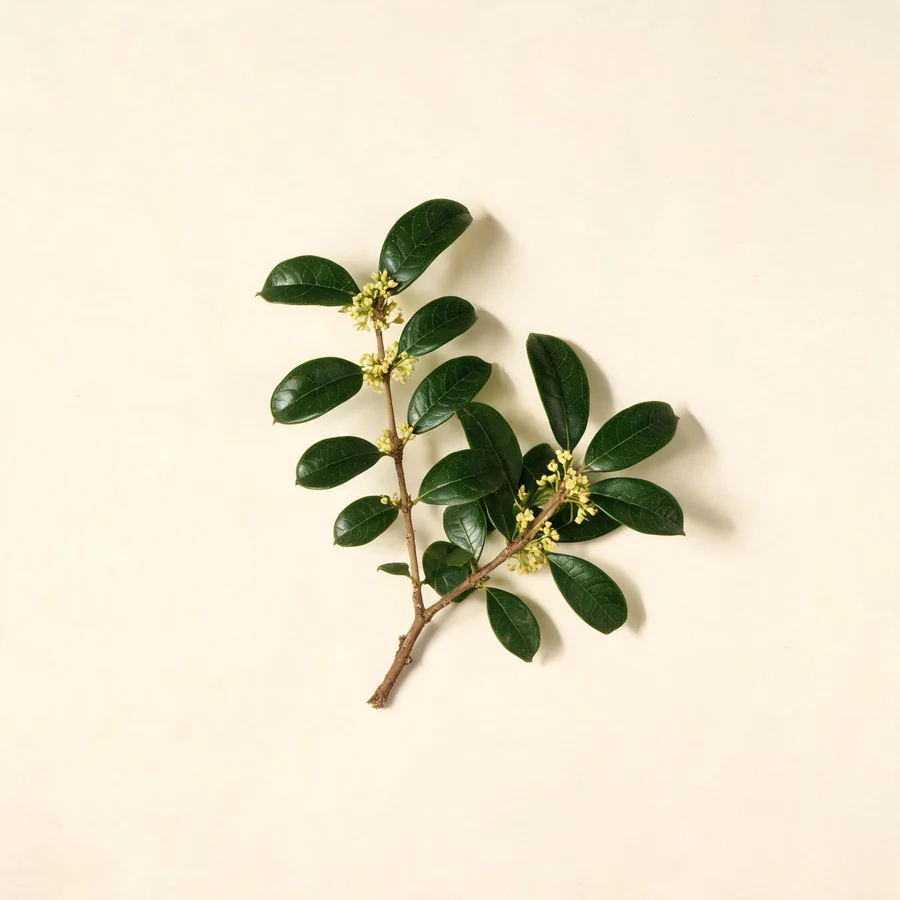
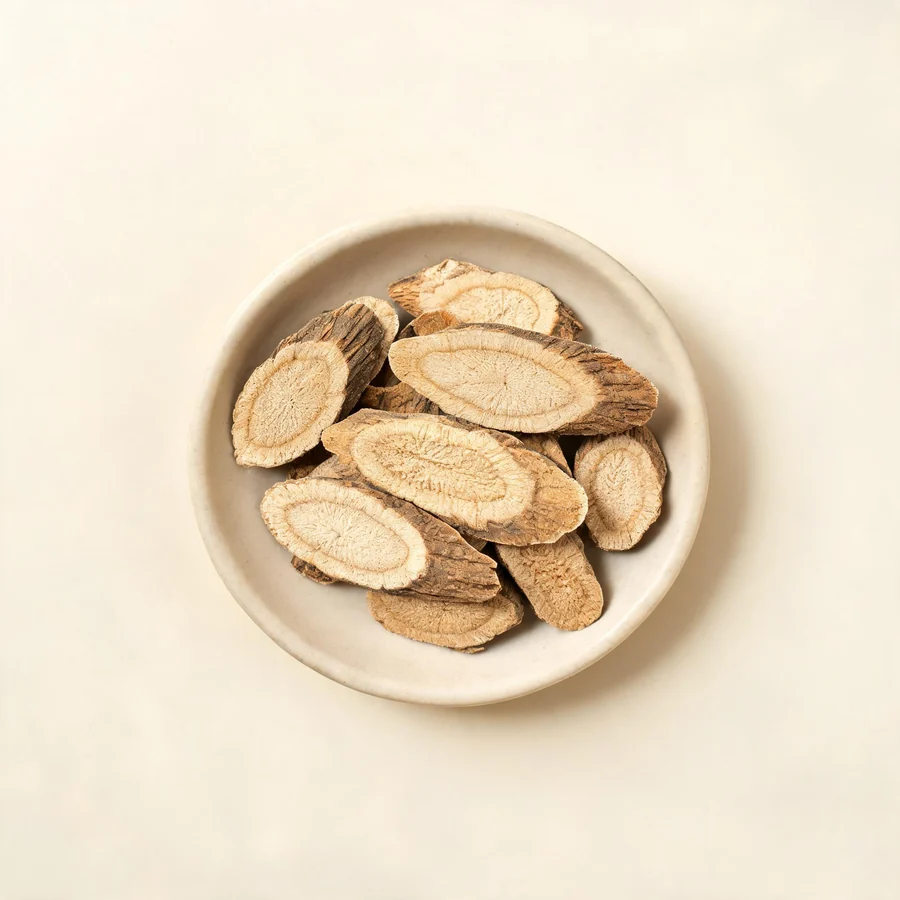
Skin profile
Where this herb sits in skin practice: the pattern it corrects, the skin signs it suits, and what it should not be used for.
Wu Yao warms and moves: on skin it is a supporting herb for cold, dusky, numb or marbled surfaces, and for chilblains that return each winter. It clears nothing and nourishes nothing, so it belongs inside a warming formula and never in a hot or weeping eruption.
Skin signs that suggest it
- Fingers or toes that blanch and then turn blue in the cold, with numbness that lingers after the hands are warmed
- Chilblains: tender purple-red swellings on toes, fingers, heels or ears that return each winter
- Marbled or mottled skin over the limbs that feels cool to the touch and looks faintly blue
- A cold, tight lower abdomen with cold hands and feet, a pale tongue and a deep, tight pulse
- Skin discomfort that aches rather than burns, eased by warmth and worse in cold, damp weather
When it is not the right herb
Not for skin that is red, hot, swollen or weeping. A warm, acrid mover added to heat pushes it further out and can turn a quiet eruption into a spreading one. It is also wrong for dry, thin, depleted skin with night sweats, a red tongue without a coat and a rapid pulse, where warming would consume the little fluid left. New or one-sided pallor of the fingers, pain with tissue loss, or a first attack of Raynaud's phenomenon needs a doctor rather than a warm decoction, because the same signs can come from a connective tissue disease or a blocked artery. Courses are kept short, and the herb is stopped if the skin becomes hotter or drier.
What it does for skin
Skin-relevant actions only. Each one describes a mechanism in TCM terms and what it looks like on the skin.
Warms the channels and moves Qi out to the limbs
The herb's warmth is used to release cold that has congealed the movement of Qi at the surface. The picture it is chosen for is a limb that is cold, dusky and slow rather than red, where warming the centre of the body is supposed to restore colour and sensation at the edge. It is never the whole treatment: it is added to a formula that already warms and moves, such as a cinnamon-twig and angelica combination, and the response is judged over weeks by colour, warmth and comfort rather than by the rash.
Clears the dusky, marbled look of cold skin
When the surface is patchily blue and cool, the traditional reading is that cold has gathered in the smaller vessels and the Qi cannot push through. The root is used with other warming movers to restore the flow that gives skin its even colour. Nothing in this claim is about thinning the blood or opening an artery, and mottling that comes with breathlessness, chest pain or a fever is a medical problem, not a pattern to warm.
Eases the ache and itch of cold lesions
Chilblains and cold-damaged skin ache, sting and itch at the same time, and warmth is what relieves them. The root is used inside a warming formula for that quality of discomfort, with the aim of shortening the attack and reducing the next one. It does not replace protection from cold, and it is not applied to broken or ulcerated skin.
Acts as the lower-body guide in a warming prescription
In formula craft the root is valued for where it goes as much as for what it does: it reaches the lower abdomen, the groin and the Bladder, and it keeps a warming prescription from sitting only in the middle. That is why it recurs in medicines for cold pain below the navel and for cold-type urinary frequency, and why a skin formula that needs warmth below the waist will include it.
Skin conditions it is used for
Mapped to the condition pages on this site. The pattern column shows what the skin is doing when this herb is the right choice.
| Condition | Pattern | Why it suits | Typical setting |
|---|---|---|---|
| Chilblains | Cold congealing the small vessels: tender purple-red swellings on the toes and fingers each winter | Chilblains appear where cold and damp have slowed the flow at the surface, leaving skin that itches, stings and turns purple-red at the edges of the toes and fingers. The picture fits a warm, moving root used inside a formula that warms the channels, and the herb is chosen for the cold, dusky quality rather than for any single lesion. Broken, ulcerated chilblains need wound care, and chilblains that appear in warm weather or in a person with other connective tissue signs need assessment. | Dang Gui Si Ni Tang, with Wu Yao added for the cold lower body |
| Raynaud's phenomenon | Cold and stagnation in the channels: fingers that blanch, then turn blue, and burn as they re-warm | In the classical reading the fingers go white because cold has driven the Qi inward, blue because the blood has stopped behind it, and red and painful as warmth returns and the flow rushes back. A warming, moving root is used as part of that treatment, with the aim of reducing the frequency and severity of attacks over a cold season. It is a supporting measure only: the diagnosis should be made by a doctor, since Raynaud's can be primary or the first sign of a connective tissue disease, and ulcers or tissue loss need urgent care. | Dang Gui Si Ni Tang, with Wu Yao and a little Xi Xin under supervision |
| Mottled skin | Cold Qi failing to reach the surface: marbled, cool, faintly blue skin over the limbs | Mottling that shifts with temperature and clears on warming is read as cold holding the superficial vessels, and the herb is used to move warmth back out to them. It is given with other warming and Qi-moving medicines, and the aim is an even colour and a warmer surface rather than a change in the texture of the skin. Fixed mottling, livedo that comes with joint pain, fever or weight loss, or a sudden change in the colour of one limb should be investigated before it is treated as cold. | With Dang Gui, Gui Zhi and Huang Qi in a warming formula |
| Skin numbness | Cold holding the channels: patches of numb, wooden skin with cold hands and feet | Numbness that follows cold exposure, eases with warmth and comes with cold limbs is read as the channels being held rather than damaged. The root warms and moves, and it is used with astragalus and cinnamon twig in the classical formula for a body that has lost feeling in its skin. Numbness that is one-sided, sudden, or accompanied by weakness, a change in speech or a band-like loss of sensation needs urgent medical assessment. | Huang Qi Gui Zhi Wu Wu Tang, with Wu Yao for the cold lower body |
Combinations for skin
Herbs it is paired with when the skin, not an internal organ, is the target.
| Partner | Ratio | Why the pair is used |
|---|---|---|
| Xiang Fu | 1 to 1, about 10 g of each | Cyperus moves Qi through the Liver and the chest while this root carries warmth into the lower abdomen. The two are the standard answer for a lower belly that is tight, cold and painful, and the pairing suits skin problems that flare with the menstrual cycle or with cold. Cyperus alone reaches the Qi but not the warmth, which is what the laurel root adds. |
| Dang Gui | about 10 g of each, with the angelica raised to 15 g for pale, dry skin | Angelica nourishes and moves the blood, and the laurel root supplies the warmth that gets it to the hands and feet. The pair is used for cold, dusky extremities and for chilblains in a person who is also pale and thin. Angelica does the building and this root does the pushing, so the proportion shifts towards the angelica when the skin is dry and towards the laurel when the cold dominates. |
| Xiao Hui Xiang | about 6 g of fennel to 10 g of the laurel root | Fennel is the sharper medicine for cold in the Liver channel, reaching the groin and the lower abdomen, while the laurel root warms and moves the whole lower body. Together they cover cold pain that runs from the belly into the groin, and the pair is used where the skin problem sits alongside that pattern. Fennel is the warmer of the two and is used in the smaller quantity. |
| Huang Qi | 15 to 30 g of astragalus to 6 to 10 g of the laurel root | Astragalus builds the Qi that pushes blood to the surface, and the laurel root makes sure that the Qi has warmth and a direction once it arrives. The combination is the logic of the classical formula for numbness and dry, lifeless skin, and it is used for a limb that is cold, weak and slow. Astragalus is given in the larger dose because it is the tonic and the laurel root is the mover. |
Formulas where it leads
- Dang Gui Si Ni Tang (当归四逆汤) - The classical prescription for cold hands and feet, built on cinnamon twig, angelica, white peony and a little asarum. Skin practice borrows it for chilblains, cold hives and the dusky fingers of Raynaud's, adding the laurel root when the cold sits low in the body. It is a warming formula for a cold picture only.
- Huang Qi Gui Zhi Wu Wu Tang (黄芪桂枝五物汤) - Astragalus with cinnamon twig, white peony, ginger and jujube, written for a body whose skin has gone numb and wooden. The laurel root is a common addition when the cold is in the lower half, and the formula is used for cold, dry, sensationless skin rather than for a rash.
Safety for skin use
What to check before recommending or using it, including the cautions that matter most for skin patients.
Do not use, or use with caution
- Skin that is red, hot, swollen or oozing. A warm, acrid, dispersing root added to heat makes the inflammation worse, and it is the wrong medicine for acute eczema, rosacea or an infected lesion.
- Dry deficiency with empty heat: night sweats, flushing in the evening, a red tongue with little coating and a rapid, thin pulse. Warming medicines consume the fluid such a person has left.
- Pregnancy, and a history of miscarriage, without direct practitioner supervision, because the root moves and disperses Qi in the lower abdomen.
- Bleeding or a bleeding disorder. The root is warm and moving, and there is a long tradition of withholding it where blood is already escaping.
Pregnancy and breastfeeding
Not counted among the herbs prohibited in pregnancy, but not a routine one either. It is warm, aromatic and dispersing, and the old caution about moving Qi in the lower abdomen is the reason most practitioners avoid it in the first trimester and use it only on direct advice later, at a reduced dose and for a short period. Any warming medicine taken while breastfeeding should be watched for a change in the baby's sleep or stool, and a topical application on a small area is the safer option if warmth is wanted at the surface.
Interactions
- Warfarin, tolbutamide and other drugs handled by CYP2C9. Laboratory work shows that linderane, one of the root's sesquiterpenoids, knocks out this liver enzyme, so concentrations of those medicines may climb; anyone taking warfarin should speak to the prescriber before starting.
- Blood pressure and heart medicines. In animals the essential oil, and one alkaloid within it, quicken the heart, increase coronary flow and push arterial pressure up, so the response to a cardiac or antihypertensive drug may change and readings deserve watching.
- Sedatives and shop-bought blends. Digestive and period remedies often contain the root without advertising it, which makes the day's total larger than the patient believes, and stacking products can deliver more than intended.
Allergy and patch testing
The root is aromatic and comes from the laurel family, so a person who reacts to cinnamon, bay or other aromatic barks may be more likely to react to it. Reactions to a decoction are usually digestive, but a warming wash or balm that contains it can produce contact redness and itch, and a patch test on the inner forearm is sensible before a preparation is used on the face. Stop at once if the skin becomes more irritated rather than warmer.
General safety references
General references for herbal hepatotoxicity and herb-drug interactions; they are not specific to this herb.
- Review article: Herbal hepatotoxicity - an update on traditional Chinese medicine preparations. Alimentary Pharmacology & Therapeutics, 2014. PMID: 24844799.
- Interactions between herbal medicines and prescribed drugs: an updated systematic review. Drugs, 2009. PMID: 19719333.
- Warfarin and food, herbal or dietary supplement interactions: a systematic review. British Journal of Clinical Pharmacology, 2021. PMID: 32478963.
Evidence
The classical record is quoted with its source. The modern note states the level of evidence plainly.
Classical record
味辛,温,无毒。
It is acrid, warm and free of poison.
Kai Bao Ben Cao (开宝本草), Song dynasty - The Song pharmacopoeia fixes the taste and nature that later practice assumes: a warming, dispersing root with no toxicity to restrain its use.
The Song compilation broadens the claim to every disorder of Qi and every kind of cold, and it adds vomiting, diarrhoea and dysentery, sores and skin disease that will not settle, together with a resolving effect where cold and heat are mixed.
Ri Hua Zi Ben Cao (日华子本草), Song dynasty - The one early entry that names skin disease outright, and it states traditional scope rather than recorded effect.
This Tang supplement names a sudden pain in the chest and belly, food that sits undigested, epidemic disease, cold Qi travelling between Bladder and Kidney and rushing up the back, disorders of Qi and blood in women, and intestinal worms in children.
Ben Cao Shi Yi (本草拾遗), Tang dynasty - Its first appearance in writing, and both later themes are already there: pain from cold, and digestive trouble blamed on worms.
Modern evidence
Evidence status
- Laboratory work on the root and its volatile oil reports anti-inflammatory, analgesic and smooth-muscle effects, mostly in animals and cell models. None of this is a trial in people, and none of it establishes a benefit for chilblains, Raynaud's phenomenon or any other skin condition.
- No controlled clinical trial of Wu Yao in a skin disease was identified. Its skin use rests on the classical warming, Qi-moving reading and on the formula tradition that places it in medicines for cold limbs, and it is best described as traditional practice.
- Regulatory status: the root tuber is an accepted article in the Chinese Pharmacopoeia as Radix Linderae, and the practical quality question is identity, since straight roots and other laurel species are sold alongside the swollen tuber.
PubMed records
Selected real PubMed records for this herb's species or its constituents, chosen by species name and title relevance. They are references for the non-TCM discussion above, not proof that the herb treats any skin condition.
- Linderane, a furanosesquiterpene from Lindera aggregata, targets STAT3 to improve metabolic and inflammatory features of MASLD.. Journal of ethnopharmacology, 2026. PMID: 42288160 (skin-related record).
Dose and forms
Skin-practice dosing and the preparations that suit skin complaints.
| Form | Dose and notes |
|---|---|
| Decoction | 3 to 9 g of dried root daily inside a formula, with 6 g usual for skin use. It goes into the pot with the rest of the prescription and needs no special handling. |
| Ground with water | Classically the tuber was wetted and rubbed on a rough stone, and the cloudy liquid produced was stirred into the strained decoction; the aromatic oils come out far more completely this way than by boiling, so less material is needed. |
| Course length | Two to four weeks for a cold season, with review. Stop or reduce if the mouth becomes dry, the stool loosens or the skin feels hotter than it did. |
Direct flame is avoided, since roasting drives off the aromatic oils that do the work; the root is sliced and air-dried instead. Bran-frying softens the dispersing action for a delicate stomach, vinegar directs it to the Liver and the flanks, and salt carries it to the Kidney and Bladder. Being a dispersing medicine, it is given in short courses and the pattern is reviewed before repeating.
Citations and further reading
Only real sources are listed: the classical materia medica passages quoted above, and the source works behind the botanical and safety statements.
- Kai Bao Ben Cao (开宝本草), Song dynasty - the passage on its acrid, warm and non-toxic nature is quoted in the original above.
- Ri Hua Zi Ben Cao (日华子本草), Song dynasty - the entry naming sores and skin disease that will not settle is rendered above.
- Ben Cao Shi Yi (本草拾遗), Tang dynasty - the earliest record of the root, rendered above.
- Radix Linderae monograph, Pharmacopoeia of the People's Republic of China - accepted source, part and quality requirements.
- Modern evidence statement: drawn from published laboratory work on Lindera aggregata and presented as a statement about the level of evidence rather than as a cited finding.
- Botanical description and identification: botanical literature on Lindera aggregata, family Lauraceae.
Educational reference for qualified practitioners. This page is not medical advice, and skin conditions should be diagnosed by a clinician before treatment.