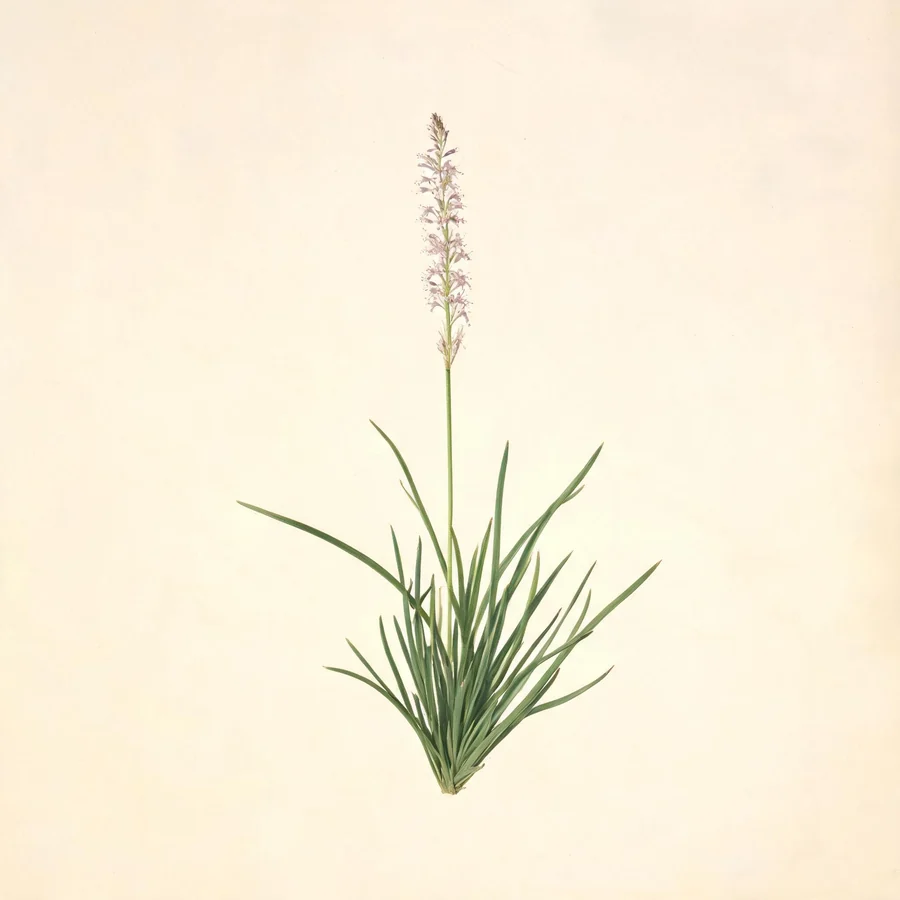
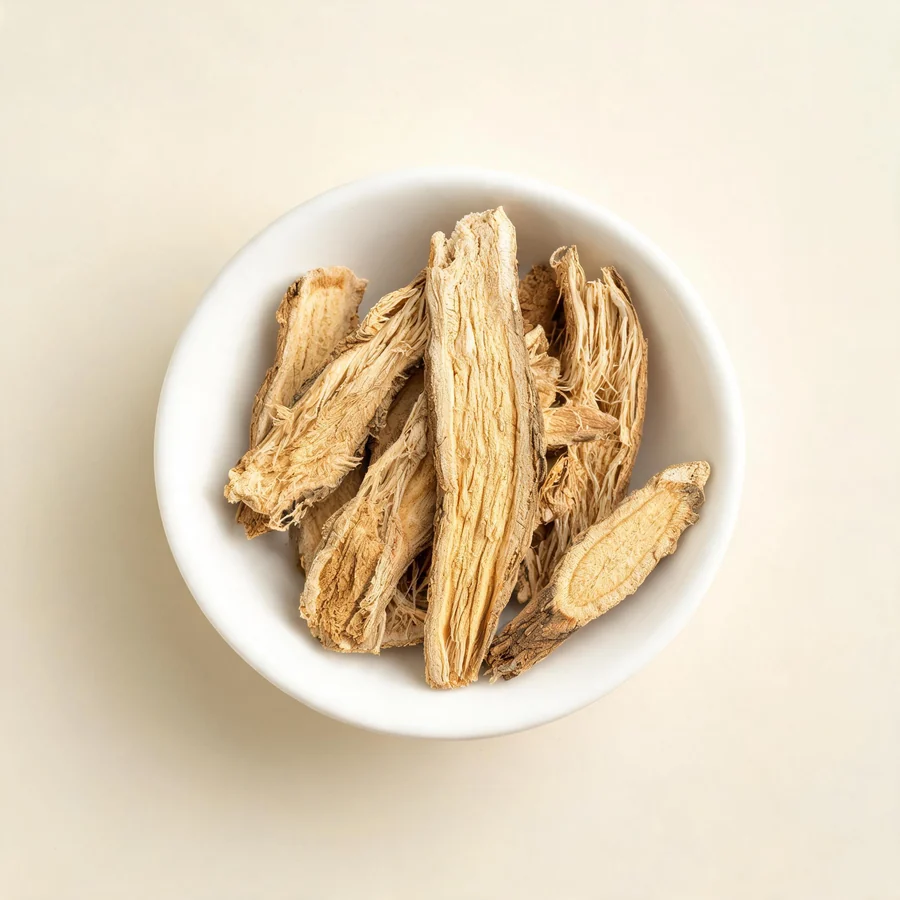
Skin profile
Where this herb sits in skin practice: the pattern it corrects, the skin signs it suits, and what it should not be used for.
Zhi Mu is a cooling, moistening herb for skin that is hot and dry together: it clears the fire and protects the fluid in the same movement. Its limit is the digestion, and the decisive question is always when to stop.
Skin signs that suggest it
- Skin that is hot, dry and tight, with flushing in the afternoon or evening (empty heat)
- Sweating at night, a parched mouth and a red tongue with barely any coating
- Slightly red, itchy patches where the skin is dry rather than weeping (wind-heat with dryness)
- Dryness and cracking of the genital skin with scanty discharge and night heat
- A rapid, fine pulse and a red tongue with scanty coating
When it is not the right herb
Not for pale, dry, cool skin with no heat in it, nor for someone who always feels chilly, passes colourless urine and has a pale, puffy tongue. Not for loose stools, a poor appetite or a cold abdomen, because the rhizome is cold and slightly laxative and will loosen the bowel further. Not while a surface pattern is still open: shivering, a stiff nape and a floating pulse say the pathogen has not left the exterior, and a cold remedy taken inside may push it deeper. Not for damp-cold skin with weeping clear fluid and a white greasy coat. Nor for a long stretch: the old instruction is to halt as soon as the heat has gone, since cold gathers in the digestive tract.
What it does for skin
Skin-relevant actions only. Each one describes a mechanism in TCM terms and what it looks like on the skin.
Cools heat without drying the skin
Most bitter-cold herbs leave the surface tighter than they found it, which is why they are difficult in a person whose skin is already dry. This rhizome is sweet as well as bitter, and the sweet part is described as moistening, so it clears the fire and protects the fluid at the same time. That is what makes it usable in a hot rash with scaling, and why it appears in itch formulas alongside the drying herbs rather than instead of them.
Restores moisture that a fever has used up
After a fever, or in a long depletion, the skin stays dry and warm, the mouth is dry, and the person is thirsty without wanting much at a time. The herb is described as generating fluid, and it is used with Sheng Di Huang, Mai Men Dong and Shi Gao in formulas that rebuild moisture after heat. The salt-prepared form is chosen when the target is the lower body and the Kidney, and the raw slices when the heat is active.
Settles the heat that drives an itch
In the standard wind-damp-heat formula for itch, this rhizome sits with gypsum, the drying herbs and the wind herbs: the surface reaction is addressed by the others, and this one keeps the heat from burning the fluid that the skin needs. That is its role in itchy conditions, and it is a supporting one. Where the skin is cold and dry, or weeping clear fluid, the herb is out of place.
Drains the fire that reddens the face and dries the mouth
Stomach fire shows as thirst, a preference for cold drinks, inflamed gums and a flushed face, and the tradition treats it by clearing the organ rather than the surface. The rhizome enters the Stomach and cools that fire while restoring the fluid it has burned. On the skin the visible change is less flushing and oiliness, and it is a short-term measure within a formula.
Skin conditions it is used for
Mapped to the condition pages on this site. The pattern column shows what the skin is doing when this herb is the right choice.
| Condition | Pattern | Why it suits | Typical setting |
|---|---|---|---|
| Dry and hot skin | Empty-Heat caused by Yin deficiency: dry, warm skin with night heat | Skin that is dry and warm together, with flushing in the evening, night sweats and a red tongue carrying little coat, is read as Yin too low to hold heat down and too low to moisten. Cooling the heat and moistening the dryness happen together, which is why it is chosen here rather than a herb that only clears. It is given in a nourishing formula and stopped when the heat has settled. | Zhi Bai Di Huang Wan |
| Eczema | Wind-Heat with dryness: itchy, slightly red, scaly patches | An itchy eruption that is red, dry and scaling rather than weeping is read as Wind-Heat with fluid already short, and it is the picture in which the standard itch formula includes this rhizome. Its job there is to cool the heat and keep the drying herbs from leaving the skin parched. A wet, oozing eczema of the damp-heat type is a different pattern, and the herb is a minor part of it at most. | Xiao Feng San |
| Urticaria | Wind-Heat: red wheals with heat, thirst and a rapid pulse | Wheals that are red, burning and brought on by heat or overheating, with thirst and restlessness, are read as Wind-Heat in the surface. The rhizome is one of the cooling herbs in the formula, there to clear the heat beneath the Wind and to protect the fluid that the heat and the sweating are using. Cold-type wheals are not this pattern, and angioedema with throat swelling is an emergency. | Xiao Feng San with increased Zhi Mu and Shi Gao |
| Itchy genitalia | Kidney and Liver Yin deficiency with dryness and night heat | Genital itch with dry, cracking skin, scanty discharge, night heat and a fine rapid pulse is read as Yin deficiency rather than damp-heat. The rhizome is paired with Huang Bai in the classic formula for that picture: one moistens and clears the deficiency fire, the other dries the dampness that usually remains. A discharge that is thick, yellow and offensive points the other way, to damp-heat, and needs a different formula. | Zhi Bai Di Huang Wan with Bai Xian Pi |
Combinations for skin
Herbs it is paired with when the skin, not an internal organ, is the target.
| Partner | Ratio | Why the pair is used |
|---|---|---|
| Shi Gao | 15 to 30 g Shi Gao with 6 to 12 g Zhi Mu | The classical pair for heat that has damaged fluid. Gypsum clears the fire, and the rhizome clears it while protecting the Yin, so the fever settles without the mouth and the skin becoming drier. On the skin it is the model for a hot, flushed, dry surface with thirst, and the two are given together rather than either alone. |
| Huang Bai | 6 to 10 g each | Two bitter cold herbs that correct each other. Huang Bai is the drying one, used for discharges, dampness and itch in the lower body; Zhi Mu is the moistening one, used for heat at the Qi level and for dryness. That contrast is why they are paired in the formula for Yin deficiency with damp-heat below, and why the pair suits genital dryness with itch. |
| Mai Dong | 10 to 15 g Mai Dong with 6 to 10 g Zhi Mu | Ophiopogon is sweet, slightly cold and almost purely nourishing, while the rhizome still has a cooling edge for whatever heat remains. The two suit the tail end of a fever, when most of the heat has gone and what remains is dryness, thirst and a skin that feels drawn tight. It is a gentle pair and fits a long, slow recovery. |
| Tian Hua Fen | 10 to 15 g Tian Hua Fen with 6 to 10 g Zhi Mu | Trichosanthes root generates fluid generously, and the rhizome clears the heat that consumed it in the first place. On the skin the pair is used where thirst and dryness travel together, in a person whose mouth is parched and whose skin is tight. One clears the cause and the other replenishes the effect, which is a pattern the tradition returns to. |
Formulas where it leads
- Bai Hu Tang (白虎汤) - The formula for Yangming heat: high fever, great thirst, profuse sweating and a forceful pulse. Gypsum leads and the rhizome supports, clearing the fire while protecting the fluid. Skin practice borrows it for a hot, dry, flushed surface in a feverish illness, and it is not a formula for a rash alone.
- Xiao Feng San (消风散) - The standard formula for wind-damp-heat itch, and the context in which the rhizome most often reaches the skin. It cools the heat and moistens, while Jing Jie, Fang Feng and Chan Tui move the Wind and Cang Zhu and Ku Shen dry the Dampness. It is the formula most used for urticaria and for a dry, itchy, red eruption.
- Zhi Bai Di Huang Wan (知柏地黄丸) - The Yin-nourishing base with two cold herbs added, used where deficiency heat persists with dampness below: night sweats, flushing, dryness and itch of the genital skin. The salt-prepared rhizome is usual, since salt is said to carry the action downward.
Safety for skin use
What to check before recommending or using it, including the cautions that matter most for skin patients.
Do not use, or use with caution
- Loose stools, a poor appetite, a cold abdomen, or Spleen and Stomach deficiency-cold. The rhizome is cold, moistening and slightly laxative, so it loosens the bowel further.
- A surface pattern that has not closed: shivering, a stiff nape and a pulse that floats. A cold interior herb can drive a surface pathogen inward.
- Yang deficiency or a cold constitution: cold limbs, pale urine and a pale swollen tongue. This is not the herb for a body that is already cold.
- Use without end. Cold builds up over time, and the old instruction is to halt the moment the target heat has cleared.
Pregnancy and breastfeeding
Not forbidden outright. The old books do record the rhizome for a restless pregnancy, and one formula is built on it, so tradition has not shut the door. What gives pause is the cold, softening quality: where a pregnant woman's digestion runs cold or her stool is loose, it may bring cramping and diarrhoea, and it is left out. Current practice lets a practitioner decide and keeps the course brief; for a skin complaint, there is seldom any reason to use it at all in pregnancy. Breastfeeding is treated as compatible at standard doses, with the mother's digestion as the practical limit.
Interactions
- Insulin and sulfonylureas. Mangiferin and the polysaccharides have brought blood sugar down in animal studies, so readings deserve checking at the start, and anyone on such medicines should tell the prescriber.
- Iron and mineral supplements. Its constituents latch onto metals and can cut absorption, so leave a gap of about two hours between them. Old processing notes also warn against iron pans and pots.
- Warfarin and other medicines with a narrow window. No interaction is established, but any new formula containing it should be reported to the prescriber, who can watch for a change.
Allergy and patch testing
Allergy to the rhizome itself is uncommon and no pattern of cross-reaction is well described. The practical risks are different: the raw powder irritates the eyes and the airway, and a reaction to a formula is more likely to come from another ingredient or from a contaminant. Stop the formula and review the whole list rather than assuming this herb is the cause.
General safety references
General references for herbal hepatotoxicity and herb-drug interactions; they are not specific to this herb.
- Review article: Herbal hepatotoxicity - an update on traditional Chinese medicine preparations. Alimentary Pharmacology & Therapeutics, 2014. PMID: 24844799.
- Interactions between herbal medicines and prescribed drugs: an updated systematic review. Drugs, 2009. PMID: 19719333.
- Warfarin and food, herbal or dietary supplement interactions: a systematic review. British Journal of Clinical Pharmacology, 2021. PMID: 32478963.
Evidence
The classical record is quoted with its source. The modern note states the level of evidence plainly.
Classical record
味苦寒。主消渴,热中,除邪气,肢体浮肿,下水,补不足,益气。
Bitter and cold. It governs wasting and thirsting, heat held inside, clears pathogenic qi, eases swelling of the limbs, drives water downward, and supplements insufficiency while benefiting Qi.
Shen Nong Ben Cao Jing (神农本草经) - Right from the start, the two defining themes are joined here: thirst driven by internal heat, and fluid that refuses to move. The line about swelling of the limbs is the only surface claim in it.
知母之辛苦寒凉,下则润肾燥而滋阴,上则清肺金泻火,乃二经气分药也。
Acrid, bitter, cold and cool, it works both ways: downward it moistens a parched Kidney and nourishes Yin, upward it clears the Lung and disperses its fire, and in either channel it acts on the Qi level.
Ben Cao Gang Mu (本草纲目), Li Shizhen, on direction - Li Shizhen's reading accounts for a single cold rhizome serving both a burning Lung and a spent Kidney, and for processing deciding which way it goes.
Modern evidence
Evidence status
- No clinical trial of the rhizome in eczema, urticaria or any other skin condition was identified. The skin uses rest on the formula tradition, above all its place in the standard itch formula, and not on controlled evidence.
- Laboratory work on mangiferin, the saponins and the polysaccharides describes anti-inflammatory, antipyretic and glucose-lowering activity, mostly in animals. Those findings are the basis for the interaction cautions, not for a claim about the skin.
- The pharmacopoeia sets a monograph for the rhizome and distinguishes the raw from the salt-prepared article. Quality is judged by the fibrous, knobbly rhizome with its yellow hairy covering and a sticky cross-section, and pale smooth pieces without the fibres should be questioned.
PubMed records
Selected real PubMed records for this herb's species or its constituents, chosen by species name and title relevance. They are references for the non-TCM discussion above, not proof that the herb treats any skin condition.
- Mangiferin inhibits passive cutaneous anaphylaxis reaction and pruritus in mice.. Planta medica, 2009. PMID: 19533581 (skin-related record).
- Anemarrhenae asphodeloides rhizoma Extract Enriched in Mangiferin Protects PC12 Cells against a Neurotoxic Agent-3-Nitropropionic Acid.. International journal of molecular sciences, 2020. PMID: 32260390 (safety record).
Dose and forms
Skin-practice dosing and the preparations that suit skin complaints.
| Form | Dose and notes |
|---|---|
| Decoction | 6 to 12 g of dried rhizome daily, in a formula rather than alone. Raw slices are chosen while heat is active, and the smaller amount when digestion is frail. |
| Salt-prepared form | Yan Zhi Mu is used where the target is deficiency heat in the Kidney, with night sweats, flushing and dryness. The same range applies, often towards the lower half inside a formula. |
| Course length | Brief. The old instruction is to halt as soon as the heat has cleared: a week or two in an acute case, less in someone depleted. |
What sets the amount is the task, not the patient's build. Where heat is active in a fever, 6 to 12 g of raw rhizome is the usual figure; for the low-grade heat of depletion with night sweating, the salt form is preferred within the same range. Its bitterness and cold are cumulative, so the decisive question is when to stop rather than how much to give, and loose stools or a lost appetite answer it.
Citations and further reading
Only real sources are listed: the classical materia medica passages quoted above, and the source works behind the botanical and safety statements.
- Shen Nong Ben Cao Jing (神农本草经), attributed compilation of the Han period - classical entry quoted above.
- Ben Cao Gang Mu (本草纲目), Li Shizhen, 1578 - classical entry quoted above.
- Rhizoma Anemarrhenae monograph: Pharmacopoeia of the People's Republic of China - source for the accepted species, part and quality requirements.
- Modern evidence statement: based on pharmacological literature on mangiferin and the saponins of the rhizome, summarised as a statement about the level of evidence rather than as a cited finding.
- Processing: literature on the raw and salt-prepared forms and on the traditional caution about iron vessels.
Educational reference for qualified practitioners. This page is not medical advice, and skin conditions should be diagnosed by a clinician before treatment.