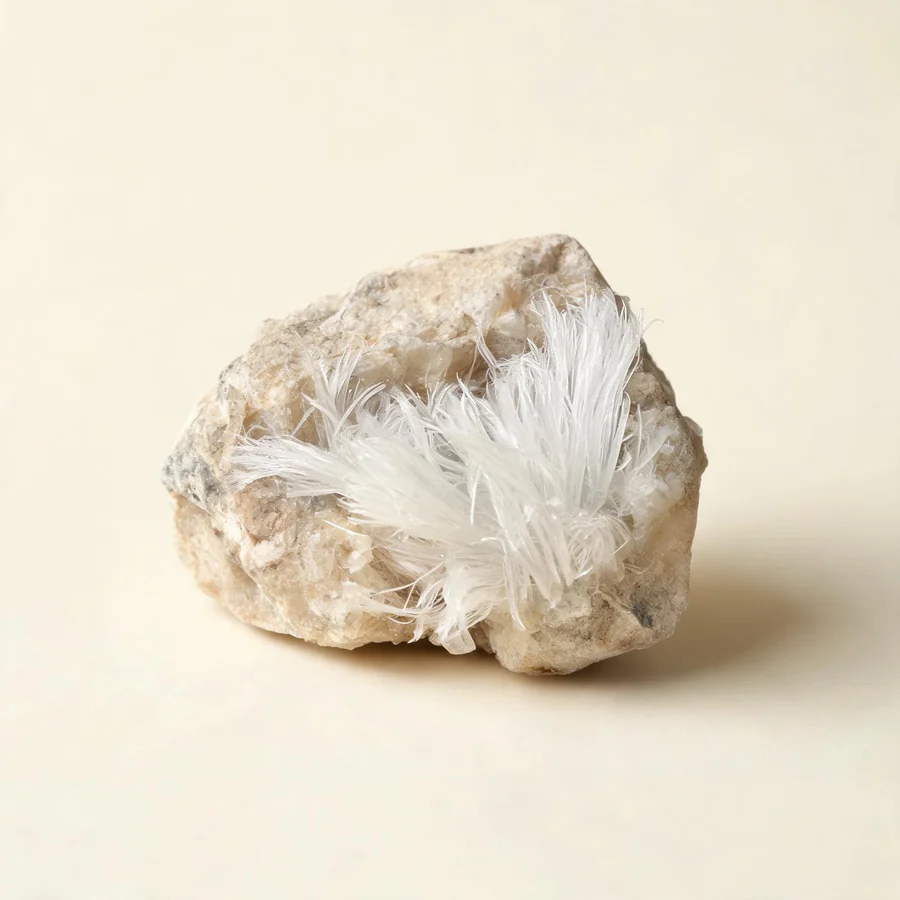
Skin profile
Where this herb sits in skin practice: the pattern it corrects, the skin signs it suits, and what it should not be used for.
Skin signs that suggest it
- Skin that is hot, dry and flushed all over, with a fever that sweat does not bring down
- Intense thirst for cold drinks alongside the heat of the skin
- A weeping, eroded or oozing surface that needs drying, such as a crusted eczema or a superficial burn
- Restlessness and irritability with the heat, a red tongue and a pulse that is full and fast
- Redness that is diffuse rather than confined to one lesion
- A burn or slow-healing sore with a moist, raw surface that has not become deeply infected
When it is not the right herb
Not for cold skin or a cold, weak digestion. The mineral is very cold, and given to a person with a pale tongue, a poor appetite, loose bowels and a cold, aching abdomen it deepens the weakness and can leave a loss of appetite that outlasts the original illness. It is also wrong for deficiency heat, where the skin is dry and the fever low and evening-based, because a heavy cold mineral injures the Yin further without touching the cause, and it is wrong at the surface stage of an illness with chills and shivering. The calcined form is never swallowed, whatever the indication.
What it does for skin
Skin-relevant actions only. Each one describes a mechanism in TCM terms and what it looks like on the skin.
Drains fire from the whole body so hot, red skin cools
This is the core action, and it is systemic rather than local. Where a skin flare is part of a hot state with fever, thirst and a bounding pulse, the mineral pulls the heat down and out, and the redness and dryness of the surface settle as the internal fire drops. It is the reason gypsum appears in formulas for acute hot eruptions rather than in creams for a single plaque.
Cools without drying the fluids
A bitter, cold herb both clears heat and dries, which helps where dampness is present and harms a person whose fever has already parched skin and mouth. Gypsum's sweetness is thought to shield fluid as the coldness clears, so it fits a hot, dry, thirsty patient in whom a drying herb would leave the surface tighter still.
Dries a weeping surface when calcined and used externally
The calcined mineral, the plaster form, has been fired until its water of crystallisation is driven off, and it absorbs moisture rather than clearing heat. Dusted thinly on a weeping eczema, a superficial burn or an eroded sore, it takes up the ooze and lets the surface dry. This is a materials action rather than an internal one, and the calcined product must never be taken by mouth.
Clears heat from the Lung and Stomach channels, which the skin reflects
The Lung governs the skin and the Stomach channel runs through the face, so heat in those channels shows as facial flushing, hot dry cheeks and an irritable complexion with thirst. Gypsum enters both, and it is used where that facial heat belongs to a larger hot picture rather than to a fixed local lesion.
Skin conditions it is used for
Mapped to the condition pages on this site. The pattern column shows what the skin is doing when this herb is the right choice.
| Condition | Pattern | Why it suits | Typical setting |
|---|---|---|---|
| Skin Burns | Toxic-heat and fire damage with a raw, weeping surface | A superficial burn is a hot injury with a moist, raw surface, and the calcined mineral is the traditional drying powder for exactly that. It is dusted on thinly to take up the ooze and is not used on a deep or blistering burn or on any burn with spreading redness, which needs medical care. The raw mineral is given internally only where the burn is part of a general hot state with fever and thirst. | Calcined Shi Gao dusted thinly; raw Shi Gao only inside a whole-body heat formula |
| Eczema | Damp-heat with a weeping, oozing surface, treated from the outside | Where an eczema flare is wet rather than dry, the calcined powder is dusted on to absorb the ooze and help the surface close. It is a dressing rather than a cure, and it is used on limited areas. The raw mineral is not a standard internal herb for eczema, and it is considered only when the flare sits inside a general hot state with thirst and a bounding pulse. | Calcined Shi Gao with Hua Shi as a drying powder; raw Shi Gao only within a heat-clearing formula |
| Skin Erosion | Damp-heat with a raw, moist, superficial loss of skin | An eroded patch that stays moist and refuses to dry is the kind of surface the calcined powder was designed for, and it is used after cleaning, in a thin layer. It does not sterilise the area and it is not a treatment for infection, so any spreading redness, heat or pus needs assessment. The powder is stopped once the surface is dry, because continued use cakes and cracks. | Calcined Shi Gao used alone as a thin dusting, or with Hua Shi |
| Burning Hot Skin To The Touch | Heat at the Qi level with the whole surface burning | When the skin is burning to the touch and the person has a high fever, great thirst and a surging pulse, the heat is at the Qi level rather than in the skin alone. Gypsum is the material that reaches it, and the surface cools as the internal fire is drained. A fever of that height needs medical assessment, and the mineral is given within a formula rather than as a home remedy. | Bai Hu Tang, or a modified Yangming heat formula |
| Skin Inflammation | Acute heat with diffuse redness and dryness, part of a systemic hot state | Diffuse red, hot, dry inflammation that comes with thirst and a rapid pulse is the skin expression of a general heat. Gypsum is added to cool the whole picture, and the skin settles as the fever and thirst do. It is not used for a chronic or recurrent inflammation without heat signs, and it is not the herb for a localised plaque. | Within a heat-clearing formula with Zhi Mu and Gan Cao |
Combinations for skin
Herbs it is paired with when the skin, not an internal organ, is the target.
| Partner | Ratio | Why the pair is used |
|---|---|---|
| Zhi Mu | 15 to 30 g Shi Gao with 6 to 10 g Zhi Mu | The classic heat-and-thirst pair. Zhi Mu moistens and clears while gypsum drains the fire, so the fluid the heat is consuming is protected as the temperature comes down. On the skin this suits a hot, dry, flushed surface with thirst, and it is the core of the Yangming heat approach. |
| Gan Cao | 15 to 30 g Shi Gao with 3 to 6 g Gan Cao | Liquorice is added to protect the middle from the mineral's coldness and to keep the formula from injuring digestion. The pair is the simplest form of the cooling approach, and it is used where the skin heat is real but the person is not strong enough for unrelieved cold. |
| Zhi Zi | 15 to 30 g Shi Gao with 6 to 10 g Zhi Zi | Zhi Zi drains heat through the urine and cools the Blood, adding a route out that gypsum does not have. Together they are used where hot, red, irritable skin comes with restlessness and a feeling of heat in the chest, and where the heat has begun to reach the Blood. |
| Hua Shi | Equal parts as a dusting powder | For external use the two minerals are combined as a drying powder: gypsum absorbs the ooze and talc helps the powder spread and glide. It is applied thinly to weeping eczema and eroded skin, and it is not used on broken, deep or infected surfaces. Both must be the external grade, and neither powder is swallowed in this setting. |
Formulas where it leads
- Bai Hu Tang (白虎汤) - The classical formula for Yangming heat: high fever, profuse sweating, intense thirst and a full, flooding pulse. Shi Gao anchors it, and the formula is the reference point for heat that reddens and dries the skin from within.
Topical use
Externally, Shi Gao is used in its calcined form, the plaster material, as a powder dusted over weeping eczema, superficial burns and sores that are slow to close. It absorbs surface moisture and helps a wet, eroded area dry, and it goes on in a thin layer rather than a thick cake. The raw mineral is the internal medicine and is not the form used on the skin.
| Preparation | How and when it is used |
|---|---|
| Calcined powder dusting | Calcined gypsum is ground to a fine powder and dusted thinly over a weeping or eroded area, once or twice daily after cleaning. A thin layer is enough; a thick cake traps moisture and cracks. Use material from a supplier that states pharmacopoeial grade for external use. |
| Powder blend with talc | Mixed with an equal part of talc or another drying mineral and applied with a soft pad to weeping eczema or to skin folds. Blends are made fresh, kept dry and discarded if they become damp or discoloured. |
Patch test and cautions
Use only the calcined material externally and keep it well away from the mouth and eyes. Do not apply it to deep, blistering or infected wounds, or to any burn larger than a small superficial area, which needs medical care. Stop if the area becomes more red, hot or painful, and do not seal a powder under an occlusive dressing.
Safety for skin use
What to check before recommending or using it, including the cautions that matter most for skin patients.
Do not use, or use with caution
- Never take the calcined mineral by mouth. Firing changes gypsum into a different material, and the calcined form is for external use only; historical warnings describe an irregular pulse, a tight chest, trouble speaking and weak limbs after swallowing it.
- Spleen and Stomach deficiency-cold: a pale tongue, a poor appetite, loose bowels and a cold, aching abdomen. The mineral is very cold and deepens that weakness, leaving a loss of appetite and fatigue that can outlast the original illness.
- Deficiency heat: an evening low fever, dry skin, a red tongue with little coating and a thin rapid pulse. The trouble is a lack of Yin, not too much heat, and a heavy cold mineral damages both further.
- Material outside the impurity limits. Natural gypsum can carry arsenic, and the pharmacopoeial limits are 2 parts per million for arsenic and 10 for heavy metals; unverified craft or industrial gypsum should not be used at all.
- The exterior stage of an illness, with chills, shivering and a stiff neck, where a heavy mineral that clears the interior can push the pathogen deeper.
Pregnancy and breastfeeding
Used with caution rather than avoided. It is not classed as prohibited, and ordinary doses are given when there is genuine excess heat. The worry is the cold: pregnancy needs steady digestion, and a mineral this cold can blunt appetite and the absorption of nutrients. Give it only when the heat picture is unmistakable, at the smallest dose that works, and stop once the heat has gone. A little calcined powder on a small superficial area is a local matter, but it should still be discussed with a practitioner.
Interactions
- Calcium released as the mineral dissolves binds tetracycline and some macrolide antibiotics in the gut, forming insoluble complexes and lowering the amount of antibiotic that gets into the blood. Leave at least two hours between the two, and treat the antibiotic course as the priority.
- More calcium in the blood alters cardiac conduction and can strengthen digoxin and related drugs, so the danger of arrhythmia and heart block rises; nifedipine and similar calcium channel blockers raise a comparable theoretical concern. Anyone on these medicines should not take the mineral unless both prescribers agree.
- Sulphonamides may be tolerated less well alongside the mineral, and extra phosphate or sulphate intake can form insoluble precipitates that reduce the effect of both. The practical rule is to separate the doses by an hour or two and to ask a pharmacist.
Allergy and patch testing
Allergy to gypsum itself is unusual, but a powder can irritate or dry the surrounding skin, and a reaction is more often to an added ingredient in a blend than to the mineral. Patch test a blend on a small area of normal skin for 24 hours, stop if there is stinging, redness or swelling, and do not use a powder that has been stored damp.
General safety references
General references for herbal hepatotoxicity and herb-drug interactions; they are not specific to this herb.
- Review article: Herbal hepatotoxicity - an update on traditional Chinese medicine preparations. Alimentary Pharmacology & Therapeutics, 2014. PMID: 24844799.
- Interactions between herbal medicines and prescribed drugs: an updated systematic review. Drugs, 2009. PMID: 19719333.
- Warfarin and food, herbal or dietary supplement interactions: a systematic review. British Journal of Clinical Pharmacology, 2021. PMID: 32478963.
Evidence
The classical record is quoted with its source. The modern note states the level of evidence plainly.
Classical record
除时气头痛身热,三焦大热,皮肤热,肠胃中膈热,解肌发汗,止消渴烦逆,腹胀暴气喘息,咽热。
It removes seasonal headache with body heat, great heat of the three burners, heat in the skin and in the intestines and diaphragm. It releases the muscles and promotes sweating, stops wasting-thirst with vexation and counterflow, distension with sudden panting, and heat in the throat.
Ming Yi Bie Lu (Supplement to the Classic of Materia Medica) - The earliest entry to name heat in the skin, and the textual basis for using the mineral where the surface itself is hot and dry.
胃经大寒药,润肺除热,发散阴邪,缓脾益气。
A medicine of great cold belonging to the Stomach channel. It moistens the Lung and removes heat, disperses Yin-type pathogens, and relaxes the Spleen to support Qi.
Yong Yao Xin Fa (Essentials of Drug Use) - A short entry that became the source of the caution later physicians repeated, since a medicine of great cold is not given casually.
乃降火之神剂,泻热之圣药。
It is the divine agent for bringing fire down and the sage medicine for draining heat.
Ben Cao Xin Bian (New Compilation of Materia Medica) - Why so simple a mineral sits at the centre of the heat-clearing tradition, and why it is used where the whole body, skin included, is running hot.
Modern evidence
Evidence status
- Gypsum is calcium sulphate dihydrate, a chemically inert mineral. There is no established pharmacological mechanism for its traditional cooling action, and no clinical trial of Shi Gao in eczema, burns or any other skin condition was identified.
- The calcined form is calcium sulphate hemihydrate, the material of plaster of Paris, and it has a long history in medicine as a dressing and support material rather than as a drug. Modern burn and wound practice uses gypsum-containing dressings for their physical properties, not because the mineral is thought to treat the skin.
- The most solid data about the mineral are analytical: pharmacopoeial limits of 2 parts per million for arsenic and 10 for heavy metals, and the absolute distinction between the raw and the calcined forms. These are safety facts rather than evidence of benefit.
PubMed records
Selected real PubMed records for this herb's species or its constituents, chosen by species name and title relevance. They are references for the non-TCM discussion above, not proof that the herb treats any skin condition.
- Gypsum fibrosum and its major component CaSO4 increase cutaneous aquaporin-3 expression levels.. Journal of ethnopharmacology, 2012. PMID: 22138657 (skin-related record).
- Elucidating the mechanism by which Gypsum fibrosum, a traditional Chinese medicine, maintains cutaneous water content.. Biological & pharmaceutical bulletin, 2013. PMID: 23912684 (skin-related record).
Dose and forms
Skin-practice dosing and the preparations that suit skin complaints.
| Form | Dose and notes |
|---|---|
| Decoction (raw mineral) | 15 to 30 g of crushed raw gypsum daily within a formula, decocted first for 15 to 30 minutes before the other herbs. It is crushed rather than left in blocks, because the active fraction barely dissolves otherwise. |
| Severe heat | 30 to 60 g is the range for marked whole-body heat with high fever, thirst and a flooding pulse, and higher figures belong to experienced hands and severe excess heat. Very large historical amounts refer to a course rather than to a single dose. |
| External powder | The calcined mineral is used as a thin dusting on weeping or eroded skin once or twice daily, and is not measured like an internal dose. It is applied from a clean container and the residue is discarded. |
| Stopping | Stop as soon as the heat is substantially reduced. Cold continued beyond that point injures the Stomach and Spleen, and a poor appetite with fatigue that lingers is the usual sign of it. |
Two rules govern this material rather than any dose ceiling: the raw mineral is the only internal form, and the calcined mineral is external only. The mineral is heavy and inert, so it is crushed and decocted first, and some classical sources wrapped it in cloth to keep the sediment out of the liquid. For skin use the practical question is which form is in the pot or on the skin, since that mistake is the most common way a safe material does harm.
Citations and further reading
Only real sources are listed: the classical materia medica passages quoted above, and the source works behind the botanical and safety statements.
- Ming Yi Bie Lu (Supplement to the Classic of Materia Medica), attributed to Tao Hongjing - the passage naming heat in the skin is quoted above.
- Yong Yao Xin Fa (Essentials of Drug Use), attributed to Zhang Yuansu - the entry on great cold and the Stomach channel is quoted above.
- Ben Cao Xin Bian (New Compilation of Materia Medica), Chen Shiduo, 1687 - the line on draining heat is quoted above.
- Pharmacopoeia of the People's Republic of China, Gypsum Fibrosum monograph - source for the raw and calcined forms and for the arsenic and heavy metal limits.
- Modern evidence statement: mineralogical and materials literature on calcium sulphate, summarised as a statement about the level of evidence rather than as a cited finding.
- Clinical toxicology notes on the swallowed calcined material, which record the historical warnings repeated in the safety section.
Educational reference for qualified practitioners. This page is not medical advice, and skin conditions should be diagnosed by a clinician before treatment.