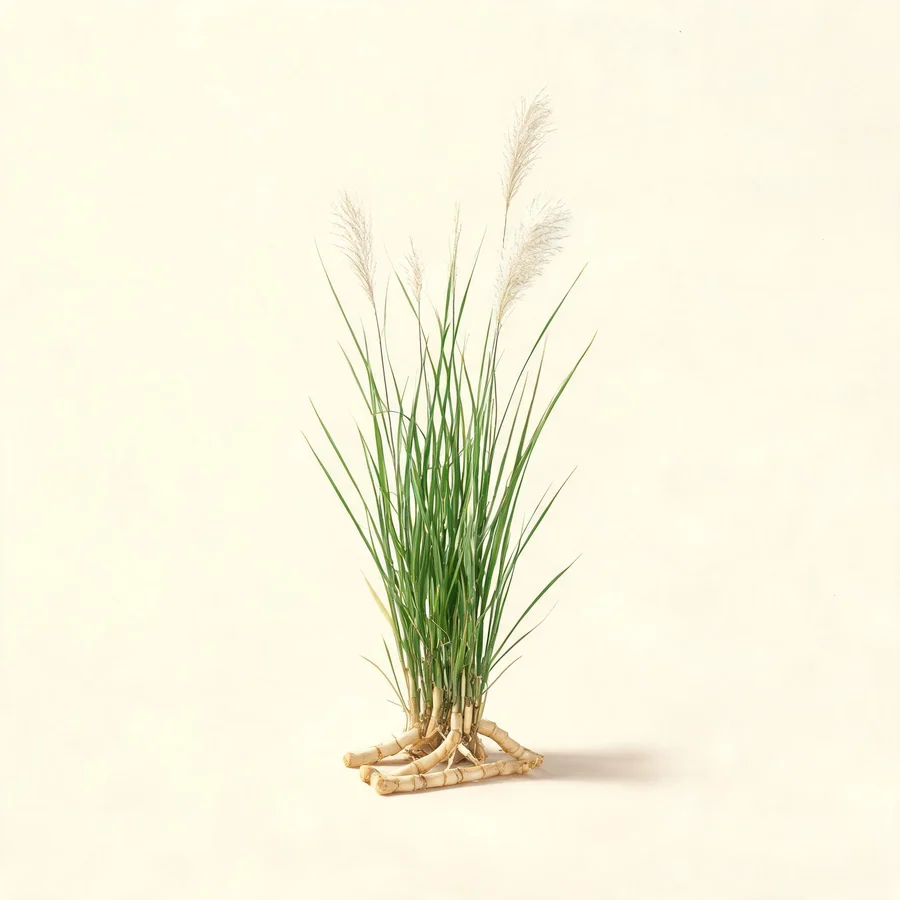
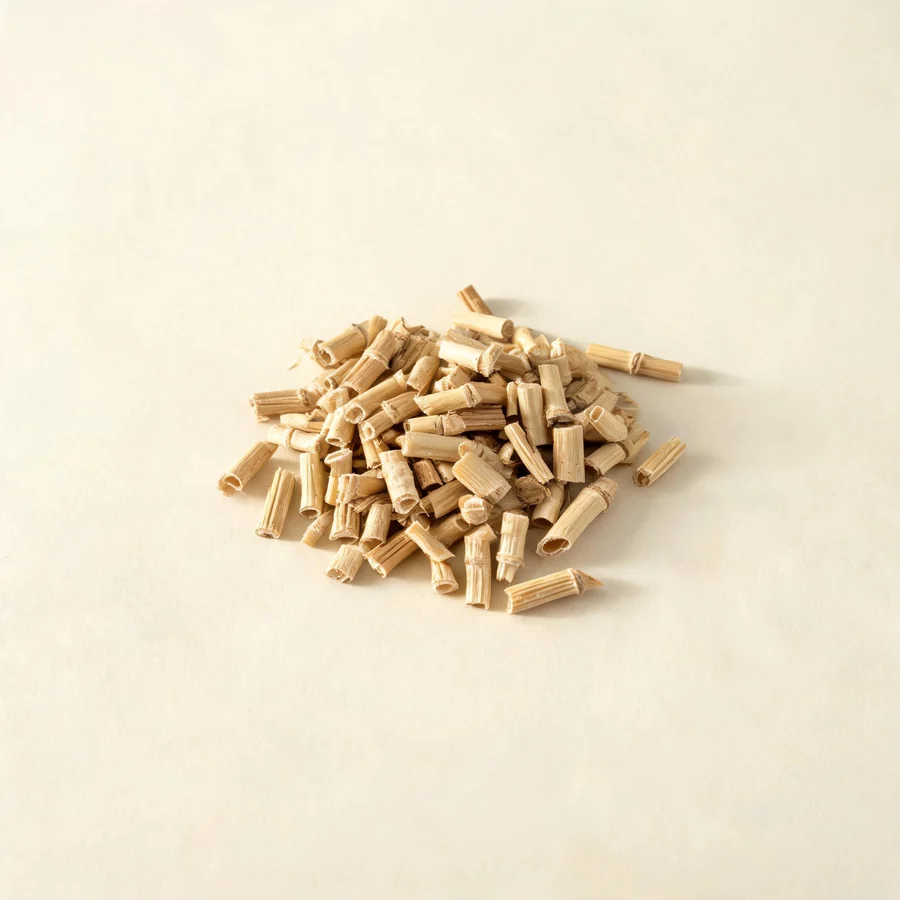
Skin profile
Where this herb sits in skin practice: the pattern it corrects, the skin signs it suits, and what it should not be used for.
Bai Mao Gen is the gentle blood-cooling herb: it is chosen for spots and patches that come from heat in the Blood, and for a hot rash with thirst. It cools without drying, and the limit is cold-deficiency rather than toxicity.
Skin signs that suggest it
- Fine red or purple pinprick spots that do not blanch under pressure, with heat signs (blood heat)
- Larger purple patches or bruises appearing without injury, on a background of fever or heat
- A bright red, fine rash in an acute febrile illness, with thirst and a red tongue
- Skin that is hot and dry, with cracked lips and a strong wish for cold drinks
- Bright red bleeding from the gums or nose alongside the skin flare, pointing to the same heat in the Blood
When it is not the right herb
Not for bleeding that comes from cold and deficiency: pale skin, a cold body, a weak pulse and a chronic ooze are the opposite pattern, and cooling a cold picture will not stop the bleeding. Not for a cold Spleen with loose stools and a poor appetite, and not for profuse clear urine without thirst, because a draining herb adds to a loss that is already happening. Unexplained bruising or purpura always needs medical assessment.
What it does for skin
Skin-relevant actions only. Each one describes a mechanism in TCM terms and what it looks like on the skin.
Cools the Blood and stops bleeding into the skin
Reckless movement of Blood is how the tradition describes heat that pushes blood out of its vessels, and the result on the skin is petechiae, purpura or easy bruising. Cooling the blood level restores containment, so the leak stops of itself. The herb is valued because it does this without causing stasis and without drying the skin, which is not true of every haemostatic: an astringent that plugs the leak can leave stale Blood behind, and this one is chosen where that matters.
Clears Heat so a hot rash settles
The same cold, sweet quality settles the heat behind a red, fine, spreading rash in a febrile illness. Zhang Xichun called the rhizome the best herb for releasing heat held in the organs and for carrying pox and rash toxin to the surface, which is a statement about direction: the eruption is cooled and encouraged outward rather than driven back into the body.
Clears Heat and generates fluids, so it cools without drying
The fresh rhizome is juicy and sweet, and it quenches thirst while it cools, which makes it suitable for skin that is hot, tight and dry after a fever. A cold herb that also dries would leave the surface rougher; this one replaces some of the moisture the heat has taken, and it does so without injuring the Stomach. It is a supporting action in skin formulas rather than a leading one.
Drains heat downward through the urine
Clearing heat and increasing urine flow gives the heat somewhere to leave rather than only damping it down at the surface. That is why the rhizome is used where a hot skin eruption sits beside burning, scanty urination, and why it supports the damp-heat pictures that include a rash. The downward route also explains the caution: it is a diuretic as well as a cooling herb, and it should not be given where urine is already profuse and clear.
Skin conditions it is used for
Mapped to the condition pages on this site. The pattern column shows what the skin is doing when this herb is the right choice.
| Condition | Pattern | Why it suits | Typical setting |
|---|---|---|---|
| Purpura | Heat in the Blood with purple patches that do not blanch | Purpura is the clearest skin expression of blood heat: purple or dark red patches that do not fade under pressure, often with fever, thirst and a red tongue. The rhizome cools the blood level so that the vessels hold, and it does so without leaving the stasis that an astringent haemostatic can create. It is a supporting herb in a formula, and any new purpura needs a blood count before it is treated as a pattern. | With Sheng Di Huang, Mu Dan Pi and Chi Shao in a blood-cooling formula |
| Petechiae | Fine pinpoint bleeding under the skin in an acute hot illness | The fine pinprick spots of an acute febrile illness are the earliest and smallest form of the same leak, and the herb is chosen while the picture is still hot and the spots are bright rather than dark. Its sweetness protects the fluids that fever has already depleted, which matters in a person who is thirsty and restless. Petechiae with fever is a reason to seek medical assessment, and the herb is used alongside that assessment. | With Xuan Shen, Sheng Di Huang and Jin Yin Hua in a cooling formula |
| Heat rash | Heat lodged in the surface with a fine red prickling rash | A fine red prickling rash in hot weather, or in a person who is feverish and flushed, is heat held in the surface layers of the skin. The rhizome clears that heat and, because it generates fluid, it does so without leaving the skin dry and irritable afterwards. It suits the hot, thirsty, restless picture rather than the dry, cold, pale one, and it is a gentle herb that can be used in children for a short course. | With Jin Yin Hua and Lian Qiao, or as a cooling decoction with Lu Gen |
| Macular rash | Heat and toxin expressing as a flat red rash | A flat red rash that spreads in a febrile illness is read as heat and toxin being pushed to the surface, and Zhang Xichun's description of the rhizome as a herb that carries rash toxin outward is the classical basis for using it here. The aim is to cool the heat while allowing the eruption to express itself, which is why it is combined with herbs that vent the surface rather than with astringents that would suppress it. | With Lu Gen and Chan Tui in a formula that vents heat outward |
| Dry, hot skin | Heat in the Lung and Stomach drying the skin and the fluids | Skin that is hot to touch, tight and finely rough, with a dry mouth and a thirst that is hard to quench, is a picture of heat that has dried the fluids. The rhizome is sweet and cold and generates fluid, so it cools the heat while protecting the moisture the skin has left. It is a supporting herb here, added to a formula that leads with stronger heat-clearing medicines. | With Shi Gao and Mai Men Dong in a fluid-generating formula |
Combinations for skin
Herbs it is paired with when the skin, not an internal organ, is the target.
| Partner | Ratio | Why the pair is used |
|---|---|---|
| Ou Jie | 15 g each | The two cool the Blood and arrest bleeding by different routes. The rhizome clears heat and increases urine flow; lotus node is the more astringent haemostatic, acting on the leak itself. Between them the heat and the leakage are both covered. The balance tilts towards lotus node for heavy bleeding and towards the rhizome when heat signs dominate, and both are gentle enough to repeat while bleeding is settling. |
| Xiao Ji | 15 to 30 g Bai Mao Gen with 10 to 15 g Xiao Ji | Thistle is the stronger haemostatic of the pair and also moves stasis and clears toxic swelling, so it supplies what the rhizome lacks. The combination is used for blood-heat purpura and for a hot rash with a sense of blockage, where the bleeding must stop without trapping stasis. It is a standard pairing in formulas for blood heat. |
| Shi Gao | 15 to 30 g Shi Gao with 15 to 30 g Bai Mao Gen | Gypsum clears blazing heat at the Qi level and the rhizome cools the Blood and protects the fluids, so fever and intense thirst are covered without either action overshooting. It is used where a febrile illness has burnt the fluids and left the person restless, flushed and dry, with spots or a rash appearing on the skin. Gypsum is the stronger cooler and the rhizome the gentler protector. |
| Lu Gen | 15 to 30 g each | Two sweet, cold rhizomes from the grass family, near-identical on paper. The division is by level: reed cools at the Qi level and settles Stomach heat with vomiting, while cogon works at the Blood level and arrests bleeding. Given together for a fever with thirst, nausea and a hot rash, the two cover both at once. |
Formulas where it leads
- Mao Gen Yin Zi (茅根饮子) - Recorded in the Wai Tai Mi Yao, where the rhizome leads a formula for heat with bleeding and urinary difficulty. Its skin relevance is the blood-cooling part of the action, which is why the same root appears in the formulas for purpura and for a hot, spotty rash.
Safety for skin use
What to check before recommending or using it, including the cautions that matter most for skin patients.
Do not use, or use with caution
- Spleen and Stomach deficiency-cold: loose stools, a poor appetite, cold abdominal pain and a pale tongue. A cold, sweet rhizome can deepen all of those, so warming herbs are added where the pattern still requires the herb.
- Bleeding that comes from deficiency cold instead of from heat. Cooling a cold picture will not arrest the bleeding and can deepen the weakness underneath, so pale skin with cold limbs and a weak pulse is a reason to withhold rather than to dose higher.
- Profuse clear urination without thirst. A draining herb adds to a loss of fluid that is already happening, and the picture is closer to a deficiency of Qi than to heat in the Blood.
- Wild rhizomes from roadsides or waste ground. The plant spreads through disturbed soil, and the one practical caution is contamination rather than toxicity, so wash it thoroughly and buy from a clean source.
Pregnancy and breastfeeding
No specific prohibition is recorded and the herb is not classified as pregnancy-prohibited, so the question is dose and duration rather than avoidance altogether. A short course at a standard dose for a clear heat pattern is generally considered acceptable; large or prolonged use is not. Any bleeding during pregnancy needs assessment in its own right, and the herb is no substitute for that review.
Interactions
- Diuretics matter most. Because the rhizome raises urine volume, a loop or thiazide diuretic can add to fluid and electrolyte loss; where both are used, monitoring is sensible, especially in a thin person already taking digoxin.
- Anticoagulants and antiplatelet drugs raise the mirror-image problem: a herb that arrests bleeding could oppose warfarin or heparin, and nobody can predict which way the balance falls. Anyone on these medicines needs supervision of the pair rather than guesswork.
- Antihypertensives are a theoretical concern, since traditional reports mention a fall in blood pressure and the diuretic action can add to it. Beyond those, little is documented, and the honest summary is a long record of safety with a thin pharmacological base.
Allergy and patch testing
No common allergy is recorded, but this is a grass and people with grass pollen sensitivity sometimes react to related material, either on handling or after a decoction. A new rash, wheeze or swelling after taking it is a reason to stop and have it assessed rather than to continue at a lower dose. The rhizome should be washed thoroughly before use and bought from a clean ground source.
General safety references
General references for herbal hepatotoxicity and herb-drug interactions; they are not specific to this herb.
- Review article: Herbal hepatotoxicity - an update on traditional Chinese medicine preparations. Alimentary Pharmacology & Therapeutics, 2014. PMID: 24844799.
- Interactions between herbal medicines and prescribed drugs: an updated systematic review. Drugs, 2009. PMID: 19719333.
- Warfarin and food, herbal or dietary supplement interactions: a systematic review. British Journal of Clinical Pharmacology, 2021. PMID: 32478963.
Evidence
The classical record is quoted with its source. The modern note states the level of evidence plainly.
Classical record
白茅根,寒凉而味甚甘,能清血分之热而不伤于燥,又不粘腻,故凉血而不虑其积瘀,以主吐衄呕血。泄降火逆,其效甚捷。
Cold in nature and very sweet in taste, it clears heat from the blood level without drying and without cloying. It therefore cools the Blood without leaving stasis behind, which is why it is used for vomiting of blood, nosebleed and coughing of blood. It drains fire counterflow downward, and it acts swiftly.
Ben Cao Zheng Yi (Correct Meaning of Materia Medica) - The property that separates it from the astringent haemostatics, and the reason it suits a leaky, hot picture in the skin.
最善透发脏腑郁热,托痘疹之毒外出;又善利小便淋涩作疼……为其味甘,且鲜者嚼之多液,故能入胃滋阴以生津止渴,并治肺胃有热,咳血、吐血、衄血、小便下血,然必用鲜者,其效方著。
It is the best herb for releasing heat that has stagnated in the organs and for carrying the toxin of pox and rash out to the surface. It also frees difficult and painful urination. Being sweet, and yielding much juice when the fresh rhizome is chewed, it enters the Stomach to nourish Yin, generate fluid and quench thirst, and it is used for heat in Lung and Stomach with coughing of blood, vomiting of blood, nosebleed and blood in the urine. The fresh rhizome must be used for the effect to show.
Yi Xue Zhong Zhong Can Xi Lu (Records of Tradition and Modern Medicine), Zhang Xichun - The one classical line that speaks directly to skin: the eruption is encouraged outward and cooled rather than driven back in.
白茅根甘,能除伏热,利小便,故能止诸血哕逆、喘急消渴,治黄疸水肿,乃良物也。世人因微而忽之,惟事苦寒之剂,致伤冲和之气,乌足知此哉?
Sweet, it clears hidden heat and frees urination, and on that basis it stops bleeding of every kind, hiccup, counterflow and panting, quenches wasting thirst and treats jaundice with oedema. It is a fine medicine. Yet people overlook it because it is commonplace, and reach instead for bitter, cold, harsh remedies that injure the harmonious Qi of the middle, which shows how little they understand.
Ben Cao Gang Mu (Compendium of Materia Medica), Li Shizhen - Li Shizhen making the case for a cheap, gentle herb against the harsh treatment in fashion, and a reminder that gentle cooling has a real place in hot skin disease.
Modern evidence
Evidence status
- Laboratory and animal work on Imperata cylindrica reports diuretic and anti-inflammatory activity in extracts of the rhizome. These are not trials in people, and they do not establish that the herb stops bleeding in any skin condition.
- Clinical evidence for this rhizome in purpura, petechiae or any other skin disorder is very limited and comes mainly from formula studies in Chinese practice. No controlled trial of the single herb in skin disease was identified, so the skin uses described here rest on the traditional record.
- The rhizome is an accepted herbal substance in the Chinese Pharmacopoeia, classed among items that can be used as food as well as medicine in China. Bleeding into the skin is a symptom that needs a diagnosis, and the herb is not a reason to postpone a blood count or a clinical review.
PubMed records
Selected real PubMed records for this herb's species or its constituents, chosen by species name and title relevance. They are references for the non-TCM discussion above, not proof that the herb treats any skin condition.
- Imperata cylindrica: A Review of Phytochemistry, Pharmacology, and Industrial Applications.. Molecules (Basel, Switzerland), 2021. PMID: 33800104 (pharmacology or review record).
- Allelopathy and Allelochemicals of Imperata cylindrica as an Invasive Plant Species.. Plants (Basel, Switzerland), 2022. PMID: 36235415 (pharmacology or review record).
Dose and forms
Skin-practice dosing and the preparations that suit skin complaints.
| Form | Dose and notes |
|---|---|
| Decoction (dried) | 9 to 30 g of dried rhizome daily, with the lower end for ordinary cooling and the upper end for marked blood-heat bleeding or an acute hot rash. The pieces are light and bulky, so the weight looks large for the volume in the pot. |
| Higher range in bleeding | As much as 60 g daily is recorded for marked blood-heat bleeding under supervision. That figure belongs to a supervised course rather than home use, and it is not continued once the bleeding settles. |
| Fresh rhizome | Roughly double the dried weight, 60 to 120 g, juiced or decocted briefly. The fresh root is preferred where the aim is to generate fluid as well as to cool, because the juice is sweeter and more moistening than the dried pieces. |
| Charred form | The charred form, Mao Gen Tan, is chosen where arresting the bleeding matters more than cooling. Stir-fried until the surface darkens, it suits persistent rather than acutely hot bleeding, and the dose matches the dried form. |
The dried material is measured in grams and the fresh in handfuls: 9 to 30 g dried is ordinary, the figure roughly doubles when the material is fresh, and the largest numbers belong to supervised treatment of active bleeding. Where the aim is to arrest bleeding rather than to cool, the charred form is chosen; charring tempers the cold and strengthens the astringent hold. Repeat doses are safe enough for subacute use, but the course is still short.
Citations and further reading
Only real sources are listed: the classical materia medica passages quoted above, and the source works behind the botanical and safety statements.
- Ben Cao Zheng Yi (Correct Meaning of Materia Medica) - classical entry quoted above.
- Yi Xue Zhong Zhong Can Xi Lu (Records of Tradition and Modern Medicine), Zhang Xichun, 1909 - classical entry quoted above.
- Ben Cao Gang Mu (Compendium of Materia Medica), Li Shizhen, 1578 - classical entry quoted above.
- Rhizoma Imperatae monograph: Pharmacopoeia of the People's Republic of China - accepted botanical source, part used and quality requirements.
- Modern evidence statement: based on laboratory and animal literature on Imperata cylindrica, summarised as a statement about the level of evidence rather than as a cited finding.
- Botanical description and identification: botanical literature on Imperata cylindrica var. major, Poaceae, and the confusion with reed rhizome.
Educational reference for qualified practitioners. This page is not medical advice, and skin conditions should be diagnosed by a clinician before treatment.