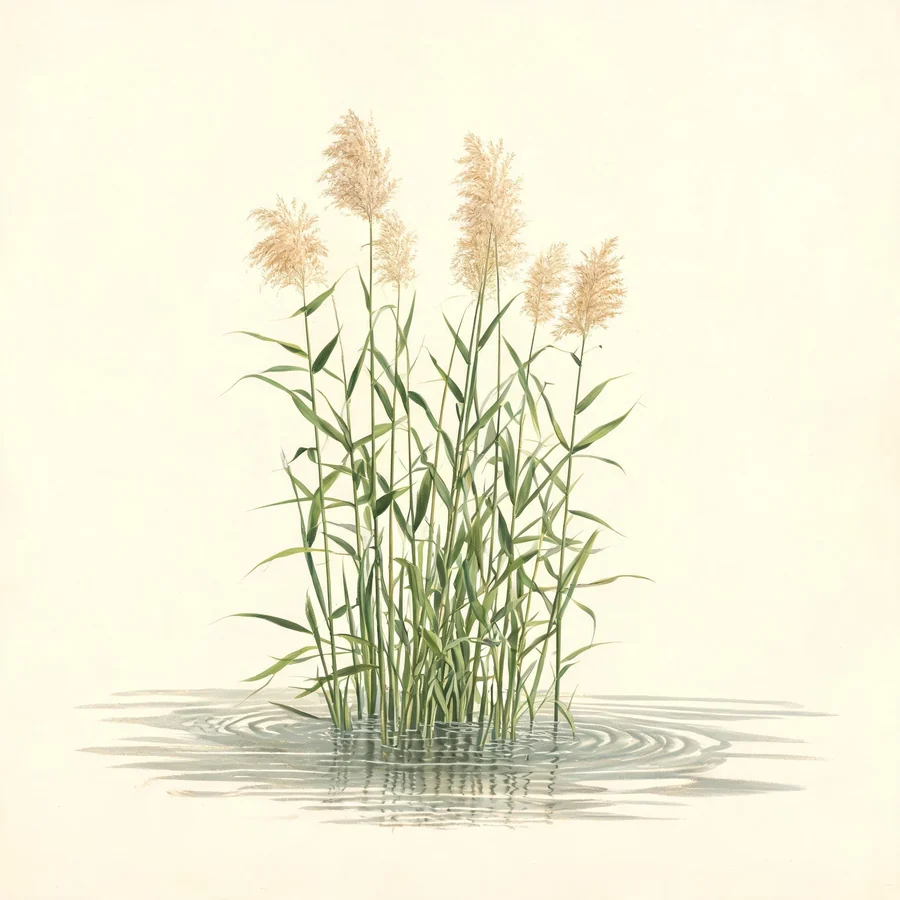
Skin profile
Where this herb sits in skin practice: the pattern it corrects, the skin signs it suits, and what it should not be used for.
Lu Gen is the cooling, moistening herb for skin that is hot and dry together, and for a febrile rash that will not finish coming out. It is gentle and food-like, which is why it can be used where a bitter root would be too much, and why it will not carry a serious eruption alone.
Skin signs that suggest it
- Flushing of the cheeks and nose with heat that worsens after spicy food or alcohol
- Skin that is hot and dry at once, with thirst for cold drinks, dry lips and a dry mouth
- A feverish rash that is slow to appear, or appears only in patches, in a thirsty, irritable child
- Constipation or a dry stool alongside the flush
- A red tongue with a dry yellow coat and a surging, rapid pulse
When it is not the right herb
Not for cold, pale, clammy skin, and not for a rash that is already fully out and fading, where there is nothing to vent. It is not for vomiting or nausea of the cold type, with a pale tongue, no thirst and relief from warmth, because a cold sweet herb adds to the cold. It is no substitute for antibiotics or hospital care in pneumonia, in measles with complications, or in any fever with drowsiness, breathlessness or a stiff neck, and long daily courses in a cold, tired person are not appropriate.
What it does for skin
Skin-relevant actions only. Each one describes a mechanism in TCM terms and what it looks like on the skin.
Clears Stomach heat that flushes the face
The Stomach channel ends at the nose and cheeks, so heat collected there shows as a flush that lasts longer with each episode, with dry lips, thirst for cold drinks and a dry stool. The rhizome is sweet and cold, and it lowers that heat without the harsh drying of the bitter roots, so the flush settles without leaving the face tighter. It is used with gypsum and anemarrhena when the heat is strong, and as a light decoction of its own when it is mild.
Restores fluids that heat has spent
Fever, sweating and a dry mouth leave the surface hot and rough, and a herb that is mostly water and sugar is read as replacing what has been lost while it cools. That combination, cooling without drying, is why it is preferred to stronger clears in a person worn down by illness. It will not rebuild Blood or Yin, and a chronic dry skin with no heat needs nourishing herbs instead.
Helps a slow eruption come out
In measles and similar febrile rashes the tradition wants the rash out and complete. A light, cooling, moistening herb supports that expression without pushing the pathogen inward, and it guards the fluids the fever is using up. This is a supportive measure in an otherwise stable child, and any rash with a high fever, drowsiness or difficulty breathing needs emergency assessment rather than a cooling tea.
Cools without drying the surface
Bitter cold herbs take heat out and moisture with it, which is the wrong trade in skin that is already dry. The reed rhizome is sweet and watery, so cooling and moistening happen together, and that is why it belongs to the light prescriptions that close a febrile illness rather than those that break the fever. The limit is duration: taken for months it cools the digestion and leaves the person tired and loose.
Skin conditions it is used for
Mapped to the condition pages on this site. The pattern column shows what the skin is doing when this herb is the right choice.
| Condition | Pattern | Why it suits | Typical setting |
|---|---|---|---|
| Rosacea | Bright Yang Stomach heat: flushing of nose and cheeks, thirst and a dry stool | The flush that follows alcohol, spice or a hot drink, with dry lips, thirst for cold drinks and a dry bowel, is read as heat in the Stomach rising along its channel to the nose and cheeks. The rhizome is used with gypsum and anemarrhena in that early picture, where the aim is to cool the heat and restore the fluid it is drying. It is not the herb for the late, thickened, purplish stage, and rosacea that is painful around the eye needs medical review. | With Shi Gao, Zhi Mu and Tian Hua Fen |
| Cold sores with Stomach heat | Bright Yang Stomach heat with thirst and flushing | Cold sores around the mouth and nose in a person who is thirsty, flushed and constipated are read as heat from the Stomach and Large Intestine rising to the lip. The rhizome cools and moistens as part of the formula, paired with the mineral clears and with herbs that resolve toxin. It does not shorten every outbreak and does not replace antiviral treatment, which works best when it is started early. | With Shi Gao, Zhi Mu and Huang Lian |
| Mottled skin in a high fever | Bright Yang heat with hot, dry, mottled skin and intense thirst | A high fever with dry, hot, blotchy skin, intense thirst and a surging pulse is read as Stomach heat at its height, with the fluids being consumed. The rhizome is one of the light cooling herbs used with gypsum and anemarrhena to bring the heat down and put moisture back. A fever with mottled or blotchy skin in a child or an older person needs urgent assessment, because the same signs can mean serious infection. | With Shi Gao, Zhi Mu and Huang Lian |
| Skin that is dry and hot at once | Heat consuming the fluids at the surface | Skin that is hot and rough together, with thirst, dry lips and a dry stool, is read as heat that is drying the surface faster than fluid can replace it. The sweet cold rhizome cools and moistens in the same motion, which is what this picture needs, and it is used in a light decoction with pear or ophiopogon. Dry hot skin with weight loss, night sweats or a long fever needs a diagnosis rather than a cooling drink. | With Mai Dong and Tian Hua Fen |
| A rash that is slow to come out | Heat held at the surface with the fluids spent | In a febrile rash that is slow to express, or appears only in patches while the child is thirsty and restless, the tradition uses a light cooling herb to help the eruption complete itself. The rhizome is given in modest doses with herbs that release the surface, and it is stopped once the rash is fully out. This applies to a stable, mild illness; a rash with a high fever, a drowsy or breathless child, or bleeding into the skin is an emergency. | With Chan Tui and Bo He |
Combinations for skin
Herbs it is paired with when the skin, not an internal organ, is the target.
| Partner | Ratio | Why the pair is used |
|---|---|---|
| Shi Gao | 15 to 30 g Shi Gao with 15 to 30 g Lu Gen | Gypsum is the heavy cold mineral that puts out Stomach fire, and the rhizome is the light, watery herb that cools and moistens at the same time. The pair is used for the flushed face with thirst and a dry stool, and gypsum is given at the larger weight because it does the heavier clearing. Neither is used for a pale, cold person. |
| Mai Dong | 10 to 15 g of each | Ophiopogon nourishes Yin and holds fluid in, while the rhizome clears the heat that has been consuming it. The pair is made for the state after a fever has settled, with a dry mouth, thirst, tiredness and skin that is hot and tight, and it is sipped in a light decoction across the day rather than taken once. Both are gentle, and the effect accumulates. |
| Tian Hua Fen | 10 to 15 g of each | Trichosanthes root is the stronger fluid generator and is used for a raging thirst with dryness, while the rhizome is milder, more watery and also settles the Stomach. Together they suit a hot dry flush with thirst where fluid loss is the main problem, and the milder herb lets the pair continue for longer without upsetting digestion. |
| Chan Tui | 3 to 6 g Chan Tui with 15 to 30 g Lu Gen | Cicada slough releases wind-heat from the surface and is the standard herb for a rash that will not come out, while the rhizome supplies the cooling and the moisture that a feverish child needs. The pair is used for a slow, patchy eruption with thirst and irritability. Neither is a treatment for a rash with a high fever or a drowsy child, which needs urgent care. |
Safety for skin use
What to check before recommending or using it, including the cautions that matter most for skin patients.
Do not use, or use with caution
- Cold-type vomiting and nausea, with a pale tongue, no thirst and relief from warmth: a cold sweet herb makes that picture worse, as the Ben Cao Jing Shu warned.
- Spleen and Stomach deficiency-cold: a poor appetite, loose stools and cold hands. The rhizome is cold, and a long course saps digestive warmth.
- Long courses at high dose: months of daily use can leave a person tired, chilly, off their food and loose. The amount should be reduced as the heat lifts, and the herb is not a year-round drink.
- No heat at all: a cold herb given for a cold, dry condition does nothing useful and adds cold to a body that is already cool.
Pregnancy and breastfeeding
Generally regarded as safe at standard doses, and unusual among cooling herbs in having a classical use in pregnancy: the Ri Hua Zi Ben Cao lists it for heart heat during pregnancy, on the reasoning that a sweet, cold, Stomach-settling herb eases the heat a woman short of Blood develops. Nothing suggests an effect on the womb or on the movement of Blood. What does argue for care is constitution: where the woman already feels the cold, months of a cold herb can loosen the stool, so a brief course at an ordinary amount is the sensible shape, and concentrated extracts have not been studied in pregnancy.
Interactions
- Glucose-lowering medicines: extracts lowered glucose in animal work, so insulin or a sulphonylurea could act more strongly. Tell the prescriber, and test more often if large doses are taken repeatedly.
- Sedatives and opioid painkillers: animal work reports mild sedative and pain-relieving activity, so an additive effect is possible, though it is unconfirmed in people.
- Diuretics: the rhizome promotes urination, so an additive fluid and electrolyte loss is possible in an older person or in someone treated for heart failure.
Allergy and patch testing
The reed is a grass, so a person with grass pollen allergy could in principle react to a wash or a strong decoction, although the herb is food-adjacent and reactions are rare. A topical preparation should still be patch tested, and a new rash while taking it should be assessed rather than assumed to be part of the original condition.
General safety references
General references for herbal hepatotoxicity and herb-drug interactions; they are not specific to this herb.
- Review article: Herbal hepatotoxicity - an update on traditional Chinese medicine preparations. Alimentary Pharmacology & Therapeutics, 2014. PMID: 24844799.
- Interactions between herbal medicines and prescribed drugs: an updated systematic review. Drugs, 2009. PMID: 19719333.
- Warfarin and food, herbal or dietary supplement interactions: a systematic review. British Journal of Clinical Pharmacology, 2021. PMID: 32478963.
Evidence
The classical record is quoted with its source. The modern note states the level of evidence plainly.
Classical record
主消渴客热,止小便利。
It treats wasting-thirst with visiting heat, and it checks the too frequent passing of urine.
Ming Yi Bie Lu (Supplement to the Classic of Materia Medica), Tao Hongjing - The earliest entry is short and sets thirst as the target, which is the thread that runs through every later use.
能解大热,开胃。治噎哕不止。
It disperses great heat and opens the Stomach, and it treats retching and hiccup that will not stop.
Yao Xing Lun (On the Nature of Medicines) - The anti-emetic use stated early, beside the heat-clearing one, the two understood as a single action on the Stomach.
芦根,味甘寒而无毒。甘能益胃和中,寒能除热降火,热解胃和,则津液流通而渴止矣。
The reed root is sweet, cold and free of toxicity. Sweetness benefits the Stomach and settles the centre; coldness removes heat and brings fire down. Once the heat is dispersed and the Stomach is at peace, the fluids circulate again and the thirst ceases.
Ben Cao Jing Shu (Commentary on the Classic of Materia Medica), Miu Xiyong - The clearest explanation of why a sweet cold herb can cool and moisten at once, which is the whole reason it suits hot, dry skin.
苇之根居于水底,其性凉而善升……其性凉能清肺热,中空能理肺气,而又味甘多液,更善滋养肺阴,则用根实胜于茎明矣。
The reed root lies at the bottom of the water; its nature is cool and it tends to rise. Being cool it clears heat from the Lung, being hollow it regulates Lung Qi, and being sweet and full of juice it nourishes Lung Yin particularly well. On these grounds the root is plainly better than the stem.
Yi Xue Zhong Zhong Can Xi Lu (Records of Chinese Medicine with Reference to Western Medicine), Zhang Xichun - The late Qing argument that settled which part of the plant is used, and the reason modern practice takes the rhizome.
Modern evidence
Evidence status
- Genotoxicity screening of an aqueous extract, covering bacterial mutation, chromosomal damage and a mouse micronucleus assay, produced no positive signal, and the herb is classed as non-toxic. That is reassuring about the material and says nothing about efficacy.
- Animal work reports a modest glucose-lowering effect and mild sedative and pain-relieving activity. No clinical trial of the rhizome in skin disease was identified, and the flush and rash uses rest on the classical framework.
- Regulatory status: the dried rhizome is an accepted article in the Chinese Pharmacopoeia under Rhizoma Phragmitis. It is a food-adjacent herb, and the practical limits on it are its coldness and its diuretic effect.
PubMed records
Selected real PubMed records for this herb's species or its constituents, chosen by species name and title relevance. They are references for the non-TCM discussion above, not proof that the herb treats any skin condition.
- Chinese medicine Phragmites communis (Lu Gen) for acute respiratory tract infections: a systematic review and meta-analysis of randomized controlled trials.. Frontiers in pharmacology, 2024. PMID: 38510651 (pharmacology or review record).
Dose and forms
Skin-practice dosing and the preparations that suit skin complaints.
| Form | Dose and notes |
|---|---|
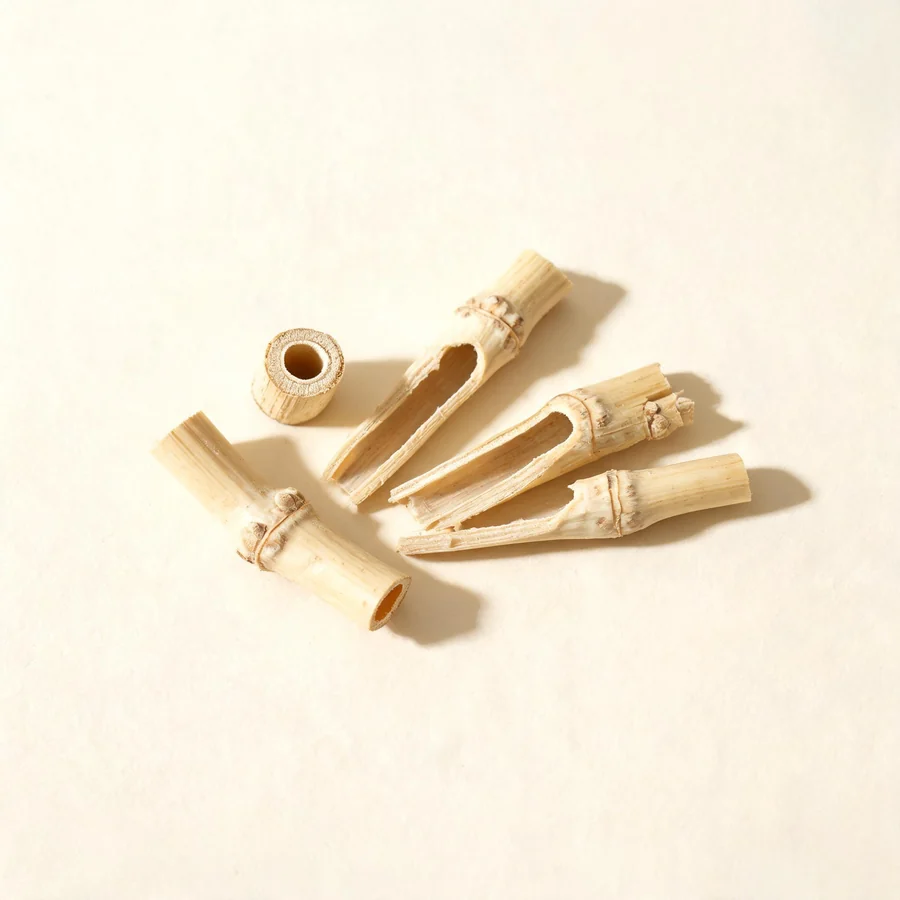
| Decoction | 15 to 30 g of dried rhizome daily. The nodes and fibrous rootlets are trimmed first, and dried pieces are cut across the fibre so water can reach the hollow centre. |
| Fresh rhizome | Used at roughly double the dried weight, because most of it is water. The fresh rhizome can be crushed, its juice pressed and drunk on its own, or stirred into the strained decoction. |
| Higher range | As much as 60 g in a day is recorded for an acute febrile thirst or a rash that will not come out, under supervision. That level belongs to a prescription rather than to home use. |
| Children | Between a third and a half of the adult amount, by age and weight, and stop once the fever settles. Loose motions while taking it point to the cold temperature rather than to an allergy, and the amount is reduced. |
Amount follows the fever rather than a calendar. Fifteen to thirty grams covers a hot dry mouth, a flush and a light fever; larger amounts are reserved for a strong febrile thirst or a rash that will not come out, and fresh root is given at about twice the dried weight. The herb is cold, so the amount is reduced once the heat lifts, and loose stools or a heavy stomach mean it has gone on long enough.
Citations and further reading
Only real sources are listed: the classical materia medica passages quoted above, and the source works behind the botanical and safety statements.
- Ming Yi Bie Lu (Supplement to the Classic of Materia Medica), Tao Hongjing - classical entry quoted above.
- Yao Xing Lun (On the Nature of Medicines) - classical entry quoted above.
- Ben Cao Jing Shu (Commentary on the Classic of Materia Medica), Miu Xiyong - classical entry quoted above.
- Yi Xue Zhong Zhong Can Xi Lu (Records of Chinese Medicine with Reference to Western Medicine), Zhang Xichun - classical entry quoted above.
- Rhizoma Phragmitis monograph: Pharmacopoeia of the People's Republic of China - accepted source, part and quality requirements.
- Modern evidence statement: based on published genotoxicity testing and animal pharmacology of Phragmites australis (synonym Phragmites communis); no clinical trial in skin disease is presented as proof.
- Botanical description and identification: botanical literature on Phragmites australis, Poaceae.
Educational reference for qualified practitioners. This page is not medical advice, and skin conditions should be diagnosed by a clinician before treatment.