Skin profile
Where this herb sits in skin practice: the pattern it corrects, the skin signs it suits, and what it should not be used for.
Bai Zi Ren is chosen for the slow, dry, depleted skin: thin, finely scaled, lustreless and often accompanied by a dry stool and light sleep. It is gentle enough for months of use, and it is held back whenever the skin is oily, congested or inflamed.
Skin signs that suggest it
- Dry, fine-textured skin with a dull, lustreless look in a pale, tired person (Heart Blood deficiency)
- Dryness of the skin together with a dry, hard stool that is difficult to pass (Blood and Yin deficiency)
- Night sweats with a dry mouth and restless, dream-filled sleep (Yin deficiency)
- Itch that is worse at night and after a poor night's sleep (deficiency with an unsettled spirit)
- A pale tongue with a thin coat and a fine pulse
When it is not the right herb
Not for skin that is oily, congested or inflamed. Red, hot, weeping or pustular lesions, and any flare with fever, are made worse by a rich moistening seed. It is also wrong where there is copious Phlegm or Dampness, with a greasy coating, a heavy chest and loose stools, because its oils add to what is already congested. The classical cautions also include Kidney fire with restless sexual desire and a tendency to vomit, and the seed is not a treatment for a dry skin or a dry bowel without attention to the cause.
What it does for skin
Skin-relevant actions only. Each one describes a mechanism in TCM terms and what it looks like on the skin.
Nourishes Heart Blood and Yin so the skin can hold its moisture
Blood and Yin are what keep the surface moist, and when they are low the skin becomes fine, dry, thin and dull, with a pale complexion and a tendency to mark easily. The seed feeds that store slowly, and it is given over months within a nourishing formula rather than as a short course. It suits the dry skin that comes with a dry stool and broken sleep, and it is honest to say that the change is gradual and modest.
Moistens dryness throughout, so skin and bowel improve together
The seed's fatty oil lubricates the intestine, which is why it is used for dry, hard stools in older, postpartum or chronically weakened people. That same moistening quality is the reason it is chosen when a dry skin and a dry bowel appear in the same person, which the tradition reads as one deficiency rather than two problems. Water, fibre and treatment of any cause of constipation still come first.
Settles the spirit and takes the edge off night-time itch
The Heart houses the spirit, and Blood and Yin give it a place to rest. Where the sleep is light and dream-filled and the skin itches at night, the seed is used to settle that arousal rather than to sedate. It is combined with other calming seeds and with herbs that address the surface. Persistent insomnia needs its cause assessed, and the seed is a support rather than a treatment for a sleep disorder.
Moistens without burdening the Spleen, so a long course is possible
Most herbs that build Blood are rich and cloying, and a person with a delicate digestion often cannot take them for long. The seed is described as moistening yet aromatic enough to support the Spleen and Stomach, which is why it is chosen where a drying tonic would be too harsh and a heavy one too congesting. This is a practical reason for its place in long courses rather than a separate effect on the skin.
Skin conditions it is used for
Mapped to the condition pages on this site. The pattern column shows what the skin is doing when this herb is the right choice.
| Condition | Pattern | Why it suits | Typical setting |
|---|---|---|---|
| Skin dryness | Blood Deficiency with External Wind | Dry, finely scaled skin in a pale, tired person, worse at night and after washing, is read as Blood and Yin failing to reach the surface. Bai Zi Ren supports that work gently and can be taken for months, which suits a deficiency that took months to develop. It is used with other Blood tonics and with wind-diffusing herbs, and it is not the herb for dryness with redness, heat or oozing. | Bai Zi Ren with Dang Gui, Bai Shao and Fang Feng |
| Dry and hot skin | Empty-Heat caused by Yin Deficiency | Skin that is dry and yet feels hot, with night sweats, a dry mouth and a fine rapid pulse, is read as Yin too low to anchor its heat. The seed nourishes Yin without being cold, which is why it suits a person who cannot tolerate strong cooling herbs, and it is paired with a cooling partner for the heat itself. It is not for heat in the Blood, where the skin is red and the rash spreads quickly. | Bai Zi Ren with Zhi Mu and Sheng Di Huang |
| Cracked skin | Blood Deficiency with External Wind | Fine fissures and a papery surface that splits in cold dry weather, in pale thin skin that heals slowly, are read as Blood and fluids failing to keep the surface supple. The seed contributes moisture from within and is given over weeks, while emollient protection does the immediate work. A deep fissure that bleeds, becomes inflamed or will not close needs clinical review rather than a stronger tonic. | Bai Zi Ren with Dang Gui, Mai Men Dong and Bai Shao |
| Wrinkled and shrunken skin | Empty-Heat caused by Yin Deficiency | Skin that has lost its support and looks loose or shrunken is read as Qi, Essence or fluids running low, and where dryness and night sweats dominate the emphasis is on Yin. The seed is a gentle supporting part of a nourishing formula in that picture, and it supports moisture rather than reversing ageing. Sudden shrivelling with sunken eyes and confusion is dehydration or shock and belongs in emergency care. | Bai Zi Ren with Shu Di Huang, Mai Men Dong and Gou Qi Zi |
| Senile pruritus | Blood Deficiency with External Wind | Itch in later life without redness, in dry thin skin, worse at night, is read as Blood and Yin declining so the surface is no longer nourished. The seed is suited to this group because it is gentle, neutral and can be taken for a long period, and because it also addresses the dry stool that so often accompanies the dry skin in older people. Persistent itch with weight loss or jaundice needs medical review before any herb. | Bai Zi Ren with He Shou Wu, Dang Gui and Bai Xian Pi |
Combinations for skin
Herbs it is paired with when the skin, not an internal organ, is the target.
| Partner | Ratio | Why the pair is used |
|---|---|---|
| Suan Zao Ren | 1 to 1, commonly 10 g each | The classic pairing for deficiency insomnia. Bai Zi Ren nourishes Blood and moistens while Suan Zao Ren settles the spirit more strongly and astringes sweating, so together they cover the deficiency and the arousal. On the skin the pair suits dry, thin, reactive skin in a person whose sleep is light and whose stool is dry, and it is the pairing at the centre of the classical calm-the-heart formula. |
| Long Yan Rou | 1 to 1, commonly 10 g each | Both nourish Blood and settle the spirit, but Long Yan Rou also tonifies the Spleen, which is where Blood is made, and adds Qi support. The pair strengthens the Heart and Spleen connection behind a pale, dry, tired complexion, and it is used for the person whose skin looks underfed and whose sleep never restores. It is a long-course pairing rather than an acute one. |
| Huo Ma Ren | 1 to 1, commonly 10 g each | Both are oily seeds that lubricate the intestine, and together they strengthen the moistening effect while Bai Zi Ren adds the Heart-nourishing layer. The pair is used when a dry skin and a dry, hard stool appear together in an older or postpartum person, which the tradition treats as one pattern of Blood and Yin deficiency. It is not a substitute for water, fibre and a review of what is causing the constipation. |
| Wu Wei Zi | 10 g Bai Zi Ren with 5 g Wu Wei Zi | Bai Zi Ren nourishes the Heart and Wu Wei Zi gathers the Qi and holds the fluid that is leaking, so the pair calms the spirit and reduces night sweats more than either does alone. On the skin it suits the dry, damp-by-morning surface of a depleted person with broken sleep, and it is taken in the evening. It is not given while an acute rash is still coming out. |
Formulas where it leads
- Bai Zi Yang Xin Wan (柏子养心丸) - The formula named after the seed, built for Heart Blood deficiency with insomnia, palpitations and poor memory. In skin practice it is used when a dry, dull, pale complexion appears alongside broken sleep and a tired mind, and it is given over weeks. It is not a treatment for an inflamed, weeping or infected skin, and it does not replace topical care.
Safety for skin use
What to check before recommending or using it, including the cautions that matter most for skin patients.
Do not use, or use with caution
- Loose stools, diarrhoea or Spleen deficiency with Dampness. The oils loosen the bowel further, and the defatted form is used when the calming action is still wanted.
- Copious Phlegm or Dampness, with a greasy coating, a heavy chest and a muzzy head. The enriching, moistening nature aggravates congestion rather than clearing it.
- Active heat or inflammation in the skin, and oily or congested skin, where a rich seed adds to what is already blocked.
- A tendency to nausea or vomiting, and the classical caution of Kidney fire with restless sexual desire, where an enriching moist seed is considered inappropriate to the pattern.
Pregnancy and breastfeeding
Generally considered safe at standard doses: the seed is neutral and gentle, with no known uterine-stimulating or teratogenic effect. The practical caution is its oil, because an excessive dose loosens the stool, so it stays within the standard range under practitioner guidance. During breastfeeding there are no documented restrictions, and its calming, Blood-nourishing quality may suit the postpartum period; a baby who becomes unusually loose while the mother is taking it is a reason to review.
Interactions
- Benzodiazepines, barbiturates and other central depressants. Preclinical work shows sedative effects, so sedation could add up, and the combination is disclosed rather than assumed to be harmless.
- Prescription antidepressants. In the laboratory the extract has inhibited monoamine oxidase and slowed monoamine reuptake, so combining it with these medicines is a theoretical risk worth raising with the prescriber.
- Pharmaceutical laxatives. The bowel-lubricating effect adds to them and can produce excessive loose stools, which matters in an older person who is already using a laxative regularly.
General safety references
General references for herbal hepatotoxicity and herb-drug interactions; they are not specific to this herb.
- Review article: Herbal hepatotoxicity - an update on traditional Chinese medicine preparations. Alimentary Pharmacology & Therapeutics, 2014. PMID: 24844799.
- Interactions between herbal medicines and prescribed drugs: an updated systematic review. Drugs, 2009. PMID: 19719333.
- Warfarin and food, herbal or dietary supplement interactions: a systematic review. British Journal of Clinical Pharmacology, 2021. PMID: 32478963.
Evidence
The classical record is quoted with its source. The modern note states the level of evidence plainly.
Classical record
柏实,味甘平。主惊悸,安五脏,益气,除风湿痹,久服令人润泽,美色,耳目聪明。
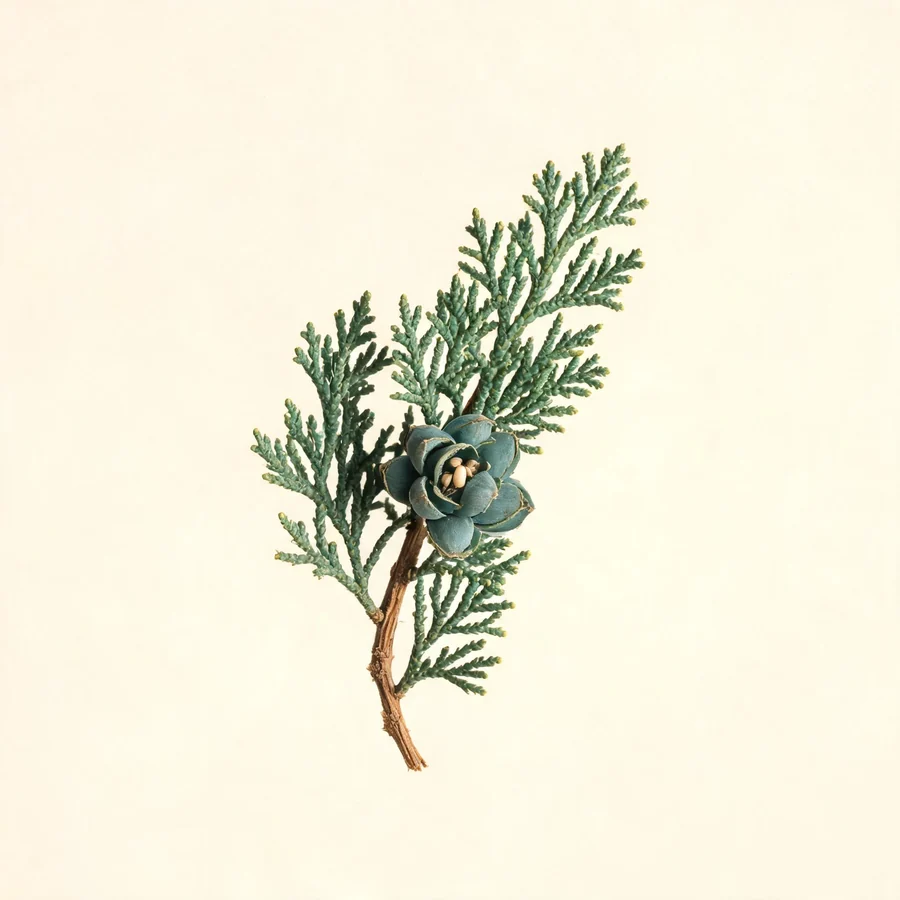
Sweet and neutral in taste, the seed of the arborvitae is used for palpitations of fright, to quiet the five viscera, to strengthen Qi and to clear wind-damp painful obstruction; long use is said to give the body sheen, a fine complexion, and clear sight and hearing.
Shen Nong Ben Cao Jing (Divine Husbandman's Classic of Materia Medica) - The cosmetic promise is in the oldest layer of the record. It is quoted here as a classical claim, not as a finding.
柏子仁,性平而不寒不燥,味甘而补,辛而能润,其气清香,能透心肾,益脾胃,盖上品药也。
Neutral in nature, neither chilling nor parching, sweet in a nourishing way and faintly acrid so that it moistens, its clean fragrance penetrates to Heart and Kidney and it benefits Spleen and Stomach. It stands among the top-grade medicines.
Ben Cao Gang Mu (Compendium of Materia Medica), Li Shizhen - Li Shizhen's summary explains why the seed can be given for months and why it suits dryness without burdening digestion.
Modern evidence
Evidence status
- No clinical trial of Bai Zi Ren in a skin condition was identified for this page. The classical claims about lustre and complexion have not been tested in modern studies, and the skin use described here is traditional.
- The seed's fatty oil is the basis of its moistening effect on the bowel, which is better documented than any effect on the skin. That is why loose stools are the practical unwanted effect of a large or long course.
- Preclinical work reports sedative and possible monoamine-modulating activity, which is consistent with the traditional calming use but is not evidence of benefit for the skin.
PubMed records
Selected real PubMed records for this herb's species or its constituents, chosen by species name and title relevance. They are references for the non-TCM discussion above, not proof that the herb treats any skin condition.
- Chemometrics of the composition and antioxidant capacity of essential oils obtained from six Cupressaceae taxa.. Scientific reports, 2024. PMID: 39127791 (pharmacology or review record).
- Fighting antimicrobial resistance (AMR): Chinese herbal medicine as a source of novel antimicrobials - an update.. Letters in applied microbiology, 2021. PMID: 34219247 (pharmacology or review record).
Dose and forms
Skin-practice dosing and the preparations that suit skin complaints.
| Form | Dose and notes |
|---|---|
| Decoction | 9 to 15 g of crushed seed daily in a formula. Up to 20 g is used for marked insomnia or dry constipation under supervision, and the lower end is used when the digestion is delicate. |
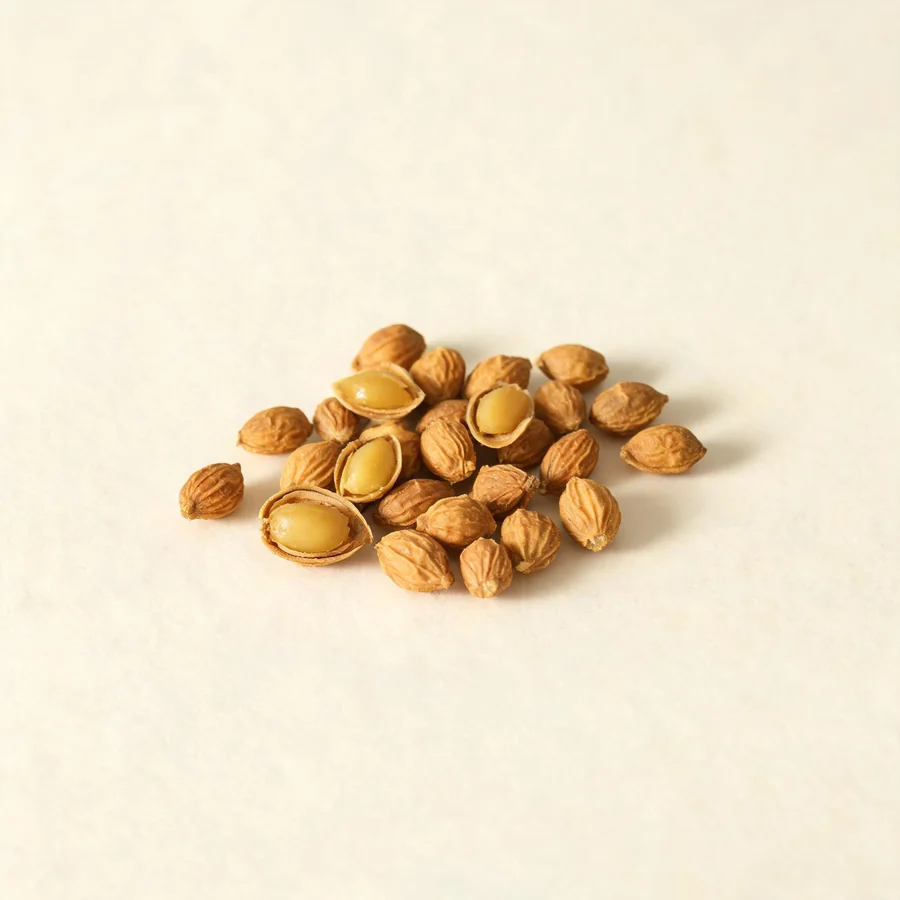
| Pills and powder | 3 to 6 g per administration, with the seeds lightly crushed before decocting so that the oils are released rather than left in the coat. |
| Processed and defatted forms | Stir-frying until aromatic moderates the moistening effect, and the defatted form is used where loose stools are a concern but the calming action is still wanted. |
The seed is gentle, so the dose is set by the stool rather than by toxicity. Where the bowel is already loose, the stir-fried or defatted form is chosen and the dose kept low. Storage matters as much as dose, because the high oil content makes the seed prone to rancidity, and dark, oily or off-smelling material is discarded rather than used.
Citations and further reading
Only real sources are listed: the classical materia medica passages quoted above, and the source works behind the botanical and safety statements.
- Shen Nong Ben Cao Jing (Divine Husbandman's Classic of Materia Medica), attributed compilation of the Han period - classical entry quoted above.
- Ben Cao Gang Mu (Compendium of Materia Medica), Li Shizhen, 1578 - classical entry quoted above.
- Bai Zi Ren monograph: Pharmacopoeia of the People's Republic of China, Semen Platycladi - source for the accepted botanical source, part used and quality requirements.
- Modern evidence statement: based on preclinical and review literature on Platycladus orientalis seed oil, presented as a statement about the level of evidence rather than as a claim of effect.
- Botanical description and identification: botanical literature on Platycladus orientalis, Cupressaceae.
Educational reference for qualified practitioners. This page is not medical advice, and skin conditions should be diagnosed by a clinician before treatment.