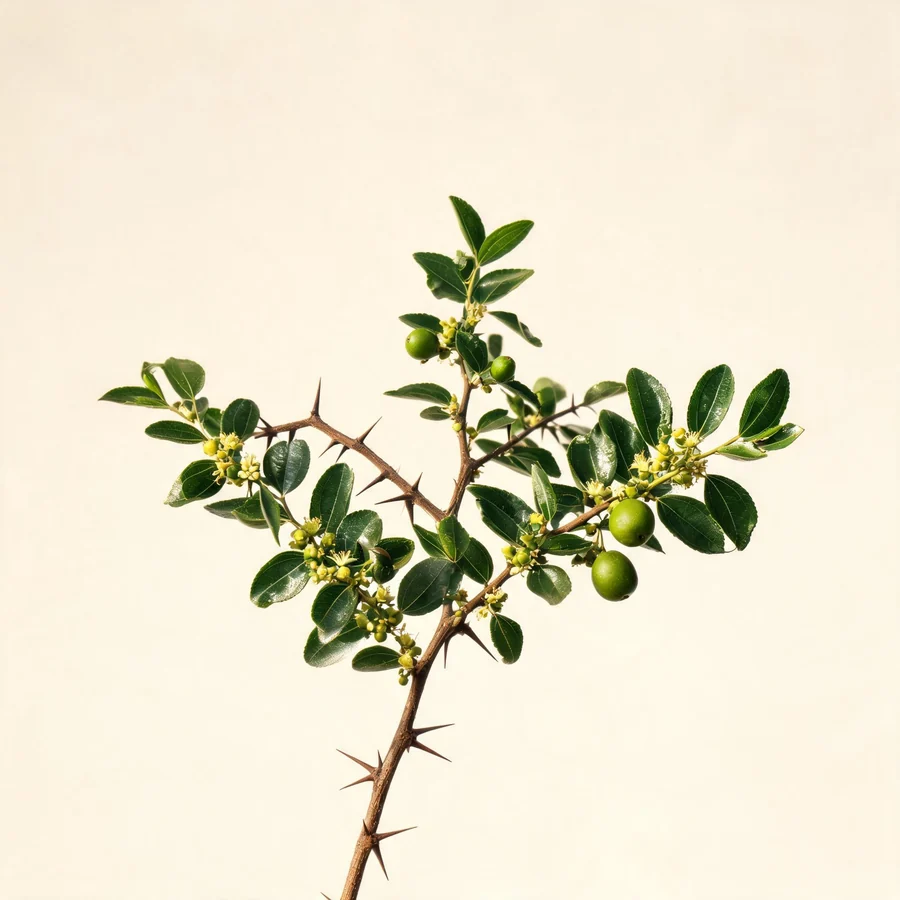
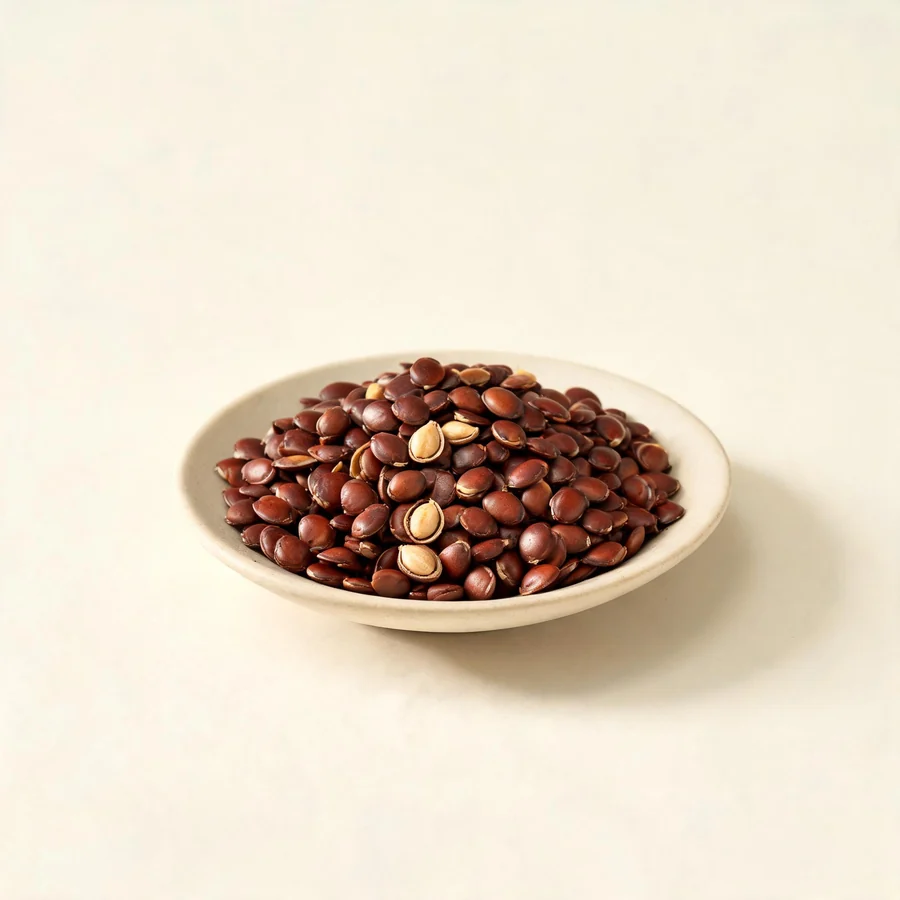
Skin profile
Where this herb sits in skin practice: the pattern it corrects, the skin signs it suits, and what it should not be used for.
Suan Zao Ren is chosen when the skin is worse for want of sleep: dry, thin, reactive, with itch that builds at night and a person who is tired, pale and easily woken. It builds Blood and settles the spirit, so it belongs in a course and never in place of the assessment of a sleep or skin disorder.
Skin signs that suggest it
- Itch that is worst at night and eases when sleep improves (Blood deficiency with an unsettled spirit)
- Dry, thin, pale skin with a fine scale, in a tired person who wakes easily (Heart and Liver Blood deficiency)
- Thickened, leathery, scratched plaques that track a period of strain or insomnia (the itch and scratch cycle)
- Night sweats that leave the skin dry by morning, with a dry throat and a fine rapid pulse (deficient heat)
- A pale tongue, sometimes with red edges, and a fine pulse
When it is not the right herb
Not for a hot, red, weeping flare, and not where itch is driven by damp-heat, infection or an unidentified allergy. A sour, astringent seed is said to hold in what should come out. It is also wrong for insomnia with a thick greasy coating, a bitter taste, a heavy chest and an agitated mind, which points to Phlegm-Fire rather than to depletion. It does not replace the assessment of a sleep disorder, because depression, sleep apnoea and thyroid disease all present with tiredness that a calming seed will not fix.
What it does for skin
Skin-relevant actions only. Each one describes a mechanism in TCM terms and what it looks like on the skin.
Nourishes Heart and Liver Blood so dry skin has material to rebuild from
The seed is the leading herb for nourishing the Blood that houses the spirit, and on the skin that same Blood is what keeps the surface moist and supplied. It suits dry, thin, pale skin in a depleted person, with a fine pulse and a history of overwork, illness or poor sleep. The action is slow and cumulative, so it is given over weeks with other Blood tonics and is judged by whether the skin is less reactive rather than by any immediate change.
Settles the spirit and interrupts the night-time itch and scratch cycle
Itch that wakes a person at night produces scratching, and scratching thickens the skin, which itches more. The seed breaks that loop indirectly by giving the spirit something to rest on, so the arousal that drives the scratching is lower. It is not an antihistamine and it does not suppress the sensation, which is why it is combined with herbs that address the surface rather than relied on alone.
Holds fluids at the surface and reduces night sweats
The sour taste is described as gathering and holding, and the seed is used where fluid leaks away at night in a depleted person. On the skin that means less of the damp-then-cold cycle that leaves the surface dry by morning, and it is paired with astringents that work at the surface itself. It is not for the sweat of an acute fever, which is a release rather than a leak.
Lowers the arousal that drives a stress-provoked flare
Where a flare arrives after a period of strain, the seed is used because the pattern is one of Blood deficiency with an unsettled spirit rather than of heat or damp. It is a supporting herb in that formula, not a treatment for anxiety, and persistent anxiety, panic or low mood needs proper assessment. What it offers the skin is a calmer night, which is often the difference between a flare that settles and one that spreads.
Skin conditions it is used for
Mapped to the condition pages on this site. The pattern column shows what the skin is doing when this herb is the right choice.
| Condition | Pattern | Why it suits | Typical setting |
|---|---|---|---|
| Neurodermatitis | Blood Deficiency with External Wind | The thickened, leathery plaque of neurodermatitis is the end point of a long itch and scratch cycle, and in a tired, pale person with light sleep it is read as Blood deficiency with wind at the surface. The seed nourishes the Blood and settles the night-time arousal, while wind-diffusing herbs address the itch itself. Breaking the cycle also requires attention to the scratching habit, and topical treatment is not replaced by the herb. | Suan Zao Ren with Dang Gui, Bai Shao and Fang Feng |
| Senile pruritus | Blood Deficiency with External Wind | Itch in later life that is worse at night, in dry thin skin without redness, is read as Blood and Yin declining so the surface is no longer nourished, with wind moving in the gap. The seed is used for the nocturnal pattern and for the broken sleep that makes the itch feel worse, alongside Blood tonics. Its neutral temperature and low toxicity suit an older person, and a persistent itch still needs review for a systemic cause. | Suan Zao Ren with He Shou Wu, Dang Gui and Bai Xian Pi |
| Chronic urticaria | Yin and Blood Deficiency | Hives that return when a person is run down, that are worse at night and that settle slowly, are read as Yin and Blood too low to hold the surface rather than as a fresh wind-heat attack. The seed is a supporting herb here, chosen when sleep is broken and the wheals track fatigue, and it is given with Blood tonics and with herbs that settle the surface. Antihistamines remain the conventional treatment and are not replaced without medical agreement. | Suan Zao Ren with Dang Gui, Huang Qi and Fang Feng |
| Itchy skin | Blood Deficiency with External Wind | Itch without redness or ooze, in dry skin, worse at night, in winter and after washing, is the deficiency picture rather than the damp-heat one. The seed supports the treatment by nourishing Blood and improving sleep, and it is combined with wind-diffusing and itch-settling herbs. Where the itch is red, warm and provoked by heat, or comes with oozing, this is the wrong approach and a clearing herb leads instead. | Suan Zao Ren with Dang Gui, Bai Shao and Chan Tui |
| Atopic dermatitis | Blood Deficiency with External Wind | In the chronic dry, lichenified phase of atopic dermatitis the itch is worst at night and sleep is broken, which is the pattern of Blood deficiency with wind. The seed is used for its effect on sleep and on the Blood that the skin is short of, alongside the main nourishing and wind-diffusing herbs. It is not given during a weeping, infected flare, and it does not replace emollients and topical treatment. | Suan Zao Ren with Dang Gui, Bai Shao and Fang Feng |
Combinations for skin
Herbs it is paired with when the skin, not an internal organ, is the target.
| Partner | Ratio | Why the pair is used |
|---|---|---|
| Bai Zi Ren | 10 to 15 g each in decoction | The classic pairing for deficiency insomnia. Suan Zao Ren is sour and astringent and settles the spirit strongly, while Bai Zi Ren nourishes Blood and moistens, so together they cover the arousal and the deficiency. On the skin the pair suits dry, thin, reactive skin in a person whose sleep is light and whose stool is dry, and it appears in the formulas built for that picture. |
| Long Yan Rou | 10 to 15 g each in decoction | The fruit nourishes Heart and Spleen Blood from the Spleen side and the seed calms the spirit that the Blood supports, so the pair suits the tired, forgetful person with light sleep and a dull dry complexion. The seed's sourness keeps the combination from being cloying. It is a pairing for the chronic case, and it is taken for weeks rather than for a single bad night. |
| Zhi Mu | 15 g Suan Zao Ren with 6 to 10 g Zhi Mu | Zhi Mu supplies the cooling that makes the seed workable once Blood deficiency has bred a low-grade heat. The seed rebuilds the Blood and calms the spirit, and Zhi Mu deals with the warmth behind the night sweats, the dry throat and the irritable restlessness. Those two form the centre of the classical sleep formula, and the pair suits skin that turns dry and hot at night rather than red and inflamed. |
| Wu Wei Zi | 1 to 1, about 6 to 10 g each | Both taste sour and both retain fluid, yet Wu Wei Zi covers Lung and Kidney as well as Heart, while the seed contributes the Blood-building and calming layer. The combination is chosen for night sweats with palpitations and for the dryness left by a long illness, when the skin is dry and sleep never refreshes. Neither belongs in the middle of an eruption that has still to surface. |
Safety for skin use
What to check before recommending or using it, including the cautions that matter most for skin patients.
Do not use, or use with caution
- Excess heat or Phlegm-Fire: insomnia with a thick greasy coating, a bitter taste, a heavy chest and an agitated rather than empty mind. A sweet sour astringent seed can hold the pathogen in.
- Loose stools or Spleen deficiency with diarrhoea. Its oil can further loosen a bowel that is already loose, so the dose comes down or the seed is omitted where digestion is weak and damp.
- A known allergy to jujube or to related species. The seed is in the same family as the cultivated jujube, and a first course is started at a standard dose rather than a high one.
Pregnancy and breastfeeding
Generally considered acceptable at standard doses under supervision, and it is not on the lists of herbs avoided in pregnancy. Nothing in it quickens Blood, acts on the uterus or moves downward, and its calming, Blood-building quality may help the broken sleep and worry of pregnancy. The usual caution still applies: the lower end of the range, a practitioner's oversight, and a review if sleep does not improve.
Interactions
- Benzodiazepines, newer sleeping tablets and barbiturates. The seed's constituents act on GABA-A receptors, so sedation can add up, and driving or machinery work should wait until the combination is known.
- SSRIs and monoamine oxidase inhibitors. The theoretical concern is additive sedation and a serotonergic effect, so the combination is disclosed rather than assumed to be harmless.
- Anticoagulants. Extracts of the seed have reduced platelet aggregation in laboratory work, though clinically important bleeding with warfarin has not been reported; checking is sensible when the seed is started or stopped suddenly.
Allergy and patch testing
A known allergy to jujube or to other members of the Rhamnaceae is a reason to avoid the seed. Reactions to the seed itself are uncommon, but a first course is started at a standard dose, and any rash, wheeze or swelling is a reason to stop and seek advice rather than to continue at a lower dose.
General safety references
General references for herbal hepatotoxicity and herb-drug interactions; they are not specific to this herb.
- Review article: Herbal hepatotoxicity - an update on traditional Chinese medicine preparations. Alimentary Pharmacology & Therapeutics, 2014. PMID: 24844799.
- Interactions between herbal medicines and prescribed drugs: an updated systematic review. Drugs, 2009. PMID: 19719333.
- Warfarin and food, herbal or dietary supplement interactions: a systematic review. British Journal of Clinical Pharmacology, 2021. PMID: 32478963.
Evidence
The classical record is quoted with its source. The modern note states the level of evidence plainly.
Classical record
味酸,平。主治心腹寒热,邪结气聚,四肢酸疼湿痹。久服安五脏。
Sour in taste and neutral in nature, it is used for cold and heat in the chest and belly, for accumulations of pathogenic Qi, for aching limbs and for damp painful obstruction; long use is said to quiet the five viscera.
Shen Nong Ben Cao Jing (Divine Husbandman's Classic of Materia Medica) - The earliest record already treats the seed as a long-term herb, and the aching limbs entry is its only gesture toward the surface.
无毒。主治烦心不得眠,脐上下痛,血转,久泄,虚汗,烦渴,补中,益肝气,坚筋骨,助阴气,令人肥健。
It carries no toxicity, and is used for a restless mind that cannot sleep, for pain above and below the navel, for Blood disorders, chronic diarrhoea, deficiency sweating and a parched, irritable thirst. It supplements the middle and strengthens Liver Qi.
Ming Yi Bie Lu (Supplement to the Classic of Materia Medica) - The passage that adds sleep and sweating to the record, and the reference to disorders of the Blood is the phrase skin practice leans on.
酸枣仁,甘而润,故熟用疗胆虚不得眠、烦渴虚汗之证;生用疗胆热好眠。皆足厥阴、少阳药也。今人专以为心家药,殊昧此理。
Sweet and moistening, the fried seed is chosen for sleeplessness from a deficient Gallbladder, for irritable thirst and for deficiency sweating, while the raw seed suits the drowsiness of a hot Gallbladder. Both belong to the Liver and Gallbladder channels, and to use it only as a Heart herb is to misunderstand it.
Ben Cao Gang Mu (Compendium of Materia Medica), Li Shizhen - Li Shizhen's argument for the Liver and Gallbladder, which is why the seed is chosen when sleep breaks with irritability and vivid dreams.
Modern evidence
Evidence status
- Laboratory work on the seed's saponins and flavonoids reports activity at GABA-A receptors and on serotonergic pathways. That is consistent with the traditional calming use, but it is not evidence of benefit for the skin.
- Clinical studies of the seed in insomnia are mostly small and often use multi-herb formulas rather than the single herb, so no robust conclusion about sleep can be drawn. None was found for this page that measured a skin outcome.
- The animal toxicity data are reassuring within the therapeutic range: mice given 150 g per kg by mouth showed no signs of poisoning. The practical cautions are pattern-based, not dose-based.
PubMed records
Selected real PubMed records for this herb's species or its constituents, chosen by species name and title relevance. They are references for the non-TCM discussion above, not proof that the herb treats any skin condition.
- Magnoflorine alleviates colitis-induced anxiety-like behaviors by regulating gut microbiota and microglia-mediated neuroinflammation.. Microbiome, 2025. PMID: 40713743 (skin-related record).
- Experimental and Clinical Pharmacology of Ziziphus jujuba Mills.. Phytotherapy research : PTR, 2017. PMID: 28084039 (pharmacology or review record).
Dose and forms
Skin-practice dosing and the preparations that suit skin complaints.
| Form | Dose and notes |
|---|---|
| Decoction | 10 to 15 g of crushed seed daily for mild to moderate insomnia and for a dry, reactive skin. Fifteen to 30 g is used for stubborn insomnia under supervision. |
| Powder | 1.5 to 3 g of ground seed per dose, swallowed, when a decoction is impractical. The seed is crushed first so that the oil is released. |
| Raw and fried forms | Both are used, and some practitioners combine them in equal parts. The classical distinction between them is not supported by modern work, which finds sedative activity in both. |
The seed has a very wide margin of safety, so the dose is set by the pattern and by how much sedation the person wants rather than by a ceiling. In skin practice the aim is a settled night rather than heavy sedation, and the lower band is usually enough. It is given in the evening and as part of a formula; taken alone in the morning it does little for the skin and may make the day heavy.
Citations and further reading
Only real sources are listed: the classical materia medica passages quoted above, and the source works behind the botanical and safety statements.
- Shen Nong Ben Cao Jing (Divine Husbandman's Classic of Materia Medica), attributed compilation of the Han period - classical entry quoted above.
- Ming Yi Bie Lu (Supplement to the Classic of Materia Medica), Tao Hongjing, Southern and Northern Dynasties - classical entry quoted above.
- Ben Cao Gang Mu (Compendium of Materia Medica), Li Shizhen, 1578 - classical entry quoted above.
- Suan Zao Ren monograph: Pharmacopoeia of the People's Republic of China, Semen Ziziphi Spinosae - source for the accepted botanical source, part used and quality requirements.
- Modern evidence statement: based on laboratory and toxicity literature on Ziziphus jujuba var. spinosa, presented as a statement about the level of evidence rather than as a claim of effect.
- Botanical description and identification: botanical literature on Ziziphus jujuba var. spinosa, Rhamnaceae.
Educational reference for qualified practitioners. This page is not medical advice, and skin conditions should be diagnosed by a clinician before treatment.