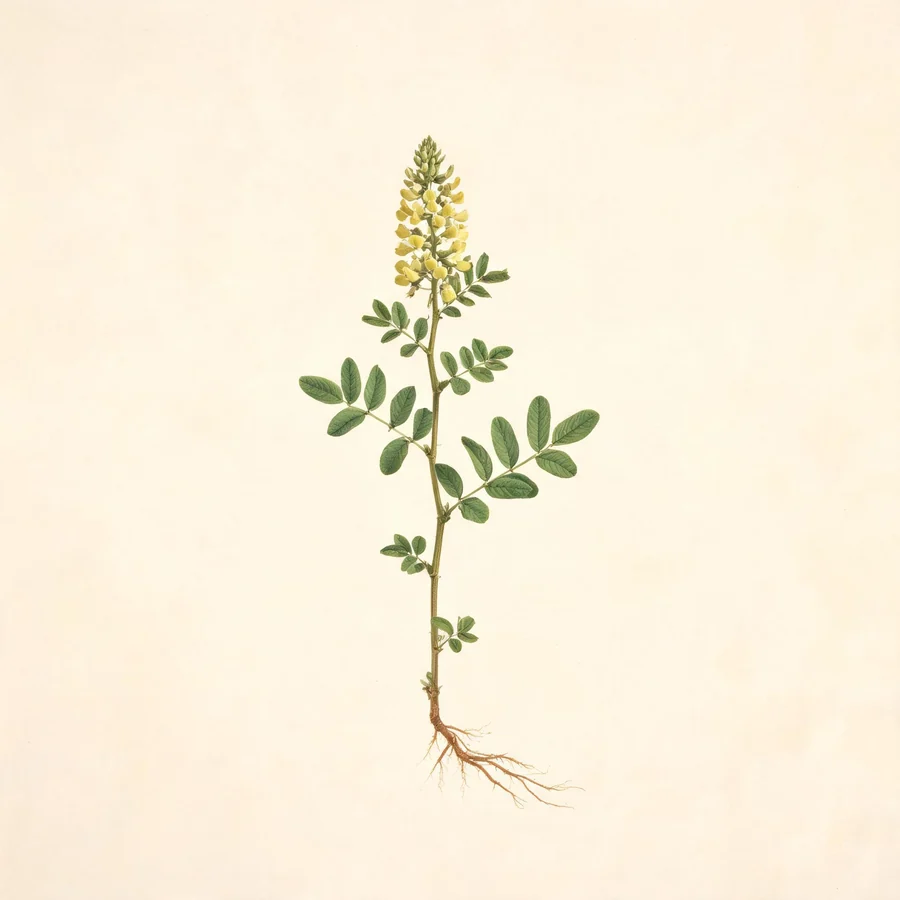
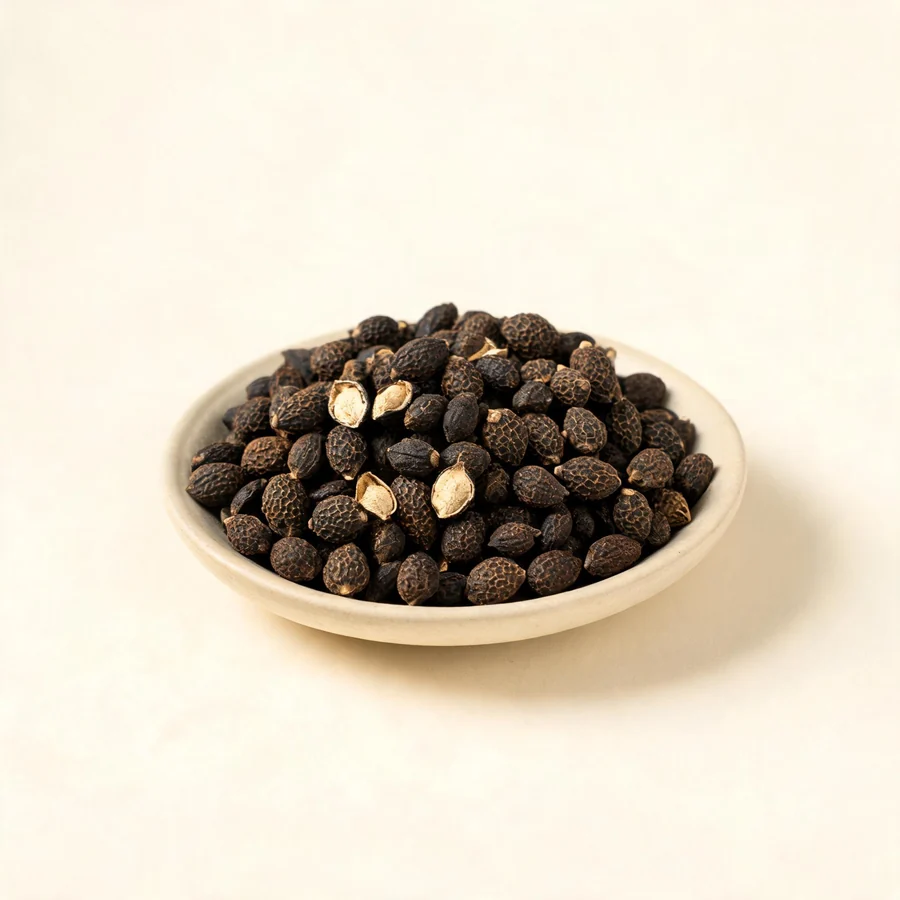
Skin profile
Where this herb sits in skin practice: the pattern it corrects, the skin signs it suits, and what it should not be used for.
Bu Gu Zhi reaches the skin in two ways: as warmth for a cold, depleted, slow-healing surface, and as a photosensitising tincture for vitiligo and thick plaques. Both are narrow, both are supervised, and the liver signal means the fruit is never a long self-prescribed course.
Skin signs that suggest it
- White or pale patches of lost pigment, with no scale and no inflammation
- Thick, fixed plaques that are slow to change, in a person who feels the cold
- A localised hard thickening of the skin, such as a corn, with pain on pressure
- A small rough growth on the hand or face with a horny surface
- A cold, depleted general picture: cold lower back and limbs, pale urine, a pale tongue
When it is not the right herb
Not for skin that is dry, hot and red: the fruit is warm and drying, and a person with night sweats, a dry mouth, a red peeled tongue and a thin rapid pulse is the classical exclusion. Not for active liver disease or raised liver enzymes, which rules it out rather than calling for a smaller dose. Not for anyone who cannot avoid strong sun during treatment, because the photosensitivity is the point of the external use and the danger of it at the same time. Not in pregnancy, and not as a self-prescribed tincture for a lesion that has not been assessed.
What it does for skin
Skin-relevant actions only. Each one describes a mechanism in TCM terms and what it looks like on the skin.
Warms the Kidney Yang that supplies the skin
In the tradition the Kidney holds the fire that warms everything above it, and when that fire is low the surface shows it: cold, dusky, slow-healing skin in a person with a cold back, cold limbs and pale urine. Bu Gu Zhi warms that layer, and it is used where a chronic skin problem sits inside a cold, depleted constitution rather than in an inflamed one. It is a supporting herb in such formulas, and the warmth is the point.
Sensitises the skin to light as a deliberate treatment
The furanocoumarins in the fruit, psoralen and isopsoralen, are what make it a photochemotherapeutic agent. Applied to a depigmented patch and then exposed to a measured amount of ultraviolet light, they stimulate repigmentation, and the same approach is used for thick psoriasis plaques. It is a clinical technique with a narrow margin: the light dose is set by a practitioner, the treated area is limited, and a burn is the predictable harm when it is attempted at home.
Disperses stasis in a local hard lesion
An external tincture is used on small, hard, localised thickenings such as a corn, and on common warts, where the aim is to soften and separate the lesion from the tissue around it. The tradition describes it as warming and dispersing what has congealed, and the modern reading is that the tincture macerates the horny surface while the coumarins irritate it enough to provoke a response. The surrounding skin is protected, because the preparation will irritate it too.
Skin conditions it is used for
Mapped to the condition pages on this site. The pattern column shows what the skin is doing when this herb is the right choice.
| Condition | Pattern | Why it suits | Typical setting |
|---|---|---|---|
| Vitiligo | Kidney Yang deficiency with Blood stasis leaving the skin unsupplied | The external tincture is the best-known skin use of the fruit, applied to the pale patches before a controlled dose of ultraviolet light so that the psoralens stimulate pigment return. The internal rationale is different: white, slow-spreading patches in a cold person are read as Yang deficiency failing to supply the skin, and the fruit warms that layer. Both halves belong to supervised practice. The treatment takes months, the response is partial in most people, and burns are the commonest harm. | Bu Gu Zhi tincture externally with controlled ultraviolet light, and a Kidney-warming formula internally |
| Psoriasis | Blood stasis with cold: thick, fixed plaques | Psoralen with ultraviolet A is an established photochemotherapy for psoriasis, and the fruit is one of the plants from which the psoralens come. It is used for thick, stable plaques that have not responded to simpler measures, never for an inflamed or weeping flare, and never in a person who cannot attend for supervised light treatment. The cumulative ultraviolet dose matters over the years, which is why the indication is narrow rather than routine. | Psoralen with ultraviolet A, the fruit being the source material |
| Corns | Qi and Blood stagnation where pressure has thickened the skin | A corn is read as tissue that has congealed where friction presses, and the external tincture is a traditional way of softening it so that it separates. It is applied to the corn alone, with the surrounding skin protected, and the cause is still the pressure: footwear has to change or the corn returns. A person with diabetes or poor circulation should not treat a foot lesion this way at all, because the risk of ulceration is the greater problem. | Bu Gu Zhi tincture applied to the corn, with the pressure removed |
| Warts | Qi and Blood stagnation with a local toxin | Warts are read as a local obstruction where defensive Qi is weak, and an irritant tincture is one of the traditional ways of provoking the tissue to clear it. The fruit's coumarins make the treated skin sensitive to light, so the spot is kept covered and the surrounding skin is protected. Warts on the face, the genitals or a nail fold are not treated this way, and a changing or bleeding lesion needs assessment rather than an irritant. | Bu Gu Zhi tincture applied locally, with the surrounding skin protected |
Combinations for skin
Herbs it is paired with when the skin, not an internal organ, is the target.
| Partner | Ratio | Why the pair is used |
|---|---|---|
| Bai Zhi | 6 to 10 g each internally, or equal parts in a tincture | Both are used for vitiligo and both contain furanocoumarins, so the pair concentrates the photochemotherapeutic effect rather than adding a second mechanism. On the skin that means more repigmentation in some people and more risk of a burn in everyone, so the light dose is reduced rather than kept the same. Internally the two are used in the warm, dispersing formulas for pale patches in a cold person. |
| He Shou Wu | 10 to 15 g He Shou Wu with 6 to 9 g Bu Gu Zhi | The fruit is hot and drying, and a long course of warmth alone can consume the Blood that the skin also needs. Prepared fleeceflower root nourishes Blood and Essence and is the usual counterweight, which is why the two appear together in formulas for vitiligo and for premature greying. The proportions give the nourishing herb the larger share and leave the fruit as the warming agent. |
| Dang Gui | 6 to 10 g Dang Gui with 6 to 9 g Bu Gu Zhi | Dang Gui builds and moves Blood while the fruit supplies the warmth that keeps it moving, so the pair suits a cold, deficient skin picture with dusky colour and slow healing. It belongs to the internal side of the vitiligo and chronic-sore formulas rather than to the tincture. Dang Gui is moistening, which also softens the drying effect of the fruit. |
| Bai Ji Li | 6 to 10 g each | Tribulus is the wind-dispersing herb that the dermatological tradition pairs with warming tonics for vitiligo, on the reasoning that pale patches have a deficiency underneath and wind at the surface. The fruit warms the deficiency while tribulus moves the surface, which is why the combination recurs in formulas for depigmentation. Neither is a treatment for a patch that is changing, bleeding or new. |
Topical use
The fruit is used on the skin as a tincture, and this is where its reputation in vitiligo and psoriasis comes from. The tincture is made to a standard strength, applied to the lesion alone, and followed by a measured dose of ultraviolet light, usually in a clinic. Nothing about the preparation is suited to home use: the margin between repigmentation and a chemical burn is narrow, the surrounding skin must be protected, and the light dose has to be prescribed rather than guessed.
| Preparation | How and when it is used |
|---|---|
| Standardised tincture for vitiligo | A 20 to 30 per cent tincture is applied to the depigmented patch only, with petroleum jelly or a barrier cream on the surrounding skin, and the area is then exposed to a prescribed dose of ultraviolet A or to monitored sunlight. The first exposures are short and the response is reviewed. |
| Tincture for a corn or a wart | A drop is applied to the lesion alone, the surrounding skin is protected, and the area is kept covered and out of the sun. Treatment is repeated at intervals set by a practitioner, and the lesion is reviewed rather than treated indefinitely. |
| Why there is no home version | A decoction or a kitchen-made tincture cannot be standardised, and the furanocoumarin content determines both the effect and the burn. The concentrated ethanolic form is also the form linked to the liver signal, which is the opposite of what a home remedy should be. |
Patch test and cautions
The treated skin must be kept out of strong sun unless the exposure is the prescribed part of the treatment, because a phototoxic burn is the predictable adverse effect. Do not apply to the face, the genitals, broken skin or a lesion that is changing, and do not use it in pregnancy. Stop at once if the skin blisters, stings or becomes more inflamed than the lesion itself, and do not combine a home preparation with a clinic's light treatment.
Safety for skin use
What to check before recommending or using it, including the cautions that matter most for skin patients.
Do not use, or use with caution
- Active liver disease, or liver enzymes that are already raised. The fruit has a documented pattern of liver injury, and abnormal liver results are a reason to choose something else rather than to lower the dose.
- Yin deficiency with heat: sweating at night, a parched mouth and throat, hot palms, a tongue that is red and peeled, and a pulse that is thin and fast. The classical exclusions list these signs, and a warm drying fruit adds to the dryness.
- Dry constipation, a dry cough or dry, thin skin in a dry person, for the same reason: warmth and drying harden what is already hard.
- Pregnancy, and any treatment with a medicine that burdens the liver. The fruit is avoided in pregnancy, and combining it with paracetamol, a statin, methotrexate or an antifungal multiplies rather than adds to the liver risk.
- Unavoidable strong sun during external treatment, because the light sensitivity is not manageable without control of exposure.
Pregnancy and breastfeeding
Avoided unless a practitioner has diagnosed a clear Kidney Yang pattern and takes responsibility for the decision. The processing literature puts pregnancy among the contraindications, animal work shows weak oestrogenic activity, and large doses of the seed temporarily reduced fertility in female animals. A single classical commentary took the opposite view, holding that warming Spleen and Kidney could prevent repeated miscarriage, and that reading survives only inside restricted use. The tincture is excluded in pregnancy as well, since the psoralens cross the skin.
Interactions
- Other medicines that load the liver: paracetamol at high dose, statins, methotrexate, anti-tuberculosis drugs and azole antifungals. Liver injury is the documented harm, so the combination is a matter of multiplied risk and monitoring rather than of a chemical clash.
- Warfarin and other coumarin-based anticoagulants. Psoralen induces CYP1A2 and affects CYP2C9, the pathways that handle warfarin, so clotting can shift and needs checking rather than assuming the herb is inert.
- Medicines cleared by CYP1A2, including theophylline, clozapine, tizanidine and caffeine. Enzyme induction can lower their levels, and the effect builds over days rather than appearing at once.
- Photosensitising medicines such as tetracyclines, fluoroquinolones and thiazides. They add to the skin's sensitivity, so sun exposure has to be managed on both counts.
Allergy and patch testing
Contact dermatitis and phototoxic reactions to the tincture are the recognised skin harms, and they can look like the disease getting worse rather than like an allergy. Patch test on a small area of normal skin, keep the treated area small, protect the surrounding skin, and stop if blistering or spreading redness appears. A person who has reacted to a psoralen-containing preparation should not use it again.
General safety references
General references for herbal hepatotoxicity and herb-drug interactions; they are not specific to this herb.
- Review article: Herbal hepatotoxicity - an update on traditional Chinese medicine preparations. Alimentary Pharmacology & Therapeutics, 2014. PMID: 24844799.
- Interactions between herbal medicines and prescribed drugs: an updated systematic review. Drugs, 2009. PMID: 19719333.
- Warfarin and food, herbal or dietary supplement interactions: a systematic review. British Journal of Clinical Pharmacology, 2021. PMID: 32478963.
Evidence
The classical record is quoted with its source. The modern note states the level of evidence plainly.
Classical record
补骨脂,能暖水脏;阴中生阳,壮火益土之要药也。
The seed warms the water organ: it draws Yang out from within Yin, and it is a key medicine for strengthening fire so that earth is nourished.
Ben Cao Jing Shu (本草经疏) on warming the water organ - The statement of rank and mechanism. The warmth it describes is why the fruit is considered for cold, dusky, slow-healing skin rather than for anything inflamed.
凡病阴虚火动,梦遗,尿血,小便短涩及目赤口苦舌干,大便燥结,内热作渴,火升目赤,易饥嘈杂,湿热成痿,以致骨乏无力者,皆不宜服。
Where yin deficiency stirs fire, with nocturnal emissions, blood in the urine, scanty and difficult urination, red eyes, a bitter taste and a dry tongue, dry bound stool, internal heat with thirst, upflaring fire with red eyes, easy hunger with epigastric discomfort, or damp-heat wasting with weakness of the bones, the herb should not be taken.
Ben Cao Jing Shu (本草经疏) on the exclusions - A classical exclusion list rather than a list of uses, and it is why the modern cautions read as they do: dry heat is the situation in which the warmth does harm.
阴虚下陷,内热烦渴,眩晕气虚,怀孕心包热,二便结者禁用。
It is forbidden in yin deficiency with sinking, in internal heat with agitation and thirst, in dizziness with qi deficiency, in pregnancy with heat in the pericardium, and where both stool and urine are bound.
De Pei Ben Cao (得配本草) - The bluntest prohibition in the record, and the one that names pregnancy, which is why the fruit is not offered in pregnancy even where the Kidney Yang pattern appears to fit.
Modern evidence
Evidence status
- A review of 84 reported adverse reactions published between 1978 and 2016 attributed about 57 per cent of them to liver injury, mainly hepatocellular damage and cholestasis, with overdose, prolonged use, unprocessed material and ethanol-based extracts named as risk factors. Bakuchiol and psoralidin have been implicated through mitochondrial mechanisms.
- The photochemistry is well established: psoralen and isopsoralen intercalate DNA and, with ultraviolet A, drive the repigmentation used in vitiligo and the plaque clearance used in psoriasis. That is also the mechanism of the burn, and the long-term concern is the cumulative ultraviolet dose rather than the herb itself.
- Evidence for the fruit as distinct from psoralen photochemotherapy is thin. Skin studies are mostly small, drawn from Chinese clinical practice, and use multi-herb formulas or a tincture alongside light, so the contribution of the herb alone has not been isolated.
PubMed records
Selected real PubMed records for this herb's species or its constituents, chosen by species name and title relevance. They are references for the non-TCM discussion above, not proof that the herb treats any skin condition.
- The Chemical Constituents and Bioactivities of Psoralea corylifolia Linn.: A Review.. The American journal of Chinese medicine, 2016. PMID: 26916913 (pharmacology or review record).
- A comprehensive review on the hepatotoxicity of herbs used in the Indian (Ayush) systems of alternative medicine.. Medicine, 2024. PMID: 38640296 (safety record).
Dose and forms
Skin-practice dosing and the preparations that suit skin complaints.
| Form | Dose and notes |
|---|---|
| Decoction (internal) | Salt-fried fruit is the internal form, and unprocessed fruit is never given by mouth. The stated range is 6 to 9 g daily inside a formula, falling to 3 to 6 g for a sensitive person and reaching 12 to 15 g only for a pronounced cold deficiency under supervision. |
| External tincture | A 20 to 30 per cent tincture applied to the lesion alone, followed by a prescribed dose of ultraviolet light. This is a practitioner treatment, and the strength and the light dose are set together. |
| Duration | Keep courses short, and check liver function if treatment carries on past several weeks. The external programme is designed to run for months, but it is reviewed at fixed intervals rather than allowed to continue unexamined. |
Dose matters less here than duration and preparation. The salt-fried fruit in a decoction is a different exposure from months of a concentrated ethanolic extract, and the liver reports cluster around the second. The raw fruit is avoided internally because the risk is highest in unprocessed material. For the skin, the important number is not the grams but the light dose that follows the tincture, which is why the external use belongs to a clinic that can measure it.
Citations and further reading
Only real sources are listed: the classical materia medica passages quoted above, and the source works behind the botanical and safety statements.
- Ben Cao Jing Shu (本草经疏), Miao Xiyong, Ming dynasty - classical entries quoted above.
- De Pei Ben Cao (得配本草), Yan Jie, Qing dynasty - classical entry quoted above.
- Bu Gu Zhi monograph: Pharmacopoeia of the People's Republic of China - source for the accepted botanical source, part used and processing.
- Published analysis of 84 adverse reaction reports for Bu Gu Zhi covering 1978 to 2016 - source for the liver injury figures summarised above.
- Modern evidence statement: based on pharmacovigilance and photochemistry literature on psoralen, isopsoralen and bakuchiol, summarised as a statement about the level of evidence rather than as a cited finding.
- Botanical description and identification: botanical literature on Psoralea corylifolia, Fabaceae.
Educational reference for qualified practitioners. This page is not medical advice, and skin conditions should be diagnosed by a clinician before treatment.