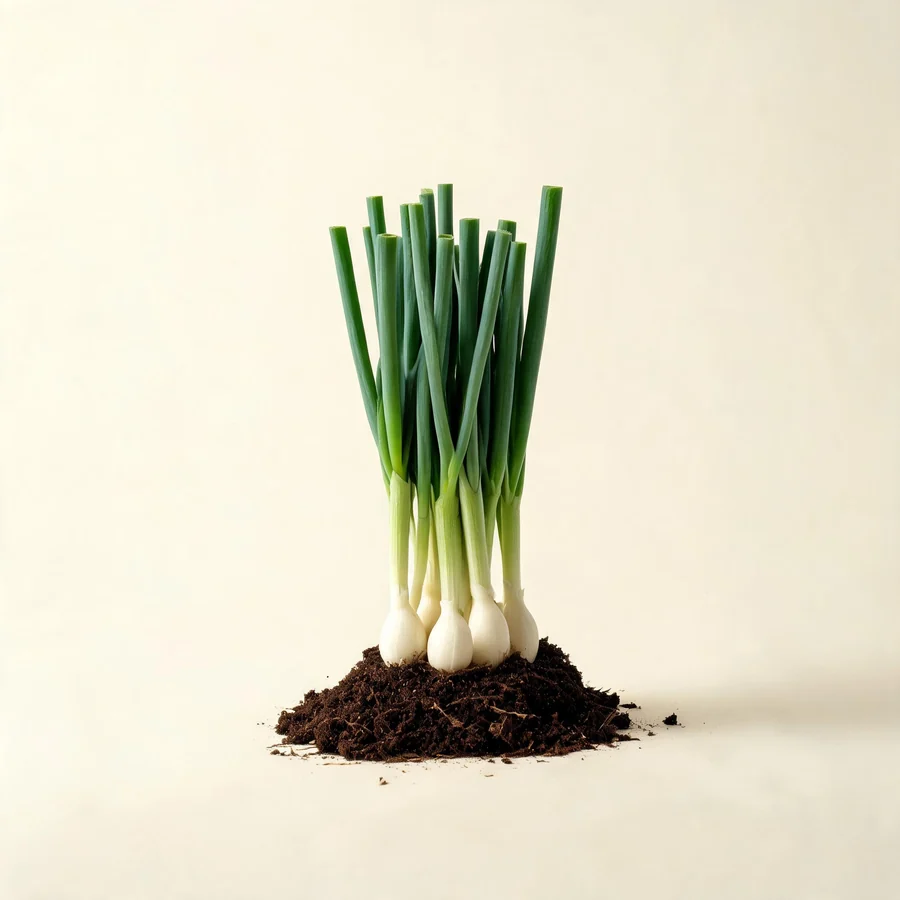
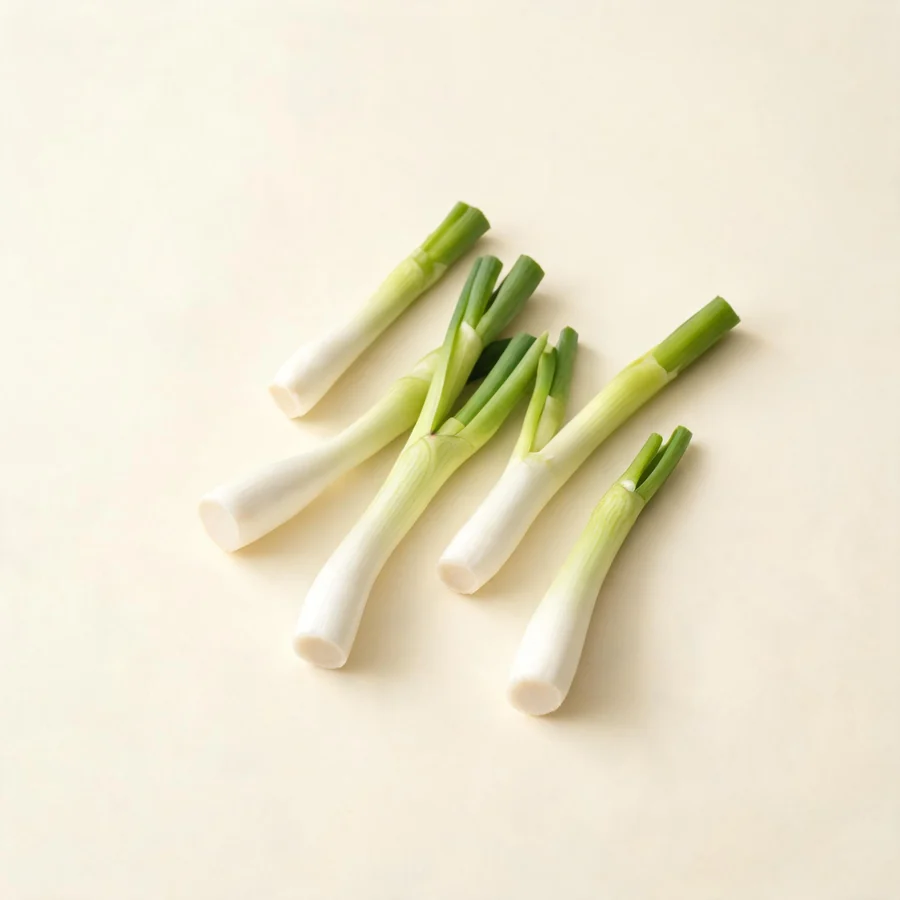
Skin profile
Where this herb sits in skin practice: the pattern it corrects, the skin signs it suits, and what it should not be used for.
Cong Bai is an external measure for the first day or two of a hard, unopened swelling, and it is a food rather than a potent herb. Its value is that it is mild enough to use early; its danger is that it can be used too long, after a lesion has moved past the stage where warmth helps.
Skin signs that suggest it
- A hard, red, tender swelling that has not yet pointed or discharged (an early boil or abscess)
- A breast that is hard and painful with milk stasis, before any fever or spreading redness
- A cold, pale, hard swelling or indurated patch with no heat in it
- Pain in the lesion that is eased by warmth and worse with cold
- Pale skin over the swelling, a white tongue coating and no fever
When it is not the right herb
Not for a lesion that is already hot, red and spreading, where warmth is the wrong direction and medical care is needed. Not on broken, ulcerated or discharging skin, which a poultice macerates, and not on a mature abscess with a soft centre, which needs drainage. Not for anyone who reacts to onion, garlic or leek with a rash, swelling or wheeze. Not left on overnight, and not used on the face, where the skin is thin and the juice can burn.
What it does for skin
Skin-relevant actions only. Each one describes a mechanism in TCM terms and what it looks like on the skin.
Moves Qi and Blood in a hard swelling
This is the whole of the external action. A swelling that is hard, tense and unopened is read as Qi and Blood held in place, and a warm pungent paste on the surface is held to loosen that hold. The bulb does not add Yang or nourish anything; it opens a route through tissue that has closed. That is why the poultice is used early, while the lesion is still hard, and why it is abandoned once pus has formed.
Warms a cold, indurated patch
Where a swelling or a patch of skin feels cold to the touch and is pale rather than red, the tradition reads Cold as the obstruction and warmth as the treatment. A warmed scallion poultice carries heat into the tissue and holds it there for the half hour it is left on. The effect is local and temporary, and it is a comfort measure rather than a cure for whatever is causing the coldness.
Resolves toxin by freeing Qi
Li Shizhen's explanation is that the bulb disperses and moves Qi, and that moving Qi is what allows toxin to resolve and Blood to move again, since Qi is the leader of Blood. The wording matters: the herb is not described as a toxin-clearing herb in the way that Huang Qin or Pu Gong Ying are. It makes the tissue move, and the tradition expects the swelling to settle as a consequence rather than because the herb kills anything.
Provides a food-grade option for a first, mild measure
Because the bulb is eaten, a poultice can be used at the very start of a swelling, at home, without the caution that a stronger external herb needs. That is its real advantage, and also its limit: it is for the first day or two of a hard, unopened lesion, not for a lesion that is worsening. If the swelling is larger, hotter or more painful after a day of poultices, the case has moved past this measure.
Skin conditions it is used for
Mapped to the condition pages on this site. The pattern column shows what the skin is doing when this herb is the right choice.
| Condition | Pattern | Why it suits | Typical setting |
|---|---|---|---|
| Boils | An early boil that is hard and has not yet pointed | A poultice is the oldest household measure for a boil that is still a hard, tender lump, and the bulb is the classic kitchen version of it. It warms the lesion and moves what is congested, and the tradition expects the boil either to settle or to come to a head. Once there is a pointing head or pus, warmth and a moist poultice are no longer helpful and the boil needs to drain. | A warm Cong Bai poultice while the boil is hard and unopened, with a heat-clearing formula if the lesion is hot |
| Skin abscess | An early hard swelling before a collection has formed | Before pus collects, an abscess is a hard, painful area of congestion, and a warm poultice is one way of trying to settle it. The herb is used only in that window, and only on intact skin. A swelling that is enlarging, throbbing, or accompanied by fever has moved past the point where a poultice helps, and delay is the main risk in an abscess anywhere on the body. | A Cong Bai poultice for an early hard swelling, with prompt medical review if it does not settle |
| Breast blister | A hard, painful area of the breast from milk stasis, before fever | A tense, painful segment of the breast in a breastfeeding woman is treated in household practice with a warm poultice before a feed, and the scallion bulb is one of the traditional warm applications. It is used at the very start, on intact skin, and it is not a treatment for mastitis: a hot, red, spreading breast with fever needs medical care, and that warning belongs on the same page as the remedy. | A warm Cong Bai poultice over the hard area before a feed, with medical review if fever or spreading redness appears |
| Chilblains | Cold congealing Blood in the small vessels of the hands and feet | Chilblains are read as cold that has slowed the blood in tiny vessels, giving dusky, painful, cold swellings that are better for warmth and worse in the cold. A warm pungent poultice suits the logic of the pattern and is used on unbroken skin in the early, itchy stage. It is a comfort measure: keeping the feet and hands warm and dry does more, and a chilblain that ulcerates needs wound care rather than a poultice. | A warm Cong Bai poultice on unbroken, dusky skin, alongside warmth and dryness rather than instead of them |
Combinations for skin
Herbs it is paired with when the skin, not an internal organ, is the target.
| Partner | Ratio | Why the pair is used |
|---|---|---|
| Sheng Jiang | 3 to 5 stalks Cong Bai with 3 to 4 slices of fresh ginger | The two warm kitchen aromatics, pounded together into a paste and warmed for a poultice on a cold, hard swelling. Ginger adds warmth to the middle and the bulb penetrates the tissue, and neither is strong enough to use on a lesion that is already hot. The pair is a household application, which is exactly its place: it is safe enough to try on the first day and too mild to rely on after that. |
| Jing Jie | 3 to 5 stalks Cong Bai with 6 to 10 g Jing Jie | Jing Jie is the stronger disperser and it also enters the Blood level, where rashes and itching are treated, while the scallion bulb opens the surface gently and is mild enough for a child or an elderly person. The pair is used where an itchy rash arrives with wind-cold and the surface needs opening without a harsh sweat. The bulb is the gentler partner and the one that can be used as food. |
| Ge Gen | 3 to 5 stalks Cong Bai with 9 to 15 g Ge Gen | Ge Gen lifts fluid to the surface and relaxes the neck and shoulders, so a dispersing draft does not dry a person who is already short of fluid. That matters on the skin, where a harsh sudorific can leave the surface drier and itchier than before. The pair is chosen for a cold arriving in someone depleted after illness, childbirth or bleeding, and it belongs to a practitioner's formula rather than a kitchen poultice. |
Topical use
The poultice is the skin use of this herb and almost the only one. The fresh bulb is pounded to a paste, warmed and wrapped in cloth, then laid over a hard, early swelling for twenty to thirty minutes. It is a household preparation, used on intact skin, and it is renewed rather than left on overnight.
| Preparation | How and when it is used |
|---|---|
| Warm poultice for an early swelling | Two to five fresh stalks are pounded to a paste, warmed briefly in a dry pan and wrapped in a single layer of clean cloth. The parcel is laid over the hard swelling for 20 to 30 minutes, once or twice a day, and the paste is discarded after each use rather than kept. |
| Breast poultice for milk stasis | The same paste, warmed and wrapped, is laid over the hard segment of the breast for 15 to 20 minutes before a feed, avoiding the nipple and areola. The skin is washed afterwards, the paste is not reused, and the poultice is abandoned if the breast becomes hotter, redder or painful with fever. |
Patch test and cautions
Use on intact skin only, and patch test on the inner arm for 24 hours if there is any history of reaction to onion or garlic. The juice can redden and sting thin skin, so the poultice is timed rather than left on, and it is never applied to broken, ulcerated or discharging skin. A swelling that is spreading, throbbing or accompanied by fever needs medical assessment instead of another application.
Safety for skin use
What to check before recommending or using it, including the cautions that matter most for skin patients.
Do not use, or use with caution
- Broken, ulcerated or already discharging skin. A poultice macerates the tissue and adds a vegetable irritant to an open wound.
- A hot, red, spreading lesion with fever or tenderness beyond its edge. Warmth is the wrong direction and the case needs medical assessment.
- A mature abscess with a soft centre or a pointing head. It needs drainage, and a poultice delays that.
- Allergy to the onion family, with rash, swelling or wheeze on contact with garlic, leek or onion. A poultice is not tried in that situation.
Pregnancy and breastfeeding
Culinary and standard medicinal amounts are considered safe, and the old literature even lists the bulb among treatments given during pregnancy. The reservation concerns dose and direction rather than toxicity: a warm dispersing herb is not what a threatened miscarriage with heat, or with heavy sweating, is asking for. A small poultice over a limited area is less exposure than a decoction and is still checked with a practitioner. For breastfeeding, the bulb has a traditional reputation for promoting milk flow, and a poultice on a tense breast is a support in the first hours rather than a treatment for mastitis.
Interactions
- Warfarin and antiplatelet drugs. The bulb contains the same sulphur compounds as garlic and onion, which can mildly reduce platelet stickiness. Culinary amounts are not clinically meaningful, but a strong decoction taken daily is worth declaring and the monitoring schedule kept to.
- Insulin and sulfonylureas. Animal and laboratory studies of the species point to a modest lowering of blood sugar, so anyone taking large medicinal amounts alongside these drugs should watch for low readings instead of assuming the bulb is inert.
- Prescription creams on the same area. A poultice is applied at a different time of day from a steroid or antibiotic cream, so that the cream is not occluded under it and any irritation can be attributed to one product.
Allergy and patch testing
Contact dermatitis from onion and garlic juice is well documented, and the scallion bulb belongs to the same family, so a poultice is a real exposure rather than a harmless one. Patch test on the inner arm for 24 hours, keep the first application short, and stop at once if the skin stings, reddens or swells. Anyone who reacts to garlic, leek or onion with a rash, swelling or wheeze should not use it at all.
General safety references
General references for herbal hepatotoxicity and herb-drug interactions; they are not specific to this herb.
- Review article: Herbal hepatotoxicity - an update on traditional Chinese medicine preparations. Alimentary Pharmacology & Therapeutics, 2014. PMID: 24844799.
- Interactions between herbal medicines and prescribed drugs: an updated systematic review. Drugs, 2009. PMID: 19719333.
- Warfarin and food, herbal or dietary supplement interactions: a systematic review. British Journal of Clinical Pharmacology, 2021. PMID: 32478963.
Evidence
The classical record is quoted with its source. The modern note states the level of evidence plainly.
Classical record
主伤寒寒热,出汗,中风,面目肿。
Governs Cold Damage with chills and fever, promotes sweating, and treats wind-strike with swelling of the face and eyes.
Shen Nong Ben Cao Jing (Divine Husbandman's Classic of Materia Medica) - The earliest entry already names swelling of the face and eyes, which is the surface use a poultice draws on.
葱,所治之症,多属太阴、阳明,皆取其发散通气之功。通气故能解毒及理血病。气者,血之帅也,气通则血活矣。
The complaints scallion treats belong mostly to the Tai Yin and Yang Ming, and all draw on its power to disperse and move Qi. Because it moves Qi it also resolves toxin and regulates Blood disorders. Qi leads Blood; once Qi passes freely, Blood comes alive.
Ben Cao Gang Mu (Compendium of Materia Medica), Li Shizhen - Li Shizhen gives the reasoning behind the poultice: toxin and stagnant Blood in a swelling are moved by freeing Qi.
葱,辛能发散,能解肌,能通上下阳气。故外来怫郁诸证,悉皆主之。
Scallion is pungent and therefore disperses: it releases the flesh layer and frees Yang Qi above and below. It therefore governs every pattern of constraint that arrives from outside.
Ben Cao Jing Shu (Commentary on the Classic of Materia Medica), Miao Xiyong - Ming commentary that gives the freeing of Yang as the reason the bulb works when something outside has closed the body down, which is how a hard cold swelling is read.
Modern evidence
Evidence status
- Laboratory work on allicin, other sulphur compounds and the bulb extract reports antibacterial and anti-inflammatory activity, mostly against gut organisms and in cell models. Whether a poultice delivers any of it through intact skin has not been shown.
- No clinical trial of scallion poultices in skin infection was identified. The practice is a household tradition, and the effect the literature does record is irritation and contact dermatitis from allium juice.
- Safety position: a food article classed as non-toxic. The risks that matter are skin irritation from prolonged contact and, more seriously, the delay of proper treatment for an abscess or a spreading infection.
PubMed records
Selected real PubMed records for this herb's species or its constituents, chosen by species name and title relevance. They are references for the non-TCM discussion above, not proof that the herb treats any skin condition.
- Allium vegetables: Traditional uses, phytoconstituents, and beneficial effects in inflammation and cancer.. Critical reviews in food science and nutrition, 2023. PMID: 35170391 (skin-related record).
Dose and forms
Skin-practice dosing and the preparations that suit skin complaints.
| Form | Dose and notes |
|---|---|
| Warm poultice | Two to five fresh stalks, pounded and warmed, laid on a hard swelling for 20 to 30 minutes, once or twice daily. The paste is renewed for each application rather than left on overnight. |
| Decoction (internal) | 3 to 15 g, that is two to five stalks, inside a formula, added in the last five to ten minutes because the aroma is volatile. On a skin page this is secondary to the poultice. |
| Course length | Two to three days for a poultice. If the swelling is not settling, or is becoming hotter or more painful, stop and have it looked at rather than continuing. |
Everything here depends on the bulb being fresh, because drying drives off most of the volatile oil and leaves a poor substitute. A sweating draft, if one is used at all, should bring a light moisture to the skin rather than a soak, and it stops at that point. A poultice is judged by the skin beneath it: red, stinging or blistered means it stayed on too long.
Citations and further reading
Only real sources are listed: the classical materia medica passages quoted above, and the source works behind the botanical and safety statements.
- Shen Nong Ben Cao Jing (Divine Husbandman's Classic of Materia Medica), attributed compilation of the Han period - classical entry quoted above.
- Ben Cao Gang Mu (Compendium of Materia Medica), Li Shizhen, 1578 - classical entry quoted above.
- Ben Cao Jing Shu (Commentary on the Classic of Materia Medica), Miao Xiyong, Ming dynasty - classical entry quoted above.
- Cong Bai monograph, Bulbus Allii Fistulosi: Pharmacopoeia of the People's Republic of China - source for the accepted botanical source, the part used and quality requirements.
- Modern evidence statement: based on laboratory literature on allicin and Allium fistulosum, framed as a statement about the level of evidence rather than as a cited finding.
- Botanical description and identification: botanical literature on Allium fistulosum, Amaryllidaceae.
Educational reference for qualified practitioners. This page is not medical advice, and skin conditions should be diagnosed by a clinician before treatment.