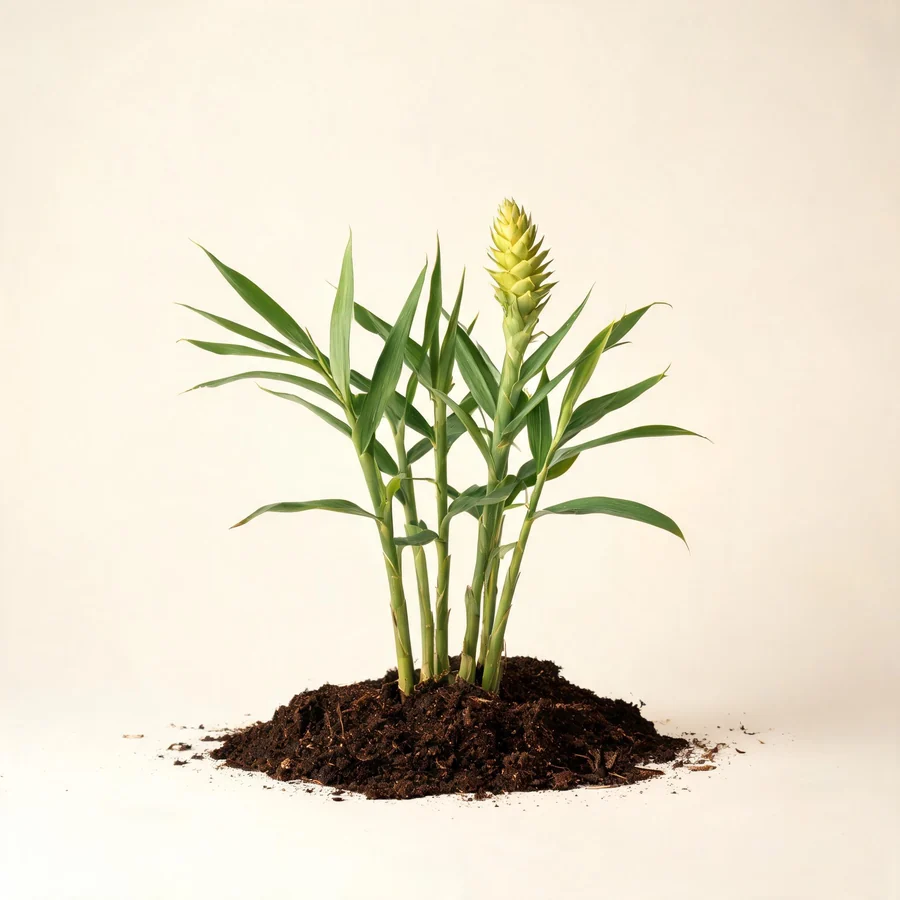
Skin profile
Where this herb sits in skin practice: the pattern it corrects, the skin signs it suits, and what it should not be used for.
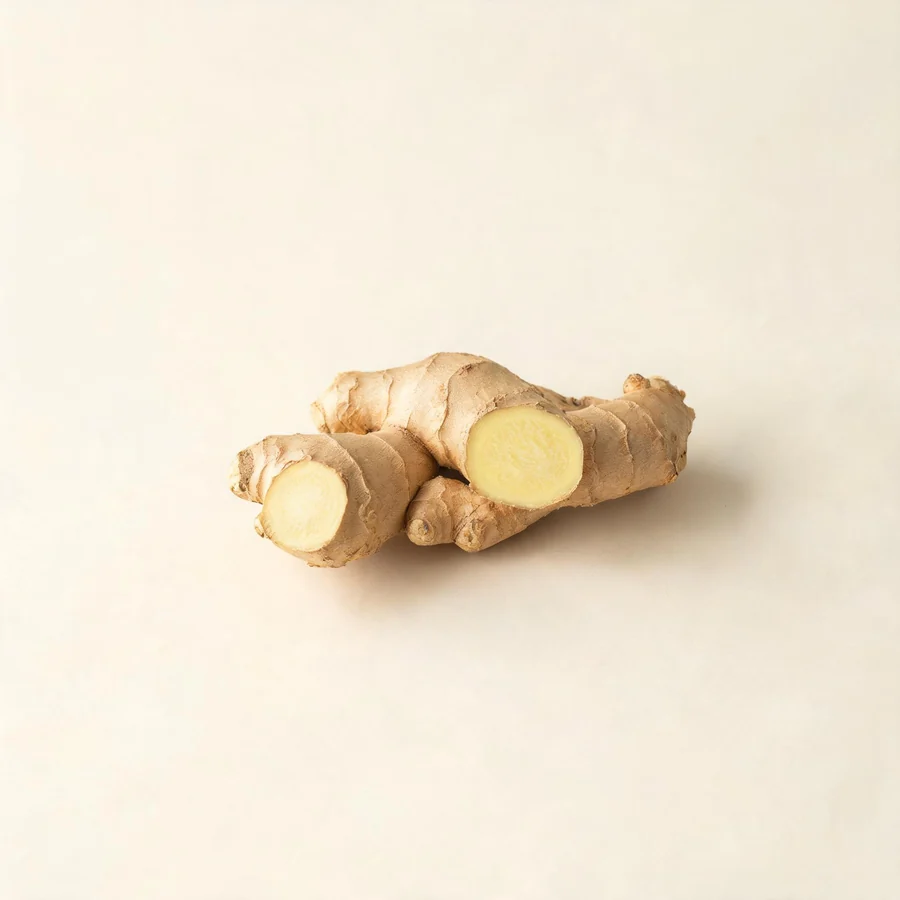
Fresh ginger is the warmest thing in most kitchens and one of the mildest herbs on this site. Its skin place is cold, pale, sluggish skin, cold-provoked welts and chilblains, and a traditional external practice on stable vitiligo that is honest to describe as unproven. The one absolute rule is the material: fresh and sound, never rotten.
Skin signs that suggest it
- Pale, cold, clammy skin in a person who feels the cold and dislikes draughts
- Welts that are pale rather than red, come up on chilled or uncovered skin and fade slowly once warm
- Bluish, cold, swollen fingers or toes in damp cold, itching and burning as they rewarm
- Stable, well-defined pale patches with no scale and no inflammation, in someone who runs cold
- A pale tongue with a white coat and a slow or moderate pulse
- Skin that improves with warmth, warm food and exercise, and worsens in winter
When it is not the right herb
Not for red, hot, swollen or weeping skin, and not for a flare of rosacea, acne or infected eczema, where warming the surface makes matters worse. Not for yin deficiency with a dry mouth, night sweats and a red tongue. Never applied to broken, ulcerated, blistered or numb skin, and never rubbed on a frostbitten part, which should be rewarmed gently and medically rather than scrubbed. Not rotten ginger, ever. Not a substitute for emollient, compression or medical care in a leg ulcer or a spreading infection.
What it does for skin
Skin-relevant actions only. Each one describes a mechanism in TCM terms and what it looks like on the skin.
Warms the surface and drives cold out
The fresh rhizome is acrid and slightly warm and it promotes a mild sweat, which is the mechanism by which cold at the surface is said to be expelled. On the skin this is relevant to cold urticaria and to the chill that precedes a flare, rather than to any inflammatory dermatosis. Its dispersing strength is modest, so it is used at the early, mild stage, or as an adjunct within a larger prescription.
Warms the middle so that the skin is fed from within
Cold skin is often the skin of a person with a cold, weak digestion, and warming the Stomach and Spleen is part of treating it. The same rhizome settles the stomach and allows food to be transformed, which is the traditional explanation for how warmth reaches the surface at all. This is the least visible and the most important of its skin actions.
Stimulates a sluggish area when applied topically
Rubbing a cut slice of fresh ginger on a stable pale vitiligo patch is a long-standing folk practice, and the reasoning is local stimulation rather than pigmentation. The evidence is absent, the effect modest and the practice harmless on intact skin, which is the honest way to present it. It is never used on a patch that is inflamed, on the face near the eyes, or on skin that has lost sensation.
Warms and revives cold, damp, puffy skin
Winter fingers that are cold and swollen, and skin that stays cold and clammy after a chill, sit in the same category. A warm ginger footbath or a warm drink does what the tradition says because warmth and circulation are the same thing seen from two sides. Anyone with diabetes, peripheral arterial disease or neuropathy should not use a hot footbath at all without advice, because they may not feel a burn.
Skin conditions it is used for
Mapped to the condition pages on this site. The pattern column shows what the skin is doing when this herb is the right choice.
| Condition | Pattern | Why it suits | Typical setting |
|---|---|---|---|
| Vitiligo | Cold and stagnation at the surface, with qi and blood not reaching the skin | Pale, stable, non-inflamed patches in a person who runs cold are treated in traditional practice by warming and moving, and fresh ginger is one of the substances rubbed into the patch. It is a folk external stimulant, not a treatment with demonstrated benefit, and it is described here as such. Sun protection, camouflage and dermatological care are the mainstays, and a patch that is spreading quickly should be assessed rather than rubbed. | External rubbing with a fresh slice, beside a warming formula such as Gui Zhi Tang |
| Chilblains | Cold-damp settling in the peripheral skin | Chilblains are cold injury to small vessels, and warming is the rational response. Traditional practice uses a warm ginger decoction as a soak for intact chilblains and takes ginger internally in a warming formula. A chilblain that ulcerates, or a toe that stays blue and painful, needs medical attention, and heat is not applied to a numb foot. | Warm ginger soak for intact skin, with Dang Gui Si Ni Tang internally |
| Urticaria | Wind-cold welts at the surface | A first episode of pale welts with chills, sneezing and no thirst is read as wind-cold, and the traditional household remedy of ginger, brown sugar and scallion white is what people take at that stage. It is used for the mild and early case, and antihistamines remain the treatment that works quickly. Welts with swelling of the lips or tongue, or with difficulty breathing, need emergency care. | Gui Zhi Tang, with ginger as both a warming and a harmonising ingredient |
| Chronic Urticaria | Yang deficiency with recurrent cold-provoked welts | Welts that return for months, are provoked by cold and draughts, and come with cold hands and a pale tongue are read as yang deficiency, and warming herbs are used as a background treatment rather than a rescue. Ginger is a dietary-level support in that picture and not the main herb, and the formula is built around warming and blood-moving ingredients. Persistent urticaria needs investigation for triggers and, in some cases, for an underlying condition. | Modified Gui Zhi Tang or Dang Gui Si Ni Tang, with warming dietary support |
Combinations for skin
Herbs it is paired with when the skin, not an internal organ, is the target.
| Partner | Ratio | Why the pair is used |
|---|---|---|
| Gui Zhi | 9 g each, as in the classical formula | Cinnamon twig opens the muscle layer and warms the channels, while fresh ginger opens the surface and promotes a mild sweat, so the two together expel cold more effectively than either alone. The pair suits the early chill with body aches, a pale tongue and no thirst. Both are warming, so neither belongs in a hot red flare. |
| Dang Gui | 9 to 12 g Dang Gui with 9 g Sheng Jiang | Angelica nourishes and moves blood while ginger warms and disperses, and the classical pairing is used for cold, dry, dull skin with cold limbs and scanty periods. Ginger supplies movement and warmth, angelica supplies substance, and the result is a skin that is warmer and better supplied. It is a slow, building combination rather than a quick one. |
| Da Zao | 3 to 5 slices of fresh ginger with 4 to 6 jujubes | This is the harmonising pair that appears at the end of many formulas: ginger moves outward while the date nourishes and holds, and together they keep a formula from being either too dispersing or too cloying. In practice it is also the base of the household drink for an early chill. It is a food-level combination and can be taken as a tea. |
| Zi Su Ye | 6 to 10 g each | Perilla leaf and fresh ginger both release wind-cold from the surface and both are traditionally used with seafood, and the leaf also moves qi, which eases fullness in the chest and abdomen. The pair suits a chill with nausea or with a tight, distended feeling, and it is the sort of combination used at home before a formula is needed. Both are warm and both are avoided in heat patterns. |
Formulas where it leads
- Gui Zhi Tang (桂枝汤) - The classical harmonising formula for wind-cold with sweating and aversion to wind, containing cinnamon twig, peony, liquorice, jujube and fresh ginger. Ginger is a supporting ingredient that warms the middle and helps the exterior release, and the formula underlies much of the cold-urticaria and chill-related skin prescribing. It is a warming formula and not a treatment for a hot, red eruption.
- Dang Gui Si Ni Tang (当归四逆汤) - The formula for cold hands and feet with a fine pulse, and one of the classical answers to chilblains and cold-induced vasospasm. Fresh ginger is not always included in modern versions, but the warming and blood-moving logic is the same one that puts ginger into a winter footbath. It belongs to a practitioner, and a limb that stays blue or numb needs medical assessment.
Topical use
Fresh ginger is used on skin in three traditional ways: a cut slice rubbed on a stable vitiligo patch, a warm decoction used as a footbath or hand soak for cold and chilblain-prone skin, and an infused oil rubbed into cold, stiff areas. All of them rest on warmth and local stimulation rather than on any measured effect, and all of them are for intact skin only.
| Preparation | How and when it is used |
|---|---|
| Fresh slice rub | A freshly cut slice of rhizome rubbed gently on a stable pale vitiligo patch for a minute or two, once or twice daily. Stop if the skin reddens, stings or breaks, and never use it on the face, near the eyes, or over a patch that is inflamed or spreading. |
| Warm soak | A thumb of sliced fresh ginger simmered in a litre of water for ten minutes, cooled to a comfortable warmth and used as a hand or foot soak for ten to fifteen minutes. Not for anyone with diabetes, neuropathy or poor circulation without advice, because a burn may not be felt. |
| Warming rub | A few drops of ginger-infused oil massaged into cold, stiff hands, feet or shoulders. Keep it away from the eyes and from broken skin, and wash the hands afterwards, since the oil is irritant to mucous membranes. |
Patch test and cautions
Patch test for twenty four hours before the first use, on a small area of normal skin. Use only on intact skin, never on an ulcer, a blister, a chilblain that has broken or an area with reduced sensation. Stop at once if there is burning, blistering or spreading redness. Do not cover a ginger rub with a plaster or a hot water bottle. Keep the preparations away from children's eyes, and do not use them on an infant without professional advice.
Safety for skin use
What to check before recommending or using it, including the cautions that matter most for skin patients.
Do not use, or use with caution
- Rotten, mouldy or sprouting ginger. Spoiled rhizome carries safrole, which harms the liver and has caused cancer in animal studies, and it must never be eaten or used on skin. Buy firm clean rhizomes and discard soft or mouldy ones rather than cutting the bad part away.
- Hot, red, inflamed or suppurating skin, and internal heat patterns. The old commentaries caution that too much ginger in someone with sores or abscesses may encourage tissue to proliferate, and in practice warming a hot lesion increases redness and throbbing.
- Yin deficiency with dryness and heat: a dry mouth, night sweats, hot flushes, and a tongue that is red with hardly any coat. The warm pungent nature consumes fluid further.
- Broken, ulcerated, blistered or numb skin, for any topical use. Ginger burns mucous membranes and broken skin, and a numb area will not report a burn.
- Planned surgery or anticoagulant treatment without advice, because the gingerols inhibit platelet aggregation.
Pregnancy and breastfeeding
Food-level amounts are generally regarded as acceptable, and ginger is widely used for nausea in early pregnancy; reviews of that use describe doses in the region of 500 to 1500 mg a day, with belching as the usual minor effect. Larger medicinal doses are avoided, particularly later in pregnancy, because the warming, qi-moving action is thought in theory capable of disturbing the fetus. Topical use on a small area is low risk but is still best discussed. Vomiting in pregnancy that is severe or does not settle requires medical care rather than a home remedy.
Interactions
- Warfarin and other anticoagulants. The gingerols and shogaols reduce platelet clumping, and case reports describe a higher INR when warfarin is combined with ginger supplements. Anyone on an anticoagulant should mention regular ginger use, and a medicinal course should be discussed with the prescriber.
- Diabetes medicines. Ginger can reduce blood glucose and sharpen insulin sensitivity, so readings should be checked more often with insulin, metformin or a sulphonylurea.
- Blood pressure medicines. A mild lowering effect may add to a beta-blocker, an ACE inhibitor or a calcium channel blocker and contribute to light-headedness.
Allergy and patch testing
Contact dermatitis to ginger is uncommon but recognised, and it is more likely with repeated handling of fresh rhizome than with a tea. Patch test a topical preparation for twenty four hours, and stop at once if the skin burns or itches after application. A person who reacts to other members of the ginger family, such as cardamom or turmeric, should be cautious with topical use.
General safety references
General references for herbal hepatotoxicity and herb-drug interactions; they are not specific to this herb.
- Review article: Herbal hepatotoxicity - an update on traditional Chinese medicine preparations. Alimentary Pharmacology & Therapeutics, 2014. PMID: 24844799.
- Interactions between herbal medicines and prescribed drugs: an updated systematic review. Drugs, 2009. PMID: 19719333.
- Warfarin and food, herbal or dietary supplement interactions: a systematic review. British Journal of Clinical Pharmacology, 2021. PMID: 32478963.
Evidence
The classical record is quoted with its source. The modern note states the level of evidence plainly.
Classical record
生用发散,熟用和中。
Taken raw it scatters what has invaded the surface; taken cooked it brings harmony to the Middle.
Ben Cao Gang Mu (Compendium of Materia Medica), Li Shizhen - The line sets out the practical difference between the fresh and the prepared rhizome, a distinction later texts repeat, and it is quoted because both the topical and the internal warming skin uses depend on that dispersing quality.
若人只知其散邪发汗,而不知其有匡正止汗之功,皆读书死于句下之过也。
To know only that ginger drives out pathogens and makes a patient sweat, while missing its capacity to uphold the upright qi and to restrain sweating, is the mistake of one who reads words too literally.
Ben Cao Jing Du (Reading of the Materia Medica) - A warning against reducing the rhizome to its diaphoretic action, which is also a warning against reducing it to any single skin use.
Modern evidence
Evidence status
- Ginger's pharmacology is comparatively well characterised: gingerols and the shogaols formed on drying have shown anti-inflammatory, antioxidant and anti-emetic activity, and clinical trials of ginger for nausea and for dysmenorrhoea are the areas with the most evidence. Those trials do not concern the skin.
- No controlled trial of ginger, taken or applied, in vitiligo, chilblains or urticaria was identified. The topical vitiligo practice is a folk tradition and is described here as one, not as a therapy with evidence behind it.
- The clearest safety finding concerns spoiled material: safrole in deteriorated ginger is hepatotoxic and carcinogenic in animal studies, which is why the food-safety rule is absolute. Concentrated supplements, rather than culinary amounts, are the form in which the anticoagulant interaction has been reported.
PubMed records
Selected real PubMed records for this herb's species or its constituents, chosen by species name and title relevance. They are references for the non-TCM discussion above, not proof that the herb treats any skin condition.
- EFFECTS OF ZINGIBER OFFICINALE ROSCOE FRESH EXTRACT ON AMELANOTIC MELANOMA AND NORMAL SKIN FIBROBLASTS.. Revista medico-chirurgicala a Societatii de Medici si Naturalisti din Iasi, 2015. PMID: 26204672 (skin-related record).
- Anti-inflammatory effect of the hydralcoholic extract of Zingiber officinale rhizomes on rat paw and skin edema.. Phytomedicine : international journal of phytotherapy and phytopharmacology, 2003. PMID: 12834002 (skin-related record).
Dose and forms
Skin-practice dosing and the preparations that suit skin complaints.
| Form | Dose and notes |
|---|---|
| Decoction | 3 to 10 g of fresh rhizome daily, sliced, in a formula or as a tea. Lower amounts harmonise a formula and protect the stomach; the upper end releases the exterior or settles nausea. |
| Higher range | 15 to 30 g is used in acute vomiting or to moderate another herb's toxicity, under supervision. It is not a routine skin dose. |
| Juice | 3 to 10 drops of fresh juice for acute nausea. Ginger juice is pungent and irritant, and it is diluted or mixed with honey rather than taken neat. |
| Course length | A few days to a few weeks. Long high-dose courses accumulate heat, which shows as dryness, irritability and, in traditional terms, worse sores. |
Here safety turns on the material, not on the quantity: fresh, firm, sound rhizome and nothing else. The roasted form, wrapped in damp paper and heated in ashes until half cooked, disperses less and warms the middle more, so it suits a cold digestion with nausea better than the raw rhizome does. For skin use the fresh rhizome is what the traditional external practice calls for, and a dried or powdered substitute is a different medicine.
Citations and further reading
Only real sources are listed: the classical materia medica passages quoted above, and the source works behind the botanical and safety statements.
- Ben Cao Gang Mu (Compendium of Materia Medica), Li Shizhen, 1578 - classical passage quoted above.
- Ben Cao Jing Du (Reading of the Materia Medica) - classical passage quoted above.
- Pharmacopoeia of the People's Republic of China - source for the fresh rhizome as the part used and for its quality requirements.
- European Medicines Agency herbal monograph on Zingiber officinale - basis for the pregnancy nausea dose range referred to above.
- Modern evidence statement: summarised from pharmacological and clinical literature on gingerols; no dermatological trial is presented as proof of effect.
- Food safety and toxicology: safrole content of deteriorated ginger, as described in the toxicological literature.
Educational reference for qualified practitioners. This page is not medical advice, and skin conditions should be diagnosed by a clinician before treatment.