Skin profile
Where this herb sits in skin practice: the pattern it corrects, the skin signs it suits, and what it should not be used for.
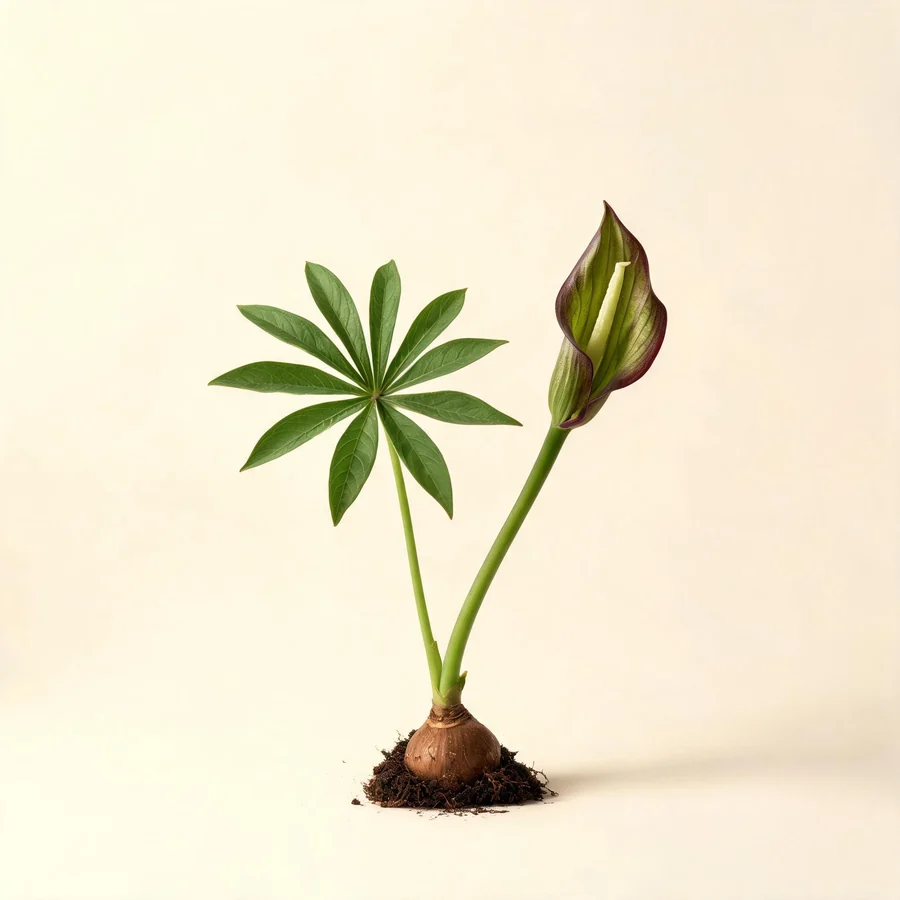
Dan Nan Xing is included here because phlegm can show on the skin, not because it is a skin herb. Its territory is narrow: nodules, doughy swellings, numbness and wind-driven twitching. It is processed, slightly toxic and practitioner-only, and the most important thing a reader can take from this page is the distinction between the raw poison and the bile-processed medicine.
Skin signs that suggest it
- Firm, painless lumps or nodules under the skin that move a little and have no redness (phlegm nodules)
- A doughy swelling that is more heavy than hot and is slow to resolve, with no clear head of pus (phlegm-damp swelling)
- Numbness, heaviness or a thick, wooden feeling in a patch of skin (wind-phlegm in the channels)
- Twitching or flickering of facial or eyelid muscles, or a pulled, uneven face (wind stirring)
- A thick, greasy tongue coating with dizziness or a muzzy head (phlegm clouding the orifices)
When it is not the right herb
Not for dry, thin skin with a dry throat and no phlegm, and not for a hot, red, spreading infection where the problem is heat toxin rather than phlegm. It is not a cosmetic treatment for a lump of unknown cause, and it is never used raw. A new, growing, painful or changing swelling, and any sudden facial weakness, needs diagnosis before a phlegm medicine is considered.
What it does for skin
Skin-relevant actions only. Each one describes a mechanism in TCM terms and what it looks like on the skin.
Transforms Phlegm and softens nodules
Phlegm that has congealed under the skin makes a nodule: firm, rounded, painless and slow to change. Dan Nan Xing is one of the herbs used to break that congealed phlegm down, and its acrid, dispersing quality is read as reaching what has become stuck. It is used in compounds with Ban Xia and Bai Jie Zi rather than alone, and any new or changing lump needs a diagnosis before it is treated as phlegm.
Extinguishes Wind and settles twitching
Wind in the channels shows as movement that should not be there: a flickering eyelid, a twitching cheek, a face that pulls to one side, or a limb that jerks. The bile processing gives Dan Nan Xing a cool, orifice-opening quality that fits wind-phlegm with heat, and it is used with Gou Teng and Tian Ma to settle the movement. Facial weakness or a sudden twitch is a medical presentation, not a skin complaint, and needs assessment.
Opens the orifices and clears a muzzy head
Phlegm that clouds the orifices produces dizziness, a heavy head, dulled senses and, in severe cases, loss of speech or consciousness. The processed arisaema is said to open those orifices and clear the phlegm that is blocking them. On the skin this is relevant where sensation itself is dulled and the skin feels thick or numb; the action is on the channels and the senses, not on the surface.
Cools and dries phlegm that has become hot
Raw arisaema is warm and drying, but the bile turns it cool, which is why the processed form is used for phlegm that has combined with heat rather than cold. The picture is a thick yellow coating, a red tongue, irritability and a swelling that is heavy rather than cold. The coolness is mild, and Dan Nan Xing is not a general heat-clearing herb; it is chosen for phlegm-heat, not for simple inflammation.
Skin conditions it is used for
Mapped to the condition pages on this site. The pattern column shows what the skin is doing when this herb is the right choice.
| Condition | Pattern | Why it suits | Typical setting |
|---|---|---|---|
| Subcutaneous lipomas and nodules | Phlegm congealed into nodules under the skin | A firm, rounded, painless lump that moves slightly and has no redness is the classical phlegm nodule, and bile-processed arisaema is one of the herbs used to soften it. The reasoning is that phlegm has congealed where it should have moved, and an acrid dispersing medicine reaches what has become stuck. This is a traditional reading only: a new, growing or changing lump must be diagnosed, and a lipoma or cyst is not removed by a herb. | Dao Tan Tang with Ban Xia and Bai Jie Zi |
| Skin swelling | Phlegm-damp swelling that is heavy and slow to resolve | A swelling that is doughy, heavy and slow to resolve, without the heat and redness of an infection, is read as phlegm-damp rather than as heat toxin. Dan Nan Xing transforms the phlegm and dries the dampness, and it is used in compounds with Fu Ling and Chen Pi rather than on its own. A hot, tender or rapidly growing swelling is a different problem and needs urgent assessment. | Modified Dao Tan Tang with Fu Ling and Chen Pi |
| Skin numbness | Wind-phlegm obstructing the channels of the skin | A patch of skin that feels numb, thick or wooden is read as phlegm blocking the channels that carry sensation. The processed arisaema enters the Liver channel and is said to clear that obstruction, and it is combined with Tian Ma and Gou Teng when there is also twitching or dizziness. Numbness in a limb or the face can have serious causes and should be investigated before it is treated as wind-phlegm. | Dao Tan Tang with Tian Ma and Gou Teng |
| Thickened or insensitive skin | Phlegm and Wind making the skin thick and dull | Skin that has become thick, insensitive or wooden over a patch is read as phlegm and wind lodged in the channels, so that the surface no longer responds. Dan Nan Xing is used to clear the phlegm and settle the wind, usually with blood-moving and channel-opening herbs. The action is slow and the setting is a compound; a thickened patch that is new or changing needs a diagnosis. | A modified Dao Tan Tang with channel-opening herbs |
Combinations for skin
Herbs it is paired with when the skin, not an internal organ, is the target.
| Partner | Ratio | Why the pair is used |
|---|---|---|
| Ban Xia | Equal parts in decoction | Ban Xia is the everyday phlegm-transforming herb, and Dan Nan Xing is its processed, wind-settling relative. Both dry dampness and transform phlegm, but the bile-processed arisaema reaches the channels and the orifices while Ban Xia works more on the Stomach and the middle. The pair is used where phlegm has made a nodule or a swelling and there is also dizziness or a thick coating, with Ban Xia supplying the base action and Dan Nan Xing the reach into the channels. |
| Gou Teng | Equal parts in decoction | Gou Teng is a cool herb that extinguishes wind and settles tremor, and Dan Nan Xing supplies the phlegm-transforming half of the same picture. Together they are used where twitching, a flickering eyelid or a pulled face comes with a thick coating and dizziness, which is read as wind-phlegm rather than as simple wind. The pair is a calmative combination, not a treatment for a skin lesion, and a new facial weakness needs urgent assessment. |
| Tian Ma | Equal parts in decoction | Tian Ma is the classic herb for wind that causes dizziness, numbness and tremor, and Dan Nan Xing clears the phlegm that is carrying the wind. The pair suits the numb, heavy, wooden quality that phlegm gives to a patch of skin, and it is used with Ban Xia and Chen Pi in compounds. Neither herb is a surface treatment: the aim is to clear the channels so that sensation returns, which is a slow and uncertain business. |
| Bai Jie Zi | Equal parts in a compound, or Bai Jie Zi applied topically | Bai Jie Zi is a warm, acrid seed used to disperse phlegm and to draw swellings, and it is often applied externally for nodules while Dan Nan Xing is taken internally. The two cover the same phlegm from different directions, one from the surface and one from the channels, and they are used together for firm subcutaneous lumps. The external use is a traditional plaster method and should not be applied to broken or inflamed skin. |
Formulas where it leads
- Dao Tan Tang (导痰汤) - The formula for phlegm that has become stubborn, with dizziness, a thick coating and a heavy chest. Dan Nan Xing is one of its phlegm-transforming ingredients, and in skin practice the formula is the context for phlegm nodules and doughy swellings rather than for a surface rash.
Safety for skin use
What to check before recommending or using it, including the cautions that matter most for skin patients.
Do not use, or use with caution
- Raw or poorly processed arisaema. The untreated tuber contains calcium oxalate raphides that burn the mouth, tongue and throat and can swell the airway, and it must never be used internally. Only pharmacopoeial bile-processed material is acceptable.
- Pregnancy. It is avoided: the source herb is toxic, its drying and wind-dispelling actions are considered inappropriate for pregnancy, and safer alternatives exist.
- Yin deficiency with a dry throat, dry skin and no phlegm. The drying, dispersing action can deplete fluids further and make the dryness worse.
- Frail, elderly or depleted patients. Reduced reserve makes even processed material riskier, so small doses inside a compound are preferred to strong single-herb use.
Pregnancy and breastfeeding
Avoid in pregnancy. The raw tuber is toxic and is traditionally listed among the herbs to avoid while pregnant, and the processed form still carries a drying, wind-dispelling action that is considered inappropriate for the gestational state. It is not needed for common conditions where a safer substitute exists, and any use would be a specialist decision rather than a standard prescription. The same caution applies while breastfeeding, because there are no transfer data for its irritant constituents.
Interactions
- Sedatives. At high doses the processed herb may add to the depressant effect of sedative medicines, so the combination should be supervised and kept to the smallest effective dose.
- Aconite and raw Pinellia. It should not be combined with Chuan Wu, Cao Wu or Fu Zi, or with raw Pinellia and other toxic herbs, without careful professional control, because the toxic constituents can compound.
- Gastrointestinal irritants and drying medicines. Its irritant saponins and calcium oxalate crystals can add to drugs that irritate the gut lining, and its drying action may work against the intended effect of anticholinergic medicines in a person with dry airways.
Allergy and patch testing
Burning, numbness or swelling of the mouth, tongue or throat after taking the processed herb is a sign of inadequate processing or of an individual reaction, and it needs urgent medical attention rather than a dose adjustment. Stop at once and keep the material for identification. A known reaction to Araceae plants is a reason to avoid it altogether.
General safety references
General references for herbal hepatotoxicity and herb-drug interactions; they are not specific to this herb.
- Review article: Herbal hepatotoxicity - an update on traditional Chinese medicine preparations. Alimentary Pharmacology & Therapeutics, 2014. PMID: 24844799.
- Interactions between herbal medicines and prescribed drugs: an updated systematic review. Drugs, 2009. PMID: 19719333.
- Warfarin and food, herbal or dietary supplement interactions: a systematic review. British Journal of Clinical Pharmacology, 2021. PMID: 32478963.
Evidence
The classical record is quoted with its source. The modern note states the level of evidence plainly.
Classical record
胆南星,味苦,性凉,入肝经,能豁痰开窍,治中风痰迷,惊风抽搐。
Dan Nan Xing is bitter in taste and cool in nature, enters the Liver channel, can break through Phlegm and open the orifices, and treats Phlegm-obstructed stroke and the convulsions of febrile seizures.
Ben Cao Hui Yan (Collected Discourses on Materia Medica) - The entry is the classical statement of the processed form's character: cool rather than warm, and directed at the orifices and at Wind. That is the reading behind its use for numb, twitching or nodular skin, which sits at the surface end of the same action.
天南星,味苦辛,性温,有毒。治风痰,中风不语,风痫,口眼歪斜,破伤风。
Tian Nan Xing is bitter and acrid in taste, warm and toxic in nature. It treats Wind-Phlegm, loss of speech after Wind-stroke, Wind epilepsy, deviation of the mouth and eyes, and tetanus.
Ben Cao Gang Mu (Compendium of Materia Medica), Li Shizhen - Li Shizhen describes the raw tuber, which is warm and toxic. The bile processing described in later texts is what turns that material into the cool, less irritant Dan Nan Xing, and the contrast is the safety lesson of the herb.
Modern evidence
Evidence status
- The processing rationale is the best-documented part. Bile fermentation reduces the irritant calcium oxalate content and changes the material's character, and incomplete processing is a recognised poisoning hazard. That is a toxicological finding rather than evidence of benefit.
- No clinical trial evidence supports Dan Nan Xing for skin nodules, numbness or any skin condition. The skin uses on this page are traditional, small in scope, and always set inside a compound prescribed by a practitioner.
- Modern work on Arisaema constituents is largely pharmacological and toxicological, focused on the raw tuber's irritants and on the processed form's chemistry. It does not establish efficacy, and the safety literature is more substantial than the efficacy literature.
PubMed records
Selected real PubMed records for this herb's species or its constituents, chosen by species name and title relevance. They are references for the non-TCM discussion above, not proof that the herb treats any skin condition.
- Comparison of Plant Genomic DNA Extraction Kits Using the Proofman-LMTIA Amplification Assay.. Phytochemical analysis : PCA, 2025. PMID: 39731450 (pharmacology or review record).
Dose and forms
Skin-practice dosing and the preparations that suit skin complaints.
| Form | Dose and notes |
|---|---|
| Processed material | 3 to 6 g of bile-processed material daily, in a compound and under practitioner supervision. The small dose reflects the toxicity of the source tuber. |
| Upper limit | Do not exceed 6 g. Higher doses are not a route to a stronger effect and increase the risk from residual irritant constituents. |
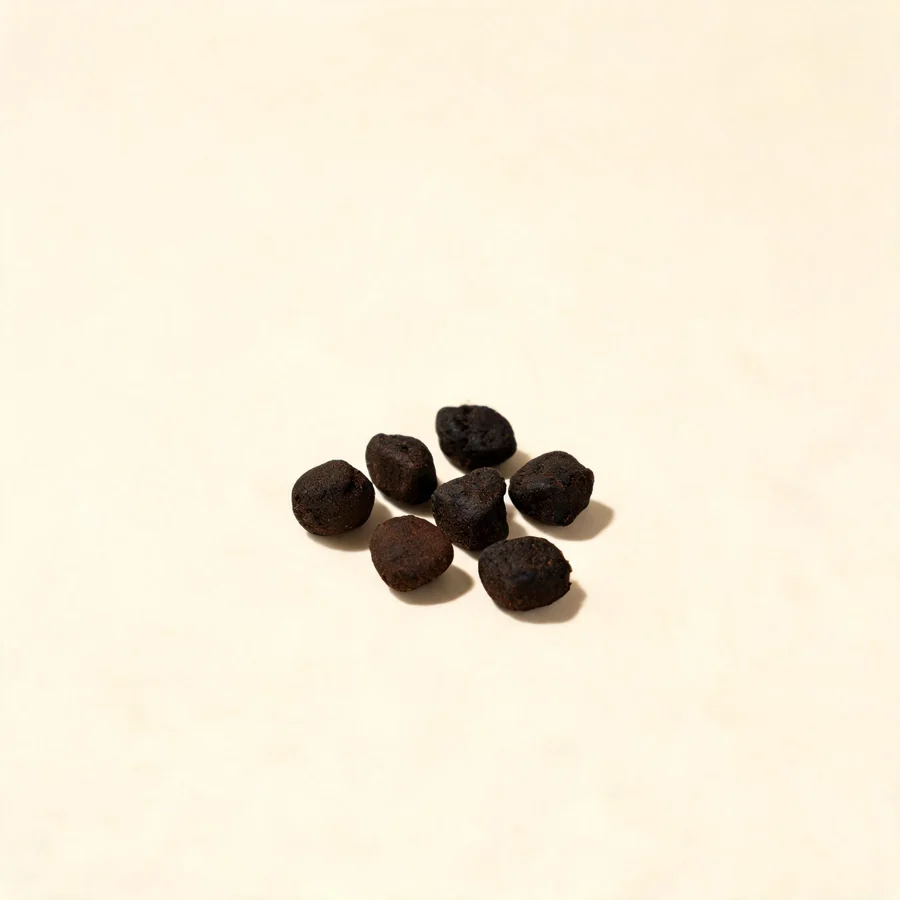
| Form | Small blocks or powder of the bile-processed product only. Raw Tian Nan Xing is never used internally, and the processed article should come from a supplier that declares the processing. |
The small dose and the strict form reflect the toxicity of the source herb. Raw arisaema is never used internally, and the processed product is still a practitioner decision rather than a household remedy. It is given in compounds, at the lower end of the range, and stopped when the phlegm picture has changed. Because the margin between a useful and a harmful preparation is a matter of processing rather than of dose alone, the supplier matters as much as the number.
Citations and further reading
Only real sources are listed: the classical materia medica passages quoted above, and the source works behind the botanical and safety statements.
- Ben Cao Hui Yan (Collected Discourses on Materia Medica) - classical entry on Dan Nan Xing quoted above.
- Ben Cao Gang Mu (Compendium of Materia Medica), Li Shizhen, 1578 - classical entry on Tian Nan Xing quoted above.
- Dan Nan Xing monograph, Arisaema Cum Bile: Pharmacopoeia of the People's Republic of China - source for the processed article and its quality requirements.
- Toxicology of Araceae: published literature on calcium oxalate raphides and the irritant proteins of Arisaema - source for the raw-material hazard.
- Botanical description and identification: botanical literature on Arisaema erubescens, Araceae.
Educational reference for qualified practitioners. This page is not medical advice, and skin conditions should be diagnosed by a clinician before treatment.