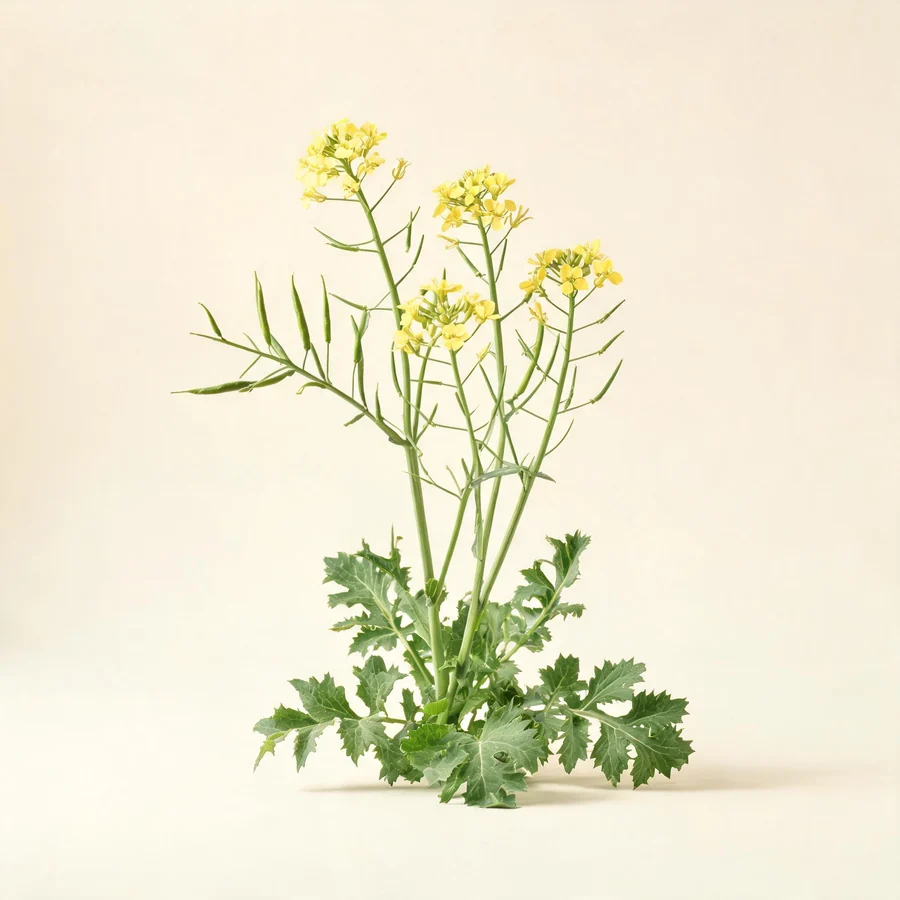
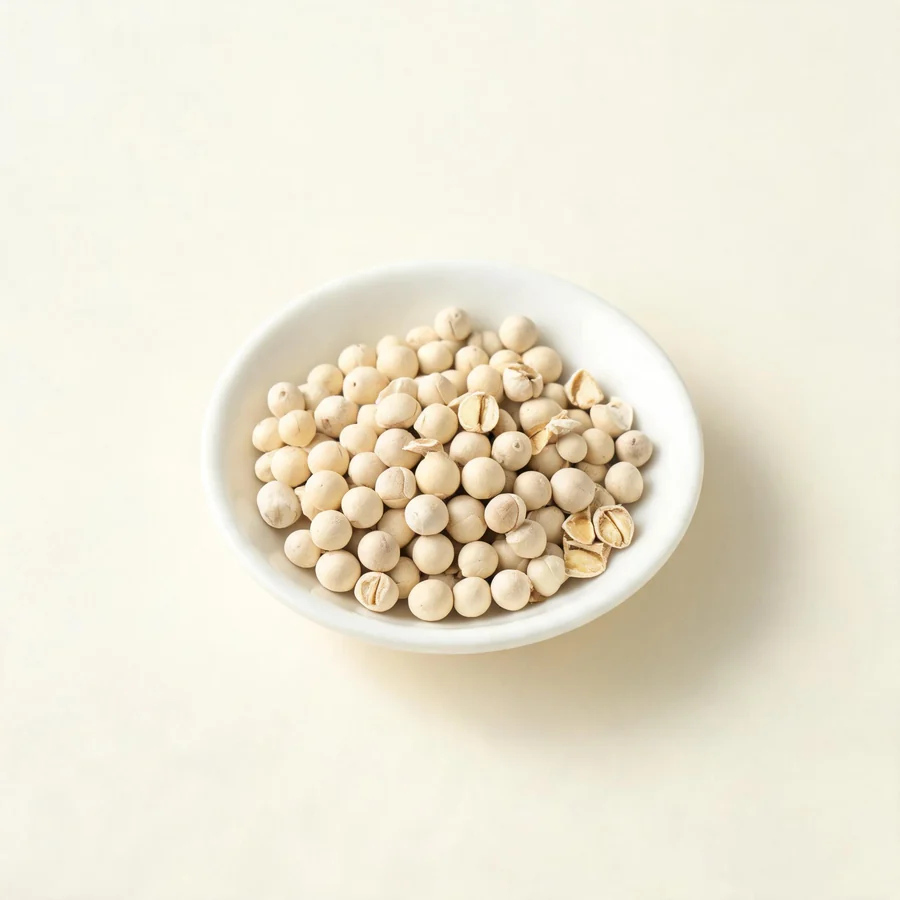
Skin profile
Where this herb sits in skin practice: the pattern it corrects, the skin signs it suits, and what it should not be used for.
Bai Jie Zi is for the cold, pale, quiet lesion: the lump that has been there for months, the swelling that never reddens, the sore that refuses to point. It is warm, drying and strongly dispersing, and its plaster is a controlled burn rather than a poultice. Hot, red, spreading lesions are the wrong pattern and the wrong use.
Skin signs that suggest it
- Pale, cool, painless lumps under the skin that have been present for weeks and are slow to change
- A cold, indolent swelling or abscess that is not red and will not come to a head
- Deep, fixed joint or limb swelling with heaviness, worse in cold and damp weather
- A sensation of numbness or fullness in the flesh with a greasy tongue coating
- A thin, white or greasy tongue coat with a deep or slippery pulse
When it is not the right herb
Not for anything hot, red and throbbing: a Yang-type boil, an acute abscess or a spreading cellulitis is the opposite of an indolent cold lump, and warming it with a plaster is harmful. Not for dry skin, a dry cough with no sputum or Yin deficiency with night sweats, because the seed is warm and drying. Not for broken, ulcerated or eczematous skin, and never for the face, the eyes, a child under two, or anyone with a mustard allergy. The raw paste is not a household remedy.
What it does for skin
Skin-relevant actions only. Each one describes a mechanism in TCM terms and what it looks like on the skin.
Disperses phlegm nodules in the flesh
The seed is the classical medicine for phlegm that has congealed between the skin and the membranes. On the skin that means a lump that is pale, cool and slow: a lipoma, a sebaceous cyst, a lymph node left enlarged after an infection, or an indolent cold abscess. The acrid warmth breaks the phlegm apart and the drying quality reduces the fluid that holds it together. It is a slow action, and a lump that is growing or changing needs a diagnosis first.
Warms and unblocks a cold, stagnant swelling
Where cold and damp have settled in the flesh, the result is a heavy, poorly defined swelling that aches in cold weather and does not redden. The seed warms the channels and disperses the obstruction, and it is combined with warming and blood-moving herbs rather than used alone. A hot, red, tender swelling is a different pattern and is made worse by warmth.
Draws blood to the surface as a counter-irritant
The traditional plaster works by producing a controlled inflammation over a deep cold lesion, on the reasoning that the new local heat draws the stuck phlegm outward. That is the theory, and the practice is a blister: the raw seed plus water plus skin makes mustard oil, which burns. It is used only by practitioners trained in the timing, and its modern justification is limited to the chemistry of the irritant rather than to any trial.
Dries the dampness that keeps a lesion indolent
A cold lump that stays soft and slow is often damp as well as phlegm. The seed's drying quality reduces that moisture, and it is included where cold-damp joint swelling or a stubborn lesion needs that dryness. The drying is strong, so it is balanced with herbs that protect the fluids and is not continued for long.
Skin conditions it is used for
Mapped to the condition pages on this site. The pattern column shows what the skin is doing when this herb is the right choice.
| Condition | Pattern | Why it suits | Typical setting |
|---|---|---|---|
| Subcutaneous nodules | Cold phlegm settled into a lump | A soft or firm lump under intact skin, pale and cool, that has been present for months is read as cold phlegm forming a lump rather than as a hot sore. The seed disperses that phlegm, and it is given in a warming formula such as Yang He Tang. A lump that is growing, fixed, painful or newly appeared needs medical assessment before any herbal treatment, because the same description can fit a serious lesion. | Yang He Tang, or with Ban Xia and Rou Gui in a warming phlegm formula |
| Sebaceous cysts | Phlegm-damp lodged in the skin | A small, smooth, skin-coloured swelling with a central pore fits the traditional description of a phlegm nodule. The seed is used in a warming, dispersing formula rather than as a plaster, and the aim is to settle a quiet cyst rather than to force it to drain. An inflamed, tender or rapidly enlarging cyst is infected or obstructed and needs a clinician, not a counter-irritant. | With Ban Xia, Chen Pi and Rou Gui in a phlegm-transforming formula |
| Cold skin swelling | Cold-Damp and Phlegm in the flesh | A pale, cool, heavy swelling that pits slightly and aches in damp weather is the cold-damp picture this seed suits. It warms the channels and dries the dampness, and it is combined with herbs that move Qi and Blood. A swelling that is hot, red, tender or spreading is infection and needs urgent assessment; a warming plaster on it is harmful. | With Rou Gui, Ma Huang and Gan Jiang in a warming formula |
| Cold, indolent abscess | Phlegm and Cold with deficient Qi, slow to suppurate | The yin-type sore is pale, cool, deep and slow, with little pus and no surrounding redness. The seed is included to disperse the cold phlegm and to help the lesion come to a point, in a formula that also warms and tonifies. A hot abscess with spreading redness, fever or pus needs drainage and antibiotics, and a blistering paste over it is dangerous. | Yang He Tang with Huang Qi and Dang Gui |
Combinations for skin
Herbs it is paired with when the skin, not an internal organ, is the target.
| Partner | Ratio | Why the pair is used |
|---|---|---|
| Rou Gui | 3 to 5 g Rou Gui with 6 to 10 g Bai Jie Zi | Rou Gui warms Yang and opens the vessels; the mustard seed, meanwhile, reaches cold phlegm lodged deep in flesh and bone. The two are used for the pale, indolent lump and for the joint that aches in cold weather, following the strategy of Yang He Tang: warm and harmonise rather than disperse. A hot, red swelling calls for the reverse approach. |
| Ban Xia | 9 g each | Both transform phlegm, but Pinellia works on phlegm that is moist and plentiful while mustard seed reaches the dry, congealed nodule under the skin. Together they are used for a lump that is soft, pale and slow, with a greasy coating and a heavy body. Pinellia is the safer of the two and takes the larger share when the digestion is delicate. |
| Lai Fu Zi | 6 to 10 g each | Radish seed descends Qi and resolves food stagnation, and mustard seed dissolves the phlegm that accompanies a stagnant, overloaded digestion. The pair suits an older person with a heavy chest, a bloated abdomen and a pale lump, where the phlegm and the stagnation feed each other. The mustard seed is the stronger and is kept at the lower weight. |
| Huang Qi | 15 to 30 g Huang Qi with 6 to 10 g Bai Jie Zi | Huang Qi tonifies Qi and supports the surface, and the seed disperses the cold phlegm that a deficient person cannot move. The combination is used for a chronic indolent sore in someone who is tired and slow to heal, where dispersing alone would drain the patient. The tonifying herb leads and the dispersing herb is kept small. |
Formulas where it leads
- Yang He Tang (阳和汤) - The warming formula for yin-type sores: pale, cold, deep lesions that are slow to suppurate. Bai Jie Zi disperses the cold phlegm while Rou Gui, Ma Huang and Gan Jiang warm the channels and Huang Qi and Dang Gui support Qi and Blood. It is used for indolent lumps and cold abscesses, and it is the opposite of a formula for a hot, red boil.
Topical use
The external use of Bai Jie Zi is a controlled blister. Raw seed is crushed, mixed with water, vinegar or ginger juice into a paste, and applied over a cold, deep swelling for a set number of minutes. The mustard oil that forms reddens the skin, then raises a blister, and the intention is to draw heat and blood to a lesion that has neither. It is a practitioner's technique with a real burn risk, and it is described here so that it is recognised rather than copied.
| Preparation | How and when it is used |
|---|---|
| Counter-irritant paste | Raw seed is ground and mixed with a little water or vinegar to a thick paste, spread on a small square of gauze and laid over the lesion. A practitioner sets the site and the time, checks the skin every few minutes and removes the paste at the first strong sting. It is never left in place simply for convenience. |
| Summer point application | The traditional winter-disease-treated-in-summer practice places the paste on defined back points for a timed interval. It belongs to trained clinic practice, uses measured amounts, and is not a home treatment. Children are left for shorter times and the skin is checked throughout. |
Patch test and cautions
This is not a home remedy. The paste can blister, burn and suppurate, and a blister can scar or become infected. Never apply it to the face, the eyes, broken or eczematous skin, the abdomen or lower back in pregnancy, or to a child under two. Do not cover it with an occlusive dressing and do not leave it on while sleeping. Stop at once if the pain is severe or the skin breaks, and get medical help for a large or infected burn. A person with a mustard allergy should not use it at all.
Safety for skin use
What to check before recommending or using it, including the cautions that matter most for skin patients.
Do not use, or use with caution
- Hot, red, throbbing lesions. A Yang-type boil, acute abscess or cellulitis is the opposite of an indolent cold lump, and warming or blistering it can spread infection and cause scarring.
- Dry skin, dry cough or Yin deficiency with night sweats. The seed is warm and drying and consumes fluids that are already short.
- Broken, ulcerated or eczematous skin, the face, and children under two. The isothiocyanates irritate mucous membranes and broken skin, and a child's skin burns faster.
- Mustard allergy, peptic ulcer or inflammatory bowel disease. The irritant chemistry affects the gut as well as the skin, and a known mustard sensitivity is an absolute reason to avoid the seed.
Pregnancy and breastfeeding
Avoid taking it internally during pregnancy unless a practitioner has prescribed it, and never put the paste on the abdomen or lower back. The concern is its warming, dispersing strength and the way isothiocyanates stimulate smooth muscle, not any recorded injury. The seed is not on the classical list of forbidden herbs, but the blistering application has no place in pregnancy at all. Breastfeeding data are thin, and the pungent compounds might in theory enter milk and upset an infant's digestion, so use is limited to a clear indication, the smallest dose and a short course.
Interactions
- Thyroid medication. Some mustard glucosinolates degrade to thiocyanate, and thiocyanate competes with iodine for uptake by the thyroid. An occasional medicinal dose is unlikely to matter, but heavy or long use in a patient taking levothyroxine, carbimazole or propylthiouracil should be discussed with the prescriber.
- Anticoagulants and blood pressure medicines. In animals, mustard oil has changed vascular tone and blood pressure, so an additive effect with warfarin or antihypertensives is theoretically possible. No case has been documented, which makes this a reason for disclosure rather than avoidance.
- Acid-suppressing drugs. Because the seed irritates the stomach lining, it conflicts with proton pump inhibitors and H2 blockers, and a patient on long-term acid suppression may notice more stomach discomfort rather than less.
Allergy and patch testing
Mustard allergy is well recognised and can be severe, including anaphylaxis to mustard in food. A person who reacts to mustard, horseradish or wasabi should not use the seed internally or on the skin, and a patch test is not a substitute for avoiding it in that case. A first plaster should be applied by a practitioner with a small test area, and any spreading redness, swelling or wheeze after use needs medical attention.
General safety references
General references for herbal hepatotoxicity and herb-drug interactions; they are not specific to this herb.
- Review article: Herbal hepatotoxicity - an update on traditional Chinese medicine preparations. Alimentary Pharmacology & Therapeutics, 2014. PMID: 24844799.
- Interactions between herbal medicines and prescribed drugs: an updated systematic review. Drugs, 2009. PMID: 19719333.
- Warfarin and food, herbal or dietary supplement interactions: a systematic review. British Journal of Clinical Pharmacology, 2021. PMID: 32478963.
Evidence
The classical record is quoted with its source. The modern note states the level of evidence plainly.
Classical record
味辛,温,无毒。归鼻。主除肾邪气,利九窍,明耳目,安中。久服温中。又白芥子,主射工及疰气发无恒处,丸服之;或捣为末,醋和涂之,随手验也。
Acrid and warm, free of poison, it is said to enter the nose. It removes pathogenic Qi from the Kidney, opens the nine orifices, brightens hearing and sight and settles the centre, and long use warms the middle. White mustard seed also treats the toxin of water creatures and wandering pathogenic Qi that surfaces unpredictably: take it in pills, or crush it to a powder and apply it with vinegar, where the effect is said to follow at once.
Ming Yi Bie Lu (Supplement to the Classic of Materia Medica) - The vinegar paste is already here, with its claim of an immediate result, which is the ancestor of the counter-irritant plaster.
白芥子辛能入肺,温能发散,故有利气豁痰、温中开胃、散痛消肿、辟恶之功。
The seed is acrid, and acridity carries it to the Lung; it is warm, and warmth disperses. Hence it moves Qi and clears phlegm, warms the middle and opens the appetite, scatters pain, reduces swelling and drives off malign influences.
Ben Cao Gang Mu (Compendium of Materia Medica), Li Shizhen - A compact statement of every action the seed is still used for, including the reduction of swelling that the plaster exploits.
白芥子善化痰涎,皮里膜外之痰无不消去,实胜于半夏、南星。
The seed is skilled at dissolving phlegm and mucus; there is no phlegm between the skin and the membranes that it will not disperse. In truth it surpasses Pinellia and Arisaema for this.
Ben Cao Xin Bian (New Compilation of Materia Medica), Chen Shiduo - The origin of the phrase that still defines the seed's niche, and the reason it is chosen for lumps in the flesh.
Modern evidence
Evidence status
- No clinical trial of Bai Jie Zi in skin disease was found for this page. The nodule and cold-sore uses rest on the traditional record, and no claim of proven benefit is made.
- The irritant chemistry is established rather than speculative. The seed holds the glucosinolate sinalbin and the enzyme myrosinase; crushed in water, these produce p-hydroxybenzyl isothiocyanate, the mustard oil responsible for the redness and blistering. That is why the plaster works, and it is also why it burns.
- Mustard oil is a recognised skin irritant, and in rodents its oral lethal dose is low, roughly 128 to 134 milligrams per kilogram. Those are toxicology findings, not evidence that the seed treats a nodule, and they are the reason the raw paste is a practitioner-only preparation.
PubMed records
Selected real PubMed records for this herb's species or its constituents, chosen by species name and title relevance. They are references for the non-TCM discussion above, not proof that the herb treats any skin condition.
- Sinapis Semen: A review on phytochemistry, pharmacology, toxicity, analytical methods and pharmacokinetics.. Frontiers in pharmacology, 2023. PMID: 37124205 (safety record).
- White Mustard (Sinapis alba L.) Oil in Biodiesel Production: A Review.. Frontiers in plant science, 2020. PMID: 32300349 (pharmacology or review record).
Dose and forms
Skin-practice dosing and the preparations that suit skin complaints.
| Form | Dose and notes |
|---|---|
| Decoction | 3 to 6 g daily for a mild cold-phlegm picture, and 6 to 10 g for a heavier obstruction with a nodule or joint swelling. The seed is crushed before decocting and is usually the stir-fried form, which is gentler on the stomach. |
| Stir-fried or raw | Internal use calls for the dry-fried seed. Heating destroys the enzyme, so the stomach is spared, while the glucosinolate survives to be released slowly. The raw seed belongs to plasters, where the enzyme must stay active to make the mustard oil. |
| Plaster | A practitioner sets the amount and the time; it is measured in grams applied rather than swallowed, and the skin is checked every few minutes. This is not a dose that can be given as a household instruction. |
The dose stays small because contact with water generates mustard oil, which is fiercely irritant. In a decoction, three to ten grams of the fried seed acts as a warming medicine for phlegm; the same seed ground raw and moistened becomes a paste that blisters within thirty minutes. More than about fifteen grams by mouth has been followed by nausea, vomiting and abdominal pain. A sensitive stomach does better with the fried form, which gives up its irritant gradually.
Citations and further reading
Only real sources are listed: the classical materia medica passages quoted above, and the source works behind the botanical and safety statements.
- Ming Yi Bie Lu (Supplement to the Classic of Materia Medica), Tao Hongjing, Southern and Northern Dynasties - classical entry quoted above.
- Ben Cao Gang Mu (Compendium of Materia Medica), Li Shizhen, 1578 - classical entry quoted above.
- Ben Cao Xin Bian (New Compilation of Materia Medica), Chen Shiduo, Qing dynasty - classical entry quoted above.
- Pharmacopoeia of the People's Republic of China, Semen Sinapis monograph - accepted species, part and quality requirements.
- Modern evidence statement: based on toxicological and phytochemical literature on sinalbin, myrosinase and p-hydroxybenzyl isothiocyanate, presented as a statement about the level of evidence rather than as a cited skin finding.
- Botanical description: botanical literature on Sinapis alba, Brassicaceae, including the distinction from Brassica juncea.
Educational reference for qualified practitioners. This page is not medical advice, and skin conditions should be diagnosed by a clinician before treatment.