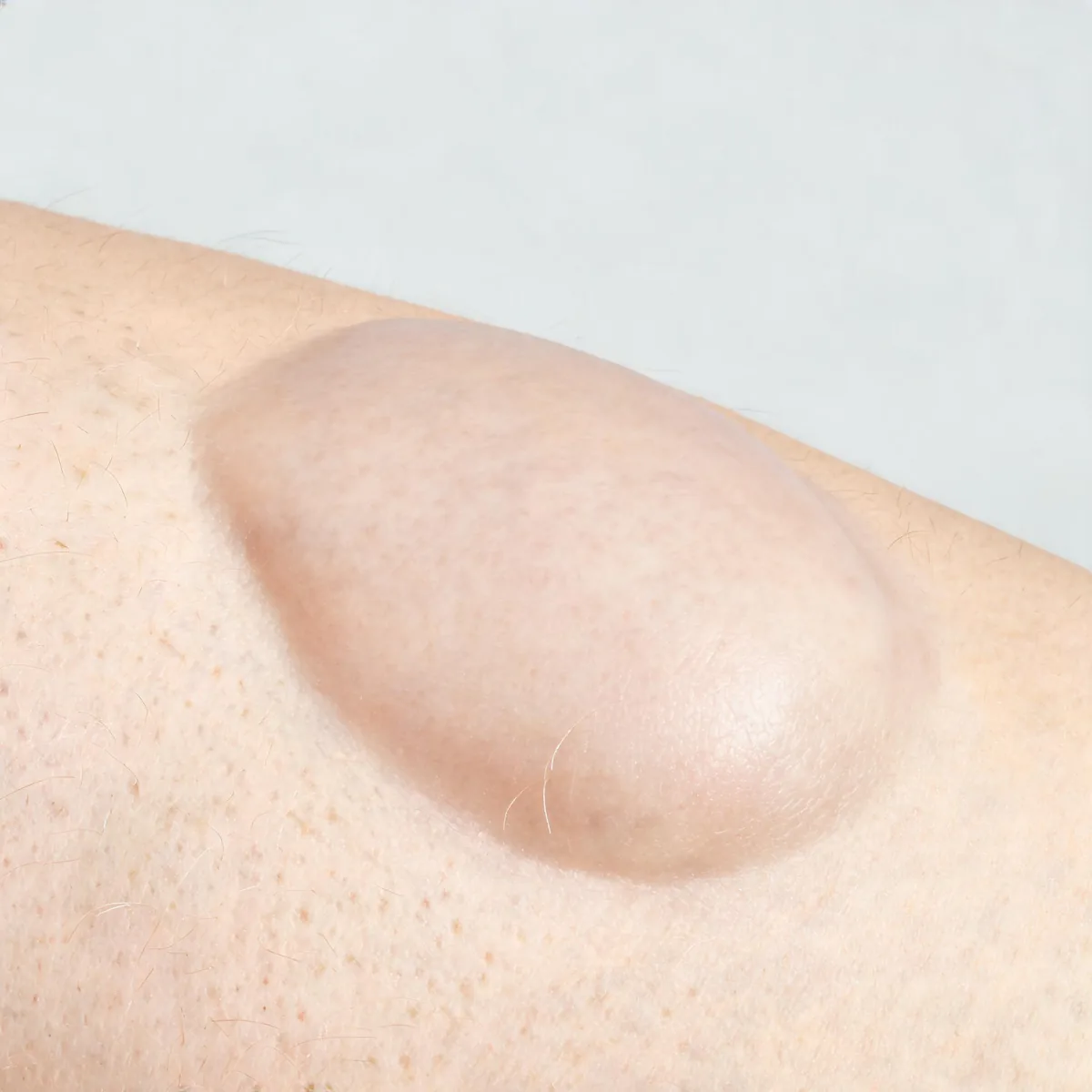
Understanding Skin swelling
The Spleen is described as the central organ for transforming and transporting fluids. When it weakens from diet, overwork or constitution, dampness accumulates under the skin and produces swelling.
The patterns differ by temperature and texture. Red, hot swelling that may ooze is Damp-Heat. Sudden itchy swollen patches that move around, worse in damp windy weather, are Wind-Damp, the pattern behind hives-like swelling.
Heavy puffy swelling that is neither red nor hot, with a thick greasy coating and a foggy head, is Damp-Phlegm. Pale soft swelling that pits easily and comes with fatigue is Qi and Blood deficiency.
Cold pitting swelling of the lower legs and ankles, with early-morning diarrhoea, cold hands and a sore cold lower back, is Kidney and Spleen Yang deficiency. Fixed dark swelling with stabbing pain that does not pit is Blood stagnation.
Each organ leaves its own signature on the swelling. The Lungs govern the routes by which water moves and push defensive Qi out to the surface, so a passing Wind can push Dampness or Heat through the surface and produce a swelling that appears within hours. The Kidneys supply the warmth that every fluid transformation depends on, and when that warmth is thin the water settles quietly in the ankles and lower legs. The Liver adds a fourth route: Qi held under pressure for too long lets Blood slow behind it, and the result is a hard, dark, painful lump rather than a soft puffiness.
What separates these patterns is not the amount of fluid but its temperature, colour and texture. A shiny red patch that feels hot belongs to Damp-Heat. A pale swelling that dents under the thumb and fills slowly belongs to deficiency, because the tissue has lost its tone. Swelling that is cold to the touch and worsens through the day belongs to Yang deficiency, while one that keeps no dent at all belongs to stasis. Because the same conventional label of oedema or urticaria can sit behind any of them, the pattern rather than the diagnosis decides the treatment, and correcting that imbalance is what reduces the tendency to swell again.
Conventional view
In Western medicine the swelling is described as oedema or angioedema: fluid collecting in the tissue just beneath the skin. The cause may be an allergic reaction, inflammation, infection, poor circulation, a kidney or heart problem, or a medication. It can be confined to one area or spread widely, and on examination it may be soft and pitting or firm and non-pitting. Assessment combines the history and examination with blood tests, allergy testing or imaging where a cause is not obvious.
Treatment follows the cause. Antihistamines and corticosteroids are used for allergic swelling, and diuretics are prescribed where fluid retention comes from heart, kidney or liver disease. Infection is treated with antibiotics, and compression stockings or elevation of the limb are used where circulation is poor. In every case the aim is to relieve the symptom while identifying and treating the underlying disease.
The limits are worth knowing. Medication reduces swelling but does not stop it returning once the drug is withdrawn. Diuretics can disturb electrolytes and lose effect over time, and long courses of corticosteroids carry weight gain, bone thinning and immune suppression. Antihistamines quiet the allergic response without changing the tendency to produce it. That is the gap a pattern-based approach tries to fill, by working on the internal conditions that allow fluid to gather in the first place.
Selected PubMed records
Real PubMed records for the conventional discussion above, selected by condition name and title relevance. They are references, not a claim that any treatment is proven for this condition.
- Urticaria and Angioedema.. , 1990. PMID: 21250053.
- The prevalence, incidence and risk factors of medical adhesive-related skin injury in adult inpatients: A systematic review and meta-analysis.. Journal of tissue viability, 2024. PMID: 39462698.
How it connects
The conditions that travel with skin swelling tend to share one root: a Spleen too weak to move fluids, producing Dampness that Wind or Heat then pushes towards whichever surface is weakest. Atopic dermatitis, allergic rhinitis and asthma are the usual companions, and in TCM terms they are three expressions of one weakness, since the Lung governs the skin and the nose while the Spleen supplies the Dampness that rises into both. When Damp-Heat dominates, the skin is red and hot and the rhinitis produces yellow discharge or the asthma thick yellow sputum. When Wind-Damp dominates, the swelling and the sneezing are both itchy and both come and go. Formulas such as Xiao Feng San address the shared pattern, and tonics such as Ba Zhen Tang are used when the root is deficiency, with Shi Pi Yin where cold dominates.
How it is assessed
The practitioner assesses temperature, pitting and distribution, and looks at digestion and energy.
What a practitioner looks for
- Temperature: hot and red points to Damp-Heat; cold points to Yang deficiency.
- Pitting: swelling that pits easily suggests deficiency of Qi or Yang; swelling that does not pit suggests stasis.
- Movement: swelling that shifts location points to Wind-Damp.
- Systemic signs: breathing difficulty, facial or throat swelling, or swelling with reduced urine output is urgent.
A consultation usually opens with questions rather than with the skin: when the swelling began, whether it moves, what makes it worse, and how digestion and energy have been lately. The answers narrow the field quickly. Swelling that arrives after wind or a change of weather, itches and shifts from one place to another is read as Wind-Damp, and a floating pulse with a thin white coating supports that reading. Swelling that feels heavy and boggy, dents slightly and comes with a thick greasy coating is read as Damp-Phlegm, where the Spleen is failing to move fluids and the coating shows the backlog.
Looking comes next. The practitioner notes colour, warmth, the tightness of the skin and whether pressure leaves a dent, then checks the tongue body and coating and the strength of the pulse at each position. A pale thin tongue with a weak pulse in someone who looks tired points to Qi and Blood deficiency. A dusky tongue with purple spots, distended veins beneath it and a choppy pulse points to Blood Stagnation, and a history of injury or long inflammation usually accompanies it. Cold pitting swelling of the ankles with a deep slow pulse and a puffy pale tongue belongs to Kidney and Spleen Yang deficiency, and loose stools before dawn carrying undigested food often complete the picture.
TCM patterns in Skin swelling
Three observations separate the six patterns: how warm the swelling feels, whether it keeps a dent when pressed, and how far it spreads. Warmth, redness and a sticky surface mean Damp-Heat, an excess pattern that arrives and settles fast. Sudden itchy swellings that wander between sites and worsen in damp windy weather are Wind-Damp. Doughy swelling that is neither red nor hot, with a greasy coating and a foggy head, is Damp-Phlegm, from a Spleen that cannot finish its task. Deficiency looks different. Pale soft swelling that dents easily alongside tiredness points to thin Qi and Blood. Cold swelling that pits deeply at the ankles, with cold limbs and loose early-morning stools, means Yang no longer warms water. Blood Stagnation is easiest to miss: dark skin, fixed stabbing pain and no dent under pressure. Mixed pictures are common, and an old deficiency often carries some stasis.
| Pattern | Key signs | The itch | Tongue | Main formula |
|---|---|---|---|---|
| Damp-Heat | Red hot swollen skin; Oozing yellow fluid or stickiness | Not specified | Body: Red, often swollen with teeth marksCoat: Yellow, greasy and thick, usually in the middle and at the root | Not specified |
| Wind-Damp | Swelling moves to different areas | Sudden itchy swollen patches | Body: Normal or slightly pale, possibly swollenCoat: White and greasy | Not specified |
| Damp-Phlegm | Heavy puffy swelling, not red or hot | Not specified | Body: Pale, swollen and teeth-marked, wet-lookingCoat: Thick, white and greasy | Not specified |
| Qi and Blood Deficiency | Pale soft swelling that pits easily | Not specified | Body: Pale, possibly thin or with teeth marksCoat: Thin white | Not specified |
| Kidney and Spleen Yang Deficiency | Cold pitting swelling of legs and ankles | Not specified | Body: Pale, swollen and teeth-markedCoat: White and slippery | Not specified |
| Blood Stagnation | Fixed stabbing pain; Dark purplish or dusky skin | Not specified | Body: Purple, dusky or with dark stasis spots; sublingual veins dark and distendedCoat: Often thin white; a yellow coat would suggest Heat as the cause | Not specified |
Damp-Heat
Red hot swollen skin that may ooze and feel sticky.
Dampness is heavy and sinks, while Heat rises and speeds everything up, and when the two combine inside the body they lodge wherever fluid already gathers. In the skin this produces a patch that is red, hot and tight, and because Dampness is sticky the surface may weep a yellow fluid or feel clammy under the finger. The pattern usually builds from a diet of rich, fried or sweet food, or from months spent in a hot humid climate, and the Spleen is left unable to move the fluid on. Heaviness in the limbs, a bitter or sticky taste in the mouth and a poor appetite with loose sticky stools belong to the same picture.
The tongue is red with a yellow greasy coating, sometimes swollen with teeth marks, and the pulse is soggy and rapid or slippery and rapid. Spicy and greasy meals, alcohol, humid weather, overeating and stress all deepen the redness, while a cool room, a light bland diet, barley water, rest and a cool compress ease it. Long Dan Xie Gan Tang is the formula named for this presentation, and the key herbs are Long Dan Cao, Huang Qin, Zhi Zi and Fu Ling. The points used are Quchi (LI-11), Yinlingquan (SP-9), Sanyinjiao (SP-6) and Xuehai (SP-10).
Signs
- Red hot swollen skin
- Oozing yellow fluid or stickiness
- Heavy sensation in the limbs
- Sticky or bitter taste
- Dark scanty urine
Diet and lifestyle for this pattern: Eat cooling, Dampness-draining food such as mung beans, barley, cucumber and bitter greens, and avoid greasy, spicy and sweet food as well as alcohol. Keep the skin clean and dry and out of hot humid environments, and walk gently to move Qi and drain Dampness.
Wind-Damp
Sudden itchy swelling that moves around.
Wind moves quickly and changes direction, while Dampness is heavy and stays where it lands, so together they behave unlike either alone. Wind carries Dampness into the space between skin and muscle, where it blocks the free movement of defensive Qi and traps fluid in place. The swelling then appears suddenly, itches intensely and moves from one part of the body to another, which is the signature of an exterior pattern rather than a deep one. Mild chills, a low fever, an aversion to draughts and a heavy feeling in the limbs or head commonly travel with it.
The tongue is normal or slightly pale with a white greasy coating and may be a little swollen, and the pulse floats and feels soft or soggy. Damp rainy weather, wind, heavy or greasy food, cold raw food and overexertion provoke it, while warmth, dry weather, a room without draughts, light bland meals and gentle movement bring relief. Xiao Feng San is the formula named here, built on Fang Feng, Jing Jie, Chan Tui and Fu Ling. The points are Fengchi (GB-20), Quchi (LI-11), Xuehai (SP-10) and Sanyinjiao (SP-6).
Signs
- Sudden itchy swollen patches
- Swelling moves to different areas
- Worse in damp windy weather
- Mild chills and low-grade fever
- Aversion to wind and drafts
Diet and lifestyle for this pattern: Avoid Dampness-producing food such as dairy, greasy meals and excessive sweets, which can worsen fluid buildup. Stay warm and dry, protect the skin from wind and draughts, and keep exercise gentle and consistent such as walking to circulate Qi and drain Dampness without overstraining.
Damp-Phlegm
Heavy puffy swelling with a foggy head and greasy coating.
When the Spleen is too weak to transform what it receives, fluid gathers as Dampness, and Dampness that stands long enough thickens into Phlegm. Phlegm is heavier and more viscous than plain damp and settles where movement is slowest, which is often just beneath the skin. The result is a swelling that feels puffy and doughy, shows no redness or heat, and leaves a shallow dent when pressed. Because the Spleen also governs the flesh of the limbs, heaviness, foggy thinking and a heavy head travel with it, and the appetite is usually poor with some bloating and loose stool.
The tongue is pale and swollen with tooth marks and a thick white greasy coat that looks wet, and the pulse is slippery, often soggy at the right middle position. Humid weather, overeating rich or greasy food, a sedentary routine, cold raw food and dairy all worsen the puffiness, while warmth, dry weather, light exercise, cooked food and barley or ginger tea help. Wei Ling Tang is the formula named for this pattern, and its key herbs are Ban Xia, Fu Ling and Bai Zhu. The points are Fenglong (ST-40), Yinlingquan (SP-9) and Zusanli (ST-36).
Signs
- Heavy puffy swelling, not red or hot
- Worse in damp humid weather
- Poor appetite with bloating
- Thick white greasy coating
- Fatigue with brain fog
Diet and lifestyle for this pattern: Avoid Dampness-producing food such as dairy, sugar, greasy fried food and excessive cold or raw items. Favour warm cooked meals with spices such as ginger, cardamom and a little black pepper, include barley, adzuki beans and Job's tears to drain Dampness gently, and walk lightly and regularly to move Qi.
Qi and Blood Deficiency
Pale soft swelling that pits, with fatigue.
Skin holds its shape because Qi and Blood keep arriving with nourishment and carry away what is no longer needed. When both are thin, from overwork, poor food, a long illness or blood loss, the tissue loses that support and fluid collects in the loosened spaces. The swelling that follows is pale, soft and doughy and leaves a dent that fills slowly. It is not red, hot or painful, and its defining feature is timing: it is worse after exertion and better after rest and a good meal, often with dizziness, a poor appetite and a pale complexion alongside.
The tongue is pale, perhaps thin or marked by teeth, with a thin white coating, and the pulse is fine and weak. Overwork, irregular or poor food, cold raw food and a long illness make it worse, while sleep, warm nourishing meals, walking or tai chi and stress reduction help. Ba Zhen Tang is the formula indicated, with Dang Gui, Bai Zhu and Fu Ling among its herbs. The points used are Zusanli (ST-36), Sanyinjiao (SP-6) and Xuehai (SP-10).
Signs
- Pale soft swelling that pits easily
- Fatigue worse with exertion
- Dizziness or light-headedness
- Poor appetite
Diet and lifestyle for this pattern: Eat warm, cooked, nutrient-dense food such as bone broth, congee with red dates and goji berries and lightly steamed vegetables, and avoid raw, cold and greasy food that strains the Spleen. Rest takes priority with gentle movement such as walking or tai chi, since overexertion depletes the Qi and Blood the skin needs.
Kidney and Spleen Yang Deficiency
Cold pitting swelling of the lower legs with Yang deficiency signs.
Yang is the fire that turns water into mist and lifts it upward. Kidney Yang is the root of that fire and Spleen Yang is the pump that distributes what it produces, so when both decline water stops moving and pools where gravity takes it. Swelling of this kind is cold to the touch, pits deeply and shows first in the ankles and lower legs, worse as the day goes on. Deep fatigue, cold hands and feet, a cold sore lower back with weak knees, and loose stools before dawn containing undigested food complete the picture.
The tongue looks puffy and pale, its edges scalloped, and it carries a white slippery coat; the pulse is deep, weak and slow, feeblest at the rear and right middle positions. Cold damp weather, raw and iced food, overwork, prolonged standing and stress all deepen the swelling, while warmth, a warm compress, lying down with the legs raised, cooked soups and moxibustion on the lower back relieve it. Shi Pi Yin and Zhen Wu Tang are the formulas named, using Zhi Fu Zi, Gan Jiang, Bai Zhu and Fu Ling. The points are Shenshu (BL-23), Pishu (BL-20), Mingmen (DU-4), Sanyinjiao (SP-6) and Zusanli (ST-36).
Signs
- Cold pitting swelling of legs and ankles
- Early-morning diarrhoea with undigested food
- Deep fatigue and feeling cold
- Cold hands and feet
- Sore cold lower back
Diet and lifestyle for this pattern: Eat warm, cooked, easy food such as soups, stews and congees, and avoid raw, cold and iced food and drinks that dampen digestive fire. Include warming spices such as ginger, cinnamon and black pepper, keep the body, especially the lower back and abdomen, warm, walk gently to move fluids without overexertion, and moxibustion on the lower back and abdomen can help under professional guidance.
Blood Stagnation
Fixed dark swelling with stabbing pain that does not pit.
Blood that has been damaged and then left stagnant collects in the smallest vessels. Instead of fluid spreading evenly, the trapped blood forms a discrete, hard swelling that feels like a lump and keeps no dent, and the pain is fixed and stabbing rather than merely sore. It is often worse at night, when circulation slows and Yin dominates. An injury, an operation or a long inflammatory condition usually comes first, and the local channels are left narrowed so that the area never quite returns to normal.
The tongue is purple or dusky with stasis spots and dark distended veins beneath it, and the pulse is either choppy or wiry. Cold weather, sitting still for long periods, stress and the night hours make it worse, while warmth, gentle movement and massage ease it. Xue Fu Zhu Yu Tang and Tao Hong Si Wu Tang are the two formulas named, with Tao Ren, Hong Hua, Chuan Xiong as their key herbs. The points are Xuehai (SP-10), Sanyinjiao (SP-6) and Taichong (LR-3).
Signs
- Fixed stabbing pain
- Dark purplish or dusky skin
- Hard nodules or lumps
- Worse at night
- Swelling that does not pit
Diet and lifestyle for this pattern: Avoid cold and raw food, which can congeal Blood. Include warming spices such as turmeric, ginger and cinnamon to encourage circulation, keep moving gently such as walking or stretching so Blood flows, and avoid prolonged sitting or standing in one position.
Treatment approach
How the tradition treats skin swelling, with the herbs, formulas and points used for it.
Principles
- Drain dampness and clear heat where swelling is hot and oozing.
- Dispel Wind-Damp where swelling is sudden, itchy and moving.
- Warm and support the Spleen and Kidney Yang where swelling is cold and pitting.
- Move Blood where swelling is dark, fixed and non-pitting.
- There is a root and a branch in every case, and their order decides the prescription. The branch is the fluid currently sitting in the tissue, which is drained, dispersed or moved first so that the person gets relief; the root is the weakness or pathogen that keeps producing it, treated afterwards or at the same time in a smaller dose. Hot swellings are handled with cooling, bitter, draining herbs over a short course, while deficiency pictures are handled slowly with tonics, because pushing fluid out of a depleted body costs more Qi than it saves. Where a deficient person flares with Damp-Heat, the flare is treated first and the tonic resumed once the heat has cleared.
Herbs used
Formulas
- Long Dan Xie Gan Tang
- Xiao Feng San
- Wei Ling Tang
- Ba Zhen Tang
- Shi Pi Yin
- Zhen Wu Tang
- Xue Fu Zhu Yu Tang
- Tao Hong Si Wu Tang
Acupoints
- LI-11 (Quchi)
- SP-9 (Yinlingquan)
- SP-6 (Sanyinjiao)
- SP-10 (Xuehai)
- GB-20 (Fengchi)
- ST-40 (Fenglong)
- ST-36 (Zusanli)
- BL-23 (Shenshu)
- BL-20 (Pishu)
- DU-4 (Mingmen)
- LR-3 (Taichong)
What to expect
- Acute swelling from heat or wind is described as settling within days to weeks.
- Deficiency and stagnation patterns take longer and need constitutional treatment.
- Swelling with breathing difficulty or reduced urine needs emergency assessment.
- Expect the pattern to be reviewed rather than fixed once and forgotten. Hot itchy swelling usually settles within one to two weeks of consistent herbs and acupuncture. Deficiency swelling often changes before it shrinks: sleep, digestion and the heaviness in the limbs improve first, with the visible puffiness following over a month or more, and a maintenance formula or a review at the change of season is a normal part of holding the result rather than a sign that treatment has failed.
Safety and when to get help
Seek medical help urgently for
- Sudden swelling of the face, lips, tongue or throat.
- Swelling with difficulty breathing or chest tightness.
- Swelling with reduced urine output, or swelling of one leg that is hot and painful.
For anything severe, sudden or spreading quickly, read when a skin problem needs urgent care.
Cautions
- Do not delay emergency care for facial or throat swelling.
- Persistent leg swelling needs medical review of heart, kidney and venous causes.
- Diuretics and other prescribed medicines should not be changed without advice.
Using this alongside conventional care
- TCM is described as complementary to conventional care: prescribed treatment continues alongside herbs, with medical review for the underlying cause of swelling.
- Herbs sit alongside conventional care rather than replacing it, and the prescribing doctor should know about them. The caution that matters most is fluid: many formulas for swelling promote urination in order to drain dampness, and combined with a diuretic they can push someone towards dehydration or an electrolyte disturbance, so the practitioner needs the exact diuretic dose and a plan to review it. Antihistamines and topical steroids do not usually interact with the herbs used here, but warfarin, aspirin and clopidogrel do interact with Blood-moving herbs including Tao Ren, Hong Hua, Chuan Xiong, and those combinations need medical supervision. No prescribed medicine should be stopped or reduced without the prescriber's agreement.
Diet and lifestyle
- Avoid cold, raw, greasy and sweet food, which are said to burden the Spleen and worsen dampness.
- Across all six patterns the same foundation applies: warm cooked meals, modest portions, and little that is cold, raw, greasy or sweet, since those are the foods that leave the Spleen with work it cannot finish. Barley, adzuki beans, Job's tears and winter melon gently drain dampness and suit almost anyone with swelling. From there the additions follow the pattern. Mung beans, cucumber and bitter greens cool Damp-Heat, while dairy and heavy sweets are dropped in Damp-Phlegm and Wind-Damp. Bone broth, congee with red dates and lightly steamed vegetables rebuild Qi and Blood, soups and stews with ginger and cinnamon warm Yang deficiency, and turmeric, ginger and cinnamon with an avoidance of cold food suit Blood Stagnation.
If you're pregnant
During pregnancy the Damp-Heat and Wind-Damp pictures may be more pronounced, because blood volume rises and hormonal shifts change fluid balance. Herbs that move the blood, among them Tao Ren, Hong Hua, Chuan Xiong, are strictly avoided, since they may stimulate the uterus, and strongly bitter-cold formulas such as Long Dan Xie Gan Tang are not used. Milder options such as Xiao Feng San may be considered with professional supervision, and Ba Zhen Tang is regarded as generally safe where Qi and Blood are deficient.
Acupuncture avoids points that can promote labour, including LI-4 and SP-6 and any point on the lower abdomen, and needling elsewhere is kept gentle. Moxibustion over the lower back may help where Yang needs support. Swelling in pregnancy always needs medical review as well, because raised blood pressure and clot risk are assessed conventionally.
If you're breastfeeding
Some bitter-cold herbs pass into breast milk, and Long Dan Cao, Huang Qin, Zhi Zi may cause loose stools or colic in a nursing infant, so they are used sparingly or replaced with gentler draining herbs such as Fu Ling with Yi Yi Ren. Xiao Feng San is usually well tolerated. Fluid intake matters more than usual when diuretic herbs form part of the formula, because milk supply depends on it.
Acupuncture carries no risk of transfer to the infant and is a reasonable first choice during lactation, and external cooling compresses give local relief without any systemic exposure.
If treating a child
In children the picture is often Damp-Phlegm or Wind-Damp, because the Spleen is immature and food allergy is a frequent trigger, so dietary review does much of the work. Xiao Feng San and Wei Ling Tang are considered appropriate at roughly one third to one half of the adult dose, adjusted for age and weight.
Needling is shallow and uses fewer points, and tuina may replace it in younger children. A child who cannot describe the swelling is assessed largely by observation of the skin and behaviour, with the tongue and pulse still read as in an adult.
If treating an elderly patient
In older patients the deficiency pictures dominate. Pale pitting swelling with fatigue and an intolerance of cold is the usual presentation, and the pattern found is Qi and Blood deficiency or Kidney and Spleen Yang deficiency. Ba Zhen Tang and Shi Pi Yin are the mainstays, given at about two thirds of the standard adult dose so as not to overwhelm a weaker digestion.
Because older patients often take several medicines, herb and drug interactions need checking carefully, especially where diuretics or anticoagulants are involved. Courses run longer and stimulation is gentler than in younger adults, and progress is judged on energy and digestion as much as on the swelling itself.
Urgent-sign guidance is based on standard sources: NHS anaphylaxis, NHS cellulitis, NHS Stevens-Johnson syndrome, NHS melanoma.
Evidence
Evidence status
Compiled for this page from the classical and modern literature; not a systematic review, so treat it as a pointer to sources rather than clinical guidance.
The evidence is moderate for swelling of the urticarial type. A meta-analysis of 18 randomised trials with over 1,500 patients found a classic wind formula combined with antihistamines improved response rates and reduced recurrence compared with antihistamines alone, and a four-week trial in 72 patients found real acupuncture reduced urticaria activity and itch intensity compared with sham. Swelling that is one-sided, painful or accompanied by breathlessness needs urgent assessment.
Most of the research concerns the urticarial and angioedema end of the spectrum. A meta-analysis of 18 randomised trials with more than 1,500 patients found Xiao Feng San combined with antihistamines improved the overall response rate and lowered recurrence against antihistamines alone, and a sham-controlled four-week trial of 72 patients reported lower urticaria activity and itch scores on real acupuncture. A review of 28 trials of Chinese herbal medicine in atopic dermatitis, much of it using herbs that also appear in Xiao Feng San and Long Dan Xie Gan Tang, reported lower severity and swelling scores, although the authors rated study quality as generally low. Most of the trials are Chinese and appear in Chinese-language journals, and larger multicentre placebo-controlled work with standardised outcomes is still needed.
Studies often cited
Pooling 18 randomised trials with over 1,500 patients, the combined treatment significantly improved total effective rate and reduced recurrence compared with antihistamines alone, with a favourable safety profile. Li X, Wang Y, Zhang H. J Altern Complement Med. 2015;21(8):455-462.
In a four-week trial of 72 patients, real acupuncture significantly reduced urticaria activity scores and itching intensity compared with sham acupuncture, suggesting an effect beyond placebo. Randomised trial in chronic spontaneous urticaria, as recorded in the classical literature source.
Across 28 randomised trials, herbal treatment that included herbs also used in Xiao Feng San and Long Dan Xie Gan Tang lowered eczema severity and swelling scores against placebo or usual care, although the authors rated the evidence as low quality. Gu S, Yang AW, Xue CC, et al. Br J Dermatol. 2013;169(6):1204-1213.
Classical record
Wind-water: the pulse is floating, the body feels heavy, there is sweating and aversion to wind. Fang Ji Huang Qi Tang governs.
- Jin Gui Yao Lue, Chapter 14, on water Qi disease.
水气盛则肤胀。
An excess of water qi makes the skin and flesh swell.
On water qi and swelling of the skin - Classical citation: Huang Di Nei Jing (Yellow Emperor's Inner Classic), Su Wen, Chapter 61, Shui Re Xue Lun, the discussion on water and heat.
Common questions
Can herbs reduce swelling?
The tradition describes draining dampness and warming Yang for different patterns, with improvement over weeks. Swelling always needs its cause investigated.
Why does my swelling pit?
Pitting is read as deficiency of Qi or Yang, where the tissues are soft and fluid is not being moved; non-pitting swelling is read as stagnation.
Is leg swelling dangerous?
It can be. Swelling in one hot painful leg, or swelling with breathlessness, needs urgent medical assessment.
Should I drink less water?
No. The framework treats fluid transformation, not fluid restriction; discuss fluid advice with your doctor.
Can acupuncture really reduce skin swelling?
The tradition describes acupuncture as useful because it moves Qi, opens the channels and regulates the organs that manage fluids. For swelling of the urticarial or allergic kind, relief is often noticed within hours of a session, while chronic swelling responds to repeated treatment that gradually improves fluid handling rather than to a single needling.
How long does TCM take to work on swelling?
Acute swelling from Wind-Damp or Damp-Heat is described as settling in about a week of herbs, especially with acupuncture alongside. Swelling rooted in Spleen or Kidney deficiency takes longer, typically four to twelve weeks, because the aim is to rebuild the body's reserves rather than to drain fluid quickly. Stagnation that has been present for years may need two to three months.
Does the location of the swelling matter?
It is one of the most useful clues. Swelling that appears suddenly on the face or upper body and moves around points to Wind. Swelling that is worst around the ankles and builds towards evening points to a Spleen or Kidney deficiency. Hard localised lumps that keep no dent point to Blood Stagnation. Location is read together with colour and temperature.