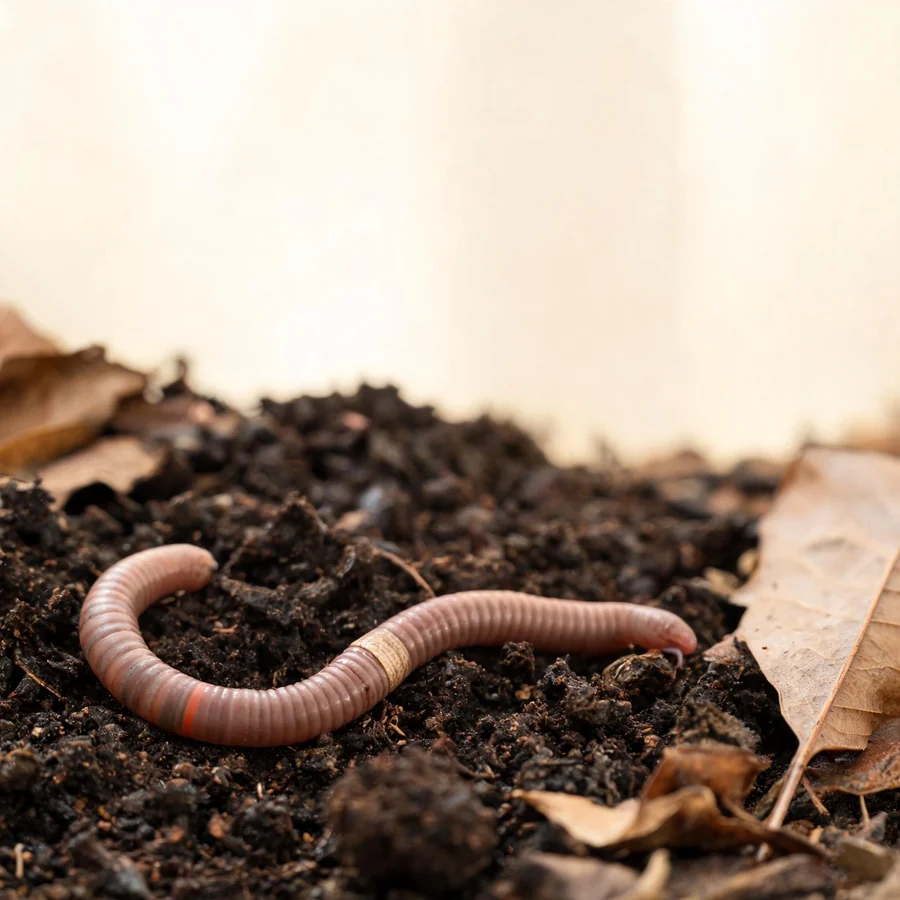
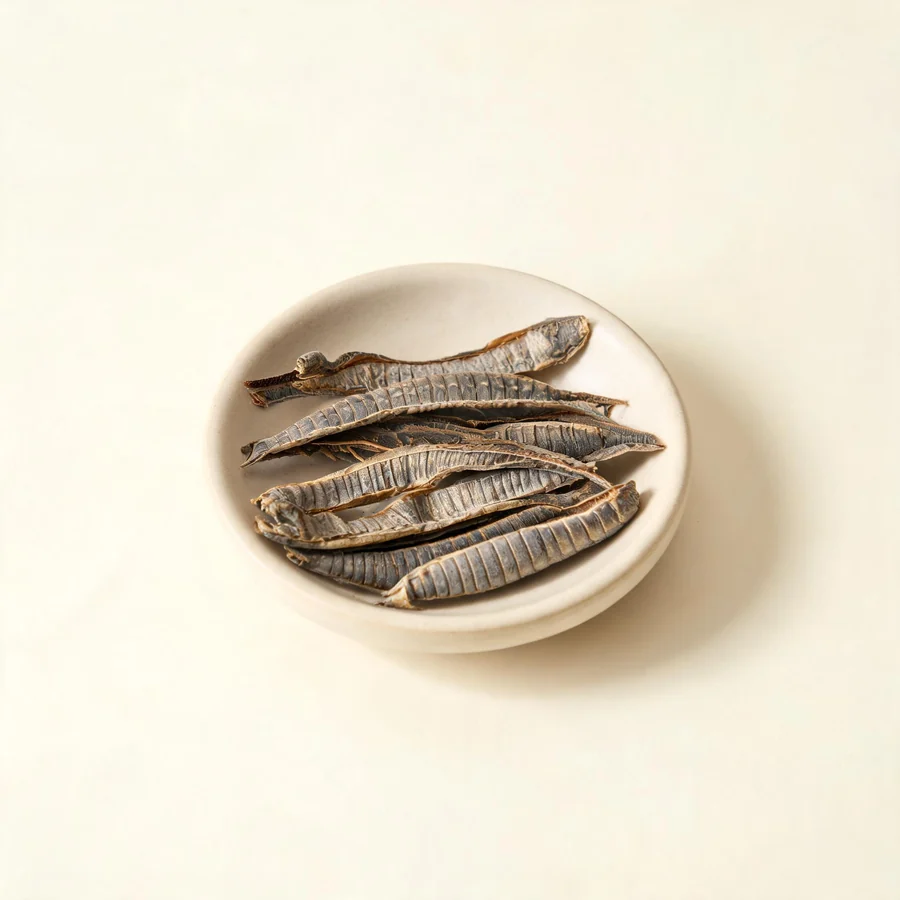
Skin profile
Where this herb sits in skin practice: the pattern it corrects, the skin signs it suits, and what it should not be used for.
Di Long is for skin that is blocked rather than inflamed: hard and bound-down patches, numb and dusky areas, the pain that outlasts shingles and, in traditional external use, small burns. It is cold and salty and always a supporting herb, and its effect on clotting is the safety question that comes before everything else.
Skin signs that suggest it
- Skin that is hard, tight and bound down, so a fold cannot be lifted between the fingers, often with a shiny or faintly dusky surface.
- A patch of skin that is numb, wooden or cold to the touch, with normal colour or a dusky tinge, and no rash.
- Burning, shooting or electric pain in the skin where a shingles rash has already healed, often worse at night and on light touch.
- A burn or a slow-healing raw area that is hot, weeping and slow to close, in a person who is otherwise well.
- A dusky or purplish tongue, a wiry or choppy pulse, and fingers or toes that change colour in the cold.
When it is not the right herb
Not for cold, pale skin with no heat and no stasis, and not for a cold wheeze or a chill-driven joint. Not in pregnancy, not where there is active bleeding or a bleeding disorder, and not in the weeks before planned surgery. Not for a person with a known allergy to earthworm protein, and never as raw or unprepared material, which can carry parasites and bacteria. A deep or extensive burn, a burn on the face, hands or genitals, and any burn in a child are hospital matters, and no herb belongs on them at home.
What it does for skin
Skin-relevant actions only. Each one describes a mechanism in TCM terms and what it looks like on the skin.
Opens the fine collaterals so blood reaches the skin
The network vessels are the smallest branch of the channel system, and when they are blocked the skin is starved of what should reach it: it goes hard, numb, cool or dusky, and it heals slowly. The animal is described as penetrating where plant medicines do not, which is why it is used for the skin of scleroderma, for numb patches and for the dusky fingers of poor circulation. It is a supporting herb in that work and is always given with herbs that move and build Blood.
Cools heat that is stuck in the skin and the vessels
Burning skin, a dusky red colour and pain that persists long after a rash has gone are read as heat that has entered the smaller vessels and stayed there. The cold, salty nature clears that heat and the channel-opening action lets it disperse, and the combination is why the herb is used for pain that outlasts shingles. It is a cold herb, so it is used where there is heat to clear and not as a general analgesic for nerve pain.
Settles Wind and quiets the shooting and twitching after nerve injury
Twitching, cramping and sudden electric jabs in the skin are read as Wind, and the tradition uses this animal to settle it, particularly when heat has stirred it. The visible change is a quieter surface: fewer jabs, less twitching and better sleep. It is used in small doses inside a formula, since larger amounts cool the digestion and the effect flattens rather than strengthens.
Draws heat and fluid out of a burned or weeping surface
In the external tradition the dried body is used as a cool preparation for a burn or a raw, weeping area, and the aim is to take heat out of the tissue and keep the surface clean while it closes. Modern laboratory work on scalded skin in animals is the reason the use is still discussed. It does not sterilise a wound, it does not replace fluid replacement or dressings, and a burn beyond a small superficial area needs medical care.
Skin conditions it is used for
Mapped to the condition pages on this site. The pattern column shows what the skin is doing when this herb is the right choice.
| Condition | Pattern | Why it suits | Typical setting |
|---|---|---|---|
| Skin numbness | Blocked collaterals with Blood failing to reach the surface | Numbness in a patch of skin, with a wooden or cold feeling and no rash, is read as the fine vessels failing to deliver. The herb is chosen for its penetrating quality rather than for its coldness, and it is given with herbs that move and build Blood so that what reaches the surface is worth delivering. Numbness that begins suddenly, affects one side, or comes with weakness or slurred speech is a stroke warning and needs emergency care before any prescription. | Bu Yang Huan Wu Tang, or a collateral-opening formula with Huang Qi and Dang Gui |
| Scleroderma | Skin impediment with obstruction in the collaterals and deficiency underneath | Hard, tight, bound-down skin is read as an obstruction lodged in the channels of the skin, with a deficiency underneath that leaves the surface poorly nourished. The herb opens the fine vessels so the blood-moving and tonifying herbs in the formula can reach the skin, and it is a supporting member rather than a treatment in itself. Scleroderma affects internal organs as well as skin, so it belongs to specialist care, and the herb is used only with that care in place. | A blood-moving, collateral-opening formula with Huang Qi, Dan Shen and Di Long |
| Herpes zoster infection | Heat in the vessels with Wind and static Blood after the rash | Once the blisters have dried, the pain can continue for months, and the tradition reads that as heat and stasis left in the small vessels with Wind stirring in them. The herb cools the heat, opens the vessels and settles the shooting pain, which is why it is added to blood-moving formulas for postherpetic pain. It is used after the acute phase, alongside conventional pain management, and it does not replace antiviral treatment or a proper assessment of severe pain. | A blood-moving formula with Di Long, Hong Hua and Yan Hu Suo |
| Skin burns | Fire toxin in the surface with heat and weeping | A burn is read as fire toxin that has scorched the skin, and the first need is to clear the heat and protect the surface while it closes. The dried body is recorded as an external application for this purpose, and laboratory work on scalded skin in animals is the modern support for the tradition. It is for small superficial burns only, after cooling with clean running water, and any burn that blisters widely, looks white or leathery, or affects a child needs medical care rather than a herb. | A traditional external preparation applied under clinical supervision |
Combinations for skin
Herbs it is paired with when the skin, not an internal organ, is the target.
| Partner | Ratio | Why the pair is used |
|---|---|---|
| Huang Qi | 30 g Huang Qi with 6 g Di Long | The pairing that made the herb's modern name. A large dose of Huang Qi drives Qi and Blood toward a part that has been cut off from them, and the worm opens the network so that what is driven can arrive. The ratio is deliberately uneven, with the root outweighing the worm several times over, because the worm guides rather than tonifies. It serves one-sided weakness and numbness, and skin that has gone hard and poorly supplied. |
| Dang Gui | 9 to 12 g Dang Gui with 5 to 10 g Di Long | Dang Gui builds and moves Blood while the worm opens the smallest vessels, and the pair is the backbone of the work on hard, numb and dusky skin. Neither is enough alone: opening vessels in a person with thin Blood simply moves a small volume faster, and building Blood without opening the vessels leaves it unable to reach the surface. |
| Gou Teng | 10 to 15 g Gou Teng with 5 to 10 g Di Long | Both settle Wind, but from different directions: Gou Teng is cool and gentle and calms what is twitching, while the worm is colder and reaches the vessels where the Wind is lodged. The pair is used for twitching, cramping and the jabbing pain that follows a nerve injury, and it is stopped once the surface has quietened rather than continued indefinitely. |
| Zhi Chuan Wu | 1 to 1, in the small collateral-opening pill | Prepared aconite heats the channels and eases pain, and the worm opens the collaterals while its coldness restrains the aconite's heat. Together they form the core of the classical pill for chronic cold-damp joint pain, where the pain is fixed and the skin over the joint is stiff and cool. Both are strong medicines, the aconite is toxic, and the pair belongs to a prepared formula rather than a home-made decoction. |
Formulas where it leads
- Bu Yang Huan Wu Tang (补阳还五汤) - Wang Qingren's formula for one-sided weakness after a stroke, built on a very large dose of Huang Qi with a small amount of this worm as the guide into the network vessels. It is the reason the herb is associated with the skin and the limbs rather than with the organs, and it is used in skin practice for numb, poorly supplied skin rather than for the stroke itself, which is a medical emergency.
- Xiao Huo Luo Dan (小活络丹) - The classical pill for chronic cold-damp obstruction, with prepared aconite, arisaema, myrrh, frankincense and this worm. The worm opens the collaterals while the warming herbs drive out the cold, and the formula is used where joint pain is fixed and the skin over the joint is stiff and cool. It contains toxic aconite and belongs in prepared form under supervision.
Topical use
The external use of the dried body is old and specific: it is recorded as an application for burns and for raw, weeping skin, and a cooled preparation is also used as a compress where skin is hot and slow to settle. In Chinese practice a liquid is drawn from the dried worms and applied to a burned surface under clinical supervision, and the laboratory work on scalded skin in animals follows that use. This is not a household treatment. A burn is cooled with clean running water first, and anything beyond a small superficial area needs medical care.
| Preparation | How and when it is used |
|---|---|
| Cooled decoction compress | Simmer 10 to 15 g of the dried body in water for 20 minutes, strain carefully, and cool to skin temperature. Apply with clean gauze to intact or healing skin for 10 minutes, once or twice a day, and discard the liquid after use rather than keeping it. |
| Recorded burn preparation | The traditional preparation is made by drawing a liquid from cleaned dried worms and applying it to a small superficial burn under clinical supervision. It is recorded here for completeness and is not a home remedy, because infection, fluid loss and scarring are the real risks of a burn. |
Patch test and cautions
Do not apply to a deep burn, to skin blistered over a wide area, or to any burn on the face, hands, feet, genitals or over a joint, and do not apply to a child. Keep any preparation away from the eyes and mouth, use clean materials and discard leftovers. Stop if the area becomes more painful, redder or smells, and seek care, because infection in a burn can progress quickly. A known allergy to earthworm protein rules out the external route as much as the internal one.
Safety for skin use
What to check before recommending or using it, including the cautions that matter most for skin patients.
Do not use, or use with caution
- Pregnancy. Its action on the channels and on the Blood could disturb the fetus, and the classical sources list the herb as contraindicated; there is no skin complaint for which a self-chosen course is appropriate during pregnancy.
- Active bleeding, a bleeding disorder, or planned surgery. The clot-breaking activity that gives the worm its interest after a stroke also means it must be stopped before an operation, a dental extraction or any procedure where clotting matters.
- A cold, weak digestion with loose stools and a cold abdomen, and any cold condition without heat. A cold salty animal material sits badly on a cold Spleen and is the wrong tool where nothing is hot.
- Known allergy to earthworm protein, and raw or unprepared material. Allergy can produce rash, itching and, with injected preparations, a collapse-like reaction, and an unprepared worm may carry parasites and bacteria.
Pregnancy and breastfeeding
Contraindicated. The classical sources and the pharmacopoeia both reject it, on the grounds that opening channels and moving Blood may disturb a pregnancy, and animal work has suggested possible harm to the fetus. No skin or burn picture exists for which a self-chosen earthworm preparation is appropriate during pregnancy, and a decision to use it after a severe illness would be a hospital-level one. During breastfeeding very little is recorded, and because a cold salty material may unsettle an infant's digestion and proteins could in principle pass into milk, a plant substitute is usually simpler.
Interactions
- Anticoagulants and antiplatelet medicines. The worm carries fibrinolytic enzymes, so using it with aspirin, warfarin, clopidogrel, heparin or a direct oral anticoagulant risks a combined bleeding tendency. If the two are used together at all, clotting is monitored and the herb is stopped ahead of any operation.
- Thrombolytic drugs such as alteplase. Combining a fibrinolytic herb with a thrombolytic medicine is the same idea pushed further, and it is not attempted outside a hospital setting.
- Blood pressure medicines. A fall in blood pressure has been seen in animals and in patients, so anyone on antihypertensives should watch for dizziness when standing, and anyone on a diuretic should note that the herb also promotes urination.
Allergy and patch testing
Earthworm protein can sensitise. Recorded reactions include rash and itching, and with injected preparations a collapse-like picture, with pallor, sweating and a fall in blood pressure. Ask about a previous reaction before the first dose, stop at once if hives, wheezing or swelling of the face or throat appears, and treat that as an emergency. A patch test is sensible before an external preparation, and a known allergy rules out both routes.
General safety references
General references for herbal hepatotoxicity and herb-drug interactions; they are not specific to this herb.
- Review article: Herbal hepatotoxicity - an update on traditional Chinese medicine preparations. Alimentary Pharmacology & Therapeutics, 2014. PMID: 24844799.
- Interactions between herbal medicines and prescribed drugs: an updated systematic review. Drugs, 2009. PMID: 19719333.
- Warfarin and food, herbal or dietary supplement interactions: a systematic review. British Journal of Clinical Pharmacology, 2021. PMID: 32478963.
Evidence
The classical record is quoted with its source. The modern note states the level of evidence plainly.
Classical record
The entry makes the logic of the herb explicit: its nature is cold, so it settles heat diseases, and its movement is downward, so it frees urination and reaches the feet and the channels. Those two halves, one thermal and one directional, run through the whole indication list, and later writers applied them rather than adding to them.
Ben Cao Gang Mu (Compendium of Materia Medica), Li Shizhen - Li Shizhen is explaining rather than listing, which is why the line is still quoted for the herb's dual character.
The commentary describes a salty, cold substance that descends and discharges and is unusually mobile, and from those three qualities it derives the ability to clear heat, settle fright and open the channels. It is a good example of the method of the period, in which taste and temperature are treated as the cause of the clinical actions rather than as a label attached afterwards.
Ben Cao Jing Shu (Commentary on the Classic of Materia Medica) - It explains how a cold, salty and restless animal came to be trusted with the channels and the skin.
Modern evidence
Evidence status
- An extract of the dried body has been studied in scalded-skin animal models, which is the laboratory basis for the traditional burn use. Animal work does not establish that the preparation helps a human burn, and burn care depends on cooling, fluid management, dressings and infection control.
- The fibrinolytic activity of earthworm extracts, associated with the enzyme lumbrokinase, is well described in laboratory work and has been developed commercially. That same activity is why the herb is a bleeding risk alongside anticoagulants, so the pharmacological interest and the safety concern are two sides of one finding.
- Identity is the best-documented practical problem. DNA sequencing of commercial material has shown that a large share of products are made from species other than the four the pharmacopoeia accepts, and soil left inside the body adds weight that the buyer pays for. None of this can be judged by eye, so a supplier able to name both species and region is the safeguard.
PubMed records
Selected real PubMed records for this herb's species or its constituents, chosen by species name and title relevance. They are references for the non-TCM discussion above, not proof that the herb treats any skin condition.
- Shuxuetong injection promotes skin flap survival by inhibiting pyroptosis mediated by the TLR4/NF-κB/NLRP3 signaling pathway.. Journal of ethnopharmacology, 2026. PMID: 41106569 (skin-related record).
- Pheretima: A system review of zoology, traditional applications, processing technology, chemical composition, pharmacologic activities, quality control and toxicity.. Journal of ethnopharmacology, 2025. PMID: 40490228 (safety record).
Dose and forms
Skin-practice dosing and the preparations that suit skin complaints.
| Form | Dose and notes |
|---|---|
| Decoction (internal) | 5 to 10 g of the processed dried body daily in a formula. Up to 15 g is used for a severe picture under supervision, and it is not pushed further, since the effect levels off and the coldness starts to upset the digestion. |
| Powder | 1 to 2 g, ground and swallowed rather than boiled, and 3 to 4 g in severe cases. The fall is steep because the powder is the entire drug with nothing thrown away, and because the enzymes survive better unboiled. |
| Course length | Short courses, generally a few weeks with review, and stopped before any planned operation or dental extraction, since its effect on clotting persists after the last dose. |
The form changes the medicine more than the number does. Heat, twitching and wheeze call for the raw dried body, which retains most of its cooling constituents; hard numb skin and chronic joint pain call for the wine-processed form, a less cold preparation that is gentler on the stomach. Boiling breaks down some of the clot-breaking activity, so where that is the aim the powder serves better, and it is that same activity that makes the herb a bleeding risk. Material that is gritty, musty or heavy with soil is a sign of poor cleaning rather than of strength.
Citations and further reading
Only real sources are listed: the classical materia medica passages quoted above, and the source works behind the botanical and safety statements.
- Ben Cao Gang Mu (Compendium of Materia Medica), Li Shizhen, 1578 - the entry on the cold nature and downward movement is quoted above.
- Ben Cao Jing Shu (Commentary on the Classic of Materia Medica), Miao Xiyong, Ming dynasty - the passage on the salty, cold and mobile character is quoted above.
- Pheretima monograph, Pharmacopoeia of the People's Republic of China - the four accepted species, the processed part used and quality requirements.
- Effects of extract of Dilong (Pheretima) on the scalded skin in rats, Journal of Traditional Chinese Medicine, 2006 - the animal study behind the burn use.
- DNA barcoding and quality surveys of commercial earthworm material, summarised as a statement about species substitution rather than as a cited trial.
Educational reference for qualified practitioners. This page is not medical advice, and skin conditions should be diagnosed by a clinician before treatment.