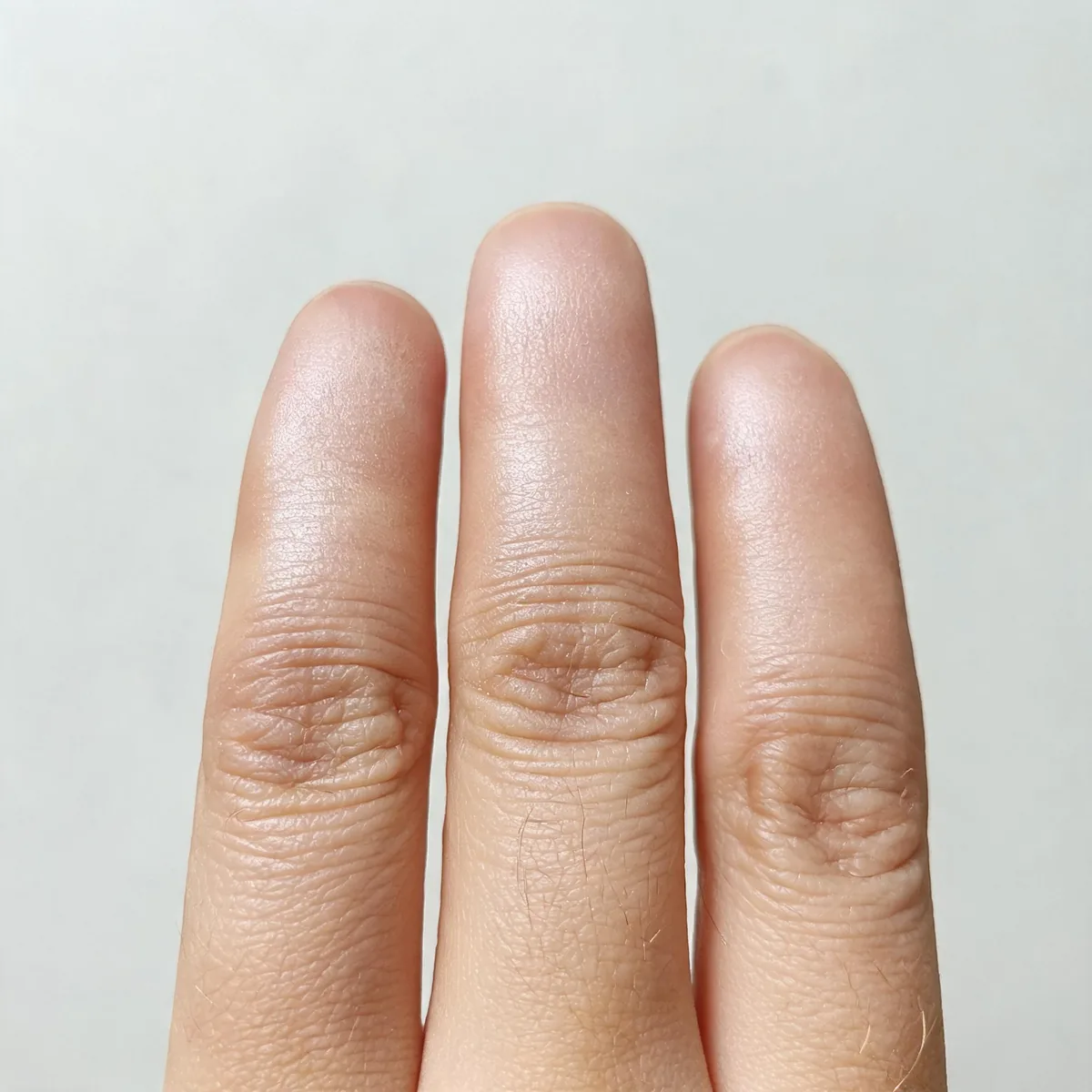
Understanding Scleroderma
The classical literature places scleroderma under skin impediment, a form of Bi syndrome where obstruction settles in the skin channels and collaterals.
The obstruction may come from external Wind, Cold, Dampness or Heat, or from internal deficiency of Qi, Blood and Yang that fails to nourish the skin. In practice the tradition describes both together: obstruction on top, deficiency beneath.
Wind-Cold-Damp gives skin tightening with a cold sensation, joint and muscle pain worse in cold weather, and stiffness. Damp-Heat gives redness, warmth and a purple-red hue with pain eased by cold.
The deeper patterns describe the later picture. Qi and Blood deficiency gives thin atrophic papery skin with muscle wasting and fatigue. Blood stagnation gives skin hard as leather that cannot be pinched, with dark discolouration and fixed stabbing pain. Phlegm in the channels gives fixed pain with hard non-pitting swelling or subcutaneous lumps, and Kidney and Spleen Yang deficiency gives thin papery skin with cold limbs and early-morning diarrhoea.
The classical literature places scleroderma within skin impediment, a Bi syndrome in which pathogens obstruct the channels and collaterals of the skin. The obstruction is either external, from Wind, Cold, Dampness or Heat, or internal, from deficiency of Qi, Blood and Yang. What follows depends on which dominates: cold and tight skin, hot inflamed skin, or thin atrophic skin.
As the condition continues, stagnant Qi and Blood congeal into Phlegm and stasis, and the skin becomes leathery and cannot be pinched. That progression explains why one disease presents so differently at different stages, and why treatment both dispels pathogens in the early excess stages and tonifies in the later deficiency ones.
Conventional view
Systemic sclerosis, usually called scleroderma, is autoimmune in origin: the body lays down too much collagen, so skin and connective tissue thicken and harden. It ranges from disease confined to the skin to a diffuse form affecting the lungs and heart, the kidneys and the gut. Tight shiny skin, Raynaud's phenomenon in which the fingers turn pale or blue when cold, joint pain and fatigue are common. Diagnosis rests on clinical signs, autoantibody tests, and in some cases nailfold capillaroscopy or a skin biopsy.
Management aims to control symptoms and slow progression rather than reverse fibrosis. Immunosuppressants such as methotrexate or mycophenolate are used for skin and lung involvement, vasodilators such as calcium channel blockers for Raynaud's, proton pump inhibitors for reflux, and physical therapy to preserve joint mobility, with targeted biological therapy or organ-specific treatment in severe disease.
The shortfall is that current drugs curb the immune attack and lift quality of life but do not restore elasticity to established fibrosis, and long-term immunosuppression brings infection risk, fatigue and gastrointestinal upset. Conventional care also treats scleroderma as one disease, whereas patients present very differently, one with cold tight skin and another with hot inflamed swelling, and those differences call for different strategies.
Selected PubMed records
Real PubMed records for the conventional discussion above, selected by condition name and title relevance. They are references, not a claim that any treatment is proven for this condition.
- EULAR recommendations for the treatment of systemic sclerosis: 2023 update.. Annals of the rheumatic diseases, 2025. PMID: 39874231.
- Botulinum Toxin for Refractory Digital Ischemia and Ulcers in Systemic Sclerosis: A Systematic Review and Meta-Analysis.. JAMA dermatology, 2026. PMID: 41369954.
- Incidence and prevalence of systemic sclerosis globally: a comprehensive systematic review and meta-analysis.. Rheumatology (Oxford, England), 2021. PMID: 33630060.
How it connects
In TCM scleroderma rarely travels alone. Joint pain frequently accompanies skin hardening because both arise from the same pathogenic obstructions, Wind, Cold and Dampness lodged in the channels: when these block the flow of Qi and Blood in the joints, pain and stiffness result, and when they settle in the skin it tightens and hardens, so treating the underlying obstruction often eases both. Acid reflux is another common companion, reflecting the Spleen and Stomach's struggle with Dampness and Cold, since the same Yang deficiency that fails to warm the skin also weakens digestive fire. Aversion to cold with cold limbs is almost a hallmark, especially in Yang-deficiency or Cold-Damp patterns, and improves as the core pattern is warmed. Because scleroderma is progressive, an early Cold-Damp obstruction can gradually drain Qi and Blood into deficiency and then congeal into Blood stasis and Phlegm, with Yang deficiency as the deepest stage, so several patterns often show at once and different areas of the body may carry different features. The skin's temperature and texture are the strongest clues: cold and puffy, hot and red, thin and wasted, or thick and leathery each point elsewhere. Rapid skin tightening, difficulty swallowing, breathlessness or severe joint pain need prompt medical assessment.
How it is assessed
The practitioner examines skin texture, temperature and hardness, then looks for internal involvement.
What a practitioner looks for
- Skin texture: papery and thin suggests deficiency; hard and leathery suggests stagnation.
- Temperature and colour: cold tightening suggests cold-damp; purple-red warmth suggests damp heat.
- Swelling: hard non-pitting swelling or lumps suggests Phlegm in the channels.
- Organ red flags: breathlessness, new severe hypertension, or difficulty swallowing need urgent medical care.
The practitioner first asks about temperature and colour, since the earliest stage usually reads as either cold or hot. Cool pale skin that tightens gradually and worsens in cold weather, with a pale tongue, thin white coat and tight pulse, points to Wind-Cold-Damp. Hot red or purplish skin that may swell, with dark scanty urine, a red tongue carrying a greasy yellow coat and a rapid slippery pulse, points to Damp-Heat.
As the illness lingers, the practitioner looks for depletion. Thin atrophic sallow skin, muscle wasting, deep fatigue and thinning hair, with a pale tongue bearing teeth marks and a deep thready pulse, indicate Qi and Blood deficiency. A leathery board-like surface that cannot be pinched, dark or purplish in colour, with stiff painful joints, a dark tongue with purple spots under a thick greasy coat and a slippery or thready pulse, indicate that Blood stasis and Phlegm have combined.
The last pattern is recognised by paradox: skin that is hard yet paper thin, with limbs that stay cold, deep tiredness, sore lower back and knees and loose stools. A pale swollen tongue with a white coat and a deep thready weak pulse confirm Kidney and Spleen Yang deficiency. Throughout, the practitioner asks about breathing, swallowing and blood pressure, because organ involvement rather than the skin decides the outcome.
TCM patterns in Scleroderma
Six patterns are described for scleroderma, and they differ mainly in what is blocking the channels and in how much of the picture is depletion. Three are obstruction patterns: Wind-Cold-Damp, which gives cool pale tight skin and joints that ache in damp weather; Damp-Heat, which gives hot red or purplish skin and swelling early in the illness; and Phlegm in the channels, where congealed fluids form hard lumps and a leathery surface. Two describe the consequences of long obstruction: Blood Stagnation, with board-like skin and fixed stabbing pain, and Qi and Blood deficiency, with thin atrophic papery skin and wasting. The sixth, Kidney and Spleen Yang deficiency, is the deepest stage, recognised by skin that is hard yet paper thin and by limbs that never warm. Patterns commonly overlap and succeed one another, so the formula is revised as the disease moves.
| Pattern | Key signs | The itch | Tongue | Main formula |
|---|---|---|---|---|
| Painful Obstruction with Wind-Cold-Damp | Skin tightening with a cold sensation; Joint and muscle pain worse in cold or damp weather | Not specified | Body: Pale and slightly swollen, teeth-markedCoat: White, greasy and moist | Not specified |
| Painful Obstruction due to Damp Heat in Channels | Skin redness and warmth; Tightness with a purple-red hue | Not specified | Body: Red, possibly slightly swollenCoat: Yellow and greasy | Not specified |
| Qi and Blood Deficiency | Skin thin, atrophic and papery | Not specified | Body: Pale, possibly thin or with teeth marksCoat: Thin white | Not specified |
| Blood Stagnation | Skin hard as leather, cannot be pinched; Fixed stabbing pain in joints and muscles | Not specified | Body: Purple, dusky or with dark stasis spots; sublingual veins dark and distendedCoat: Often thin white; a yellow coat would suggest Heat as the cause | Not specified |
| Phlegm in the Channels (Joints and Muscles) | Fixed stabbing pain in joints and muscles; Hard non-pitting swelling or subcutaneous lumps | Not specified | Body: Purple, with stasis spots and distended sublingual veinsCoat: White and greasy | Not specified |
| Kidney and Spleen Yang Deficiency | Skin hard but thin like paper | Not specified | Body: Pale, swollen and teeth-markedCoat: White and slippery | Not specified |
Painful Obstruction with Wind-Cold-Damp
Skin tightening with cold sensation and weather-sensitive joint pain.
Wind, Cold and Dampness arrive together and settle in skin, muscle and channel. Cold contracts and tightens, Dampness makes tissue heavy and stuck, and Wind makes the pain wander. Between them they block the movement of Qi and Blood, so the skin feels cold and tight, the joints ache, and range of motion is lost.
A pale slightly swollen tongue with teeth marks, a white greasy moist coat, and a wiry tight or slow pulse, sometimes soggy where Dampness dominates, support it. Cold damp weather, wind, raw food and long periods of stillness worsen it, while warmth, gentle movement and warm cooked meals ease it. The formula for this pattern is Ma Huang Fu Zi Xi Xin Tang. It warms Yang, disperses Cold and unblocks the channels, with Fang Feng, Ma Huang, Gui Zhi and Cang Zhu, and treatment uses LI-4 (Hegu), GB-20 (Fengchi), GB-34 (Yanglingquan) and SP-6 (Sanyinjiao).
Signs
- Skin tightening with a cold sensation
- Joint and muscle pain worse in cold or damp weather
- Stiffness with limited range of motion
- Heaviness or numbness in the limbs
- Pain relieved by warmth
Diet and lifestyle for this pattern: Keep the body warm and dry, and avoid sitting or sleeping in damp cold places. Dress in layers against wind, include warming spices such as ginger, cinnamon and black pepper in meals and sip warm broths or teas, and keep movement gentle and regular such as walking or tai chi, resting when pain is acute.
Painful Obstruction due to Damp Heat in Channels
Red, warm, purple-red tight skin with pain eased by cold.
Dampness and Heat combine into something like sticky steam that clogs the channels and the skin. The skin turns inflamed and tight, feels hot, and often carries a red or purple hue; the trapped Heat makes it painful, and the Dampness adds a heavy swollen feeling. This is typically the early, active inflammatory stage.
A red, possibly slightly swollen tongue with a yellow greasy coat, and a slippery rapid pulse that may read soggy or wiry at the Guan, confirm it. Heat and humidity, spicy or greasy meals, alcohol, overwork and frustration all worsen it, while cool compresses, a cool room, light clothing and cooling foods ease it. Xuan Bi Tang clears Heat, drains Dampness and unblocks the channels, with Yi Yi Ren, Huang Bo and Fang Ji, and treatment uses LI-11 (Quchi), SP-9 (Yinlingquan), SP-6 (Sanyinjiao) and LI-4 (Hegu).
Signs
- Skin redness and warmth
- Tightness with a purple-red hue
- Pain worse with heat, eased by cold
- Heavy aching sensation in limbs
- Thirst with dark urine
Diet and lifestyle for this pattern: Avoid spicy, greasy and fried food, which creates more Damp-Heat. Eat cooling, Dampness-draining food such as mung beans, cucumber, celery and watermelon, keep the environment cool and dry, and avoid excessive sweating or hot baths.
Qi and Blood Deficiency
Thin atrophic papery skin with wasting and fatigue.
When Qi and Blood are both short, skin and muscle lose the nourishment they depend on and the tissue itself thins. Without Qi to move and Blood to moisten, the surface stiffens and wastes, so the hardening here comes from within rather than from an external blockage. That is why the skin is papery and atrophic instead of thick.
A pale tongue, thin or with teeth marks and a thin white coat, with a fine weak pulse that may feel empty or slow, describe it. Overwork, raw and cold food, stress and cold damp weather worsen it, while warm cooked meals, rest, gentle movement and warmth help. Treatment uses Huang Qi Gui Zhi Wu Wu Tang to tonify Qi, warm the channels and nourish Blood, with Huang Qi, Dang Gui and Bai Zhu, and the points are ST-36 (Zusanli), SP-6 (Sanyinjiao) and REN-6 (Qihai).
Signs
- Skin thin, atrophic and papery
- Pale or sallow yellowish complexion
- Muscle wasting and weakness
- Severe fatigue
- Spontaneous sweating
Diet and lifestyle for this pattern: Eat warm, easy food such as bone broth, rice congee, stewed dark leafy greens and small amounts of red dates or goji berries, and avoid raw, cold or greasy food that further weakens the Spleen. Gentle daily movement such as tai chi or walking builds Qi without depleting it, and rest and sleep let the body rebuild.
Blood Stagnation
Skin hard as leather with dark discolouration and fixed pain.
Obstruction that has lasted a long time, from pathogens outside or depletion within, eventually causes Blood to congeal. The Blood can no longer nourish skin and connective tissue, which lose elasticity and turn hard, leathery and dark. Because the small vessels are blocked, the pain is fixed and stabbing, worse at night and on pressure, and joint movement is badly limited.
A dark purple tongue with stasis spots, distended sublingual veins and a thin white or greasy coat, with a choppy pulse like a knife scraping bamboo or a wiry pulse, confirm it. Cold damp weather, raw food, inactivity, frustration and heavy rich meals worsen it, while warmth, blood-moving foods, gentle movement, massage and rest ease it. Shen Tong Zhu Yu Tang invigorates Blood, dispels stasis and unblocks the channels, with Chuan Xiong and Tao Ren, and treatment uses SP-10 (Xuehai), BL-17 (Geshu) and SP-6 (Sanyinjiao) with a reducing method. Er Chen Tang may be added where Phlegm is prominent.
Signs
- Skin hard as leather, cannot be pinched
- Dark or purplish discolouration
- Fixed stabbing pain in joints and muscles
- Stiffness with limited movement
- Dark purple tongue with stasis spots
Diet and lifestyle for this pattern: Eat warming, blood-moving food such as turmeric, ginger, hawthorn and a little red wine, and avoid cold raw food and greasy heavy meals that promote Phlegm. Gentle daily walking or tai chi keeps blood flowing, and warm compresses on stiff areas provide relief.
Phlegm in the Channels (Joints and Muscles)
Fixed pain with hard non-pitting swelling or lumps.
Prolonged stagnation of Qi and fluids produces Phlegm, which is thick and sticky and lodges in skin, muscle and joint. Together with Blood stasis it forms hard lumps that do not move and a leathery surface that cannot be pinched, and the blocked channels give fixed stabbing pain, stubborn numbness and progressive stiffness.
A purple tongue with stasis spots, a white greasy coat and distended sublingual veins, with a wiry and choppy pulse, or a wiry slippery pulse where Phlegm dominates, support it. Cold damp weather, heavy greasy food, inactivity and frustration worsen it, while warmth, gentle movement, light spices and warm cooked meals ease it. Xiao Huo Luo Dan transforms Phlegm, disperses Wind-Cold and unblocks the collaterals, with Dan Nan Xing, Ru Xiang, Mo Yao and Di Long, and treatment uses ST-40 (Fenglong), SP-6 (Sanyinjiao), SP-10 (Xuehai) and GB-34 (Yanglingquan).
Signs
- Fixed stabbing pain in joints and muscles
- Hard non-pitting swelling or subcutaneous lumps
- Dark or purplish skin
- Thick white greasy coating
- Heaviness or numbness
Diet and lifestyle for this pattern: Avoid dairy, fried food and cold raw items that generate Dampness and Phlegm. Favour warm cooked meals with moderate amounts of ginger, turmeric and black pepper, and keep moving gently such as walking or tai chi so Qi and Blood flow through the channels.
Kidney and Spleen Yang Deficiency
Thin papery skin with cold limbs and loose stools.
The deepest warmth in the body comes from the Spleen and Kidney, and all transformation depends on it. When that Yang fire declines, internal cold takes over and fluids and Blood congeal in the skin, so the surface becomes hard yet paper thin while the limbs stay cold. Digestion fails at the same time, giving chronic loose stools, poor appetite and profound fatigue.
A pale swollen puffy tongue with teeth marks and a white slippery coat, and a deep weak slow pulse with feeble Chi positions and a weak right Guan, confirm it. Cold damp weather, raw and frozen food, overwork and prolonged standing worsen it, while warmth, warm cooked meals, rest and moxibustion on the lower back help. You Gui Yin warms and tonifies Kidney Yang, with Rou Gui, Zhi Fu Zi and Du Zhong, and treatment uses BL-23 (Shenshu), BL-20 (Pishu), REN-4 (Guanyuan) and ST-36 (Zusanli) with moxa.
Signs
- Skin hard but thin like paper
- Cold limbs, especially below the knees
- Chronic loose stools or early-morning diarrhoea
- Sore cold lower back and knees
- Severe fatigue
Diet and lifestyle for this pattern: Eat warm, easy food such as soups, stews and congees, and avoid all raw, cold and frozen items. Keep the lower back, abdomen and feet warm, keep movement gentle such as walking or tai chi so Yang Qi circulates without exhaustion, and home moxibustion on the lower back and abdomen can be very supportive.
Treatment approach
How the tradition treats scleroderma, with the herbs, formulas and points used for it.
Principles
- Warm and unblock the skin channels where cold-damp is obstructing.
- Nourish Qi and Blood where the skin is thin and atrophic.
- Move Blood and resolve stasis where the skin is hard and leathery.
- Coordinate with medical care, because internal organ involvement is the main determinant of outcome.
- The common aim is to unblock the channels and bring Qi and Blood freely back to the skin, and the means divide by pattern: disperse Wind, warm Cold, dry Dampness or clear Heat where pathogens dominate, and supplement Qi, Blood, Yang or Yin where depletion dominates, transforming Phlegm and invigorating Blood where the two have combined. Treatment is rarely static. As obstruction clears, the underlying deficiency often becomes obvious, and a formula that dispelled Cold-Dampness is replaced by one that tonifies Spleen and Kidney. Points are chosen to support that strategy and to treat the affected areas directly.
Herbs used
Formulas
- Ma Huang Fu Zi Xi Xin Tang
- Xuan Bi Tang
- Huang Qi Gui Zhi Wu Wu Tang
- Shen Tong Zhu Yu Tang
- Xiao Huo Luo Dan
- You Gui Yin
Acupoints
- LI-4 (Hegu)
- GB-20 (Fengchi)
- GB-34 (Yanglingquan)
- SP-6 (Sanyinjiao)
- LI-11 (Quchi)
- SP-9 (Yinlingquan)
- ST-36 (Zusanli)
- qihai-ren-6
- SP-10 (Xuehai)
- BL-17 (Geshu)
- ST-40 (Fenglong)
- BL-23 (Shenshu)
- BL-20 (Pishu)
- guanyuan-ren-4
What to expect
- The tradition describes skin softening and symptom relief over months, not weeks.
- Internal organ involvement progresses independently, which is why medical monitoring is essential.
- Skin changes may stabilise rather than reverse.
- Improvement is usually noticed in the order of warmth in the hands and feet, then less joint stiffness, then better energy, often within the first month. Softening of the skin comes more slowly, typically becoming apparent after two to four months, and progress is measured in small practical gains such as buttoning a shirt or less tightness across the chest. Plans usually run six to twelve months, with the formula adjusted every few weeks as the pattern shifts, and chronic cases may continue at lower intensity.
Safety and when to get help
Seek medical help urgently for
- Sudden shortness of breath or chest pain, which may indicate lung or heart involvement.
- Severe new high blood pressure with headache, which may indicate renal crisis.
- Difficulty swallowing with choking or weight loss.
For anything severe, sudden or spreading quickly, read when a skin problem needs urgent care.
Cautions
- Regular medical monitoring of lungs, heart, kidneys and blood pressure is essential.
- Protect the hands from cold and injury; Raynaud's commonly coexists.
- Do not stop prescribed treatment without medical advice.
Using this alongside conventional care
- TCM is described as complementary to conventional care: . Organ monitoring and prescribed treatment continue; herbs are used for the skin and constitutional pattern alongside them.
- TCM is described as usable alongside conventional scleroderma care provided everyone involved knows the plan. Blood-moving herbs, Dang Gui and Chuan Xiong among them, may interact with anticoagulants or antiplatelet drugs, and Huang Qi may influence immune function, so the rheumatologist should be told what is being taken. A full medication and supplement list is brought to each consultation, prescribed drugs are not stopped without the prescriber's agreement, and new symptoms are reported to the medical team promptly.
Diet and lifestyle
- Favour warm cooked easily digestible food such as soups and congees, and avoid cold raw food.
- The general principle is warm, cooked and easy to digest: soups, stews, congees and steamed vegetables, which support the Spleen and Stomach as the source of Qi and Blood. Ice-cold drinks, raw salads, excess dairy, greasy and sugary food are limited because they add Cold, Dampness and Phlegm. Bone broth, black sesame and dark leafy greens, with small amounts of red meat, support Blood, and where Damp-Heat is present cooling foods such as cucumber and mung beans may be advised instead.
If you're pregnant
Pregnancy gathers Qi and Blood towards the fetus, so depletion may deepen, in particular deficiency of both Qi and Blood and deficiency of Kidney Yang. Blood-moving formulas, Shen Tong Zhu Yu Tang among them, are considered unsuitable because they can stimulate the uterus, and strong dispersing herbs such as Ma Huang and Fu Zi are avoided. Gentle tonics, Huang Qi Gui Zhi Wu Wu Tang above all, are preferred, and acupuncture is often the first choice, with LI-4, SP-6 and lower abdominal points avoided and moxibustion on the back and abdomen generally avoided. The obstetrician should be part of the plan.
If you're breastfeeding
Milk production continues to drain Qi and Blood, so deficiency patterns may persist. Bitter cold herbs such as Huang Bo can reach breast milk and may cause diarrhoea in the infant, and strong warming dispersing herbs such as Ma Huang and Fu Zi are avoided. Milder warming tonics, Huang Qi Gui Zhi Wu Wu Tang among them, are generally considered safe, acupuncture has no direct contraindication, and the infant's sleep and digestion are watched when the mother takes herbs.
If treating a child
Localised scleroderma is more common in children than the systemic form, and children's patterns tend toward excess, with Wind-Cold-Damp obstruction the usual culprit: tight cool skin, a pale tongue and a tight pulse. Treatment expels the pathogen with milder versions of formulas such as Ma Huang Fu Zi Xi Xin Tang, at doses scaled to age and weight; acupuncture is frequently swapped for acupressure or tuina, and courses are shorter because children respond quickly, with care not to over-disperse. Fever or difficulty swallowing needs immediate medical attention.
If treating an elderly patient
In older adults a deficiency component is almost always present, most often Kidney and Spleen Yang deficiency, or deficiency of both Qi and Blood, with thin papery skin rather than thick swelling, deep fatigue, cold intolerance and weak digestion. Treatment prioritises gentle tonification, with You Gui Yin, and with Huang Qi Gui Zhi Wu Wu Tang where warmth is the greater need, at roughly two thirds of the adult dose; multiple medications mean clotting-affecting herbs, Dan Shen and Chuan Xiong among them, are used cautiously. Acupuncture is generally well tolerated, expectations are set for slowing progression rather than reversal, and timelines are longer.
Urgent-sign guidance is based on standard sources: NHS anaphylaxis, NHS cellulitis, NHS Stevens-Johnson syndrome, NHS melanoma.
Evidence
Evidence status
Compiled for this page from the classical and modern literature; not a systematic review, so treat it as a pointer to sources rather than clinical guidance.
Evidence is limited but suggestive. Small Chinese randomised trials and case series report that herbal medicine improves skin thickness scores, Raynaud phenomenon and quality of life, and a 2017 systematic review of Chinese herbal medicine for systemic sclerosis found modest benefits with generally low methodological quality and high risk of bias. Acupuncture has been studied mainly for secondary Raynaud phenomenon, with pilot trials showing reduced attack frequency and severity. Larger trials are lacking, and organ monitoring remains essential.
The evidence is described as limited but suggestive. Small randomised trials and case series from China report improvement in skin thickness scores, Raynaud's phenomenon and quality of life with Chinese herbal medicine, and a systematic review published in 2017 examined herbal treatment for systemic sclerosis and found benefit that was modest, in studies of low methodological quality carrying a high risk of bias. Acupuncture research has centred on Raynaud's phenomenon secondary to systemic sclerosis, where pilot trials show fewer and milder attacks, but larger well designed trials are lacking. Because the disease is complex and progressive, most evidence comes from integrative protocols, and TCM is best regarded as complementary.
Studies often cited
Modest benefits reported, with generally low methodological quality and high risk of bias. 2017 systematic review (as recorded in the source)
Pilot trials show reduced attack frequency and severity. Pilot trials (as recorded in the source)
PubMed records for the TCM evidence
Real PubMed records for the TCM clinical evidence discussed above, selected by condition name and title relevance. They are references, not proof of benefit.
- Gastrointestinal involvement in systemic sclerosis: diagnosis and management.. Current opinion in rheumatology, 2018. PMID: 30234725.
- Complementary therapies for patients with systemic sclerosis.. Journal of scleroderma and related disorders, 2019. PMID: 35382503.
Classical record
In blood impediment, both yin and yang are slight; the pulse at the cun and guan positions is faint, and the chi position is slightly tight. The external manifestation is numbness of the body, resembling wind impediment. Huang Qi Gui Zhi Wu Wu Tang governs it.
- Jin Gui Yao Lue, chapter on blood impediment (Xue Bi). The Chinese original is not reproduced here: it could not be recovered reliably from the source record, and is not guessed.
风寒湿三气杂至,合而为痹也……以秋遇此者为皮痹。
When wind, cold and dampness arrive together they combine to form impediment, and the form met in autumn is skin impediment.
Huang Di Nei Jing (Su Wen), chapter 43, Bi Lun - Classical citation: Huang Di Nei Jing (Su Wen), chapter 43, Bi Lun.
Common questions
Can herbs soften the skin?
The tradition describes gradual change over months. Skin may stabilise rather than reverse, and organ monitoring remains essential.
Why is blood pressure monitored?
Sudden severe hypertension can signal renal crisis, which is a medical emergency in scleroderma.
Is Raynaud's part of it?
Very commonly. Cold-triggered colour change in the fingers is part of the same obstruction picture and is treated as well.
Can TCM replace my medical treatment?
No. Scleroderma can involve the lungs, heart, kidneys and gut, and that requires conventional monitoring and treatment.
Is scleroderma curable with TCM?
TCM does not claim to eradicate scleroderma. The aims described are to reduce skin tightness, ease joint pain, restore energy and support quality of life, and many people reach long periods of stability with a lower symptom burden. Treatment is directed at slowing or halting progression rather than promising a cure.
How long does treatment take?
Weekly acupuncture and daily herbs are the usual starting point. Energy, warmth and joint stiffness often improve within the first month, softening of the skin is usually noticed after two to four months, and a full course may run six to twelve months with periodic adjustments. Long-standing cases may continue on lower-intensity maintenance.
Can TCM be taken with my immunosuppressants?
It is frequently combined with conventional treatment, but both the TCM practitioner and the rheumatologist need to know the full list. Herbs including Dang Gui and Chuan Xiong can affect clotting, and Huang Qi may modulate immune function, so anticoagulant use and immunosuppression need discussing. Prescribed drugs are never stopped or altered without medical agreement.
Does my diet need to change?
Diet is treated as part of management. Warm cooked meals are favoured and cold raw food is reduced because it weakens the Spleen and promotes Dampness, while greasy, fried and sugary food is limited because it creates Phlegm. The pattern then decides the details, with cooling foods for Damp-Heat and warming foods for Yang deficiency.
What if my lungs or other organs are involved?
Treatment widens to address the organ pattern, for example by building Lung Qi or moving Blood through the chest. Organ involvement, though, needs close coordination with the medical team, and pulmonary hypertension, pulmonary fibrosis or renal crisis require urgent conventional care rather than TCM as the primary treatment.