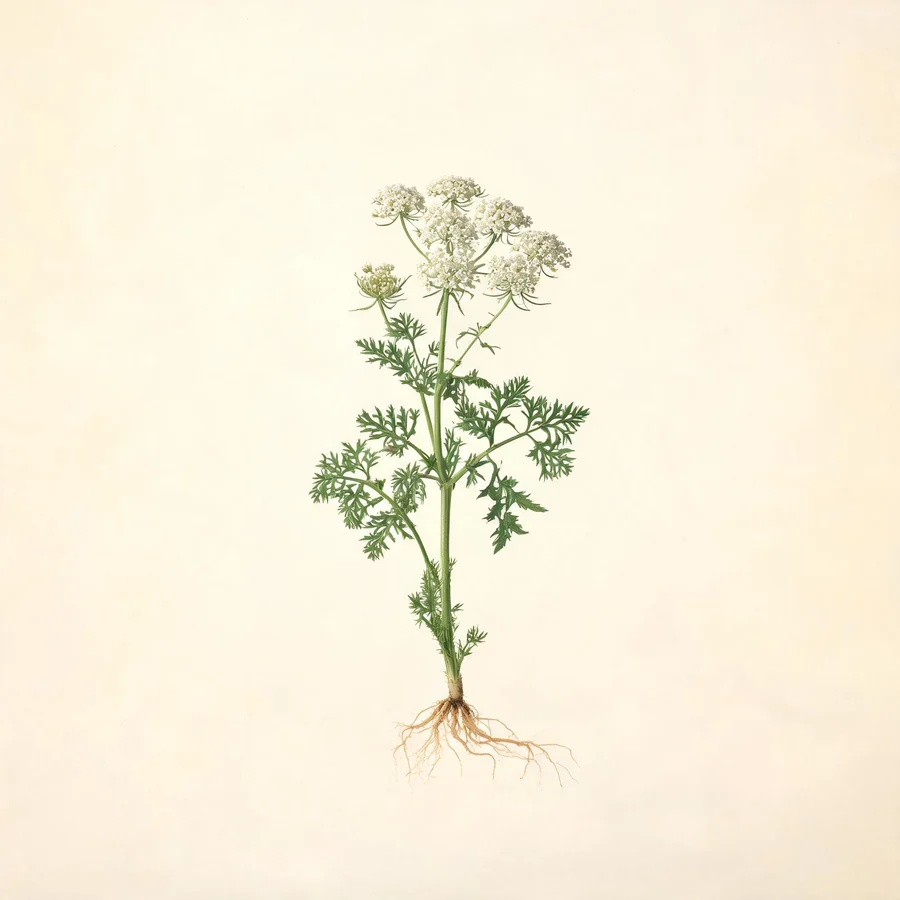
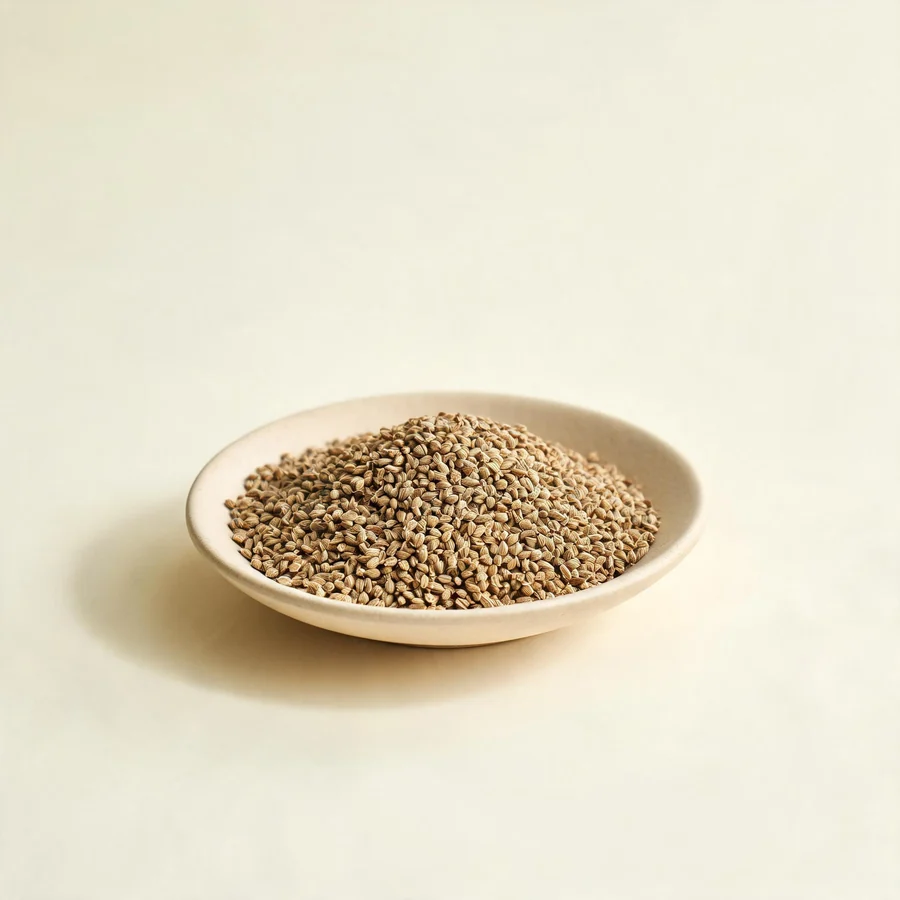
Skin profile
Where this herb sits in skin practice: the pattern it corrects, the skin signs it suits, and what it should not be used for.
She Chuang Zi is the warm half of the itch repertoire: it is chosen where the skin is damp and cold, where the discharge is pale, and where a cooling wash would leave the dampness behind. The photosensitivity is the practical limit on how it is used.
Skin signs that suggest it
- Intensely itchy, pale or dull-red damp skin, worse in damp weather and eased by warmth (cold-damp)
- Scrotal or vulval itch with a pale watery discharge, and a heavy cold feeling in the area
- Damp itchy skin in the folds of the groin, with maceration rather than yellow crusting
- Itch that persists after the redness has gone, with little to see between scratch marks
- A pale tongue with a white greasy coating, and a deep, slow pulse
When it is not the right herb
Not for damp-heat: yellow foul discharge, red hot skin or itch that is worse with heat all point away from a warming drying herb, and the cooler herbs, Ku Shen among them, suit better. It is also not for Yin deficiency with fire, where night sweats, a dry mouth and flushing would be made worse.
What it does for skin
Skin-relevant actions only. Each one describes a mechanism in TCM terms and what it looks like on the skin.
Dries Dampness and kills parasites
The fruit is warm, acrid and bitter, and the tradition uses it where Dampness has settled in the skin or the lower body and bred the parasites that cause itch. It is applied to scabies, tinea and the damp itchy skin of the genitals and folds, usually as a decoction, and it is one of the oldest external antiparasitic herbs in the materia medica.
Dispels Wind and stops itch
Itch that moves, returns in damp weather and settles in the genital skin is read as Wind on a base of Dampness, and the acrid warmth of the fruit is said to scatter it while the bitterness dries the ground it grows in. Unlike Ku Shen, which is cold, this herb suits the itch that comes with a cold, pale, wet picture, and the two are combined in washes so that the mixture covers either temperature.
Warms the lower burner
In skin practice the warming action matters because cold-damp in the lower body produces pale, soggy skin, a watery discharge and a heavy bearing-down sensation rather than inflammation. The fruit is read as warming the Kidneys and Spleen, which is why it appears in washes for genital itch and in internal formulas for cold deficiency with low back pain. This is a warming herb chosen for a cold, damp picture, not a general tonic.
Dries a weeping surface
Applied as a warm wash, the decoction reduces the wetness that keeps skin macerated and keeps the itch going. It is used where the ooze is clear or pale rather than yellow and sticky, and on skin that feels cold and damp to the touch. Because the fruit is drying it is stopped once the surface settles, or the skin becomes tight and uncomfortable.
Skin conditions it is used for
Mapped to the condition pages on this site. The pattern column shows what the skin is doing when this herb is the right choice.
| Condition | Pattern | Why it suits | Typical setting |
|---|---|---|---|
| Itchy genitalia | Cold-damp in the lower burner with damp itch | Genital itch with a pale watery discharge, a cold heavy feeling and itch that is worse in damp weather is the pattern this fruit was recorded for in the oldest materia medica. It is used mostly as a warm wash, which puts the drying and antiparasitic action directly on the skin, and it is combined with Ku Shen so that the wash suits either a hot or a cold picture. | She Chuang Zi with Ku Shen as a warm wash, or in a modified lower-burner formula |
| Scrotal eczema | Damp-cold in the scrotum with pale ooze and itch | Scrotal eczema that is soggy, pale and maddening rather than bright red suits a warming drying herb, and a dilute warm wash is often better tolerated here than a strong ointment. The fruit reduces the surface moisture and quiets the itch, while an internal formula is added only if there is clear cold-damp or Yang deficiency behind it. | She Chuang Zi and Di Fu Zi decoction for washing |
| Vulvar eczema | Damp-cold with a pale discharge and chronic itch | Where the vulval skin is itchy, thickened and damp but not hot, with a white discharge, the picture is cold-damp and the fruit is a standard wash ingredient. Its warmth is the point: a cooling herb would leave the cold dampness in place. Any persistent vulval itch, bleeding or a visible change in the skin needs assessment, because infection and other causes have to be excluded. | She Chuang Zi with Ku Shen and Di Fu Zi, as a wash |
| Scabies | Parasitic itch on a cold-damp base | The fruit has been used against scabies since the classical period and is one of the standard wash herbs for it. It relieves the itch and dries the eruption, but a confirmed infestation needs the specific scabies treatment as well, with close contacts and bedding dealt with at the same time. | She Chuang Zi and Ku Shen decoction for washing, alongside conventional scabies treatment |
| Tinea | Damp-cold parasitic skin disease | Tinea of the body, groin or feet is read as Dampness with a parasite, and a warm drying wash is a long-standing external use of the fruit. It reduces itch and moisture; extensive infection or nail involvement needs an antifungal medicine rather than a wash alone. The treated area should stay covered and away from strong sun for the rest of the day, because of the furanocoumarins. | She Chuang Zi wash with Ku Shen, alongside a conventional antifungal where indicated |
| Itchy skin | Wind-damp itch without Heat | When itch is the main complaint and the skin is not red or hot, the fruit is used in washes together with cooling herbs so that the mixture is not too warming for the individual case. Its contribution is the drying and parasite-killing action, and the acrid quality that is said to scatter Wind. It is not the herb for a dry, scaly, heat-provoked itch. | She Chuang Zi with Di Fu Zi and Ku Shen in a wash |
Combinations for skin
Herbs it is paired with when the skin, not an internal organ, is the target.
| Partner | Ratio | Why the pair is used |
|---|---|---|
| Ku Shen | 10 to 15 g each in a wash | One of the best known external combinations for wet itchy skin. Ku Shen is cold and clears Heat while She Chuang Zi is warm and dries cold-damp, so together they handle an itch of either temperature. The combination is the base of most washes for genital itch and scrotal eczema, and it is prepared as a wash, not taken by mouth. |
| Bai Xian Pi | 10 to 15 g each in a wash | Bai Xian Pi is cold and works on damp-heat in the skin, which makes it the choice where lesions are red, inflamed and weeping; She Chuang Zi is for the pale, cold, itchy kind instead. In one wash the two handle the mixed pictures that are common in clinic, and they are a usual starting point when chronic eczema affects the hands or the genital area. A full-strength wash should not go onto skin that is broken. |
| Di Fu Zi | 15 g each in a wash | The two herbs together dry Dampness, quiet Wind and settle itch, and because one is cold and the other warm the mixture covers an itch that runs hot or cold. Di Fu Zi adds a mild draining action through the urine. It is the standard wash for genital itch, groin eczema and scrotal eczema. |
Topical use
The fruit is more often applied than swallowed. It is decocted and used warm as a wash, a soak or a compress for genital itch, scrotal eczema, tinea and scabies, and the powder can also be applied sparingly or mixed into an ointment base. Warmth suits the cold-damp picture the herb treats, but the concentration must stay low, and treated skin must be kept out of strong sunlight because of the furanocoumarins.
| Preparation | How and when it is used |
|---|---|
| Warm decoction wash | Simmer 15 to 30 g of the fruit in about 700 ml of water for 15 to 20 minutes, strain, and cool to comfortably warm. Bathe or soak the area for 10 minutes once or twice daily, pat dry, and keep the area covered and out of sun afterwards. |
| Diluted wash for children | Use roughly half the adult concentration for a child, applied with a cloth rather than by soaking, and stop if the skin stings or reddens. A child with a lasting problem in the genital or urinary area needs assessment rather than a home wash. |
| Powder and ointment bases | The ground fruit can be dusted sparingly on a small damp area or blended into an unscented ointment base. Because the powder dries and the fruit can irritate, use it on limited areas only, and never on broken skin. |
Patch test and cautions
Keep treated skin out of direct sunlight and sunbeds for at least a day after use, because the furanocoumarins can cause a burn-like phototoxic reaction. Reduce the concentration for sensitive skin and for children, patch test on normal skin first, and keep the wash off eroded or hot, angry skin, where it stings. Stop if burning, swelling or spreading redness develops.
Safety for skin use
What to check before recommending or using it, including the cautions that matter most for skin patients.
Do not use, or use with caution
- Damp-heat in the lower burner: yellow foul discharge, red hot skin, or itch that is worse with heat. A herb that warms and dries will usually make such a picture worse, and the cooler herbs, Ku Shen among them, are used instead.
- Yin deficiency with fire: night sweats, a dry mouth, flushing and restlessness. The warmth and dryness of the fruit can intensify both, and it is not the herb for a hot, dry constitution.
- Eroded or acutely inflamed skin. A strong decoction can sting there and may increase the inflammation, so use a weaker decoction and try it on a small patch first.
- Overdose or unsupervised internal use. A numb mouth and tongue, sickness, vomiting, dizziness, a pounding heart, sweating and a tight chest are the picture recorded for an overdose, and they call for the herb to be stopped and medical advice sought.
Pregnancy and breastfeeding
Internal use is avoided. It is classed as slightly toxic, and a warm, drying, Yang-stimulating herb is considered unsettling in pregnancy, while a pregnant woman is often relatively Yin deficient, a constitution that does not want a warming drying herb. Washing a small area should be talked over with a practitioner before it is begun at home, and stopped if the skin becomes irritated. During breastfeeding there are no data on transfer into milk, so internal use is avoided or kept to a short supervised course, and a wash is regarded as lower risk.
Interactions
- Anticoagulants and antiplatelet drugs. The coumarins are not warfarin but share a structural family with it, so the combination should be avoided or monitored, and unexplained bruising reported.
- Photosensitising medicines such as tetracyclines, fluoroquinolones and psoralens. Together with the furanocoumarins in the fruit they may bring on a phototoxic reaction that neither would trigger on its own, so treated skin must be kept out of the sun.
- Sedatives and anaesthetics. In animal experiments the fruit made barbiturate sleep last longer, which suggests it might add to sedative effects; this is precautionary rather than documented in people.
- No major interaction has been established in practice. The cautions above are reasoned from the constituents and from animal work, and the evidence is thin.
Allergy and patch testing
The furanocoumarins can cause a phototoxic reaction that looks like sunburn, and contact irritation is possible with strong decoctions. Patch test on a small area, keep the wash dilute, and stop at once if redness, blistering or swelling develops. Anyone who has reacted to other coumarin-containing plants or to psoralen-containing cosmetics should avoid it.
General safety references
General references for herbal hepatotoxicity and herb-drug interactions; they are not specific to this herb.
- Review article: Herbal hepatotoxicity - an update on traditional Chinese medicine preparations. Alimentary Pharmacology & Therapeutics, 2014. PMID: 24844799.
- Interactions between herbal medicines and prescribed drugs: an updated systematic review. Drugs, 2009. PMID: 19719333.
- Warfarin and food, herbal or dietary supplement interactions: a systematic review. British Journal of Clinical Pharmacology, 2021. PMID: 32478963.
Evidence
The classical record is quoted with its source. The modern note states the level of evidence plainly.
Classical record
She Chuang Zi is bitter in flavour and neutral in nature. It mainly treats swelling and pain of the female genitals, impotence in men, damp itching, and it removes impediment Qi, benefits the joints, and treats epilepsy and malignant sores. Taken for a long time it lightens the body. It is also called snake grain and grows in valleys and fields.
Shen Nong Ben Cao Jing (神农本草经) - The oldest record places the genital and damp-itch uses together from the beginning, and names malignant sores as well.
It dries dampness, kills parasites and stops itching.
Classical materia medica - These three actions are exactly the ones skin practice relies on, and they are stated together in the traditional literature.
Modern evidence
Evidence status
- Laboratory work on osthole and the other coumarins of Cnidium monnieri reports antipruritic, antifungal, antibacterial and anti-inflammatory activity, largely in cell and animal models. These findings do not establish clinical benefit in skin disease.
- Clinical trial evidence for She Chuang Zi in skin disease is limited and mostly concerns multi-herb washes rather than the single fruit. No firm conclusion about efficacy in scabies, tinea or genital itch can be drawn from the published literature.
- The furanocoumarin content is a documented photosensitivity risk, and the fruit is classed as slightly toxic; the overdose picture of oral numbness, nausea and palpitations is recorded, which is why internal use stays within the standard range and short courses.
PubMed records
Selected real PubMed records for this herb's species or its constituents, chosen by species name and title relevance. They are references for the non-TCM discussion above, not proof that the herb treats any skin condition.
- Cnidium monnieri: A Review of Traditional Uses, Phytochemical and Ethnopharmacological Properties.. The American journal of Chinese medicine, 2015. PMID: 26243582 (pharmacology or review record).
- Phytochemistry, Ethnopharmacology, Pharmacokinetics and Toxicology of Cnidium monnieri (L.) Cusson.. International journal of molecular sciences, 2020. PMID: 32028721 (safety record).
Dose and forms
Skin-practice dosing and the preparations that suit skin complaints.
| Form | Dose and notes |
|---|---|
| Decoction (internal) | 3 to 10 g of dried fruit daily in a formula, for a clear cold-damp or Yang-deficiency picture. A few practitioners go as high as 15 g for a brief stretch in stubborn cold-damp, but that belongs to an assessment rather than a household dose. |
| External wash | 15 to 30 g decocted for a wash, more than one would take by mouth. The liquid, once strained and cooled to a comfortable warmth, is used for bathing or soaking the area; the powder can be applied sparingly or mixed into an unscented ointment base, with the concentration reduced for sensitive skin and children. |
| Course length | Short courses. Stop if numbness of the mouth, nausea, dizziness or palpitations occur after an internal dose, and keep treated skin out of strong sun for a day after a wash. |
The dose margin is not narrow, but the fruit is not benign. What limits it is the overdose picture, numbness and a racing heart, along with the sun sensitivity of the furanocoumarins, not a tight therapeutic window. Brief courses within the standard range, and a weak wash, are how it is used in practice. Where digestion is delicate the fried fruit is chosen; the raw fruit is reserved for washing.
Citations and further reading
Only real sources are listed: the classical materia medica passages quoted above, and the source works behind the botanical and safety statements.
- Shen Nong Ben Cao Jing (Divine Husbandman's Classic of Materia Medica), attributed compilation of the Han period - classical entry quoted above.
- She Chuang Zi monograph: Pharmacopoeia of the People's Republic of China - source for the accepted botanical source, part used and quality requirements.
- Classical and later materia medica on Cnidium monnieri - the drying, antiparasitic and itch-stopping actions quoted above are the traditional record, not a trial finding.
- Modern evidence statement: based on laboratory and toxicological literature on osthole and the furanocoumarins of Cnidium monnieri, summarised as a statement about the level of evidence rather than as a cited finding.
- Botanical description and identification: botanical literature on Cnidium monnieri, Apiaceae.
Educational reference for qualified practitioners. This page is not medical advice, and skin conditions should be diagnosed by a clinician before treatment.