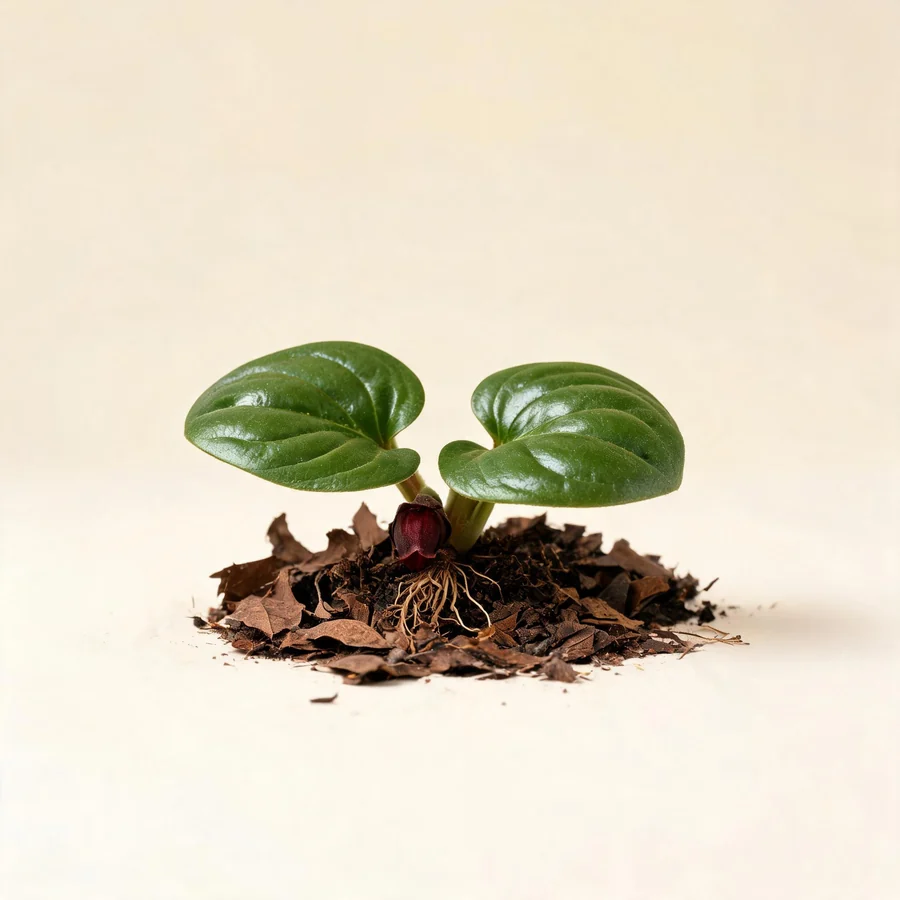
Skin profile
Where this herb sits in skin practice: the pattern it corrects, the skin signs it suits, and what it should not be used for.
Xi Xin belongs to the cold end of skin practice: pale, numb, chilly skin, and welts or chilblains provoked by cold. Its ceiling, its part and its boiling time are the medicine, and the herb should not be used at all where the species and the part cannot be verified.
Skin signs that suggest it
- Pale, cold, dry skin with itching that begins when the weather turns and eases in warmth
- Welts that appear on chilled or uncovered skin and fade slowly once warm, with chills and no thirst
- Bluish, cold, swollen fingers or toes in damp cold, with numbness and a burning ache on rewarming
- Skin that feels wooden or numb over the fingers, with a deep boring ache in the cold
- Chilblains that return every winter and are worse in damp weather
- A pale tongue, a deep tight pulse and a marked dislike of cold and draughts
When it is not the right herb
Not for skin that is red, hot, swollen or weeping, and not for the dry hot skin of yin deficiency, where the mouth is dry, the tongue has little coat and night sweats are present; a warming dispersing root makes those worse. Not as raw powder: the classical ceiling belongs to the powder form, and the recorded acute picture is a tight, suffocating chest. Not in pregnancy, not in children without specialist advice, not in known kidney disease, and never from unlabelled material whose species and part are unknown. Nor is it a treatment for a sudden cold, numb or discoloured limb, which needs urgent medical assessment.
What it does for skin
Skin-relevant actions only. Each one describes a mechanism in TCM terms and what it looks like on the skin.
Warms the surface and disperses cold
The root is acrid and warm, and its first skin use follows from that: it drives cold out of the surface where the result is pallor, chill and itch rather than redness. It sweats far less than the strong exterior herbs, so it is chosen where cold sits in the skin and the small vessels rather than where a closed exterior needs opening. The dose is one or two grams inside a formula, and the effect comes from penetration rather than from bulk.
Reaches cold that has settled in the vessels and channels
This is the action behind the classic cold-extremity formula, in which a small quantity of the root sits with cinnamon twig, peony and liquorice. Fingers that go white and numb, feet that stay cold all winter and chilblains that recur are read as cold lodged where blood should flow. The root is a guide and a warmer at once: it carries the other herbs inward and discourages the cold from settling again. It does not replace the measures that matter more, such as gloves, dry socks and not smoking.
Opens the orifices and quiets pain in the head and face
The aromatic quality that clears a blocked nose is the same one used traditionally for toothache and for ulcers of the mouth, where a little powder or a gargle is applied. On the skin this is a small local use: it relieves pain and itch in a limited area and is one of the few herbs applied to a point rather than to a whole limb. The quantity reaching the bloodstream from a small application is low, but the preparation is not therefore free of risk, and broken or ulcerated skin is avoided.
Acts as a guide herb in a very small dose
Much of what this root does in a formula is directional. A gram or two is added so that the other ingredients reach a depth they would otherwise miss, which is why its effect on a whole prescription is larger than its weight suggests. That also means a mistake in the dose is a mistake in the whole formula, and it is the reason the ceiling is stated in grams and repeated wherever the herb is described.
Skin conditions it is used for
Mapped to the condition pages on this site. The pattern column shows what the skin is doing when this herb is the right choice.
| Condition | Pattern | Why it suits | Typical setting |
|---|---|---|---|
| Raynaud's Disease | Cold in the channels with blood failing the extremities | White, numb fingers that turn blue and then red on rewarming, brought on by cold or emotion, fit the classical picture of cold obstructing the small vessels. The root appears in the standard cold-extremity formula with cinnamon twig and peony, where it is one of several warming and moving herbs rather than the main one. It is not a treatment for the underlying condition, which needs medical assessment, and any finger that stays white, blackens or ulcerates needs urgent care rather than a prescription. | Dang Gui Si Ni Tang |
| Chilblains | Cold-damp settling in the peripheral skin | Chilblains are read as cold lodged in the small vessels of the toes and fingers, and the root is used internally in a warming formula and topically in traditional liniments. The winter recurrence and the improvement in warmth are the signs that justify it. Broken chilblain skin is not a surface for a strong aromatic application, and prevention, dry warm footwear and not smoking do more than any prescription. | Dang Gui Si Ni Tang, or a warming liniment on intact skin |
| Chronic Urticaria | Wind-cold welts in a cold constitution | Welts that are pale rather than red, that rise on chilled skin and fade slowly, belong to the wind-cold type, and a small quantity of this root is added to warm the surface and help the releasing herbs work. The distinction from the hot, red type is essential, because a warming root given for heat-provoked welts makes the flare worse. Antihistamines remain the main treatment and the herbal role is adjunctive. | Modified Gui Zhi Tang with Jing Jie and Fang Feng |
| Skin Numbness | Cold-damp obstructing the channels, with numbness | Numbness without weakness, worse in cold weather, with cold pale skin and no redness, is read as obstruction by cold and damp. The root warms and penetrates, and it is combined with herbs that move blood and expel dampness. Numbness that is new, one-sided, or accompanied by weakness, speech change or a band of altered sensation requires urgent assessment rather than a warming root. | Huang Qi Gui Zhi Wu Wu Tang with a small addition of Xi Xin |
| Itchy Skin | Cold-type itch without inflammation | A dry, pale, chilly itch that appears in winter and settles in a warm room is the one itch pattern where a warming root is appropriate. It is used in a small dose to move the cold that is holding the surface, alongside blood-nourishing herbs so that the warmth has something to move. Itch with redness, ooze or heat is the opposite pattern, and the two are easy to confuse when the skin is merely dry. | Modified Dang Gui Yin Zi with a small addition of Xi Xin |
Combinations for skin
Herbs it is paired with when the skin, not an internal organ, is the target.
| Partner | Ratio | Why the pair is used |
|---|---|---|
| Gui Zhi | 3 g Xi Xin with 9 g Gui Zhi | Cinnamon twig warms the channels and moves outward while the root penetrates inward, so the pair covers the whole route from the centre to the fingertips. It is the core of the cold-extremity formula and the reason a small dose of the root can change a whole prescription. The pair is warming, so it does not suit hands that are hot and red. |
| Bai Shao | 3 g Xi Xin with 9 to 12 g Bai Shao | Peony nourishes the blood and holds it while the root warms and moves; one gives the vessels content and the other gives them movement. This is the pairing used where cold extremities come with thin blood, cramping and dry skin. The sour, gathering quality of peony also moderates the dispersing warmth of the root. |
| Gan Jiang | 1 to 3 g Xi Xin with 3 to 6 g Gan Jiang | Dried ginger warms the middle and the lungs while the root warms the channels and opens what is blocked, so the pair works from the source outward. It suits the person who is cold all through, with cold hands, a cold abdomen and thin watery phlegm. Both are warming and the pair is avoided in anyone with heat signs. |
| Fu Zi | 1 to 3 g Xi Xin with 6 to 10 g prepared Fu Zi | Prepared aconite warms the kidney yang and pulls the interior back from collapse while the root drives cold outward and opens the orifices. The combination is the classical answer to a cold patient who has also caught a chill, and it is among the most toxic pairings in the materia medica, so it belongs to a practitioner and to short supervised courses. Fu Zi is dispensed only in its prepared form. |
Formulas where it leads
- Dang Gui Si Ni Tang (当归四逆汤) - The cold-extremity formula, with angelica, cinnamon twig, peony, liquorice, jujube and a small quantity of this root. It is used where the hands and feet are cold and the pulse is fine, a picture that includes cold-induced vasospasm and chilblains. The root is a minor ingredient by weight and a major one by effect, and the formula is the reason its ceiling matters in skin practice.
- Ma Huang Fu Zi Xi Xin Tang (麻黄附子细辛汤) - Three herbs for a cold person with a chill on the surface: ephedra releases the exterior, prepared aconite warms the interior and the root carries warmth into the depths. It is included because it states the penetrating role most clearly, not because it is a skin formula; it is a toxic combination and belongs to a practitioner.
Topical use
The root is used externally in traditional practice in three ways: as a powder applied to the navel with vinegar for mouth ulcers in children, as a gargle for toothache, and as a warming liniment or plaster for cold, painful skin and chilblains. External use limits how much reaches the bloodstream, but an aromatic root on inflamed or broken skin can burn, and a plaster over a large area is not a small dose.
| Preparation | How and when it is used |
|---|---|
| Vinegar paste on the navel | Finely ground root mixed with vinegar into a paste and laid on the navel to treat mouth ulcers, a classical paediatric route that avoids internal dosing. Keep it to a small area, leave it on for a short time only, and stop if the surrounding skin reddens or stings. |
| Warming liniment | A tincture or oil containing the root, rubbed into intact cold skin on the fingers, toes or a stiff joint. Do not apply it to broken, cracked or blistered skin, and do not cover the area with a plaster or a hot water bottle afterwards, since heat increases absorption. |
| Gargle and mouth rinse | A weak decoction used as a rinse for toothache, with the liquid spat out rather than swallowed. Not for children who cannot reliably spit, and not for anyone with a history of reaction to the root. |
Patch test and cautions
Patch test a small area of normal skin for twenty four hours before first use, and keep the application small. Do not apply to broken, ulcerated or blistered skin, near the eyes, or to a large area under occlusion. Stop at once if burning, stinging or spreading redness develops. External use is avoided in pregnancy as well, because the same constituents are absorbed through skin, and the preparation is never applied to a numb area, where a burn will not be felt.
Safety for skin use
What to check before recommending or using it, including the cautions that matter most for skin patients.
Do not use, or use with caution
- Powder or pill form, and any dose above the ceiling. The classical warning that the herb must not exceed about three grams was written for powder taken raw and unmixed, and the acute effect on record is a chest that tightens until the breath cannot pass. A decoction simmered for half an hour is a different exposure, but the ceiling still applies to the powder.
- Known kidney disease or a single kidney. The root carries trace aristolochic acid even when correctly specified, and a person with impaired renal function should not take an exposure of that kind, nor should anyone with liver disease without specialist advice.
- Dry hot skin with yin deficiency: a dry mouth, night sweats, a red tongue with barely any coat and a dry cough. The root is warm and dispersing and aggravates all of it.
- Skin that is red, hot, weeping or infected. Warming a hot lesion increases redness and ooze, and an aromatic application to broken skin irritates it further.
- Pregnancy, breastfeeding and infancy. The root is contraindicated in pregnancy in every form, avoided in breastfeeding, and not used in infants at all.
Pregnancy and breastfeeding
Contraindicated in all forms, including topical. The herb appears in the classical lists of medicines to avoid in pregnancy, where its warm, acrid, dispersing character is said to unsettle the qi of the fetus, and the trace aristolochic acid adds a separate concern that no human evidence can be set against. Rarely do an old prohibition and a modern toxicological caution coincide so exactly. A pregnant woman with cold numb hands should be assessed and treated with measures that carry no such question.
Interactions
- Other nephrotoxic medicines. Aminoglycosides, cisplatin, amphotericin, ciclosporin and long-term high-dose anti-inflammatory drugs all stress the kidney, and the trace aristolochic acid in this root turns any added injury into something harder both to attribute and to undo. The combination is avoided.
- Sedatives, opioids and anaesthetics. In animals the volatile oil dampens the nervous system mildly and eases pain, so extra drowsiness is possible. Tell the prescriber and the surgical team before an operation rather than stopping the herb silently.
- Anticoagulants and antiplatelets. The concern here is theoretical, drawn from the herb's traditional classification as a mover of blood, not from any recorded bleeding, and in practice it means informing the prescriber rather than refusing the herb outright.
- Medicines handled by CYP1A2 and CYP2E1. Methyleugenol influences cytochrome activity in laboratory work, so concentrations could in principle shift; human data are thin and this is a theoretical caution rather than a reason to avoid the herb.
Allergy and patch testing
Contact dermatitis to aromatic roots in liniments and plasters is well recognised, and the stronger the aroma the more likely a reaction. Patch test before first use, keep the area small, and stop at once if the skin becomes more irritated rather than calmer. A person who has reacted to other aromatic herbs should not use a plaster containing this root.
General safety references
General references for herbal hepatotoxicity and herb-drug interactions; they are not specific to this herb.
- Review article: Herbal hepatotoxicity - an update on traditional Chinese medicine preparations. Alimentary Pharmacology & Therapeutics, 2014. PMID: 24844799.
- Interactions between herbal medicines and prescribed drugs: an updated systematic review. Drugs, 2009. PMID: 19719333.
- Warfarin and food, herbal or dietary supplement interactions: a systematic review. British Journal of Clinical Pharmacology, 2021. PMID: 32478963.
Evidence
The classical record is quoted with its source. The modern note states the level of evidence plainly.
Classical record
Acrid and warming. What it governs is cough where qi rebels, pain in the head, a sense of something stirring within, stiffness across the hundred joints, wind-dampness with painful obstruction, and flesh that has died. Used over a long period it brightens the eyes, frees the nine openings and makes the body light.
Shen Nong Ben Cao Jing (Divine Husbandman's Classic of Materia Medica) - The upper-grade rating is why later readers were surprised by the dose limit; nothing in this passage suggests a narrow margin.
Swallowed as a powder and taken by itself, it must stay under half a mace, some one and a half grams; past that point the qi jams, the chest shuts and death may follow.
Ben Cao Bie Shuo (Separate Discourses on the Materia Medica) - Where the celebrated one-qian rule began, and why it is still disputed whether it governs decoctions as well as powders.
It is forbidden where heat lies within, where fire blazes upward, where the upper body is full and the lower empty, where qi is deficient and sweat escapes, where headache comes from thin blood, or where yin deficiency produces a cough.
Ben Cao Jing Shu (Thorough Commentary on the Materia Medica) - A list of exclusions set down four hundred years ago that matches present-day practice almost line for line.
Being acrid and warm, it scatters, and that is why it answers headache from wind-cold and wind-damp, retained phlegm-fluid, qi held in the chest and epilepsy of fright. The same scattering of heat that floats upward explains its use for sores in the mouth, a blocked throat and toothache.
Ben Cao Gang Mu (Compendium of Materia Medica), Li Shizhen - Li Shizhen arguing from taste, and the clearest classical explanation of how a single root serves the surface and the orifices together.
Modern evidence
Evidence status
- The aristolochic acid content of the root and rhizome has been measured at roughly 0.5 to 5 micrograms per gram, about forty times lower than in the aerial parts, and the pharmacopoeia sets a limit of 0.001 per cent with root and rhizome as the only official part. Aristolochic acid is poorly water-soluble, so a decoction extracts comparatively little.
- The volatile oil contains safrole and methyleugenol, both of which have shown carcinogenic potential in animal work; being volatile, they are substantially reduced by boiling for thirty minutes or more. That is why a long decoction, rather than a short one, is the specified preparation.
- No controlled trial of Xi Xin in any skin condition was identified. The classical acute toxicity picture, a blocked and suffocating chest from an overdose of raw powder, is a clinical observation rather than a trial finding, and the modern safety position rests on analytical chemistry and on the dose ceiling.
PubMed records
Selected real PubMed records for this herb's species or its constituents, chosen by species name and title relevance. They are references for the non-TCM discussion above, not proof that the herb treats any skin condition.
- Asarum heterotropoides F. schmidt attenuates osteoarthritis via multi-target anti-inflammatory actions: A network pharmacology and experimental validation.. Journal of ethnopharmacology, 2025. PMID: 40345271 (skin-related record).
Dose and forms
Skin-practice dosing and the preparations that suit skin complaints.
| Form | Dose and notes |
|---|---|
| Decoction | 1 to 3 g of the dried root and rhizome, boiled for at least thirty minutes inside a formula. The long boil is a safety step rather than a matter of taste. |
| Ceiling | About 3 g a day. The classical ceiling was written for powder taken alone; decoctions of 3 to 9 g appear in modern practice with a long boil, but that is a prescriber's decision and not a range for self-treatment. |
| Powder and pill | 1 to 3 g, which is the form the classical limit describes. Powder swallowed on its own is the form in which the recorded cases of a closed chest occurred, and it is not a form for home use. |
| External | A small quantity in a liniment or a vinegar paste on intact skin. Absorption is limited but not nil, and the same cautions apply as for internal use. |
Small, and the smallness is the medicine. Only root and rhizome from a tested Asarum species, only with a long boil, and only for a short course. The root is nearly always given with other herbs, and traditional practice holds that pairing it with prepared aconite and peony moderates its toxicity, a claim that is traditional rather than demonstrated. Anyone offered this herb as loose powder with no species on the label, or as a capsule to be taken over months, should decline it.
Citations and further reading
Only real sources are listed: the classical materia medica passages quoted above, and the source works behind the botanical and safety statements.
- Shen Nong Ben Cao Jing (Divine Husbandman's Classic of Materia Medica), Han compilation - classical entry translated above.
- Ben Cao Bie Shuo (Separate Discourses on the Materia Medica) - source of the one-qian dose limit quoted above.
- Ben Cao Jing Shu (Thorough Commentary on the Materia Medica) - contraindication passage quoted above.
- Ben Cao Gang Mu (Compendium of Materia Medica), Li Shizhen, 1578 - passage quoted above.
- Pharmacopoeia of the People's Republic of China - root and rhizome as the official part, and the aristolochic acid limit of 0.001 per cent.
- IARC Monographs, aristolochic acid - basis for the Group 1 classification applied to this herb's trace contaminant.
- Modern evidence statement: summarised from analytical and toxicological literature; no dermatological trial of Xi Xin is presented as proof of effect.
Educational reference for qualified practitioners. This page is not medical advice, and skin conditions should be diagnosed by a clinician before treatment.