Skin profile
Where this herb sits in skin practice: the pattern it corrects, the skin signs it suits, and what it should not be used for.
Gui Zhi is a warming surface and channel herb, not a treatment for inflamed skin. It is chosen when the skin is cold, pale and slow, and it is left out when the skin is hot, red and active.
Skin signs that suggest it
- Pale, cool, clammy skin that dislikes draughts and feels cold to the touch
- Wheals that rise after cold wind, a cold swim or a chill, with itching and a pale surface
- White, blue or purple fingers and toes in the cold, with numbness and slow rewarming
- Dusky, cold, doughy skin around a chronic ulcer or a slow-healing area
- Dark, mottled facial patches with cold limbs, a pale swollen tongue and no thirst
When it is not the right herb
Not for heat. A rash that is red, hot, itchy and worse in warmth, a flushing face, a feverish cold with a sore throat or a bright red tongue are all made worse by a warm, dispersing twig. Not for yin deficiency with empty fire, where night sweats, a dry mouth and hot palms mean the fluid is already short. Not for blood heat with bleeding, and not for a pregnancy cold without advice. It is also the wrong herb for a cold, dry, scaly skin with no circulation problem to move: warmth alone does not make moisture.
What it does for skin
Skin-relevant actions only. Each one describes a mechanism in TCM terms and what it looks like on the skin.
Releases the surface and settles cold-provoked wheals
The twig opens the muscle layer gently, warming the defensive Qi and bringing it back into step with the nutritive Qi. That is the mechanism behind its use in wind-cold urticaria, where wheals appear after a chill or a cold wind and the skin is pale rather than red. It is a mild release, suitable where there is already sweating, and it is paired with a sour, astringing herb so the surface is opened and closed in balance.
Warms the channels so blood reaches the extremities
Cold narrows the small vessels, and the tradition reads the result as channels that have closed. The twig warms and opens them, which is why it is used for chilblains, white and painful fingers in winter, and numb cold toes. Its warmth is carried into a formula with blood-moving partners rather than applied alone.
Assists Yang so cold dampness leaves the surface
Where Yang is too weak to move fluid, the skin looks pale, puffy and clammy and the limbs feel heavy. The twig supplies warmth rather than drainage, restoring the transforming function so that the draining herbs can work. The picture is cold and wet, with a pale swollen tongue, not hot and dry.
Moves blood in the fine vessels of the face
The twig is one of the moving herbs in the formula for dark facial patches, where stasis sits in the small vessels and the complexion becomes mottled and dull. Its warmth suits the cold, sluggish version of that picture. A face that is hot, flushing and red is not this pattern, and warming it would make matters worse.
Helps a cold, chronic ulcer to close
An ulcer with a dusky, cold, doughy edge and thin discharge is read as tissue that has lost its warmth and movement. The twig warms and moves, and it is used with astragalus to supply the Qi that drives repair. A hot, spreading, foul-smelling ulcer is an infection and needs medical care, not a warming decoction.
Skin conditions it is used for
Mapped to the condition pages on this site. The pattern column shows what the skin is doing when this herb is the right choice.
| Condition | Pattern | Why it suits | Typical setting |
|---|---|---|---|
| Urticaria | Wind-Cold: pale wheals after cold exposure, with chill and no thirst | Wheals that rise after a draught, a cold swim or a winter walk, with a pale skin, a chill and an absence of thirst, are read as wind-cold held at the surface. The twig warms the defensive Qi and releases the muscle layer, and it is paired with a sour herb that keeps the release from exhausting the surface. A wheal that is red, hot and worse in warmth is the opposite pattern. | Gui Zhi Tang |
| Chilblains | Cold in the channels with poor peripheral circulation | A chilblain is cold that has settled in the small vessels of the toes or fingers. The twig warms those channels and moves the blood that has pooled, and it is used in a warming formula with blood-moving and channel-reaching partners. The lesion must be intact: a chilblain that has blistered, ulcerated or become hot and spreading needs medical assessment and not a warming wash. | Dang Gui Si Ni Tang |
| Raynaud's disease | Cold invading the channels, with white then blue fingers | The episodic colour change of white, blue and then red fingers is read as cold driving deep into the channels and blood retreating from the surface. The twig is the warming herb that opens those channels, and it is used with blood-moving and Qi-supplying partners. It supports warmth and circulation; it does not replace the medical assessment that a first episode of Raynaud's requires, especially if it is one-sided or appears in an older person. | Dang Gui Si Ni Tang, or Huang Qi Gui Zhi Wu Wu Tang |
| Cool or clammy skin sensation | Ying-Wei Disharmony: cold, clammy skin with spontaneous sweating | Skin that feels cool and damp, with sweating that comes without effort and a dislike of draughts, is read as the nutritive and defensive levels failing to harmonise. The twig warms the defensive Qi and restores the relationship between the two, which is exactly the task of the classical formula it leads. The picture is one of deficiency and cold, not of heat, and a hot, dry skin with night sweats is the opposite case. | Gui Zhi Tang |
| Melasma | Qi and Blood Stagnation with cold, sluggish circulation | Dark facial patches in a person with cold hands, a pale complexion and sluggish circulation are read as stasis with cold. The twig warms and moves the fine vessels of the face, and it is used in the formula that pairs it with poria, peony, peach kernel and moutan. The patches fade slowly, over months, and sun protection is part of the treatment rather than an afterthought. | Gui Zhi Fu Ling Wan |
Combinations for skin
Herbs it is paired with when the skin, not an internal organ, is the target.
| Partner | Ratio | Why the pair is used |
|---|---|---|
| Bai Shao | 1 to 1, as in Gui Zhi Tang | The best known pairing in the whole materia medica and the model of release balanced by restraint. The twig warms and opens the surface, and the peony nourishes and astringes, so the skin is warmed without being drained. On the skin it suits cold wheals with spontaneous sweating, and the clammy, cool surface of a person who cannot hold their warmth. |
| Huang Qi | 15 to 30 g Huang Qi with 9 g Gui Zhi | Astragalus supplies the Qi that drives repair, and the twig warms the channels so the Qi can reach the surface. The pair is the core of the formula for cold, chronic, slow-healing skin and ulcers, and it is used where the tissue is pale, cool and inert rather than hot and infected. The warming herb is kept to a modest share. |
| Dang Gui | 10 g of each, as in Dang Gui Si Ni Tang | Dang Gui nourishes Blood and the twig warms and moves it, so the pair reaches cold extremities where nourishment alone would sit. It is the pairing used for chilblains, white fingers and numb cold toes, and it is taken as a course before the cold season rather than only once the lesions have formed. |
| Fu Ling | Equal parts, as in Gui Zhi Fu Ling Wan | Poria drains fluid and the twig warms the Yang that transforms it, so one addresses the origin while the other deals with what has already gathered. In skin practice the pair sits in the formula for dark facial patches with a sluggish, fluid-retaining constitution, and it is also used where a pale, puffy skin accompanies the discolouration. |
Formulas where it leads
- Gui Zhi Tang (桂枝汤) - The foundational formula for wind-cold at the muscle layer, with peony, ginger, jujube and liquorice. Its skin use is the cold-provoked wheal and the clammy, cool surface with spontaneous sweating, and it is taken warm with rice porridge so that the release is gentle.
- Dang Gui Si Ni Tang (当归四逆汤) - A warming formula for cold that has reached the extremities, with the twig, peony, asarum, akebia, jujube and liquorice. It is the classical setting for chilblains and white, painful fingers, and it is given as a course in the cold months rather than as a single dose.
- Huang Qi Gui Zhi Wu Wu Tang (黄芪桂枝五物汤) - Astragalus and the twig with peony, ginger and jujube, built for numb, cold and poorly nourished limbs. In skin practice it is used for chronic ulcers and dusky, cold skin that heals slowly, and it is not used on a hot, infected lesion.
- Gui Zhi Fu Ling Wan (桂枝茯苓丸) - The twig with poria, peony, peach kernel and moutan, a formula for stasis with cold. Its skin use is the dark, mottled facial patch in a person with sluggish circulation, and it is a practitioner's formula rather than a household one.
Safety for skin use
What to check before recommending or using it, including the cautions that matter most for skin patients.
Do not use, or use with caution
- Heat patterns: a red, hot, itchy rash, a flushing face, a feverish cold with a sore throat or a bright red tongue. Warming and dispersing add to heat.
- Yin deficiency with empty fire: night sweats, a dry mouth and throat, hot palms and soles, and a red tongue with little coat. The twig spends fluid that is already short.
- Blood heat with bleeding: heavy periods, nosebleeds, blood in the sputum or purpura. A warm, mobilising herb can drive the bleeding harder.
- Pregnancy, except under specialist care, and any use of Gui Zhi Fu Ling Wan, which is a strong formula for stasis and not an antenatal remedy.
Pregnancy and breastfeeding
Classical lists treat it with caution rather than forbidding it, but a skin complaint in pregnancy is not a reason to start without advice. Warmth, movement and a blood-moving tendency together argue for restraint, and the twig oil has relaxed uterine muscle in laboratory work. The ready-made formula Gui Zhi Fu Ling Wan belongs in specialist hands, not in a pregnancy treated at home for dark facial patches. During breastfeeding keep to a short course for a clear cold pattern, because cinnamaldehyde enters milk in small quantities and older sources caution that cassia may lessen milk flow.
Interactions
- Anticoagulants and antiplatelet medicines. Two of the twig's constituents, cinnamic acid and cinnamaldehyde, have demonstrated antiplatelet effects, so warfarin, aspirin and clopidogrel may bleed more than intended. Bruising that appears without a cause is a signal to stop and seek advice.
- Diabetes medicines. Trials of cinnamon have reduced blood glucose, mostly with bark rather than twig, so insulin and sulfonylureas may need closer monitoring if a course is started.
- Medicines handled by CYP3A4. In the laboratory cinnamon blocks this enzyme, which raises a theoretical concern for a statin, a calcium channel blocker and other medicines cleared by the same pathway.
Allergy and patch testing
Cinnamaldehyde is a recognised fragrance allergen, and contact dermatitis from cinnamon-containing products is well documented. People who react to balsam of Peru or to other fragrance mixes are more likely to react. Patch test any wash or cream for 24 hours, and stop at once if the skin stings, reddens or swells.
General safety references
General references for herbal hepatotoxicity and herb-drug interactions; they are not specific to this herb.
- Review article: Herbal hepatotoxicity - an update on traditional Chinese medicine preparations. Alimentary Pharmacology & Therapeutics, 2014. PMID: 24844799.
- Interactions between herbal medicines and prescribed drugs: an updated systematic review. Drugs, 2009. PMID: 19719333.
- Warfarin and food, herbal or dietary supplement interactions: a systematic review. British Journal of Clinical Pharmacology, 2021. PMID: 32478963.
Evidence
The classical record is quoted with its source. The modern note states the level of evidence plainly.
Classical record
去伤风头痛,开腠理,解表发汗,去皮肤风湿。
It clears headache from Wind injury, opens the interstices, releases the exterior and promotes sweating, and drives Wind-Damp out of the skin.
Zhen Zhu Nang (Pearl Pouch), Zhang Yuansu, Jin dynasty - Zhang Yuansu is the one classical author here who names the skin directly, and the passage is the clearest warrant for the surface uses on this page.
主上气咳逆,结气,喉痹吐吸,利关节。
It settles Qi that rebels upward with cough, disperses knotted Qi, opens a blocked throat so that breath can be drawn, and frees the joints.
Shen Nong Ben Cao Jing (Divine Husbandman's Classic of Materia Medica), Han compilation - The oldest entry joins the throat and the joints, which is the double character of the twig: surface above, channels below.
治一切风冷风湿,骨节挛痛,解肌开腠理,抑肝气,扶脾土,熨阴痹。
Li Shizhen records it for Wind-Cold and Wind-Damp of every kind, for cramping pain of the bones and joints, for releasing the muscle layer and opening the pores, for restraining Liver Qi, supporting the Spleen and warming Cold-type impediment.
Ben Cao Gang Mu (Compendium of Materia Medica), Li Shizhen, 1578 - The Ming summary is a catalogue of the uses still taught, and the opening phrase, Wind-Cold and Wind-Damp of every kind, is what allows the twig into so many skin formulas.
阴虚血乏,素有血证,外无寒邪,阳气内盛,四者禁用。
Where Yin is deficient and Blood thin, where bleeding has long been a tendency, where no external Cold is present, or where Yang is excessive within, it must not be used.
De Pei Ben Cao (Materia Medica of Combined Properties), Qing dynasty - The Qing list of four prohibitions is the source of the cautions on this page, and it is unusually absolute for a herb of such wide use.
Modern evidence
Evidence status
- Cinnamaldehyde and cinnamic acid, the twig's main volatile constituents, have been studied in the laboratory and in animals for anti-inflammatory, antimicrobial and vasodilatory activity. These findings are experimental and do not establish a benefit for urticaria, chilblains or Raynaud's in people.
- Trials of cinnamon for blood glucose used bark powder rather than the twig, and none of them examined a skin outcome. No controlled trial of Gui Zhi in a skin condition was identified, so the skin uses rest on the classical and formula tradition.
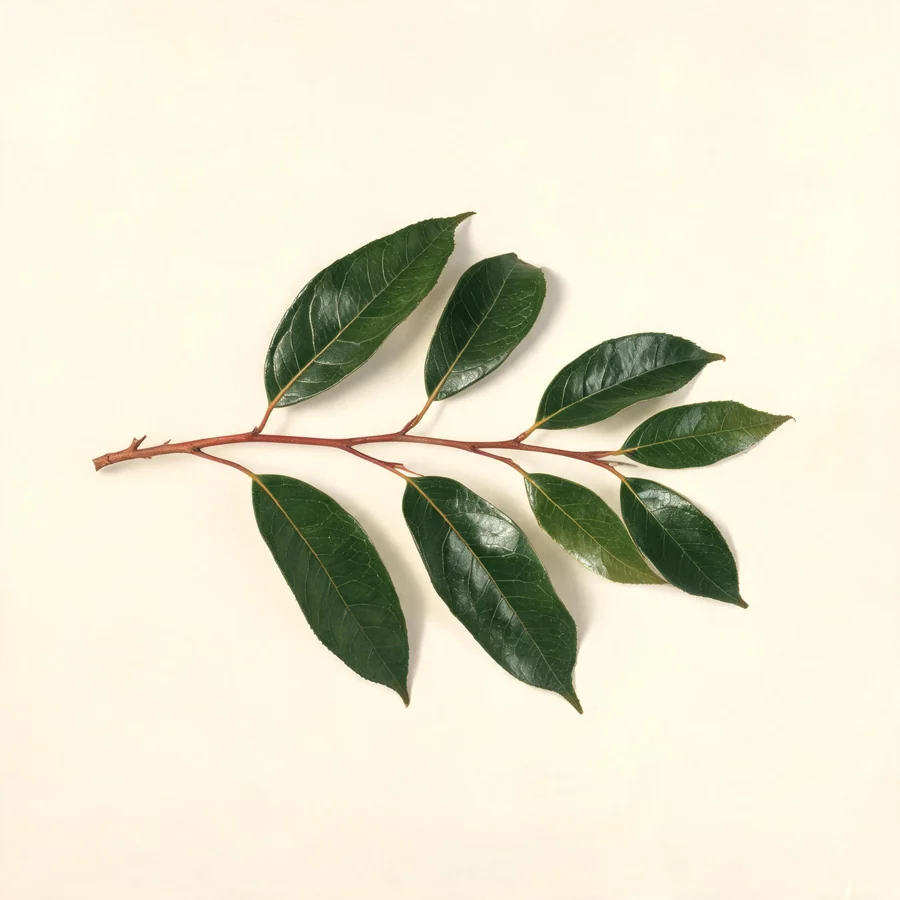
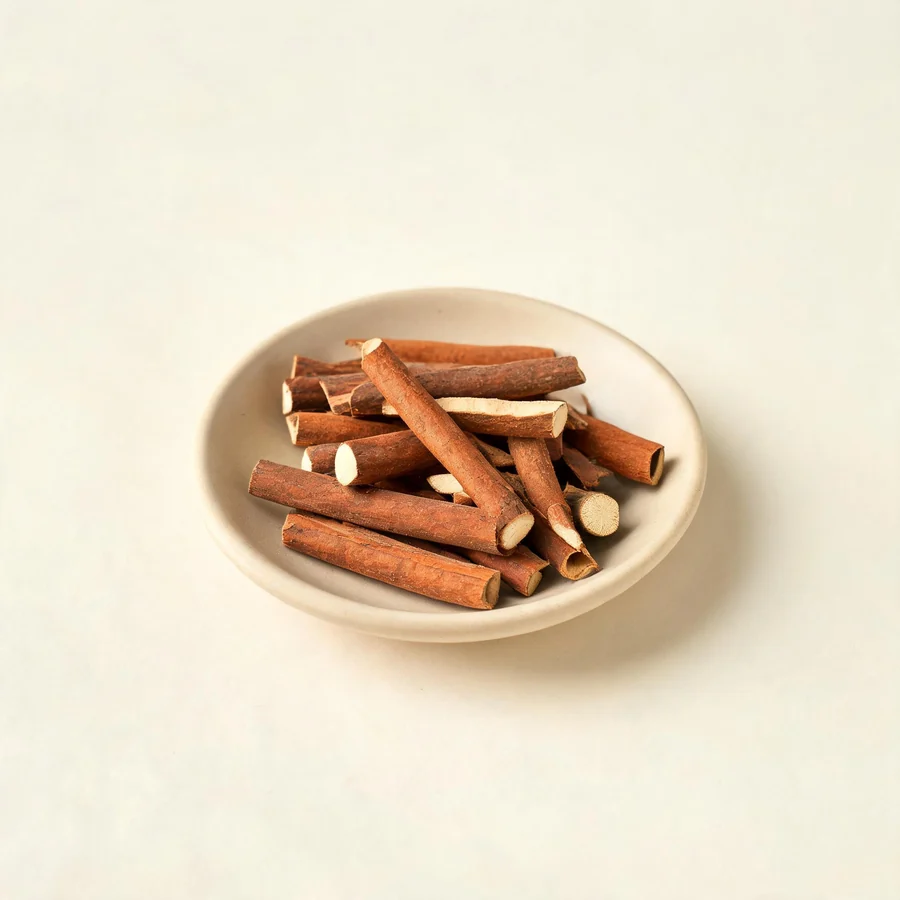
- Regulatory status: the twig is an accepted article in the Chinese Pharmacopoeia as Ramulus Cinnamomi. The quality question is identity, because bark, leaf stalk and other Cinnamomum species are sold as twig, and bark is hotter and more interior. What this page describes is traditional practice and the state of the evidence, not a claim of proven benefit.
PubMed records
Selected real PubMed records for this herb's species or its constituents, chosen by species name and title relevance. They are references for the non-TCM discussion above, not proof that the herb treats any skin condition.
- Anti-proliferation and anti-migration effects of an aqueous extract of Cinnamomi ramulus on MH7A rheumatoid arthritis-derived fibroblast-like synoviocytes through induction of apoptosis, cell arrest and suppression of matrix metalloproteinase.. Pharmaceutical biology, 2020. PMID: 32878533 (skin-related record).
Dose and forms
Skin-practice dosing and the preparations that suit skin complaints.
| Form | Dose and notes |
|---|---|
| Decoction | 3 to 10 g of dried twig daily inside a formula. Six to nine grams is the usual range for releasing the surface, and three to six grams when it only guides other herbs. |
| By purpose | Warming the channels for chilblains or white fingers takes the upper end, nine to twelve grams where the cold is strong, and that range belongs to a practitioner rather than to home use. |
| Decoction method | No special handling is required, but much of the action sits in its volatile oil, so give the twig a normal twenty to thirty minute simmer rather than an hour-long boil. |
| Course length | A short course of one to three weeks for a cold pattern, stopped when the skin is warm and even. Long courses at the top of the range dry the skin and cost fluid. |
A moderate dose of a warm, dispersing twig. Most clinical use stays below nine grams, and how much is given depends on its job in the prescription rather than on the twig alone. Too much in a person short of yin produces sweating, thirst and restlessness instead of a stronger effect. The honey-fried form is gentler on the middle, and the raw twig is the stronger surface release.
Citations and further reading
Only real sources are listed: the classical materia medica passages quoted above, and the source works behind the botanical and safety statements.
- Zhen Zhu Nang (Pearl Pouch), Zhang Yuansu, Jin dynasty - the passage on Wind-Damp in the skin is quoted in the original above.
- Shen Nong Ben Cao Jing (Divine Husbandman's Classic of Materia Medica), Han compilation - the throat and joint passage is quoted in the original above.
- Ben Cao Gang Mu (Compendium of Materia Medica), Li Shizhen, 1578 - the Wind-Cold and Wind-Damp passage is quoted in the original above.
- De Pei Ben Cao (Materia Medica of Combined Properties), Qing dynasty - the four prohibitions are quoted in the original above.
- Ramulus Cinnamomi monograph, Pharmacopoeia of the People's Republic of China - accepted source, part and quality requirements.
- Modern evidence statement: based on published laboratory and animal work on cinnamaldehyde and cinnamic acid, presented as a statement about the level of evidence.
Educational reference for qualified practitioners. This page is not medical advice, and skin conditions should be diagnosed by a clinician before treatment.