Skin profile
Where this herb sits in skin practice: the pattern it corrects, the skin signs it suits, and what it should not be used for.
Xian Mao is the strongest warming herb on this list and the one with the clearest ceiling. It is used for a cold, pale, inert surface with cold signs throughout, in a short course, and it is stopped when the skin is warm again.
Skin signs that suggest it
- Skin that is cold to the touch, pale or dusky, with cold hands, feet and lower back
- Chilblains that recur each winter in a person who feels the cold everywhere
- Chronic leg or foot ulcers with a pale, cold, boggy surrounding skin and thin discharge
- Tight, hardened or waxy skin with cold intolerance, fatigue and a deep slow pulse
- A pale, swollen tongue with a white coat, and a pulse that is deep and slow
When it is not the right herb
Not for skin that is hot, red, swollen or infected, and not for a flushing face with a red tongue. Not for yin deficiency with empty fire, where a dry mouth, night sweats and hot palms mean the cooling side is already short. Not in pregnancy or breastfeeding, not for children, and not for anyone with liver or kidney disease. It is also not a herb to take indefinitely: a warm feeling is not evidence that the course can continue, and the organ damage associated with it is cumulative.
What it does for skin
Skin-relevant actions only. Each one describes a mechanism in TCM terms and what it looks like on the skin.
Warms Yang so blood returns to the surface
The herb reaches the Yang that the tradition places in the Kidney and warms it directly. When that warmth is short, the periphery is the first place to lose its supply, so the skin is pale, cold and slow to repair. The aim is to restore the interior warmth that keeps the surface supplied, not to heat the skin from outside.
Drives cold and dampness out of the limbs
Its pungent heat opens channels that cold has closed. The signs are cold, aching, heavy limbs, chilblains and fingers that change colour in winter, and the herb is used with other warming and blood-moving partners so the cold leaves and the blood follows.
Supports the repair of cold, chronic tissue
An ulcer or an area of hardened skin that is cold, pale and inert is read as tissue without Yang. The herb is used in a warming formula with astragalus and blood-moving herbs to supply warmth and movement, and it is stopped if the area becomes hot, red or painful, which suggests infection rather than a cold deficiency.
Skin conditions it is used for
Mapped to the condition pages on this site. The pattern column shows what the skin is doing when this herb is the right choice.
| Condition | Pattern | Why it suits | Typical setting |
|---|---|---|---|
| Chilblains | Yang Deficiency with Cold-Damp | Chilblains that recur every winter in a person who is cold all over, with a cold lower back and a deep slow pulse, point to Yang that cannot keep the limbs warm. The herb warms the source of the body's heat and drives the cold out of the small vessels, and it is used in a warming formula for a short course before and during the cold season. A chilblain that has ulcerated or become hot needs medical care. | Er Xian Tang, modified with Dang Gui and Hong Hua |
| Raynaud's disease | Kidney Yang Deficiency with cold in the channels | White, blue and then red fingers in a cold person with a cold lower back and fatigue are read as Kidney Yang deficiency that cannot push warmth to the extremities. The rhizome warms that source, and it is used with blood-moving and channel-opening partners. A first episode of Raynaud's, or one that is one-sided or new in later life, needs medical assessment before any herb is considered. | Er Xian Tang, or a warming formula with Dang Gui and Gui Zhi |
| Scleroderma | Kidney and Spleen Yang Deficiency with cold and hardening | Tight, hardened skin with cold intolerance and fatigue is read as Yang deficiency with cold and dampness settled in the tissue. The herb is a warming support in a longer formula, not a treatment for the fibrosis itself, and it is used only while the cold picture is clear. Skin that is tightening rapidly, or that is associated with internal organ symptoms, needs specialist care. | Er Xian Tang with Huang Qi and Dang Gui |
| Cool or clammy skin sensation | Yang Deficiency with Cold-Damp | A persistent feeling of cold and clamminess in the skin, with cold limbs and a pale swollen tongue, is read as Yang deficiency with cold dampness at the surface. The herb warms the interior and dries the cold dampness, and it is used in a short course with herbs that strengthen the Spleen. A cold, clammy skin with breathlessness, chest pain or fainting is an emergency and not a pattern to treat at home. | Er Xian Tang |
| Skin numbness | Kidney Yang Deficiency with cold-damp in the channels | Numbness that comes with cold, pale skin and a deep slow pulse is read as Yang failing to reach the channels, with cold dampness settling there. The rhizome warms and opens, and it is paired with herbs that strengthen the sinews and move the blood. Numbness that is sudden, one-sided or accompanied by weakness needs urgent medical assessment. | Er Xian Tang with Ba Ji Tian and Dang Gui |
Combinations for skin
Herbs it is paired with when the skin, not an internal organ, is the target.
| Partner | Ratio | Why the pair is used |
|---|---|---|
| Yin Yang Huo | 6 to 9 g of each, as in Er Xian Tang | The two warming Yang herbs of the materia medica, and the pair at the centre of the formula for cold below with flushing above. Epimedium warms more gently and moves wind-dampness, while the curculigo is the hotter, fiercer partner. On the skin the pair is used for cold, pale, slow-healing tissue, and the dose of the hotter herb stays at the low end. |
| Zhi Mu | 2 parts Xian Mao to 1 part Zhi Mu | Two opposites that make the warming formula safe. Anemarrhena is cold and moistening and clears deficiency fire, while the curculigo warms Yang. The cold herb holds back the heat that might otherwise scorch yin, and the warm one stops the cold from damping the Yang. It is the model for the mixed picture of cold feet and a flushing face. |
| Ba Ji Tian | 6 g Xian Mao with 10 g Ba Ji Tian | Morinda is milder, moister and safer for a longer course, and it reaches the lower limbs. Adding it lets the curculigo dose come down while the warming and sinew-strengthening action is preserved. The two are used for cold, weak knees and a cold lower back with numb skin. |
| Dang Gui | 6 g Xian Mao with 10 g Dang Gui | Dang Gui nourishes Blood and the curculigo supplies the Yang that moves it, so cold, dry, thin skin in an older person is warmed and fed at the same time. The pair is used for a pale, cold, thin skin that tears easily and heals slowly, and it is kept to a short course. |
Formulas where it leads
- Er Xian Tang (二仙汤) - The formula of the two immortals, with curculigo and epimedium balanced by anemarrhena and phellodendron, with angelica and morinda in support. It was built for the mixed picture of menopausal cold below and heat above, and its skin use is the cold, pale surface that accompanies that picture. The cooling herbs are what make the hot rhizome tolerable.
Safety for skin use
What to check before recommending or using it, including the cautions that matter most for skin patients.
Do not use, or use with caution
- Yin deficiency with blazing fire: a dry mouth, night sweats, hot palms, restless sleep and a red tongue with little coat. The hot, drying rhizome deepens the depletion and pushes the fire higher.
- Hot, red, inflamed or infected skin, a feverish illness, and bleeding driven by heat. Pungent heat adds to a fever or a haemorrhage that heat is already driving.
- Pregnancy and breastfeeding. The pharmacopoeia classes the rhizome as slightly toxic, its heat is strong, and there are no human safety data for either situation.
- Children, and anyone with liver or kidney disease. Harm from this herb accumulates and falls on those organs, and it is not recommended for the young.
- Long courses without review. Acute toxicity is low, yet prolonged use has been associated with organ damage, so setting a clear stopping point is itself part of using the herb safely.
Pregnancy and breastfeeding
Not to be used. The heat and the slight toxicity raise concern for fetal development, there are no human data on its use in pregnancy, and the classical texts do not count it among the herbs regarded as safe. Avoidance, rather than a cautious dose, is the default. The same answer applies while breastfeeding: how much of the curculigosides and alkaloids passes into milk is unknown, and its warming character may unsettle the infant. A cold skin problem in pregnancy is managed with warmth, rest and practitioner advice instead.
Interactions
- Hormonal medicines. Androgenic activity and an effect on the hypothalamic-pituitary-gonadal axis are reported in animals, so hormone replacement therapy, oral contraceptives and anti-androgen treatment should be reviewed before the herb is added.
- Hepatotoxic medicines. Since long or high-dose use has been associated with liver and kidney injury, taking it alongside high-dose paracetamol, a statin or a liver-burdening antibiotic adds risk without benefit.
- Anticoagulants and antiplatelet medicines. Preliminary work suggests an antithrombotic effect, so warfarin, heparin and antiplatelet drugs carry a narrower margin for bleeding.
General safety references
General references for herbal hepatotoxicity and herb-drug interactions; they are not specific to this herb.
- Review article: Herbal hepatotoxicity - an update on traditional Chinese medicine preparations. Alimentary Pharmacology & Therapeutics, 2014. PMID: 24844799.
- Interactions between herbal medicines and prescribed drugs: an updated systematic review. Drugs, 2009. PMID: 19719333.
- Warfarin and food, herbal or dietary supplement interactions: a systematic review. British Journal of Clinical Pharmacology, 2021. PMID: 32478963.
Evidence
The classical record is quoted with its source. The modern note states the level of evidence plainly.
Classical record
主心腹冷气不能食,腰脚风冷,挛痹不能行,丈夫虚劳,老人失溺,无子,益阳道。
It governs cold Qi in the chest and abdomen that stops a person eating, wind-cold in the lower back and legs with cramping obstruction that prevents walking, consumptive strain in men, incontinence in the elderly and childlessness, and it benefits the Yang pathway.
Kai Bao Ben Cao (Materia Medica of the Kai Bao Era), Song dynasty - The earliest full statement already contains both halves of the herb's reputation, the cold lower body and the failing urinary and reproductive functions, and the cold limbs are the part that matters for the skin.
仙茅性热,补三焦命门之药也。惟阳弱精寒、禀赋素怯者宜之。若体壮相火炽盛者服之,反能动火。
The herb is hot and belongs among the medicines that supplement the Triple Burner and the Gate of Vitality. It suits only those whose Yang is weak and whose essence is cold, with a naturally timid constitution. Taken by the robust in whom ministerial fire blazes, it stirs fire instead.
Ben Cao Gang Mu (Compendium of Materia Medica), Li Shizhen, 1578 - The warning is as important as the indication. It restricts the herb to genuine Yang weakness, which is exactly the skin picture of cold, pale, inert tissue.
仙茅虽温,而无发扬之气,长于闭精,而短于动火。
Although warm, the herb has no outward-scattering quality; it is strong at closing and securing essence and weak at stirring fire.
Ben Cao Xin Bian (New Compilation of Materia Medica), Chen Shiduo, Qing dynasty - Chen Shiduo's refinement explains why the herb is used for leaking and coldness rather than for a collapse, and it is a reminder that its heat moves inward rather than outward.
Modern evidence
Evidence status
- In mice, one oral dose of 150 g per kg produced no deaths over seven days, which is a signal of very low acute toxicity. The concern recorded in the modern literature is different: prolonged or excessive use has been linked to damage to the liver, kidneys and reproductive organs, and that is a cumulative risk rather than an overdose effect.
- Laboratory work on the curculigosides and other phenolics reports antioxidant, immunomodulatory and androgenic activity, and some studies examine bone and reproductive tissue. These are cell and animal findings. No controlled clinical trial of Xian Mao in a skin condition was identified.
- Regulatory status: the rhizome is an accepted article in the Chinese Pharmacopoeia and is classed there as slightly toxic. Adulteration is a real danger, because the root of an aconite relative with aconitine-type alkaloids has been sold under the same name and has caused serious poisoning. What this page describes is traditional practice and the state of the evidence, not a claim of proven benefit.
PubMed records
Selected real PubMed records for this herb's species or its constituents, chosen by species name and title relevance. They are references for the non-TCM discussion above, not proof that the herb treats any skin condition.
- Fingerprint analysis and simultaneous determination of phenolic compounds in extracts of Curculiginis Rhizoma by HPLC-diode array detector.. Chemical & pharmaceutical bulletin, 2013. PMID: 23902862 (pharmacology or review record).
Dose and forms
Skin-practice dosing and the preparations that suit skin complaints.
| Form | Dose and notes |
|---|---|
| Decoction | 3 to 10 g of dried rhizome daily inside a formula. Three to five grams is the usual share when it sits with other Yang tonics, and the top of the range is kept for severe cold-damp pain. |
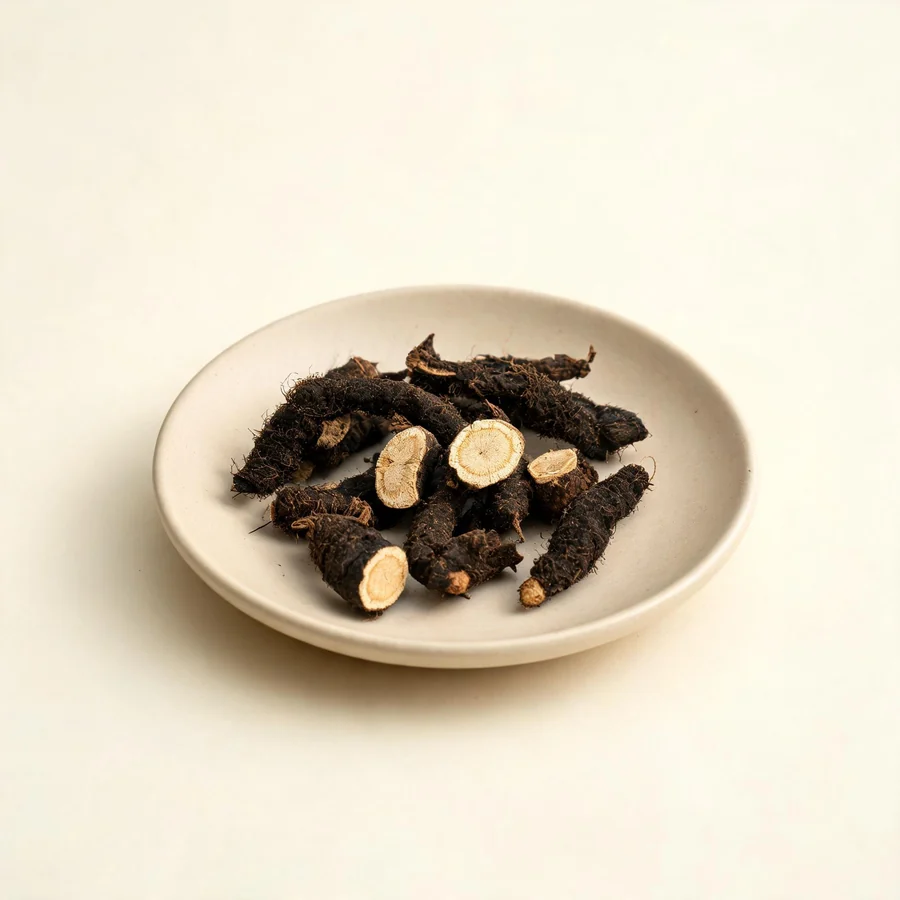
| Wine-processed form | The wine-processed rhizome is preferred internally, because processing tempers its heat and makes it less irritating. Where only raw material is to hand, soak it in rice-washing water before decoction. |
| Course length | Two to four weeks with a clear stopping point, then review. The toxicity accumulates, so this is not a herb for daily long-term use and it is not repeated without checking liver and kidney function. |
| Ceiling | Fifteen grams is the stated ceiling when deficiency is severe and the case is supervised; it is not a routine dose, and it is not used at that level in an older or depleted person. |
Duration matters more than the number. Three to ten grams of the processed rhizome for a defined course is the ordinary use, and the dose comes down when the person is older or the deficiency is mixed with heat. Raw material is reserved for cold-damp pain and the wine-processed form for internal use. Anyone whose liver or kidneys are diseased should avoid it entirely unless a specialist is supervising.
Citations and further reading
Only real sources are listed: the classical materia medica passages quoted above, and the source works behind the botanical and safety statements.
- Kai Bao Ben Cao (Materia Medica of the Kai Bao Era), Song dynasty - the passage on cold Qi and the lower body is quoted in the original above.
- Ben Cao Gang Mu (Compendium of Materia Medica), Li Shizhen, 1578 - the warning on weak Yang and blazing fire is quoted in the original above.
- Ben Cao Xin Bian (New Compilation of Materia Medica), Chen Shiduo, Qing dynasty - the passage on closing and securing is quoted in the original above.
- Curculiginis Rhizoma monograph, Pharmacopoeia of the People's Republic of China - accepted source, part, toxicity classification and dose range.
- Modern evidence statement: based on published laboratory, animal and observational work on Curculigo orchioides, presented as a statement about the level of evidence.
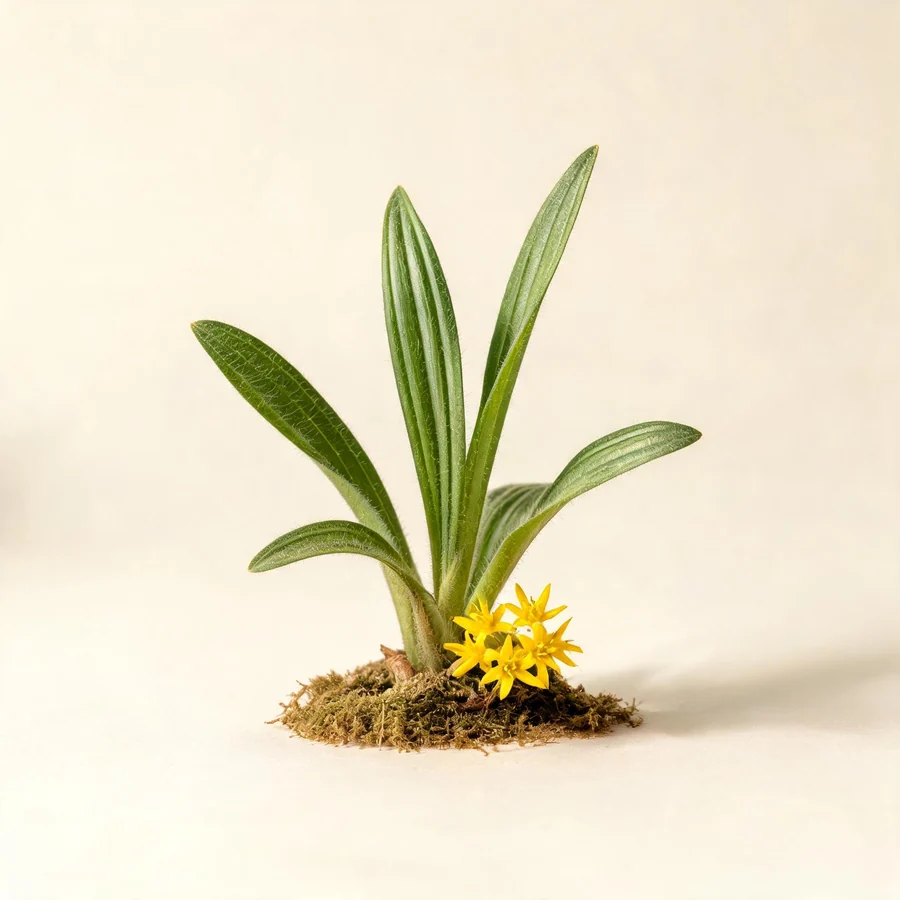
- Botanical description and identification: botanical literature on Curculigo orchioides, Hypoxidaceae, and on the aconite relative sold as an adulterant.
Educational reference for qualified practitioners. This page is not medical advice, and skin conditions should be diagnosed by a clinician before treatment.