Skin profile
Where this herb sits in skin practice: the pattern it corrects, the skin signs it suits, and what it should not be used for.
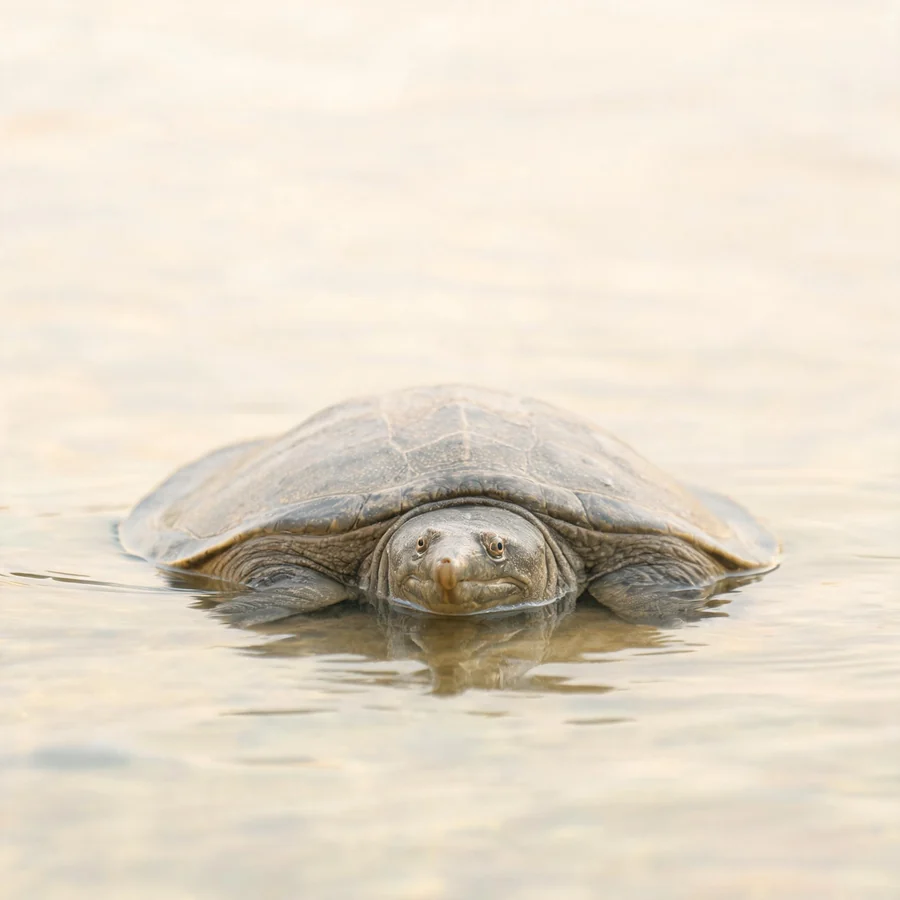
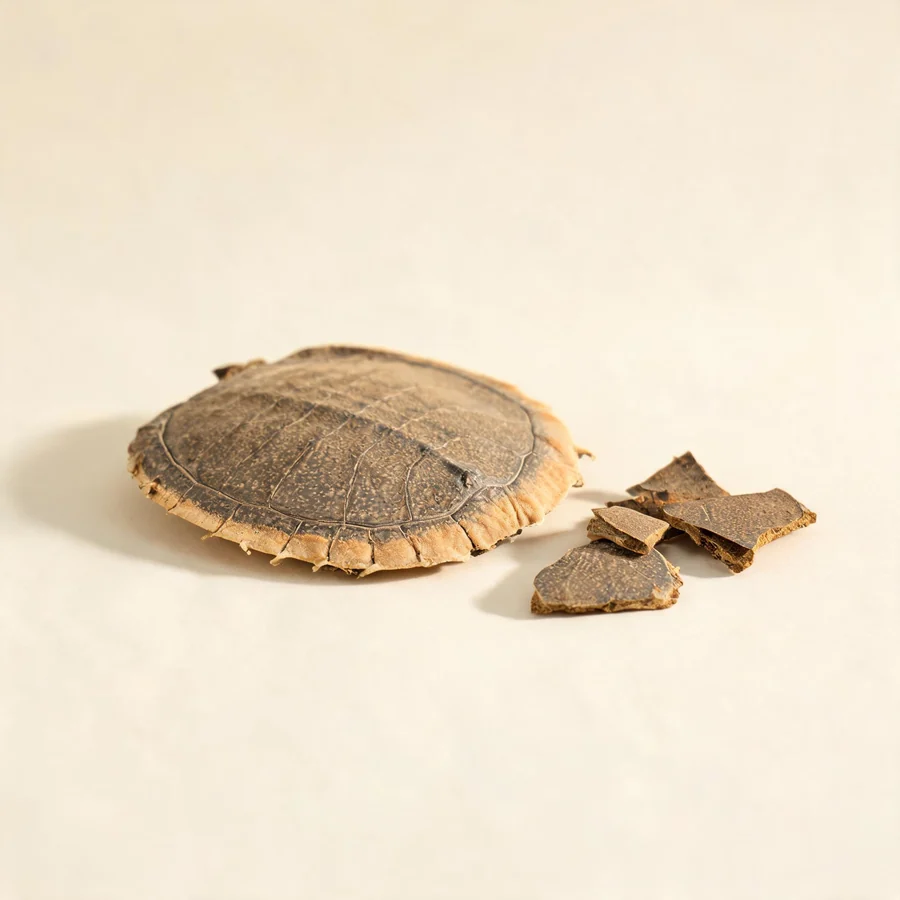
Bie Jia is chosen for skin that is dry and hot from deep depletion, and for lumps and scars that have become hard and fixed. It is an animal shell, so the species, the cleaning and the paperwork matter as much as the dose.
Skin signs that suggest it
- Skin that is dry and thin yet hot to the touch, with flushing over the cheekbones in the afternoon or evening (empty heat)
- Sweating at night that leaves the skin damp and cold by dawn, with thirst, a parched mouth and a red tongue with almost no coating
- A scar or nodule that is firm, fixed and slow to change, with dark or purplish skin over it (hardness)
- Itch in older, dry skin that is worse at night, with a sore low back, dry eyes and a fine rapid pulse
- A sensation of heat coming from inside the bones rather than from the room (steaming bone heat)
When it is not the right herb
This is not a herb for red, weeping or infected skin, and it is not for the ordinary dryness of winter that an emollient settles. Anyone with loose bowels, little appetite, nausea or a cold feeling in the abdomen should leave it alone: a salty, cooling, weighty shell is a burden on a weak Spleen, and the stool loosens long before the skin improves. It is avoided in pregnancy. Nor is it the first choice where dryness comes from plain Blood deficiency, with no heat and no fixed lump: Blood that is already thin is the last thing to set in motion, and the skin dries further. Finally, a firm lump is a diagnosis before it is a pattern, so any new, enlarging or painful mass needs medical assessment rather than a shell.
What it does for skin
Skin-relevant actions only. Each one describes a mechanism in TCM terms and what it looks like on the skin.
Rebuilds deep Yin so the surface stops burning
The shell is salty, cool and heavy, and it is described as entering the deepest layer the tradition works with, the Yin of the Liver and Kidney. When that reserve is low the skin loses its moisture and its coolness at once: it feels papery and hot, flushes in the late afternoon, and sweats at night. The shell is not a surface herb and does nothing for a rash. Its work is to restore the fluid that keeps heat down, so flushing and dryness ease over weeks rather than days. A fever that will not settle, or weight loss with night sweats, needs investigation before any herb is started.
Clears the low-grade heat of depletion
Steaming bone heat is the old name for warmth that seems to come from inside the skeleton, worst in the evening, with a dry mouth, a thin body and sweat that escapes without effort. It is read as heat with little substance left to feed on, so the treatment is to cool and to replenish rather than to purge. The shell is paired with Qing Hao for exactly this picture, and it is one of the few cooling substances that does not leave the skin drier than it found it.
Softens what has hardened into a lump or scar
Salt in this framework moves downward and inward and loosens what has consolidated. Applied to the skin, that means a keloid, a firm nodule or a long-standing indurated patch where the tissue has become dense and fixed. The shell is given with blood-moving herbs such as Mu Dan Pi, or with phlegm-transforming herbs, and the aim is to stop the lump thickening rather than to make it vanish. Vinegar-quenching is the traditional preparation for this use, because vinegar is said to carry the action into the Blood and the channels.
Moves Blood that has stalled in the skin
The shell has a gentle blood-moving quality that supports the softening work. It is used where the skin over a scar or nodule is dusky, where the lesion is fixed and tender on pressure, and where the surrounding tissue looks stagnant rather than inflamed. It is a mild mover, not a strong one, and it is never the whole treatment: the blood-moving herbs do the main work while the shell addresses the density of the tissue.
Skin conditions it is used for
Mapped to the condition pages on this site. The pattern column shows what the skin is doing when this herb is the right choice.
| Condition | Pattern | Why it suits | Typical setting |
|---|---|---|---|
| Warm skin | Empty-Heat from Yin deficiency: warmth that rises in the evening with night sweats | Skin that feels warm without being red or inflamed, worse at night and across the upper back and cheeks, is read as Yin that can no longer hold heat in. The shell restores the deep fluid and cools the empty heat at the same time, which is why it suits a warmth that has been present for months rather than hours. It is given with Qing Hao or Sheng Di Huang. A persistent fever or unexplained weight loss should be investigated first. | Qing Hao Bie Jia Tang |
| Skin dryness | Yin and fluid depletion with dryness and a low-grade heat | Dryness that comes with night heat, a dry mouth, a thin body and a fine rapid pulse is read as fluid and Yin that have run low, not as a surface problem. Emollients treat the outside and the shell is used to treat the supply, so the two are combined rather than opposed. It is a slow herb and the effect is judged over weeks. Anyone with loose stools should not take it for that long. | A Yin-nourishing formula with Bie Jia, Sheng Di Huang and Mai Men Dong |
| Senile pruritus | Liver and Kidney Yin deficiency with wind-dry itch | Itch in later life, on dry shins and genitals, with night heat, dry eyes and a sore lower back, is read as Yin depletion that lets a dry Wind move through the skin. The shell nourishes the two organs whose Yin the skin depends on, and it is used with itch-settling and blood-nourishing herbs. It will not stop an itch quickly, and cooler washing and a thick emollient still carry most of the benefit. | A modified Dang Gui Yin Zi with Bie Jia and Bai Ji Li |
| Keloids | Blood stagnation with hardness in the scar | A keloid that keeps growing, feels hard and looks dusky is read as Blood that has stalled and tissue that has consolidated. The salty shell is the softening element in the formula, and it is combined with blood-moving and stasis-breaking herbs. Honesty is needed here: there is no evidence that the shell shrinks a scar, early scar care and sun protection matter more, and a scar that becomes painful or changes should be reviewed. | A modified Bie Jia Jian Wan with Mu Dan Pi and Hong Hua |
| Subcutaneous lipomas and nodules | Qi and Blood stagnation with firm, fixed nodules | A nodule that is firm, fixed, tender on pressure and covered by dusky skin is a different proposition from a soft lipoma, and it is the picture in which a softening shell belongs. It is given with herbs that move Qi and Blood and transform Phlegm, and the shell addresses the density of the lump. A soft, freely movable lipoma usually needs Spleen support instead, and any rapidly growing or hard lump needs a diagnosis before treatment. | A modified Xiao Luo Wan with Bie Jia and Zhe Bei Mu |
Combinations for skin
Herbs it is paired with when the skin, not an internal organ, is the target.
| Partner | Ratio | Why the pair is used |
|---|---|---|
| Qing Hao | 10 to 15 g Qing Hao with 9 to 15 g Bie Jia | The old partnership for a fever that climbs after dark and fades towards dawn. The aromatic aerial part is light and lifting, coaxing the held-in heat outwards, while the heavy shell works from below to replace the deep fluid the fever has spent. In skin practice the pair is used where flushing and night sweats persist after an illness, and the shell is decocted first because it is dense. |
| Gui Ban | 9 to 15 g each, both decocted first | Two shells with different temperaments. Tortoise plastron builds Yin and Blood more deeply and steadies the bones; the soft-shelled turtle is the better clearer of stubborn deficiency heat and the one chosen when a lump has formed. Classical teachers described one as building and the other as breaking, and they are combined where a depleted person has both a low fever and a firm mass. |
| Mu Dan Pi | 6 to 10 g Mu Dan Pi with 9 to 15 g Bie Jia | Tree peony bark cools the Blood and moves stasis at the Blood level, while the shell restores the Yin underneath and softens what has consolidated. The pair suits a dusky, fixed patch that still carries heat, such as a keloid that burns or itches, and the moistening shell keeps the cooling from becoming drying. |
| Mu Li | 15 to 30 g Mu Li with 9 to 15 g Bie Jia | Oyster shell adds weight, settles Yang that has floated up and astringes sweat, which suits the drenching night sweats of depletion. The turtle shell supplies the Yin that has been lost and softens hardness. Together they are used for flushing, dizziness and night sweats in a thin, dry person, and for firm nodules where two softening substances are wanted. |
Formulas where it leads
- Qing Hao Bie Jia Tang (青蒿鳖甲汤) - The formula for heat that lingers after an acute illness, with night warmth, a dry mouth and a pulse that is fine and rapid. The shell is decocted first and works on the Yin, while Qing Hao, Sheng Di Huang and Mu Dan Pi draw out and cool the residual heat. In skin practice it is the model for flushing and night sweats that persist after a feverish illness.
- Bie Jia Jian Wan (鳖甲煎丸) - Zhang Zhongjing's large pill for a firm mass left behind by a long illness, and the classical demonstration of the softening action. Skin practice borrows its reasoning rather than the formula itself: a hard, fixed lump is treated with a softening shell and stasis-breaking herbs over months, with the cause of the lump assessed first.
Safety for skin use
What to check before recommending or using it, including the cautions that matter most for skin patients.
Do not use, or use with caution
- Loose stools, poor appetite, nausea or a cold abdomen. A cold, salty, heavy shell slows the digestion, and the bowel loosens before any change appears in the skin.
- Pregnancy, and any attempt to conceive. The shell is used to break stasis and move Blood, and the classical texts are explicit that this can endanger an unborn child.
- Dryness from Blood deficiency alone, with neither heat nor a fixed lump. Setting thin Blood in motion leaves the surface drier and the person wearier.
- A surface pattern that has not cleared: shivering, a locked neck and a pulse that floats. A heavy Yin tonic given at that stage is held to lock the pathogen in.
Pregnancy and breastfeeding
Avoid in pregnancy unless a practitioner has a specific reason. The classical record is unusually direct: the shell is said to break Blood and injure the Liver, and pregnancy is listed as a bar. Present-day practice carries that bar through all nine months and picks a different Yin tonic. For skin use there is rarely a reason to weigh the risk at all, since the shell is not a surface herb. Breastfeeding has no specific research behind it; the practical concerns are the mother's digestion and the animal-product supply, and a short supervised course is the usual compromise. Anyone hoping to conceive is usually advised to stop it first.
Interactions
- Blood-thinning medicines. Because the shell sets Blood in motion and breaks up what has settled, warfarin, heparin, aspirin or clopidogrel may in theory act more strongly, so marks and bruises are worth watching if the combination is used.
- Other oral medicines taken at the same time. A heavy shell decoction can slow the stomach, so doses are spaced about an hour apart to keep absorption predictable.
- Immunosuppressants after a transplant. Immune stimulation seen in the laboratory is grounds for care rather than an outright bar, though the prescriber should know before the two are used together.
Allergy and patch testing
Reactions to the shell itself are uncommon, but it is an animal material and the risks sit in the supply rather than in the pharmacology. Shells must be cleaned of flesh and dried properly, because spoilage and bacterial contamination are recorded problems, and freshwater turtles can accumulate lead and cadmium from polluted water. Identity matters too: tortoise plastron is a different medicine and is sometimes sold in its place. Buy from a supplier that names the species, states the processing and can show testing, and stop if a rash, fever or gut upset follows a new batch. Where the material is offered in a shop or a clinic, the label should say plainly that it is an animal shell.
General safety references
General references for herbal hepatotoxicity and herb-drug interactions; they are not specific to this herb.
- Review article: Herbal hepatotoxicity - an update on traditional Chinese medicine preparations. Alimentary Pharmacology & Therapeutics, 2014. PMID: 24844799.
- Interactions between herbal medicines and prescribed drugs: an updated systematic review. Drugs, 2009. PMID: 19719333.
- Warfarin and food, herbal or dietary supplement interactions: a systematic review. British Journal of Clinical Pharmacology, 2021. PMID: 32478963.
Evidence
The classical record is quoted with its source. The modern note states the level of evidence plainly.
Classical record
疗温疟,血瘕,腰痛,小儿胁下坚。
It is used for warm malaria, for accumulations of Blood, for pain in the lower back, and for the hard swelling below the ribs that appears in children.
Ming Yi Bie Lu (Supplement to the Classic of Materia Medica) - A child's hard flank swelling is the first written trace of the softening effect, and that line is what later brings the shell to fixed lumps.
鳖甲,凡骨蒸劳热自汗皆用之,为其能滋肝经之火也。然究竟是削肝之剂,非补肝药也。妊妇忌用,以其能伐肝破血也。
This shell is used when heat burns in the bones and wastes the flesh, when sweat leaks away of its own accord, for it quenches the fire of the Liver channel. In truth it drains the Liver rather than building it, and she who is with child should leave it alone, for it breaks Blood and damages the Liver.
Ben Jing Feng Yuan (本经逢原), Qing dynasty - Within a single passage sit both the steaming-bone use and the ban in pregnancy, which current practice has not lifted.
Three things are recorded of it from the oldest layers of the literature: it nourishes Yin, it clears heat, and it loosens what has hardened.
Classical materia medica, on the three actions - Short, and still the fairest summary of what the substance is for; every skin use on this page is a deduction from one of the three.
Modern evidence
Evidence status
- No clinical trial of the shell in keloids, dry skin or any other skin condition was identified. The skin uses rest on the classical claims about Yin and hardness, and on the logic of pattern diagnosis, not on controlled evidence.
- Laboratory work on turtle shell material has examined general pharmacological activity in cells and animals, and analyses describe collagen, amino acids and trace minerals. None of it measures a skin outcome, and none of it separates the shell's effect from that of the herbs it is given with.
- The modern literature that matters most for this material concerns safety and supply. Turtles living in polluted water can hold lead and cadmium in their tissue; shell taken from animals that died of illness, or that was poorly cleaned, has drawn regulatory warnings; and tortoise plastron still turns up in place of the turtle shell often enough that species testing is routine.
PubMed records
Selected real PubMed records for this herb's species or its constituents, chosen by species name and title relevance. They are references for the non-TCM discussion above, not proof that the herb treats any skin condition.
- Herb pairs containing Curcumae Rhizoma (Ezhu): A review of bio-active constituents, compatibility effects and t-copula function analysis.. Journal of ethnopharmacology, 2024. PMID: 37844744 (pharmacology or review record).
- Essential oils promote antibacterial and antiviral defense across species.. Fish & shellfish immunology, 2026. PMID: 42061630 (pharmacology or review record).
Dose and forms
Skin-practice dosing and the preparations that suit skin complaints.
| Form | Dose and notes |
|---|---|
| Decoction | 9 to 24 g, cracked into small pieces and simmered for half an hour ahead of the rest of the formula, since dense shell releases its material slowly. In skin practice the smaller end of the range is usual. |
| Yin-nourishing range | 9 to 15 g where the aim is to cool deficiency heat and restore fluid, and 15 to 24 g where a firm lump or a long-standing accumulation is being treated. What decides the amount is the task, not the patient's build. |
| Vinegar-quenched shell | Cu Bie Jia is the form preferred for lumps: the shell is cleaned, dried and quenched in vinegar, which is said to carry the action into the Blood and the channels, and it is still decocted first. |
| Gelatin | The gelatin made from the shell, Bie Jia Jiao, is a separate article. Stir 3 to 9 g into the strained liquid off the heat rather than cooking it with the rest. |
Source and processing decide more than the dose. Only shell that has been cleaned, quenched in vinegar and traced to a named species is fit to use; anything still carrying flesh, or smelling sour, is thrown away. Given that the material is cooling, salty and dense, it goes down warmed and after eating, and the course is weighed against the lump or the heat instead of running on. Loose stools or a lost appetite are the signal to stop.
Citations and further reading
Only real sources are listed: the classical materia medica passages quoted above, and the source works behind the botanical and safety statements.
- Ming Yi Bie Lu (Supplement to the Classic of Materia Medica), Wei-Jin period - classical entry quoted above.
- Ben Jing Feng Yuan (本经逢原), Zhang Lu, Qing dynasty - classical entry quoted above.
- Carapax Trionycis monograph: Pharmacopoeia of the People's Republic of China - source for the accepted article, its processing and its quality requirements.
- Modern evidence statement: based on pharmacological and toxicological literature on turtle shell material and on reports of heavy-metal accumulation in freshwater turtles; no clinical trial in skin disease is presented as proof of effect.
- Species identification: literature on distinguishing Carapax Trionycis from tortoise plastron by morphology and by DNA testing.
- Biology and supply: zoological literature on Trionyx sinensis and on the farmed trade that now supplies most material.
Educational reference for qualified practitioners. This page is not medical advice, and skin conditions should be diagnosed by a clinician before treatment.