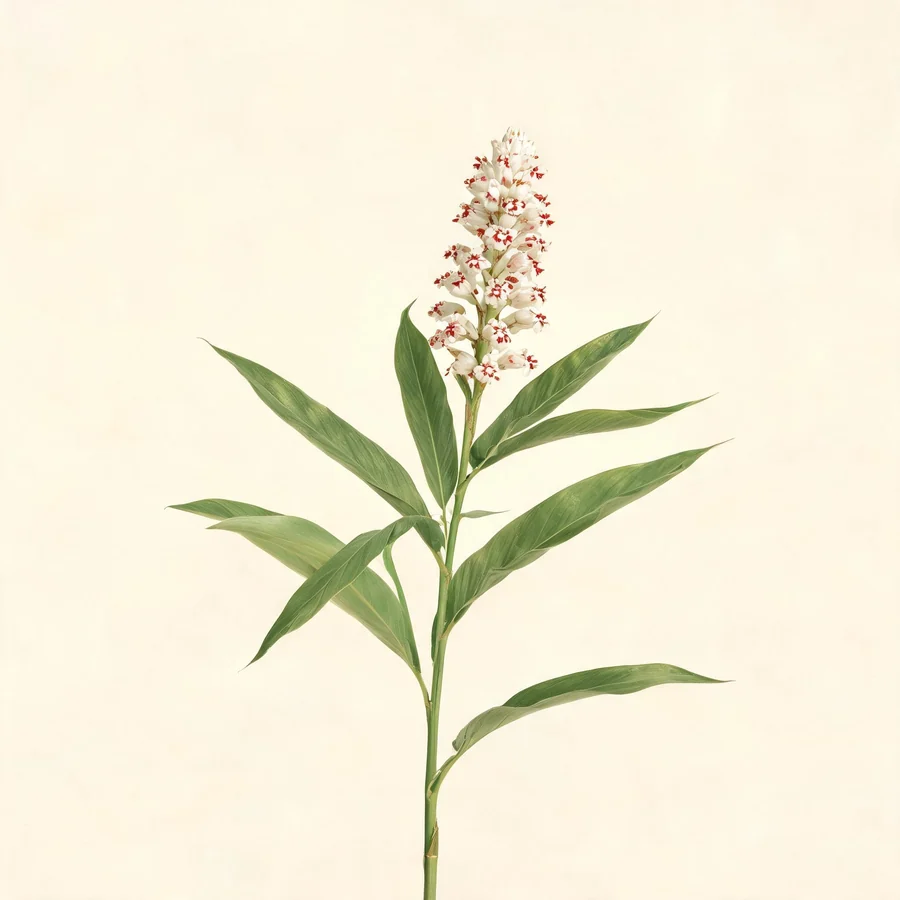
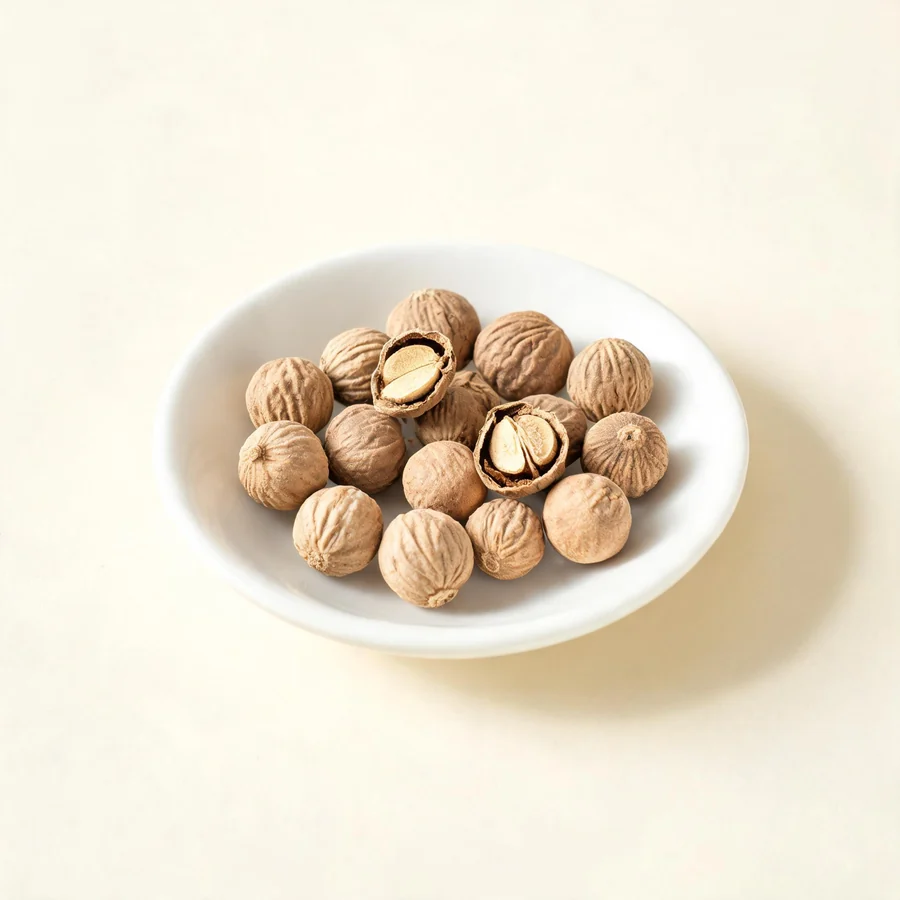
Skin profile
Where this herb sits in skin practice: the pattern it corrects, the skin signs it suits, and what it should not be used for.
Cao Dou Kou is a drying, warming adjunct for a greasy, clammy surface on a cold, damp constitution. It is not a treatment for a hot or dry skin, and it is used in short courses because it consumes fluid.
Skin signs that suggest it
- Greasy, oily skin with a dull or sallow complexion and a heavy, puffy feel
- Yellow greasy scale on the scalp, brows or nasolabial folds with little redness
- Skin folds that are clammy and softened, worse in humid weather
- A white greasy tongue coat, a poor appetite and a loose stool
- A dislike of cold drinks and a sense of coldness in the abdomen
When it is not the right herb
Not for dry skin, a dry mouth or thirst, or a red tongue with a scanty coat, because a warm drying seed takes fluid that is already short. Not for red, hot, inflamed or infected skin, and not for damp-heat with a yellow greasy coat and irritability, where the warmth pushes the wrong way. Not for night sweats, scanty dark urine or a wasting picture. Not in pregnancy beyond a brief supervised course, since some traditional sources advise against it, and not for long periods in anyone, because it dries the fluids.
What it does for skin
Skin-relevant actions only. Each one describes a mechanism in TCM terms and what it looks like on the skin.
Dries the Dampness that shows as oil and scale
The seed's warm, acrid aroma is described as transforming Dampness, and its skin use is the greasy presentation: an oily T-zone, dandruff that clumps and clings, a scalp that smells stale, and folds that feel wet rather than red. It works on the internal source rather than on the surface, so it is given by mouth and paired with washing and a lighter diet. The sign that it is working is a cleaner tongue coat and a less greasy face together.
Warms the middle so that fluid is transformed rather than pooled
To warm the middle is to give the Spleen and Stomach back their working heat. Where Cold has settled, discomfort eases under a hot compress, cold drinks are refused and stools come loose; the tradition reads that as a fire that has gone out, so food and fluid are not cooked through. The seed's warmth is meant to relight it, and atractylodes or ginger is usually given as well so the effect is support rather than a momentary flush of heat.
Moves Qi that has stalled behind the Dampness
Dampness is heavy and Qi is slow, so a damp skin often comes with a distended, uncomfortable abdomen and a heavy body. The aromatic seed moves that Qi, which is why it appears in the same formulas as magnolia bark and tangerine peel. For the skin this means less of the sluggish, puffy quality that accompanies a damp constitution, and it is a supporting effect rather than a direct one on the lesion.
Keeps a cold skin formula from upsetting the digestion
Many formulas for damp lesions are cold and drying, and in a person with a cold middle they can cause cramping, loose stools and a loss of appetite. A small amount of this warm aromatic seed is added to protect the digestion, which is often its most useful contribution to a skin prescription. The dose is kept low for that purpose, and it is not a licence to use heating herbs in a hot pattern.
Skin conditions it is used for
Mapped to the condition pages on this site. The pattern column shows what the skin is doing when this herb is the right choice.
| Condition | Pattern | Why it suits | Typical setting |
|---|---|---|---|
| Seborrhoeic dermatitis | Damp-Heat in the Stomach and Spleen with Dampness predominating | Greasy yellow scale on the scalp, brows and nasolabial folds with a heavy body and a greasy coat is read as Dampness that has begun to heat. The seed is a small adjunct rather than the lead herb, and it is chosen when the dampness is cold and greasy rather than actively inflamed. A bright red, itchy face with a yellow greasy coat needs cooling and drying herbs first, and the warm seed is added only if the digestion is cold. | Modified Ping Wei San with Cao Dou Kou, Fu Ling and Bai Zhu |
| Oily skin | Damp-Phlegm with a sluggish, puffy surface | Persistent oiliness with a dull complexion, a heavy feeling and a greasy white coat is read as dampness that the Spleen is not transforming. The seed dries and moves, and it is used with poria and job's tears in a formula that reduces the internal load rather than stripping the surface. It is stopped if the skin becomes tight or the mouth dry, which means the drying has gone too far. | Modified Ping Wei San with Cao Dou Kou and Fu Ling |
| Dandruff | Damp-Heat in the Stomach and Spleen with a cold digestion | Dandruff that is greasy and clumped rather than fine and dry is read as dampness rising to the scalp. Where the digestion is cold and the stool loose, the warm aromatic is the form of drying that the person can tolerate, and it is paired with cooling and wind-dispersing herbs so the scalp is not heated. Fine white dandruff on a dry scalp is the opposite picture and is made worse by this seed. | Modified Ping Wei San with Cao Dou Kou, Fang Feng and Bai Xian Pi |
| Moist skin sensation | Damp-Cold with a cold, clammy surface | A skin that feels damp or clammy to the touch, without sweat or a lesion, is read as Damp-Cold when the person also feels cold, dislikes cold drinks and has a pale, swollen tongue. The seed warms and dries at the same time, which fits that picture directly, and it is combined with herbs that strengthen the Spleen. A clammy skin with night sweats and heat in the palms is deficiency heat and is not treated this way. | Modified Ping Wei San with Cao Dou Kou, Cang Zhu and Gan Jiang |
| Foul body odour | Spleen Deficiency with Dampness and stale fluid | A stale, heavy body odour in a person with greasy skin, a coated tongue and a sluggish digestion is read as dampness that has stewed rather than moved. The aromatic seed is the classical remedy for foul breath and for the smell of stagnation, and it is used here with drying and Spleen-strengthening herbs. A sudden change in body odour, or one with weight loss and fatigue, needs a medical check. | Modified Ping Wei San with Cao Dou Kou and Huo Xiang |
Combinations for skin
Herbs it is paired with when the skin, not an internal organ, is the target.
| Partner | Ratio | Why the pair is used |
|---|---|---|
| Sha Ren | 3 to 6 g of each | Cardamom and this seed are close cousins from the ginger family, and they are used together for the same sluggish, cold middle. Cardamom is the one on most shelves and the milder of the two; this seed is the more heating and the more drying, so it is chosen when coldness and heaviness dominate. Both go in near the end of the boil. |
| Hou Po | 3 to 6 g Cao Dou Kou with 6 to 10 g Hou Po | Magnolia bark shifts Qi with some force and takes down distension; the cardamom seed supplies heat and removes the dampness that allowed Qi to jam in the first place. They meet in the classical formula for cold-dampness with marked fullness and pain. On skin they are used where a greasy, puffy surface belongs to a tight, swollen abdomen. |
| Chen Pi | 3 to 6 g of each | Tangerine peel is the gentler Qi-mover and Dampness-drier of the two, and the cardamom seed adds heat and a sharper aromatic reach. Together they suit a Spleen and Stomach picture with bloating, a poor appetite, a heavy head and a greasy surface, especially where cold is part of it. |
| Bai Zhu | 6 g Cao Dou Kou with 10 g Bai Zhu | Atractylodes repairs the Spleen that has failed to process fluid; the seed clears the Dampness that failure has already produced. Working on the weakness and on its product in the same formula is the point of the pairing, and it keeps a drying herb from becoming depleting in a person whose digestion is already poor. |
Formulas where it leads
- Hou Po Wen Zhong Tang (厚朴温中汤) - The classical formula for cold-dampness obstructing the middle, with magnolia bark, tangerine peel, cardamom, ginger, poria and licorice. Its skin use is narrow: the greasy, clammy surface that accompanies a cold, distended abdomen, given for a short course alongside a lighter diet.
- Ping Wei San (平胃散) - The plain, drying formula for dampness in the middle, built on atractylodes, magnolia bark, tangerine peel and licorice. This seed is not in the original and is added when the dampness is cold and the digestion sluggish, which is the pattern it supports and the company it keeps.
Safety for skin use
What to check before recommending or using it, including the cautions that matter most for skin patients.
Do not use, or use with caution
- Heat or dryness, with thirst, a dry mouth, a red tongue or night sweats. If there is no cold-dampness present, drying simply removes fluid the body still needs.
- Pregnancy, beyond a short supervised course. Some traditional sources discourage the seed at this time because it is warm, acrid and drying; the classical record notes it for morning sickness, which gives limited use a precedent but not a free hand.
- Yin deficiency with blood dryness, where the skin is thin, dry and itchy and the tongue coat is scanty. Drying is the opposite of what is required and makes the itch worse.
- Damp-heat with a yellow greasy coat, a bitter taste and irritability. Warmth pushes the wrong way once heat has joined the dampness, and cooling, draining herbs are the correct choice.
Pregnancy and breastfeeding
Handled with care. Some traditional sources discourage the seed in pregnancy because it is warm, acrid and drying, and no modern safety data settle the question. The classical record does note it for morning sickness, so a short, low-dose course under supervision has a precedent behind it. Self-prescribing at this time is not sensible, and a warming, drying herb is stopped if there is any bleeding, abdominal pain or fever.
Interactions
- Antacids and acid-suppressing drugs. The seed is said to increase gastric secretion, which runs against treatment that reduces acid, so the two are spaced a couple of hours apart.
- Immunosuppressants. Cell studies of cardamonin and related flavonoids describe anti-inflammatory action through NF-kB inhibition, so a clash with immunosuppressive drugs is possible in principle but has not been shown. It is a reason to inform the prescriber, not a reason to refuse the herb.
- Diabetes medicines. A drying, Qi-moving aromatic can change appetite and meal timing, which matters more for someone on insulin or a sulfonylurea than any direct drug effect; readings are watched through a course.
Allergy and patch testing
Contact with the crushed seed can irritate sensitive skin, and the volatile oil is the likely culprit, so gloves are sensible when preparing it. A person who reacts to cardamom, ginger or other members of the ginger family should be cautious with this seed as well. There is no established topical preparation for skin, and a poultice made at home is patch tested first.
General safety references
General references for herbal hepatotoxicity and herb-drug interactions; they are not specific to this herb.
- Review article: Herbal hepatotoxicity - an update on traditional Chinese medicine preparations. Alimentary Pharmacology & Therapeutics, 2014. PMID: 24844799.
- Interactions between herbal medicines and prescribed drugs: an updated systematic review. Drugs, 2009. PMID: 19719333.
- Warfarin and food, herbal or dietary supplement interactions: a systematic review. British Journal of Clinical Pharmacology, 2021. PMID: 32478963.
Evidence
The classical record is quoted with its source. The modern note states the level of evidence plainly.
Classical record
无毒。
Without toxicity: the seed carries no poison.
Ming Yi Bie Lu (Supplement to the Classic of Materia Medica) - The shortest possible entry, and the one that sets the herb's safety profile: the cautions attached to it concern dryness and pattern, not poison.
Acrid, warm and without poison. It warms the middle, treats pain in the heart and abdomen and vomiting, and removes foul breath.
Ming Yi Bie Lu, on the actions of the seed - The earliest clinical line, and the whole profile is already present: warmth, the middle, vomiting and the removal of foul breath, which is the one clause with a bearing on how the skin and the body smell.
Its nature is warm, and it disperses stagnant Qi and dissolves Phlegm above the diaphragm. Where Cold has entered the body and cold food is eaten daily so that the stomach pains, it may be used to warm and disperse, and the response comes like a drumstick on a drum.
Ben Cao Yan Yi Bu Yi (Supplement to the Elaboration of Materia Medica) - The drumstick image stresses how directly the herb acts when the pattern is truly Cold, which is the condition for using a warm aromatic at all.
Acridity breaks stagnation, fragrance enters the Spleen, and warmth expels Cold and dries Dampness, which is why it warms the middle, treats Cold lodged there, pain in the heart and abdomen and vomiting from internal Cold. The Spleen opens into the mouth, and when stagnation turns to Heat the breath becomes foul; awakening the Spleen clears it.
Ben Cao Jing Shu (Commentary on the Classic of Materia Medica) - A clear statement of the mechanism, and the link between the aromatic quality and the Spleen is the basis for using the seed where dampness shows on the surface.
It is acrid, hot, aromatic and dispersing. Its work resembles nutmeg, but this herb dries Dampness and expels Cold and is only mildly astringent, whereas nutmeg is strongly astringent and stops intestinal slippage. It also resembles Cao Guo, but it drives out Wind-Cold lodged above the stomach, giving pain at the heart region, while Cao Guo floats and disperses and is reserved for miasmic cold fevers.
Ben Cao Qiu Zhen (Seeking the Truth in Materia Medica), Qing dynasty - A Qing comparison that separates the cardamom seeds by taste, direction and clinical target, and the passage a practitioner still uses to tell two similar-looking seeds apart.
Modern evidence
Evidence status
- Laboratory work on the seed's flavonoids, including cardamonin and alpinetin, has reported anti-inflammatory and antioxidant activity in cell and animal systems. These findings are preliminary, and they do not show that the seed improves seborrhoeic dermatitis, dandruff or oily skin.
- No controlled clinical trial of Cao Dou Kou in a skin condition was identified. Its skin use is an extension of its digestive action, argued from the theory that Dampness formed in the middle shows on the surface, and the herb is a supporting one in formulas rather than a treatment in its own right.
- Regulatory status: the seed is an accepted article in the Chinese Pharmacopoeia. The quality question is species identity, because the related Cao Guo and other Alpinia seeds are confused with it in trade. What this page describes is traditional practice and the state of the evidence, not a claim of proven benefit.
PubMed records
Selected real PubMed records for this herb's species or its constituents, chosen by species name and title relevance. They are references for the non-TCM discussion above, not proof that the herb treats any skin condition.
- Effect of Alpinia katsumadai Hayata on House Dust Mite-Induced Atopic Dermatitis in NC/Nga Mice.. Evidence-based complementary and alternative medicine : eCAM, 2012. PMID: 23082085 (skin-related record).
- Alpinia katsumadai Hayata prevents mouse sepsis induced by cecal ligation and puncture through promoting bacterial clearance and downregulating systemic inflammation.. Phytotherapy research : PTR, 2009. PMID: 18844287 (skin-related record).
Dose and forms
Skin-practice dosing and the preparations that suit skin complaints.
| Form | Dose and notes |
|---|---|
| Decoction | 3 to 6 g a day in a formula. The small end suits mild dampness with a poor appetite; the larger end suits clear cold-dampness with distension, nausea or pain. |
| Short course | Ten grams in severe cold-dampness is a practitioner's figure, given for days rather than weeks because the seed dries. The course is reviewed at a fortnight. |
| Preparation | Break up the cluster of seeds and put it in for only the final five to ten minutes, so the aromatic oil is not boiled away. Dough-baked seed disperses less and suits a loose stool; seed prepared with ginger juice is hotter and settles vomiting more strongly. |
The caution with this seed is duration and dryness rather than a ceiling. The aromatic oil is volatile, so crushing and late addition matter more than a large dose. Dough-baking softens the dispersing quality for a person with diarrhoea, and the raw seed is the form for moving Qi and drying dampness. If the mouth becomes dry or the stool hard, the herb has done enough and is stopped.
Citations and further reading
Only real sources are listed: the classical materia medica passages quoted above, and the source works behind the botanical and safety statements.
- Supplement to the Classic of Materia Medica (Ming Yi Bie Lu) - the notice that the seed is non-toxic is quoted in the original above, and the line on warming the middle and clearing foul breath is given as its translation.
- Ben Cao Yan Yi Bu Yi (Supplement to the Elaboration of Materia Medica) - the passage on warm dispersion and the drumstick image is given as its translation above.
- Ben Cao Jing Shu (Commentary on the Classic of Materia Medica) - the passage on acridity, fragrance and the Spleen is given as its translation above.
- Ben Cao Qiu Zhen (Seeking the Truth in Materia Medica), Qing dynasty - the comparison with nutmeg and Cao Guo is given as its translation above.
- Semen Alpiniae Katsumadai monograph, Pharmacopoeia of the People's Republic of China - accepted source, part and quality requirements.
- Modern evidence statement: based on published cell and animal studies of the seed's flavonoids, presented as a statement about the level of evidence.
Educational reference for qualified practitioners. This page is not medical advice, and skin conditions should be diagnosed by a clinician before treatment.