Skin profile
Where this herb sits in skin practice: the pattern it corrects, the skin signs it suits, and what it should not be used for.
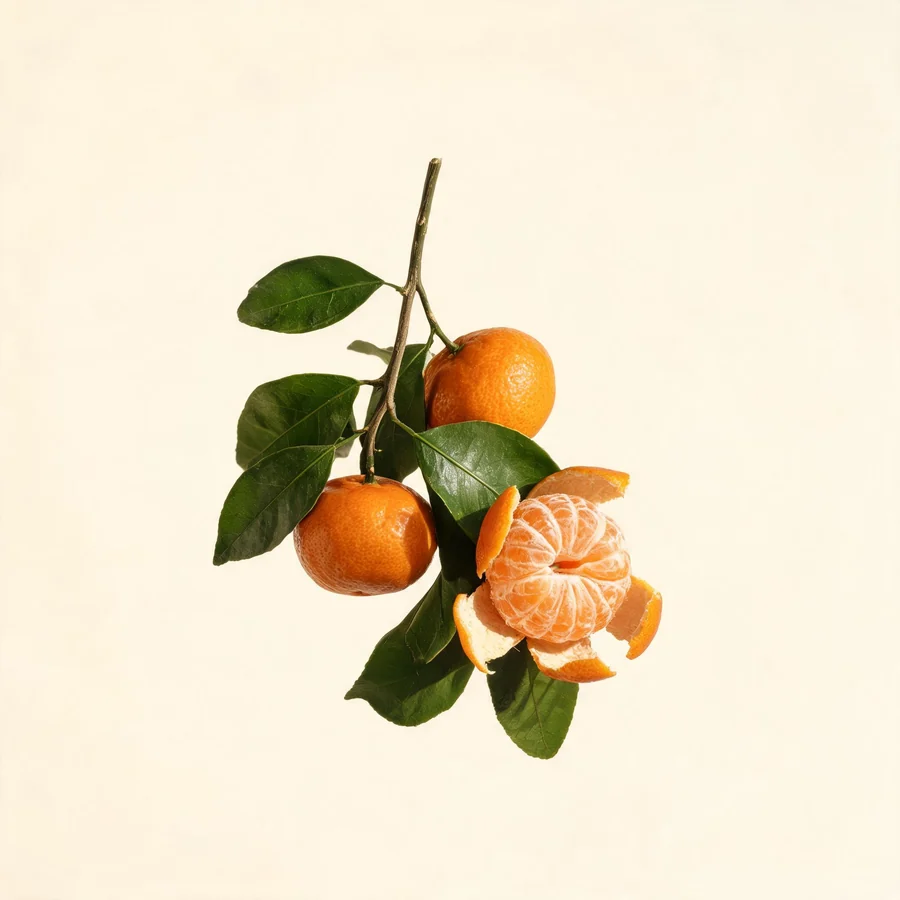
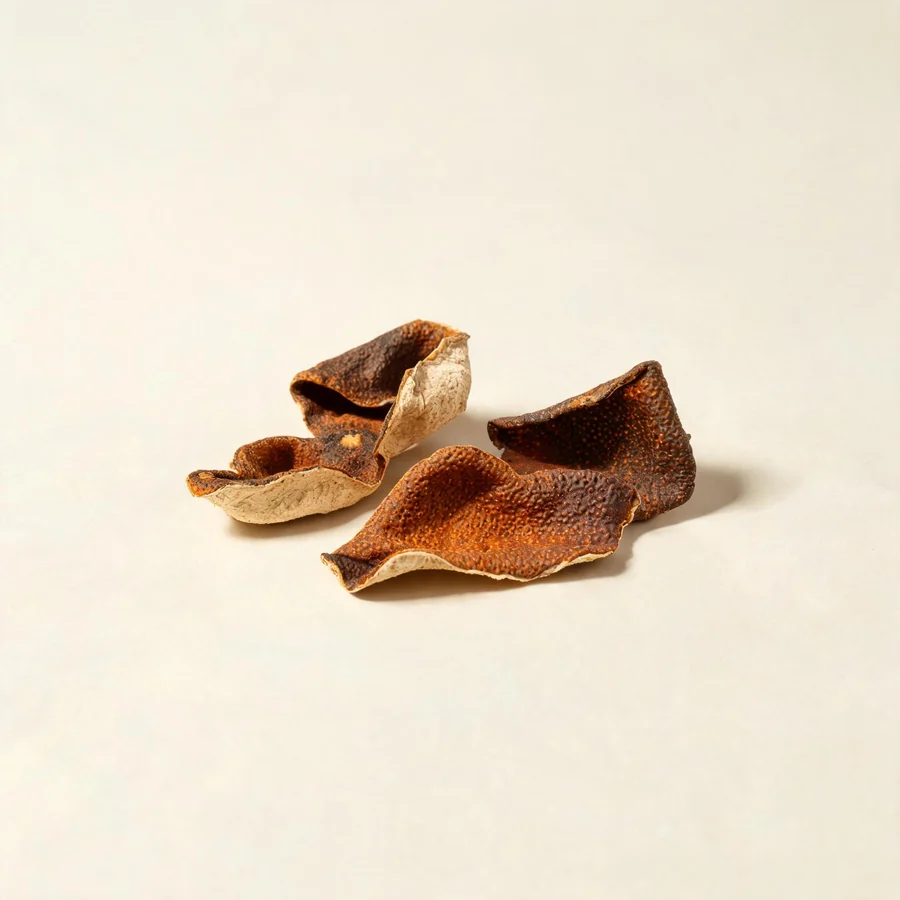
The peel is the least specialised herb on this page and the one most often misunderstood: it is not a treatment for a skin disease, it is the herb that makes the rest of a damp-skin formula work and keeps it tolerable. Judged by what it is combined with, as Li Shizhen said, it is reliable; judged alone, it is not much.
Skin signs that suggest it
- A greasy sheen, coarse pores and a dull, sallow complexion, worse in humid weather
- Yellow greasy scaling at the scalp, the eyebrows or the nasolabial folds
- Pale, puffy, slightly boggy skin with a heavy, tired body
- Bloating, a coated tongue and a poor appetite alongside the skin problem
- A greasy white or yellow tongue coat with a slippery pulse
When it is not the right herb
Not where there is no Dampness. Dry, flaky, thin skin, a tickling cough with nothing to bring up, a tongue with little coat and a mouth that dries overnight all point the other way, and warmth plus drying will only tighten a picture already short of fluid. Not for a hot, red, weeping flare, where cooling herbs are needed and the peel is at best a bystander. Not for someone worn down, with fatigue, a faint voice and no sense of fullness, who has no stagnation to move and can finish a long course more tired than they started.
What it does for skin
Skin-relevant actions only. Each one describes a mechanism in TCM terms and what it looks like on the skin.
Dries dampness that shows as grease and scale
The greasy yellow scale of seborrhoeic skin is read as Dampness thickened by Heat, and the peel's aromatic warmth dries the Dampness while its bitterness drains downward. It is not a strong enough drying herb to carry that job alone, so it sits with Ban Xia, Fu Ling and Huang Qin, and its contribution is to keep the drying moving rather than to do the drying. On the skin that means less shine, a finer scale and a less heavy feel.
Moves Qi so that dampness does not settle
Dampness that stays in one place is Dampness with stagnant Qi, and the sign is a greasy, boggy texture that does not shift with washing or with a change of cream. The aromatic quality moves that Qi, so fluid is carried away instead of pooling, and it is why a skin formula with a lot of moistening or tonifying herbs is easier to tolerate with the peel in it. It moves gently, and the gentleness is what makes it usable for weeks.
Keeps a rich formula from stagnating
Someone with atopic eczema and a weak digestion often cannot take the nourishing herbs the pattern seems to need, because they bring on the bloating and the stuffed feeling that make people give up. A small amount of the peel prevents that, keeping the middle turning while the tonics work, and it is why the herb is quoted so often as the way to supplement without causing stagnation. This is its commonest and least glamorous skin role, and in practice it is what keeps a long course going.
Warms a cold, damp middle behind a pale, puffy skin
Where the skin is pale, cool and puffy and the digestion runs cold, with loose stools and a dislike of cold drinks, the Dampness is cold Dampness and needs warmth as well as drying. The peel supplies both without being a heating herb, and it is paired with ginger or with Atractylodes rather than used by itself. A skin picture that is red and hot is the opposite case and is not for this herb.
Skin conditions it is used for
Mapped to the condition pages on this site. The pattern column shows what the skin is doing when this herb is the right choice.
| Condition | Pattern | Why it suits | Typical setting |
|---|---|---|---|
| Seborrhoeic dermatitis | Dampness with greasy yellow scale and sluggish digestion | The greasy yellow scale and the red base are read as Dampness with Heat, and the peel's job in the formula is to dry the Dampness and keep the Qi moving so that it does not re-form. It is a supporting herb, paired with Huang Qin for the heat and with Fu Ling for the fluid. Scalp and eyebrow involvement add the upper-body argument, and the peel is one of the few herbs in the formula that also settles the digestion. | Modified Er Chen Tang with Huang Qin and Zhi Zi |
| Oily skin | Dampness and Qi stagnation with a greasy shine | An oily shine with coarse pores and a dull colour is the surface sign of Dampness that the Spleen has not transformed, and the peel is used to dry that Dampness and move the stagnation behind it. It is a modest herb for a modest problem, and it works best with a change of diet and with herbs that drain the fluid downward. Oily skin with active inflammation needs a cooling herb, because the peel is warm. | Er Chen Tang with Cang Zhu and Yi Yi Ren |
| Dandruff | Dampness rising to the scalp as greasy scale | Greasy dandruff with an oily scalp and a greasy tongue coat fits the damp-phlegm picture, and the peel is the Qi-moving half of a formula that dries and drains. It is taken internally, not rubbed into the scalp, and it is judged over weeks rather than days. Dry, tight, flaking scalp is the wrong kind, and the peel would make that worse rather than better. | Modified Er Chen Tang as the internal base, with a medicated shampoo routine |
| Eczema | Damp type, without active weeping or heat | A dull, thickened, slightly greasy eczema that flares with humidity and rich food is the damp type, and the peel dries and moves while the formula drains the fluid underneath. It is not the herb for a wet, red, weeping flare, which needs cooling and drying herbs that are stronger than this, and it is not an itch treatment. Its place is in the longer formula that follows a flare and tries to stop the next one. | Er Chen Tang with Bai Zhu, Fu Ling and Bai Xian Pi |
| Atopic dermatitis | Spleen deficiency where tonics cause bloating | When the pattern calls for Spleen tonification but the person cannot tolerate it, the peel is added to the tonic so that the middle keeps moving. That is the classical reason it appears with ginseng and Atractylodes, and in atopic eczema it is often what allows a nourishing formula to be taken for long enough to matter. The skin itself still needs its own herbs, and the peel is there to keep the digestion from refusing the treatment. | Yi Gong San, the Si Jun Zi Tang base with Chen Pi added |
Combinations for skin
Herbs it is paired with when the skin, not an internal organ, is the target.
| Partner | Ratio | Why the pair is used |
|---|---|---|
| Ban Xia | Equal parts, as in Er Chen Tang | Ban Xia works on the Phlegm itself while the peel moves the Qi that let it gather, so the pair treats the material and the stagnation together. This is the whole core of Er Chen Tang and the base from which most later damp-phlegm formulas are built, including the skin formulas for a greasy scalp and a boggy, dull complexion. |
| Fu Ling | 9 g Chen Pi with 12 g Fu Ling | Fu Ling drains the fluid through the urine and the peel moves the Qi that was holding it in place, so the pair removes both the water and the stagnation behind it. They are used for a heavy chest, cloudy thinking and a moist, clammy skin fold, with the peel supplying the movement and Fu Ling the drainage. |
| Cang Zhu | 6 g each | Cang Zhu's bitter aromatic warmth dries Dampness hard enough to let the Spleen lift again, and it can leave the middle feeling parched. The peel adds movement so that the dried residue is carried off rather than sitting there, and together they cover a weak Spleen making Dampness and the stagnation that Dampness then creates. |
| Bai Zhu | 6 g Chen Pi with 10 g Bai Zhu | Bai Zhu tonifies and dries the Spleen while the peel keeps the Qi moving, which makes the pair suitable for a poor appetite, loose stools and a pale, puffy skin that flares when the digestion is off. It is a gentle pairing for long use, and it is the reason a Spleen-tonifying formula can be given to someone who bloats easily. |
Formulas where it leads
- Er Chen Tang (二陈汤) - The foundational phlegm-transforming formula, in which the peel is the Qi-moving half and Ban Xia the drying half. Its skin use is for greasy, boggy, dull skin with a coated tongue, modified with cooling herbs when there is redness and with draining herbs when there is ooze.
- Yi Gong San (异功散) - The Four Gentlemen formula with the peel added, and the standard illustration of supplementing without creating stagnation. It is used in skin practice where a Spleen-deficient person with eczema or a dull, puffy complexion cannot tolerate a rich tonic on its own.
Safety for skin use
What to check before recommending or using it, including the cautions that matter most for skin patients.
Do not use, or use with caution
- Dry, hot skin with a red tongue, little coating and a mouth that dries overnight. Warmth and drying both work against a picture short of fluid.
- A tickling cough with nothing to bring up, or a dry throat, where the drying quality tightens what is already irritated.
- Exhaustion with no stagnation: fatigue, a faint voice and an abdomen that never feels full do not call for Qi to be moved, and months of peel alone can leave a person weaker.
- Unbroken use over a long period in a dry constitution, where the drying accumulates quietly rather than announcing itself.
- Blood coughed up, or brought up in vomit, is a reason to stop and be assessed rather than to continue with a warming, moving herb.
Pregnancy and breastfeeding
Small doses are traditional for morning sickness, but a skin complaint in pregnancy is not a reason to start it. The peel warms and dries, so a hot pregnancy, with heartburn, a dry stool and a red tongue, is the wrong picture, and there is no useful evidence either way for skin use. Culinary amounts in food are not a concern; concentrated extracts and long courses deserve a practitioner's view, and persistent vomiting or any bleeding needs medical review.
Interactions
- Medicines handled by the liver enzymes the peel inhibits. Its furanocoumarins and flavonoids can raise the level of drugs cleared by the same route, omeprazole being the example usually named, so doses are separated and the prescriber is told.
- Synephrine, a mild sympathomimetic amine in the peel, makes monoamine oxidase inhibitors the combination to avoid, and may let alpha blockers blunt its modest pressor effect.
- Digoxin may be potentiated, and anyone taking it should not add a concentrated peel preparation without advice.
- Mineral supplements and antacids: flavonoids bind them in the gut, so a gap of about two hours is left between them and the herb.
Allergy and patch testing
Citrus peel can cause contact dermatitis and, because of its furanocoumarins, a photosensitive reaction in people who handle a lot of it. A rash from citrus foods or from peel oil is a reason for caution. Patch test any preparation used on the skin, and keep a peel-based wash off the face in strong sun.
General safety references
General references for herbal hepatotoxicity and herb-drug interactions; they are not specific to this herb.
- Review article: Herbal hepatotoxicity - an update on traditional Chinese medicine preparations. Alimentary Pharmacology & Therapeutics, 2014. PMID: 24844799.
- Interactions between herbal medicines and prescribed drugs: an updated systematic review. Drugs, 2009. PMID: 19719333.
- Warfarin and food, herbal or dietary supplement interactions: a systematic review. British Journal of Clinical Pharmacology, 2021. PMID: 32478963.
Evidence
The classical record is quoted with its source. The modern note states the level of evidence plainly.
Classical record
It is not poisonous. It lowers Qi and settles vomiting and cough, treats Qi rushing into the chest with retching and the vomiting of cholera-like illness, and helps a Spleen that cannot break down grain; it stops diarrhoea and clears heat and retained water from the bladder.
Ming Yi Bie Lu (Supplement to the Classic of Materia Medica) - This is the passage that fixed the peel as a descending, drying digestive drug, and it is also where the preference for older material is first argued.
Whatever it treats comes back to two powers, ordering Qi and drying Dampness. Beside a supplement it supplements; beside a draining drug it drains; beside an ascending drug it ascends; beside a descending drug it descends. Bitter drains and dries, acrid scatters, warm harmonises.
Ben Cao Gang Mu (Compendium of Materia Medica), Li Shizhen - Li Shizhen's summary, and the reason the peel is judged by what it is combined with rather than by itself, which is exactly how it is used on the skin.
Modern evidence
Evidence status
- The peel's flavonoids, including hesperidin and nobiletin, and its volatile oil are the subject of laboratory work on inflammation and on sebaceous activity, and limonene is a documented skin sensitiser at high concentration. These are laboratory and formulation findings rather than clinical evidence in seborrhoeic dermatitis or oily skin.
- No trial of Chen Pi in a skin condition was identified. Trials of the multi-herb damp-phlegm formulas it belongs to do not isolate its contribution, so its place is judged on the classical reasoning rather than on measured effect.
- Regulatory status: the aged peel is both a food and a pharmacopoeial drug, and its furanocoumarin and volatile oil content varies with age and origin, which is why a concentrated product is not equivalent to the peel in a cooking pot.
PubMed records
Selected real PubMed records for this herb's species or its constituents, chosen by species name and title relevance. They are references for the non-TCM discussion above, not proof that the herb treats any skin condition.
- Evaluation of Skin Anti-aging Potential of Citrus reticulata Blanco Peel.. Pharmacognosy research, 2016. PMID: 27365982 (skin-related record).
Dose and forms
Skin-practice dosing and the preparations that suit skin complaints.
| Form | Dose and notes |
|---|---|
| Decoction | 3 to 10 g daily inside a formula, put in for the final five to ten minutes of simmering so that the volatile oil responsible for the moving effect is not driven off. |
| Tea and household use | A household cup is three to five grams, steeped five minutes, and the same piece is often dropped into a pot of food. Medicinal amounts are larger and belong in a prescription rather than a mug. |
| Bran-fried form | Fu Chao Chen Pi, stir-fried with wheat bran, gives the Spleen action more weight and takes the edge off the aromatic sharpness, which suits longer use in a weak digestion. |
| Course length | Weeks rather than months, with review. In a dry constitution the course is shorter still, and a moistening herb is added if the mouth dries or the stool hardens. |
The peel is a herb of small quantities, and the aromatic oil is the part that does the moving, which is why it goes into the pot late and why a household cup is measured in grams rather than handfuls. Ageing concentrates the flavonoids and softens the oil, so older stock is dosed towards the bottom of the range. In skin work the dose is usually the smallest in the formula, because the job is to keep the middle turning rather than to dry the patient out.
Citations and further reading
Only real sources are listed: the classical materia medica passages quoted above, and the source works behind the botanical and safety statements.
- Ming Yi Bie Lu (Supplement to the Classic of Materia Medica), Tao Hongjing, Southern and Northern Dynasties - classical entry quoted above.
- Ben Cao Gang Mu (Compendium of Materia Medica), Li Shizhen, 1578 - classical entry quoted above.
- Chen Pi monograph: Pharmacopoeia of the People's Republic of China - source for the accepted species, the peel as the drug, the 3 to 10 g dose and the quality requirements for aged material.
- Modern evidence statement: based on laboratory and formulation literature on citrus flavonoids, limonene and synephrine, summarised as a statement about the level of evidence.
- Botanical description and identification: botanical literature on Citrus reticulata, Rutaceae, and on the aged Xinhui peel trade.
Educational reference for qualified practitioners. This page is not medical advice, and skin conditions should be diagnosed by a clinician before treatment.