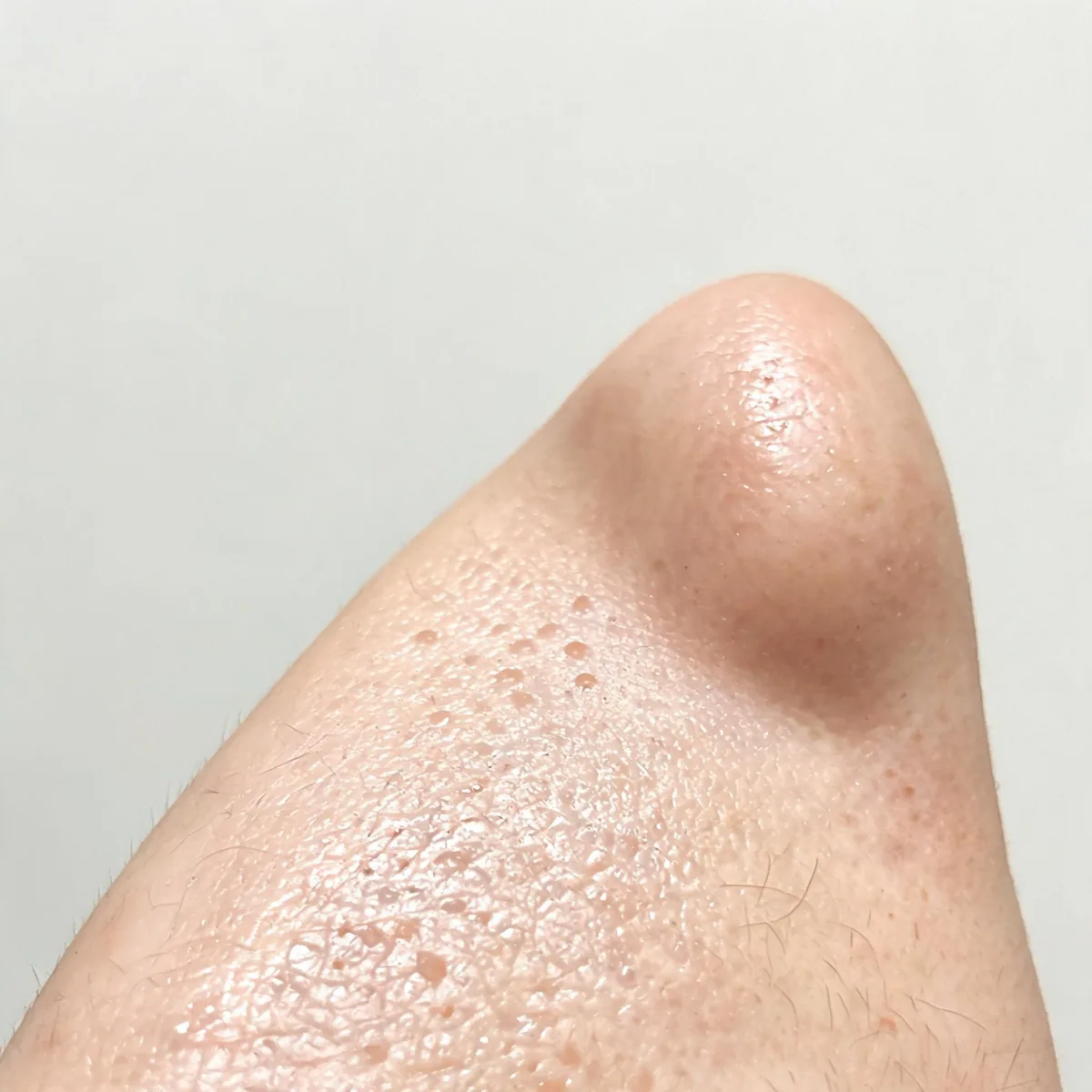
Understanding Oily skin
The tradition describes the quality of facial oil as reflecting the state of the digestive and emotional organs, with the Spleen and Stomach central.
When the Spleen and Stomach cannot transform food and fluids efficiently, dampness and heat accumulate and are said to rise to the face, producing persistent greasy shine with bloating and a sticky taste.
Damp-Phlegm is a thicker version: waxy oil rather than a shine, a dull sallow complexion, poor appetite, a sticky taste without thirst and heaviness. Liver Fire Blazing gives a flushed red face with oily shine, a bitter taste, throbbing temple headache and marked irritability.
The last pattern is easy to misread. Empty-Heat from Yin deficiency gives skin that is oily yet tight and dry, with malar flush, night sweats and heat in the palms and soles. Treating that as simple excess heat would worsen it.
The classical literature puts the internal organs at the centre of the picture: the face is where digestion and feeling become visible, so one appearance can carry quite different meanings. The Spleen and Stomach are named because they turn meals into energy and moisture, and their channel reaches the face, so fluid that they fail to transform tends to surface there. Poor diet, irregular meals and stress each weaken that work.
How long the fluid has sat decides what the practitioner sees. Dampness is the first stage and returns as grease within hours of washing. Heat from food, drink or emotion makes the same shine inflamed. Longer stagnation thickens it into phlegm, which reads as wax rather than shine. The Liver and the Yin are the two remaining routes, and the classical literature keeps them apart because what suits one would set back the other.
Conventional view
Conventional dermatology explains oily skin as the output of sebaceous glands responding to androgens, inheritance, stress, humidity and some medications. The visible result is a shiny complexion with enlarged pores and a tendency to blackheads and acne, and the diagnosis is made by looking at the skin rather than by any test. Management is aimed at sebum and at keeping the pores clear.
That management starts with gentle cleansing and an oil-free moisturiser, then moves to salicylic acid, benzoyl peroxide or a topical retinoid. Where the response is inadequate, spironolactone, combined oral contraceptives or isotretinoin may then be prescribed, altering hormonal drive or shrinking the glands. Isotretinoin in particular needs close monitoring.
The limitation the classical literature identifies is that all of this acts at the surface or on the gland, and none of it asks why this person is producing the oil. Drying products used too enthusiastically can provoke rebound oiliness and irritation, and oral treatment carries effects that rule it out for some people. Above all, the approach treats every oily face as the same face, which is the gap the pattern reading is meant to fill.
Selected PubMed records
Real PubMed records for the conventional discussion above, selected by condition name and title relevance. They are references, not a claim that any treatment is proven for this condition.
- Oily skin: an overview.. Skin pharmacology and physiology, 2012. PMID: 22722766.
How it connects
Oily skin rarely travels alone, and the classical literature suggests the reason is structural rather than coincidental. The same heat and dampness that clog the pores of the face do the same work on the back and chest, which is why acne, blackheads and seborrhoeic trouble are described alongside it. Where phlegm dominates, the heaviness and foggy head arrive with the shine, so poor appetite, bloating and loose stools belong to the same picture. Patterns also change into one another: long-standing damp heat is described as damaging Yin, and Liver fire as combining with Stomach heat, which is why two people with the same appearance can need opposite treatment.
How it is assessed
The practitioner examines the quality of the oil, the colour of the face, and the digestive and emotional picture.
What a practitioner looks for
- Oil quality: a shine suggests Damp-Heat; thick waxy oil suggests Damp-Phlegm.
- Facial colour: flushing with irritability suggests Liver Fire; malar flush with dryness suggests Yin deficiency.
- Digestive signs: bloating, sticky taste and loose stools support damp patterns.
- Paradoxical dryness: oily but tight skin points to Empty-Heat rather than excess.
The oil itself is read first, because texture separates the patterns faster than any single symptom. A thin bright film that returns within an hour or two of washing points to heat moving with fluid. Oil that feels like a coating, thick and waxy under the fingers, belongs to the phlegm picture, and the tradition describes the face as dull rather than shiny in that case. Whether the face is flushed or sallow is read alongside it, since colour says whether heat is involved.
Questions about digestion, mood and sleep then decide between the routes. Bloating, a sticky or bitter taste and bowel movements that feel incomplete support a digestive origin. A bitter taste with temple headache, rib-side tension and a short temper points along the Liver channel. Thirst for small sips, night sweats and warmth in the palms and soles point to depleted Yin. The tongue and pulse settle what the history leaves open, and treatment is chosen for the dominant pattern rather than for the oil.
TCM patterns in Oily skin
The four patterns on this page are separated by two questions: what the oil feels like, and what the rest of the body is doing. Thick, waxy oil on a dull face, with heaviness and no real thirst, is phlegm that has congealed. A bright shine with bloating, a sticky taste and loose stools is dampness carrying heat upward. A flushed face with a bitter taste, a throbbing temple headache and a short temper is Fire rising along the Liver channel. Oil over skin that feels tight, with night sweats and warmth in the palms, is the empty heat of depleted Yin. Each has its own triggers, its own formula and its own points, and one person can move between them over months, so the reading is revised rather than fixed. The tongue and pulse confirm it.
| Pattern | Key signs | The itch | Tongue | Main formula |
|---|---|---|---|---|
| Damp-Heat in Stomach and Spleen | Not specified | Not specified | Body: Red, possibly swollen with teeth marksCoat: Thick, yellow and greasy in the centre and root | Not specified |
| Damp-Phlegm | Not specified | Not specified | Body: Pale, swollen and teeth-marked, wet-lookingCoat: Thick, white and greasy | Not specified |
| Liver Fire Blazing | Flushed red face with oily shine | Not specified | Body: Red with redder sides and raised red pointsCoat: Dry and yellow | Not specified |
| Empty-Heat caused by Yin Deficiency | Oily but dry tight-feeling skin; Dry mouth and throat at night | Not specified | Body: Red, thin and dry, often crackedCoat: Little or none; the tongue may look peeled | Not specified |
Damp-Heat in Stomach and Spleen
Persistent greasy shine with a digestive picture.
The classical literature locates the problem in the middle burner rather than on the face. Food and fluid are supposed to be separated into what the body can use and what it can pass on, and rich meals, alcohol or constant stress overload that work until the separation stops happening. What remains is dampness, and where heat is present as well the two combine into something the tradition describes as steam: heavy, hot and inclined to rise. It gathers in the middle, which is why the abdomen feels full after eating, and it is carried up the Stomach channel to the face, which is why the shine returns so reliably whatever is done to the skin.
The tongue is red, sometimes swollen with teeth marks, with a thick yellow greasy coating clearest in the centre and at the back. The pulse is soggy, rapid and slippery, and strongest at the right guan position, which the classical literature reads as the Spleen and Stomach. Greasy and fried food, dairy, sweets, alcohol, humid weather and meals taken late or in quantity all make it worse. Light bland meals, cooling food and drink, complete bowel movements and gentle exercise make it better. The formula named for this picture is Lian Po Yin, with Huang Lian, Hou Po and Yi Yi Ren, and the points are ST-36 Zusanli, SP-6 Sanyinjiao, SP-9 Yinlingquan and ST-44 Neiting.
Signs
- Persistent greasy shine all over the face
- Bloating and fullness after eating
- Sticky or bitter taste
- Loose sticky bowel movements
Diet and lifestyle for this pattern: Cut back on fried, greasy and sugary food as well as dairy and alcohol, which all create Dampness and Heat. Focus on light, cooked meals with plenty of vegetables, including barley, mung beans or Job's tears, keep moving gently so the Spleen processes moisture, and do not skip breakfast.
Damp-Phlegm
Thick waxy oil with a dull complexion and heaviness.
Phlegm here is dampness that has been left long enough to thicken, and the classical literature builds the picture from the Spleen outward. When transforming and transporting fluids is beyond the Spleen, the fluid does not simply pool, it becomes turbid and sticky, and that thicker substance is what rises. It travels up the Stomach channel and settles in the pores, so the face does not merely shine, it feels coated. The classical literature adds that the normal lustre of the skin is obscured by it, which is why the complexion reads dull and slightly sallow instead of bright.
The tongue is pale and swollen with scalloped edges, and its coat is thick, white and grease-like, so oily in appearance that it resists scraping. The pulse is slippery, described as beads rolling through oil. Greasy or sweet food, cold and raw food, iced drinks, humid weather, long sitting and irregular or oversized meals all contribute. Warm cooked meals, gentle exercise, less dairy and sugar, a dry aired room and mild cleansing help. The formulas named are Er Chen Tang and, where the digestion is clearly weak, Xiang Sha Liu Jun Zi Tang, with Ban Xia, Chen Pi, Fu Ling and Bai Zhu, and the points are ST-40 Fenglong, ST-36 Zusanli, SP-6 Sanyinjiao and SP-9 Yinlingquan.
Signs
- Thick sticky waxy oil rather than a shine
- Dull sallow complexion
- Poor appetite with bloating and no thirst
- Heaviness in the body
- Foggy head
Diet and lifestyle for this pattern: Eat warm cooked meals and avoid cold, raw, greasy and sweet food that generates Dampness. Gentle daily walking helps the Spleen transform fluids, and cleanse the face with a mild product without stripping it, since over-washing can trigger more oil production.
Liver Fire Blazing
Flushed oily face with irritability and temple headache.
The tradition describes this pattern as emotion becoming heat. Frustration, anger or unrelieved stress stops Liver Qi from spreading as it should, and Qi that has been held long enough is said to turn into Fire. Fire follows the channel, and the Liver channel goes to the face, so the heat arrives where it is most visible: the skin reddens, the glands are driven harder and the shine becomes a flush. Because the trigger is emotional, the flare follows the mood rather than the calendar, and a difficult week shows on the face before anything else changes.
The tongue is red with redder sides and a dry yellow coating. The pulse is wiry and rapid, most forceful at the left middle position. Anger and stress, greasy or fried or spicy dishes, coffee and alcohol, and late nights spent working all feed it. Cooling food and drink, deliberate stress reduction, adequate sleep and gentle exercise settle it. The formula named is Long Dan Xie Gan Tang, with Long Dan Cao as its chief herb, and the points are LR-3 Taichong and LR-2 Xingjian, the Fire point of the channel, which the classical literature uses to vent the heat directly.
Signs
- Flushed red face with oily shine
- Bitter taste in the mouth
- Intense irritability or short temper
- Throbbing headache at the temples
- Worse with stress and anger
Diet and lifestyle for this pattern: Favour cooling, bitter, lightly cooked food such as cucumber, celery, chrysanthemum tea and watermelon, and avoid alcohol, coffee, spicy dishes and fried food that add Heat. Regular moderate exercise and a consistent sleep schedule smooth Liver Qi, and journalling, meditation or gentle yoga can stop emotional heat building up.
Empty-Heat caused by Yin Deficiency
Oily but tight dry skin with malar flush and night sweats.
This is the pattern that most often gets treated the wrong way. Yin is the cooling, moistening half of the system, and when it runs low there is nothing to anchor the body's warmth, so a low-grade heat drifts upward and reaches the face. The heat is real enough to drive the oil glands, and the surface shines, but the skin underneath has none of the fluid it needs. The classical literature points to the paradox that follows: fine lines, a tight feeling after washing, and a face that looks greasy while behaving like dry skin.
The tongue is red, thin and dry, cracked, with hardly any coat, and the pulse is fine and rapid. Spicy or fried food, alcohol, coffee, late nights, overwork, emotional strain and dry hot weather all draw down what remains. Cooling and moistening food, sleep, gentle exercise and a humid environment help. The formula named is Zhi Bai Di Huang Wan, with Zhi Mu and Huang Bo, and the points are KI-3 Taixi, SP-6 Sanyinjiao and KI-6 Zhaohai, which the classical literature uses to nourish Yin and settle the deficiency heat rather than to drain anything.
Signs
- Oily but dry tight-feeling skin
- Malar flush
- Night sweats
- Dry mouth and throat at night
- Heat in palms and soles
Diet and lifestyle for this pattern: Prioritise moistening, Yin-nourishing food such as pear, lily bulb, black sesame and tofu, and sip warm water through the day rather than drinking a lot at once. Avoid spicy, fried or overly heating food, go to bed early and avoid overwork or late-night screens that consume Yin, and choose grounding exercise such as tai chi or yoga over sweat-drenching workouts.
Treatment approach
How the tradition treats oily skin, with the herbs, formulas and points used for it.
Principles
- Clear damp heat and support digestion where the shine is greasy and the digestion is sluggish.
- Transform damp-phlegm where the oil is thick and waxy.
- Drain Liver fire where the face is flushed and the temper is short.
- Nourish Yin where the skin is oily but tight, since drying treatment would worsen it.
- The order of work matters as much as the method. Clear or drain what is excess, transform what has congealed, and only then nourish, because moistening a body still carrying dampness makes the shine worse. Where both are present, as they often are, the formula is adjusted rather than replaced, and the balance is moved as the tongue and pulse change.
Herbs used
Formulas
- Lian Po Yin
- Er Chen Tang
- Xiang Sha Liu Jun Zi Tang
- Long Dan Xie Gan Tang
- Zhi Bai Di Huang Wan
Acupoints
- ST-36 (Zusanli)
- SP-6 (Sanyinjiao)
- SP-9 (Yinlingquan)
- ST-44 (Neiting)
- ST-40 (Fenglong)
- LR-3 (Taichong)
- LR-2 (Xingjian)
- KI-3 (Taixi)
- KI-6 (Zhaohai)
What to expect
- The tradition describes reduced oiliness over weeks to months with treatment and dietary change.
- Recurrence follows diet and stress if the pattern is not maintained.
- Coexisting acne or seborrhoeic dermatitis may need separate medical treatment.
- The classical literature gives an order of response rather than one figure: three to six weeks for the excess pictures, six to ten for congealed phlegm, and two to four months to rebuild Yin. Oil output swings before it settles, so a poor week is not a failed treatment.
Safety and when to get help
Seek medical help urgently for
- Sudden severe oily skin with painful cysts and fever.
- Facial swelling, or spreading redness with pain.
- Signs of infection in the skin.
For anything severe, sudden or spreading quickly, read when a skin problem needs urgent care.
Cautions
- Do not over-wash or use harsh astringents, which the classical literature says worsens the cycle.
- Oily skin with sudden hormonal change should be reviewed.
- Prescribed topical treatment should not be stopped abruptly.
Using this alongside conventional care
- TCM is described as complementary to conventional care: prescribed topical treatment continues alongside herbs.
- Nothing prescribed has to be stopped in order to start treatment. Retinoids, benzoyl peroxide and oral spironolactone or isotretinoin are the treatments the classical literature asks to be disclosed, because herbs which clear heat and drain dampness can add a mild diuretic effect and some move the blood, so the practitioner needs the whole list before prescribing. A gentle, non-stripping routine supports the internal work rather than competing with it. Where oily skin arrives suddenly and severely, or comes with painful cysts, fever, spreading redness or facial swelling, medical assessment comes first and pattern treatment follows.
Diet and lifestyle
- Avoid greasy, fried and spicy food, dairy and sugar, which are said to generate dampness and heat.
- Every pattern on this page shares one rule: take the load off the Spleen. That means fried and greasy food, dairy, sugar and alcohol reduced, and nothing taken ice cold, since cold is said to weaken the digestive fire. What is added then follows the pattern. Damp heat suits light cooked meals with barley, mung beans and plenty of vegetables, and breakfast should not be skipped. Phlegm suits warm cooked food and less raw and sweet. Liver fire is cooled with cucumber, celery, chrysanthemum tea and watermelon, with coffee and spirits removed. Yin deficiency is moistened with pear, tofu, lily bulb and black sesame, and helped by early nights rather than late ones.
If you're pregnant
Pregnancy commonly makes the face oilier, because the tradition describes Yang Qi and dampness both increasing, which sharpens the damp heat and Liver Qi stagnation pictures. Strong bitter-cold formulas such as Lian Po Yin and Long Dan Xie Gan Tang are avoided, their cold, downward nature being considered unsuitable in pregnancy. Milder ground is preferred: dietary adjustment, acupuncture away from the abdomen and away from LI-4 and SP-6, and gentle Spleen support such as Xiang Sha Liu Jun Zi Tang. Anyone treating a pregnant patient should be experienced in pregnancy care.
If you're breastfeeding
Bitter-cold herbs pass into milk, so Huang Lian and Long Dan Cao are avoided while breastfeeding, largely because of the loose stools they can cause in the infant. Acupuncture is the safer route and can regulate oil without any medicine reaching the baby. If herbs are used at all, a Spleen-supporting formula such as Xiang Sha Liu Jun Zi Tang is preferred, and the baby is watched for changes in digestion.
If treating a child
Oily skin is uncommon in children. Where it appears, the classical literature attributes it to damp heat from a diet heavy in sugar, dairy and fried food, or to a Spleen too immature to transform fluids. Doses are scaled to between a quarter and a half of the adult amount, and needling is usually replaced by tuina on points such as Zusanli (ST-36) and Sanyinjiao (SP-6). Diet and simple bland meals do most of the work.
If treating an elderly patient
In older people the oil often sits over skin that is thin and dry underneath, which the classical literature reads as Yin deficiency with empty heat rising. The approach is gentle nourishment rather than draining, with formulas such as Zhi Bo Di Huang Wan at about two thirds of the adult amount. Acupuncture suits this group, but polypharmacy is the thing to watch, and results come more slowly.
Urgent-sign guidance is based on standard sources: NHS anaphylaxis, NHS cellulitis, NHS Stevens-Johnson syndrome, NHS melanoma.
Evidence
Evidence status
Compiled for this page from the classical and modern literature; not a systematic review, so treat it as a pointer to sources rather than clinical guidance.
Direct trials on oily skin are scarce; evidence comes from acne, where sebum is central. A 2015 Cochrane review of complementary therapies for acne found moderate-quality evidence that some Chinese herbal formulas reduce lesion count and improve skin oiliness, though heterogeneity limits conclusions. Small randomised trials show acupuncture reduces sebum excretion, and a 2017 meta-analysis of 12 trials concluded that acupuncture significantly reduces acne severity and may directly affect oil production.
Studies often cited
Moderate-quality evidence that some Chinese herbal formulas reduce lesion count and improve skin oiliness, with heterogeneity limiting conclusions. 2015 Cochrane review (as recorded in the source)
Small randomised trials show reduced sebum excretion rates. Small randomised controlled trials (as recorded in the source)
Acupuncture significantly reduces acne severity and may directly affect oil production. 2017 meta-analysis (as recorded in the source)
Classical record
面垢者,胃中熱氣上沖,熏於面,故令面垢。
When hot Qi in the Stomach rises and steams the face, the complexion turns greasy.
Zhu Bing Yuan Hou Lun, volume 28, facial symptoms - Classical citation: for this condition, where the quotation appears in the understanding section.
Common questions
Does washing more help oily skin?
No. The tradition describes over-cleansing as disrupting the skin and worsening the cycle; the internal damp-heat pattern needs addressing.
Why is my skin oily and dry at the same time?
That pattern is Empty-Heat from Yin deficiency, where oiliness coexists with tightness, malar flush and night sweats.
Can herbs reduce oiliness?
The tradition describes clearing damp heat and transforming phlegm, with gradual reduction over weeks.
When is oily skin a medical concern?
With painful cysts and fever, or sudden change alongside other symptoms.
What if my symptoms fit more than one pattern?
That is common, because the patterns overlap. Long-standing Damp-Heat can damage Yin, and Liver Fire can join with Stomach heat. The classical literature advises reading the dominant feature first: heavy sticky dampness, fiery redness, or an underlying dryness. Oiliness that worsens after rich food or alcohol leans toward dampness, a flare with stress points to Liver Fire, and oil over parched skin with a craving for cool drinks suggests depleted Yin.