Skin profile
Where this herb sits in skin practice: the pattern it corrects, the skin signs it suits, and what it should not be used for.
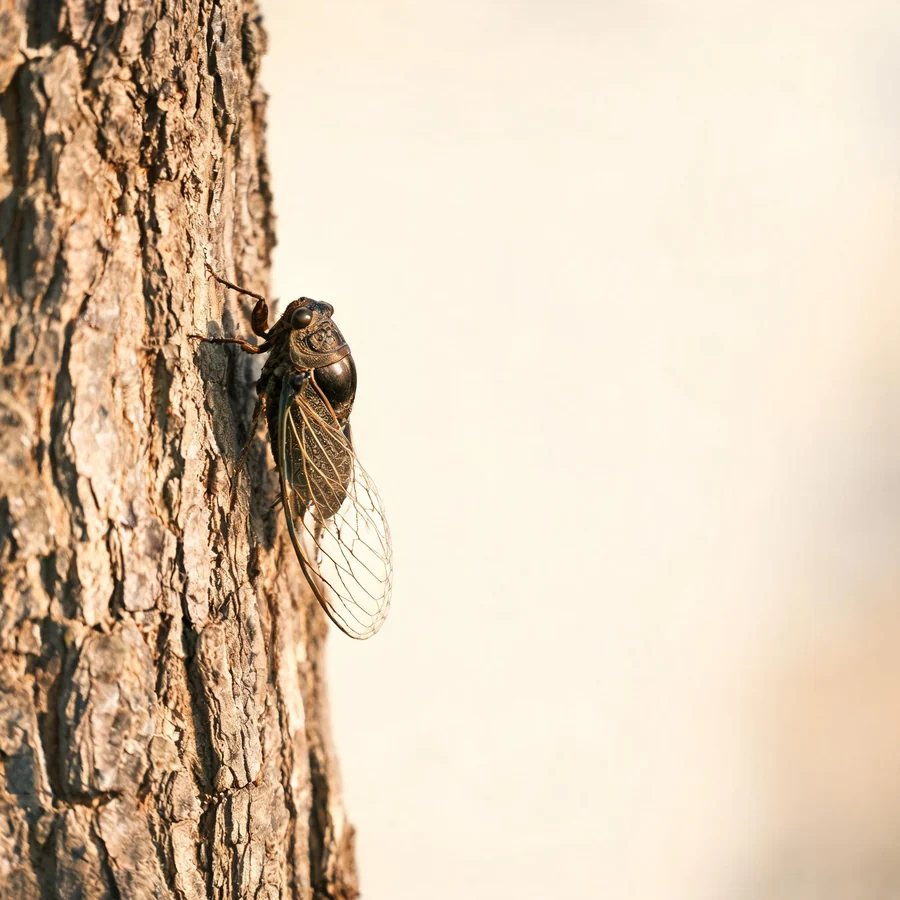
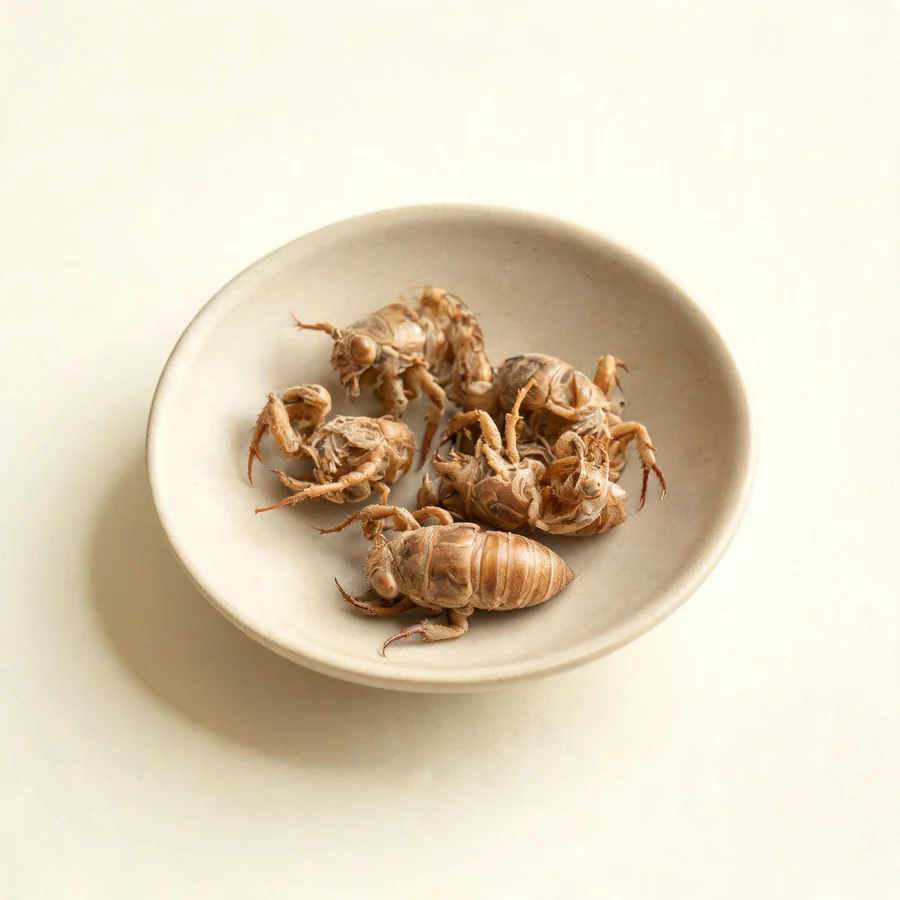
Chan Tui is the gentle surface herb: it vents a rash, quiets a moving itch and settles the restlessness that goes with both, and it does so without drying or poisoning. Its place is the itchy, recently erupted, wind-driven problem, especially in children, and it is an assistant in a formula rather than the whole treatment.
Skin signs that suggest it
- Raised, pale or pink wheals that move and fade within hours, with intense itch (Wind in the surface)
- An itch with no fixed lesion, worse at night and in warmth, where scratching leaves no ooze
- A sparse rash in a feverish child that is slow to come out (a rash failing to vent)
- Itchy patches where the itch rather than the redness is the main complaint
- Itch with restlessness, irritability or a tendency to twitching and night waking (Wind stirring)
When it is not the right herb
Wind-Cold is the wrong pattern: chills, clear nasal discharge and a throat that is not sore all point away from a cold herb. Someone who perspires without exertion and catches colds readily should not take it either, since dispersing thins a defence that is already leaking. Zhang Shouyi warned against it where the itch of a pox arises from Qi deficiency instead of Heat: that rash needs support, not dispersal. Nor does it replace an antihistamine or emergency treatment when urticaria involves swelling of the mouth or throat.
What it does for skin
Skin-relevant actions only. Each one describes a mechanism in TCM terms and what it looks like on the skin.
Vents a rash that is stuck
The shell is light and hollow, and the tradition gives it an affinity for the surface, so it is used where an eruption is present but incomplete. A sparse rash that fades as soon as it shows, or a child whose spots will not come out, is read as Heat held in the exterior with the pathogen unable to leave. The shell helps the eruption complete rather than suppressing it, which is the opposite of what a modern anti-itch cream is doing.
Stops itch by dispersing Wind
Wind in this framework is what moves: an itch that travels, comes and goes, and worsens at night. The shell is a wind herb at the surface, and its job is to remove the cause of the movement rather than to numb the skin. It is used for the itch of urticaria, for the itch that remains after a rash has settled, and for the itch of childhood eruptions, where a gentle herb is needed.
Cools the surface without drying it
Many of the herbs used for a hot itchy rash are bitter and drying, and on a child's skin or on skin that is already tight they sting and leave it drier. The shell is cool and bland instead, so it can be used where a drying herb would be too much, and it combines well with the sweet, moistening herbs in a formula for a dry-ish itchy rash. Its lack of drying power is also its limit: it will not settle a weeping lesion on its own.
Quiets the Wind that stirs with an itch
The same lightness that reaches the surface also reaches the head, and the tradition uses the shell for the restlessness, night crying and twitching that accompany a febrile rash in a child. That is a genuinely different use from the anti-itch one, and it matters in skin practice because a child who cannot sleep because of itch is exhausted and flares further. It is a mild herb in this role and is used with the Liver-calming herbs rather than alone.
Skin conditions it is used for
Mapped to the condition pages on this site. The pattern column shows what the skin is doing when this herb is the right choice.
| Condition | Pattern | Why it suits | Typical setting |
|---|---|---|---|
| Urticaria | Wind-Heat in the surface with wheals that move and fade | Urticaria is the condition the shell is best known for in skin practice, because the wheal is Wind made visible: it arrives suddenly, moves and disappears. The shell disperses the Wind and cools the surface at the same time, and it is gentle enough for repeated courses. Where the wheals are cold and pale the herb is the wrong choice, and where there is swelling of the lips, tongue or throat the person needs emergency care rather than a formula. | Xiao Feng San, with Chan Tui increased where itch dominates |
| Itchy skin | Wind-driven itch without a fixed lesion | An itch that moves, worsens at night and leaves little to see is the shell's core indication. It is used when there is also a hot quality, so that the cooling and the Wind dispersal work together, and it is a reasonable choice for an older person or a child in whom the drying herbs cause trouble. It is less useful for the fixed, lichenified itch of a chronic patch, which needs Blood nourishment. | A modified Xiao Feng San with Chan Tui, Bo He and Jing Jie |
| Skin rashes | Rash that has not fully vented, with heat and itch | Venting a rash is the classical use and it is still the clearest rationale for the shell. The eruption is read as the pathogen looking for an exit, so the treatment helps it out; the shell is chosen because it is cool, light and non-toxic, and because it does not dry the skin that the rash is crossing. A febrile rash in a child needs a diagnosis first, and a rash that does not fade under pressure is an emergency. | A light wind-heat formula with Chan Tui, Bo He and Niu Bang Zi |
| Chickenpox | Epidemic toxin with vesicles, itch and a rash appearing in crops | The shell's paediatric record is largely about eruptive fevers, and chickenpox fits the reasoning: heat and dampness producing vesicles that itch, with the rash arriving in crops. It is used for the itch and for the surface Heat, not to shorten the illness, and it is given inside a formula. Chickenpox in an adult, in pregnancy, or with a widespread weeping rash needs medical advice, and the herb is not a substitute for that. | A light formula with Chan Tui, Bo He and Lian Qiao |
| Eczema | Itch-dominant eczema where the itch outlasts the redness | The shell is a supporting herb in eczema rather than a leading one, and its place is where itch is the dominant complaint and the skin is not actively weeping. It is used at the itch dose, higher than the throat dose, and it is combined with the drying and Blood-moving herbs that address the lesion itself. On a weeping, infected patch the shell alone will not do, and a drying herb belongs in the formula. | A modified Xiao Feng San with Chan Tui and Bai Xian Pi |
Combinations for skin
Herbs it is paired with when the skin, not an internal organ, is the target.
| Partner | Ratio | Why the pair is used |
|---|---|---|
| Bo He | 3 to 6 g each | Both are light, cool surface herbs. Mint disperses more strongly and suits the head and throat; the shell contributes the venting action, relief of itch and a mildness that works in children. An early itchy eruption with a sore throat, or a rash that is emerging too slowly, is where they are combined. |
| Niu Bang Zi | 6 g each | The burdock fruit is the more forceful against Heat-toxin and swollen tissue, while the shell brings gentle soothing to the throat and relief to itch. Hoarseness with a sore throat, and the early rash of a febrile illness where spots have not all appeared, are their targets. Both are among the leading ingredients of Xiao Feng San, the formula most used for wind-type itch. |
| Gou Teng | Chan Tui 3 to 6 g with Gou Teng 6 to 10 g | One is the principal Liver-calming herb and the stronger anticonvulsant; the shell adds dispersal at the surface and a mild calming effect. Restless itch, night waking or twitching is where the two are used, and it is the standard gentle pair for a feverish child with a rash who cannot settle. Neither would suffice alone. |
Formulas where it leads
- Xiao Feng San (消风散) - The standard formula for wind-damp-heat itch, and the context in which the shell is most often prescribed. Chan Tui, Bo He, Jing Jie and the other surface herbs move the Wind, while Shi Gao, Zhi Mu and the drying herbs handle the Heat and the Dampness underneath. It is the formula most used for urticaria and for an itchy, spreading eruption.
Safety for skin use
What to check before recommending or using it, including the cautions that matter most for skin patients.
Do not use, or use with caution
- Wind-Cold: chills, a clear runny nose, no sore throat and a pale tongue. The shell is cold and works on Wind-Heat, so using it here deepens the chill rather than releasing the surface.
- Exterior deficiency with unprovoked sweating. Dispersal can thin a defensive layer that is already leaking, so a person who perspires easily and catches cold after cold is unsuitable.
- A pox or rash arising from deficiency-cold. Where itch comes from Qi deficiency, the classical warning is to avoid the shell: the rash needs support rather than release.
- Severe allergic reaction. Urticaria with swelling of the mouth, tongue or throat, or with difficulty breathing, is an emergency and needs immediate medical care; a shell decoction has no place in it.
Pregnancy and breastfeeding
Only under supervision. The concern rests on tradition rather than experiment: nothing teratogenic has been reported, and the material is mild, yet its dispersing and descending nature is considered capable of unsettling a pregnancy, and several sources advise caution. Where it is used, it belongs inside a practitioner's formula for a definite indication, at a modest dose, briefly. Breastfeeding mothers are generally advised to keep to a short supervised course and to watch for rash, loose stool or unusual sleepiness in the baby.
Interactions
- Sedatives and anticonvulsants. Animal work shows sedation and synergy with barbiturates, so combining the shell with phenobarbital, a benzodiazepine or valproate can add to sedation. Clear it with the prescriber, and treat driving as a separate decision while the combination is new.
- Immunosuppressants. Laboratory work describes suppression of dendritic cell activation, which underlies a theoretical concern over ciclosporin, tacrolimus and similar drugs. How large that effect is in a patient is unknown, so the combination should not be assembled without specialist advice.
- Antihistamines. Its reported anti-allergic activity means the shell may amplify an antihistamine. That is usually harmless, but it can produce more drowsiness than expected, and the same applies to someone already taking several allergy medicines.
Allergy and patch testing
The shell is a collected animal material, and rare idiosyncratic reactions have been reported: flushing, sweating, a scattered rash and a mild fever. Those are not the same as a dose-related poisoning, but a rash that appears after starting the herb has to be taken seriously, because it can be hard to tell from the condition being treated. Stop the herb, and get urgent help if there is swelling, breathlessness or a widespread blistering rash.
General safety references
General references for herbal hepatotoxicity and herb-drug interactions; they are not specific to this herb.
- Review article: Herbal hepatotoxicity - an update on traditional Chinese medicine preparations. Alimentary Pharmacology & Therapeutics, 2014. PMID: 24844799.
- Interactions between herbal medicines and prescribed drugs: an updated systematic review. Drugs, 2009. PMID: 19719333.
- Warfarin and food, herbal or dietary supplement interactions: a systematic review. British Journal of Clinical Pharmacology, 2021. PMID: 32478963.
Evidence
The classical record is quoted with its source. The modern note states the level of evidence plainly.
Classical record
蝉,主疗皆一切风热证,古人用身,后人用蜕,大抵治脏腑经络,当用蝉身;治皮肤疮疡风热,当用蝉蜕。
The cicada treats all wind-heat conditions. The ancients used the body and later physicians used the shed skin: for the organs and channels the body is used, and for wind-heat of the skin and sores the shell.
Ben Cao Gang Mu (Compendium of Materia Medica), Li Shizhen, on body and shell - This is the passage that accounts for the shell displacing the whole insect, and the plainest classical statement that skin is where it belongs.
治头风眩运,皮肤风热,痘疹作痒,破伤风及疗肿毒疮,大人失音,小儿噤风天吊,惊哭夜啼,阴肿。
It treats dizziness from head-wind, wind-heat of the skin, itching of pox and rash, tetanus and toxic swellings and sores, loss of voice in adults, lockjaw and upward-staring convulsion in children, startled crying and night crying, and swelling of the genitals.
Ben Cao Gang Mu (Compendium of Materia Medica), list of indications - The fullest classical list: skin wind-heat, the itch of pox and rash, and toxic sores are all named, which is why the modern pharmacopoeia keeps the same indications.
Modern evidence
Evidence status
- Laboratory work on the shell reports anticonvulsant, sedative, antipyretic and anti-allergic activity, mostly in animal models, along with constituents such as chitin, amino acids and trace elements. The anti-allergic findings are the most relevant to skin practice, and they remain preclinical.
- No adequate clinical trial of the shell in urticaria or eczema was identified for this edition. Where it appears in published work it is one ingredient in a compound formula, so its own contribution cannot be separated from the rest.
- The safety margin is wide: animal studies given very large oral doses reported no deaths, and the recorded reactions are rare idiosyncratic allergy rather than dose-related toxicity. The practical risks belong to sourcing, because it is a shed material gathered from trees and sold by weight.
PubMed records
Selected real PubMed records for this herb's species or its constituents, chosen by species name and title relevance. They are references for the non-TCM discussion above, not proof that the herb treats any skin condition.
- Cryptotympana pustulata Extract and Its Main Active Component, Oleic Acid, Inhibit Ovalbumin-Induced Allergic Airway Inflammation through Inhibition of Th2/GATA-3 and Interleukin-17/RORγt Signaling Pathways in Asthmatic Mice.. Molecules (Basel, Switzerland), 2021. PMID: 33806085 (skin-related record).
- Identifying core herbal treatments for urticaria using Taiwan's nationwide prescription database.. Journal of ethnopharmacology, 2013. PMID: 23684721 (skin-related record).
Dose and forms
Skin-practice dosing and the preparations that suit skin complaints.
| Form | Dose and notes |
|---|---|
| Decoction for wind-heat and itch | 3 to 6 g for the throat and the surface, and 6 to 10 g where itch is prominent in urticaria or eczema. The shell is very light, so a modest weight is a large volume. |
| For spasm and restlessness | 10 to 15 g inside a formula with the Liver-calming herbs. This is a different job from the anti-itch use and a different dose, and it belongs to practitioner care. |
| Powder | 1 to 3 g per dose, ground finely, which suits a child or a small dose and avoids the bulk of a decoction. Remove the head, wings and legs before grinding. |
| Preparation | Wrap the shell in cloth before decocting, because it floats and the fragments are lost at straining. Rinse it in hot water first, as it is a shed material gathered from trees and carries soil and debris. |
The throat dose and the itch dose sit far apart and should not be merged: 3 to 6 g releases Wind-Heat, 6 to 10 g is the itch range, and 10 to 15 g belongs to spasm. Weigh the shell rather than spooning it, because it is almost weightless, and wrap it in cloth as carefully as you weigh it. Rinsing it beforehand is as much a hygiene measure as a preparation step.
Citations and further reading
Only real sources are listed: the classical materia medica passages quoted above, and the source works behind the botanical and safety statements.
- Ben Cao Gang Mu (Compendium of Materia Medica), Li Shizhen, 1578 - both passages quoted above.
- Ming Yi Bie Lu (Supplement to the Classic of Materia Medica), attributed to Tao Hongjing, about 500 AD - the earliest separate record of the shed skin as a medicine.
- Yao Xing Lun (On the Nature of Medicines), Tang dynasty - the first text to use the standard drug name.
- Pharmacopoeia of the People's Republic of China - Chan Tui monograph: source species, part used, preparation and dose range.
- Modern evidence statement: based on pharmacological and toxicological literature on cicada slough extracts, summarised as a statement about the level of evidence rather than as a cited finding.
- Zoological description and source species: entomological literature on Cryptotympana pustulata, Cicadidae.
Educational reference for qualified practitioners. This page is not medical advice, and skin conditions should be diagnosed by a clinician before treatment.