Skin profile
Where this herb sits in skin practice: the pattern it corrects, the skin signs it suits, and what it should not be used for.
Che Qian Cao is a mild cooling herb for hot, red swellings and moist heat rashes, used as a fresh poultice or a cooled wash. It supports the stronger toxin-clearing herbs and does not replace treatment for a spreading infection.
Skin signs that suggest it
- Hot, red, inflamed patches that look angry rather than dusky, often with some swelling (heat toxin)
- Small boils or infected spots that are red at the base and tender (heat toxin in the skin)
- A rash of fine red papules in hot, humid weather, worse in the folds and under clothing (summer heat with dampness)
- Weeping or slightly moist red patches with a burning quality (damp-heat)
- Dark, scanty urine alongside the skin problem, and a yellow tongue coating
When it is not the right herb
Not for cold, pale, dry skin, and not for chronic eczema that has become thick and dry. Not for wind-cold urticaria with pale wheals, where a cold herb is the wrong temperature. Because it is cold and draining, it is held back where the digestion is weak and the stools are already loose. A poultice is not a treatment for an abscess that needs drainage, and spreading redness with fever needs medical care.
What it does for skin
Skin-relevant actions only. Each one describes a mechanism in TCM terms and what it looks like on the skin.
Clears heat and resolves toxin
The herb is used where a lesion is hot, red and tender, which is heat that has concentrated to the point of damaging tissue. It is a mild example of the type, so it backs up the stronger toxin-clearing herbs instead of replacing them, and it is applied as well as swallowed: the fresh plant is crushed to a paste for a single boil or a hot plaque. Nothing in the action suggests it can sterilise an infection that needs antibiotics.
Cools the blood and settles a hot rash
The seed does not carry this action; the whole plant does, reaching the blood by way of the Liver, and heat there pushes blood out of small vessels. On the skin that shows as a fine red rash, or as pinpoint bleeding where scratching has broken the surface. The cooling action settles that heat, and the draining action carries it out through the urine, which is why the herb suits a hot rash with scanty dark urine.
Drains damp-heat downward
Sweet and cold means the herb cools without the harsh drying of a bitter herb, and it increases urine output. In skin practice that matters when a hot, moist eruption comes with general dampness: a heavy feeling, a greasy coating and little urine. Draining the dampness at the lower end reduces the moisture feeding the lesion, and it is the reason the herb is used on weeping patches that are not frankly infected.
Cools and soothes the surface when used fresh
A crushed fresh leaf or a cooled decoction gives immediate relief from heat and burning on the surface. The effect is physical as much as pharmacological: the preparation is cold and moist, and it lowers the temperature of the tissue while the herb's own cooling action works. It is temporary, and it is used on intact or lightly eroded skin, never on a deep or spreading wound.
Offers a gentle option where the stronger cold herbs are too harsh
The bitter-cold herbs can upset digestion and dry the skin. This one is sweet on top of being cold, so it can be given for a longer stretch to a person who would not tolerate Huang Qin or Ku Shen, and it can be used as a wash on a child. The trade-off is strength: it will not carry a severe heat-toxin picture on its own.
Skin conditions it is used for
Mapped to the condition pages on this site. The pattern column shows what the skin is doing when this herb is the right choice.
| Condition | Pattern | Why it suits | Typical setting |
|---|---|---|---|
| Boils | Heat toxin gathering into a red, tender swelling | A boil is the classic heat-toxin lesion, and this herb has a long record of being pounded fresh and laid on the swelling as well as taken internally. The cold reduces the local heat and the toxin-clearing action addresses the inflammation around the head of the boil. It is a supporting measure: a boil with spreading redness, fever or a dark centre needs medical assessment, and a collection of pus needs drainage. | Che Qian Cao with Pu Gong Ying and Lian Qiao internally, plus a fresh poultice |
| Erysipelas | Toxic heat spreading across the surface as a bright red, hot plaque | The traditional external preparation for a hot, sharply bordered, spreading red plaque is a pounded fresh plant or a cooled decoction, and this is one of the herbs named for it. The cooling and toxin-clearing action suits the surface heat, and the wash keeps the area clean while it settles. Erysipelas is a bacterial infection that needs prompt medical treatment, so the herb sits beside that treatment and never instead of it. | A cooled Che Qian Cao compress alongside antibiotics and a heat-clearing internal formula |
| Skin infection | Mild superficial infection with redness, heat and moisture | For a small, superficial, mildly infected area the herb offers a cooling wash that reduces heat and surface moisture without stinging, and it is mild enough to repeat through the day. It is limited to superficial infection: spreading redness, a raised temperature, lymph tenderness or a deep wound all move the case out of its range. The point of the wash is to cool and clean, not to treat the infection itself. | A cooled Che Qian Cao wash, with Huang Qin and Lian Qiao internally where heat toxin is clear |
| Heat rash | Summer heat and dampness trapped in the skin | Prickly heat produces small red papules in the folds and under clothing, with itch and a pricking quality. A cold herb that drains dampness suits it, and a dilute cooled wash is easy to apply to a child. The herb reduces surface heat and moisture; cooling the room, loosening clothing and keeping the skin dry matter at least as much, and a rash with pustules or fever needs review. | A dilute Che Qian Cao wash, or a cooling wash with Ma Chi Xian |
| Eczema | Acute damp-heat flare with weeping and burning | In the wet, hot phase of eczema this herb is used as a supporting drainer, not as the lead. It cools the surface, reduces moisture and adds a mild toxin-clearing action, and it is gentle enough to combine with the stronger skin herbs. The dry, thickened phase of eczema is a different pattern: a cold draining herb then removes moisture the skin no longer has. | Che Qian Cao within a damp-heat formula with Ku Shen and Bai Xian Pi |
Combinations for skin
Herbs it is paired with when the skin, not an internal organ, is the target.
| Partner | Ratio | Why the pair is used |
|---|---|---|
| Huang Qin | 10 to 15 g Che Qian Cao with 6 to 10 g Huang Qin | Huang Qin drains damp-heat from the upper and middle body and clears toxin strongly, while Che Qian Cao cools gently and drains the lower body. Combined they cover damp-heat spread across more than one level, which is the usual picture when a hot skin eruption comes with a bitter taste, a greasy coating and dark urine. Huang Qin dries more, so the balance is shifted toward Che Qian Cao when the skin is dry. |
| Pu Gong Ying | 15 to 30 g each in a decoction | Pu Gong Ying is the standard mild herb for boils and hot swellings, and it clears heat toxin without the harshness of the bitter-cold group. The pair is used for recurrent boils and infected spots, with a fresh Che Qian Cao poultice on the lesion itself. Both are cooling, so a cold digestion needs the dose reduced and the course kept short. |
| Lian Qiao | 15 g each | Lian Qiao vents heat outward from the surface and is a standard component of formulas for erysipelas and early infection, while Che Qian Cao cools and drains underneath it. Together they address a hot, spreading red lesion from the surface and from the centre at once. Lian Qiao is the stronger of the two, so the pair is used in short courses while the acute heat lasts. |
| Ku Shen | 15 g Che Qian Cao with 6 to 10 g Ku Shen in a wash | Ku Shen is the stronger drying and itch-quieting herb, and it is used where damp-heat is producing itch and ooze. Che Qian Cao adds cooling without much extra drying, which keeps the wash tolerable on skin that is already tight. Because Ku Shen is the harsher of the two, it is limited in area and duration and the mixture is used on the affected patch rather than the whole body. |
Topical use
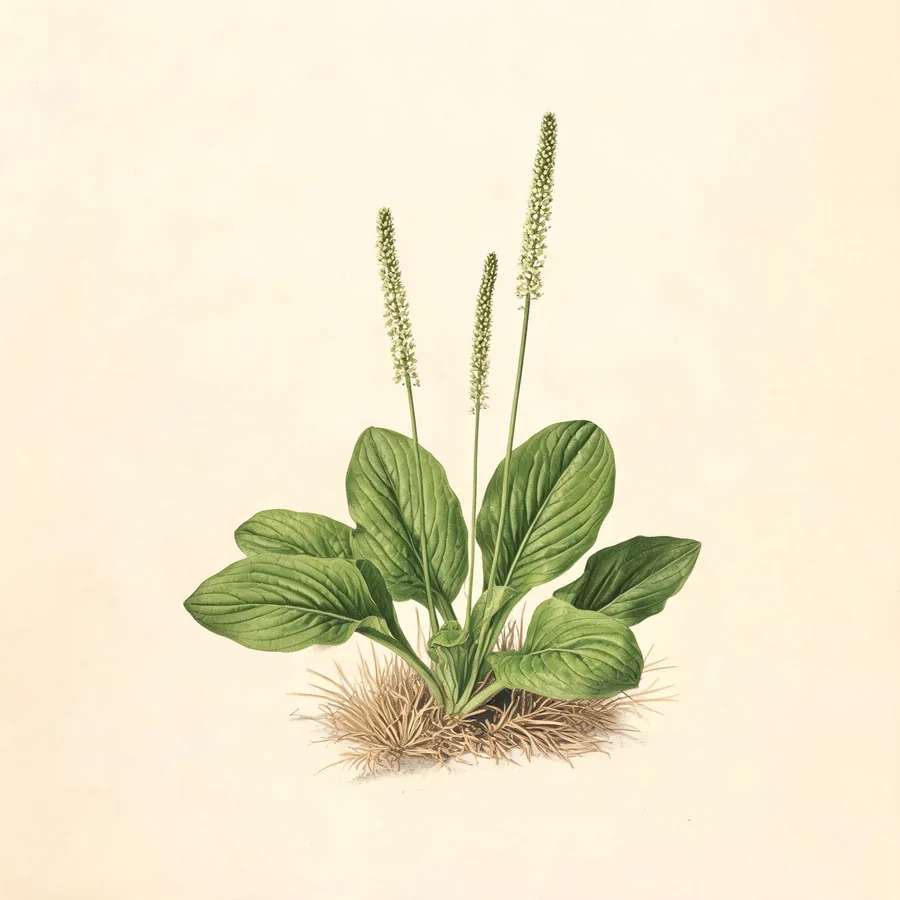
The poultice is the older of the two ways this herb is used on skin, and it remains the most practical: a fresh plant, crushed and laid on a single hot lesion. A cooled decoction is used for larger or weepy areas, and both are limited to superficial lesions. The plant is a common weed, which is why the tradition treats it as a field remedy, but recognition matters, and the preparation is discarded after use.
| Preparation | How and when it is used |
|---|---|
| Fresh poultice | Take a good handful of fresh plant, rinse it, crush it to a soft mash and spread it on clean gauze. It is laid on a single hot, red swelling for 15 to 20 minutes, once or twice daily, and thrown away afterwards. Do not use it on broken, deep or spreading lesions. |
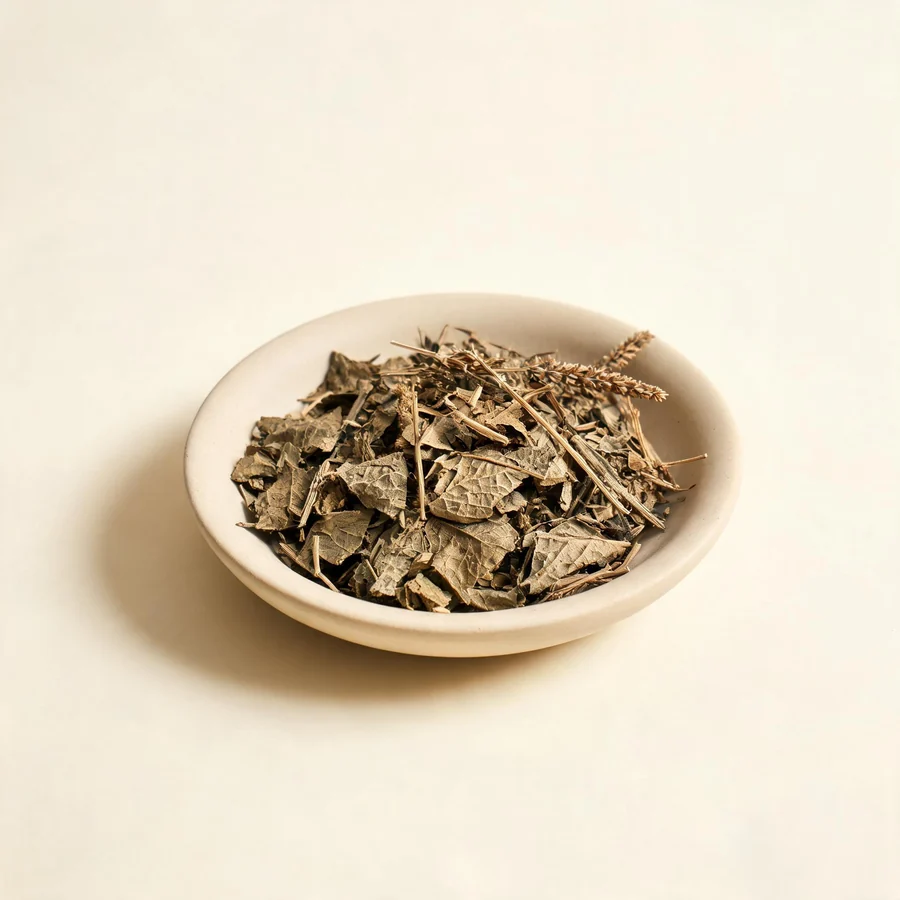
| Cooled wash | 15 to 30 g of dried herb, or 30 to 60 g of fresh plant, simmered in 500 ml of water for 15 minutes, then strained and cooled. Use as a rinse or a compress on hot, itchy or weeping areas for 10 minutes, once or twice daily, and make it fresh each day. |
| Compress for a hot plaque | Several layers of gauze are soaked in the cooled decoction and laid over a hot, red plaque for 10 to 15 minutes, then removed and the skin left uncovered. This is a comfort measure alongside medical treatment, not a substitute for it, and it is stopped if the area spreads or becomes painful. |
Patch test and cautions
Patch test on a small area for 24 hours before the first proper use. Do not apply it to a wound that is deep, punctured or clearly spreading, and do not cover a treated area with an airtight dressing. The wash is for external use only, is not kept beyond the day it is made, and is not used near the eyes. Stop if the skin stings or reddens further.
Safety for skin use
What to check before recommending or using it, including the cautions that matter most for skin patients.
Do not use, or use with caution
- Cold and weak digestion: long-standing loose stools, poor appetite, a cold abdomen or a pale tongue. A cold draining herb makes these worse, and the effect is more likely with internal use than with a short wash.
- Skin with no heat or dampness: pale, dry, thin or cold skin, chronic dry eczema and ichthyosis. A cooling diuretic herb has nothing to clear there and only removes moisture.
- Kidney deficiency with copious pale urine, cold limbs and a sore lower back, where the draining action deepens a weakness rather than relieving a blockage.
- Known allergy to plantain pollen, and a history of contact reaction to a herb-containing wash or cream. A first application is a patch test, not a full wash.
Pregnancy and breastfeeding
Use only on practitioner advice. Laboratory work has reported that plantain extracts make uterine muscle contract, and a cold draining herb is unwelcome in the first months. Urinary trouble in pregnancy, which is the herb's main internal use, is a matter for assessment rather than self-treatment, because infection at that time carries real risk. During breastfeeding, a short course at an ordinary dose is considered compatible, though a cold herb can disturb a nursing baby's digestion, so the smallest effective amount and a brief course are preferred.
Interactions
- Diuretics such as furosemide or a thiazide. The herb adds to water and sodium loss, so the danger is dehydration and upset electrolyte balance rather than a chemical conflict between the two, and the effect is worth watching during a course.
- Lithium. A herb that increases urine output may slow the clearing of lithium, letting blood levels creep toward the toxic range, and that margin is narrow. Anyone on lithium should not add the herb without the prescriber's knowledge and blood monitoring.
- Blood pressure medicines. Because the herb lowers blood pressure in animal work, an ACE inhibitor, an angiotensin receptor blocker or another antihypertensive may act more strongly than expected, so readings are worth checking.
- Glucose-lowering medicines. Animal work reports a fall in blood glucose, so people on insulin or a sulfonylurea should watch for hypoglycaemia if they take the herb regularly.
- Prescription topical treatments. Where a steroid cream or a calcineurin inhibitor is also in use, put hours between it and the herbal wash, so neither product dilutes the other and any reaction points to one of them.
Allergy and patch testing
Anyone with a plantain pollen allergy may react to the leaf too, with an itchy rash or wheeze, and handling the fresh plant can bring out a contact reaction in someone already sensitised. Test it on a small area first and stop at once if the skin flares instead of calming. A wash prepared from a plant gathered at the roadside should be discarded, since contamination is a separate hazard.
General safety references
General references for herbal hepatotoxicity and herb-drug interactions; they are not specific to this herb.
- Review article: Herbal hepatotoxicity - an update on traditional Chinese medicine preparations. Alimentary Pharmacology & Therapeutics, 2014. PMID: 24844799.
- Interactions between herbal medicines and prescribed drugs: an updated systematic review. Drugs, 2009. PMID: 19719333.
- Warfarin and food, herbal or dietary supplement interactions: a systematic review. British Journal of Clinical Pharmacology, 2021. PMID: 32478963.
Evidence
The classical record is quoted with its source. The modern note states the level of evidence plainly.
Classical record
It frees blocked urination and quiets pain, aids the passing of water and clears damp obstruction; used for a long time it makes the body light and keeps ageing at bay.
Shen Nong Ben Cao Jing (Divine Husbandman's Classic of Materia Medica) - Even the earliest notice concerns urine, and the promise of long life came with its superior grade. The skin use is a later extension of the same draining of dampness.
It is applied to cuts from metal, checks bleeding including nosebleed, breaks up static blood and abdominal lumps, clears dark red urine, calms restlessness and sends qi down.
Ming Yi Bie Lu (Supplement to the Classic of Materia Medica) - Here the cooling of blood and the checking of bleeding arrive, long before anyone separated the leaf from the seed.
Leaf and root alike are sweet, cold and free of poison; they are used for urine mixed with blood, to supplement the five viscera, to brighten the eyes and to open the five stranguries.
Ben Cao Gang Mu (Compendium of Materia Medica), Li Shizhen - For Li Shizhen the plant and its root are a single drug; the split into herb and seed is a later arrangement, and his note on harmlessness is the basis for using it as a wash.
Modern evidence
Evidence status
- Laboratory work on aucubin, plantamajoside and the whole-plant extract reports anti-inflammatory, antimicrobial and wound-healing activity, largely in cell and animal models. The plant is also eaten as a vegetable in parts of Asia, which is a food-safety signal rather than a clinical one.
- No adequately powered dermatological trial of Che Qian Cao was identified. Where it appears in clinical reports of skin disease it sits inside multi-herb formulas, so the contribution of the single herb cannot be separated from the rest.
- Safety position: the herb is classed as non-toxic in the Chinese Pharmacopoeia, with a mild laxative effect from aucubin at higher doses and possible reactions in people allergic to plantain pollen as the documented drawbacks.
PubMed records
Selected real PubMed records for this herb's species or its constituents, chosen by species name and title relevance. They are references for the non-TCM discussion above, not proof that the herb treats any skin condition.
- Metabolites analysis of plantamajoside based on gut microbiota-drug interaction.. Phytomedicine : international journal of phytotherapy and phytopharmacology, 2023. PMID: 37196513 (safety record).
Dose and forms
Skin-practice dosing and the preparations that suit skin complaints.
| Form | Dose and notes |
|---|---|
| Decoction (internal) | 9 to 15 g of dried herb daily, rising to 30 g in an acute hot, damp picture under supervision, or 30 to 60 g of fresh plant. It is given inside a formula and stopped when the heat settles. |
| Fresh poultice | Enough fresh plant to pound into a paste for a single lesion, applied for 15 to 20 minutes once or twice daily. There is no fixed weight, and the paste is discarded after each use. |
| Cooled wash | 15 to 30 g of dried herb to 500 ml of water, simmered for 15 minutes, strained and cooled, for compresses or rinses on hot, itchy or weeping areas once or twice daily. |
| Course length | Three to seven days for an acute hot lesion, with review. Stop when the redness and heat settle, and shorten the course if the stools loosen or the appetite drops. |
The whole plant is the article here, and compared with the seed of the same plant it cools blood more strongly but moves water less; the seed is a separate medicine in the materia medica. Fresh material is stronger than dried for both the poultice and the decoction, and the external preparation needs no gram dose because it is applied to a patch. Where Spleen or Kidney is weak, both the amount and the length are cut back.
Citations and further reading
Only real sources are listed: the classical materia medica passages quoted above, and the source works behind the botanical and safety statements.
- Shen Nong Ben Cao Jing (Divine Husbandman's Classic of Materia Medica), attributed compilation of the Han period - classical entry quoted above.
- Ming Yi Bie Lu (Supplement to the Classic of Materia Medica), Tao Hongjing, around 500 - classical entry quoted above.
- Ben Cao Gang Mu (Compendium of Materia Medica), Li Shizhen, 1578 - classical entry quoted above.
- Che Qian Cao monograph: Pharmacopoeia of the People's Republic of China - source for the accepted botanical source, part used and quality requirements.
- Modern evidence statement: based on laboratory literature on aucubin, plantamajoside and Plantago asiatica, described as a statement about the level of evidence rather than as a cited finding.
- Botanical description and identification: botanical literature on Plantago asiatica and Plantago depressa, Plantaginaceae.
Educational reference for qualified practitioners. This page is not medical advice, and skin conditions should be diagnosed by a clinician before treatment.