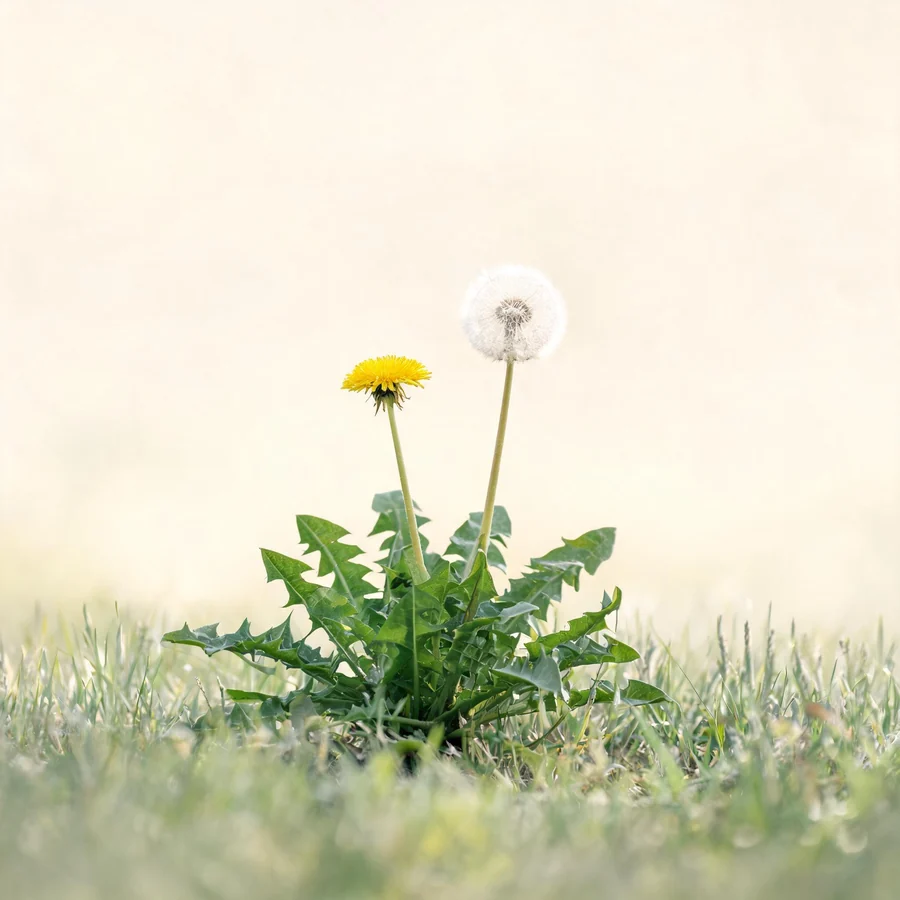
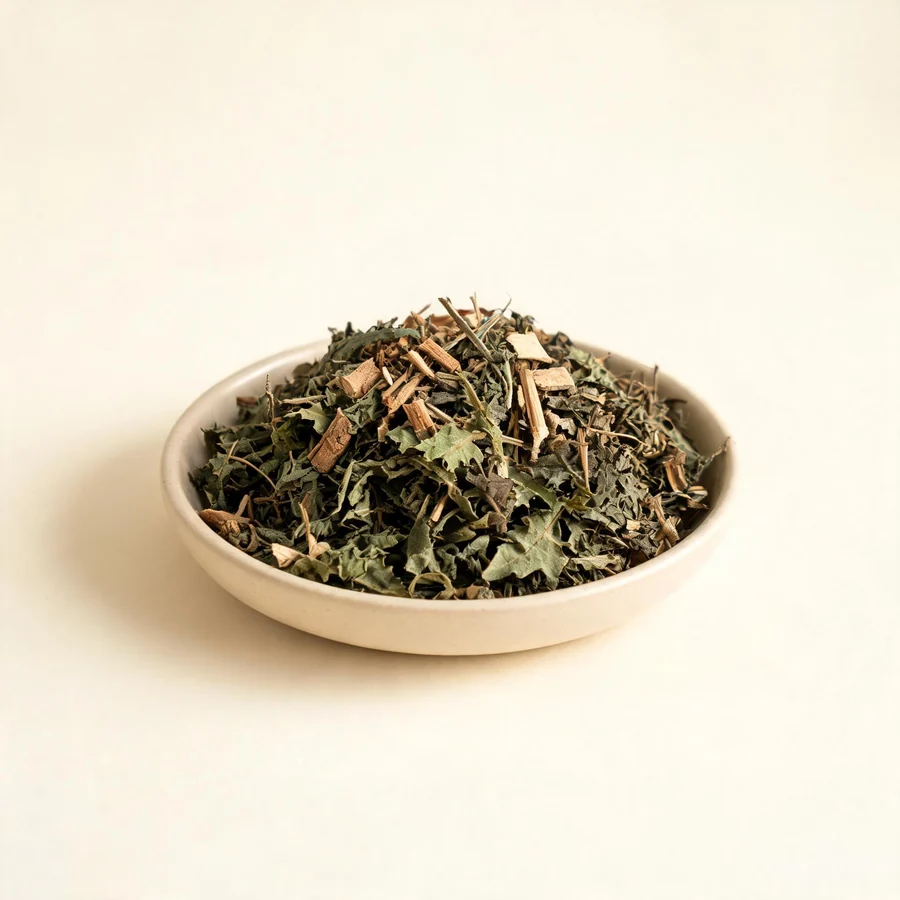
Skin profile
Where this herb sits in skin practice: the pattern it corrects, the skin signs it suits, and what it should not be used for.
Dandelion is gentle enough to eat and cold enough to respect. Its skin role is the hot lump rather than the flat red patch, and it works best before pus collects.
Skin signs that suggest it
- A hot, red, painful swelling with a distinct edge or a hard core (heat toxin gathering into a lump)
- A tender inflamed follicle, or a boil coming to a head, with redness around it
- A firm lump beneath hot red skin that is sore to press (heat toxin congealing)
- An infected area alongside a bitter taste, a red tongue and a fast pulse
- Lesions that are red and hot, ease with cooling and worsen after spicy food or alcohol
When it is not the right herb
Not for swellings that are pale, cold, slow and doughy, which need warming and tonifying instead. Not for someone with cold extremities, loose stool and no appetite, and not for an infection that is spreading with fever, which needs antibiotics and assessment. Not for a lump that fails to settle in a short time: a persistent breast lump or skin nodule needs proper diagnosis, and taking the herb does not remove that need.
What it does for skin
Skin-relevant actions only. Each one describes a mechanism in TCM terms and what it looks like on the skin.
Clears heat toxin in the skin
This is the core action. Lesions that are red, hot, swollen and sore, whether a boil, an abscess or a cluster of inflamed follicles, are heat concentrated into toxin, and the cold bitter plant clears it. Because the sweetness tempers the bitterness, the clearing is gentler than the harshest cold herbs allow, which is what permits larger doses and longer courses. It leads for the hot lump rather than assisting.
Scatters a swelling and disperses a nodule
When heat has thickened into a firm, defined lump, the herb is described as scattering, not merely cooling. That is the basis of its old reputation for a hot breast lump and for boils that stay hard instead of softening. It is paired with herbs that soften hardness, since scattering alone will not resolve a mature collection of pus; a fluctuant abscess needs drainage, not herbs.
Drains damp-heat downward through the urine
The bitter flavour moves down and the cold nature cools, giving heat an exit through the urine. In skin work that matters when a hot eruption comes with burning, scanty urine, which this tradition reads as one damp-heat showing in two places. It is a supporting action, not a justification for using the herb in a urinary problem on its own.
Cools Stomach and Liver heat behind facial lesions
The plant enters the Stomach and Liver, the channels this tradition links with the face and the breast. Hence its use in acne-like eruptions with a flushed face and a bitter taste, and in lesions that flare after rich or spicy food. Its cooling is mild enough to sit within a formula rather than act as a purge, the quality the Qing writers admired.
Skin conditions it is used for
Mapped to the condition pages on this site. The pattern column shows what the skin is doing when this herb is the right choice.
| Condition | Pattern | Why it suits | Typical setting |
|---|---|---|---|
| Boils | Heat toxin congealing into a hot, hard boil | A boil is the classic indication: heat toxin gathered into a red, hot, sore swelling. The herb is given early, while the lesion is still hard and before it points, to scatter the heat and bring the swelling down, usually with honeysuckle and viola. A boil on the face, or one with advancing redness and fever, needs medical care. | Wu Wei Xiao Du Yin, or Pu Gong Ying with Zi Hua Di Ding and Jin Yin Hua |
| Skin abscess | Toxic heat with pus collecting | An abscess is read as a local contest between defensive Qi and a pathogen, with heat and dampness collecting into pus. The scattering action fits the stage before pus has fully formed; once a collection is fluctuant, drainage decides the outcome and the herb becomes a helper. Deep, spreading or facial abscesses need medical treatment. | Modified Wu Wei Xiao Du Yin with Pu Gong Ying and Gua Lou |
| Folliculitis | Heat toxin at multiple follicles | Many small inflamed follicles read as toxin that has not yet merged into one lesion, and a cold herb that scatters suits that better than one that binds. It is given internally and applied as a wash, and it is combined with herbs clearing heat from Lung and Stomach when lesions sit on trunk and shoulders. Crops that keep returning need the underlying pattern addressed. | Pu Gong Ying with Lian Qiao and Huang Qin, or as a dilute wash |
| Acne | Stomach and Liver heat with inflammatory papules | Inflammatory acne with red bumps, pustules, a flushed face and a history of flaring after rich food is read as heat in the Stomach and Liver. Its gentler coldness allows a longer course inside a formula than the harsher cold herbs permit, which matters for a condition that takes weeks to settle. It is not a single-herb treatment, and comedonal acne without inflammation is not its pattern. | Modified Qing Shang Fang or Pi Pa Qing Fei Yin with Pu Gong Ying |
| Skin infection | Toxic heat with local redness, swelling and pain | Where an infection shows as a hot, tender, red swelling with no formed collection, the herb clears the heat and discourages the lesion from consolidating. It is a supporting ingredient in a formula and may be applied as a wash to a small area. Fever, advancing redness or a deep tender swelling means the infection needs medical treatment, and the herb must not delay it. | Pu Gong Ying with Jin Yin Hua and Lian Qiao, or a modified Wu Wei Xiao Du Yin |
Combinations for skin
Herbs it is paired with when the skin, not an internal organ, is the target.
| Partner | Ratio | Why the pair is used |
|---|---|---|
| Jin Yin Hua | 10 to 15 g each | The classic pairing for heat toxin and abscess. Honeysuckle has the wider reach, clearing toxic heat in many channels at once, while dandelion is more specifically a Liver and Stomach herb and the better scatterer of a lump. That division is why the old texts say honeysuckle cannot finish a sore without it, and the pair is used for boils, carbuncles and hot infected skin. |
| Zi Hua Di Ding | 15 g each | Both clear toxic heat, though the depths differ: dandelion scatters stagnation and lump at the Qi level, while viola cools the Blood and reaches toxin set deeper. They are combined for boils and carbuncles that are markedly red and painful, and both belong to the five-herb toxin formula. Viola suits the dusky, hard, deep lesion and dandelion the hot, spreading swelling. |
| Xia Ku Cao | About 15 g each | Prunella clears Liver fire and softens hardness, while dandelion scatters the swelling heat has produced, so the two are paired for lumps that can be felt. Prunella does the softening, dandelion the clearing. The combination is also used where damp-heat leaves something swollen and tender rather than flat and red. |
| Gua Lou | 10 to 15 g each | Gua Lou works on the chest, clearing heat, dissolving phlegm and breaking up nodules, while dandelion clears toxic heat through the Stomach and Liver. Together they address both phlegm and heat, which suits an early hot lump with red, painful swelling before pus forms. Once pus collects, drainage rather than herbs determines the outcome. |
Formulas where it leads
- Wu Wei Xiao Du Yin (五味消毒饮) - The five-herb formula for boils, carbuncles and hot swellings, with dandelion beside wild chrysanthemum, viola, honeysuckle and forsythia. Dandelion does the scattering of the lump while the others clear toxin, and the formula is the standard setting for the herb in skin work.
- Qing Shang Fang (清上防风汤) - A formula for heat in the upper body with facial eruptions, to which dandelion is added for its clearing and scattering action. It suits acne-like bumps and pustules with a flushed face, and in most modern use it is a modification rather than a fixed classical composition.
Topical use
Dandelion goes on as a fresh poultice and a cooled wash for hot, red swellings, and the Tang pharmacopoeia describes taking the decoction by mouth while applying the herb to the lesion at the same time. Fresh leaves and flower heads crush into a paste for a single boil or an inflamed follicle, and a cooled decoction serves as a compress on hot, tender skin. It brings comfort to a limited lesion; it does not treat infection that is spreading.
| Preparation | How and when it is used |
|---|---|
| Fresh poultice | Crush a handful of fresh plant, or rehydrated dried herb, into a paste and spread it on a clean cloth. Lay it on a single early boil or inflamed follicle for 20 minutes, twice a day, on unbroken skin only. Throw the paste away after each use. |
| Decoction wash | Simmer 20 to 30 g of dried whole plant in 500 ml of water for 15 minutes, strain and cool. Use as a compress or a rinse on hot red areas for 10 minutes once or twice a day. It spoils quickly, so make it fresh. |
| Combined wash with honeysuckle | Roughly 15 g each of dandelion and honeysuckle, decocted and used cooled, for a crop of small inflamed follicles. It is the external version of the heat-toxin pair and suits the trunk and shoulders where the skin is intact. |
Patch test and cautions
Test a patch first, since daisy-family allergy is the main risk and a poultice places the plant directly on skin. Keep it off deep, open or spreading infection, away from the eyes, and off a fluctuant abscess that needs drainage. Stop if burning, itching or advancing redness appears, and do not seal a poultice under an occlusive dressing. A breast lump, or a lesion that will not settle, needs medical assessment rather than another poultice.
Safety for skin use
What to check before recommending or using it, including the cautions that matter most for skin patients.
Do not use, or use with caution
- Cold and weak digestion, with unformed stool, no appetite, cold extremities and a sense of chill. The bitter cold plant aggravates all of it, so it is used briefly alongside warming herbs, or avoided altogether.
- Swellings and ulcers that are pale, cold and not inflamed, which need warming and tonifying. A cold clearing herb makes them worse, and the test is whether a genuinely hot, red, swollen element exists.
- Big doses taken over weeks when there is no heat at all, which can drain Stomach Qi and bring nausea or loose stool even in someone robust. A breast lump that will not settle promptly needs assessment rather than longer self-treatment.
Pregnancy and breastfeeding
Use only under guidance. Safety in pregnancy has not been established, and although it does not appear among the substances classically forbidden in pregnancy, its cold nature counts against high or prolonged use. A short course of 9 to 15 g within a balanced prescription, for an unmistakable heat-toxin problem, is generally regarded as acceptable, but the decision belongs to a practitioner. A small topical area is the lower-risk option, and any breast problem in pregnancy or lactation needs assessment.
Interactions
- Ciprofloxacin and other fluoroquinolones. Animal work found absorption reduced by dandelion, most likely because plant minerals bind the antibiotic, so leave a gap of two hours or more. Treat tetracyclines and other chelatable antibiotics in the same way.
- Diuretics such as furosemide and hydrochlorothiazide. Its own mild diuretic effect adds to theirs, with more risk of dehydration and depleted potassium. The leaf is also potassium-rich, so combining it with a potassium-sparing drug such as spironolactone may drive potassium up rather than down; blood tests are sensible for anyone on either.
- Lithium, diabetes medicines and anticoagulants. Lithium concentrations move with urine flow, so levels need checking; animal studies point to lower blood glucose, relevant to insulin or metformin; and clotting may be slowed, relevant to warfarin, aspirin or clopidogrel.
Allergy and patch testing
Dandelion belongs to the daisy family, so people who react to ragweed, chrysanthemums, daisies or marigolds may react here too. The usual skin signs are rash, itching or contact dermatitis, and a poultice is the likelier trigger; a more general response is possible but rare. Anyone with a known Asteraceae allergy should avoid the plant, and a patch test should precede any wash or poultice used over a wider area.
General safety references
General references for herbal hepatotoxicity and herb-drug interactions; they are not specific to this herb.
- Review article: Herbal hepatotoxicity - an update on traditional Chinese medicine preparations. Alimentary Pharmacology & Therapeutics, 2014. PMID: 24844799.
- Interactions between herbal medicines and prescribed drugs: an updated systematic review. Drugs, 2009. PMID: 19719333.
- Warfarin and food, herbal or dietary supplement interactions: a systematic review. British Journal of Clinical Pharmacology, 2021. PMID: 32478963.
Evidence
The classical record is quoted with its source. The modern note states the level of evidence plainly.
Classical record
主妇人乳痈肿,水煮汁饮之及封之,立消。
It principally treats swelling from breast abscess in women. Boil it in water, drink the liquid and apply the herb as a poultice, and the swelling subsides at once.
Xin Xiu Ben Cao (《新修本草》) - The Tang pharmacopoeia describes the treatment in the very form it still takes: swallow the decoction and apply the herb at the same time.
蒲公英味甘平,其性无毒。当是入肝入胃,解热凉血之要药。
Dandelion is sweet and balanced in flavour and non-toxic in nature. It enters the Liver and Stomach and is an important herb for resolving Heat and cooling the Blood.
Ben Cao Jing Shu (《本草经疏》) - This is where the Liver and Stomach attribution comes from, the reason the herb is used for the breast and for heat in the face.
蒲公英,至贱而有大功……既能泻火,又不损土,可以长服久服而无碍。
Dandelion is the humblest of herbs yet has great merit. It drains Fire without damaging the Earth of the Spleen and Stomach, and can be taken for a long time without harm.
Ben Cao Xin Bian (《本草新编》) - Chen Shiduo's praise is why the herb came to be called gentle enough for regular use, though its cold nature still sets a limit in practice.
Modern evidence
Evidence status
- Laboratory work on the whole plant describes anti-inflammatory and antimicrobial activity in cell and animal models, and the plant is rich in potassium and in sesquiterpene lactones. These are pharmacological findings, not evidence of a clinical effect on skin lesions.
- Trial evidence for dandelion in skin disease is very thin. Published reports concern urinary and digestive uses, and this page found no adequately controlled trial of the single herb in acne, boils or folliculitis.
- Regulatory position: the dried whole plant holds a monograph in the Chinese Pharmacopoeia, and dandelion is also classed in China as both a food and a medicine. What is written here describes traditional practice and the evidence as it stands, not proven benefit.
PubMed records
Selected real PubMed records for this herb's species or its constituents, chosen by species name and title relevance. They are references for the non-TCM discussion above, not proof that the herb treats any skin condition.
- Unveiling the genus Taraxacum: From folk medicine to chemodiversity-driven pharmacological and toxicological outcomes-A systematic review.. Journal of ethnopharmacology, 2026. PMID: 41554454 (safety record).
Dose and forms
Skin-practice dosing and the preparations that suit skin complaints.
| Form | Dose and notes |
|---|---|
| Decoction | 9 to 15 g of dried whole plant a day for ordinary heat and detoxification, rising to 15 to 30 g for a hot lump or abscess under supervision. |
| Severe heat toxin | As much as 30 to 60 g appears in the literature for severe acute heat toxin, for example a pronounced abscess, under supervision and briefly. |
| Topical poultice | Fresh plant crushed and applied, or 20 to 30 g of dried herb decocted for a wash. External use is not bounded in the same way as internal, because the plant is applied rather than swallowed. |
| As a vegetable | Young leaves go into spring salads or are cooked as greens. This is eating, not dosing, and it is not how a hot swelling is treated. |
The range is broad because the plant is gentle: 9 to 15 g for everyday heat, 15 to 30 g for a hot lump or abscess, and 30 to 60 g only for severe acute heat toxin under supervision. The plant is food-level material, yet large amounts over time still chill the digestion, and sensitive people more often report gut symptoms than anything else. A hot lump that does not settle within a short course calls for diagnosis, not a larger dose.
Citations and further reading
Only real sources are listed: the classical materia medica passages quoted above, and the source works behind the botanical and safety statements.
- Xin Xiu Ben Cao, Tang dynasty, completed 659 - classical passage quoted above.
- Ben Cao Jing Shu, Ming dynasty - classical passage quoted above.
- Ben Cao Xin Bian, Chen Shiduo, Qing dynasty - classical passage quoted above.
- Pharmacopoeia of the People's Republic of China, Taraxaci Herba monograph - basis for source species, plant part and quality standards.
- Botanical identification: taxonomic literature on Taraxacum mongolicum in the Asteraceae, including how it differs from Sonchus oleraceus and from other accepted Taraxacum species.
- Modern evidence: a summary of pharmacological work on the whole plant, offered as an assessment of the level of evidence rather than as a cited result.
Educational reference for qualified practitioners. This page is not medical advice, and skin conditions should be diagnosed by a clinician before treatment.