Skin profile
Where this herb sits in skin practice: the pattern it corrects, the skin signs it suits, and what it should not be used for.
Dang Shen builds rather than clears: it is for pale, thin, dry, slow-healing skin in a depleted person, and for protecting the digestion while a flare is treated. It has nothing to offer a hot, wet or infected eruption.
Skin signs that suggest it
- Pale, thin, dry skin with little colour, and a face that looks tired and sallow
- Chronic eczema or dermatitis that settles with rest and flares after illness, exertion or a run of poor sleep
- Cracks, erosions and thin scars that heal slowly and stay pink for months
- Poor appetite, loose stools, a soft voice and tiredness alongside the skin problem
- A pale tongue with a thin white coat and a pulse that is fine and weak
When it is not the right herb
Wrong where the skin is red, hot, swollen or weeping. Sweet tonics feed dampness, and a person with a full, distended abdomen, a greasy tongue coat and heaviness in the limbs will feel worse for it. It is also wrong for heat with no deficiency: a bright red rash, a bitter taste and a rapid pulse call for clearing, not building. Because the root is sweet, it can cause bloating when taken in large doses or in someone whose digestion is sluggish, and it is not a substitute for investigating unexplained weight loss, anaemia or a rash that keeps spreading.
What it does for skin
Skin-relevant actions only. Each one describes a mechanism in TCM terms and what it looks like on the skin.
Builds the Qi that makes Blood and reaches the surface
Blood is understood to be made from food by the Spleen, and the surface is fed by that Blood. A person whose middle is weak makes less of it, and the skin shows the shortfall as pallor, dryness and slow repair. The root is given to strengthen production rather than to colour the skin directly, and it is used over weeks with angelica or white peony when Blood deficiency is marked.
Helps a depleted surface close and repair
Erosions that weep clear fluid for weeks, cracks at the heels and corners that will not knit, and thin, shiny scars are read as a surface without the Qi to rebuild itself. The root supplies that capacity and is used with astragalus, white peony and a little liquorice, which is the logic of the formulas for slow-healing wounds. It is supportive work, and an ulcer that is deepening or a wound that is infected needs medical care.
Steadies the digestion while the skin is being cleared
The herbs that clear damp-heat and heat toxin from the skin are cold and bitter, and they upset a weak stomach. The root is added so that the clearing medicines can be taken at the dose the skin needs, which is a practical reason it appears in formulas that seem to be about the skin alone. It does not neutralise those medicines, it protects against them.
Supports the defensive Qi that guards the surface
Recurrent crops of spots, slow-healing lesions that follow every cold, and a tendency to catch infections are read as defensive Qi that is not holding the surface. The root tonifies the Lung and the Spleen that supply that Qi, and it is combined with astragalus and Fang Feng in the classical formula for a surface that is easily invaded. It is a long, slow measure and not a treatment for an active infection.
Skin conditions it is used for
Mapped to the condition pages on this site. The pattern column shows what the skin is doing when this herb is the right choice.
| Condition | Pattern | Why it suits | Typical setting |
|---|---|---|---|
| Atopic dermatitis | Spleen deficiency with dampness: dry, thickened, pale patches in a tired person | Atopic dermatitis in a person who is pale, easily tired, loose in the stool and slow to recover is read as a Spleen that cannot transform fluid, leaving the skin both dry and prone to oozing. The root supports the middle while the damp-heat herbs deal with the flare, so that clearing does not leave the person weaker. It is used for the chronic, relapsing form, and an acute weeping flare is treated first. | Modified Si Jun Zi Tang with Huang Qi and Bai Xian Pi |
| Eczema | Chronic, dry, lichenified eczema on a deficient base | Once an eczema flare has dried, the skin often stays thick, scaly and pale for months, and the person is tired and slow to heal. The root is used then, with blood-nourishing and wind-releasing herbs, to give the surface something to rebuild from. It is not used during the wet, hot phase, where a sweet tonic would add to the ooze and leave the skin more congested than before. | Dang Gui Yin Zi, with Dang Shen added for the depleted constitution |
| Skin abscess | A chronic abscess or boil that will not discharge or heal, in a depleted person | An abscess that grumbles for weeks, drains thin fluid and never quite closes is read as Qi too weak to push the pathogen out and repair the tissue. The classical answer supports the Qi while resolving toxin, and the root is one of its main ingredients alongside astragalus. A hot, spreading, painful swelling with fever needs urgent medical care, and a chronic abscess needs to be examined for an underlying cause. | Tuo Li Xiao Du Yin |
| Skin dryness | Qi and Blood failing to reach the surface: dry, thin, lusterless skin with a sallow face | Dryness that comes with pallor, fatigue and poor appetite is not the dry heat of a hot person; it is a surface that is not being fed. The root strengthens the middle that makes Blood and is used with angelica, peony and rehmannia so that the skin is supplied rather than merely moistened. Dryness with a red tongue, thirst and night sweats points to Yin deficiency and needs a different approach. | Ba Zhen Tang, or Si Jun Zi Tang with Dang Gui and Bai Shao |
Combinations for skin
Herbs it is paired with when the skin, not an internal organ, is the target.
| Partner | Ratio | Why the pair is used |
|---|---|---|
| Huang Qi | 10 to 15 g of codonopsis to 15 to 30 g of astragalus | Both build Qi, and they are the standard pair for fatigue with a skin problem that will not heal. Astragalus lifts and holds the surface while codonopsis builds the middle that produces the Qi, so one supplies and the other distributes. The codonopsis is given in the smaller amount because astragalus is doing the heavier work at the surface. |
| Bai Zhu | 1 to 1, about 10 g of each | Atractylodes strengthens the Spleen and dries dampness, and the codonopsis supplies the Qi that the Spleen runs on. The pair is used for skin problems on a base of loose stools, poor appetite and heaviness, and it is the core of the classical middle-tonifying formula. Where dampness is marked, the atractylodes is increased; where fatigue is marked, the codonopsis. |
| Dang Gui | about 10 g of codonopsis to 10 g of angelica | Qi and Blood depend on each other, and the pair treats both sides of a pale, dry, tired skin. The codonopsis builds the Qi that makes Blood and the angelica supplies and moves the Blood itself, which is why the combination appears in the formulas for deficiency with pallor, dizziness and scanty periods. Neither alone gives the other what it lacks. |
| Mai Dong | about 10 g of codonopsis to 10 g of ophiopogon | Ophiopogon moistens and nourishes Yin, and the codonopsis restores the Qi that moves fluid to the surface. Together they suit skin that is dry and flaky after a fever or a long illness, with thirst, a dry mouth and a tired voice. The ophiopogon is added when dryness dominates, and the codonopsis is reduced if the digestion is delicate. |
Formulas where it leads
- Si Jun Zi Tang (四君子汤) - The four gentlemen: codonopsis, atractylodes, poria and liquorice, the basic middle-tonifying prescription. Skin practice borrows it as a base for chronic eczema and dry skin in a depleted person, adding blood-nourishing and itch-settling herbs. It is a formula for deficiency, and it makes a hot or damp pattern worse.
- Ba Zhen Tang (八珍汤) - Eight treasures combines the four gentlemen with the four-substance blood formula, so Qi and Blood are built together. It is used for pale, dry, thin skin with fatigue, dizziness and scanty periods, and for skin that heals poorly after illness. The codonopsis is the Qi half of the formula and can be increased when tiredness dominates.
- Tuo Li Xiao Du Yin (托里消毒饮) - The formula that supports the Qi while resolving toxin, for an abscess or boil that will not discharge or close. Codonopsis and astragalus carry the supporting work, while honeysuckle, angelica and platycodon deal with the toxin and direct it out. It is used for chronic, quiet lesions, never for a hot spreading infection.
Safety for skin use
What to check before recommending or using it, including the cautions that matter most for skin patients.
Do not use, or use with caution
- Excess or heat patterns with no deficiency: a bright red, hot, spreading rash, a bitter taste, constipation and a rapid full pulse. A sweet tonic given here strengthens the pattern rather than the person.
- Dampness, phlegm or food stagnation with a full, distended abdomen, a greasy tongue coat and heaviness. The sweet, moistening quality adds to the clogging.
- Veratrum (Li Lu). The classical incompatibility lists set the ginseng-like Shen herbs against Veratrum, and the pairing is avoided, as the Pharmacopoeia advises.
Pregnancy and breastfeeding
Regarded as suitable at food and formula doses. The root is sweet, neutral, and neither moves Blood nor stimulates the uterus, and it features in modified middle-tonifying prescriptions for deficiency during pregnancy and in soups taken after birth. It is still reserved for real deficiency, and a pregnancy with heat, raised blood pressure or swelling belongs with a clinician rather than a tonic.
Interactions
- Glucose-lowering medicines. Polysaccharides in the root have altered blood glucose in animal work, so an additive effect with insulin or a sulphonylurea is possible in theory and readings should be watched when a course begins.
- Blood pressure medicines. Extracts have produced mild vasodilation in laboratory work, which could add to an antihypertensive and cause dizziness on standing.
- Immunosuppressants and anticoagulants. Laboratory studies show the root stimulating immune activity, which could oppose transplant therapy; some work also describes platelets clumping less readily, so an added effect with warfarin cannot be ruled out.
Allergy and patch testing
Reactions are uncommon, but a sweet root taken in quantity can cause bloating and loose stool, and a herb-containing cream or wash can produce contact redness in a sensitive person. Stop if a rash worsens after a new product, and note that preparations sold as codonopsis have been mixed with other roots, so a reaction may be to what the product actually contains.
General safety references
General references for herbal hepatotoxicity and herb-drug interactions; they are not specific to this herb.
- Review article: Herbal hepatotoxicity - an update on traditional Chinese medicine preparations. Alimentary Pharmacology & Therapeutics, 2014. PMID: 24844799.
- Interactions between herbal medicines and prescribed drugs: an updated systematic review. Drugs, 2009. PMID: 19719333.
- Warfarin and food, herbal or dietary supplement interactions: a systematic review. British Journal of Clinical Pharmacology, 2021. PMID: 32478963.
Evidence
The classical record is quoted with its source. The modern note states the level of evidence plainly.
Classical record
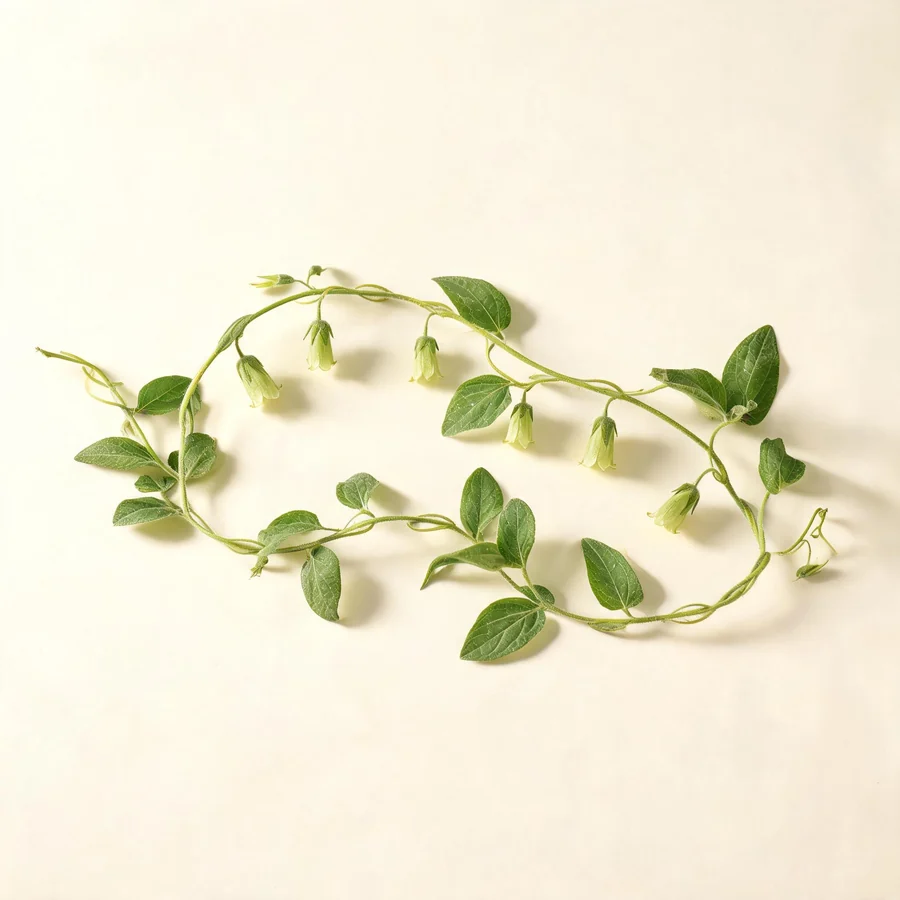
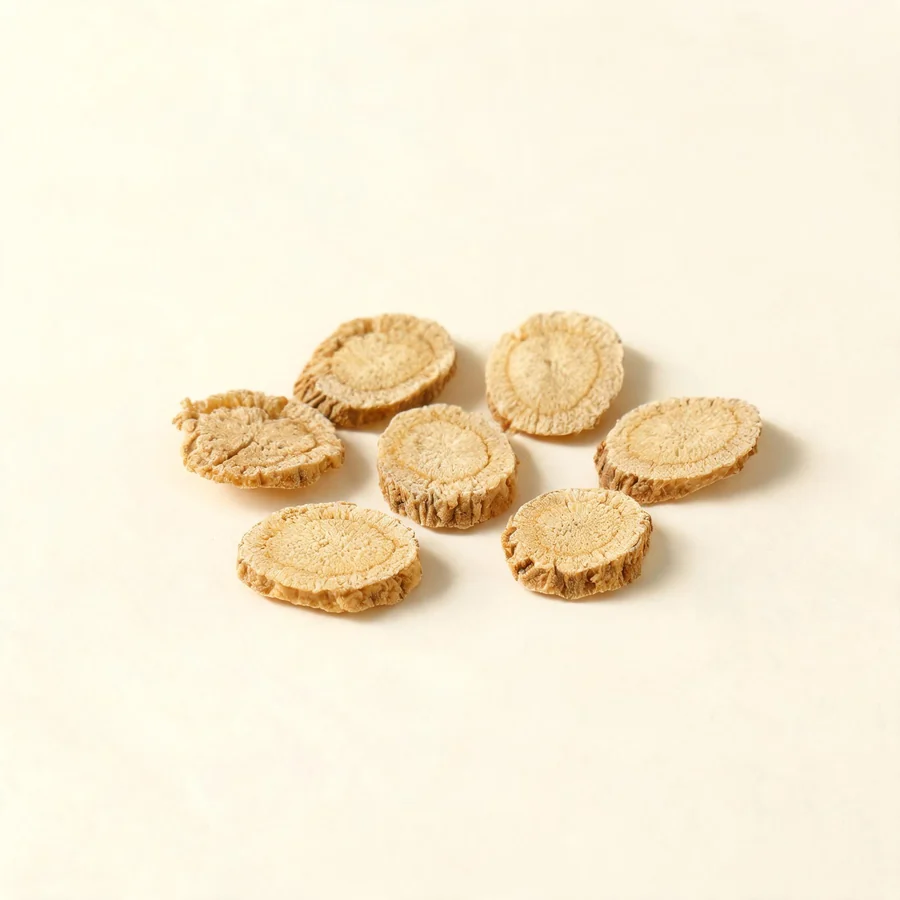
The old herbals say the finest Shen comes from Shangdang. Wild ginseng from that district became impossible to get, and only the mild, balanced Fangfeng sort of Dang Shen was valued; a crown shaped like a lion's head marks the true root, while hard ridges mark a false one.
Ben Cao Cong Xin (本草从新), Wu Yiluo, 1757 - The entry that gives the herb its own identity, separate from ginseng, and the source of the quality marks still used today.
It reinforces the Spleen and enriches the Stomach, moistens the Lung and produces fluid, and keeps the Qi of the middle in circulation. It aids transport without stirring things up, enriches Stomach Yin without causing stagnation, moistens the Lung without bringing in Cold, and generates Blood without heaviness.
Ben Cao Zheng Yi (本草正义), Qing dynasty - A Qing account of why this root can be taken for months where ginseng would prove too warming or too expensive.
It addresses emptiness of the Lung and can add to Lung Qi.
Ben Cao Gang Mu Shi Yi (本草纲目拾遗), Qing dynasty - A very short entry, and enough to confirm the Lung action on which the surface-supporting use rests.
Modern evidence
Evidence status
- Laboratory work on codonopsis polysaccharides reports immune, digestive and metabolic activity, mostly in animals and cell models. These studies are not trials in people and they say nothing about eczema, wound healing or any other skin outcome.
- No controlled clinical trial of Dang Shen in a skin disease was identified. Its skin use follows from the classical middle-tonifying reading and from the formula tradition that places it in prescriptions for chronic, slow-healing lesions, so it is presented as traditional practice.
- Regulatory status: the root is an accepted article in the Chinese Pharmacopoeia as Radix Codonopsis, and in China it is listed among substances that count as both food and medicine, which speaks of familiar use rather than of proven effect.
PubMed records
Selected real PubMed records for this herb's species or its constituents, chosen by species name and title relevance. They are references for the non-TCM discussion above, not proof that the herb treats any skin condition.
- Medicine for chronic atrophic gastritis: a systematic review, meta- and network pharmacology analysis.. Annals of medicine, 2023. PMID: 38170849 (pharmacology or review record).
- Codonopsis Radix: A comprehensive review for its ethnopharmacology, phytochemistry, pharmacodynamics, pharmacokinetics, toxicity and potential clinical applications.. Phytomedicine : international journal of phytotherapy and phytopharmacology, 2025. PMID: 41275746 (safety record).
Dose and forms
Skin-practice dosing and the preparations that suit skin complaints.
| Form | Dose and notes |
|---|---|
| Decoction | 9 to 15 g of dried root a day where it assists, rising to 15 to 30 g when it leads the prescription. |
| Honey-fried form | Honey-fried root strengthens the middle and suits a dry, depleted digestion; the raw root is preferred when fluids need generating. |
| Course length | Four to eight weeks, with review. Stop or reduce if the abdomen distends, the appetite falls or the skin becomes greasier. |
How much is given depends on the job as much as on body weight: little when the root assists, plenty when it leads. Honey-frying bends it towards a weak, dry digestion, rice-frying towards dampness, and the untreated root towards thirst and dryness. Because the effect accumulates, courses run for weeks, and progress is read from appetite, stamina and the speed of skin repair rather than from the rash alone.
Citations and further reading
Only real sources are listed: the classical materia medica passages quoted above, and the source works behind the botanical and safety statements.
- Ben Cao Cong Xin (本草从新), Wu Yiluo, 1757 - the passage on the herb's name and quality is rendered above.
- Ben Cao Zheng Yi (本草正义), Qing dynasty - the passage on its character is rendered above.
- Ben Cao Gang Mu Shi Yi (本草纲目拾遗), Qing dynasty - the brief entry on the Lung is rendered above.
- Radix Codonopsis monograph, Pharmacopoeia of the People's Republic of China - accepted source, part and quality requirements.
- Modern evidence statement: drawn from published laboratory work on Codonopsis pilosula, presented as a statement about the level of evidence rather than as a cited finding.
- Botanical description and identification: botanical literature on Codonopsis pilosula, family Campanulaceae.
Educational reference for qualified practitioners. This page is not medical advice, and skin conditions should be diagnosed by a clinician before treatment.