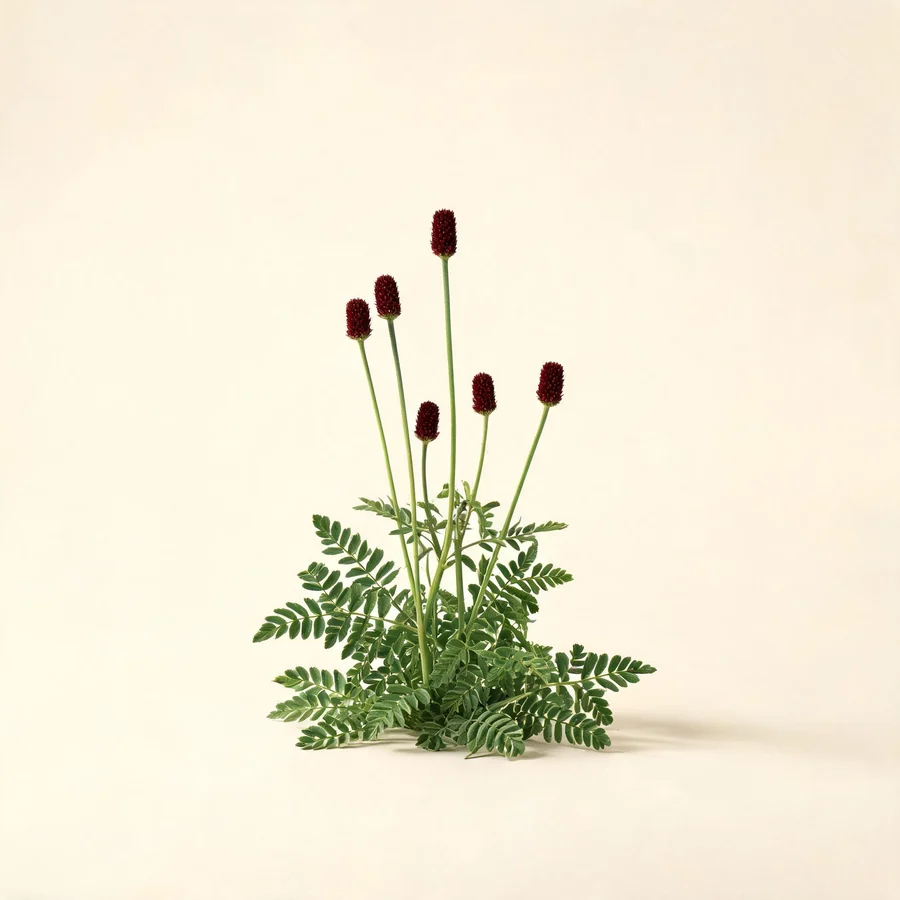
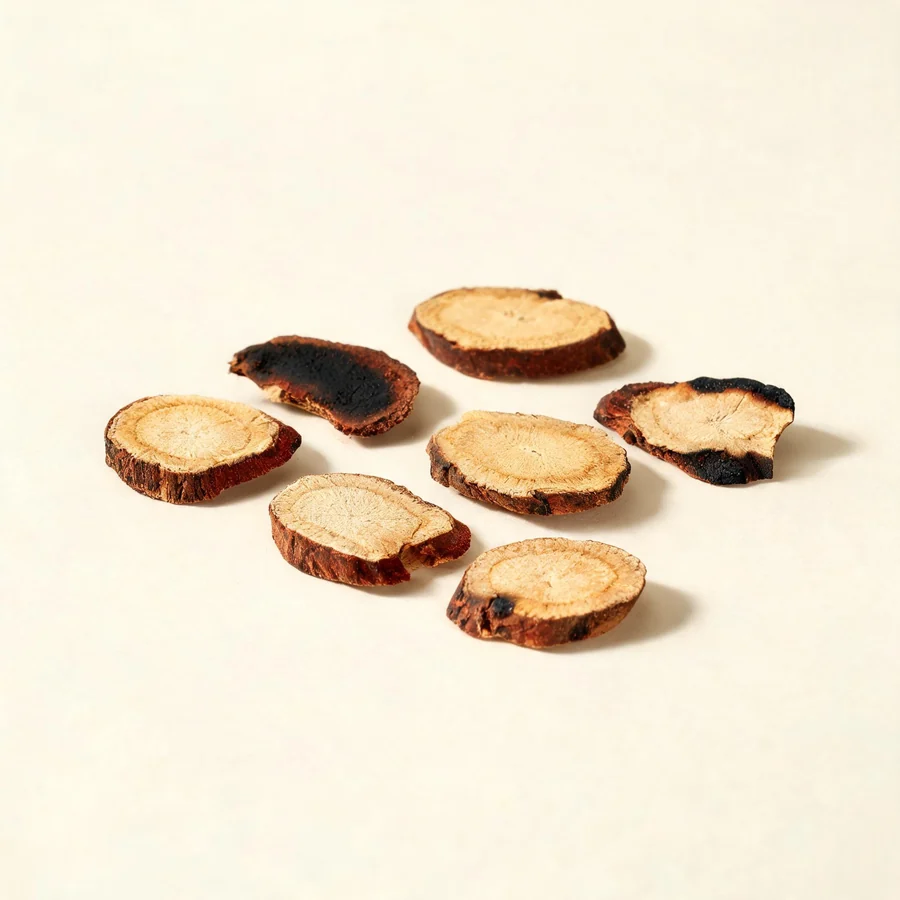
Skin profile
Where this herb sits in skin practice: the pattern it corrects, the skin signs it suits, and what it should not be used for.
Di Yu responds to what the skin is doing rather than to where the rash sits: it binds, dries and shields. That is why it is first a topical herb and only second an internal one.
Skin signs that suggest it
- A raw, weeping area that is red, sore and slow to heal, with clear or yellowish fluid on the surface (heat with dampness)
- A burn or scald with blisters, ooze and pain in the first days after the injury
- Small red or purple spots that stay coloured when pressed, in a hot and restless person (heat in the Blood)
- A red tongue carrying a yellow coat, with a rapid pulse, alongside bleeding or ooze
- Skin that is wet and raw rather than dry and flaky, and that settles with drying rather than with oil
When it is not the right herb
It is wrong for pale, cold, dry skin, and wrong for the cold-deficiency form of chronic eczema, where the surface is thickened and nothing weeps. It is wrong in the opening days of an infected lesion producing pus, since an astringent keeps the discharge in. It is wrong when bleeding comes from stasis, with dark clotted blood and pain fixed in one spot. Nor is it a dressing for every wound: a clean surgical incision does not need it, and a large burn needs hospital care.
What it does for skin
Skin-relevant actions only. Each one describes a mechanism in TCM terms and what it looks like on the skin.
Cools Blood and stops leakage from small vessels
Heat, in this reading, drives blood out of its proper channels, and the sour, astringent flavour restores tone to the vessel walls. On the skin the result is purpura and petechiae that stop extending, and a raw area that stops weeping blood. The effect belongs to capillaries and small vessels rather than to serious haemorrhage, and it is always given alongside treatment of the pattern underneath.
Dries a weeping surface and binds it
Tannins explain the old idea of astringency: they cross-link proteins at the surface, tightening the tissue, cutting exudate and leaving a protective film. That is why the root helps an erosion, a weeping eczema, or a raw patch inside a skin fold. The same property rules it out where a surface must stay moist or must drain.
Clears heat and resolves toxin in inflamed skin
The root is bitter and cool as well as binding, and the tradition applied it to inflamed, infected and foul-smelling skin, not only to bleeding. Hence its old place in washes for sores and in ointments for wounds, where the aim was to take away the heat keeping the tissue raw. This supports rather than replaces antibiotics when infection is spreading.
Promotes tissue repair on burns and raw skin
The classical phrase is generating flesh: the aim is for the surface to rebuild, not merely to dry out. The old texts combine the root with oil to make an ointment for metal wounds, and the same idea survives in preparations for scalds. Practically, the film left by the powder shields the new surface while it re-epithelialises, and pain and fluid loss fall together.
Skin conditions it is used for
Mapped to the condition pages on this site. The pattern column shows what the skin is doing when this herb is the right choice.
| Condition | Pattern | Why it suits | Typical setting |
|---|---|---|---|
| Skin burns | Fire toxin scorching the skin with heat and a damaged surface | A fresh burn is the plainest example of external heat injury, and powder of the raw root in oil is the classical dressing. It suits superficial and partial-thickness burns of limited size, where the goals are to shield the surface, slow fluid loss and ease pain while healing proceeds. Deep, extensive or infected burns need hospital care, and a herbal dressing can only ever be an adjunct. | Di Yu powder in sesame oil as a paste, or a cooled decoction as a wet dressing |
| Sunburn | External fire toxin with red, hot and tender skin | Sunburn is the same fire toxin in a milder key: erythema, heat, soreness and sometimes blistering over exposed skin. A cooled decoction applied as a compress suits the first day or two, when cooling and binding are what is wanted, and the astringency curbs the weep from a blister. It should not go on broken or infected skin, and a widespread blistering burn needs assessment. | Cooled decoction compress, or a thin paste of the powder in a neutral oil |
| Eczema | Acute damp-heat with weeping and ooze | The root belongs to the wet, raw stage of eczema, not the dry, thickened stage, and here it is more often applied as a wash than swallowed. Astringency cuts surface exudate while the cool bitterness addresses the heat driving it, which is why it features in traditional washes for acute lesions. When the skin dries and begins to scale, the herb is set aside in favour of nourishment. | Di Yu wash with Ku Shen and Huang Bo, or a modified damp-heat decoction |
| Skin erosion | Dampness with heat on a broken, weeping surface | An erosion is a shallow break that weeps instead of bleeding, which is close to what the root does best. The aim is to bind the surface just enough for it to close without sealing infection in, so it is used on clean, shallow erosions and not on anything purulent or spreading. In this setting it is a topical herb rather than an internal one. | Di Yu with Huang Bo as a wash, or the powder dusted thinly on a small area |
| Purpura | Heat in the Blood with blood leaking into the skin | Red or purple spots that do not blanch, in a hot person, are read as heat making blood reckless, and a blood-cooling astringent forms one part of the response. Di Yu is a supporting herb, given with stronger cooling and blood-moving medicines. It is not a treatment for purpura with fever or a low platelet count, which needs urgent assessment, and the charred form is the usual internal choice. | Modified Shi Hui San, or Di Yu Tan with Mu Dan Pi and Sheng Di Huang |
Combinations for skin
Herbs it is paired with when the skin, not an internal organ, is the target.
| Partner | Ratio | Why the pair is used |
|---|---|---|
| Huang Qin | 6 to 10 g each | Scutellaria works on heat and dampness at the Qi level; the burnet root works a level deeper, at the Blood, and binds the surface as well. Between them they cover a damp-heat lesion that is inflamed and weeping together, which is why that pair serves acute oozing eczema and raw inflamed skin, both by mouth and in washes. |
| Huai Hua | 10 g each | The classic combination for bleeding below the waist. Sophora flower is aimed at the Large Intestine and clears the Liver fire that pushes blood downward; the root contributes the astringency that shuts leaking vessels. For skin practice its relevance is perianal skin, where bleeding, ooze and irritation occur together. Equal weights are customary. |
| San Qi | 6 to 10 g Di Yu with 3 to 6 g San Qi | Notoginseng arrests bleeding while leaving no stasis behind, which is precisely where a purely astringent approach falls short. The two are put together when bleeding has persisted, or when the person already tends toward stagnation, so vessels close without the congested after-effect an astringent can leave. It is a deliberate pairing rather than a routine one. |
| Huang Bo | 6 to 10 g each, or equal parts in a wash | Huang Bo is the bitter cold herb for damp-heat low in the body and on the skin, and it is the natural partner when the root is being used as a wash. Together they dry the surface and clear the heat keeping it raw, and they are applied to limited areas of intact or lightly broken skin. Prepare the wash fresh and use it cool. |
Formulas where it leads
- Shi Hui San (十灰散) - The ten-ash formula for bleeding caused by heat, in which charred roots and leaves act together to cool the Blood and seal vessels. It is a bleeding formula rather than a skin one, but it is where charred Di Yu classically appears, and the classical context for its use in purpura of the heat type.
- Huai Jiao Wan (槐角丸) - The classical formula for bleeding haemorrhoids and intestinal wind, with Di Yu in a supporting cooling and haemostatic role. Its skin relevance is the perianal area, where blood, ooze and soreness coexist and an astringent influence is welcome.
Topical use
This is where the root does most of its work, and the classical preparation is simple: grind the raw root fine, work it into sesame oil and spread the paste on burns and scalds. A cooled decoction serves as a wash or a wet dressing for weeping eczema, erosions and raw skin, while the charred root is an internal form and not a topical one. Area, not weight, sets the limit, because tannins cross damaged skin and a small burn is a different proposition from a large one.
| Preparation | How and when it is used |
|---|---|
| Powder in oil | Take equal parts finely ground raw root and sesame oil and work them into a smooth paste. Spread a thin layer over a cleaned superficial burn or a small weeping erosion, then cover lightly. Renew once or twice a day, and stop if the area grows hotter, more painful or foul-smelling. |
| Decoction wash | Simmer 15 to 30 g of dried root in 500 ml of water for 20 minutes, strain, and let it cool to skin temperature. Apply as a compress or a rinse to weeping eczema and raw skin for 10 to 15 minutes, once or twice a day, on limited areas. |
| Dusting powder | Dust the dry powder thinly over a small, clean, weeping area to dry it. A thin layer only, since a thick crust holds moisture and cracks. Never use it on a deep or purulent lesion. |
| Wet dressing | Soak several layers of gauze in the cooled decoction and lay them over the area for 10 to 15 minutes. Keep the gauze wet; if it dries onto the skin it will tear the new surface when lifted. |
Patch test and cautions
Test a patch first, and do not cover a burn more than a few centimetres across without clinical advice. Extensive or deep burns, burns on the face, hands or feet or over a joint, and any burn in a child or in an older person belong in medical care. If the area becomes redder, more painful, more swollen or smells foul, infection is more likely than healing. Tannins stain cloth and temporarily tint skin.
Safety for skin use
What to check before recommending or using it, including the cautions that matter most for skin patients.
Do not use, or use with caution
- Cold deficiency in the Spleen and Stomach, shown by a pale swollen tongue, unformed stool, a cold belly and no appetite. A bitter, cold, astringent root aggravates cold digestion, and the classical writers watched for loss of appetite as the warning sign.
- Bleeding that comes from stasis rather than heat, with dark clotted blood and pain fixed in one place. An astringent locks that stasis in instead of releasing it, and the same objection applies to bleeding in a depleted picture, with a pale face and a weak pulse.
- A lesion that needs to drain, and the opening days of an infection producing pus. Binding a discharging surface traps the discharge, and bleeding above the diaphragm lies outside a root that works downward.
Pregnancy and breastfeeding
Only with supervision, and only for a definite reason. The root does not appear among the substances classically forbidden in pregnancy, yet its bitter cold character and its action on the Blood argue for restraint rather than confidence. Where it is judged necessary, use the smallest effective amount for the shortest period, and prefer a small topical area as the lower-risk route. Bleeding during pregnancy should be assessed, not self-treated.
Interactions
- Anticoagulants and antiplatelet drugs, including warfarin, heparin, aspirin and clopidogrel. A herb that shortens bleeding time and encourages platelets to clump pulls in the opposite direction, so the combination should be reviewed rather than assumed harmless.
- Iron supplements and alkaloid medicines. Tannins form insoluble complexes in the gut and cut absorption, so leave about two hours between doses. The same precaution applies wherever a small change in absorbed dose matters.
- Dressing a large area adds an absorbed tannin load to the liver's other work. Keep other liver-straining medicines to a minimum while a substantial burn is being covered, and keep the covered area within whatever limit a clinician sets.
Allergy and patch testing
Contact allergy to the root is rare but real, so test a patch of intact skin for a day before using a paste or wash over a wider area. If the skin becomes more irritated, stop and do not reapply that preparation. Anyone sensitive to other tannin-rich plants, or to sesame oil, should check the base as well as the herb, since the classical paste is made with sesame oil.
General safety references
General references for herbal hepatotoxicity and herb-drug interactions; they are not specific to this herb.
- Review article: Herbal hepatotoxicity - an update on traditional Chinese medicine preparations. Alimentary Pharmacology & Therapeutics, 2014. PMID: 24844799.
- Interactions between herbal medicines and prescribed drugs: an updated systematic review. Drugs, 2009. PMID: 19719333.
- Warfarin and food, herbal or dietary supplement interactions: a systematic review. British Journal of Clinical Pharmacology, 2021. PMID: 32478963.
Evidence
The classical record is quoted with its source. The modern note states the level of evidence plainly.
Classical record
主妇人乳痓痛,七伤,带下病,止痛,除恶肉,止汗,疗金疮。
It governs painful breast contraction in women, the seven injuries, diseases of vaginal discharge, stops pain, removes necrotic flesh, stops sweating and treats metal wounds.
Shen Nong Ben Cao Jing (神农本草经) - The phrases about removing dead flesh and treating metal wounds are the classical seed of the tissue-repairing and wound-dressing uses.
止脓血,诸痿,恶疮,消酒,除消渴,补绝伤,产后内塞,可作金疮膏。
It stops pus and blood, treats the wasting conditions and the malignant sores, clears the effects of alcohol, removes wasting thirst, repairs severe injury, relieves the internal blockage after childbirth, and can be made into an ointment for wounds from metal.
Ming Yi Bie Lu (名医别录) - Here, for the first time, the root is described as an ointment for wounds, the direct forerunner of the oil paste still used on burns and weeping skin.
地榆,除下焦热,治大小便血证。止血,取上截切片炒用,其梢则能行血,不可不知。
The root clears heat from the lower burner and treats bleeding from either passage. For stopping bleeding the upper part is sliced and fried; the tip, by contrast, moves the blood, and this is worth knowing.
Ben Cao Gang Mu (本草纲目), Li Shizhen - The split between the upper root, charred to staunch bleeding, and the tip, which moves blood, is why processing rather than dose is the first decision in skin work.
其热不除,则血不止,其热既清,则血自安,且其性主收敛,既能清降,又能收涩,则清不虑其过泄,涩亦不虑其或滞,实为解热止血药也。
While the heat remains the bleeding will not stop, and once the heat is cleared the blood settles by itself. Its character is mainly to gather: it can cool and descend as well as bind, so the cooling carries no risk of over-draining and the binding no risk of stagnating. It is in truth a medicine that resolves heat and stops blood.
Ben Cao Qiu Zhen (本草求真) - The plainest classical explanation of how cooling and astringency can coexist in one herb without either cancelling the other.
Modern evidence
Evidence status
- The astringency rests on a high tannin content, around seventeen per cent of the root, and gallic and ellagic acid are among the compounds named. Tannins bind surface proteins, which is the laboratory basis for the drying and contracting effect on weeping skin, and the same compounds explain the constipation and stomach upset of large internal doses.
- Extracts of the root show anti-inflammatory and wound-healing activity in laboratory models, and Chinese hospitals have published small reports on tannin dressings for burns. None of this is a controlled trial in skin disease, and it says nothing about comparative effectiveness.
- Regulatory position: Sanguisorba root holds a monograph in the Chinese Pharmacopoeia with defined tannin limits. What is set out here describes traditional practice and the evidence as it stands; it is not proof of benefit, and any burn still needs ordinary wound care.
PubMed records
Selected real PubMed records for this herb's species or its constituents, chosen by species name and title relevance. They are references for the non-TCM discussion above, not proof that the herb treats any skin condition.
- Sanguisorba officinalis L. promotes diabetic wound healing in rats through inflammation response mediated by macrophage.. Phytotherapy research : PTR, 2023. PMID: 37260161 (skin-related record).
Dose and forms
Skin-practice dosing and the preparations that suit skin complaints.
| Form | Dose and notes |
|---|---|
| Decoction | 9 to 15 g of dried root a day within a formula. The raw root is chosen for heat and toxin and the charred root for bleeding, with up to 30 g used for an acute bleed under supervision. |
| Charred form | Di Yu Tan, at the same range, when bleeding is the target. Frying until the outside blackens and the inside darkens strengthens the binding action and is the usual internal form for purpura and other heat bleeding. |
| Topical paste | Raw root ground fine and worked into sesame oil, spread thinly on burns and weeping lesions once or twice a day, on limited areas. |
| Wash | 15 to 30 g simmered in 500 ml of water, cooled, and applied as a compress or rinse to weeping eczema and erosions once or twice a day. |
Two choices shape the prescription. Raw or charred comes first: frying the root lowers its tannin level yet sharpens the way it binds, which is why the charred version is preferred for staunching blood, while the untreated root holds on to more of the cooling that heat, ooze and infection need. Route comes second, because by mouth the limit is grams whereas on skin the limit is surface area, and an extensive burn needs hospital care where fluid balance can be monitored.
Citations and further reading
Only real sources are listed: the classical materia medica passages quoted above, and the source works behind the botanical and safety statements.
- Shen Nong Ben Cao Jing, an attributed Han-period compilation - first classical passage quoted above.
- Ming Yi Bie Lu, a Han-era supplement to the classic - classical passage quoted above.
- Ben Cao Gang Mu, Li Shizhen, 1578 - classical passage quoted above.
- Ben Cao Qiu Zhen, Qing dynasty - classical passage quoted above.
- Pharmacopoeia of the People's Republic of China, Sanguisorbae Radix monograph - basis for source species, plant part and tannin requirements.
- Botanical description: taxonomic literature on Sanguisorba officinalis in the Rosaceae, including the long-leafed variety traded as Mian Di Yu.
- Modern evidence: a summary of pharmacological work on tannins and of small clinical reports, offered as an assessment of the level of evidence rather than as a cited result.
Educational reference for qualified practitioners. This page is not medical advice, and skin conditions should be diagnosed by a clinician before treatment.