Skin profile
Where this herb sits in skin practice: the pattern it corrects, the skin signs it suits, and what it should not be used for.
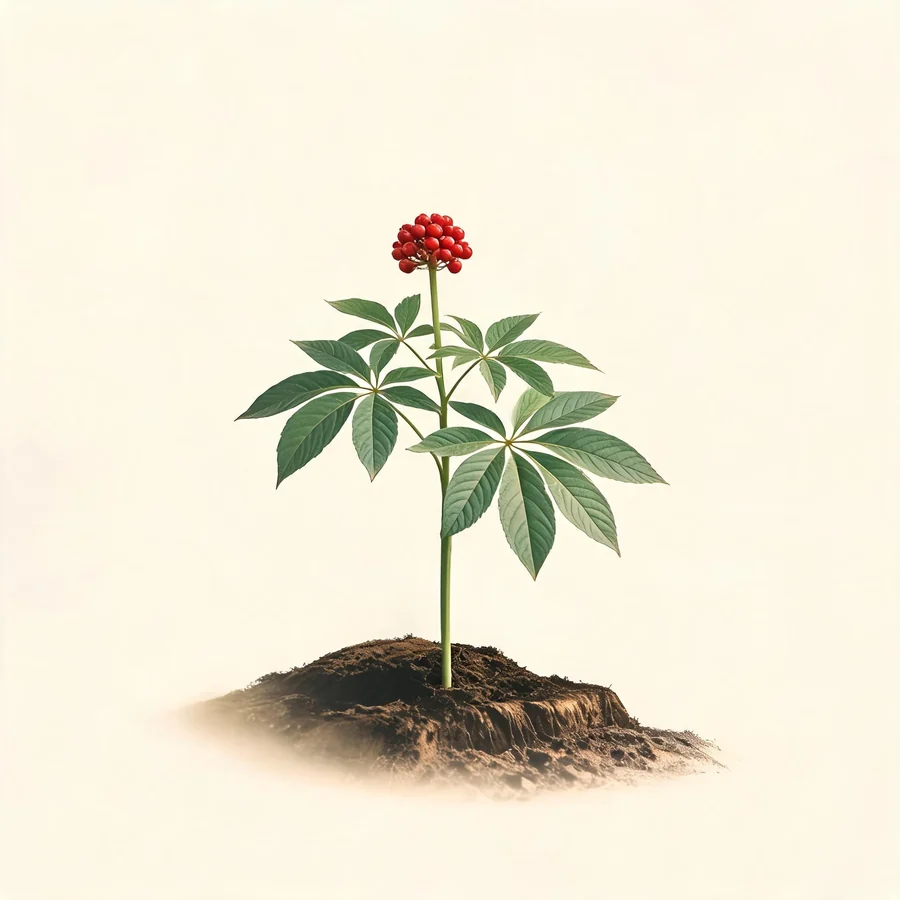
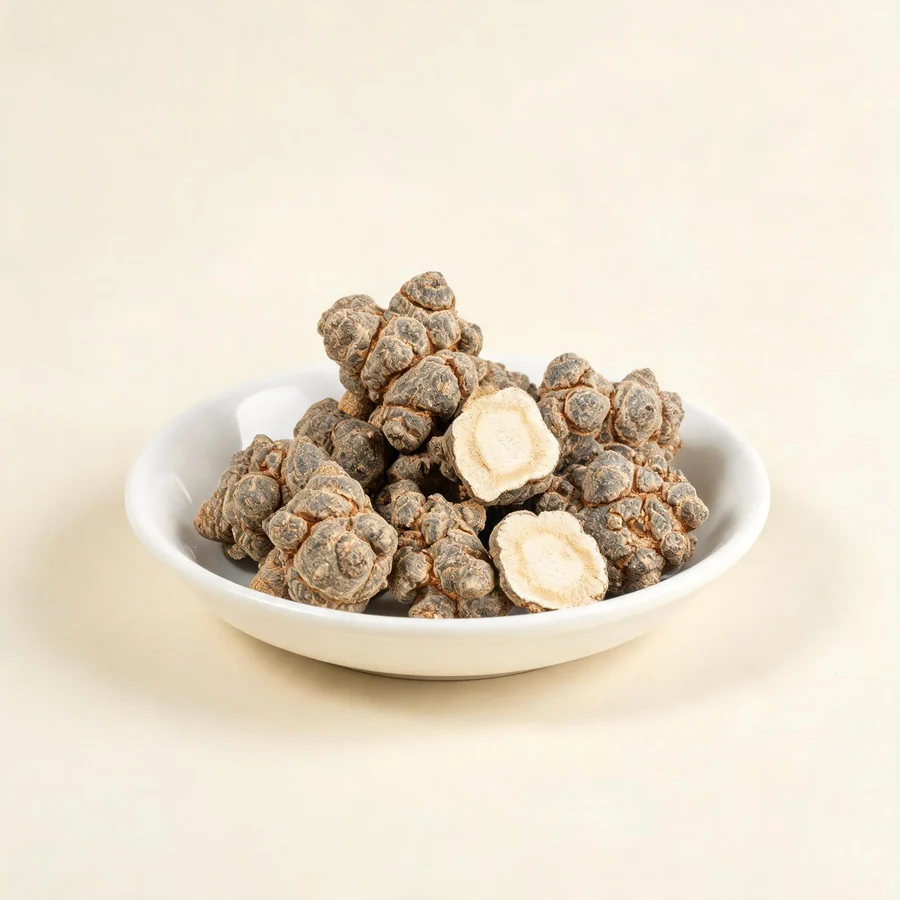
San Qi is on a skin page because of bruises, swelling and wounds: the lesions where blood has left its channels and stopped moving. Its two actions are not a contradiction but a single movement, and the practical questions are whether stasis is really present and whether the root in the packet is notoginseng at all. The second question is the one that has killed people.
Skin signs that suggest it
- A bruise that is dark purple, hard and tender, and slow to fade
- Swelling and stiffness after a blow, a sprain or a sports injury
- A wound that has healed over yet remains indurated, tender or discoloured
- Fixed, pricking pain in one patch of skin, or a dark stagnant-looking lesion
- A purple or dusky tongue with a choppy pulse alongside the skin change
When it is not the right herb
Not for a pale, dry, thin-skinned person with no stasis, where a blood-moving root has nothing to move and can leave the person more depleted. It is not for unexplained bleeding, nor for loss that is heavy or keeps returning, which needs investigation rather than a haemostatic. It is avoided in pregnancy, and it is used with real caution in someone who already takes an antiplatelet drug, warfarin or aspirin. A wound still bleeding after firm pressure needs a clinician, not another dusting of powder, and powder whose botanical origin is unknown should never be used, since grinding destroys every feature that would tell the safe root from the dangerous one.
What it does for skin
Skin-relevant actions only. Each one describes a mechanism in TCM terms and what it looks like on the skin.
Stops bleeding without leaving stasis behind
Most haemostatic herbs act by cooling, contracting or astringing, and each of those risks trapping the blood that has already escaped, which is why a bruise treated with them can stay hard. The root is described as stopping the bleeding while dispersing the stagnant blood at the same time, so it can be used for a cut, an abrasion or a nosebleed without the lesion becoming a fixed lump. On the skin that shows as a wound that closes cleanly rather than one that heals around a hard, dark core.
Disperses stasis and reduces swelling
A contusion leaves blood outside the vessels, and the visible result is a bruise that darkens, hardens and takes weeks to clear. The root is the standard herb for that picture, taken internally and applied as a paste, and the combination is what made it the trauma medicine of the tradition. The change is a bruise that fades from the edges and a swelling that softens, and the effect is greatest in the first days after an injury.
Relieves fixed, pricking pain
Pain that stays in one place and feels sharp or boring is read as stagnant blood, in contrast to the moving pain of Wind or the burning pain of heat. The root is chosen for the fixed kind, whether it sits in a bruised patch, a scar or deeper tissue, and it is combined with herbs that move blood and with warming herbs when the lesion feels cold. It is not an analgesic for ordinary headache or for pain without a stasis pattern.
Supports a wound that has closed but not settled
A wound can close and still feel hard, tender and discoloured for months, which is read as blood that has not returned to normal movement. The root is used in small doses over a defined course, often with Dang Gui, to clear what is stale so that fresh blood can form. It is an adjunct to wound care, not a replacement for it, and a wound that is red, hot, discharging or slow to close needs assessment for infection.
Applied as a first-aid powder
The powder dusted on a cleaned wound is the most familiar use, and the root is among the handful of herbs trusted as much outside the body as within it. It is applied after the wound has been cleaned and pressure has been applied, and it is covered with a clean dressing. It does not sterilise a wound, does not remove dirt or dead tissue, and does not substitute for tetanus cover or for the assessment of a deep injury.
Skin conditions it is used for
Mapped to the condition pages on this site. The pattern column shows what the skin is doing when this herb is the right choice.
| Condition | Pattern | Why it suits | Typical setting |
|---|---|---|---|
| Bruising | Blood stasis from trauma, with dark, hard and tender patches | A bruise is blood that has left the vessels and stopped moving, and the root is the herb most closely associated with that picture in the whole materia medica. It is used internally as a powder and externally as a paste, and the earlier it is given after the injury the more useful it is. A bruise that appears without injury, or one that spreads and does not fade, needs a blood count and an explanation rather than a haemostatic. | Hua Xue Dan, or San Qi powder with Dang Gui |
| Bruising easily | Spleen Qi deficiency failing to hold blood, with stasis in the skin | Easy bruising is usually read as the Spleen failing to keep blood inside the vessels, and that is a deficiency picture in which a blood-moving root is not the lead herb. The root is used only where the bruises are dark, hard and slow to clear, which indicates that stasis is also present, and it is combined with Spleen-tonifying herbs such as Huang Qi and Shan Yao. Widespread or unexplained bruising needs a blood count and a clotting screen before any herb is considered. | San Qi with Huang Qi and Dang Gui in a modified Spleen-supporting formula |
| Skin swelling | Stasis and fluid congestion after a blow | Swelling after trauma has two components in this framework: the blood that has leaked and the fluid that has collected around it. The root addresses the stasis, and it is paired with herbs that move Qi and drain fluid when the swelling is puffy as well as hard. Cold compresses and elevation are part of the care, and a swelling that is hot, red and increasing needs assessment for infection or a fracture. | San Qi with Hong Hua and Dang Gui in a modified trauma formula |
| Purpura | Blood stasis with bleeding, where the spots are dark and fixed | Purpura is blood outside the vessels, and the tradition distinguishes the heat-driven kind from the stasis kind. The root is used only for the second, where the spots are dark, fixed and accompanied by a choppy pulse and a dusky tongue, and it is combined with blood-cooling herbs if any heat remains. Purpura always needs a cause found, whether platelets, a vasculitis, a drug or an infection, and a herb is never the first step. | Hua Xue Dan with Chi Shao and Mu Dan Pi, after the cause is established |
Combinations for skin
Herbs it is paired with when the skin, not an internal organ, is the target.
| Partner | Ratio | Why the pair is used |
|---|---|---|
| Ren Shen | 3 to 9 g each | Ginseng is the first Qi tonic, and Qi is spoken of as the officer that keeps blood within its channels. The notoginseng halts the loss and scatters what has already spilled, while ginseng gives the strength that keeps the rest where it belongs, which is why the two are given to someone pale, exhausted and short of breath who is still bleeding. The old name Ren Shen San Qi puts the two roots on an equal footing. |
| Dan Shen | 3 to 9 g each | Dan Shen is cold while the notoginseng is warm, and it both cools and moves the blood, so the pair works on stasis without overheating a person who runs hot. It is the mainstay of modern cardiovascular prescribing, and on the skin it suits a fixed, dusky patch in someone with a red face and a rapid pulse. The two are combined rather than exchanged. |
| Dang Gui | 6 to 10 g Dang Gui with 3 to 9 g San Qi | Dang Gui builds blood while the notoginseng breaks up the clots and stagnant patches that leave a lesion tender and slow to fade. The two are said to clear what is stale so that fresh blood can form, which is why they are used after childbirth and in painful periods that pass dark clots, and why they suit a bruise that no longer hurts but has not gone. |
| Bai Ji | 3 to 6 g each, often equal parts | Bai Ji is glutinous and astringent and checks bleeding by sealing the leak, whereas the notoginseng checks it by shifting the static blood aside. One shuts, the other clears, so the two are seen as partners rather than duplicates and are given together where bleeding keeps returning. On the skin that means a wound or an erosion that bleeds again and again and yields dark blood. |
Formulas where it leads
- Hua Xue Dan (化血丹) - Zhang Xichun's formula, in which notoginseng is joined by ophicalcite and charred curcuma; it remains the pattern for treating bleeding with stasis. Its logic is the pairing of a sealing mineral with a moving root, so that bleeding stops without the escaped blood hardening into a lump. It is a formula for a defined course after an injury rather than a household standby.
- Yunnan Baiyao (云南白药) - The best-known patent medicine built on the root, a first-aid powder that travelled from Yunnan to military kits and international first-aid boxes. Its full composition is proprietary, which is a real limitation for a practitioner: the identity of the notoginseng in a proprietary blend cannot be checked, and the species question is the one that matters most on this page.
Topical use
The root is applied as a fine powder, dusted onto a cleaned wound or mixed to a paste for a bruise or a sprain. It is among the handful of materia medica items trusted as much outside the body as within it, and the external use is the older and the more celebrated of the two. It is a first-aid application for a minor injury, and it does not clean a wound, remove embedded material or substitute for the assessment of a deep or dirty wound.
| Preparation | How and when it is used |
|---|---|
| Powder on a cleaned wound | Half a gram to two grams of the powder is dusted onto a wound that has been cleaned and had pressure applied, then covered with a clean dressing. It is applied once and left in place, and the wound is checked the next day; a wound that continues to bleed, or that is deep, dirty or on the face, needs medical care rather than more powder. |
| Paste for a bruise or sprain | The powder is mixed with warm water, or with a little rice wine in traditional practice, to a thick paste and spread over the bruise or the swollen joint, leaving the skin around it bare. It is left for twenty to thirty minutes and washed off, once or twice daily for the first few days, and it is not applied to broken skin. |
Patch test and cautions
Do not pack a bleeding wound with powder in the hope of stopping it: pressure and elevation come first, and bleeding that continues needs medical help. The powder is not sterile, so it is not applied to a deep, dirty or surgical wound, and it is not used as a paste on a burn. Patch test on normal skin first, keep it out of the eyes and mouth, and stop if the area becomes redder, hotter or more painful.
Safety for skin use
What to check before recommending or using it, including the cautions that matter most for skin patients.
Do not use, or use with caution
- Pregnancy. The root moves blood forcefully and breaks up stasis, an effect the tradition regards as disruptive to a pregnancy, and high-dose ginsenoside work in animals has prompted concern about how the unborn child develops. The pharmacopoeia lists it as contraindicated, and supervised use after birth is the sole exception.
- Menstruation with heavy flow, and any bleeding without an identified cause. The root can increase flow, and heavy or unexplained bleeding needs investigation rather than a haemostatic.
- Blood deficiency without stasis, and a person who is pale, dry and thin. A warming, moving root has nothing to move and can leave the person more depleted.
- Powder whose identity is unknown. Tu San Qi, Gynura segetum, carries hepatotoxic pyrrolizidine alkaloids and has produced hepatic sinusoidal obstruction syndrome with liver failure and death. Once ground, the two plants cannot be told apart, so the only safe course is a whole root from a named source, or powder ground from such a root.
- A wound that keeps bleeding despite pressure, or a deep or dirty wound. The powder is not a substitute for wound care, tetanus cover or the assessment of a deep injury.
Pregnancy and breastfeeding
Avoided at any meaningful dose, and the avoidance is not negotiable. The pharmacopoeia and the standard materia medica both list notoginseng as contraindicated in pregnancy, on the ground that it moves blood so strongly that the womb is likely to be stirred. High doses of ginsenosides in animal studies have also prompted concern about how the unborn child develops. Tradition allows it in one setting only, after birth, under supervision, where retained blood is causing loss or pain, and even then the decision belongs to a practitioner and not to the household.
Interactions
- Warfarin. The saponins of the root have been reported to lengthen prothrombin time and raise the INR in people taking warfarin, and to delay the drug's removal from the body, which gives a pharmacological reason to expect more bleeding and not less. A patient on warfarin should inform the prescriber before starting, and the INR needs measuring after the change instead of being taken for granted.
- Antiplatelet drugs. The root inhibits the clumping of platelets, and when it has been combined with aspirin the resulting inhibition was greater than with aspirin by itself. Some cardiac protocols want that and others do not, and it weighs most heavily in an older patient who bruises at the slightest knock.
- Medicines that lower glucose. A fall in blood sugar has been reported with the root, so anyone using insulin or a sulfonylurea should test more often when it is started or increased, and should tell the prescriber.
Allergy and patch testing
Sensitivity to the Araliaceae is uncommon but real, and the reported reactions run from nausea and vomiting to indigestion and skin rashes. There are rare reports of effects on cardiac conduction, regarded as uncommon and dependent on dose rather than predictable. Anyone who becomes nauseated or breaks out in a rash should stop and be assessed, and a small test dose is sensible before a first course.
General safety references
General references for herbal hepatotoxicity and herb-drug interactions; they are not specific to this herb.
- Review article: Herbal hepatotoxicity - an update on traditional Chinese medicine preparations. Alimentary Pharmacology & Therapeutics, 2014. PMID: 24844799.
- Interactions between herbal medicines and prescribed drugs: an updated systematic review. Drugs, 2009. PMID: 19719333.
- Warfarin and food, herbal or dietary supplement interactions: a systematic review. British Journal of Clinical Pharmacology, 2021. PMID: 32478963.
Evidence
The classical record is quoted with its source. The modern note states the level of evidence plainly.
Classical record
It arrests bleeding, breaks up blood and eases pain. Where a blade or an arrow has cut, or where a fall or a blow leaves bleeding that refuses to stop, the root is chewed and laid on the place, or ground and dusted over it, and the flow ceases. The same root serves for blood brought up from the stomach, for nosebleeds, for blood in the stool and in dysentery, for flooding and for menstruation that will not end, for lochia retained after birth, and for pain and giddiness arising from static blood.
Ben Cao Gang Mu (Compendium of Materia Medica), Li Shizhen, 1578 - The first major materia medica entry, and it lists the trauma and gynaecological uses together, which is why the root is a first-aid powder and a formula herb at once.
San Qi root is an extraordinary remedy for stanching blood. Whether the loss comes from above, from the middle or from below, it works when used on its own, and its effect is greater still when it is added to Qi and blood tonics, for a stopping remedy is steadied by tonification and a tonifying remedy is calmed by stopping.
Ben Cao Xin Bian (New Compilation of Materia Medica), Chen Shiduo, Qing dynasty - It explains why ginseng is the chosen partner, and it states plainly that a remedy which stops bleeding and a remedy which builds work better together than either alone.
It brings the nutritive level into harmony, arrests bleeding, opens the vessels and quickens static blood, breaking up the old without destroying the fresh.
Yu Qiu Yao Jie (Jade Pivot Materia Medica), Huang Yuanyu, Qing dynasty - A terse summing up of the two actions, and the line later writers used to explain why stopping bleeding need not leave a bruise behind.
Modern evidence
Evidence status
- The notoginsenosides have been studied extensively in laboratory and animal work on coagulation, platelet function and blood flow, and dencichine, a non-protein amino acid, is linked to the effect on bleeding. All of this is mechanistic work; none of it is a trial showing that a bruise fades faster in a person.
- Clinical research on San Qi is dominated by cardiovascular formula studies rather than dermatology. No controlled trial in bruising, wounds or purpura is available to cite, and the trauma record is a record of practice rather than a demonstration of effect.
- The identity hazard is the one well-documented harm: Tu San Qi, Gynura segetum, contains hepatotoxic pyrrolizidine alkaloids and has caused hepatic sinusoidal obstruction syndrome, with liver failure and death, in people who took it believing it was notoginseng.
PubMed records
Selected real PubMed records for this herb's species or its constituents, chosen by species name and title relevance. They are references for the non-TCM discussion above, not proof that the herb treats any skin condition.
- Chemical constituents of Panax ginseng and Panax notoginseng explain why they differ in therapeutic efficacy.. Pharmacological research, 2020. PMID: 33127555 (pharmacology or review record).
- Traditional uses, botany, phytochemistry, pharmacology and toxicology of Panax notoginseng (Burk.) F.H. Chen: A review.. Journal of ethnopharmacology, 2016. PMID: 27154405 (safety record).
Dose and forms
Skin-practice dosing and the preparations that suit skin complaints.
| Form | Dose and notes |
|---|---|
| Powder | One to three grams once or twice daily, stirred into warm water. Powder is the better form for bleeding, since a long boil would lose some of the constituents that heat destroys. |
| Decoction | Three to nine grams of the sliced or crushed root in a formula. The root is extremely hard, so it is sliced or pounded before cooking, and it normally goes into a compound rather than being taken on its own. |
| Topical | Half a gram to two grams dusted on a cleaned wound, or mixed to a paste for a bruise or a sprain and left for twenty to thirty minutes. |
| Raw or cooked root | Raw notoginseng stops bleeding, resolves stasis and relieves pain; once steamed or fried in oil it is said to move blood less and tonify it more, and it is then used for deficiency and recovery. |
The amount is modest for a root graded non-toxic, and the danger here lies in which plant is in the packet rather than in how much is taken. A small dose is right because the root is strong, yet any amount of the wrong species is unsafe. That is why a whole root bought from someone who knows its origin is safer, and why anonymous powder should be refused entirely. Raw root serves injury and stasis, the cooked root serves deficiency, and treatment of an injury has a defined end rather than running on.
Citations and further reading
Only real sources are listed: the classical materia medica passages quoted above, and the source works behind the botanical and safety statements.
- Ben Cao Gang Mu (Compendium of Materia Medica), Li Shizhen, 1578 - classical passage translated above.
- Ben Cao Xin Bian (New Compilation of Materia Medica), Chen Shiduo, Qing dynasty - classical passage translated above.
- Yu Qiu Yao Jie (Jade Pivot Materia Medica), Huang Yuanyu, Qing dynasty - classical passage translated above.
- Radix Notoginseng monograph: Pharmacopoeia of the People's Republic of China - accepted botanical source, part used and quality requirements.
- Hua Xue Dan: Yi Xue Zhong Zhong Can Xi Lu (Records of Tradition and Modern Medicine), Zhang Xichun, early twentieth century - the formula named above.
- Pyrrolizidine alkaloid toxicology literature on Gynura segetum - the basis for the warning about substitution, including reports of hepatic sinusoidal obstruction syndrome.
- Modern evidence statement: based on laboratory literature on notoginsenosides and dencichine, summarised as a statement about the level of evidence rather than as one cited finding.
Educational reference for qualified practitioners. This page is not medical advice, and skin conditions should be diagnosed by a clinician before treatment.