Skin profile
Where this herb sits in skin practice: the pattern it corrects, the skin signs it suits, and what it should not be used for.
Huai Hua is for heat that shows in the blood: purple spots, easy bruising, a hot itchy rash and a flushed face. It cools without purging and stops bleeding without astringing hard, which is why it is a supporting herb rather than a leader. Cold, pale, deficient bleeding is the wrong pattern.
Skin signs that suggest it
- Small red or purple spots under the skin that do not blanch when pressed
- Easy bruising with heat signs: a red tongue, a warm body and a rapid pulse
- A hot, itchy red rash or urticaria that worsens in warmth and improves in cool air
- Flushing of the face with red eyes, a throbbing headache and a short temper
- Bright red blood on scratching, with a dry mouth and a red tongue
When it is not the right herb
Not for bleeding that comes from deficiency: pale, continuous oozing in a tired person with a soft pulse is cold bleeding, and cooling makes it worse. Not for the cold, pale, dry skin of Spleen or Stomach deficiency, where a bitter cool flower further weakens digestion, and not for Yin deficiency with dryness but no excess heat. Not for someone on warfarin without the anticoagulant clinic knowing, and not for a legume allergy. A rash with fever, bruising that appears without cause, or bleeding that will not stop needs medical assessment.
What it does for skin
Skin-relevant actions only. Each one describes a mechanism in TCM terms and what it looks like on the skin.
Cools the Blood so it stays in the vessels
Classical theory holds that cool blood remains within its channels and that heat makes it reckless, so that it leaks out. On the skin that leakage shows as petechiae, purpura and easy bruising with heat signs. The flower cools the Blood and is used where the spots are bright red, the tongue is red and the pulse is rapid. It is not the medicine for bruising from trauma or for bleeding from a clotting disorder, which need diagnosis.
Stops bleeding from hot, inflamed skin
Where scratching or a hot lesion produces bright red blood, the flower's haemostatic action is used alongside its cooling. It is a mild astringent in the charred form, which is chosen when bleeding dominates and the heat is secondary. It does not seal a large vessel or replace pressure, and persistent bleeding from a skin lesion needs a clinician.
Disperses wind-heat from the skin
The classical rationale is the interior-exterior pairing of the Large Intestine and the Lung: a flower that clears the bowel can also release wind-heat held in the skin. In practice it is a supporting medicine for a hot, itchy rash and for urticaria that flares in warmth. It is combined with wind-releasing and itch-quieting herbs, and it is not strong enough to lead that formula.
Clears Liver fire that flushes the face
Heat stored in the Liver tends to rise, producing a flushed face, red eyes, a throbbing headache and a short temper. A bitter flower whose nature sinks gives that heat somewhere to go, and the flushing eases. This is a cosmetic concern for some patients and a signal of blood pressure for others, and a persistent flush with headache should be measured rather than treated with a tea.
Skin conditions it is used for
Mapped to the condition pages on this site. The pattern column shows what the skin is doing when this herb is the right choice.
| Condition | Pattern | Why it suits | Typical setting |
|---|---|---|---|
| Petechiae | Heat in the Blood forcing blood out of the vessels | Pinpoint red or purple spots that do not blanch, with a red tongue and a warm body, are the skin sign of blood heat. The flower cools the Blood and is used as a supporting herb in a cooling formula. Petechiae can also be the first sign of a platelet or clotting problem, so a new or spreading crop needs a blood count rather than more treatment. | With Sheng Di Huang, Mu Dan Pi and Ce Bai Ye in a blood-cooling formula |
| Purpura | Blood heat with leakage into the skin | Larger purple patches that appear without injury fit the same blood-heat pattern, and the flower is used where the patches are bright and the person is hot rather than cold and tired. It is a mild herb and belongs in a formula with stronger cooling and blood-moving medicines. Purpura with fever, joint pain, abdominal pain or kidney signs needs urgent assessment, because it can be a systemic vasculitis. | With Shui Niu Jiao, Sheng Di Huang and Chi Shao in a blood-cooling formula |
| Hot, itchy rashes | Wind-heat in the skin | A red, itchy rash that worsens in warmth is read as wind-heat at the surface, and the flower's ability to disperse skin wind-heat is the classical basis for using it. It is a supporting herb, combined with the wind-releasing and itch-quieting medicines that do the main work. A rash that is blistering, spreading or accompanied by fever needs a diagnosis before treatment. | With Jing Jie, Fang Feng and Bai Xian Pi |
| Heat-type itch | Blood heat and wind-heat provoking itch | Itch with warmth, redness and a tendency to bleed on scratching is a heat pattern, and the flower adds cooling to a formula built around itch-quieting herbs. It is used where the skin is hot rather than dry and where the person feels warm and restless. Dry, cold, elderly itch is the opposite picture and is not helped by a bitter cool flower. | With Bai Xian Pi, Ku Shen and Mu Dan Pi |
Combinations for skin
Herbs it is paired with when the skin, not an internal organ, is the target.
| Partner | Ratio | Why the pair is used |
|---|---|---|
| Di Yu | 10 g each | Both are cool and bitter, and both act on the Large Intestine. Di Yu is astringent and also encourages tissue repair, while the flower adds the Liver-fire action, so the pair covers both bleeding and heat. It is used where raw, blood-stained skin at the anus needs cooling and astringing, and both are stopped once the skin settles. |
| Zhi Zi | 6 to 10 g each | Gardenia drains heat from all three burners and dries dampness, while the flower cools the Blood and stops bleeding. The pair suits a hot, itchy rash with a burning sensation and dark, concentrated urine, where heat toxin is present as well as simple heat. Gardenia is stronger and more drying, so its share is reduced when the digestion is delicate. |
| Huang Qin | 6 to 10 g Huang Qin with 10 g Huai Hua | Scutellaria is colder and more forceful, clearing heat from the upper half of the body and from the Large Intestine, while the flower supplies the haemostatic, lower-body action. The pair suits a hot rash with a bitter taste, a dry throat and a rapid pulse. The root carries the main clearing and the flower assists it. |
| Sheng Di Huang | 10 to 15 g Sheng Di Huang with 10 g Huai Hua | Sheng Di Huang cools the Blood and nourishes Yin, and the flower cools without nourishing. Together they treat a hot rash or purpura with dryness, thirst and a red tongue, where cooling alone would leave the fluids short. The nourishing herb leads and the flower supplies the haemostatic part. |
Formulas where it leads
- Huai Hua San (槐花散) - The classical powder in which the flower is the chief herb beside Ce Bai Ye, Jing Jie Sui and Zhi Zi. It is the formula that established the flower's reputation for cooling Blood and stopping bleeding, and its skin relevance is that same action applied to purpura and a hot rash, not a licence to use it for any bleed.
Safety for skin use
What to check before recommending or using it, including the cautions that matter most for skin patients.
Do not use, or use with caution
- Cold deficiency of the Spleen and Stomach. A cool, bitter flower burdens digestion that is already cold, and loose stools and poor appetite worsen. A pale, wet tongue argues against it.
- Bleeding from deficiency rather than heat. Pale, continuous bleeding in a tired person with a soft pulse is a failure of containment, and cooling and astringing make it worse.
- Yin deficiency with dryness and no excess heat. A drying bitter herb consumes fluids that are already short, and a peeled dry tongue is the sign.
- Legume allergy, and pregnancy without supervision. The tree is a legume and reactions to related species are reported, and the flower's cold, blood-cooling nature is a traditional caution in pregnancy.
Pregnancy and breastfeeding
Use only under practitioner supervision, and preferably not at all in the first trimester. The caution rests on tradition rather than demonstration: a cold, blood-cooling medicine is thought to unsettle pregnancy. A single small case-control study in early pregnancy, using a processed rutin derivative, raised a question about certain anomalies without answering it, and that study did not use the whole flower. A medicinal decoction is a different exposure from a weak tea, and the decision belongs to a practitioner. No breastfeeding safety data exist, so a medicinal dose is best avoided and a short course discussed if there is a clear need.
Interactions
- Warfarin and other anticoagulants. In the laboratory the flavonoids affect platelet clumping, and a human rutin study reported that warfarin was handled differently, the active isomer clearing faster. Because the effect runs both ways it is hard to predict: bleeding might increase while the drug's protection weakens. Anyone on warfarin should tell their anticoagulant clinic before taking the flower.
- Blood pressure medicines. The flower, and the flavonoids it contains, reduce blood pressure a little, so an ACE inhibitor, calcium channel blocker, beta blocker or diuretic may produce a larger fall than intended. Dizziness on standing is the warning sign, and home readings are the practical check.
- Medicines handled by liver enzymes. In the laboratory, quercetin and rutin change the activity of several cytochrome enzymes and drug transporters. Concentrations of drugs cleared by those routes could in theory move, among them some statins, immunosuppressants and chemotherapy agents. Nothing has been confirmed in patients for the whole flower, which makes this a reason to disclose rather than to avoid.
- Surgery and dental work. Herbs that affect clotting are normally stopped one or two weeks before an operation, and that includes a tea bought without a prescription. Tell the surgeon and the anaesthetist.
Allergy and patch testing
The tree belongs to the legume family, so a legume allergy calls for care with the flower; rash and throat swelling have been reported with related species. Pollen sensitivity to the tree is separate from a reaction to the flower taken by mouth, but a known sensitivity is a reason to start small and stop at the first sign of itch, swelling or wheeze. A reaction needs medical attention rather than a smaller dose.
General safety references
General references for herbal hepatotoxicity and herb-drug interactions; they are not specific to this herb.
- Review article: Herbal hepatotoxicity - an update on traditional Chinese medicine preparations. Alimentary Pharmacology & Therapeutics, 2014. PMID: 24844799.
- Interactions between herbal medicines and prescribed drugs: an updated systematic review. Drugs, 2009. PMID: 19719333.
- Warfarin and food, herbal or dietary supplement interactions: a systematic review. British Journal of Clinical Pharmacology, 2021. PMID: 32478963.
Evidence
The classical record is quoted with its source. The modern note states the level of evidence plainly.
Classical record
味苦、平、无毒。治五痔、心痛、眼赤,杀腹藏虫及热。
Bitter, neutral and free of poison. It treats the five kinds of haemorrhoid, pain in the heart and red eyes, and kills intestinal parasites and heat.
Ri Hua Zi Ben Cao (Materia Medica of Ri Huazi), Five Dynasties period - A short early entry that already links the flower to bleeding piles and to heat in the eyes, the two ends of its later reputation.
槐花味苦,苦能直下,且味厚而沉,主清肠红下血,痔疮肿痛,脏毒淋沥,此凉血之功独在大肠也。大肠与肺相表里,能疏散皮肤风热,是泄肺金之气也。
The flower is bitter, and bitterness is held to travel straight down; its flavour is thick and heavy, so its movement sinks. Its chief work is clearing blood that passes downward from the bowel, the swelling and pain of haemorrhoids and the toxic trickle of visceral disease, and this cooling of the Blood is directed at the Large Intestine above all. Because the Large Intestine is the paired organ of the Lung, the same herb can disperse wind-heat from the skin, which is described as draining the Qi of Lung metal.
Yao Pin Hua Yi (Materia Medica Explained), Qing dynasty - The passage explains a use that looks unrelated: why a medicine for the rectum also treats a hot, itchy rash. The link is the interior-exterior pairing of Lung and Large Intestine.
为凉血要药。
It is a principal medicine for cooling the Blood.
Ben Cao Qiu Yuan (Seeking the Source of Materia Medica), Qing dynasty - A single sentence that became the standard summary; by the Qing the flower's place in the materia medica was settled.
Modern evidence
Evidence status
- No clinical trial of Huai Hua in skin disease was found for this page. The purpura and hot-rash uses rest on the traditional record and on clinical observation, not on controlled evidence.
- Rutin and quercetin, the main flavonoids, have been studied for effects on capillary resistance and platelet behaviour in laboratory and animal work. Those findings are pharmacological, and they do not establish that the flower reduces bruising or purpura in people.
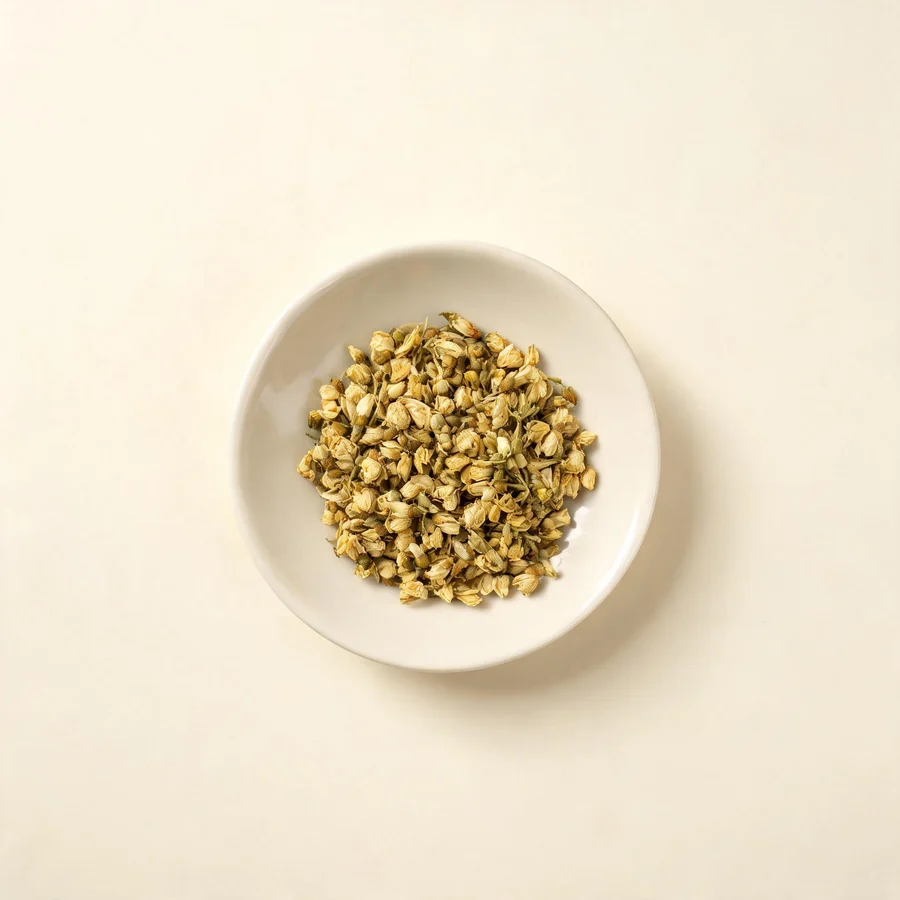
- The pharmacopoeia sets a minimum rutin content for the bud and a lower one for the open flower, which is a quality standard rather than a measure of clinical effect. The bud is the stronger article by that measure, which is why it commands the higher price.
PubMed records
Selected real PubMed records for this herb's species or its constituents, chosen by species name and title relevance. They are references for the non-TCM discussion above, not proof that the herb treats any skin condition.
- United States Pharmacopeia comprehensive safety review of Styphnolobium japonicum flower and flower bud.. Phytotherapy research : PTR, 2022. PMID: 35307893 (safety record).
Dose and forms
Skin-practice dosing and the preparations that suit skin complaints.
| Form | Dose and notes |
|---|---|
| Decoction | 5 to 10 g of dried flower daily, which is the pharmacopoeial range; 9 to 10 g is used for an acute episode and 15 g is a supervised ceiling. The flower is light and is added near the end of decocting. |
| Raw, fried or charred | The raw flower clears heat and cools Blood most strongly; stir-frying softens the cold for a weak stomach; charring converts much of the rutin to tannins and is the form for bleeding. Picking the wrong form is the usual reason the herb disappoints. |
| Course length | A few days for an acute episode, reduced once the bleeding or the rash settles. Prolonged courses are avoided because the coolness builds up in the digestion, and bleeding that does not settle needs assessment. |
Two decisions shape the result: which form to use and how long to continue. Take it raw for heat with flushing, fried for a sensitive stomach, charred when bleeding is the whole problem. The material is mild and inexpensive, so it is easy to keep taking once the problem has settled, which is precisely when a cool bitter herb begins to burden digestion. If purple spots appear or bruising has no explanation, stop and be examined rather than raising the dose.
Citations and further reading
Only real sources are listed: the classical materia medica passages quoted above, and the source works behind the botanical and safety statements.
- Ri Hua Zi Ben Cao (Materia Medica of Ri Huazi), Five Dynasties period - classical entry quoted above.
- Yao Pin Hua Yi (Materia Medica Explained), Qing dynasty - classical entry quoted above.
- Ben Cao Qiu Yuan (Seeking the Source of Materia Medica), Qing dynasty - classical entry quoted above.
- Pharmacopoeia of the People's Republic of China, Flos Sophorae monograph - accepted species, part and the rutin minimum referred to above.
- Modern evidence statement: based on pharmacological literature on rutin and quercetin, presented as a statement about the level of evidence rather than as a cited skin finding.
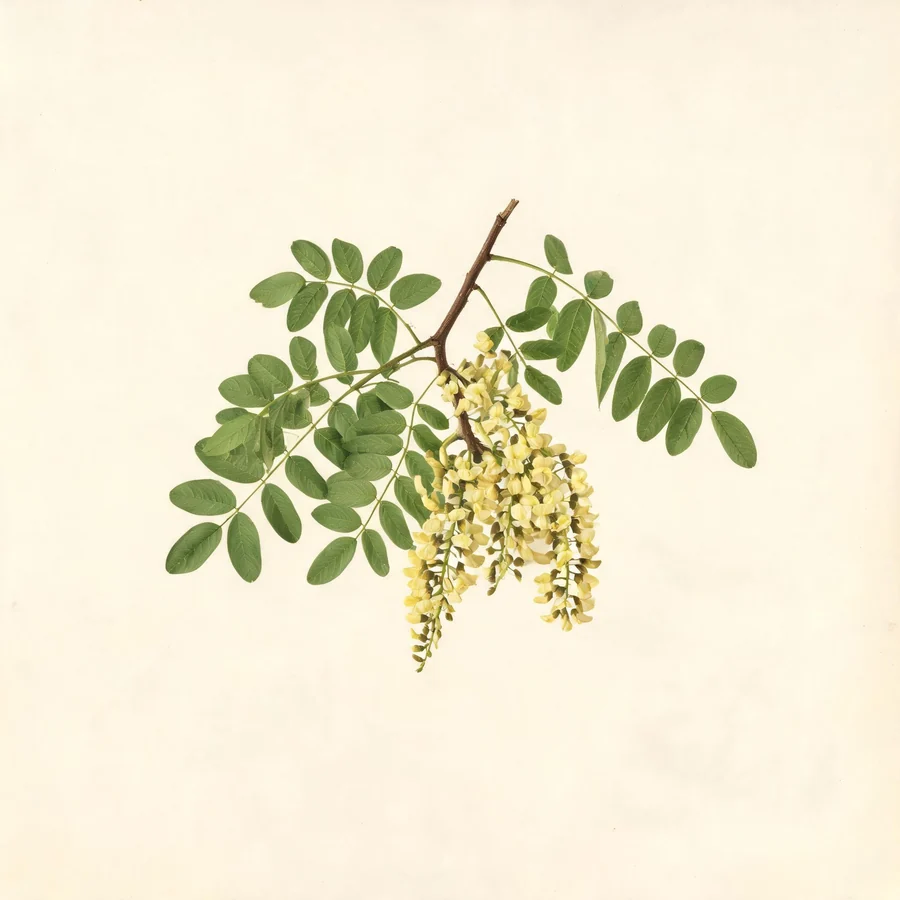
- Botanical description and adulterant note: botanical literature on Styphnolobium japonicum, Fabaceae, and its distinction from Robinia pseudoacacia.
Educational reference for qualified practitioners. This page is not medical advice, and skin conditions should be diagnosed by a clinician before treatment.