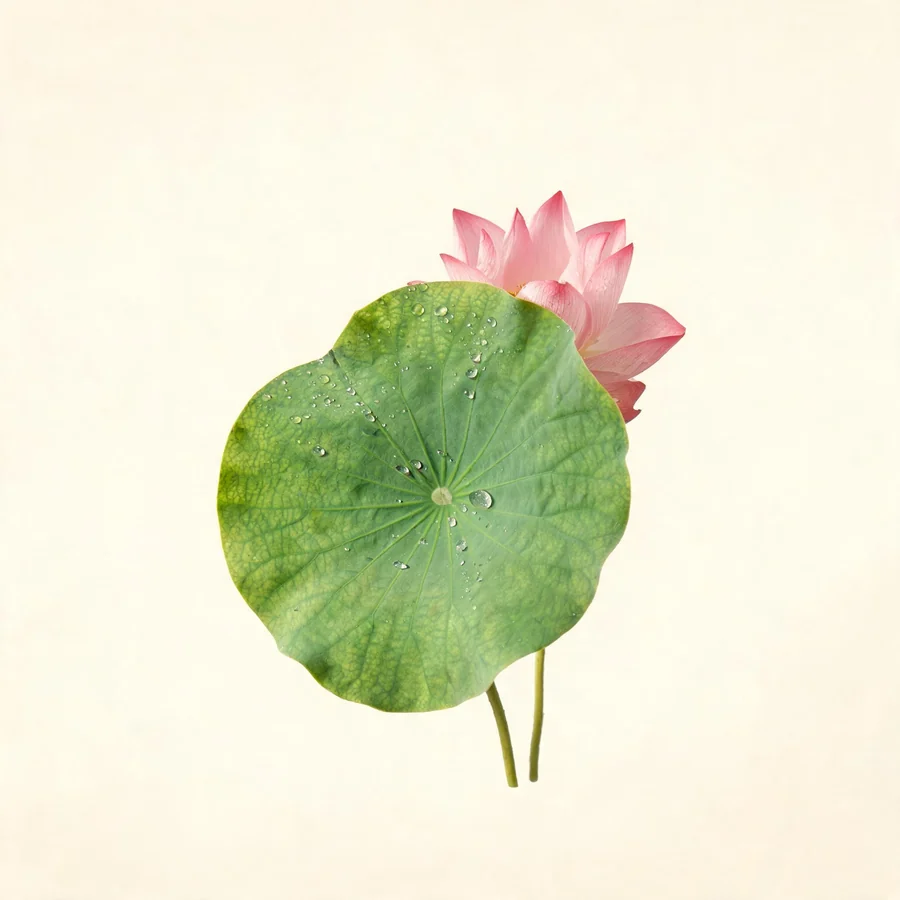
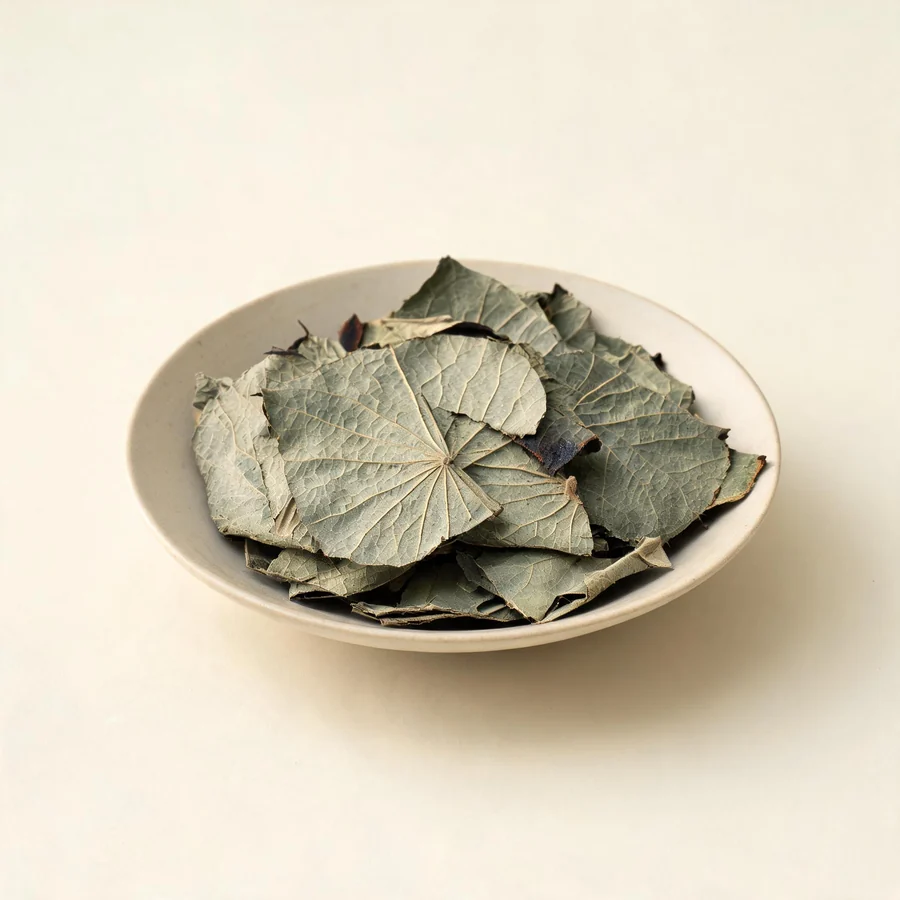
Skin profile
Where this herb sits in skin practice: the pattern it corrects, the skin signs it suits, and what it should not be used for.
He Ye is a seasonal and supporting skin herb rather than a leading one. It suits the hot, humid months, a rash that is superficial and itchy, and swelling that is soft rather than hard. Its gentleness is real, but so is its dispersing character, which is why it is not given to thin, depleted patients or used as a daily slimming tea.
Skin signs that suggest it
- A fine, itchy red rash over the neck, chest and skin folds in hot or humid weather, with little or no ooze (summer-heat rash)
- Puffiness and heaviness in the face or limbs, with skin that looks waterlogged rather than inflamed (dampness with swelling)
- A red, swollen boil or abscess that is slow to localise and has little pus (damp-heat with swelling)
- An eruptive rash that is failing to come out fully, such as the early spots of chickenpox (the leaf is given to promote eruption)
- Small purplish spots under the skin, or bruising that appears with heat signs and a purple tongue (blood heat with stasis)
When it is not the right herb
Not for dry, thin, pale skin with no redness or swelling, and not for cold-deficiency bleeding where the loss comes with cold limbs, a pale tongue and a long weary course. The leaf is light, ascending and dispersing, and the classical caution is that it consumes where the person is already depleted, so it is a poor choice for thin, tired patients who need building rather than lifting. Because it is cooling and drying it can also loosen the stool, and it should not be used as a daily slimming tea by someone with cold digestion.
What it does for skin
Skin-relevant actions only. Each one describes a mechanism in TCM terms and what it looks like on the skin.
Clears Summer-Heat from the skin
Summer-Heat in this tradition is heat carried on humidity, and on the skin it shows as a fine red rash that prickles, itches and worsens in the heat of the day or in a humid room. He Ye is bitter enough to dry the dampness and light enough to lift the heat away from the surface, which is why it is used for heat rash and for the flushed, irritable skin of a hot summer. It is a cooling herb rather than a sedating one, so it is chosen when the skin is hot and slightly moist rather than dry.
Dries Dampness and reduces swelling
The leaf is recorded as reducing oedema and abscess swelling, and its bitter, drying quality is the reason. Dampness that has settled in the skin makes a face or limb look puffy and heavy, and a boil or red swelling that stays doughy and slow to point is read the same way. He Ye is not a strong draining herb, so it supports the clearing of dampness rather than driving it out on its own, and it is paired with herbs that move fluid or resolve toxin when the swelling is stubborn.
Lifts the clear Yang and helps a rash express itself
The lotus leaf rises out of muddy water, and the tradition uses that image for its action of raising the clear Yang. When the ascent fails, the head feels heavy, the body feels weighed down and an eruptive rash such as chickenpox may not come out properly. He Ye is given so that the clear part rises and the surface can open, which is why it appears in formulas for eruptions that are slow to express rather than in those that need suppressing.
Cools the Blood and disperses static Blood
In its charred form the leaf is used where heat has pushed blood out of its vessels, showing as small purplish spots or patches under the skin. The cooling clears the heat that drove the blood outward, and the charring adds an astringent quality that helps the vessels close. The same leaf is also recorded as dispersing static blood, so it is used where a bruise or a purplish mark is slow to fade and the tongue is dark; the two actions are a pair, because blood that has leaked can stagnate.
Skin conditions it is used for
Mapped to the condition pages on this site. The pattern column shows what the skin is doing when this herb is the right choice.
| Condition | Pattern | Why it suits | Typical setting |
|---|---|---|---|
| Heat rash | Summer-Heat with Dampness trapped in the surface of the skin | The fine, itchy red rash that appears in hot, humid weather is the clearest skin picture for this leaf: the heat is not deep and the dampness is not heavy, but the two together block the surface. He Ye clears the summer heat, dries the damp film and lifts the clear Yang, so the rash settles rather than being driven inward. It is used as a cooled tea internally in traditional practice, and the same decoction can be dabbed on the skin. | He Ye with Bai Zhu, or a light summer-heat formula |
| Chickenpox | Summer-heat or damp-heat with an eruption that is slow to express | The classical record credits the leaf with promoting the eruption of pox, which is read as helping the skin express a pathogen that is stuck at the surface. In chickenpox the spots need to come out and then settle, and a cooling, lifting herb supports that movement instead of suppressing it. This is a supportive traditional use, not a treatment for the infection, and a child with fever or widespread spots needs medical assessment. | He Ye with Sheng Ma in a formula that lifts the eruption |
| Boils and abscesses | Damp-heat with swelling and poor localisation | The old entry names abscess swelling among the leaf's indications, and the picture it fits is a boil that is red and hot but stays doughy rather than forming a clear head. He Ye is not a strong toxin-resolving herb, so it is a supporting ingredient: it dries the dampness that keeps the swelling diffuse and lifts the Yang so that the lesion can localise. A spreading or febrile boil needs urgent care rather than a leaf. | He Ye with Pu Gong Ying and Lian Qiao in a damp-heat formula |
| Purpura | Blood heat with stasis, showing as purplish patches under the skin | Purpura is read as blood that has left its vessels and then stagnated in the skin. The charred leaf cools the blood that is being pushed out and its astringency helps the vessels close, while the leaf's recorded action of dispersing static blood addresses the patches that have already formed. It is a supporting herb for heat-type purpura, and any widespread or unexplained purpura needs medical assessment first. | He Ye Tan with Pu Huang, as in He Ye San |
| Bruising | Static Blood in the skin after injury, with a dark or slow-fading mark | A bruise is static blood held in the skin, and the classical entry records the leaf as dispersing static blood. He Ye is gentle, so it is used as an assistant rather than as a strong invigorating herb, and it suits a bruise that is accompanied by heat or dampness rather than a cold, fixed, painful swelling. The charred form is chosen when the bruise is accompanied by bleeding into the skin, and the fresh or dried leaf when swelling dominates. | He Ye with Pu Huang in the charred form, or in a bruise formula |
Combinations for skin
Herbs it is paired with when the skin, not an internal organ, is the target.
| Partner | Ratio | Why the pair is used |
|---|---|---|
| Pu Huang | 3 : 2, as in He Ye San | Pu Huang is a pollen that both stops bleeding and moves blood, so it keeps what has been stopped from stagnating. He Ye in its charred form cools the blood and helps the vessels close, and the pair is used where purplish spots or bleeding into the skin come with signs of heat. The two are a classical answer to the problem that stopping blood can itself create stasis, which is why the combination appears in formulas for bleeding with bruises rather than for bleeding alone. |
| Sheng Ma | One leaf with 15 g Sheng Ma, as in Qing Zhen Tang | Both herbs rise, but they rise by different routes. Sheng Ma lifts Yang and vents pathogens outward, while He Ye raises the clear Yang and clears dampness from the middle. On the skin the pair is used for an eruption that is slow to come out and for a heavy, muzzy head with a rash that will not express itself; the leaf supplies the dampness work and Sheng Ma the outward venting, so the surface opens as the dampness clears. |
| Bai Zhu | 1 : 2, He Ye 6 g to Bai Zhu 12 g | Bai Zhu warms and dries the Spleen, while the leaf lifts the clear Yang and clears summer dampness. The pair covers the two halves of a sinking, damp picture: the weakness that lets dampness collect and the failure of what should rise to rise. On the skin it is used for puffiness, a heavy body and a rash that appears with loose stools in hot weather; drying alone would not restore the ascent, and lifting alone would not remove the dampness. |
Safety for skin use
What to check before recommending or using it, including the cautions that matter most for skin patients.
Do not use, or use with caution
- Cold digestion with loose stools, a poor appetite, a cold abdomen and a pale tongue. The leaf is cooling and drying, and a daily tea can turn an already weak digestion into cramping and watery stool.
- Qi and blood deficiency with a thin, depleted constitution. The classical caution is that the leaf ascends, disperses and consumes, so it is avoided where the person is already thin and tired, however gentle its food reputation.
- Cold-deficiency bleeding, where the loss comes with cold limbs, a pale tongue and a long weary course. The charred leaf is cooling, so it is the wrong form for bleeding that is already cold.
- Long courses of concentrated extract. The leaf is a food, but daily high-dose extract over months has no long safety record, and digestive upset is the effect most often reported.
Pregnancy and breastfeeding
Treat the leaf as a practitioner decision rather than a household tea. It is non-toxic and has a long food history, and classical practice was more divided than a blanket ban suggests: one formula used the dried leaf for fever in pregnancy, which implies that low doses were accepted. The modern caution rests on its ascending and dispersing nature and on concentrated extracts rather than on a leaf in a decoction. Avoid slimming products built on the leaf, keep any medicinal course short, and check with a practitioner; the same caution applies while breastfeeding.
Interactions
- Antihypertensive medicines. Nuciferine relaxes blood vessels in animal work, so a concentrated leaf product taken alongside a blood-pressure drug may lower pressure further than expected. Home readings are the practical safeguard, and dizziness on standing is the sign to report.
- Lipid-lowering and glucose-lowering drugs. Extracts of the leaf have shown lipid and glucose effects in small trials, so adding a concentrated product to a statin or to metformin may amplify the effect. This is not a reason to avoid the tea, but it is a reason to tell the prescriber what is being taken.
- Anticoagulants. The leaf is not a recognised blood thinner, but the charred form is used specifically to stop bleeding, so a person on warfarin who drinks large amounts of leaf tea should mention it rather than assume the two are unrelated.
General safety references
General references for herbal hepatotoxicity and herb-drug interactions; they are not specific to this herb.
- Review article: Herbal hepatotoxicity - an update on traditional Chinese medicine preparations. Alimentary Pharmacology & Therapeutics, 2014. PMID: 24844799.
- Interactions between herbal medicines and prescribed drugs: an updated systematic review. Drugs, 2009. PMID: 19719333.
- Warfarin and food, herbal or dietary supplement interactions: a systematic review. British Journal of Clinical Pharmacology, 2021. PMID: 32478963.
Evidence
The classical record is quoted with its source. The modern note states the level of evidence plainly.
Classical record
生发元气,裨助脾胃,涩精浊,散瘀血,消水肿、痈肿,发痘疮。
It generates the primal Qi, supports the Spleen and Stomach, holds essence and turbidity in, disperses static Blood, lessens oedema and abscess swelling, and encourages pox to erupt.
Ben Cao Gang Mu (Compendium of Materia Medica), Li Shizhen - The entry names three skin uses at once: swelling, abscess, and an eruption that needs help to come out. The static-blood clause is the basis for its use on bruises and purplish patches.
荷叶服之,令人瘦劣,单服可以消阳水浮肿之气。
Used as a medicine, the lotus leaf makes a person thin; used alone, it disperses the Qi of yang-type oedema.
Zheng Zhi Yao Jue (Essential Teachings on Diagnosis and Treatment), Dai Yuanli - This is the source of both the slimming reputation and the swelling use. The oedema clause is the one that matters for the skin; the slimming claim belongs to internal use and is not skin evidence.
升散消耗,虚者禁之。
It rises, scatters and consumes; anyone who is depleted should avoid it.
Ben Cao Cong Xin (New Compilation of Materia Medica), Wu Yiluo - A short warning that balances the leaf's gentle reputation. Its lifting, dispersing character is not for the depleted, and that is the main limit on its skin use.
Modern evidence
Evidence status
- Laboratory work on the leaf has centred on nuciferine and on flavonoid glycosides such as quercetin derivatives. Reports of vascular, lipid and glucose effects come mainly from animal and cell studies, and they do not establish a benefit for any skin condition.
- No clinical trial evidence supports the leaf for heat rash, swelling, purpura or bruising. What is available is the traditional record and the long food use, and the skin indications on this page are stated in those terms rather than as proven outcomes.
- The leaf is accepted as a food-medicine dual-use substance in China, which speaks to its safety as a food rather than to its efficacy as a skin medicine. A concentrated extract is a different material from a leaf in a decoction, and the safety record belongs to the food use.
PubMed records
Selected real PubMed records for this herb's species or its constituents, chosen by species name and title relevance. They are references for the non-TCM discussion above, not proof that the herb treats any skin condition.
- Skin-Whitening Effect of a Callus Extract of Nelumbo nucifera Isolate Haman.. Plants (Basel, Switzerland), 2023. PMID: 38068559 (skin-related record).
Dose and forms
Skin-practice dosing and the preparations that suit skin complaints.
| Form | Dose and notes |
|---|---|
| Dried leaf | 3 to 10 g of dried leaf daily in decoction, the range for the Yang-raising and dampness-clearing skin uses. It is light and bulky, so it is usually given in a formula rather than alone. |
| Fresh leaf | 15 to 30 g of fresh leaf, used in summer for heat rash and for the hot, heavy feeling that comes with humidity. Fresh leaf is mostly water, so the weight is not comparable with the dried form. |
| Charred leaf | 3 to 6 g of charred leaf (He Ye Tan), reserved for purpura, petechiae or bleeding into the skin. The charring strengthens the stop-bleeding action but does not make the leaf a strong haemostatic. |
The form matters more than the number. Fresh leaf carries the summer-heat action and is the form for heat rash; dried leaf is the everyday material for the Yang-raising and dampness work; charred leaf is a bleeding-specific preparation and is used at a much smaller weight. A prescription should say which form is meant, because the three are not interchangeable. Because the leaf is light and food-like, it is nearly always an assistant in a formula, and a course should be short rather than an indefinite daily tea.
Citations and further reading
Only real sources are listed: the classical materia medica passages quoted above, and the source works behind the botanical and safety statements.
- Ben Cao Gang Mu (Compendium of Materia Medica), Li Shizhen, 1578 - classical entry quoted above.
- Zheng Zhi Yao Jue (Essential Teachings on Diagnosis and Treatment), Dai Yuanli, Yuan dynasty - classical entry quoted above.
- Ben Cao Cong Xin (New Compilation of Materia Medica), Wu Yiluo, Qing dynasty - classical entry quoted above.
- He Ye monograph, Folium Nelumbinis: Pharmacopoeia of the People's Republic of China - source for the accepted part and quality requirements.
- Botanical description and identification: botanical literature on Nelumbo nucifera, Nelumbonaceae.
Educational reference for qualified practitioners. This page is not medical advice, and skin conditions should be diagnosed by a clinician before treatment.