Skin profile
Where this herb sits in skin practice: the pattern it corrects, the skin signs it suits, and what it should not be used for.
Pu Huang is on this page for blood that has left the vessels and then stalled: purpura, petechiae, bruising and small bleeding wounds. Its value is the double action, holding the leak while clearing what has already leaked, and its limits are pregnancy, bleeding from deficiency, and the clotting medicines that make its effect hard to predict.
Skin signs that suggest it
- Purple or dark red macules that do not blanch on pressure, with fixed stabbing pain in the same area
- A bruise that stays dark, hard and tender for weeks instead of fading through yellow and green
- Pinpoint petechiae on the legs or trunk with a dusky tongue and no fever
- Small cuts or grazes that ooze and bruise at the same time, with swelling that is hard rather than hot
- A dark or purple tongue, a choppy pulse, and pain that is worse at night or after rest
When it is not the right herb
Not for bleeding that is pale, thin and continuous without clots, with pallor, fatigue and a soft pulse: that is blood the Spleen is failing to hold, and the raw pollen's moving quality can increase the loss. Not for a widespread purpuric rash with fever, for bruising without injury, or for bleeding that will not stop, all of which need medical assessment first. Not in pregnancy, and not for anyone on anticoagulant treatment or awaiting surgery without the prescriber's knowledge.
What it does for skin
Skin-relevant actions only. Each one describes a mechanism in TCM terms and what it looks like on the skin.
Stops bleeding without trapping stasis
The classical objection to astringent styptics is that they hold the blood but leave what has already escaped sitting in the tissue, where it becomes a hard, dark, painful patch. The pollen is valued for doing both jobs: the charred form arrests the ooze while the herb's blood-moving quality keeps what has leaked from setting into a fixed mass. On the skin that means purpura and small bleeding wounds settle without leaving a tender induration behind.
Disperses stasis and relieves fixed pain
Untreated pollen is the form that moves blood, used where blood has congealed after injury or where a dark macule sits over a spot that hurts when pressed. Because its own temperature is neutral, it sits comfortably in a warm formula for cold stasis and in a cool one for heat, without tipping either. This is the action that makes it useful for a bruise that has stopped changing colour.
Cools blood that is leaking from the fine vessels
Heat agitating the Blood is read as purpura that is bright at first and dusky later, often on the legs, with a red tongue and a rapid pulse. The pollen's own quality is neutral rather than cold, so it is paired with blood-cooling herbs such as Sheng Di Huang and Mu Dan Pi, and its contribution is to stop the leak and clear the resulting stasis at the same time.
Acts as a surface styptic on small wounds
As a powder the pollen can be pressed onto a small cut or graze to staunch it, which is how it stayed a household remedy outside the pharmacy. The powder is sterile only if it has been prepared and stored as a medicine, so a garden cut is cleaned and dressed properly, and a deep, dirty, bite or puncture wound is not sealed with powder at all.
Skin conditions it is used for
Mapped to the condition pages on this site. The pattern column shows what the skin is doing when this herb is the right choice.
| Condition | Pattern | Why it suits | Typical setting |
|---|---|---|---|
| Bruising | Blood stasis after injury, with swelling and fixed pain | A bruise is blood that has left the vessels and stopped moving, and the pollen is chosen when the mark stays dark, hard and tender rather than fading. The raw form moves the congealed blood and the charred form is used when the injury also broke the skin and oozed, so one herb covers both halves of a contusion. A bruise that appears without injury, spreads widely, or comes with a low platelet count on a blood test is a medical finding, not a pattern to treat at home. | Shi Xiao San, or Pu Huang with San Qi and Dang Gui |
| Purpura | Blood heat with stasis, blood leaking into the skin | Purpura is read as blood leaving the vessels without a break in the skin, and the pollen suits the version in which the spots are dusky and fixed rather than bright and spreading. It stops the leak and disperses what has already settled, so it belongs in a purpura formula beside blood-cooling and stasis-moving herbs. Any purpura that is widespread, febrile, or accompanied by joint, gut or kidney symptoms needs urgent assessment, and a child with a new purpuric rash is a medical emergency until proved otherwise. | Modified Shi Xiao San with Sheng Di Huang, Mu Dan Pi and Chi Shao |
| Petechiae | Heat in the Blood with fine haemorrhages | Pinpoint bleeds are blood that the vessels failed to contain, and when they come with a red tongue, a rapid pulse and a hot sensation the reading is Heat in the Blood. The pollen is a supporting herb there, its neutral temperature allowing it to sit in a cooling formula without adding fire, and its stasis-clearing action preventing the tiny bleeds from leaving a dusky residue. Petechiae with fever, a low platelet count or a new medicine are assessed medically before any herb is chosen. | Modified with Sheng Di Huang, Zi Cao and Mu Dan Pi |
| Skin swelling | Stasis swelling after injury, hard and tender | Swelling that follows a blow and feels hard rather than puffy is blood and fluid trapped in the tissue, and the pollen is used to move what has stagnated while its haemostatic side prevents a small vessel from continuing to leak. It is given in a stasis-moving formula and applied as a powder only to intact skin. Swelling that is hot, spreading or painful out of proportion, or a limb that cannot bear weight, needs imaging and assessment. | Shi Xiao San with Hong Hua and Tao Ren |
Combinations for skin
Herbs it is paired with when the skin, not an internal organ, is the target.
| Partner | Ratio | Why the pair is used |
|---|---|---|
| Wu Ling Zhi | 6 g each, equal parts | The two-herb powder Shi Xiao San is the definitive pairing for stasis pain, and it is the combination that made the pollen famous. Wu Ling Zhi breaks the congealed blood while Pu Huang both moves it and stops any continuing leak, so the pair is used for bruising and for fixed pain after injury. Both are moving, so the pair is avoided in pregnancy and in anyone with active bleeding from a cause that has not been assessed. |
| San Qi | 3 to 6 g San Qi with 5 to 10 g Pu Huang | San Qi is the other herb that both stops bleeding and resolves stasis, and it is the stronger of the two. The pair is used where a bruise, a graze or a purpuric patch needs the bleeding held and the stagnation cleared at once, and San Qi is often given as a powder while the pollen is decocted in cloth. Neither is a substitute for assessing a bleeding disorder. |
| Yu Jin | 6 to 10 g each | Yu Jin moves Qi and invigorates Blood while clearing Heat from it, which is the cooling half that the neutral pollen lacks. The pair suits purpura and petechiae with a hot, dry picture, where blood is leaking and stagnating at the same time, and it is the pairing inside classical formulas that cool the Blood while breaking stasis. The pollen supplies the haemostatic and stasis-clearing action, Yu Jin the cooling and Qi-moving action. |
| Dang Gui | 9 to 12 g Dang Gui with 5 to 10 g Pu Huang | Dang Gui fills the vessels while the pollen moves what is stale, which is the logic of treating a person who has lost blood and then stagnated. It is used after an injury in someone who is pale, or for bruising in a thin, dry person, where moving blood alone would leave the vessels emptier. Dang Gui's warmth balances the pollen's neutrality when the picture is cold. |
Formulas where it leads
- Shi Xiao San (失笑散) - The two-herb powder of Pu Huang and Wu Ling Zhi, recorded for fixed stabbing pain from blood stasis. Applied to the skin it is the formula behind the treatment of a bruise or a haematoma that has stopped resolving, and the charred pollen is used if the injury also broke the surface. It is a moving formula, so it is avoided in pregnancy and in active bleeding that has not been assessed.
Topical use
The pollen is a traditional surface styptic: dusted on a small cut, a graze or a shaving nick, it absorbs and helps the ooze to stop, and it has been used the same way on a bleeding gum or a nosebleed. Its use on skin is limited to small, clean, superficial wounds, because a powder pressed into a deep or dirty wound traps contamination. The charred powder is the form kept for this purpose, and the raw pollen is for moving blood rather than for staunching it.
| Preparation | How and when it is used |
|---|---|
| Styptic powder for a small cut | A pinch of the charred pollen is pressed gently onto a cleaned, superficial cut with clean gauze and left in place while a dressing is applied. The wound is washed first and the powder is not worked into the depths of it; if bleeding does not stop within ten minutes of steady pressure, or the cut is deep, gaping or dirty, medical care is needed. |
| Paste for a bruise | For a bruise on intact skin, the raw pollen is mixed with a little warm water or wine to a paste and applied over the discoloured area for twenty minutes, once or twice a day. The skin is checked after each application, and the paste is not used on broken or grazed skin, where it would be difficult to remove cleanly. |
| Pollen in a wash | A cloth bag of the pollen is simmered briefly and the cooled liquid used as a rinse for an oozing graze. Because the pollen floats and does not strain easily, the bag is essential, and the liquid is used fresh rather than stored. |
Patch test and cautions
Patch test first, because this is a pollen and pollen-sensitive people can react with itching, sneezing or a rash. Do not pack the powder into a deep, bite, puncture or contaminated wound, and do not use it on a burn or on skin that is already infected. Stop if the area becomes more red, swollen or painful, and remember that a wound which keeps bleeding needs pressure and medical care rather than more powder.
Safety for skin use
What to check before recommending or using it, including the cautions that matter most for skin patients.
Do not use, or use with caution
- Pregnancy. The pollen is contraindicated: laboratory work shows that it stimulates the uterine muscle and increases its tone, and the classical texts say it can make the foetus descend.
- Bleeding without stasis, where the blood is pale and thin and the person is tired and pale. The raw pollen moves blood, which can increase a loss that is already coming from deficiency rather than stagnation.
- Anticoagulant or antiplatelet treatment, and planned surgery. The pollen has shown both antiplatelet and pro-coagulant activity in laboratory work, so its net effect alongside warfarin, aspirin or clopidogrel cannot be predicted, and it is stopped before an operation.
- Known pollen allergy or asthma. The powder can provoke sneezing, rhinitis or wheeze, and a first topical use is a patch test.
Pregnancy and breastfeeding
Contraindicated in pregnancy. Laboratory work shows that it stimulates the uterine muscle directly and increases its tone, and classical sources describe the pollen as able to bring on labour or cause the foetus to descend. There is no dose that is treated as safe, and a woman who becomes pregnant during a course stops it and tells her practitioner. Postpartum use for retained lochia and after-pains is a different situation and belongs to supervised care. While breastfeeding there is no adequate safety data: the pollen is not classically prohibited, but its blood-moving action argues for supervision and a short course rather than a daily self-prescribed dose.
Interactions
- Anticoagulants and antiplatelets such as warfarin, heparin, aspirin and clopidogrel. The pollen's flavonoids have shown both antiplatelet and fibrinolytic effects in laboratory systems, although other constituents act as pro-coagulants, so the combined effect cannot be predicted and clotting is monitored if the two are used together at all.
- Antihypertensive medicines. Some sources describe a mild fall in blood pressure from its effect on the vessels, which matters for anyone on treatment, though the clinical evidence is thin.
- Before any operation, dental treatment or an epidural, the herb is declared and usually stopped a week or two ahead, because an effect on clotting matters most when a needle or a knife is involved.
Allergy and patch testing
As a pollen, it can bring on sneezing, itchy eyes, rhinitis, wheeze or a skin rash where pollen sensitivity exists, and known pollen allergy argues for care rather than a firm prohibition at medicinal doses. A first topical use is patch tested for a day on normal skin. Adulteration is a separate practical concern: starch, talc, pine pollen and mineral dust have each turned up in the traded powder, and these change both the dose and the risk.
General safety references
General references for herbal hepatotoxicity and herb-drug interactions; they are not specific to this herb.
- Review article: Herbal hepatotoxicity - an update on traditional Chinese medicine preparations. Alimentary Pharmacology & Therapeutics, 2014. PMID: 24844799.
- Interactions between herbal medicines and prescribed drugs: an updated systematic review. Drugs, 2009. PMID: 19719333.
- Warfarin and food, herbal or dietary supplement interactions: a systematic review. British Journal of Clinical Pharmacology, 2021. PMID: 32478963.
Evidence
The classical record is quoted with its source. The modern note states the level of evidence plainly.
Classical record
主心腹膀胱寒热,利小便,止血,消瘀血。
Cold and heat of the chest, abdomen and bladder fall under it; it frees the urine, halts bleeding and scatters static Blood.
Shen Nong Ben Cao Jing (Divine Husbandman's Classic of Materia Medica) - The oldest entry already gives both halves of the herb, the haemostatic and the stasis-dispersing, in a single line.
蒲黄,手足厥阴血分药也,故能治血治痛。生则能行,熟则能止。
This herb works at the blood level in the hand and foot Jueyin, hence its use for pain and for disorders of the blood. Raw it moves; prepared it stops.
Ben Cao Gang Mu (Compendium of Materia Medica), Li Shizhen - One sentence fixes the raw-and-prepared rule, and it still governs which form is chosen.
蒲黄,性凉而利……至于治血之方,血之上者可清,血之下者可利,血之滞者可行,血之行者可止。
Cool in nature and free-flowing, it governs blood in four ways: the rising may be cleared, the sinking drained, the stagnant moved and the flowing stopped.
Ben Cao Hui Yan (Expanded Discussions of Materia Medica), Ming dynasty - Those four directions state, more clearly than any other classical line, that one herb can serve apparently opposite problems.
Modern evidence
Evidence status
- No controlled trial of Pu Huang in purpura, bruising or any skin condition was identified for this page. The skin uses rest on the traditional record, and the herb is nearly always part of a compound formula.
- The laboratory literature is dominated by its flavonoids, including typhaneoside and isorhamnetin derivatives, which show both haemostatic and antiplatelet activity depending on preparation and model. That duality is the pharmacological echo of the raw-and-charred rule, and it is also why the herb's effect on clotting is described as unpredictable.
- Quality is a genuine safety issue: the powder is light, easily adulterated and difficult to verify at the counter, and the pharmacopoeia sets limits on non-pollen material. A buyer should treat a surprisingly cheap or unusually heavy powder with suspicion.
PubMed records
Selected real PubMed records for this herb's species or its constituents, chosen by species name and title relevance. They are references for the non-TCM discussion above, not proof that the herb treats any skin condition.
- Antioxidant capacity of Typha angustifolia extracts and two active flavonoids.. Pharmaceutical biology, 2017. PMID: 28274161 (pharmacology or review record).
- Identification of anti-nociceptive constituents from the pollen of Typha angustifolia L. using effect-directed fractionation.. Natural product research, 2020. PMID: 30580603 (pharmacology or review record).
Dose and forms
Skin-practice dosing and the preparations that suit skin complaints.
| Form | Dose and notes |
|---|---|
| Decoction | 5 to 10 g a day, wrapped in cloth before decoction because the pollen floats, does not strain and is easily lost. Use the raw form toward the top of that range when the aim is to move blood, the charred form in the same range when stopping a bleed. |
| Powder | 1.5 to 3 g a dose, swallowed with warm water, when a decoction is impractical. The powder can also be applied to a small superficial wound, but not packed into a deep one. |
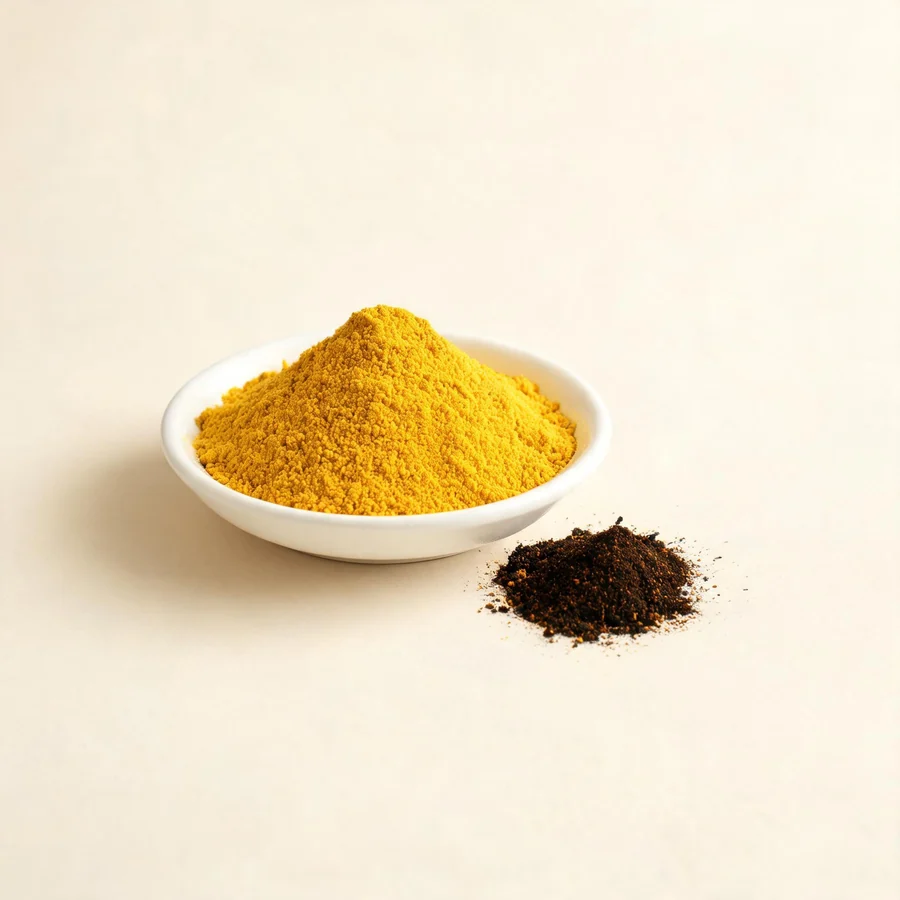
| Form and processing | Charring is done by stir-frying the raw pollen until dark brown, then sprinkling a little water to stop the burning. Once charred, the pollen leans toward staunching; unprocessed, it is the moving form. |
| Course and review | Short courses with review. What sets the ceiling is the action on clotting rather than any poison, so a person taking an anticoagulant does not increase the dose on their own. |
Dose and form are chosen together: raw for moving, charred for holding, and the cloth wrapper is essential rather than fussy, because unwrapped pollen clouds the decoction and throws away much of the dose. The 30 g daily figure reported in lipid work is far above the medicinal range and belongs to supervised practice. Because the pollen both stops and moves blood, the safe question is not only how much but which form, and a person on anticoagulants needs the prescriber involved before either is used.
Citations and further reading
Only real sources are listed: the classical materia medica passages quoted above, and the source works behind the botanical and safety statements.
- Shen Nong Ben Cao Jing (Divine Husbandman's Classic of Materia Medica), attributed compilation of the Han period - classical entry quoted above.
- Ben Cao Gang Mu (Compendium of Materia Medica), Li Shizhen, 1578 - classical entry on the raw and prepared forms.
- Ben Cao Hui Yan (Expanded Discussions of Materia Medica), Ming dynasty - classical entry on the four directions of the herb.
- Pharmacopoeia of the People's Republic of China - Pollen Typhae monograph and the limits on non-pollen material.
- Modern evidence statement: laboratory literature on the flavonoids of Typha pollen, summarised as a statement about the level of evidence rather than as a cited finding.
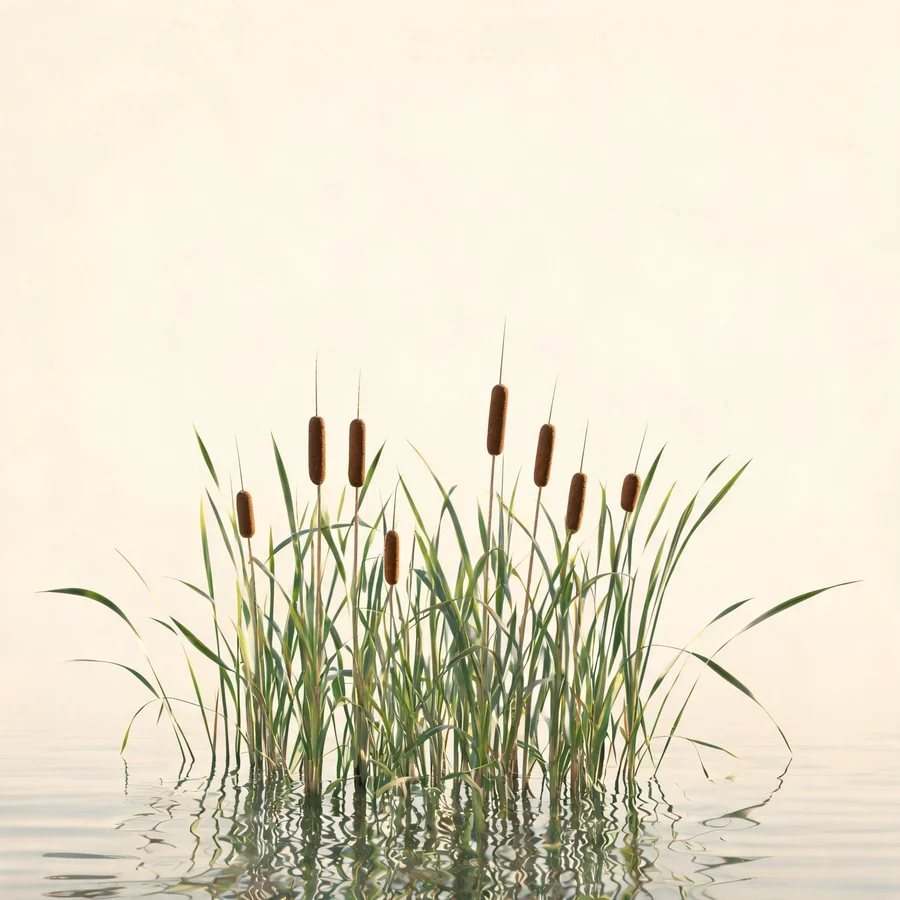
- Botanical description: botanical literature on Typha angustifolia and related cattails, Typhaceae.
Educational reference for qualified practitioners. This page is not medical advice, and skin conditions should be diagnosed by a clinician before treatment.