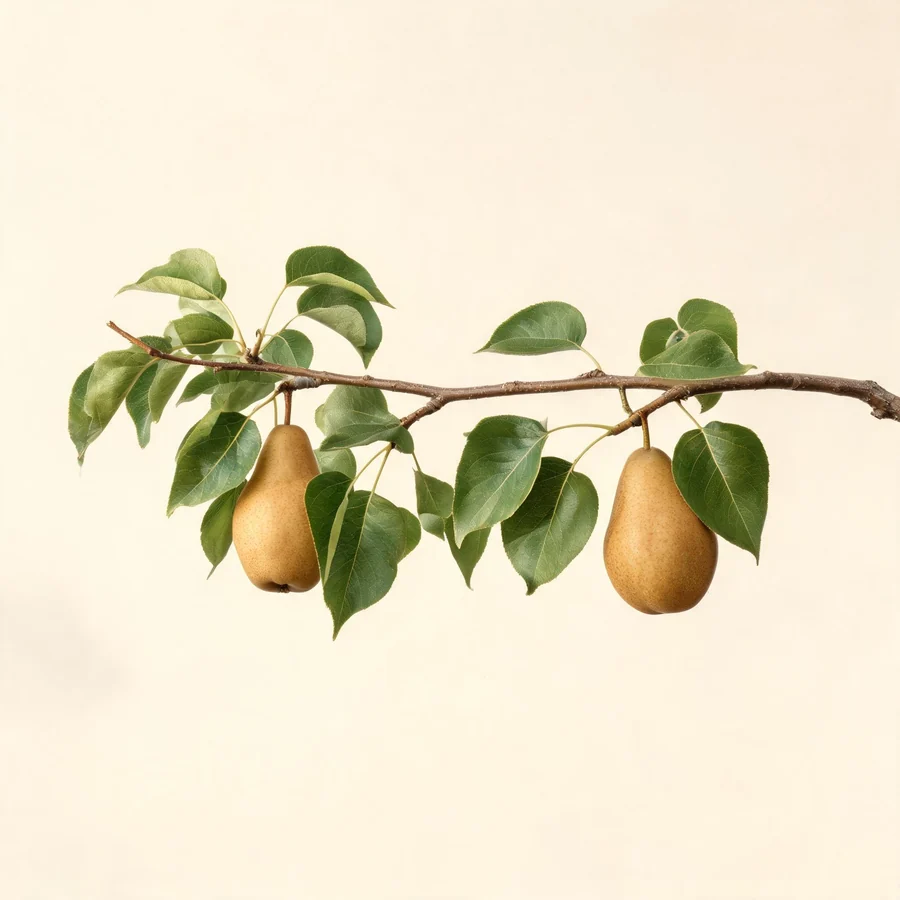
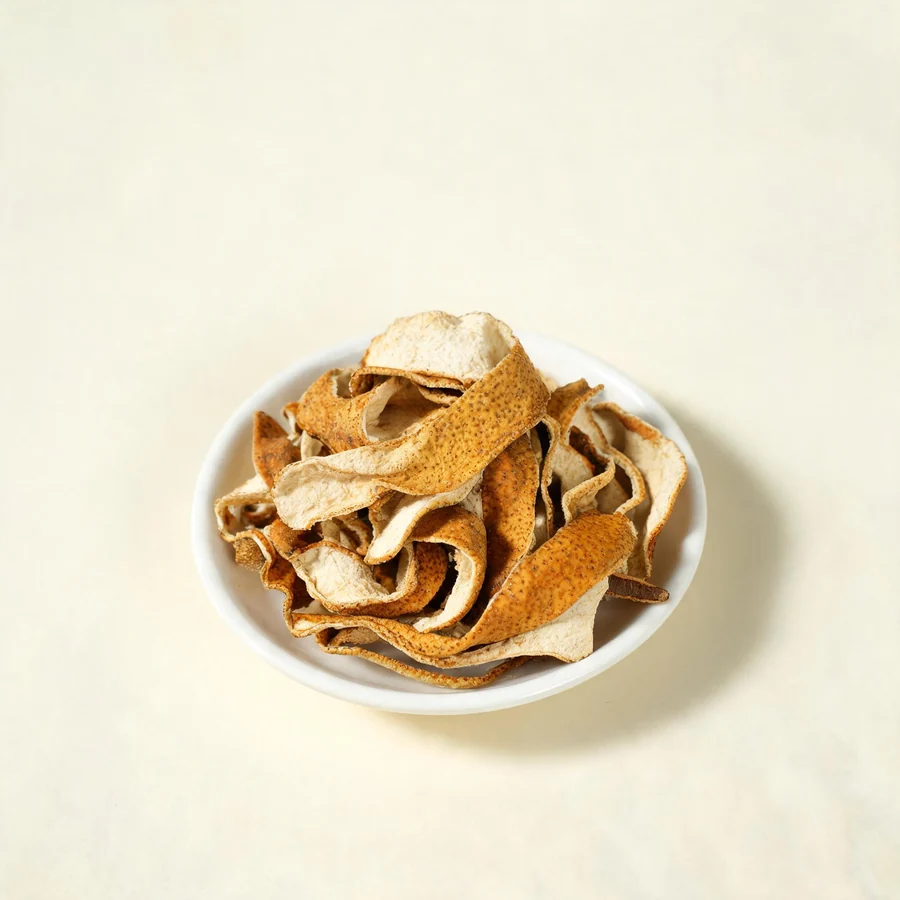
Skin profile
Where this herb sits in skin practice: the pattern it corrects, the skin signs it suits, and what it should not be used for.
Li Pi has a narrow skin role: a cool, moistening food peel used fresh on an early hard swelling, and taken internally where dry skin sits with mild heat. It is a supporting herb at best and is chosen for mildness rather than strength.
Skin signs that suggest it
- An early boil or carbuncle that is hard, red and tender but has not yet pointed or discharged
- Dry, tight, finely scaling skin with thirst and a dry mouth (dryness with mild heat)
- A rough, heat-dried surface after a fever, with little perspiration and a hot feeling to the touch
- A reddened patch that is dry rather than weeping, with no crust and no ooze
- A red tongue with little coating, alongside the skin dryness
When it is not the right herb
Not for cold, weak digestion: loose stools, a poor appetite, a cold abdomen and a pale swollen tongue, where a cool moistening peel adds to the cold. Not for a cough that brings up quantities of thin white phlegm, since that wants warming and drying. Not for a boil that has formed pus, is spreading, or sits on the face, where a poultice delays what is needed. Not for weeping, crusted or infected skin, because the peel moistens and moisture is the last thing that surface needs.
What it does for skin
Skin-relevant actions only. Each one describes a mechanism in TCM terms and what it looks like on the skin.
Cools mild heat without drying the skin
The peel is cool but not cold, and sweet rather than bitter, so it lowers heat without the drying that a bitter cold root produces. On the skin that means it suits a hot, dry patch rather than a hot, wet one, and it can be repeated where a stronger cooling herb would leave the surface tight. The action is mild and is described as such: it is a food, and its effect is the effect of a food used with intent.
Replaces the fluid that heat has taken from the surface
Sweet and moistening, it generates fluid, and in the tradition the Lung governs the skin, so a herb that moistens the Lung is used where the surface has dried. The picture is a dry, rough, slightly hot skin with thirst and a dry mouth, often after a fever or in dry autumn weather. The peel restores what has been lost rather than clearing an infection, and it is judged by whether the skin feels less tight.
Draws an early swelling when it is applied fresh
The recorded skin use is a poultice: the fresh peel pounded and laid on a carbuncle on the back or a deep-rooted boil. The reasoning is that a cool, moist, slightly astringent layer takes heat out of the lesion and holds it there while the tissue settles. It is a comfort measure for an early, hard, unopened swelling, and it does not replace drainage or antibiotics once pus has formed.
Provides a gentle option where stronger herbs are too much
Because it is a food, the peel can be used where a bitter cold drainer would be too harsh: thin elderly skin, a child, or a person whose digestion is delicate. The trade-off is strength, and it is a real one. The peel is chosen as an addition to a formula or as a household poultice, not as the main treatment for a heat-toxin picture.
Skin conditions it is used for
Mapped to the condition pages on this site. The pattern column shows what the skin is doing when this herb is the right choice.
| Condition | Pattern | Why it suits | Typical setting |
|---|---|---|---|
| Boils | An early, hard boil before it points | The recorded use is external and early: the fresh peel laid on a carbuncle or a deep boil while it is still hard. It is a household measure that cools the lesion and keeps a moist layer on it, and its place is at the very beginning, before there is pus to drain. A boil that is spreading, painful out of proportion, or on the face or upper lip needs medical assessment. | A fresh Li Pi poultice changed twice a day, with a heat-clearing formula where the whole picture is hot |
| Skin abscess | Hard, red, unopened swelling with local heat | The classical indication for the peel is the carbuncle on the back, which is an abscess in the old sense: a deep, hard, spreading swelling. The peel is applied to the surface while the swelling is still hard and is not used once the centre softens. The distinction matters because an unopened swelling may settle and a mature one will not, and only the first is a poultice case. | A fresh peel poultice while the swelling is hard and unopened, with prompt medical review |
| Dry and hot skin | Dryness with mild heat, without ooze or crust | Skin that is dry and hot at once is read as fluid used up while heat remains, and the peel is one of the few cooling herbs that adds moisture rather than taking it away. It suits the mild end of that picture: roughness, tightness and a hot feeling, after a fever or in dry weather. Skin that is hot, red and weeping belongs to a different pattern and a different herb. | Li Pi with Mai Dong and Sang Bai Pi in a moistening formula, with a cooled peel rinse on the surface |
| Skin dryness | Dry, rough skin from fluid and yin depletion | Dry skin is a supply problem, and a moistening peel addresses the supply gently. It is used where the dryness is recent and mild, and as an addition to a formula that already contains a proper yin tonic. In established dryness with a red, peeled tongue and night sweats the peel is too weak to matter, and the tonics do the work. | Li Pi as a supporting herb with Mai Dong and Sha Shen |
Combinations for skin
Herbs it is paired with when the skin, not an internal organ, is the target.
| Partner | Ratio | Why the pair is used |
|---|---|---|
| Sang Bai Pi | 6 to 9 g Li Pi with 9 to 12 g Sang Bai Pi | Both enter the Lung and they pull in opposite directions: the bark drains Lung heat and moves fluid downward, while the peel moistens the same organ and restores what heat has dried. Used together they clear without over-drying, which suits a dry hot skin with a cough and a sensation of heat in the chest. The bark is the stronger herb, so the peel is the smaller part of the pair. |
| Chen Pi | 6 g of each in a decoction | A moistening peel can sit heavily and turn into a sweet, stagnant drink, and aged tangerine peel moves Qi and dries dampness to keep it working. The pair is used where dry skin sits on a background of poor digestion, abdominal fullness and a coated tongue. The dryness is addressed and the digestion is not burdened, which is the point of putting the two in one formula. |
| Mai Dong | 9 g Li Pi with 9 to 12 g Mai Dong | Mai Dong is a proper yin tonic and the peel is not, so the two work at different depths: the tonic rebuilds fluid that has been lost and the peel cools and moistens the surface above it. The combination suits dryness that has begun to settle in, with a dry throat, a little thirst and rough skin. Where the depletion is deep the tonic leads and the peel is a minor assistant. |
Topical use
The recorded skin use is a poultice of the fresh peel, and it is a household preparation rather than a dispensary one. The peel is pounded, applied to an early hard swelling and changed twice a day. A cooled infusion of the dried peel is used in the same spirit as a rinse on dry, hot, itchy skin, and it is a weak preparation expected to soothe rather than to change a lesion.
| Preparation | How and when it is used |
|---|---|
| Fresh peel poultice | The peel of one or two fresh pears is pounded to a soft paste, spread on clean gauze and laid on the swelling for 20 minutes, twice a day. It is used only on unbroken skin and on a swelling that is still hard, a patch test is done on the inner arm first, and the peel is discarded after each use. |
| Cooled peel rinse | 15 g of dried peel is simmered in 500 ml of water for 10 minutes, strained and cooled, then used as a rinse or a short compress on dry, hot, itchy skin. It is a mild preparation made fresh each time, and it is stopped if the skin feels tighter or stings. |
Patch test and cautions
A fruit peel carries whatever was on the fruit, so it is washed before use and taken where possible from fruit grown without heavy spraying. Patch test for 24 hours, avoid the eyes and broken skin, and do not seal a poultice under an airtight dressing. A swelling that becomes more painful, hotter or larger needs medical review rather than another application.
Safety for skin use
What to check before recommending or using it, including the cautions that matter most for skin patients.
Do not use, or use with caution
- Cold and deficient digestion, with loose stools, a poor appetite, a cold abdomen and a pale swollen tongue. A cool moistening peel burdens a cold middle and makes all of it worse.
- Cold skin with no heat, and a cough with abundant thin white phlegm or watery diarrhoea from cold. That picture needs warming and drying, and moisture is the wrong direction.
- A boil or abscess that has formed pus, is spreading, or is on the face or upper lip. A poultice will not drain it, and delay in that situation is the real risk.
- Known allergy to pear or to other Rosaceae fruit, and a history of contact reaction to a fruit peel. The first poultice is a patch test on a small area of normal skin.
Pregnancy and breastfeeding
Generally considered safe at standard doses. The peel is a food-grade material with no known action on the uterus, and old prescriptions for morning sickness with heat include it, which suggests a cool mild peel was judged acceptable in pregnancy when the pattern asked for one. The pattern, not the herb, sets the limit: a woman who runs cold with loose stools should not be taking it routinely. Pear eaten as food, skin and all, is unremarkable, and nothing specific is documented against breastfeeding, though a mother of cold constitution may find that a lot of cooling food loosens her stools and the baby's.
Interactions
- No clinically important interaction has been recorded at food or standard herbal amounts, and the peel is not a reason to delay any prescribed treatment.
- Arbutin in the peel is converted to hydroquinone, which the liver handles. At ordinary amounts this is not expected to change how other medicines are processed, but a concentrated extract is avoided in liver disease without advice.
- Glucose-lowering medicines. Experiments on pear preparations report a modest fall in blood sugar, so anyone on insulin or a sulfonylurea who drinks peel decoction in quantity should test more often at the start.
- Prescription creams and ointments. A peel poultice is applied at a different time of day from a steroid or antibiotic cream, so that neither dilutes the other and any irritation can be attributed to one product.
Allergy and patch testing
Pear is a Rosaceae fruit, and people with birch pollen allergy can react to its flesh and skin with oral itching, so a peel applied to the skin is tested rather than trusted. Contact dermatitis from fruit peel is uncommon but reported, and a first poultice is done on a small area of normal skin for 24 hours. Stop at once if the area becomes more irritated rather than calmer.
General safety references
General references for herbal hepatotoxicity and herb-drug interactions; they are not specific to this herb.
- Review article: Herbal hepatotoxicity - an update on traditional Chinese medicine preparations. Alimentary Pharmacology & Therapeutics, 2014. PMID: 24844799.
- Interactions between herbal medicines and prescribed drugs: an updated systematic review. Drugs, 2009. PMID: 19719333.
- Warfarin and food, herbal or dietary supplement interactions: a systematic review. British Journal of Clinical Pharmacology, 2021. PMID: 32478963.
Evidence
The classical record is quoted with its source. The modern note states the level of evidence plainly.
Classical record
敷发背疔疮。
Applied topically it treats carbuncles on the back and deep-rooted boils.
Dian Nan Ben Cao (Materia Medica of Yunnan), Lan Mao - The first recorded use is external and narrow: a peel laid on a carbuncle or a deep boil, with no internal application at all.
清心降火,滋肾益阴,生津止渴,除烦去湿。
It clears the Heart and lowers Fire, nourishes the Kidneys and supplements Yin, generates fluid and stops thirst, and removes irritability and Dampness.
Ben Cao Zai Xin (Renewed Materia Medica) - Qing dynasty writing that turned a topical remedy into something swallowed, adding Heart and Kidney actions that the skin use has no need of.
清暑热,止烦渴,生津,收敛。治痢疾及咳嗽有汗。
It clears Summer-Heat, stops restless thirst, generates fluid and is astringent. It treats dysentery and cough with sweating.
Sichuan Materia Medica (Sichuan Zhong Yao Zhi) - A regional record that widens the peel to Summer-Heat and dysentery. Unlike the two entries above, it says nothing about the surface, and it is noted here for completeness rather than as skin evidence.
Modern evidence
Evidence status
- Laboratory work on pear peel reports phenolic compounds including arbutin and chlorogenic acid with antioxidant activity in cell models, and there is some glucose-lowering work on pear preparations. None of it is a skin study, and none of it speaks to a poultice on a boil.
- No clinical trial of pear peel in any skin condition was identified. Its skin record rests on one short classical note about carbuncles and boils plus household use, so the herb is best described as traditional practice with no trial base.
- Safety position: the peel is a food article classed as non-toxic, and the practical quality issue is residue on the fruit surface rather than pharmacological risk. The species matters too, since European pear or apple peel sold as a substitute is a different material.
PubMed records
Selected real PubMed records for this herb's species or its constituents, chosen by species name and title relevance. They are references for the non-TCM discussion above, not proof that the herb treats any skin condition.
- Study on chemical composition, anti-inflammatory and anti-microbial activities of extracts from Chinese pear fruit (Pyrus bretschneideri Rehd.).. Food and chemical toxicology : an international journal published for the British Industrial Biological Research Association, 2012. PMID: 22824088 (skin-related record).
- Both chitosan and chitooligosaccharide treatments accelerate wound healing of pear fruit by activating phenylpropanoid metabolism.. International journal of biological macromolecules, 2022. PMID: 35196569 (skin-related record).
Dose and forms
Skin-practice dosing and the preparations that suit skin complaints.
| Form | Dose and notes |
|---|---|
| Decoction (internal) | 9 to 15 g of dried peel daily, or 30 to 60 g of fresh peel, as a supporting herb in a formula. It is a food and does not carry a formula on its own. |
| Fresh peel poultice | The peel of one or two pears, pounded and laid on an early, hard, unopened swelling for 20 minutes, twice a day, after a patch test. It is not used on broken skin. |
| Course length | One to two weeks of internal use while the dryness lasts. A thirst that fluids do not relieve, especially with weight loss or large volumes of urine, needs assessment rather than a larger dose. |
Two practical points belong here. First, this is food rather than a leading herb, so it adds to a prescription without being able to hold one together. Second, thirst that drinking does not quench, particularly with weight loss or with large volumes of urine, calls for assessment instead of a larger dose. Young children and older patients begin at the bottom of the range and move up only while digestion stays easy.
Citations and further reading
Only real sources are listed: the classical materia medica passages quoted above, and the source works behind the botanical and safety statements.
- Dian Nan Ben Cao (Materia Medica of Yunnan), Lan Mao, 1436 - classical entry quoted above.
- Ben Cao Zai Xin (Renewed Materia Medica), Qing dynasty - classical entry quoted above.
- Sichuan Materia Medica (Sichuan Zhong Yao Zhi) - regional entry quoted above.
- Li Pi monograph, Pericarpium Pyri: Pharmacopoeia of the People's Republic of China - source for the accepted botanical sources, the part used and quality requirements.
- Modern evidence statement: based on laboratory literature on arbutin, chlorogenic acid and Pyrus peel, framed as a statement about the level of evidence rather than as a cited finding.
- Botanical description and identification: botanical literature on Pyrus bretschneideri, Pyrus pyrifolia and Pyrus ussuriensis, Rosaceae.
Educational reference for qualified practitioners. This page is not medical advice, and skin conditions should be diagnosed by a clinician before treatment.