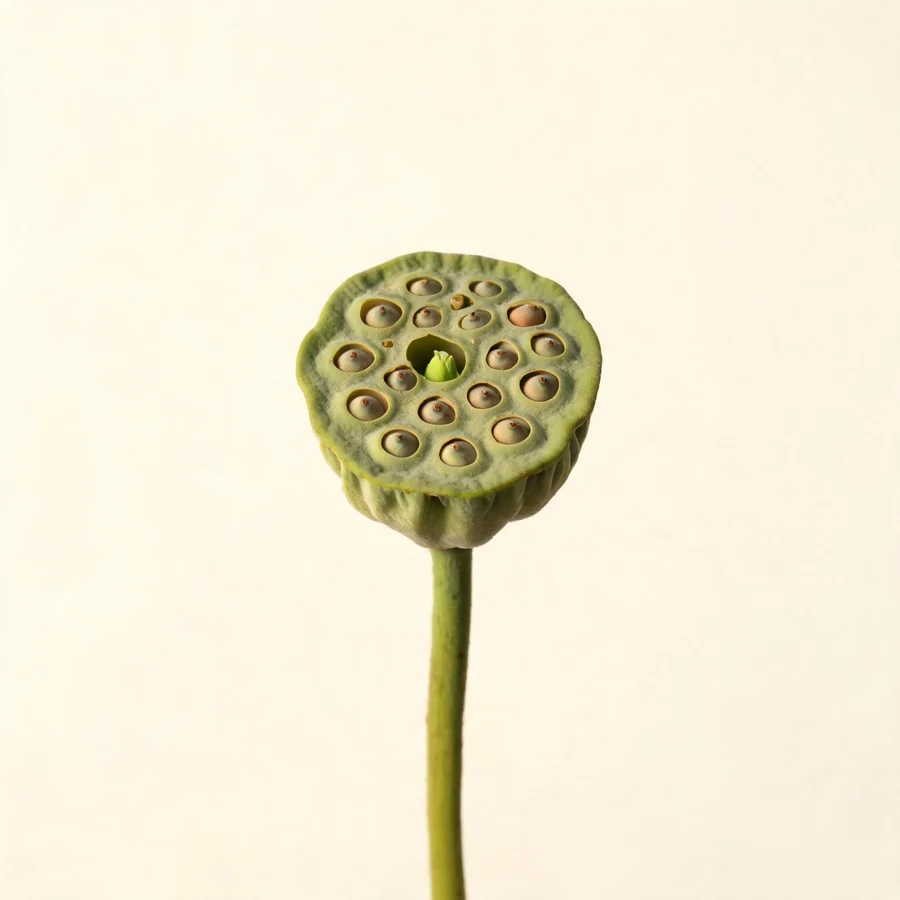
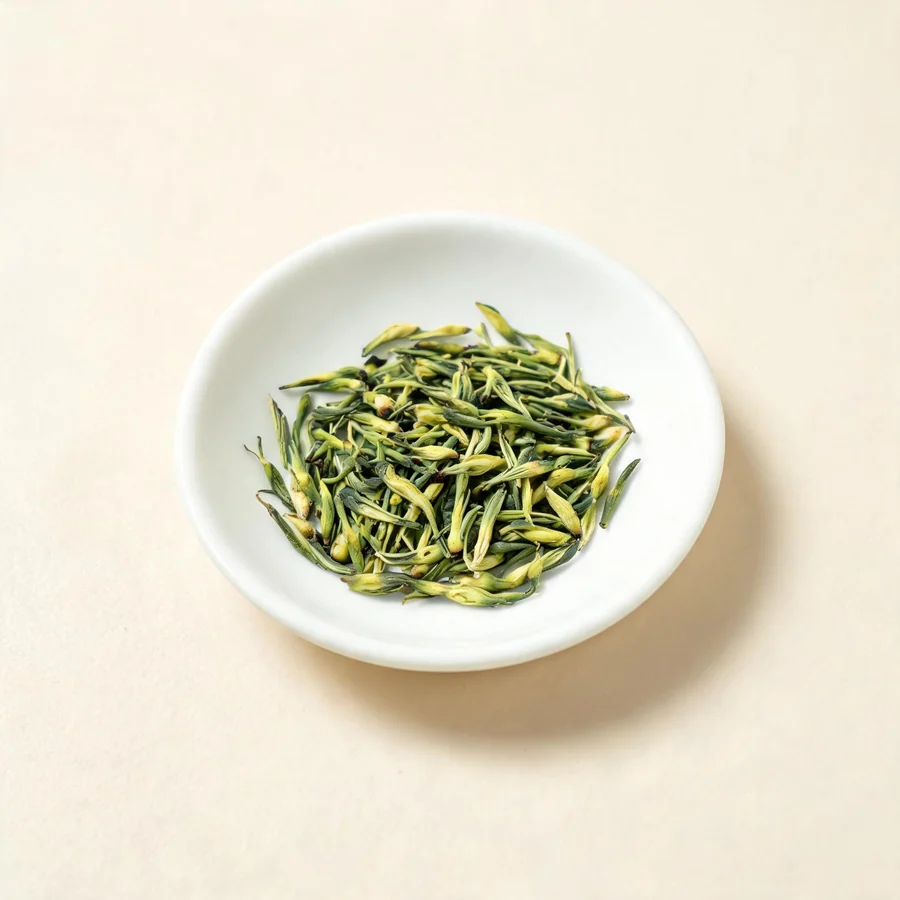
Skin profile
Where this herb sits in skin practice: the pattern it corrects, the skin signs it suits, and what it should not be used for.
Lian Zi Xin is a correctant for the hot reactive face: flushing, small red papules and a tongue tip that is redder than the rest. It cools the Heart and calms the spirit in one small dose, it has no nourishing action, and it is stopped when the heat has gone.
Skin signs that suggest it
- Red papules on the forehead and cheeks in someone who sleeps badly and feels irritable
- A face that flushes and feels hot in the evening, with a red tip to the tongue
- A prickling red rash on the chest and back in hot weather, with restlessness
- Skin that is warm and dry at night, with a dry mouth and broken sleep
- Small recurrent ulcers or sore spots at the mouth or tongue tip
- Palpitations with a feeling of heat in the upper body and cold feet
When it is not the right herb
Not for redness that comes from a cold, depleted constitution: a pale person with cold hands, loose stools and a weak pulse can have a flushed face from empty heat, and a bitter cold plumule will make that worse rather than better. It is not a long-term herb, not a tea to be drunk daily for months, and not a treatment for acne that is mainly greasy, deep and nodular. A red hot swollen area of skin that is spreading, or a rash with fever, is a medical problem rather than a case for a cooling tea.
What it does for skin
Skin-relevant actions only. Each one describes a mechanism in TCM terms and what it looks like on the skin.
Clears Fire from the Heart at its source
The tradition places the Heart's opening at the tongue and its brilliance on the face, so Heart Fire is read as flushing, red papules and small ulcers rather than as a deep lesion. The plumule is intensely bitter and cold and goes straight to that channel, and it is used where the same person is also restless, sleeps badly and has a red tongue tip. It is a small, sharp correctant, and it is stopped once the heat has cleared.
Settles the spirit that keeps the skin hot
A good deal of facial flushing and papular acne flares with agitation, late nights and broken sleep, and the tradition treats the mind and the surface as one circuit. By calming the spirit while it cools, the plumule addresses both, which is why it appears in formulas for hot insomnia rather than in formulas for skin disease as such. The visible change is a less reactive face and a calmer night, and it is judged over days rather than months.
Cools a summer heat rash from the inside
A prickling red rash in hot humid weather, with irritability, a dry mouth and a feeling of heat trapped in the chest, is read as summer-heat disturbing the Heart. A weak tea of the plumule is the traditional answer, and it doubles as an everyday summer infusion, which is unusual for a medicinal. It is a comfort measure for a self-limiting rash, not a treatment for a rash that is spreading, blistering or febrile.
Cools Blood that is being pushed out by heat
The astringent quality is slight but real, and the cold bitterness is directed at Heat that drives Blood out of the vessels, which in skin terms means small purpura and pinpoint bleeds appearing with a red tongue tip and a restless night. It is a supporting herb in that picture, added to stronger cooling and haemostatic herbs rather than relied on, and it does nothing for bleeding that comes from a Spleen too weak to hold.
Skin conditions it is used for
Mapped to the condition pages on this site. The pattern column shows what the skin is doing when this herb is the right choice.
| Condition | Pattern | Why it suits | Typical setting |
|---|---|---|---|
| Acne | Heart Fire with heat in the upper body | Papules on the forehead and cheeks that flare with stress, late nights and broken sleep, with a red tongue tip and a sense of heat in the chest, are read as Heart Fire rather than as Stomach heat or blood stasis. The plumule is added in a small dose to cool that source while the main acne herbs work on the lesions. It is not the herb for deep nodules, for greasy skin or for acne that is quiet and cold. | A Lung and Heart heat formula with Huang Lian and Mu Dan Pi, the plumule in a small dose as correctant |
| Heat rash | Summer-heat disturbing the Heart | A fine prickling rash in hot weather, worse where clothing traps sweat, with irritability and a dry mouth, is read as heat the skin cannot vent. The plumule is used as a weak tea or as a small addition to a summer formula, on the reasoning that cooling the Heart reduces the heat driving outward. It is a comfort measure for a rash that settles in days, and a rash with fever or with blistering needs a clinician. | A summer-heat formula with He Ye and Jin Yin Hua, or as a weak tea on its own |
| Warm skin | Heat in the upper body with Heart-Kidney disharmony | Skin that feels warm, particularly on the face and chest, with cold feet, palpitations and a red tongue tip, fits the picture of Fire above and Water below that the plumule is said to reconnect. It is used in a small dose to bring the upper heat down rather than to blanket the whole body in cold herbs. A persistent unexplained warmth, night sweats and weight loss need medical assessment rather than a tea. | Jiao Tai Wan, the plumule added as an assistant |
| Dry and hot skin | Heat injuring fluids with dryness of the surface | Dryness that comes with warmth rather than with cold is read as heat having consumed the fluids, and a bitter cold herb is the right instrument provided the shortage is not too deep. The plumule is added in a small dose where the person is also restless and flushed, and it is always combined with a moistening herb, because on its own its bitterness would dry the surface further. It is not a substitute for a Yin tonic. | A fluid-generating formula with Mai Dong and Sheng Di Huang, the plumule in a small dose |
| Papules | Small red raised lesions from heat in the upper burner | Where papules are small, red and scattered, and the person is hot, restless and dry-mouthed, the pattern is read as heat rising to the surface rather than as an obstruction in the skin. The plumule is a correctant in that formula, not the main herb, and its use is limited to the hot reactive type. Papules that are uniform, new and spreading, or accompanied by fever, need a diagnosis before anything is taken. | A heat-clearing formula with Lian Qiao and Ju Hua, the plumule in a small dose |
Combinations for skin
Herbs it is paired with when the skin, not an internal organ, is the target.
| Partner | Ratio | Why the pair is used |
|---|---|---|
| Huang Lian | 2 g Lian Zi Xin with 3 g Huang Lian | Coptis is the stronger bitter cold clearer of Heart Fire, and the plumule adds the Heart-Kidney link and a slight astringency. The pair is small and sharp, used for hot insomnia with a flushed face and for papules that flare with agitation. Both are cold and drying, so it is a short course, it is stopped when the sleep and the skin settle, and the stomach is the usual objector. |
| Mai Dong | 2 g Lian Zi Xin with 10 to 15 g Mai Dong | Ophiopogon replenishes Yin and builds fluid, so it works on the shortage while the plumule clears the heat consuming it. The pairing matters because a bitter cold herb in a dry person would otherwise leave the surface drier, and here the moistening partner prevents that. It suits a dry hot face with a dry throat, thirst and a red tongue with little coating. |
| Sheng Di Huang | 2 to 3 g Lian Zi Xin with 10 to 15 g Sheng Di Huang | Rehmannia in its raw form cools the Blood and feeds Yin, while the plumule clears the Heart, so the two cool at different levels and cover heat that has reached the Blood. The combination is used for a hot flushed face, night sweats and small bleeds with a red tongue tip. It is cooler than a plumule and seed pairing and is chosen when there are clear blood-heat signs. |
| Suan Zao Ren | 2 to 3 g Lian Zi Xin with 10 to 15 g Suan Zao Ren | The seed feeds the Heart's Blood and quietens the spirit by virtue of being sweet and sour, while the plumule drains the Fire that keeps the spirit awake and the face flushed. One builds and the other clears, which is why the pair covers insomnia from both the deficient and the excess side, and why it suits the tired person who cannot sleep and wakes with a hot face. |
Formulas where it leads
- Qing Gong Tang (清宫汤) - Recorded in the Wen Bing Tiao Bian for heat that has reached the Pericardium, with fever, delirium and clouded consciousness. The plumule is an assistant there, and the formula is a hospital-level treatment for a febrile emergency rather than a skin preparation. It is included because it is the classical setting that established the herb's identity, not as a model for treating a rash.
Safety for skin use
What to check before recommending or using it, including the cautions that matter most for skin patients.
Do not use, or use with caution
- A cold, weak Spleen and Stomach: loose stools, a poor appetite and cold abdominal pain. An intensely bitter cold herb burdens a digestion that is already cold, and the plumule is strong for its weight, so even a small dose can loosen the stool.
- Absent real heat. A draining substance of this kind, given to someone pale and chilled, erodes over time the Yang responsible for surface warmth, while the flushing it was meant to treat comes back worse.
- Constipation with dryness. The cold bitter nature can further slow an already dry bowel, and it works against the moistening herbs a dry person needs.
- Long or open-ended use as a daily tea. Courses are finite, and an indefinite habit in a constitutionally cold person produces cold symptoms rather than clearer skin.
Pregnancy and breastfeeding
No specific contraindication is recorded, and the plumule has no Blood-moving or uterine action. The concern is its cold bitterness rather than toxicity: excessive cold impairs digestion and the uptake of nutrients, both of which matter more than usual at this time. It is used only for a clear Heart Fire indication, at the standard small dose, under guidance, and not as a daily summer tea through pregnancy. In breastfeeding, small amounts have traditionally been taken to clear Heart Fire and improve sleep, and the theoretical concern is that a cold herb in quantity could loosen the infant's stools.
Interactions
- Blood pressure medicines. Its alkaloids relax peripheral vessels and so tend to lower blood pressure, which may add to that of antihypertensives, and readings should be watched when a regular tea is added.
- Cardiac medicines. Neferine has recorded antiarrhythmic actions, calcium channel blockade among them, so combining it with antiarrhythmics or other cardiac drugs warrants caution and prescriber knowledge.
- Sedatives. Drowsiness may add up with benzodiazepines, hypnotic tablets, opioid painkillers and alcohol, which matters most for anyone driving, operating machinery or at risk of falls.
Allergy and patch testing
A reaction to a lotus product is uncommon, but contact reactions to herbal teas and washes do occur. Patch test any preparation applied to the skin, and stop if the area becomes more irritated. Anyone who has reacted to lotus products in food or drink should avoid the plumule in a preparation.
General safety references
General references for herbal hepatotoxicity and herb-drug interactions; they are not specific to this herb.
- Review article: Herbal hepatotoxicity - an update on traditional Chinese medicine preparations. Alimentary Pharmacology & Therapeutics, 2014. PMID: 24844799.
- Interactions between herbal medicines and prescribed drugs: an updated systematic review. Drugs, 2009. PMID: 19719333.
- Warfarin and food, herbal or dietary supplement interactions: a systematic review. British Journal of Clinical Pharmacology, 2021. PMID: 32478963.
Evidence
The classical record is quoted with its source. The modern note states the level of evidence plainly.
Classical record
苦,寒,无毒。
Bitter, cold and free of toxicity.
Ben Cao Gang Mu (Compendium of Materia Medica), Li Shizhen - The whole of Li Shizhen's entry, and the reason a small dose can be used for heat without fear of poisoning.
It clears Heart Fire, settles Liver Fire, drains Spleen Fire and lowers Lung Fire; it relieves summer-heat and irritability, generates fluid, eases thirst and is used for red swollen eyes.
Ben Cao Zai Xin (Renewed Materia Medica) - A later text that widens the reach beyond the Heart, and the nearest the record comes to a surface use, since the eyes and the face are where that heat shows.
Wu Jutong writes that the plumule passes from the Heart down to the Kidney, letting Heart Fire descend to communicate below, and then returns upward so that Kidney Water reaches the Heart.
Wen Bing Tiao Bian (Systematic Differentiation of Warm Diseases), Wu Jutong - The passage that made the herb a connector between the two organs, and the basis for using it where flushing above sits with cold below.
Modern evidence
Evidence status
- The bisbenzylisoquinoline alkaloids, liensinine, isoliensinine and neferine, have documented cardiovascular activity in laboratory and animal work, including blood-pressure lowering and effects on cardiac rhythm. That supports the traditional description of calming the Heart but says nothing about the skin.
- No controlled trial of this plumule in acne, heat rash or any skin condition was identified. It appears in traditional formulas and in food use, and the human literature is descriptive rather than experimental.
- Regulatory status: the dried plumule is an accepted herbal substance in the Chinese Pharmacopoeia under the name Plumula Nelumbinis. It is also an ordinary food item in parts of Asia, which is why a weak tea is traditional, though food use is not evidence of a skin effect.
PubMed records
Selected real PubMed records for this herb's species or its constituents, chosen by species name and title relevance. They are references for the non-TCM discussion above, not proof that the herb treats any skin condition.
- Skin-Whitening Effect of a Callus Extract of Nelumbo nucifera Isolate Haman.. Plants (Basel, Switzerland), 2023. PMID: 38068559 (skin-related record).
Dose and forms
Skin-practice dosing and the preparations that suit skin complaints.
| Form | Dose and notes |
|---|---|
| Decoction | 1.5 to 3 g daily for clearing Heart Fire, added near the end of the decoction so that the volatile alkaloids are not driven off. Used in a formula rather than alone for skin complaints. |
| Tea | 1 to 2 g steeped in freshly boiled water for a mild summer-heat rash or a hot restless night, taken for a few days at a time rather than as a standing habit. |
| Upper limit | Up to 5 g in decoction for a pronounced picture with marked flushing, agitation or heat-type bleeding, in a short course only; above that nothing is gained, and cold injury to the digestion becomes a genuine risk. |
| Course length | Days to two weeks. It is withdrawn once the heat has gone, not carried on as a tonic, and it is not a maintenance herb for skin. |
The small dose is the point of this herb: bitterness and coldness are what act, and increasing either adds nothing. It is a correctant that clears and then stops, not a tonic to be continued, and it is added late in the decoction because its alkaloids are the part that matters. Any regular use alongside blood pressure or cardiac medicines should be discussed with the prescriber rather than started quietly.
Citations and further reading
Only real sources are listed: the classical materia medica passages quoted above, and the source works behind the botanical and safety statements.
- Ben Cao Gang Mu (Compendium of Materia Medica), Li Shizhen, 1578 - the four-character entry on taste and nature is quoted above.
- Ben Cao Zai Xin (Renewed Materia Medica) - the passage on clearing fire from the Heart, Liver, Spleen and Lung is quoted above.
- Wen Bing Tiao Bian (Systematic Differentiation of Warm Diseases), Wu Jutong, 1798 - the passage on the Heart and Kidney is quoted above.
- Plumula Nelumbinis monograph, Pharmacopoeia of the People's Republic of China - accepted part used and quality requirements.
- Pharmacological literature on liensinine, isoliensinine and neferine, summarised as a statement about the level of evidence rather than as a cited finding.
- Botanical literature on Nelumbo nucifera, Nelumbonaceae, for identification of the dried plumule.
Educational reference for qualified practitioners. This page is not medical advice, and skin conditions should be diagnosed by a clinician before treatment.