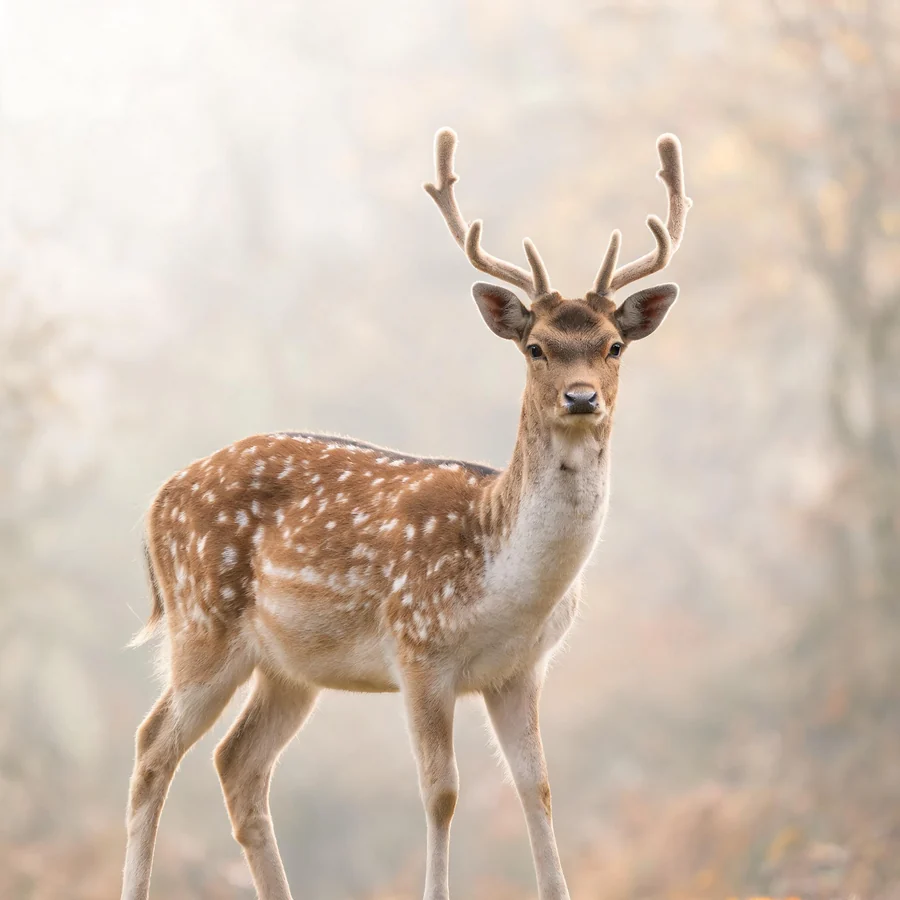
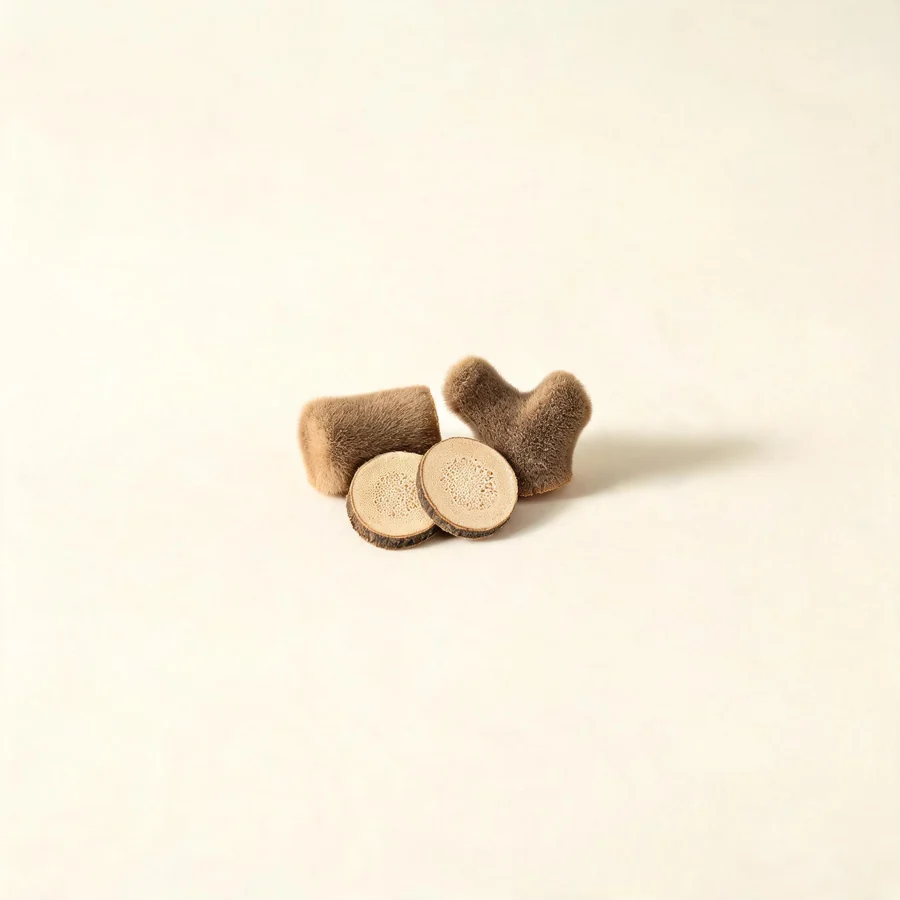
Skin profile
Where this herb sits in skin practice: the pattern it corrects, the skin signs it suits, and what it should not be used for.
Skin signs that suggest it
- A chronic ulcer, erosion or sore that is pale, cold, indented and slow to heal
- Skin that is thin, dry, lax and shrunken, in an older person whose lower back feels cold and whose knees are weak
- Cold hands, feet and limbs with a pale or dusky surface that warms slowly
- Slow healing after injury or surgery in a depleted, always-cold person
- A pale, swollen tongue and a deep, weak pulse, with no heat signs anywhere
When it is not the right herb
Not for anything hot. A red, warm, weeping or spreading lesion is the opposite polarity, and giving a warming tonic into active heat-toxin can make the eruption worse. It is wrong in Yin deficiency with empty fire, where flushing, night sweats, a dry mouth and heat in the palms mean the remaining Yin would be consumed, and it is wrong in blood heat with active bleeding, in an acute febrile illness, and in a robust person with no deficiency at all, who may simply develop a headache, a flushed face or a nosebleed. It has no role in acute eczema, acne, rosacea or heat-type urticaria.
What it does for skin
Skin-relevant actions only. Each one describes a mechanism in TCM terms and what it looks like on the skin.
Warms Kidney Yang so cold, pale skin is perfused
When the Kidney's warming fire is low, the periphery stays cold and the skin over it looks pale or dusky and heals slowly. Lu Rong is held to feed that fire directly, and its effect on the skin is secondary to the general warming: the hands and feet warm first, and indolent lesions begin to granulate only after that.
Builds Essence and Blood, which fill the skin and flesh
The tradition reasons that Essence and Blood are the material the body uses to rebuild, and that an animal substance replenishes that material more directly than a plant can. On the skin this is the basis for using it where the surface has thinned, wrinkled and lost its substance in old age or after a long illness. It is a slow, structural action measured in months.
Disperses swellings and sores and breaks stagnant blood
The early materia medica records the antler for dispersing swellings and sores and for breaking up retained blood. In skin practice that supports its use in chronic, cold, indolent swellings and in the dusky, stagnant skin around a long-standing ulcer, always alongside herbs that move blood and clear the local stagnation.
Promotes healing in chronic deficiency
Because it warms, builds and moves at once, it is used where a lesion persists because the person cannot generate the warmth and material to repair it. The action is slow and the dose small, and the herb is stopped if any heat sign appears, because the same ascending warmth that drives repair can overshoot into flushing and bleeding.
Skin conditions it is used for
Mapped to the condition pages on this site. The pattern column shows what the skin is doing when this herb is the right choice.
| Condition | Pattern | Why it suits | Typical setting |
|---|---|---|---|
| Chilblains | Yang deficiency with cold-damp: recurrent, cold, dusky toes and fingers | Chilblains in a person who is cold all winter, with dusky, slow-to-warm fingers and toes, reflect Yang deficiency failing to move blood to the periphery. Lu Rong is reserved for the chronic, recurrent case on that background, not for the acute itchy purple swelling, and it is given in a small dose through the cold months alongside herbs that warm the channels and move blood. | Within a warming formula with Gui Zhi and Dang Gui, at a low dose |
| Tissue Necrosis | Kidney Essence deficiency with cold, pale, non-healing tissue | Where tissue has broken down and will not repair in a depleted, cold person, the problem is as much a failure of building material as of circulation. The antler is used to supply the Yang and Essence that repair depends on, and it is combined with blood-moving and tissue-building herbs. Any necrotic area needs surgical and medical assessment first, and the herb is adjunctive at most. | Within a tonic formula with Huang Qi and Dang Gui |
| Skin Abscess | Cold-deficiency flat abscess: pale, indolent, no heat, will not point or heal | The classical yin flat abscess is pale, cold, deeply seated and slow, with no real redness or heat, and it is treated by warming and tonifying rather than by clearing. Lu Rong is the strongest warming substance available and is used in the chronic stage on a clearly deficient base. A hot, tender or spreading abscess is the opposite picture and must never be treated this way. | Within a warming tonic formula such as Shi Quan Da Bu Tang, with Lu Rong added |
| Cool Or Clammy Skin Sensation | Yang deficiency with cold-damp: cold, clammy, easily chilled skin | Skin that feels cold and clammy to the touch, in a person with cold limbs, a pale complexion and a deep weak pulse, is the Yang-deficient surface. The antler warms from the centre outward, and it is used at a low dose over weeks rather than for immediate relief. If the clamminess comes with profuse sweating and collapse, that is an emergency and not a case for a tonic. | Within a warming formula with Ren Shen and Rou Gui |
| Wrinkled And Shrunken Skin | Spleen and Kidney deficiency with loss of Essence: thin, lax, shrunken skin | Wrinkling and thinning that outrun age, in someone whose back aches with cold, whose knees are weak and whose reserves are failing, is read as Essence not filling the skin. Lu Rong is used in the smallest doses over months to rebuild, and the effect is on the whole constitution rather than on the face alone. Anyone with heat signs, or with a hormone-sensitive condition, should not take it. | Within a long-course tonic powder with Dang Gui and Gou Qi Zi |
Combinations for skin
Herbs it is paired with when the skin, not an internal organ, is the target.
| Partner | Ratio | Why the pair is used |
|---|---|---|
| Ren Shen | 1 to 2 g Lu Rong with 10 g Ren Shen | The classical pairing of the two most valued tonics: ginseng builds Qi and the antler builds Yang and Essence, since Qi without substance is empty and substance without Qi cannot be put to use. It is given in prolonged recovery, in frail old age, and after childbirth, where the skin is pale, cold and slow to heal. The antler is far more concentrated, hence the wide ratio. |
| Dang Gui | 1 to 2 g Lu Rong with 10 g Dang Gui | Because Essence and Blood arise together, warming Yang while ignoring Blood leaves someone dry and restless. Dang Gui closes that gap and tempers the antler's tendency to rise, which is the usual reason such a warming tonic brings on headache or a nosebleed. It suits the pale, dizzy, cold person with thin, dry skin and a sore lower back. |
| Huang Qi | 1 to 2 g Lu Rong with 15 to 30 g Huang Qi | Huang Qi raises Qi and promotes healing of chronic sores, while the antler supplies the Yang and Essence behind the repair. The pair is used for a long-standing ulcer or erosion that has stopped making progress in a depleted person. Both are warming, so the combination is stopped at the first sign of heat. |
| Gui Zhi | 1 to 2 g Lu Rong with 6 to 10 g Gui Zhi | Gui Zhi warms the channels and moves blood to the limbs, which is the action chilblains need, while the antler addresses the underlying Yang deficiency. The pair is used through the cold months in recurrent chilblains and cold, dusky skin, at a dose low enough to avoid flushing and nosebleeds. |
Safety for skin use
What to check before recommending or using it, including the cautions that matter most for skin patients.
Do not use, or use with caution
- Yin deficiency with empty fire: flushes, sweats at night, a parched mouth and throat, and hot palms and soles. A warming Yang tonic in that state burns up the little Yin left and makes the heat worse, so the skin grows hotter and drier instead of improving.
- Blood heat with active bleeding, including nosebleeds, periods that are heavy and bright red, or blood in urine or stool. The warm ascending nature can worsen bleeding, which is the classical warning attached to this herb.
- Acute infection or an active hot skin lesion: a feverish illness, a red spreading eruption, a hot abscess or weeping eczema. A strong tonic taken during an acute illness is thought to lock the pathogen in, and in skin practice it can feed the heat-toxin.
- Uncontrolled hypertension, marked liver or kidney impairment, and a robust person with nothing lacking. In these settings the herb has produced headache, flushing, chest tightness and nosebleeds, and there is nothing for it to build.
- Hormone-sensitive conditions such as oestrogen-receptor-positive breast cancer. Oestrogenic substances have been found in the fatty fraction of the antler, and it should not be used without oncological advice.
Pregnancy and breastfeeding
Most modern sources avoid it rather than forbidding it outright. Oestrogenic substances have been found in the fatty fraction; the old texts call the antler a mover of stagnant blood, so a theoretical risk to pregnancy exists. It is not used where there is any heat, and it is not a herb for routine antenatal prescribing. Give it only under direct professional supervision, and only for a clear cold-deficiency indication, at the smallest dose and for a limited period. The same caution applies during breastfeeding, since those oestrogenic substances could in theory enter milk and the warming action might disturb the infant's digestion.
Interactions
- The antler contains substances that behave like glucocorticoids and can lift blood sugar, working against metformin, a sulphonylurea or insulin. Glucose should be watched more closely once the herb is added.
- Aspirin and other salicylate anti-inflammatories may irritate the stomach more when the antler is taken as well, and it should not be paired with monoamine oxidase inhibitors. Since it moves Blood and carries oestrogenic substances, care is needed with anticoagulants such as warfarin, and with hormonal treatment such as the contraceptive pill, hormone replacement or anti-oestrogen therapy.
- Traditional practice avoids tyramine-rich food and drink alongside the antler, including aged cheese, cured and pickled meat, broad beans, chocolate and red wine, because the combination has been held to push blood pressure up sharply. It is a food interaction rather than a drug one, but it matters in anyone with hypertension.
Allergy and patch testing
Allergic reactions to deer antler products have been described, with pallor, palpitations and breathlessness, and an animal-protein product can provoke a reaction in a sensitised person. Stop at once if any of these appear. Because the material is expensive and often adulterated, a reaction may be to what the product actually contains rather than to antler, so buy only from a supplier that states the species and provides documentation.
General safety references
General references for herbal hepatotoxicity and herb-drug interactions; they are not specific to this herb.
- Review article: Herbal hepatotoxicity - an update on traditional Chinese medicine preparations. Alimentary Pharmacology & Therapeutics, 2014. PMID: 24844799.
- Interactions between herbal medicines and prescribed drugs: an updated systematic review. Drugs, 2009. PMID: 19719333.
- Warfarin and food, herbal or dietary supplement interactions: a systematic review. British Journal of Clinical Pharmacology, 2021. PMID: 32478963.
Evidence
The classical record is quoted with its source. The modern note states the level of evidence plainly.
Classical record
The later Han record treats consumptive wasting with shivering like malaria, emaciation, aching limbs, pain in the lower back and spine, frequent urination, loss of semen and blood in the urine, and adds that it breaks up retained blood in the abdomen and disperses swellings and sores.
Ming Yi Bie Lu (Supplement to the Classic of Materia Medica) - The earliest statement of the action that skin practice uses, dispersing swellings and sores, alongside the depletion picture the antler is best known for.
Li Shizhen summarises it as generating Essence and supplementing marrow, nourishing Blood and boosting Yang, and strengthening sinew and bone. He lists it for every kind of depletion, for deafness and dim sight, for dizziness, and for deficiency diarrhoea.
Ben Cao Gang Mu (Compendium of Materia Medica), Li Shizhen - The sixteenth-century consolidation of the tonic actions, and the basis for using the antler where thin, dry, shrunken skin reflects depleted Essence and Blood.
The commentary warns that it is unsuitable where Kidney deficiency is accompanied by Fire, since it leans towards supplementing Yang, and equally where Phlegm-Heat sits above or the Stomach is hot, because its nature is warm, rich and hard to digest. Anyone vomiting blood, or bleeding below with blazing deficiency Fire, must not take it.
Ben Cao Jing Shu (Commentary on the Classic of Materia Medica) - An unusually explicit early statement of the contraindications that still govern the herb, and the reason it is kept away from hot, red skin.
Modern evidence
Evidence status
- No clinical trial of Lu Rong in a skin condition was identified. Animal and laboratory studies report wound-healing, blood-vessel and bone effects from velvet antler extracts, but these do not establish a benefit for ulcers, chilblains or ageing skin in people.
- Oestrogenic substances have been found in the fatty fraction, and glucocorticoid-like activity has been described in the material. Both bear on hormonal conditions, blood sugar and blood pressure, and neither has been characterised well enough to make the herb predictable.
- Sourcing is part of the evidence question. Velvet antler is one of the most widely faked items in the whole materia medica, with hardened antler, antler glue and skins wrapped around bone sold in its place, and the species is protected, so legal documented supply matters as much as the therapeutic claim.
PubMed records
Selected real PubMed records for this herb's species or its constituents, chosen by species name and title relevance. They are references for the non-TCM discussion above, not proof that the herb treats any skin condition.
- Molecular characterization of the Cryptosporidium cervine genotype from a sika deer (Cervus nippon Temminck) in Zhengzhou, China and literature review.. Parasitology research, 2008. PMID: 18575889 (pharmacology or review record).
- Applying clinically proven human techniques for contraception and fertility to endangered species and zoo animals: a review.. Journal of zoo and wildlife medicine : official publication of the American Association of Zoo Veterinarians, 2013. PMID: 24437091 (pharmacology or review record).
Dose and forms
Skin-practice dosing and the preparations that suit skin complaints.
| Form | Dose and notes |
|---|---|
| Powder | 1 to 3 g of dried antler daily, ground fine and taken in a little warm rice wine, or with warm water and a pinch of salt. Powder is the practical form, since the dose is a fraction of a gram and needs fine tuning. |
| Starting dose | Start at a tenth of a gram and build up slowly, with a maintenance amount of 0.3 to 0.5 g taken every second day for mild depletion. Raising it quickly, especially where heat is hidden, is thought to stir up Yang and Wind. |
| Course length | Months rather than weeks for a structural effect, with review. Stop at once if headache, flushing, nosebleed, dizziness or a climb in blood pressure appears. |
| Other forms | Slices held in the mouth until they soften, pills, a wine steeped for a fortnight to a month, or a small stew with chicken. Do not put it in a mixed decoction, since the colloidal matter clings to the herbs and the pan. |
The dose is small because this is a concentrated animal tonic, and the governing rule is constitutional rather than toxicological: the herb is safe in the right person and harmful in the wrong one. Start at the lowest dose and raise it slowly, take it early in the day, not late at night, and keep tannin-heavy drinks away from the dose because tannins bind and degrade its constituents. Sourcing belongs in the same paragraph: buy only material with a documented species and legal origin, and treat a suspiciously cheap product as a different medicine.
Citations and further reading
Only real sources are listed: the classical materia medica passages quoted above, and the source works behind the botanical and safety statements.
- Ming Yi Bie Lu (Supplement to the Classic of Materia Medica), attributed to Tao Hongjing - the passage on swellings and sores is given in translation above.
- Ben Cao Gang Mu (Compendium of Materia Medica), Li Shizhen, 1578 - the summary of the tonic actions is given in translation above.
- Ben Cao Jing Shu (Commentary on the Classic of Materia Medica), Ming dynasty - the warning on contraindications is given in translation above.
- Pharmacopoeia of the People's Republic of China, Cornu Cervi Pantotrichum monograph - source for the accepted animal source, part and quality requirements.
- National wildlife protection and farmed-deer veterinary rules in China and other producing countries - the legal framework for sourcing the material.
- Modern evidence statement: laboratory and animal literature on velvet antler and its oestrogenic fraction, summarised as a statement about the level of evidence rather than as a cited finding.
Educational reference for qualified practitioners. This page is not medical advice, and skin conditions should be diagnosed by a clinician before treatment.