Skin profile
Where this herb sits in skin practice: the pattern it corrects, the skin signs it suits, and what it should not be used for.
Mu Gua is for dampness that has settled low: heavy swollen legs, a tight ankle, and pale sodden skin between the toes. It loosens the sinews and dries the surface gently, it is warm and drying so it stays away from hot red lesions, and it works as a guide and an assistant rather than as a leading medicine.
Skin signs that suggest it
- Legs and feet that swell through the day and feel heavy, with skin over the ankle that looks puffy, pale and tight.
- Pale, soggy, itchy skin between the toes or under the arch, which stays damp and is slow to dry after washing.
- Cramping in the calves, or feet that cramp on stretching, especially in damp or cold weather.
- Stiffness on first moving after rest that eases as the limb warms up, with aching that wanders between the knees and the feet.
- A white or greasy coating on the tongue, a soft or slippery pulse, and a digestion that feels heavy after eating.
When it is not the right herb
Not for skin that is red, hot, spreading or infected, where a warm fruit adds to the heat. Not for dry, thin skin in someone whose Yin or Blood is deficient, and not for the aching legs of pure deficiency, where there is no dampness to resolve and the drying quality only thins the person further. Not for food stagnation with a thick coating, since the sour astringency can hold it in place, and not for damp-heat with scanty dark urine. Long use in quantity is unkind to the teeth and the stomach.
What it does for skin
Skin-relevant actions only. Each one describes a mechanism in TCM terms and what it looks like on the skin.
Loosens tight sinews and the skin over them
Where dampness has settled around a joint, the skin over it feels tight, the ankle is puffy, and the calf cramps on movement. The fruit is described as relaxing the sinews and unblocking the collaterals, and the visible change is that the swelling softens, the skin can be moved again, and the cramp eases. It is a gentle action, used over weeks rather than days, and it works best with the leg kept moving.
Dries dampness collected in the feet
The lowest part of the body collects fluid, and the result is a foot that is damp, pale and itchy between the toes, with an odour and a tendency to macerate. The sour, slightly astringent quality is said to draw the tissue back together and to dry the surface, and a warm soak is the usual way to apply it. It reduces the moisture that keeps skin soggy, and it does not replace an antifungal when the infection is active.
Guides other herbs down into the legs
The fruit is one of the traditional guides that carry a formula into the lower limbs, which is why it appears in prescriptions for leg qi, swelling and weak knees. Its own action is mild, so the directing role is often the main reason it is there, and removing it from such a formula changes where the rest of the herbs arrive. That role explains why a sour fruit turns up in formulas for problems far from the stomach.
Settles the middle so dampness stops being made
Dampness in the skin usually has a source, and in this tradition the source is a Spleen that is not transforming fluid properly. By harmonising the Stomach and resolving dampness in the middle, the fruit reduces the supply of dampness that reaches the skin, and the nausea and heaviness that accompany a flare settle with it. This is often the part a person notices first, because the digestion responds before the skin does.
Skin conditions it is used for
Mapped to the condition pages on this site. The pattern column shows what the skin is doing when this herb is the right choice.
| Condition | Pattern | Why it suits | Typical setting |
|---|---|---|---|
| Athlete's foot | Dampness sunk to the feet, with cold and maceration rather than great heat | The damp, pale, itchy, sodden skin between the toes is read as dampness collected at the lowest point, and the sour drying fruit is used as a warm soak to take the moisture out of the surface. It suits the type that is not angry and red, where the skin is white, soft and slow to dry, and it is used alongside drying powders and, where the infection is active, an antifungal. It does not cure the fungus, and a foot that is red, swollen, hot and spreading needs medical care. | A warm soak with Mu Gua and Cang Zhu, alongside antifungal treatment where indicated |
| Red and swollen feet | Dampness in the lower body without active heat | Heat, toxicity, dampness and deficiency can all leave a foot red and swollen, and this fruit belongs only to the damp version: the foot is puffy and tight, the skin is pale or faintly dusky rather than bright red, the ache is worse in damp weather, and the person feels heavy and slow. The fruit warms, dries and directs downward, so fluid that has pooled begins to move. Where the foot is truly hot, red and tender it is the wrong choice, and heat-clearing herbs are the ones to use. | Ji Ming San, or a damp-draining formula with Mu Gua, Yi Yi Ren and Fang Ji |
| Swollen ankle | Dampness sinking into the lowest joint after injury or in humid weather | An ankle that swells repeatedly, is worse in humid weather and feels heavy rather than hot is read as dampness settled into a joint where several channels meet. The fruit relaxes the sinews around the joint and dries the dampness in them, and it is paired with herbs that move Blood where an old injury is part of the history. A single hot, painful, swollen calf or ankle needs urgent assessment first, because a clot and an infection can both look like this. | A damp-draining formula with Mu Gua, Yi Yi Ren and Huai Niu Xi |
| Skin tightness | Dampness in the channels, with the sinews held tight | Tightness that comes with puffiness, heaviness and a limb that eases with movement is read as dampness occupying the channels rather than fluid failing to arrive. The fruit loosens the sinews and takes the dampness out, so the skin over the ankle stops feeling bound. The dry deficient type of tightness, where the skin is thin and does not pit, is a different problem and is made worse by a drying fruit. | A sinew-relaxing formula with Mu Gua, Bai Shao and Gan Cao |
Combinations for skin
Herbs it is paired with when the skin, not an internal organ, is the target.
| Partner | Ratio | Why the pair is used |
|---|---|---|
| Bai Shao | 10 g of each | A sour pair for cramping and tightness in the limbs. Bai Shao nourishes Blood and relaxes the sinews from the inside, while the fruit warms the channels and dries the dampness that is holding them. The combination is used for calves that cramp at night and for a leg that feels tight and heavy, and it is gentle enough for a longer course. Where the cramping comes from thin Blood, Bai Shao leads. |
| Yi Yi Ren | 10 to 15 g of each | Both are directed at the legs and both address dampness, but in opposite ways: Yi Yi Ren is cool and drains fluid out through the urine, while the fruit is warm and dries it inside the channels. The combination suits legs that are swollen, heavy and aching, where the dampness is long standing and the digestion is sluggish, and the pair is a standard foundation when a leg will not stop swelling. |
| Wu Zhu Yu | 6 g Wu Zhu Yu with 10 g Mu Gua | A lopsided pair for cold-damp pain and swelling in the legs, with cramps that arrive with cold and vomiting. The warming herb is kept small so that it heats the interior without overheating the chest, while the larger quantity of fruit carries it downward and loosens the sinews where the cold has settled. The combination is warming throughout and is not for a red hot foot. |
| Huai Niu Xi | 9 to 12 g of each | Niu Xi firms the sinews and bones, and it moves Blood downward, while the fruit relaxes what has cramped and dries what has dampened. One deals with weakness and stasis, the other with obstruction and dampness, and the pair is used for chronic knee and low back ache with legs that are stiff and heavy in an older person. This is the pairing for the leg that is both weak and waterlogged. |
Formulas where it leads
- Ji Ming San (鸡鸣散) - The classical formula for leg qi, where dampness and cold have sunk into the feet and legs so that walking is heavy and aching. The fruit relaxes the sinews and dries dampness while Bing Lang drives Qi and fluid downward and Wu Zhu Yu warms the cold. It is a formula for swelling and numbness of the lower limb, not for a hot red foot.
- Mu Gua Wan (木瓜丸) - A pill formula built on this fruit for wind-cold-damp obstruction with numbness, stiffness and swelling of the limbs. The fruit loosens the sinews and directs the other herbs downward, while the warming and blood-moving members deal with the cold and the stasis. It is the standard example of a mild sour fruit acting as the guide in a stronger prescription.
Topical use
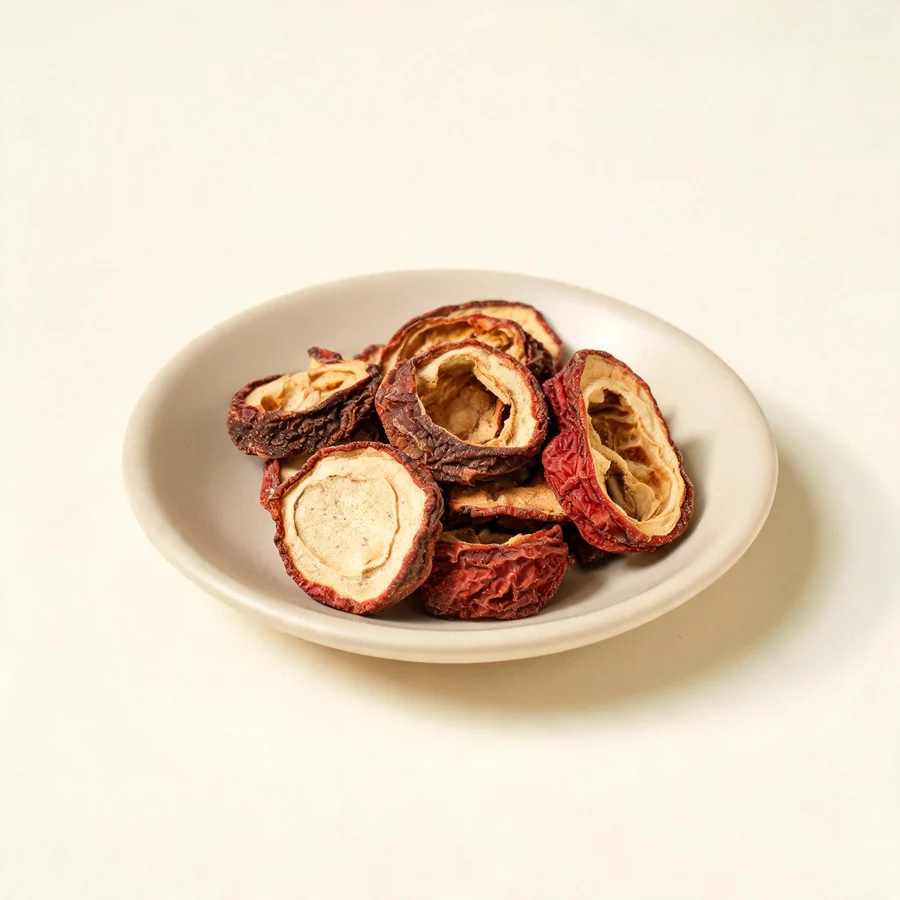
A warm foot soak is the practical way to use the fruit on the skin, and it is a household preparation as much as a clinical one. Dried slices are simmered, the liquid is strained, and the feet are soaked briefly while it is comfortably warm. It is used for pale, sodden, itchy skin between the toes, for a foot that swells and feels heavy, and for heels that have gone hard from dampness rather than from a lack of moisture. The soak stops once the skin is dry and comfortable, because a sour liquid used too often is unkind to skin and to teeth.
| Preparation | How and when it is used |
|---|---|
| Warm foot soak | Simmer 20 to 30 g of dried fruit slices in about one litre of water for 20 minutes, strain, and let it cool to a comfortable warmth. Soak the feet for 10 to 15 minutes, dry carefully between the toes, and use it no more than once a day for a week or two. |
| Compress for a swollen ankle | A stronger decoction, cooled to skin temperature, applied with a cloth to a puffy heavy ankle for 10 minutes. It is for intact skin and for swelling that is not hot; a hot, red or painful joint is a reason to seek advice rather than to apply a compress. |
Patch test and cautions
Keep the liquid away from broken, cracked or ulcerated skin, and from a foot that is red, hot or spreading, which needs medical assessment. Do not soak for longer than 15 minutes and do not use the water twice. The sourness stings a fissure and can damage tooth enamel if the liquid is sipped, and a person with diabetes should have a soak approved before trying it, because reduced sensation makes a scald from hot water easy to miss.
Safety for skin use
What to check before recommending or using it, including the cautions that matter most for skin patients.
Do not use, or use with caution
- Damp-heat with dark scanty urine, and any hot, red, spreading skin lesion. The fruit is warm and sour, so it adds to heat and can hold dampness in place rather than moving it on.
- Deficiency of Yin, Blood or Essence with a dry thin body, aching knees and no dampness. Without dampness to resolve, the drying action has nothing to work on and leaves the person drier.
- Food stagnation with a thick coating, bloating and belching. The astringent quality can gather the stagnation instead of clearing it, and a moving herb suits better.
- Long or heavy use, and known sensitivity to the fruit. The sourness burdens the stomach, and in quantity over time it is held to harm the teeth and bones.
Pregnancy and breastfeeding
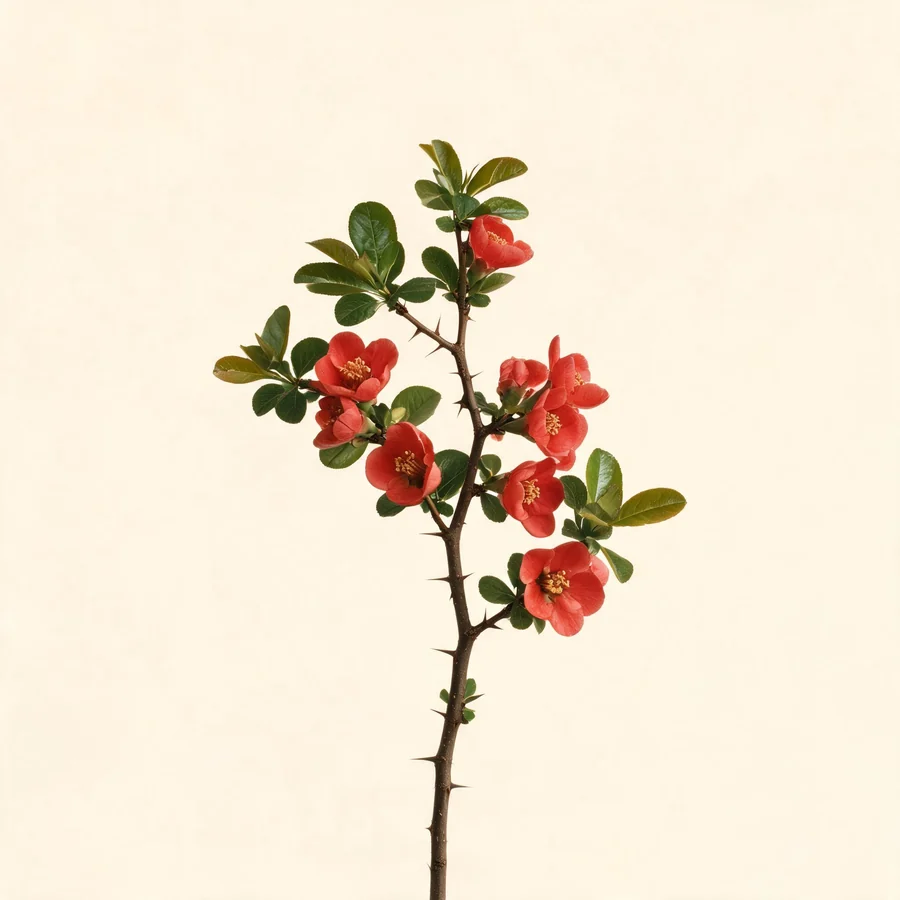
Use with caution, and only under guidance. The medicinal fruit is Chaenomeles speciosa, a Chinese quince, and it is a different species from the tropical papaya, which carries a documented caution in pregnancy. The shared name is where the real hazard lies: a product labelled papaya, or simply Mu Gua in English, may be the wrong fruit, so nothing sold as papaya should be taken as this medicine. At standard doses the Chinese fruit has no established uterine action, but there is no modern safety data in pregnancy, and a soak is the more conservative option for a skin problem.
Interactions
- Oral medicines taken at the same time. The organic acids can change the acidity of the stomach and could alter how quickly a tablet breaks up and is absorbed. No clinical effect has been demonstrated, but spacing the decoction a couple of hours away from other medicines is simple and costs nothing.
- Blood sugar and lipid medicines. Laboratory work on the fruit reports effects on glucose and lipids, so anyone using insulin, a sulfonylurea or a statin needs supervision and closer monitoring of their readings. None of this justifies stopping a prescribed medicine.
- Laxatives and a loose bowel. The fruit is mildly laxative in quantity and can loosen the stool further, while its astringency sits awkwardly with a bowel that is already irritable. Reducing the dose is usually enough.
Allergy and patch testing
Allergy to the fruit is unusual, but a warm soak can irritate skin that is already inflamed, and a sour liquid stings a crack. Try a small area for 24 hours before soaking a whole foot, and stop if the skin becomes redder or more itchy rather than calmer. People who react to other members of the rose family, such as apple and pear, should be more cautious with an internal preparation.
General safety references
General references for herbal hepatotoxicity and herb-drug interactions; they are not specific to this herb.
- Review article: Herbal hepatotoxicity - an update on traditional Chinese medicine preparations. Alimentary Pharmacology & Therapeutics, 2014. PMID: 24844799.
- Interactions between herbal medicines and prescribed drugs: an updated systematic review. Drugs, 2009. PMID: 19719333.
- Warfarin and food, herbal or dietary supplement interactions: a systematic review. British Journal of Clinical Pharmacology, 2021. PMID: 32478963.
Evidence
The classical record is quoted with its source. The modern note states the level of evidence plainly.
Classical record
It is said to treat obstruction from dampness and pathogenic qi, the severe vomiting and diarrhoea of epidemic digestive illness, and cramping that will not stop.
Ming Yi Bie Lu (Supplement to the Classic of Materia Medica) - The first record that sets out both of the fruit's enduring uses, dampness in the channels and a disordered middle.
The fruit is used for its sour, gathering quality: sour reaches the sinews, and gathering holds what is leaking. It is said to hold the true flavour of wood and for that reason to favour the Liver, feeding the sinews and moving Blood. It is named for aching weakness of the low back and knees, for leg qi, and as a guide that other medicines cannot do without.
Ben Cao Zheng (Correct Meaning of Materia Medica) - The classic argument for why a sour fruit works on the sinews, and the source of its role as a guide to the lower limbs.
Li Shizhen argues that the disorders the fruit treats, vomiting and diarrhoea with cramping and leg qi, are disorders of the Spleen and Stomach rather than of the Liver. On that reading the relief of cramp comes not from feeding the sinews but from settling the Spleen and checking the Liver.
Ben Cao Gang Mu (Compendium of Materia Medica), Li Shizhen - A famous disagreement with the earlier sinew-based account, and a reminder that classical explanations were arguments rather than settled facts.
Modern evidence
Evidence status
- Laboratory work on the fruit, its triterpenes and its organic acids reports anti-inflammatory and antioxidant activity in cell and animal models. No controlled trial of the fruit in any skin condition was identified, and the skin uses described here rest on the traditional record.
- Identity and quality are the practical modern issues. Trade material is commonly the smooth-skinned fruit of a related species rather than Chaenomeles speciosa, and the pharmacopoeia specifies the wrinkled, purplish-red dried slice with a sharply sour taste. The name is also shared with the tropical papaya, which is a different fruit entirely.
- Regulatory status: the dried fruit is an accepted herbal substance in the Chinese Pharmacopoeia. Sourness rather than any toxic constituent is the recorded practical concern, and it is a limit on dose and duration rather than on use.
PubMed records
Selected real PubMed records for this herb's species or its constituents, chosen by species name and title relevance. They are references for the non-TCM discussion above, not proof that the herb treats any skin condition.
- Recent Advances in Polysaccharides from Chaenomeles speciosa (Sweet) Nakai.: Extraction, Purification, Structural Characteristics, Health Benefits, and Applications.. Molecules (Basel, Switzerland), 2024. PMID: 38998935 (pharmacology or review record).
- Phytochemical and Pharmacological Properties of Chaenomeles speciosa: An Edible Medicinal Chinese Mugua.. Evidence-based complementary and alternative medicine : eCAM, 2018. PMID: 30622618 (pharmacology or review record).
Dose and forms
Skin-practice dosing and the preparations that suit skin complaints.
| Form | Dose and notes |
|---|---|
| Decoction (internal) | 6 to 9 g of dried fruit daily in a formula, which is the pharmacopoeial range, extended to 12 g by many modern texts. Fifteen grams is used for a few days in acute cramping under supervision, and the fruit is taken after food because of its acidity. |
| Powder or pills | The dried fruit is also ground and taken in pills, which avoids the sharp taste and is easier on the stomach over a longer course. Follow the maker's directions, since the strength of a powdered fruit varies with its age and storage. |
| Foot soak | 20 to 30 g simmered in a litre of water for a soak of 10 to 15 minutes, once a day for a week or two. This is a larger quantity than an internal dose because the liquid is not swallowed. |
Dry-frying the fruit makes it kinder to the stomach and reduces the sourness, and it is the form chosen when the digestion is irritable or the course is long. Taken after food, or with a little honey, it is easier to tolerate than on an empty stomach, and the decoction should not be sipped through the day, since the acid is unkind to tooth enamel. A sensitive stomach, reflux or a loose bowel is a reason to reduce the dose rather than to stop abruptly.
Citations and further reading
Only real sources are listed: the classical materia medica passages quoted above, and the source works behind the botanical and safety statements.
- Ming Yi Bie Lu (Supplement to the Classic of Materia Medica), Tao Hongjing, Southern and Northern Dynasties - the entry on dampness obstruction and cramping is quoted above.
- Ben Cao Zheng (Correct Meaning of Materia Medica) - the passage on sourness, the sinews and the guiding action is quoted above.
- Ben Cao Gang Mu (Compendium of Materia Medica), Li Shizhen, 1578 - the entry on the Spleen and Stomach reading of cramp is quoted above.
- Fructus Chaenomelis monograph, Pharmacopoeia of the People's Republic of China - accepted species, part used and quality requirements.
- Botanical literature on Chaenomeles speciosa, Rosaceae, and on the separate identity of Carica papaya, for identification and for the name collision.
Educational reference for qualified practitioners. This page is not medical advice, and skin conditions should be diagnosed by a clinician before treatment.