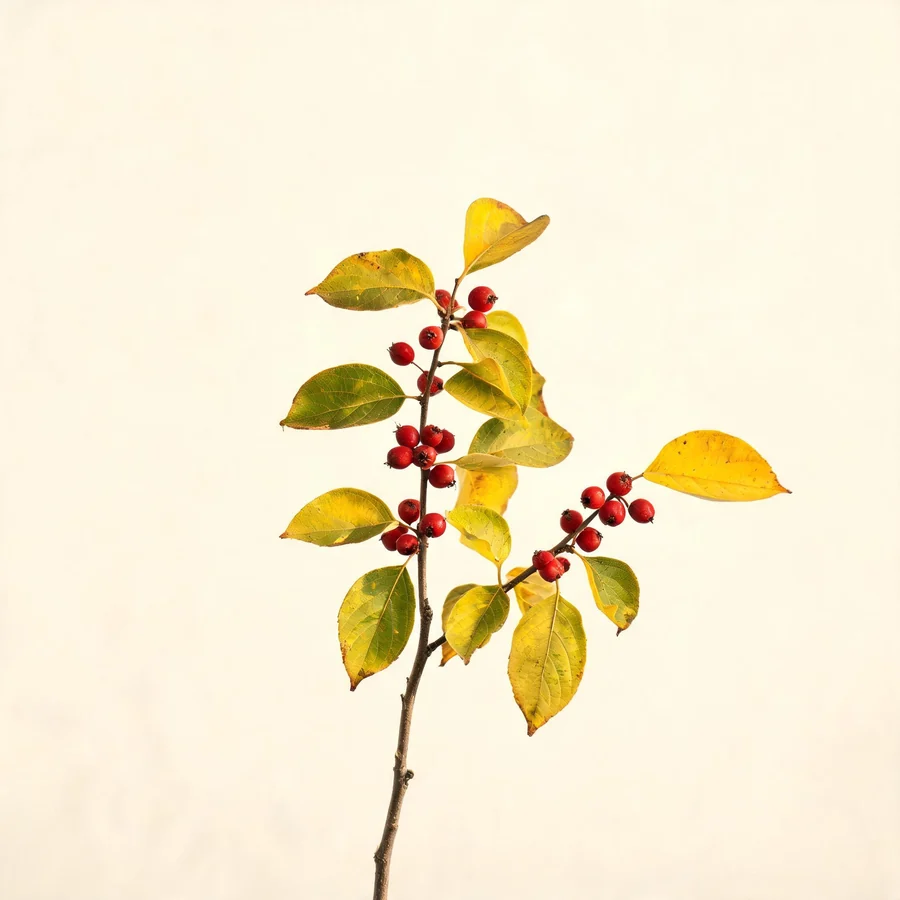
Skin profile
Where this herb sits in skin practice: the pattern it corrects, the skin signs it suits, and what it should not be used for.
Shan Zhu Yu is a herb for skin that has lost its hold: dry thin skin, pigment, the flush and night sweat of depletion, and the loose creped surface of age. It nourishes the store and astringes the leak at the same time, so it is used where nothing is inflamed and something is being lost.
Skin signs that suggest it
- Dry, thin, itchy skin in an older person, worse at night and after a bath, with little rash to see and a tendency to bruise.
- A warm flush across the cheekbones in the evening over skin that is dry rather than oily, with night sweats that leave the pillow damp.
- Pigmentation that has deepened slowly over the cheeks and upper lip, in a person who is also tired, dry-eyed and light-headed.
- Loose, creped or shrunken skin with a faint colour, in someone whose lower back aches and whose knees feel weak.
- A tongue that is red or pale and dry with little coating, and a pulse that is thin and weak, especially at the Kidney position.
When it is not the right herb
Not for damp-heat: a greasy yellow coating, oozing lesions, pustules or a discharge all mean the astringent quality would hold the problem in. Not while an exterior condition is unresolved, with fever, chills and a floating pulse, and not for the acute infected or weeping phase of any skin disease. Not for constipation, difficult urination, or any state in which the trouble is that something cannot leave rather than that it keeps leaving. Profuse cold sweating with a faint pulse and clammy skin is a medical emergency, and the traditional rescue use of this fruit belongs to a clinician rather than to a household.
What it does for skin
Skin-relevant actions only. Each one describes a mechanism in TCM terms and what it looks like on the skin.
Nourishes Liver and Kidney Yin so the skin keeps its moisture
Dry skin that comes from within is read as Yin and Essence failing to reach the surface, and the signs are thin skin, fine lines, a dry mouth at night and a lower back that aches. The fruit supplies the substance the surface is short of, and it is used with other Yin-nourishing herbs rather than alone. The change is slow and it is judged over weeks: the skin feels less papery, the itch after washing settles, and the night-time dryness eases.
Astringes sweat and closes a surface that leaks
Sweat that pours without exertion, or night sweats that leave the skin damp and cold, is read as the surface failing to hold what should stay inside. The sour, astringent quality is described as gathering and containing, and the fruit is a chief herb for that picture, especially in a depleted person after a long illness. On the skin the visible effect is a warm dry surface instead of a damp cold one, and the change is usually noticed within days rather than weeks.
Settles the flush of deficiency heat
The warm evening flush and the dry heat that comes with it are read as Yin that can no longer anchor the body's warmth, and the fruit's gentle warmth is described as supporting the Yin rather than adding to the heat. The face looks less flushed and the skin less hot to the touch, and the night sweats that accompany the flush usually settle at the same time. A flush with fever, weight loss or a persistent cough needs investigation before it is treated as deficiency.
Holds Essence, which is what the skin is built on
In this framework the firmness and colour of the skin depend on Essence and Blood, and their loss shows as thin, loose, creped skin, a dull complexion and slow healing. The fruit is included in the formulas that rebuild that store, and its astringent half stops the loss while the nourishing half refills. It is a supporting herb in that work, judged over months, and it does not reverse sun damage or replace the treatment of a skin disease.
Skin conditions it is used for
Mapped to the condition pages on this site. The pattern column shows what the skin is doing when this herb is the right choice.
| Condition | Pattern | Why it suits | Typical setting |
|---|---|---|---|
| Senile pruritus | Dryness from declining Blood and Yin, with the surface no longer held | Itch in later life, with dry thin skin, little rash and a dislike of soap and hot water, is read as Blood and Yin that can no longer keep the surface moist. The fruit nourishes the store and astringes the loss at the same time, which is why it appears in the Yin-nourishing formulas used for this group. It is an assistant to Blood-nourishing herbs, and itch that comes with weight loss, jaundice or a new medicine needs a diagnosis rather than a formula. | A Yin-nourishing formula such as Liu Wei Di Huang Wan with Dang Gui and Bai Shao |
| Melasma | Liver and Kidney depletion with pigment settling on the face | Melasma is read as the face showing an internal state, and one of the patterns behind it is Liver and Kidney depletion with Blood that no longer reaches the surface cleanly. The fruit is part of the Kidney-nourishing base such formulas are built on, and it is used for months rather than weeks. It is not a bleaching agent and it does not replace sun protection, which is the single most useful thing a person with melasma can do. | Liu Wei Di Huang Wan with Bai Shao and Chai Hu, over months |
| Dry and hot skin | Yin deficiency with empty heat at the surface | Skin that is both dry and warm, with an evening flush and night sweats, is read as Yin that has thinned enough to let heat rise. The fruit nourishes the Yin and holds the sweat, so the surface is both supplied and settled, and it is used with herbs that cool the empty heat rather than with strong cold herbs that would dry the person further. The pattern is recognised by the tongue, which is red and dry with little coating. | Zhi Bai Di Huang Wan, with Shan Zhu Yu as the securing herb |
| Wrinkled and shrunken skin | Loss of Essence and fluids, with deficient support for the surface | Loose, creped skin with a faint colour is read as the surface losing its support, and the fruit is one of the herbs that rebuilds what is stored rather than what is applied. It suits the slow change of ageing and the aftermath of a long illness, not the sudden shrivelling of dehydration, which is an emergency. The work is judged over months and it is modest: the aim is skin that is better nourished, not skin that looks younger. | A Kidney-nourishing formula such as Zuo Gui Wan |
Combinations for skin
Herbs it is paired with when the skin, not an internal organ, is the target.
| Partner | Ratio | Why the pair is used |
|---|---|---|
| Shu Di Huang | 12 to 15 g Shu Di Huang with 6 to 10 g Shan Zhu Yu | The core pair of the Kidney-nourishing formulas. Shu Di Huang builds Blood and Essence and the fruit holds them in, so the pair fills the store and closes it at the same time. It is the basis of the work on dry thin skin, pigment and the ache in the lower back, and the proportion keeps the fruit as the securing half rather than the leading one. |
| Bai Shao | 10 g of each | Bai Shao nourishes Liver Blood and relaxes the sinews while the fruit secures what is being lost, and together they suit dry itchy skin in a person who is also tense, thin and light-headed. The pair is used in the formulas for senile itch and for the dry flushed face of depletion. Both are sour, so the combination is gentle rather than dramatic, and it is judged over weeks. |
| Wu Wei Zi | 6 to 10 g of each | A pair for leakage of every kind: sweat, urine and the moisture of the surface. Wu Wei Zi gathers Lung Qi and fluids while the fruit secures Kidney Essence, so together they cover the upper and lower sources of loss. It is used for the person who sweats at night and passes urine several times, with dry skin and a thin pulse, and it is stopped once the leakage has settled. |
| Long Gu | 10 to 15 g Long Gu with 6 to 10 g Shan Zhu Yu | Dragon bone is heavy and astringent and settles what is floating upward, while the fruit gathers what is escaping below. The pair sits at the astringent centre of the collapse formulas and is also used for chronic night sweats and for sweat that will not stop after a long illness. The shell is heavy, so the pair is withdrawn once the sweating has settled and is not used where dampness congests the middle. |
Formulas where it leads
- Liu Wei Di Huang Wan (六味地黄丸) - The standard Kidney and Liver Yin formula, and the most common place a Western reader meets this fruit. The fruit supplies the securing, astringent element among the six herbs, so the formula both builds the store and stops it leaking. It is used for the dry thin itchy skin of depletion, for pigment, and for the ache in the lower back and knees.
- Zuo Gui Wan (左归丸) - A richer Kidney Yin formula for a more depleted picture, where the lower back is weak, the knees are soft and the person is dry and thin. The fruit secures the Essence that Shu Di Huang and the other filling herbs build, and the formula is used over months for the slow changes of ageing rather than for an acute skin flare.
Safety for skin use
What to check before recommending or using it, including the cautions that matter most for skin patients.
Do not use, or use with caution
- Damp-heat in the skin, with oozing, pustules, a greasy yellow coating or a discharge. The astringent quality can lock the dampness in and make the eruption worse rather than better.
- An unresolved exterior condition, with fever, chills and a floating pulse, and the acute infected phase of any skin disease. Closing the surface while a pathogen is still trying to leave is held to drive it inward.
- Blocked flow rather than leakage: difficult or painful urination, constipation, and any retention. A herb that closes is the wrong tool when the problem is that something cannot get out.
- A weak, damp Spleen with a bloated abdomen and a greasy coating. The sour, cloying flesh can sit heavily and add to the congestion.
Pregnancy and breastfeeding
Give it only where the indication is clear and a practitioner is supervising, and do not continue it indefinitely. The fruit is not classed among the herbs strictly prohibited in pregnancy, and practitioners sometimes call on its securing, Kidney-nourishing action where a pregnancy feels insecure, a decision that belongs to a practitioner rather than to self-treatment. There is no modern safety data. During breastfeeding, postpartum depletion with sweating and a weak lower back is a well-attested use, and a standard dose for a limited period under guidance is the sensible limit.
Interactions
- Insulin and oral hypoglycaemic medicines. Laboratory work reports glucose-lowering activity, so adding the fruit can push blood sugar lower than expected. Anyone on these medicines should monitor more often during the first weeks and report a hypoglycaemic episode rather than adjust the dose alone.
- Anticoagulants and antiplatelet medicines. Laboratory work describes inhibition of platelet aggregation, so an additive bleeding effect is possible in theory and matters most for warfarin, aspirin and the direct oral anticoagulants. Unexplained bruising should be reported.
- Antacids and alkaline medicines. The fruit is rich in organic acids, which can reduce the absorption of alkaline preparations such as sodium bicarbonate and aluminium hydroxide, so the doses are separated by an hour or two. Some Chinese sources also caution against using it alongside rifampicin or indometacin, though no mechanism has been properly described.
Allergy and patch testing
No specific allergy is well documented for the fruit, and reactions are rare. The flesh is sour and slightly cloying, and a person who reacts to other dogwood family plants should be cautious. A skin reaction to a herb-containing preparation is always possible, so a patch test is sensible before any external use, and internal use is stopped if a rash, itching or stomach upset appears.
General safety references
General references for herbal hepatotoxicity and herb-drug interactions; they are not specific to this herb.
- Review article: Herbal hepatotoxicity - an update on traditional Chinese medicine preparations. Alimentary Pharmacology & Therapeutics, 2014. PMID: 24844799.
- Interactions between herbal medicines and prescribed drugs: an updated systematic review. Drugs, 2009. PMID: 19719333.
- Warfarin and food, herbal or dietary supplement interactions: a systematic review. British Journal of Clinical Pharmacology, 2021. PMID: 32478963.
Evidence
The classical record is quoted with its source. The modern note states the level of evidence plainly.
Classical record
It governs the lower back and the knees, and it secures Essence.
Shen Nong Ben Cao Jing (Divine Husbandman's Classic of Materia Medica) - The oldest entry already joins the two halves of the herb: the lower back as the place of depletion and Essence as what must be held.
Li Shizhen records the fruit as sour, neutral and free of toxicity, strengthening Yin and benefiting Essence, calming the five viscera, opening the nine orifices and checking excessive urine. He adds that it treats ringing in the ears, warms the lower back and knees, fills the marrow and settles irregular menstruation.
Ben Cao Gang Mu (Compendium of Materia Medica), Li Shizhen - A sixteenth-century summary that already holds the tonifying and the securing uses together in one entry.
Zhang Xichun argued that among the medicines that rescue a patient from collapse, the flesh of this fruit should be placed first, judging it many times stronger for that purpose than ginseng, white atractylodes or astragalus. He insisted that the stone be removed completely, and warned that wine processing weakens the securing and consolidating action.
Yi Xue Zhong Zhong Can Xi Lu (Records of Chinese and Western Medicine), Zhang Xichun - The passage that made the fruit a rescue medicine in modern practice, and the source of the rule about the pit.
Modern evidence
Evidence status
- Laboratory studies of cornus fruit extracts, chiefly the iridoid glycosides loganin and morroniside, report antioxidant, anti-inflammatory and glucose-lowering activity in cell and animal models. No controlled trial of the fruit in senile pruritus, melasma or any skin condition was identified, so the skin uses here rest on the traditional record.
- The recorded harms at ordinary doses are mild constipation and a slight rise in heart rate, and the risk that matters is the pattern rather than the chemistry: used in the presence of damp-heat, or of an exterior condition that has not cleared, the astringency can make matters worse. The pit is removed because the classical sources hold that it opposes the action of the flesh.
- Regulatory status: the dried, pitted fruit flesh is an accepted herbal substance in the Chinese Pharmacopoeia, which also specifies removal of the pit. Adulteration with other dogwood material, and with dyed or sugar-added fruit, is a documented trade problem.
PubMed records
Selected real PubMed records for this herb's species or its constituents, chosen by species name and title relevance. They are references for the non-TCM discussion above, not proof that the herb treats any skin condition.
- A review of the sources and pharmacological research of morroniside.. Frontiers in pharmacology, 2024. PMID: 39301568 (pharmacology or review record).
- Efficacy and safety of traditional Chinese medicine decoction as an adjuvant treatment for diabetic nephropathy: a systematic review and meta-analysis of randomized controlled trials.. Frontiers in pharmacology, 2024. PMID: 38783937 (safety record).
Dose and forms
Skin-practice dosing and the preparations that suit skin complaints.
| Form | Dose and notes |
|---|---|
| Decoction (internal) | 6 to 12 g of dried pitted flesh daily in a formula for the slow work of nourishing Yin and securing Essence. The raw flesh is preferred where the aim is to hold sweat or Essence, and the wine-processed form is warmer and more tonifying for a long course. |
| Pills and powder | The fruit is most often taken inside a prepared pill such as Liu Wei Di Huang Wan, which avoids the sour, cloying taste. Follow the maker's directions, and do not combine several products that contain the same herb. |
| Course length | Months for the nourishing work, with review, and days to weeks for the securing work. Larger doses belong to a practitioner managing a defined picture, and they are not simply a bigger helping of a small one. |
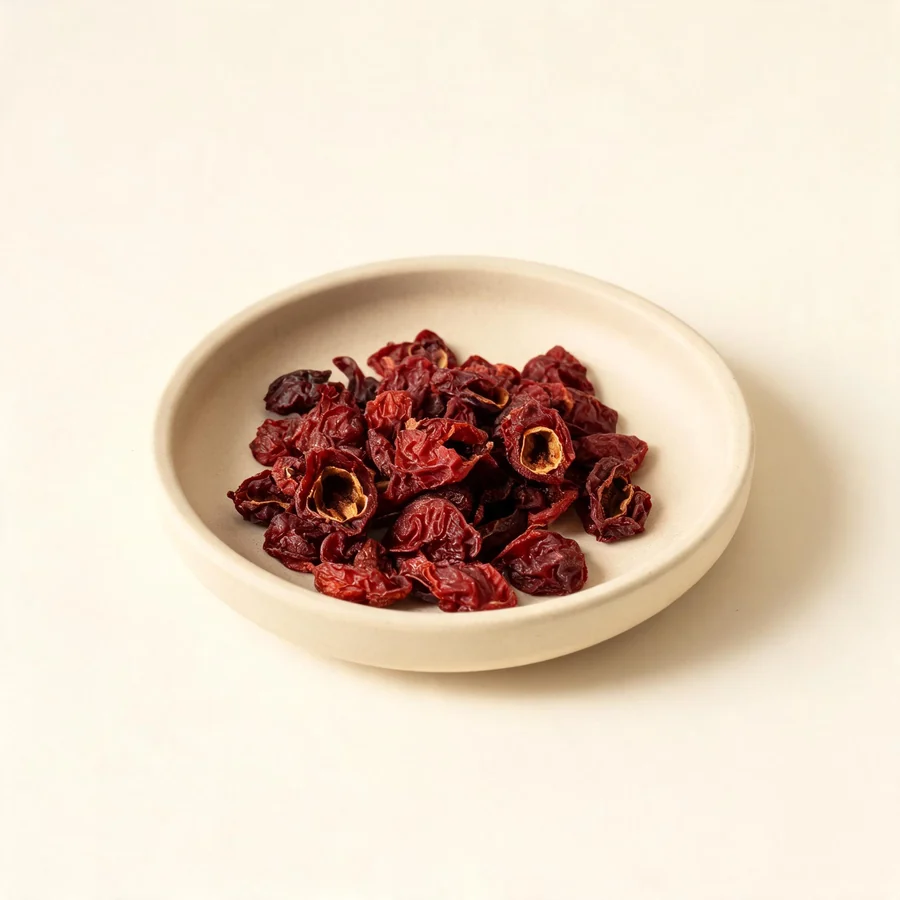
The pit is always removed. Classical physicians noted that the stone has a slippery, astringent character of its own that opposes the flesh, and good commercial material is sold already pitted with only a trace of seed left. The raw flesh is chosen for securing sweat and Essence, and the wine-processed form, which is warmer and more nourishing, for a long course of tonification. Because the fruit is sour and slightly cloying, a weak digestion tolerates it better in a pill than as a decoction, and it is taken after food.
Citations and further reading
Only real sources are listed: the classical materia medica passages quoted above, and the source works behind the botanical and safety statements.
- Shen Nong Ben Cao Jing (Divine Husbandman's Classic of Materia Medica), attributed compilation of the Han period - the entry on the lower back and Essence is quoted above.
- Ben Cao Gang Mu (Compendium of Materia Medica), Li Shizhen, 1578 - the summary entry is quoted above.
- Yi Xue Zhong Zhong Can Xi Lu (Records of Chinese and Western Medicine), Zhang Xichun, early twentieth century - the passage on collapse and on removing the pit is quoted above.
- Fructus Corni monograph, Pharmacopoeia of the People's Republic of China - accepted species, part used and the requirement to remove the pit.
- Laboratory literature on loganin and morroniside, summarised as a statement about the level of evidence rather than as a cited finding.
Educational reference for qualified practitioners. This page is not medical advice, and skin conditions should be diagnosed by a clinician before treatment.