Skin profile
Where this herb sits in skin practice: the pattern it corrects, the skin signs it suits, and what it should not be used for.
Two skin pictures, and they are far apart: a deep bruise or an injury swelling that will not settle, and the rough, scaly skin of a thin person with long-standing dry blood. Both are stasis, and neither is a reason to use the herb without a diagnosis.
Skin signs that suggest it
- Deep bruising that is slow to fade, with a hard, tender centre and a purple or brown colour
- Swelling and stiffness around a sprain or a fracture, with the overlying skin discoloured
- Rough, dry, scaly skin on a thin person, with a dull, darkish complexion (dry blood)
- A hard, fixed lump or a thickened patch left behind by an old injury
- A dark or purplish tongue, or a choppy pulse, in someone with fixed pain
When it is not the right herb
Not for a fresh wound that is still bleeding, not for heavy periods, and not for anyone on an anticoagulant. Not in pregnancy at any stage. Not for pale, dry, cold skin from Blood or Yin deficiency, where breaking stasis takes away what little the person has, and not for a rash that is hot, red and spreading, which calls for cooling rather than breaking. It is also the wrong herb for someone whose skin problem began with the herb itself, since the papular eruption it can cause is common enough to be the usual reason a course is stopped.
What it does for skin
Skin-relevant actions only. Each one describes a mechanism in TCM terms and what it looks like on the skin.
Breaks static blood and clears a bruise
A bruise is blood that has left its vessel and stopped, and the tradition reads the colour, the hardness and the tenderness as signs that it is still sitting there. The salty taste is said to enter the Blood and the cold nature to cool what has congealed, so the mass breaks up and is reabsorbed. It is used where a bruise is deep, fixed and slow, not for the light bruise that fades in a few days on its own.
Disperses swelling after an injury
Swelling around a sprain or a fracture is read as static blood and tissue fluid trapped where the vessels were torn, and the herb is credited with dispersing it. It goes into a trauma formula by mouth and onto the skin as a paste in rice wine, so that the medicine stays against the swollen tissue rather than being carried away from it. Imaging and orthopaedic care come first; the herb supports recovery and does not set a bone.
Softens a hard lump left by old stasis
An old injury can leave a firm, fixed lump where blood organised instead of clearing, and long-standing stasis can produce hardness elsewhere in the body. The salty, cold, softening quality is directed at exactly that, and the insect origin is held to let it search the fine vessels that a plant herb reaches poorly. Any lump that is new, growing and painless needs examination before it is treated as stasis, and the herb is not a licence to leave a mass alone.
Addresses the dry, scaly skin of dry blood
The Jin Gui Yao Lue paints dry blood as a wasted frame with skin like rough scales and dark shadows round the eyes, a picture where stasis sits on top of depletion. The formula built round it is Da Huang Zhe Chong Wan, which puts the breaking action in this insect and leaves the nourishment to other members of the prescription. It is a formula-level diagnosis for a thin, chronically unwell person, not a treatment for ordinary dry skin, and it belongs to a practitioner.
Skin conditions it is used for
Mapped to the condition pages on this site. The pattern column shows what the skin is doing when this herb is the right choice.
| Condition | Pattern | Why it suits | Typical setting |
|---|---|---|---|
| Bruising | Static blood from trauma, deep and fixed | A bruise is the clearest everyday example of static blood, and this is the strongest of the plant and animal stasis breakers used for one that has gone hard and dark. It is given by mouth in a formula and applied as a paste, and the expectation is that colour and hardness resolve together rather than the colour fading over a lump. A bruise that appears without injury, or one that keeps enlarging, needs a medical explanation. | Xia Yu Xue Tang style formulas, or a powder paste with warm rice wine |
| Traumatic skin swelling | Blood and fluid trapped after injury | Swelling over a sprain or a fracture is blood and fluid with nowhere to go, and the dispersing action is aimed at both halves of that. Applied as a paste it holds the medicine where the swelling is, and taken in a formula it works with minerals and plant stasis herbs that mend bone. The herb does not replace splinting or imaging, and a swelling that is tense, numb or cold below the injury needs urgent assessment. | Trauma formulas with Zi Ran Tong and Hong Hua |
| Dry, scaly skin from dry blood | Long-standing stasis with depletion (ji fu jia cuo) | Rough, dry, scaled skin on a thin and chronically unwell person is one of the classical signs of dry blood, and it is the one skin picture where this herb is used on a whole-body scale. It belongs to Da Huang Zhe Chong Wan, a prescription in which the stasis is attacked while the depletion is fed, and it is a serious formula for a diagnosed pattern. Ordinary dry skin, winter dryness and ichthyosis are not this picture and need moisture, not a blood breaker. | Da Huang Zhe Chong Wan |
| Organised lump after injury | Old static blood that has hardened into a nodule | Blood that is not reabsorbed can organise into a firm lump under the skin, and that is the nodule this herb is aimed at rather than a true lipoma or a cyst, which are phlegm-damp by nature and belong to a different approach. The distinction matters, because a stasis lump has a history of injury and a phlegm nodule does not. Any lump still needs examination, and a firm, fixed and painless one needs it first. | With San Leng and E Zhu in a modified stasis-breaking formula |
Combinations for skin
Herbs it is paired with when the skin, not an internal organ, is the target.
| Partner | Ratio | Why the pair is used |
|---|---|---|
| Da Huang | 3 to 6 g Da Huang with 6 to 10 g Tu Bie Chong | Da Huang purges downward and clears stagnant matter by way of the bowel while the beetle attacks the hardened blood itself, and the two together empty the lower abdomen of old congealed blood. They lead Xia Yu Xue Tang, and the purgative half makes them wrong for anyone already depleted; on the skin the pair is kept for a deep bruise with fullness and a costive bowel. |
| Hong Hua | 6 to 9 g Hong Hua with 6 g Tu Bie Chong | Safflower moves Blood gently and is the safer herb for surface discolouration, while the beetle reaches the deep, hard centre of an old bruise. The pair lets one formula treat a bruise at two depths, and safflower carries most of the work when the patient is thin or the course runs long. Both are avoided where there is active bleeding. |
| Tao Ren | 10 g Tao Ren with 6 g Tu Bie Chong | The peach kernel moves Blood and moistens while the insect breaks what has hardened beyond a seed's reach. They appear together in the classical stasis formulas and are used for deep bruising, for fixed pain after injury and for the dusky, dry skin that follows long-standing stasis, with the seed providing the gentler and more moistening half of the action. |
| Zi Ran Tong | 6 to 9 g each | The mineral is thought to help bone knit, and the insect clears the stale blood that would otherwise obstruct union. This is the classical trauma pair, used where a fracture is slow to unite and the skin over it stays swollen and discoloured, and it belongs to orthopaedic care rather than replacing it. |
Formulas where it leads
- Da Huang Zhe Chong Wan (大黄䗪虫丸) - The classical prescription for dry blood with emaciation and rough, scaled skin, built on Da Huang with this insect and a group of stasis-breaking and nourishing herbs. It suits a diagnosed pattern in a depleted person rather than a general bruise remedy, and the skin sign it addresses is the armour-like scaling of long-standing stasis.
Topical use
Ground to a paste, the insect is used on swelling and bruising, which holds the medicine at the surface where the blood has pooled. It is a traditional external application and carries the same two cautions as the internal one: broken skin should not be covered with it, and the insect proteins can sensitise the skin that meets them.
| Preparation | How and when it is used |
|---|---|
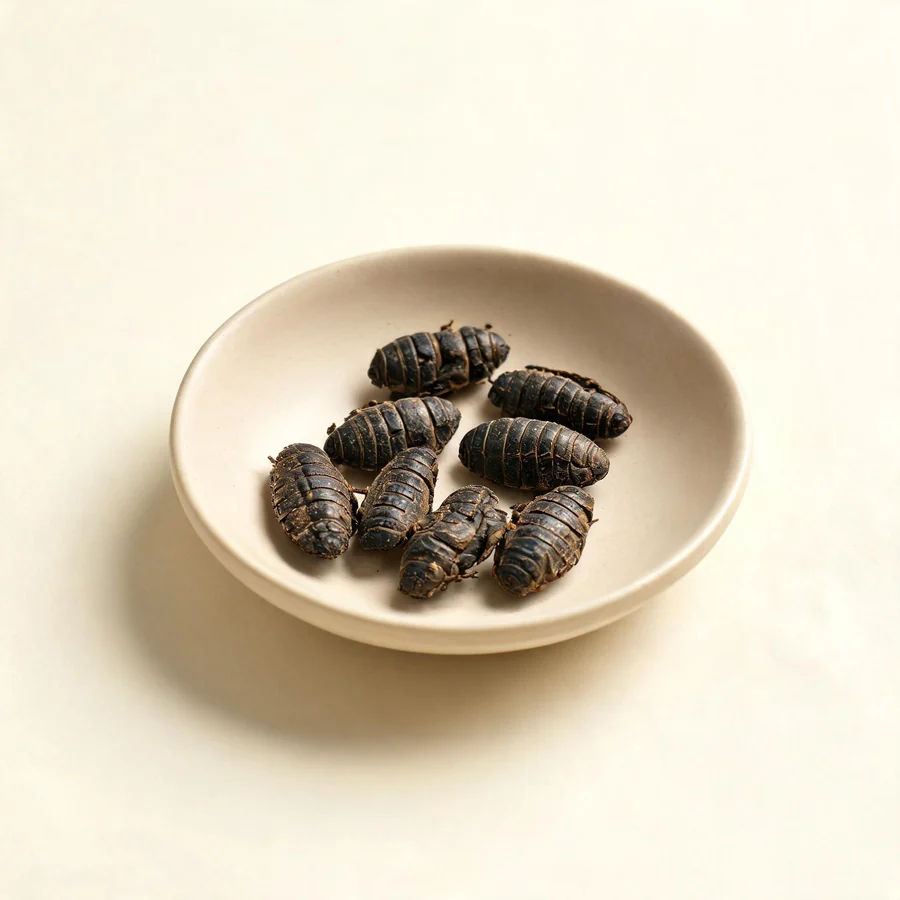
| Rice-wine paste | The dried insect is ground to a fine powder and mixed with warm rice wine to a paste, spread thickly over the discoloured area and covered with gauze for 30 to 60 minutes once or twice daily. Warm water can replace the wine. Do not use it on a graze, a burn or a surgical wound, and wash the skin afterwards. |
| Stiff paste for a hard lump | A stiffer paste made with a little flour or honey is applied to a firm, non-inflamed lump left by an old injury for 20 to 30 minutes and then washed off. Stop if the skin reddens, itches or develops small papules, which is the reaction this material is known for. |
Patch test and cautions
Patch test on the inner forearm for 24 hours before use. Never apply to broken, blistered or infected skin, keep it away from the eyes and mouth, and do not cover it with an airtight dressing. Stop at once and wash the area if a papular itch appears, and do not restart the herb after such a reaction, because a second exposure tends to repeat it.
Safety for skin use
What to check before recommending or using it, including the cautions that matter most for skin patients.
Do not use, or use with caution
- Pregnancy, at every stage. It is classed among the herbs that must not be given in pregnancy, because its descending and blood-breaking action can provoke uterine contraction and bleeding.
- Active bleeding of any kind, including a bleeding ulcer, recent surgery and heavy periods, and anticoagulant or antiplatelet treatment with warfarin, heparin, aspirin or clopidogrel.
- A previous reaction to the insect or to insect material in general. The dense itchy papular rash it can cause is the commonest reason a course is stopped, and a second exposure is not worth the risk.
- Depletion without genuine stasis. In a thin, tired person with no fixed pain, breaking blood consumes what is already short, so the herb belongs only where stasis is real and then with tonics alongside.
- An undiagnosed lump or swelling. A hard, fixed, growing mass is not a stasis picture to be treated at home.
Pregnancy and breastfeeding
Contraindicated and not a herb to weigh up. It sits among the substances a pregnant woman is not given, because a strong descending action on the Blood is held to stimulate the uterus and cause bleeding or loss. The prohibition covers every stage and includes external pastes, since the material is absorbed through skin that is rubbed or broken. Anyone who might be pregnant is asked first, and the herb stays out of a formula until that question is settled.
Interactions
- Anticoagulants and antiplatelet drugs. Enzymes in the insect dissolve fibrin and restrain platelets, so the effect of warfarin, heparin, aspirin or clopidogrel may be increased and the risk of bleeding rise; clotting is watched closely where the combination cannot be avoided.
- Thrombolytics such as streptokinase and alteplase raise the same theoretical concern, since the herb brings its own clot-dissolving enzymes to a treatment that is already dissolving clots.
- Blood pressure medicines. Preparations containing the herb have been reported to lower pressure, so an extra fall with antihypertensives is possible, with dizziness on standing the sign to watch, although formal studies are lacking.
- Surgery and dental extraction: the herb is stopped at least a week beforehand because of the bleeding risk, and the surgeon should know it has been taken.
Allergy and patch testing
The reaction to look for is not a subtle one: crops of dense, itchy papules over the trunk and limbs, sometimes with redness, usually within the first days of a course and clearing a day or two after the last dose. It is put down to foreign proteins in the insect, and it happens often enough that a known allergy to insect material, shellfish or house dust mite should rule the herb out. Patch test an external paste, and do not re-challenge after a reaction.
General safety references
General references for herbal hepatotoxicity and herb-drug interactions; they are not specific to this herb.
- Review article: Herbal hepatotoxicity - an update on traditional Chinese medicine preparations. Alimentary Pharmacology & Therapeutics, 2014. PMID: 24844799.
- Interactions between herbal medicines and prescribed drugs: an updated systematic review. Drugs, 2009. PMID: 19719333.
- Warfarin and food, herbal or dietary supplement interactions: a systematic review. British Journal of Clinical Pharmacology, 2021. PMID: 32478963.
Evidence
The classical record is quoted with its source. The modern note states the level of evidence plainly.
Classical record
破一切血积,跌打重伤,接骨。
It breaks every kind of blood accumulation, is used in serious falls and blows, and joins bone.
Ben Cao Tong Xuan (Penetrating the Materia Medica) - A short Ming summary that shows how completely the trauma use had become the herb's identity by that period.
行产后血积,折伤瘀血,治重舌木舌,口疮,小儿腹痛夜啼。
It moves the blood that collects after childbirth, treats the static blood of fractures and injuries, and is used for a doubled tongue, a wooden tongue, mouth ulcers and abdominal pain with night crying in children.
Ben Cao Gang Mu (Compendium of Materia Medica), Li Shizhen - Li Shizhen gathers the obstetric, traumatic and paediatric uses in one place, and the static blood of injury is the line that carries into skin practice.
治跌打损伤,续筋骨有奇效。乃足厥阴经药也。咸能入血,故主心腹血积癥瘕血闭诸证……又治疟母为必用之药。
It treats traumatic injury and has a remarkable effect on reconnecting sinew and bone. It is a medicine of the Liver channel; its saltiness enters the Blood, so it governs blood accumulation, masses and blocked menstruation, and it is an essential herb for malarial enlargement of the spleen.
Ben Cao Jing Shu (Exposition of the Classic of Materia Medica), Miao Xiyong - Miao Xiyong supplies the channel reasoning and gives the bone-healing claim its classical authority.
Modern evidence
Evidence status
- Laboratory work describes serine proteases with fibrinolytic and antiplatelet activity in the insect, together with antifibrotic effects in animal models of liver injury, which is consistent with the traditional description of breaking stasis. These are laboratory and animal findings, and they do not establish benefit for bruising or for skin.
- No dermatological trial of Tu Bie Chong was identified. The best documented clinical observation runs the other way: the widespread itchy papular eruption attributed to its foreign proteins is reported often enough to be treated as the characteristic adverse effect of the material.
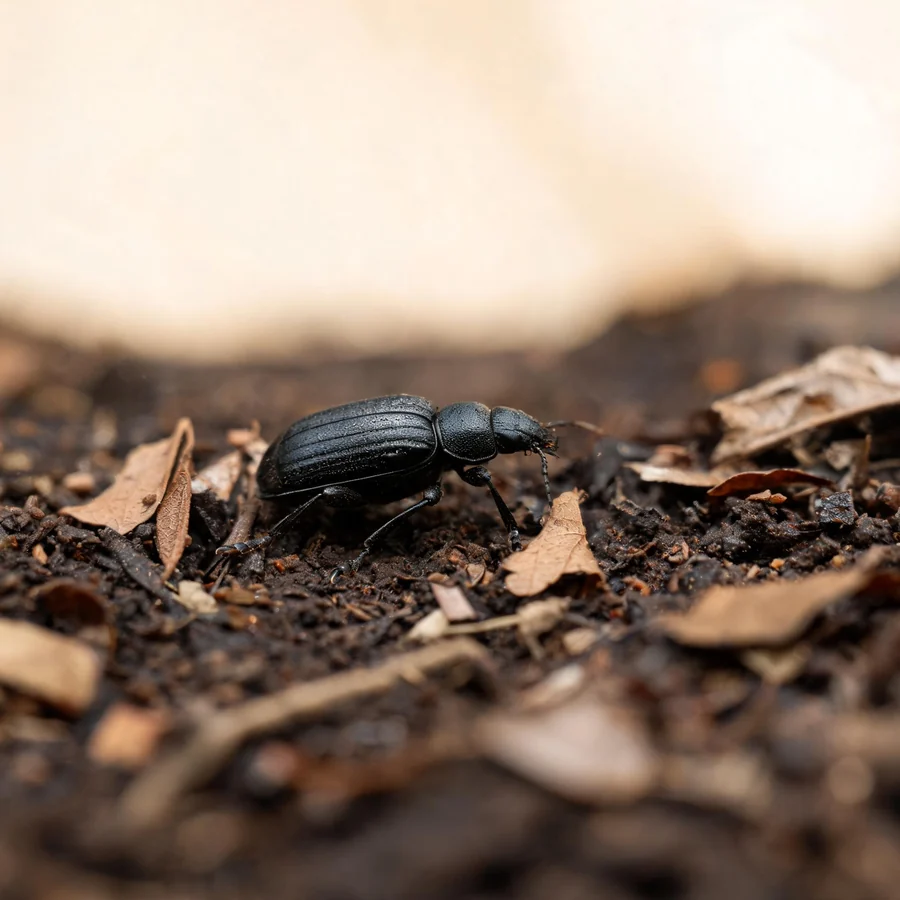
- Regulatory status: the dried female insect is an accepted animal drug in the Chinese Pharmacopoeia and is classified as slightly toxic. The species, and the sex of the specimen, both change the potency of a given weight, and the winged males are considered weaker.
PubMed records
Selected real PubMed records for this herb's species or its constituents, chosen by species name and title relevance. They are references for the non-TCM discussion above, not proof that the herb treats any skin condition.
- Polypeptides extracted from Eupolyphaga sinensis walker via enzymic digestion alleviate UV radiation-induced skin photoaging.. Biomedicine & pharmacotherapy = Biomedecine & pharmacotherapie, 2019. PMID: 30802824 (skin-related record).
Dose and forms
Skin-practice dosing and the preparations that suit skin complaints.
| Form | Dose and notes |
|---|---|
| Decoction | 3 to 10 g of the dried insect daily in a formula, with 3 to 5 g suiting chronic stasis and 6 to 10 g where the problem is a fracture or a recent injury. It is decocted with the rest of the prescription and is not taken on its own. |
| Powder | Ground and swallowed, the amount falls to between 1 and 1.5 g at a time, usually with warm rice wine or water. Weight for weight the powder is the more potent form, since the proteins credited with much of the activity are not destroyed by boiling. |
| External paste | Powder mixed with warm rice wine or water to a paste, applied to intact skin over a bruise or a firm swelling for 30 to 60 minutes, once or twice daily, and washed off afterwards. |
| Course length | Short courses of one to three weeks with review. Stop at the first sign of a papular itch, of unusual bleeding or bruising, or of indigestion, and do not repeat the herb after a reaction. |
With an animal material, the weight on the scale settles only half the matter: species, sex and the way the insect was killed and dried all alter what a given weight delivers, and the powder hits harder than the decoction. An allergic rash is a signal to stop, not to reduce the dose, and because the drug is graded as slightly toxic the margin between useful and harmful is narrower than the small gram figures suggest.
Citations and further reading
Only real sources are listed: the classical materia medica passages quoted above, and the source works behind the botanical and safety statements.
- Ben Cao Tong Xuan (Penetrating the Materia Medica), Ming dynasty - classical entry quoted above.
- Ben Cao Gang Mu (Compendium of Materia Medica), Li Shizhen, 1578 - classical entry quoted above.
- Ben Cao Jing Shu (Exposition of the Classic of Materia Medica), Miao Xiyong, Ming dynasty - classical entry quoted above.
- Tu Bie Chong monograph: Pharmacopoeia of the People's Republic of China - source for the accepted species, the dried female body as the drug, the 3 to 10 g dose and the slightly toxic classification.
- Modern evidence statement: based on laboratory and animal literature on insect fibrinolytic enzymes and on reported adverse reactions, summarised as a statement about the level of evidence.
- Zoological description and identification: entomological literature on Eupolyphaga sinensis and Steleophaga plancyi, family Corydiidae.
Educational reference for qualified practitioners. This page is not medical advice, and skin conditions should be diagnosed by a clinician before treatment.